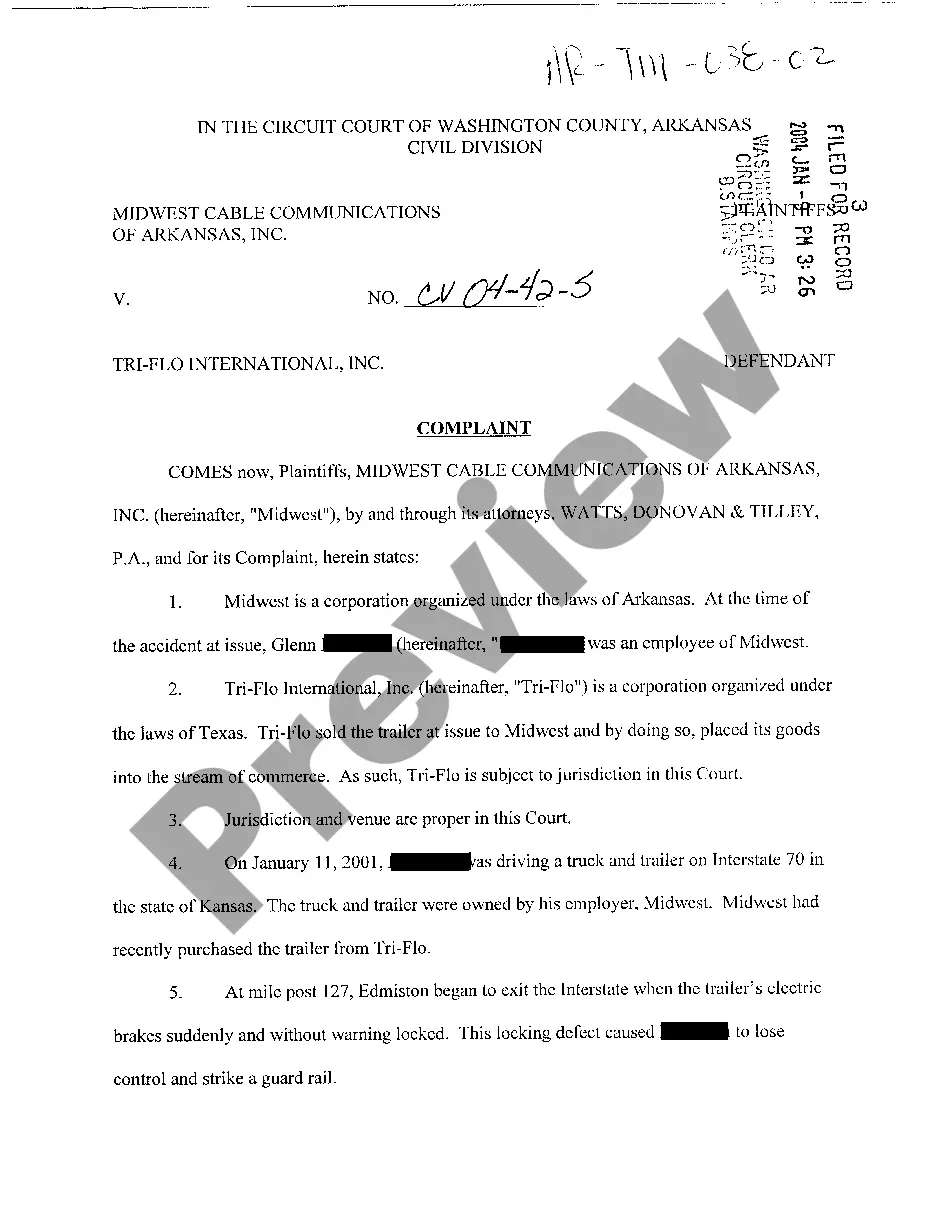
Mississippi Deed of Trust - Right to Substitute Trustee at Will
Understanding this form
The Deed of Trust - Right to Substitute Trustee at Will is a legal document used in Mississippi to secure a loan by transferring the title of real property to a trustee until the borrower repays the loan. This form grants the ability to appoint successive trustees, allowing for flexibility in management of the trust during the loan period. Unlike a traditional mortgage, this deed of trust offers lenders more control over the property in case of default, making it a crucial tool for safeguarding loans.
Main sections of this form
- Identification of the grantors, trustee, and beneficiary.
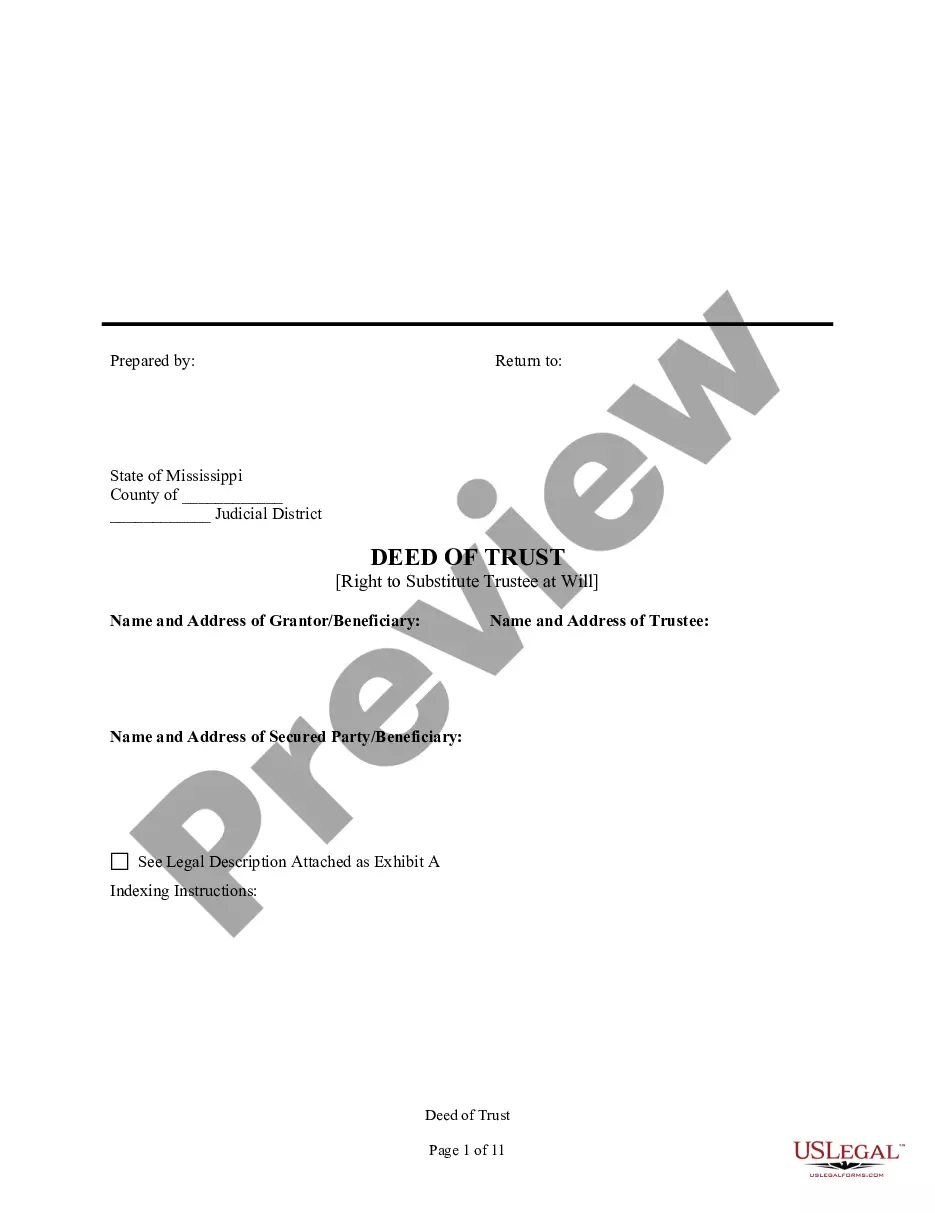
- Detailed promissory note outlining loan terms, including amount, interest rate, and repayment schedule.
- Property description including any associated improvements and rights.
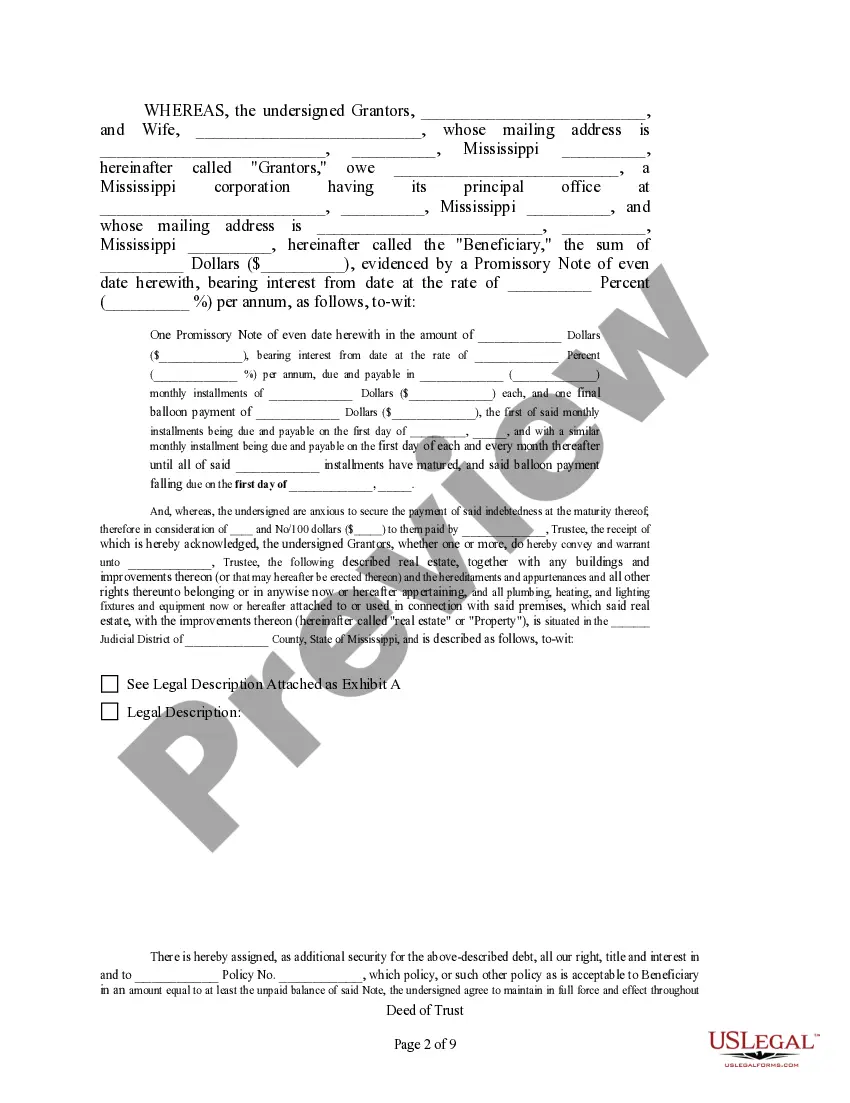
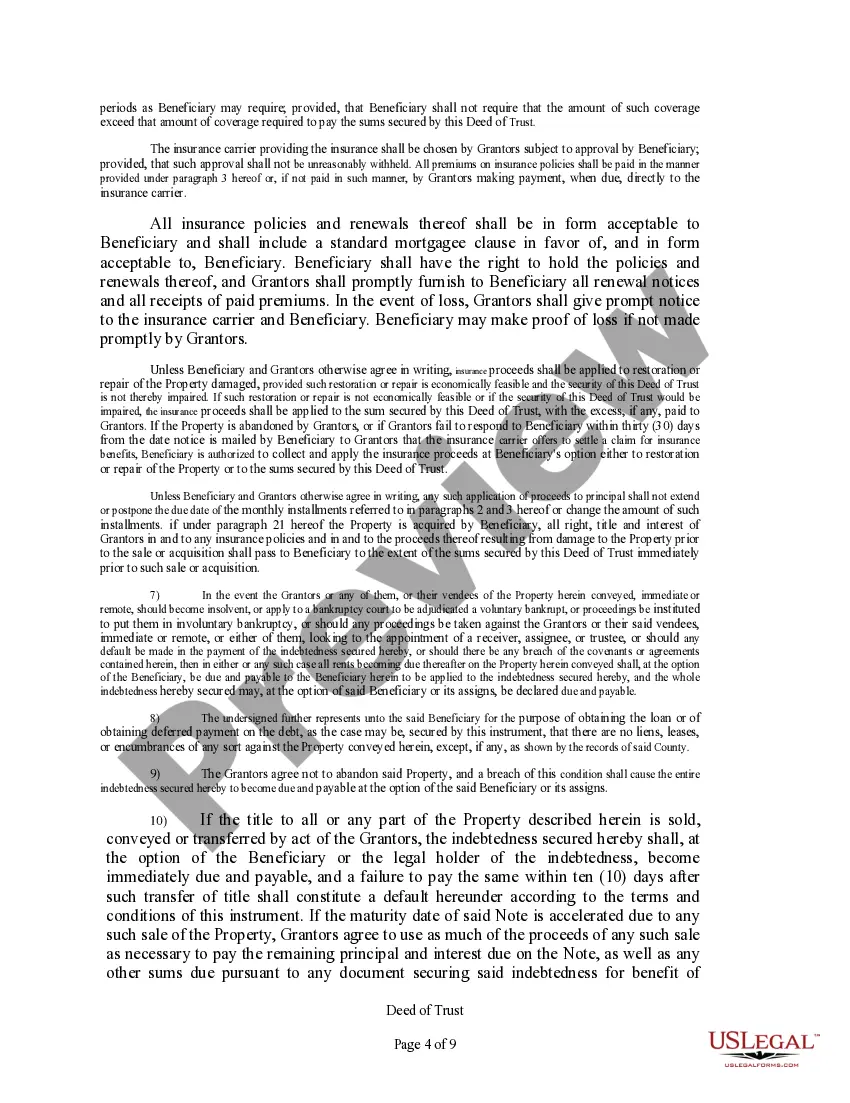
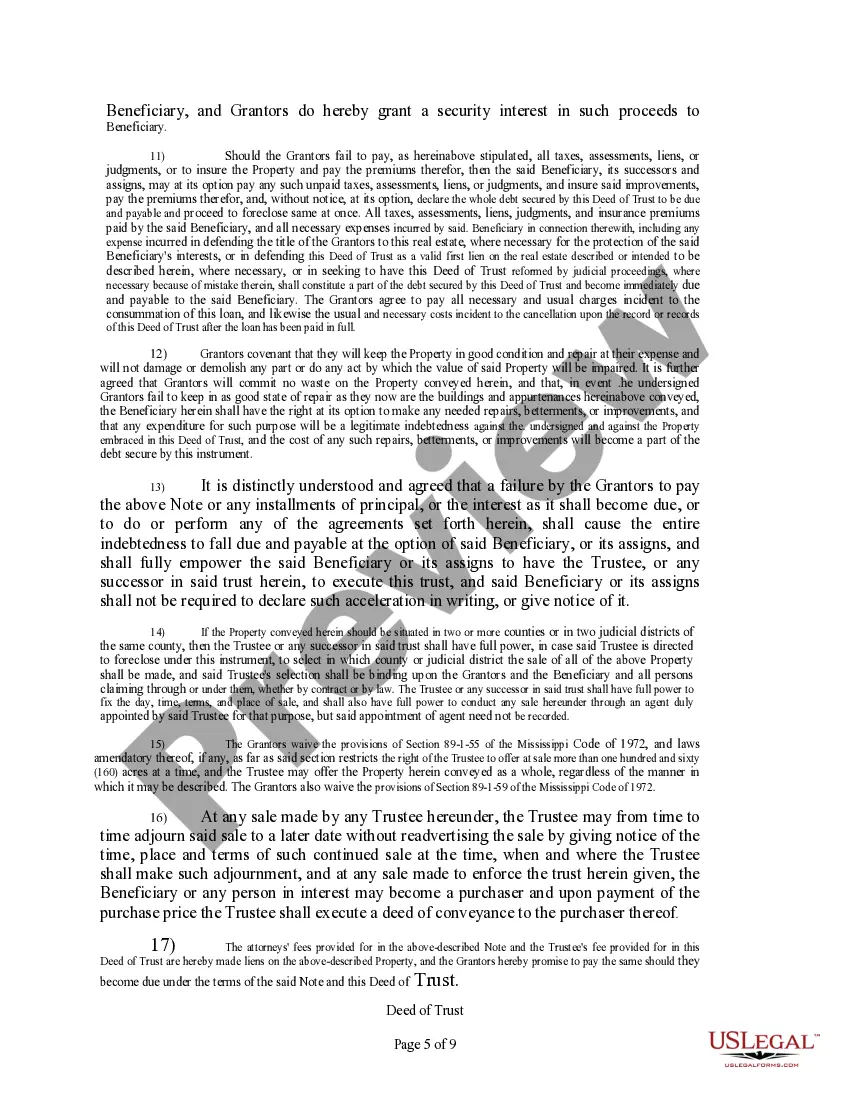
- Covenants regarding payment obligations, taxes, and insurance requirements.
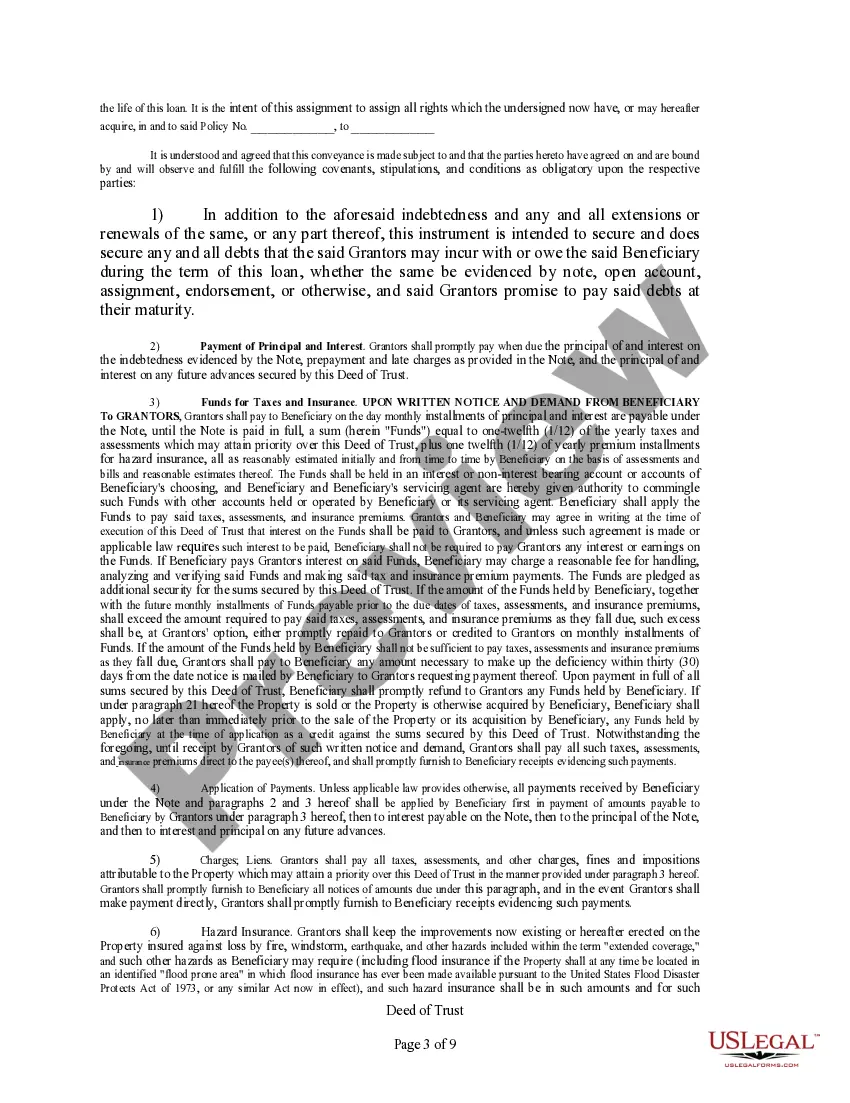
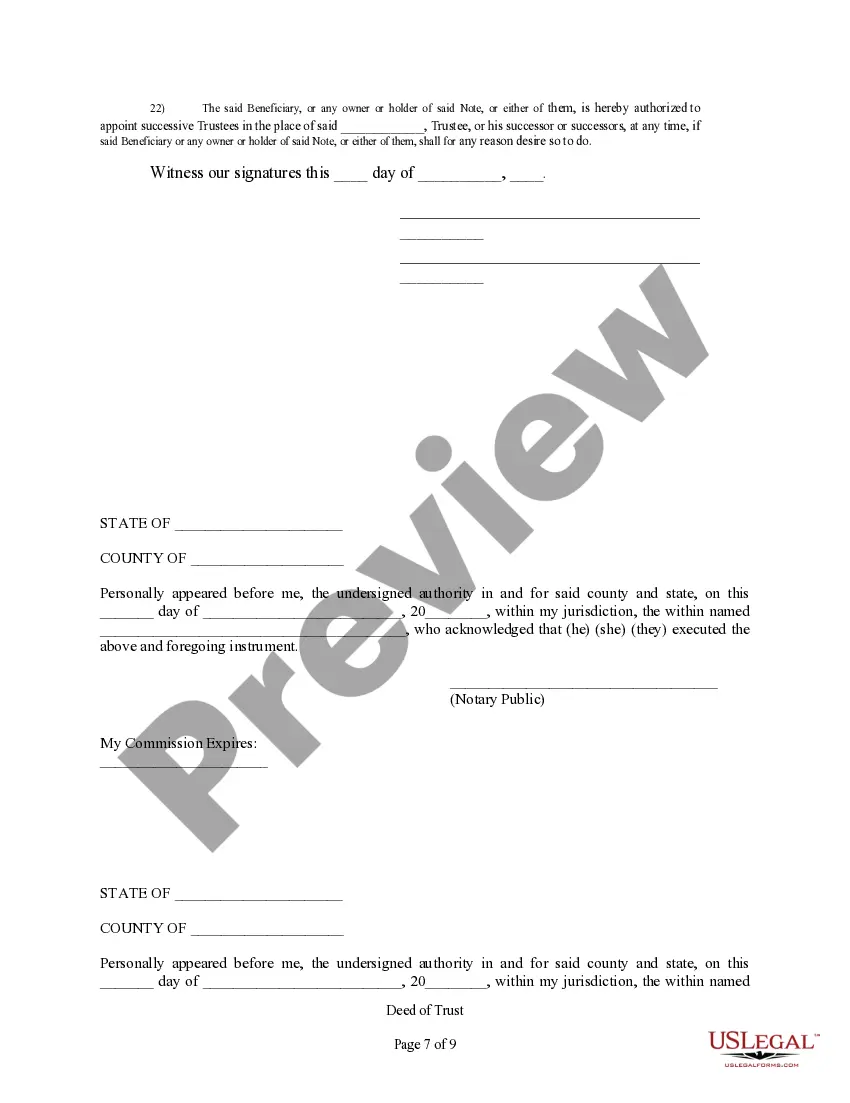
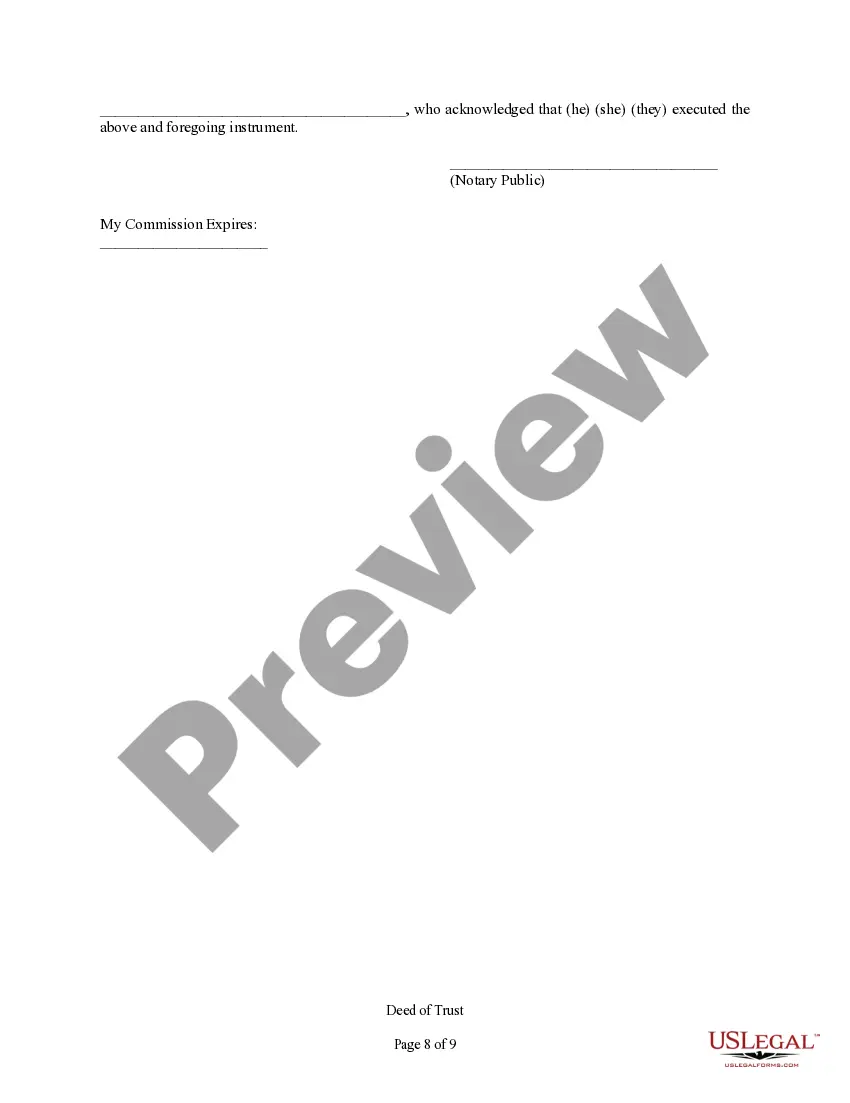
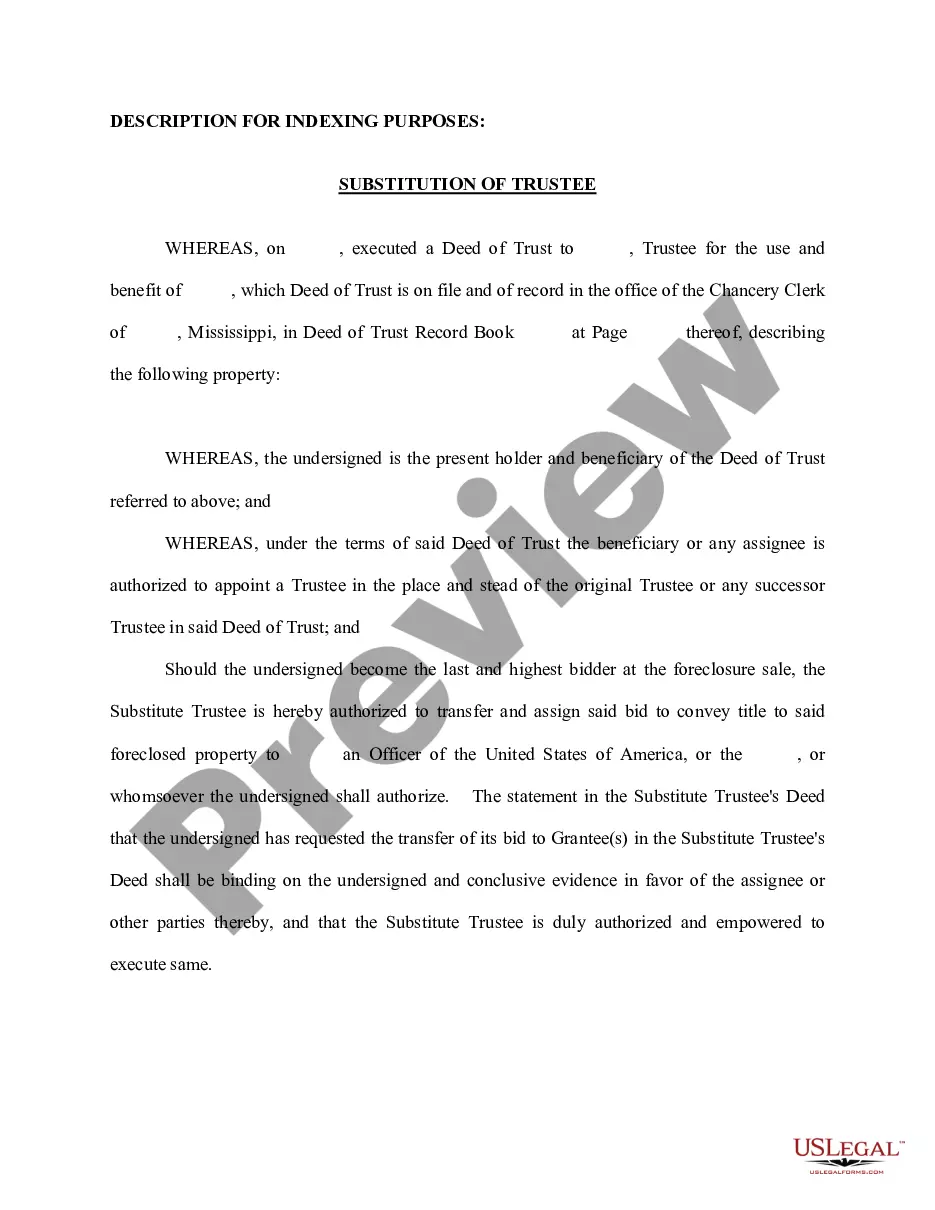
- Provisions for the appointment of a new trustee by the beneficiary.
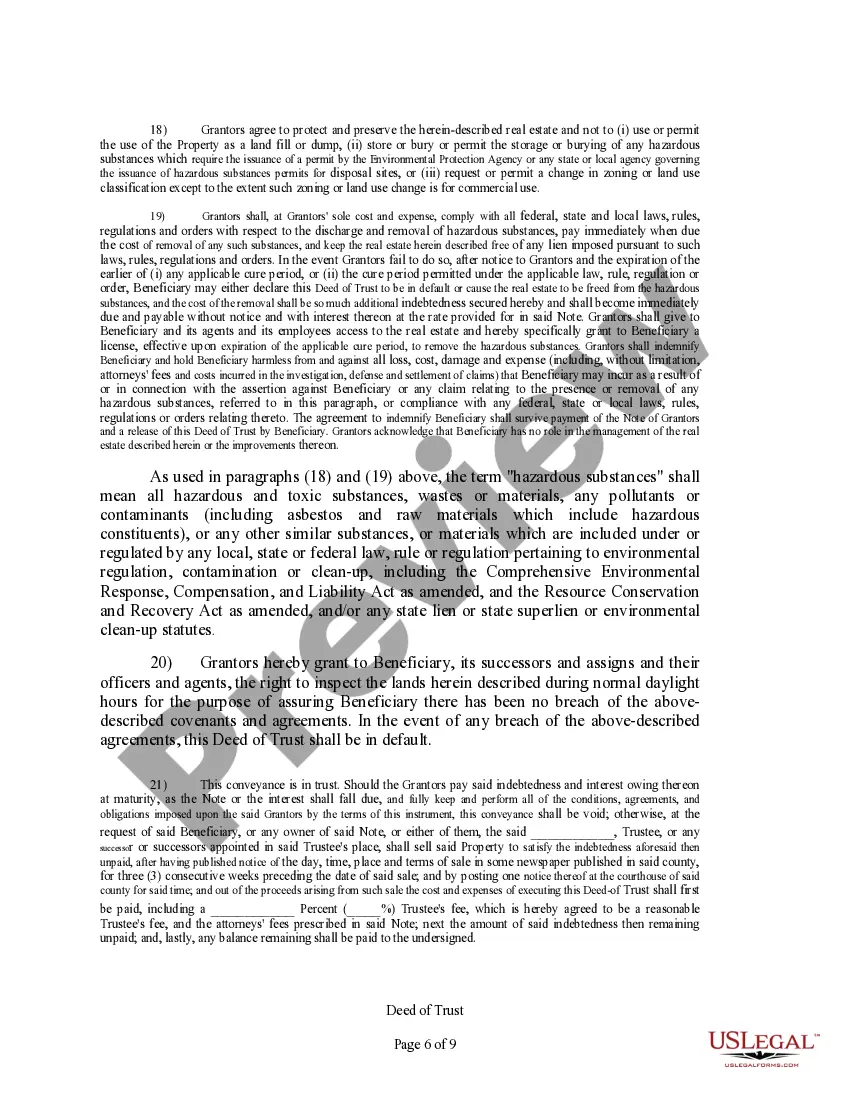
- Stipulations for resolving defaults and how the property will be managed or sold if necessary.

Common use cases
This form should be used when securing a loan against real property in Mississippi. It is particularly relevant for homeowners or property investors looking to formalize a loan agreement with a lender who requires a deed of trust as collateral. If you want the flexibility to substitute trustees during the term of the loan, this form is essential for meeting those needs.
Who can use this document
This form is intended for:
- Property owners seeking a loan secured by real estate.
- Lenders requiring security interests in real property.
- Trustees appointed to manage the trust on behalf of the lender.
- Legal advisors assisting clients with real estate financing solutions.
Steps to complete this form
- Identify the parties involved: grantors (borrowers), trustee, and beneficiary (lender).
- Specify the loan amount, interest rate, and repayment terms in the promissory note section.
- Provide a complete legal description of the property being secured by the deed of trust.
- Outline any additional covenants regarding payments, insurance, and property maintenance.
- Include the signature of all parties and the date of execution.
Notarization guidance
Notarization is required for this form to take effect. Our online notarization service, powered by Notarize, lets you verify and sign documents remotely through an encrypted video session, available 24/7.
Get your form ready online
Our built-in tools help you complete, sign, share, and store your documents in one place.
Make edits, fill in missing information, and update formatting in US Legal Forms—just like you would in MS Word.
Download a copy, print it, send it by email, or mail it via USPS—whatever works best for your next step.
Sign and collect signatures with our SignNow integration. Send to multiple recipients, set reminders, and more. Go Premium to unlock E-Sign.
If this form requires notarization, complete it online through a secure video call—no need to meet a notary in person or wait for an appointment.
We protect your documents and personal data by following strict security and privacy standards.

Make edits, fill in missing information, and update formatting in US Legal Forms—just like you would in MS Word.

Download a copy, print it, send it by email, or mail it via USPS—whatever works best for your next step.

Sign and collect signatures with our SignNow integration. Send to multiple recipients, set reminders, and more. Go Premium to unlock E-Sign.

If this form requires notarization, complete it online through a secure video call—no need to meet a notary in person or wait for an appointment.

We protect your documents and personal data by following strict security and privacy standards.
Typical mistakes to avoid
- Failing to accurately describe the property being secured.
- Not including all necessary parties' signatures.
- Overlooking state-specific requirements for notarization or recording.
- Misunderstanding the terms of the promissory note, particularly regarding payments.
Benefits of using this form online
- Convenient access to the form anytime and anywhere.
- Easy to download and customize as needed for your specific situation.
- Reliable templates drafted by licensed attorneys ensure compliance with legal standards.
- Secure storage of completed documents for future reference.
Looking for another form?

Form popularity
FAQ
Like all deeds, these two legal documents are both used to transfer titles from one owner to another. A warranty deed protects property owners from future claims that someone else actually owns a portion (or all) of their property, while trustee deeds protect lenders when borrowers default on their mortgage loans.
A trustee deedsometimes called a deed of trust or a trust deedis a legal document created when someone purchases real estate in a trust deed state, such as California (check your local laws to see what is required in your state). A trust deed is used in place of a mortgage.
A Trustee's Deed Upon Sale, also known as a Trustee's Deed Under Sale or a Trustee's Deed is a deed of foreclosure. This deed is prepared after a property's foreclosure sale and recorded in the county were the property is located.The property may be in default on taxes, have mechanic's liens and/or other encumbrances.
Some use deeds of trust instead, which are similar documents, but they have some fundamental differences.With a deed of trust, however, the lender must act through a go-between called the trustee. The beneficiary and the trustee can't be the same person or entity.
Only until the debt is paid off by the borrower can a deed of reconveyance then be used to clear the deed of trust from the title to the property. The document is signed by the trustee, whose signature must be notarized.
Giving the wrong legal address for the property or the wrong amount of the debt can render the deed unenforceable. In some cases, the error is easy to fix, and the court will rule the deed is enforceable.
A substitution of trustee is a legal document that provides public notice regarding a foreclosure. California is one of several states that allows for mortgage foreclosure through a private transaction called a trustee's sale.
The trustee will then issue a reconveyance deed, which gives the legal title of the property to you.Instead, the original trustee, or sometimes the loan servicing company, will appoint a new Substitute Trustee to handle the foreclosure. To do this, they must file an Appointment of Substitute Trustees.
Some states have laws governing who may or may not serve as a trustee in a deed of trust. Generally, the trustee must be an attorney, title insurance company, trust company, bank, savings and loan, credit union, or other company specifically authorized by law to serve as a trustee.