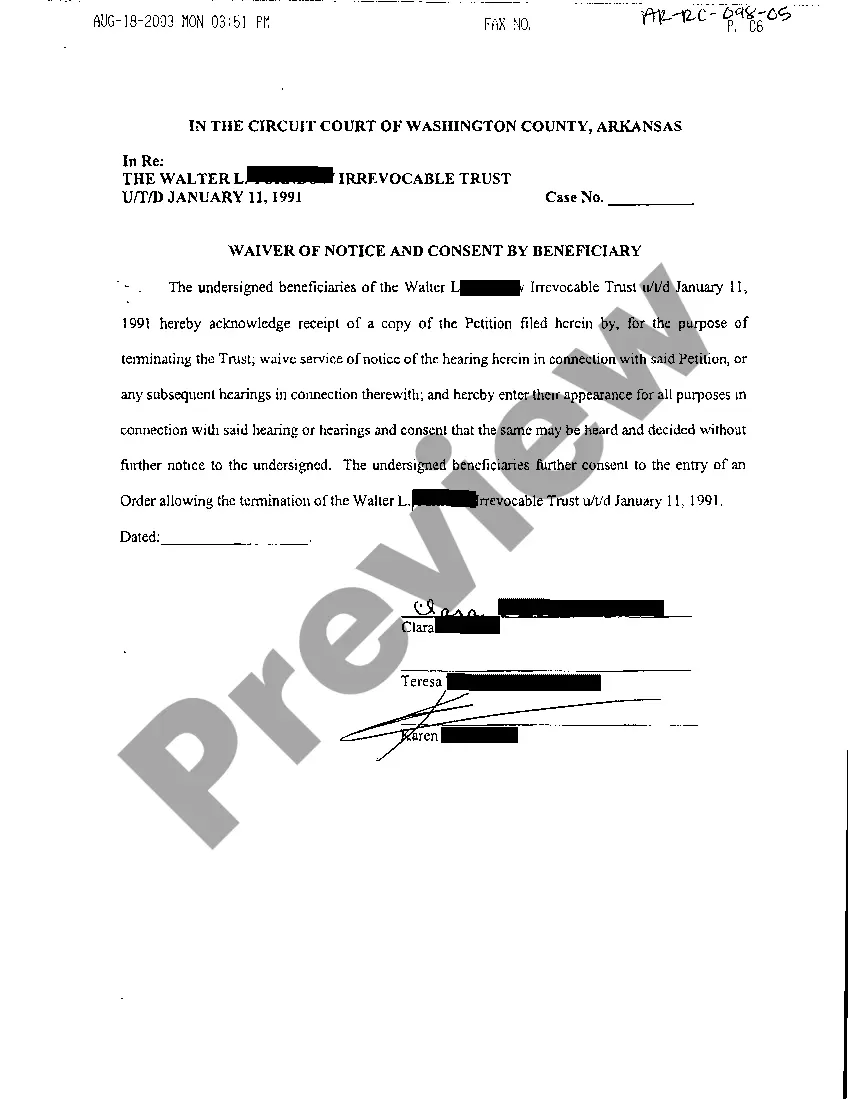
Mississippi Warranty Deed - Two Individual Grantors to Three Individual Grantees
Overview of this form
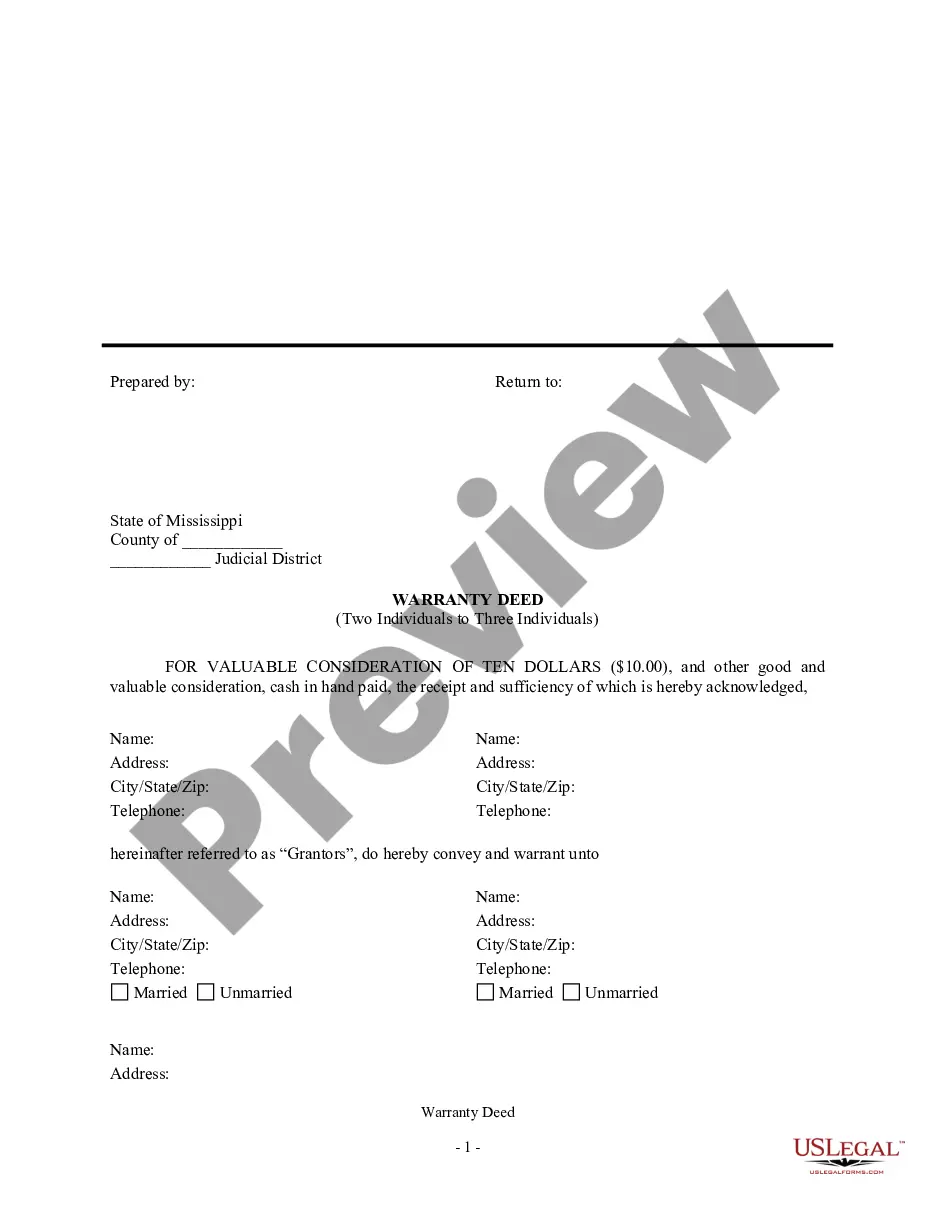
This Warranty Deed is a legal document that transfers property ownership from two individual Grantors to three individual Grantees. Unlike other deeds, this form specifically outlines the type of tenancy the Grantees will hold, either as tenants in common or joint tenants with the right of survivorship. This ensures that when one Grantee passes away, the surviving Grantees will retain ownership rights without the property passing through probate. This deed complies with all state statutory laws.
Key parts of this document
- Identification of the Grantors and Grantees, clearly naming the parties involved.
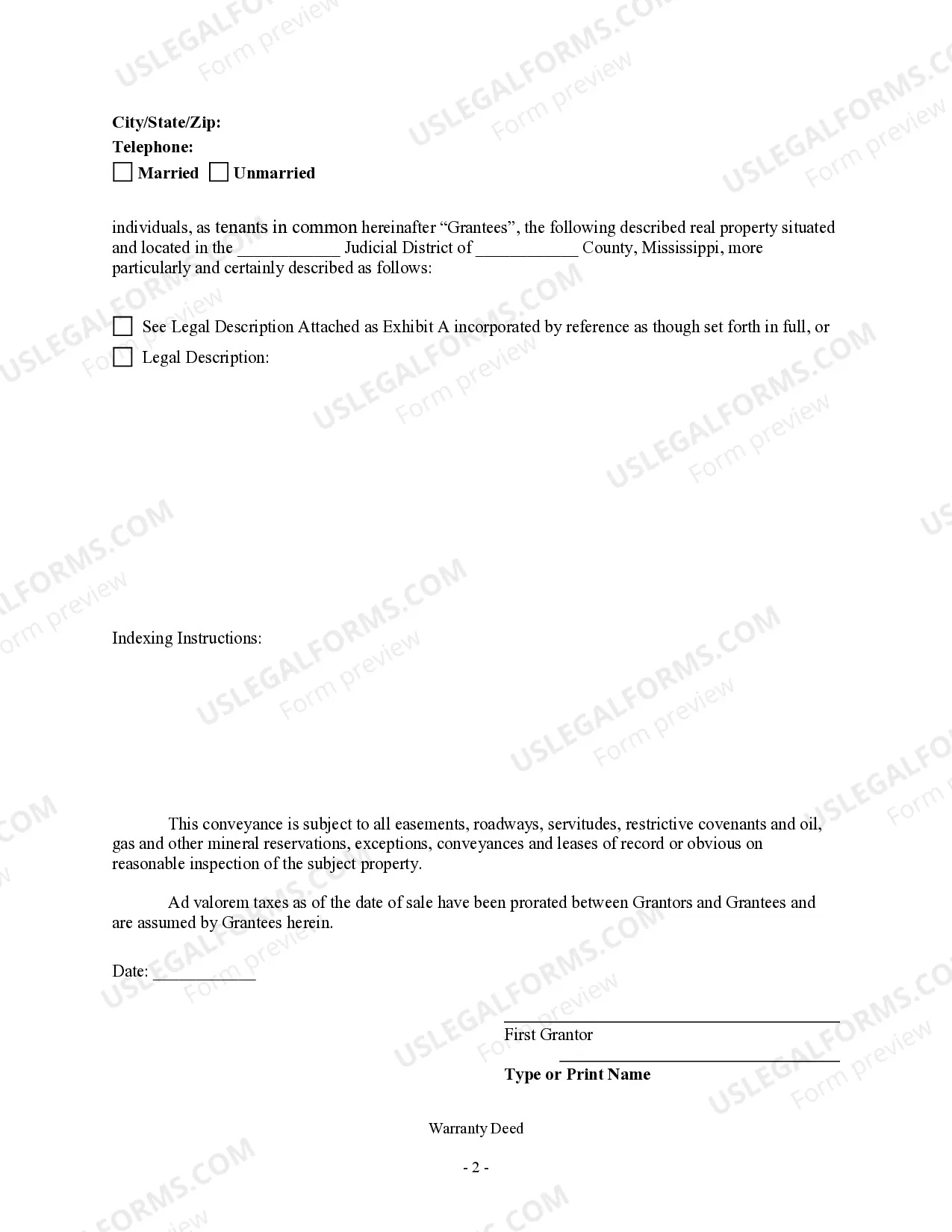
- Legal description of the property being transferred, typically included as an exhibit.
- Statement of consideration, outlining the value for the transaction, commonly set at ten dollars.
- Clauses outlining the type of tenancy among the Grantees, whether as tenants in common or joint tenants.
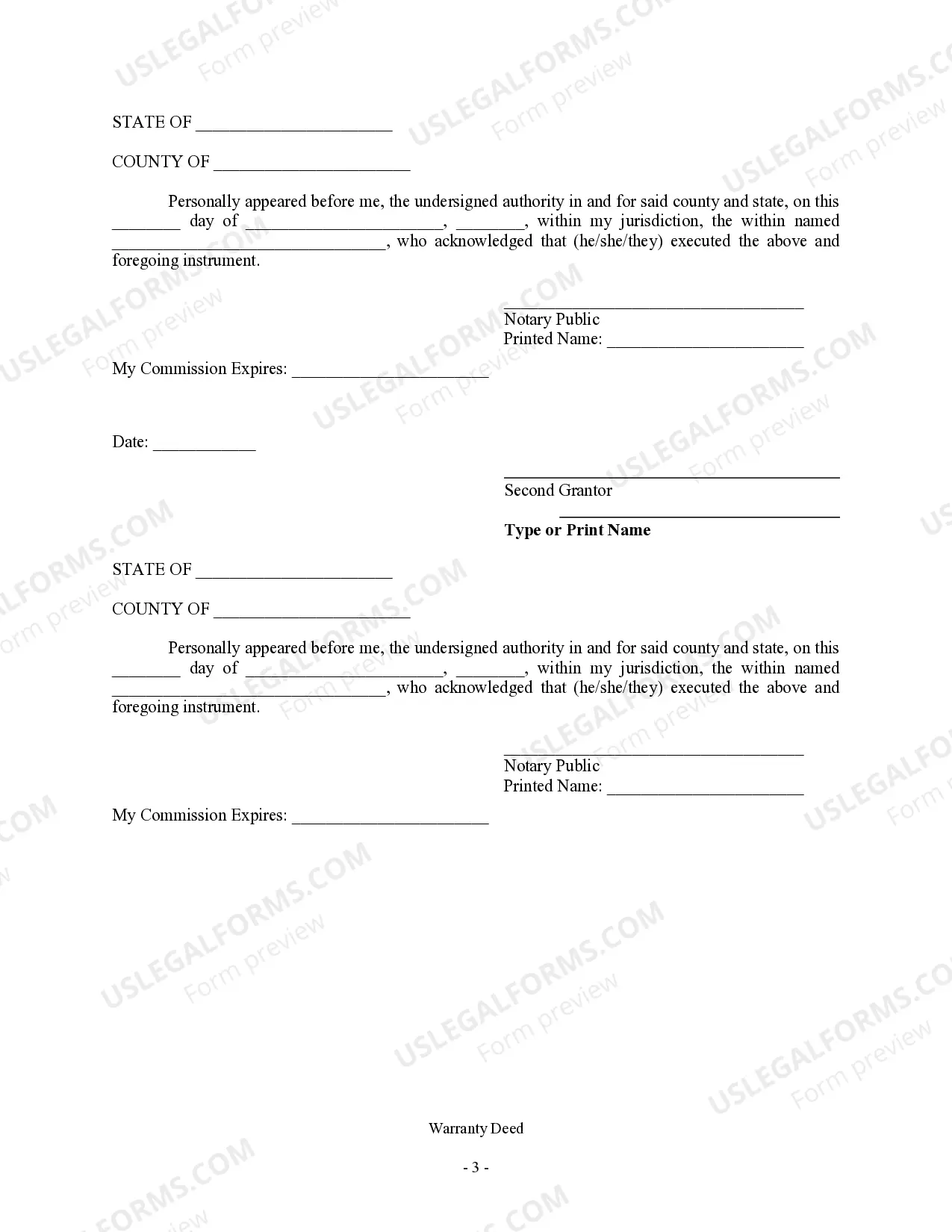
- Signature lines for both Grantors, ensuring their acknowledgment of the transfer.






Situations where this form applies
This form is essential when two individuals wish to transfer property to three individuals. It is suitable in situations like gifting property to family members, changing property ownership for estate planning purposes, or consolidating property among co-owners. This deed is particularly useful for ensuring that property rights are clear and legally recognized for the Grantees involved.
Who should use this form
- Individuals who are transferring property ownership from two people to three.
- Families engaging in estate planning to clarify property ownership.
- Co-owners of a property looking to solidify ownership agreements.
- Anyone needing a legally binding document that ensures the terms of property transfer are clear and enforceable.
How to prepare this document
- Identify the parties: Fill in the full names and addresses of the Grantors and Grantees.
- Specify the property: Attach a legal description of the property as Exhibit A.
- Enter the consideration amount: Typically set at ten dollars or a different amount if applicable.
- Select the type of tenancy: Decide whether the Grantees will hold the property as tenants in common or joint tenants.
- Sign and date the document: Ensure both Grantors sign to validate the deed before a notary if required.
Does this form need to be notarized?
This form does not typically require notarization unless specified by local law. However, having the document notarized can provide an extra layer of validation and can help in future legal situations.
Get your form ready online
Our built-in tools help you complete, sign, share, and store your documents in one place.
Make edits, fill in missing information, and update formatting in US Legal Forms—just like you would in MS Word.
Download a copy, print it, send it by email, or mail it via USPS—whatever works best for your next step.
Sign and collect signatures with our SignNow integration. Send to multiple recipients, set reminders, and more. Go Premium to unlock E-Sign.
If this form requires notarization, complete it online through a secure video call—no need to meet a notary in person or wait for an appointment.
We protect your documents and personal data by following strict security and privacy standards.

Make edits, fill in missing information, and update formatting in US Legal Forms—just like you would in MS Word.

Download a copy, print it, send it by email, or mail it via USPS—whatever works best for your next step.

Sign and collect signatures with our SignNow integration. Send to multiple recipients, set reminders, and more. Go Premium to unlock E-Sign.

If this form requires notarization, complete it online through a secure video call—no need to meet a notary in person or wait for an appointment.

We protect your documents and personal data by following strict security and privacy standards.
Typical mistakes to avoid
- Failing to provide a complete and accurate legal description of the property.
- Not identifying all Granters and Grantees correctly, which could invalidate the deed.
- Leaving out the consideration amount or incorrectly stating it.
- Neglecting to specify the type of tenancy, leading to potential future disputes.
- Failing to sign the document or obtain notarization if required by state law.
Benefits of completing this form online
- Convenience: Complete the form at your own pace and from the comfort of your home.
- Editability: Easily update any information as needed before finalizing the document.
- Reliability: Guaranteed to meet legal standards with forms drafted by licensed attorneys.
Looking for another form?
Form popularity
FAQ
If you've recently married and already own a home or other real estate, you may want to add your new spouse to the deed for your property so the two of you own it jointly. To add a spouse to a deed, all you have to do is literally fill out, sign and record a new deed in your county recorder's office.
Adding someone to your house deed requires the filing of a legal form known as a quitclaim deed. When executed and notarized, the quitclaim deed legally overrides the current deed to your home. By filing the quitclaim deed, you can add someone to the title of your home, in effect transferring a share of ownership.
Yes you can. This is called a transfer of equity but you will need the permission of your lender. If you are not married or in a civil partnership you may wish to consider creating a deed of trust and a living together agreement which we can explain to you.
Adding someone to your house deed requires the filing of a legal form known as a quitclaim deed. When executed and notarized, the quitclaim deed legally overrides the current deed to your home. By filing the quitclaim deed, you can add someone to the title of your home, in effect transferring a share of ownership.
Once signed and notarized, a Mississippi deed must be recorded. The deed must be presented to the Recorder of Deeds in the county where the property is located. The transfer takes effect when signed and accepted by the grantee. However, recording provides notice to the public that the property was transferred.
To add a co-owner, the bank would have to create a new home loan agreement, which must be registered after paying the due stamp duty and registration charges. The bank would also insist on making the co-owner a co-borrower in the home loan applicable.
It is possible to be named on the title deed of a home without being on the mortgage. However, doing so assumes risks of ownership because the title is not free and clear of liens and possible other encumbrances. Free and clear means that no one else has rights to the title above the owner.
An affiant is a person who signs the affidavit, however, a notary is a person in front of whom the affidavit must be signed by the affiant. Furthermore, a notary must also verify the facts of the affidavit by signing it and then sealing it. In fact, he's a sort of witness for an affidavit as well as the affiant.