Mississippi Warranty Deed - Five Individuals to One Individual
What is this form?
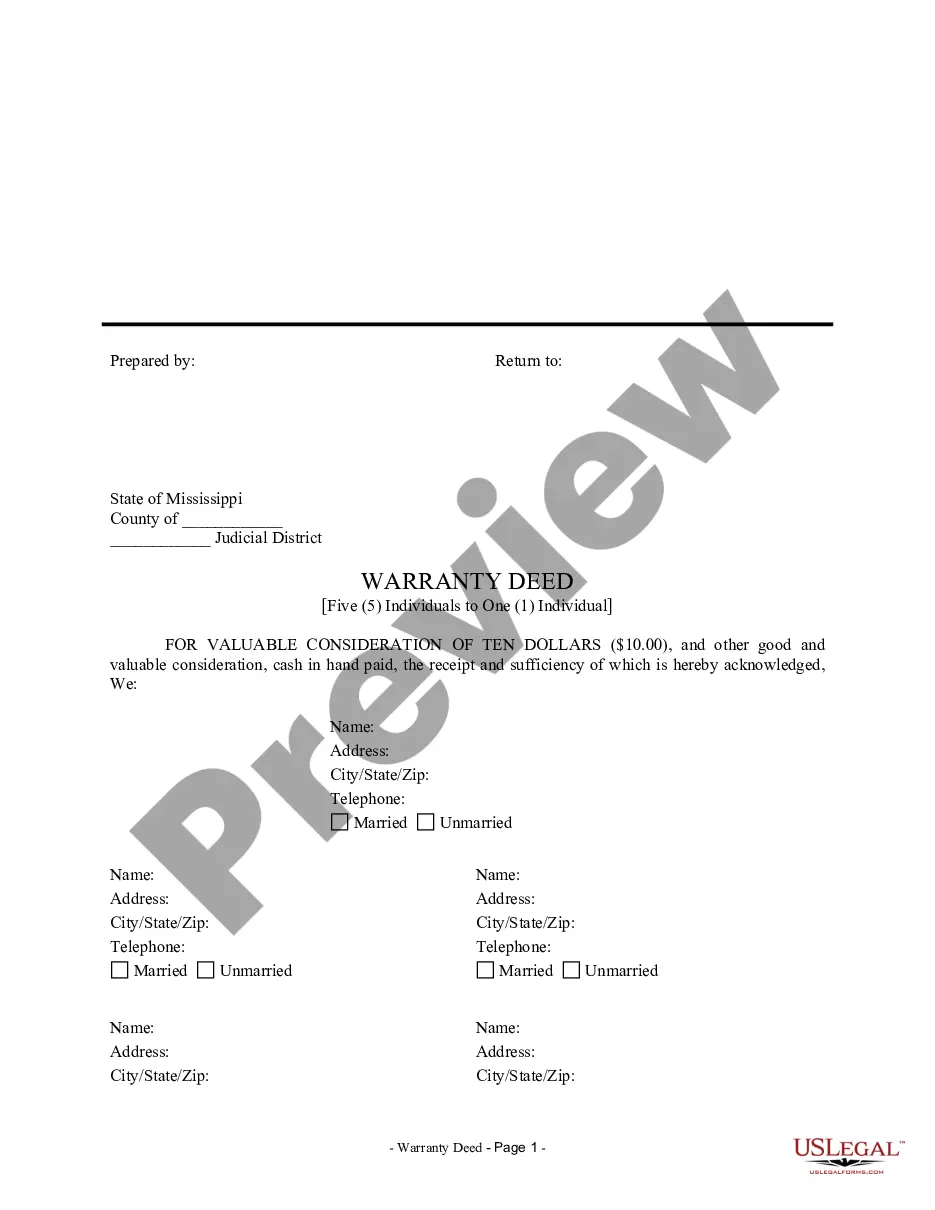
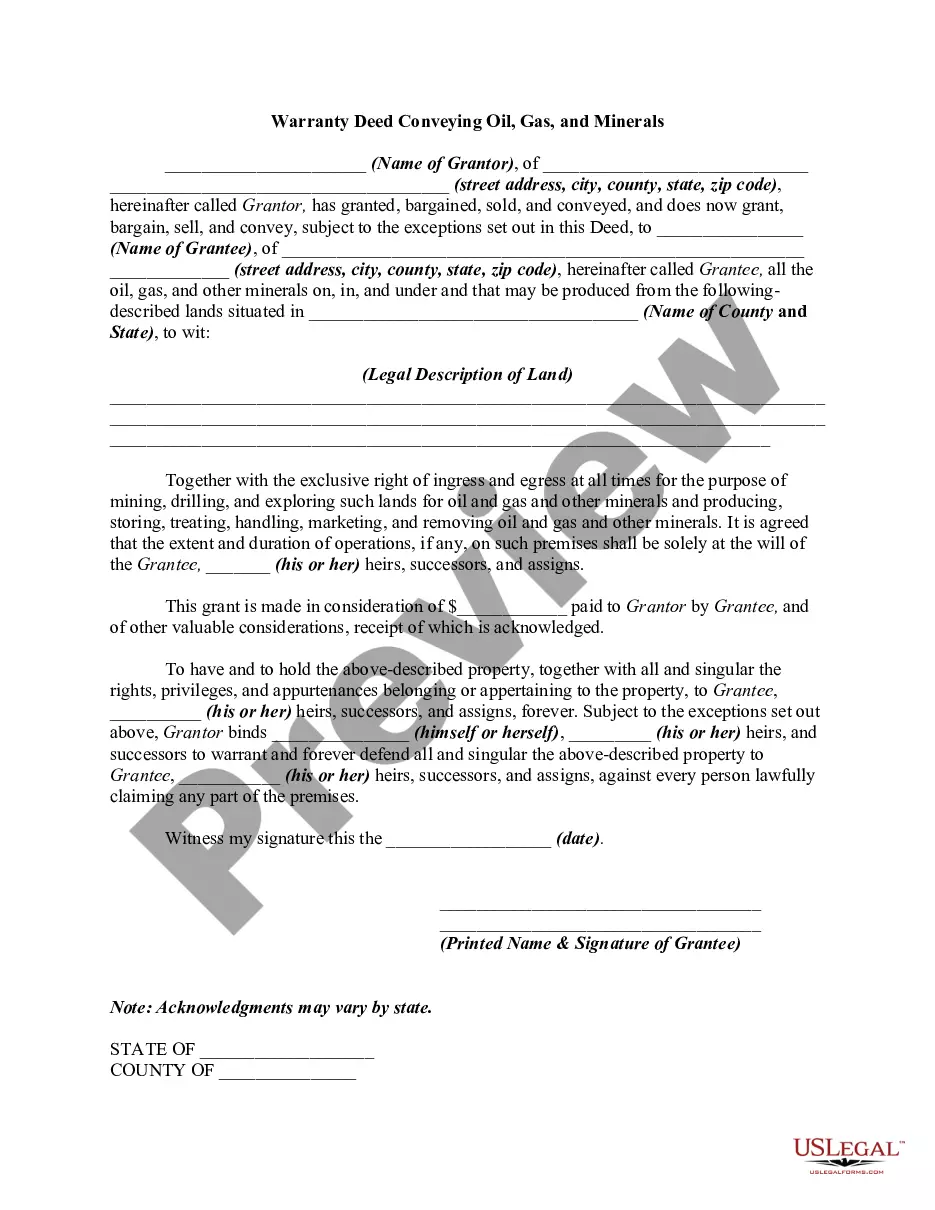
The Warranty Deed - Five Individuals to One Individual is a legal document used to transfer property ownership from five grantors to a single grantee. It is crucial in real estate transactions, ensuring that the title is clear of any claims, so the grantee receives full ownership rights. Unlike other deeds, such as quitclaim deeds, a warranty deed provides a guarantee that the grantors hold clear title to the property and have the right to convey it.
Key parts of this document
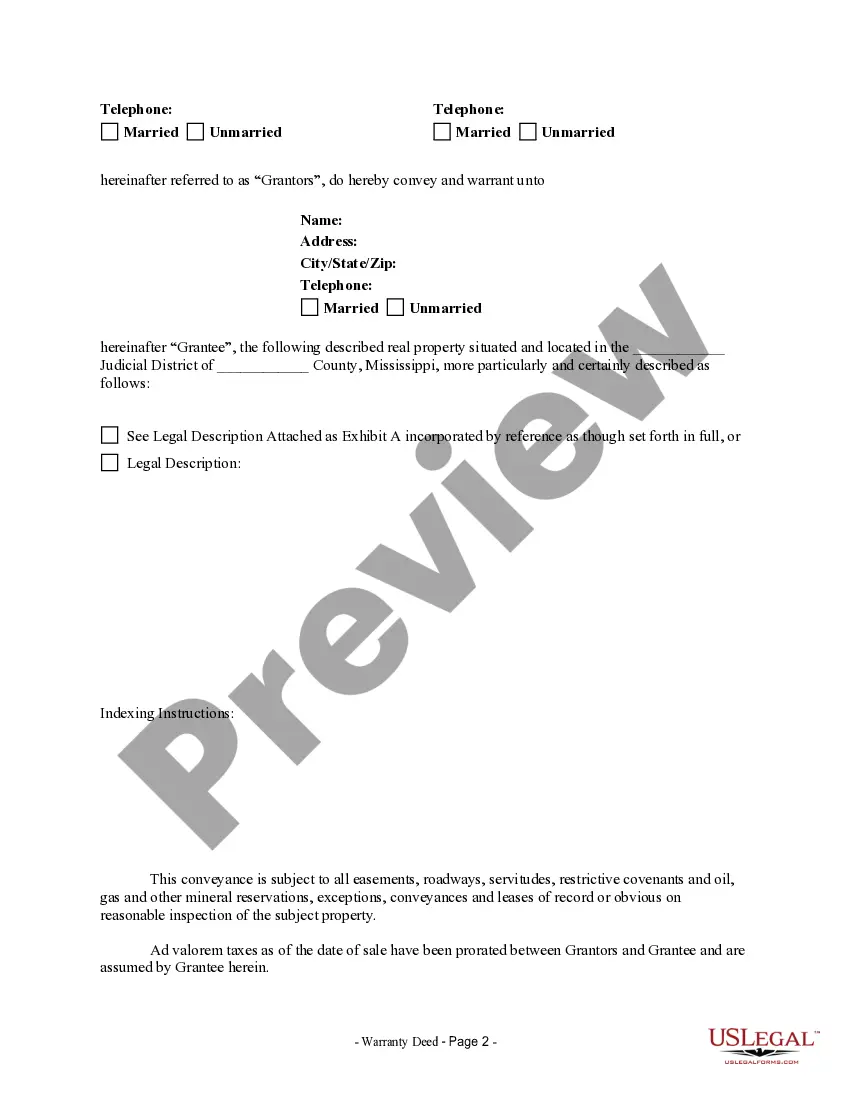
- Identification of the Grantors and Grantee: Names and addresses of the individuals involved.
- Property Description: A detailed description of the property being transferred, typically referenced in an attached legal description.
- Consideration Statement: A declaration of the monetary value exchanged (e.g., ten dollars).
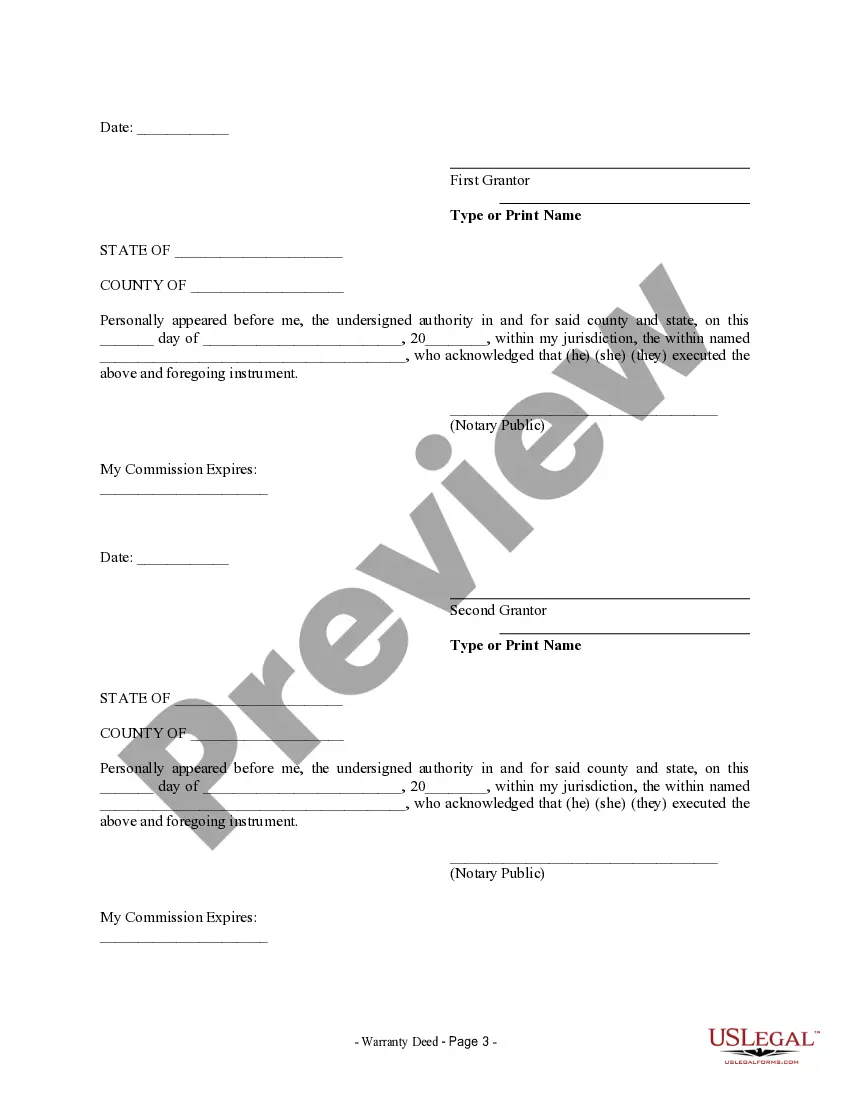
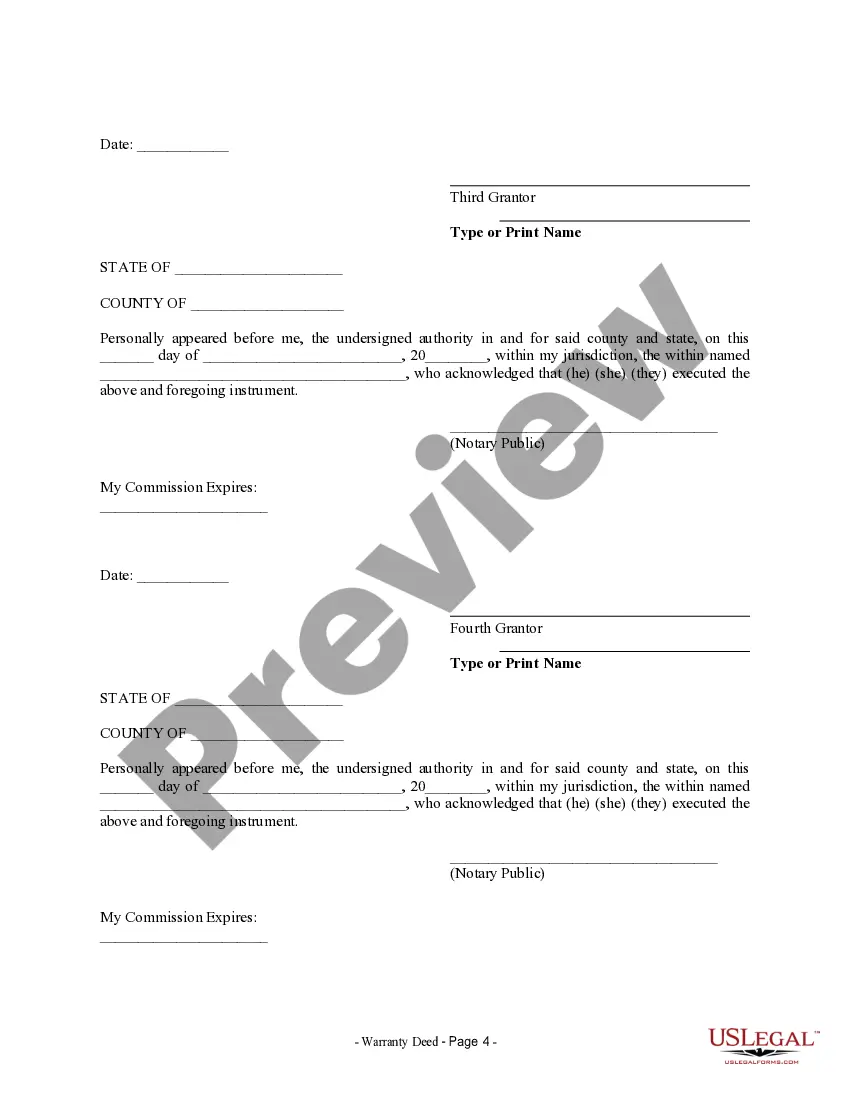
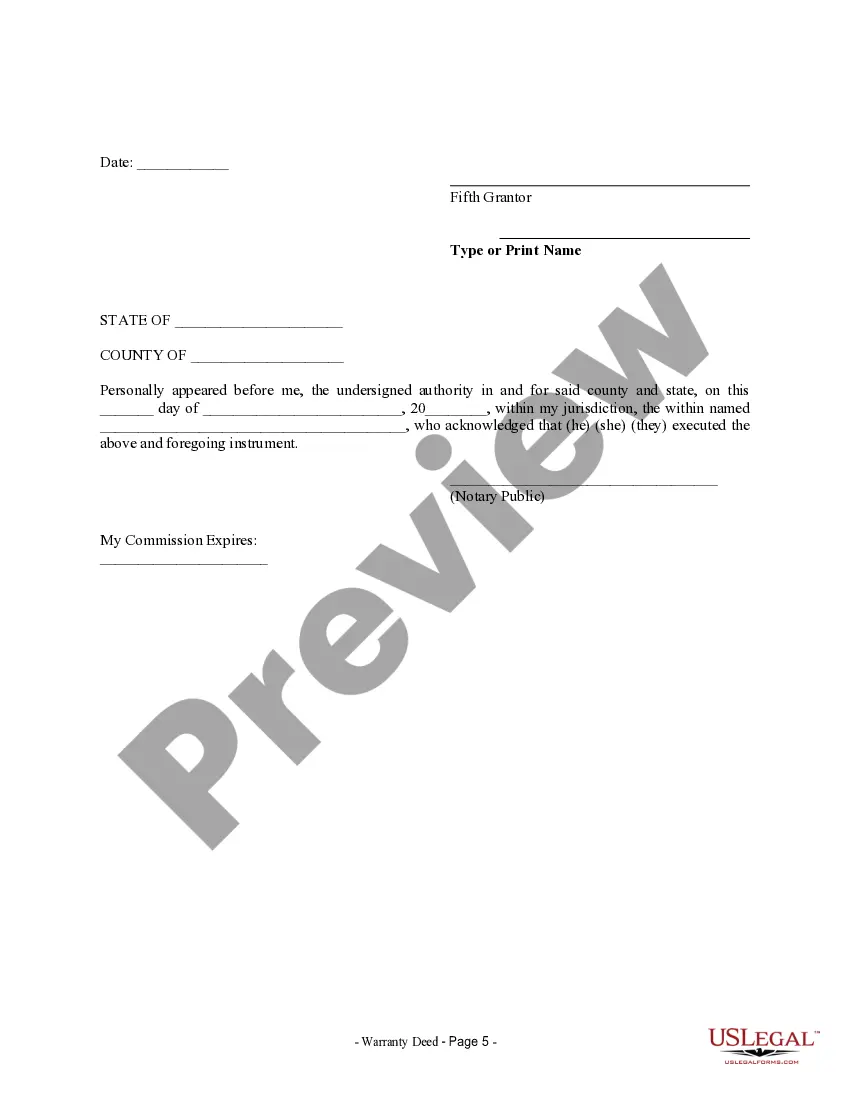
- Signatures: Required signatures from all grantors to validate the deed.
- Notarization: A section for a notary public to sign and seal the document, confirming the identities of the signers.



When to use this form
This form is useful when five individuals wish to collectively transfer their property ownership to one person. Common scenarios include family members transferring inherited property, business partners consolidating ownership, or multiple owners selling their interest to a single buyer. It provides legal assurance to the grantee regarding their property rights.
Intended users of this form
- Individuals or families involved in transferring property ownership.
- Business partners wanting to give their ownership stake to one party.
- Real estate professionals facilitating transactions between multiple owners and a single buyer.
How to complete this form
- Identify the parties: Fill in the names and addresses of the five individuals (grantors) and the single individual (grantee).
- Specify the property: Include a clear and detailed description of the property being conveyed.
- Enter the consideration: State the amount being exchanged, typically ten dollars.
- Obtain signatures: Ensure all grantors sign the document to validate the transfer.
- Notarize the deed: Have the deed notarized to meet legal requirements for recording.
Is notarization required?
Notarization is required for this form to take effect. Our online notarization service, powered by Notarize, lets you verify and sign documents remotely through an encrypted video session, available 24/7.
Get your form ready online
Our built-in tools help you complete, sign, share, and store your documents in one place.
Make edits, fill in missing information, and update formatting in US Legal Forms—just like you would in MS Word.
Download a copy, print it, send it by email, or mail it via USPS—whatever works best for your next step.
Sign and collect signatures with our SignNow integration. Send to multiple recipients, set reminders, and more. Go Premium to unlock E-Sign.
If this form requires notarization, complete it online through a secure video call—no need to meet a notary in person or wait for an appointment.
We protect your documents and personal data by following strict security and privacy standards.

Make edits, fill in missing information, and update formatting in US Legal Forms—just like you would in MS Word.

Download a copy, print it, send it by email, or mail it via USPS—whatever works best for your next step.

Sign and collect signatures with our SignNow integration. Send to multiple recipients, set reminders, and more. Go Premium to unlock E-Sign.

If this form requires notarization, complete it online through a secure video call—no need to meet a notary in person or wait for an appointment.

We protect your documents and personal data by following strict security and privacy standards.
Typical mistakes to avoid
- Failing to include all grantors' names, which can invalidate the deed.
- Not providing a precise legal description of the property.
- Omitting the consideration, leading to potential disputes.
- Incorrectly notarizing the document or failing to have it notarized.
Why use this form online
- Convenience: Downloadable forms can be completed at your own pace.
- Reliable: Documents are drafted and reviewed by licensed attorneys to ensure legality.
- Editability: Forms can be easily modified to suit your specific needs before finalizing.
Main things to remember
- This Warranty Deed enables the transfer of property from multiple Grantors to one Grantee.
- All parties involved must sign the document, and notarization is required.
- Ensure the legal description of the property is accurate and complete.
Looking for another form?
Form popularity
FAQ
Discuss property ownership interests. Access a copy of your title deed. Complete, review and sign the quitclaim or warranty form. Submit the quitclaim or warranty form. Request a certified copy of your quitclaim or warranty deed.
Generally, someone else cannot remove you from title without your consent and/or knowledge. You should speak to a local real estate attorney to see how to return your name to title and how it was removed in the first place.
A quitclaim deed transfers title but makes no promises at all about the owner's title.A person who signs a quitclaim deed to transfer property they do not own results in no title at all being transferred since there is no actual ownership interest. The quitclaim deed only transfers the type of title you own.
A warranty deed, also known as a general warranty deed, is a legal real estate document between the seller (grantor) and the buyer (grantee). The deed protects the buyer by pledging that the seller holds clear title to the property and there are no encumbrances, outstanding liens, or mortgages against it.
Fill in the application to change the register. You'll need to fill in the application to change the register, known as form AP1. Sign the transfer deed. Take form ID1 to a solicitors' firm. Send the completed forms to HM Land Registry.
The Mississippi general warranty deed is used to transfer real property in Mississippi with a guarantee from the seller or grantor that the property is free from hidden claims against the title and that the grantor has the legal authority to sell the property.
If you do not have any loan or mortgage over the said property, then the easiest way to remove your name from the joint names, is if you were to execute a release deed or relinquishment deed in favour of your wife with respect to 50% share that you are the owner of, then she in turn becomes the full and absolute owner
Misconceptions and Realities. It is a misconception that someone can be removed from the deed. Nor can a co-owner simply take away another party's interest in a property by executing a new deed without that other party. In short, no one can be passively removed from a title.
Quitclaim Deeds are used when the transfer of ownership in the property does not occur as the result of a traditional sale.Under a warranty deed, if it turns out that the property is not what the seller promised or there's an uncleared lien or other block to the title, the buyer can sue the seller and recover damages.