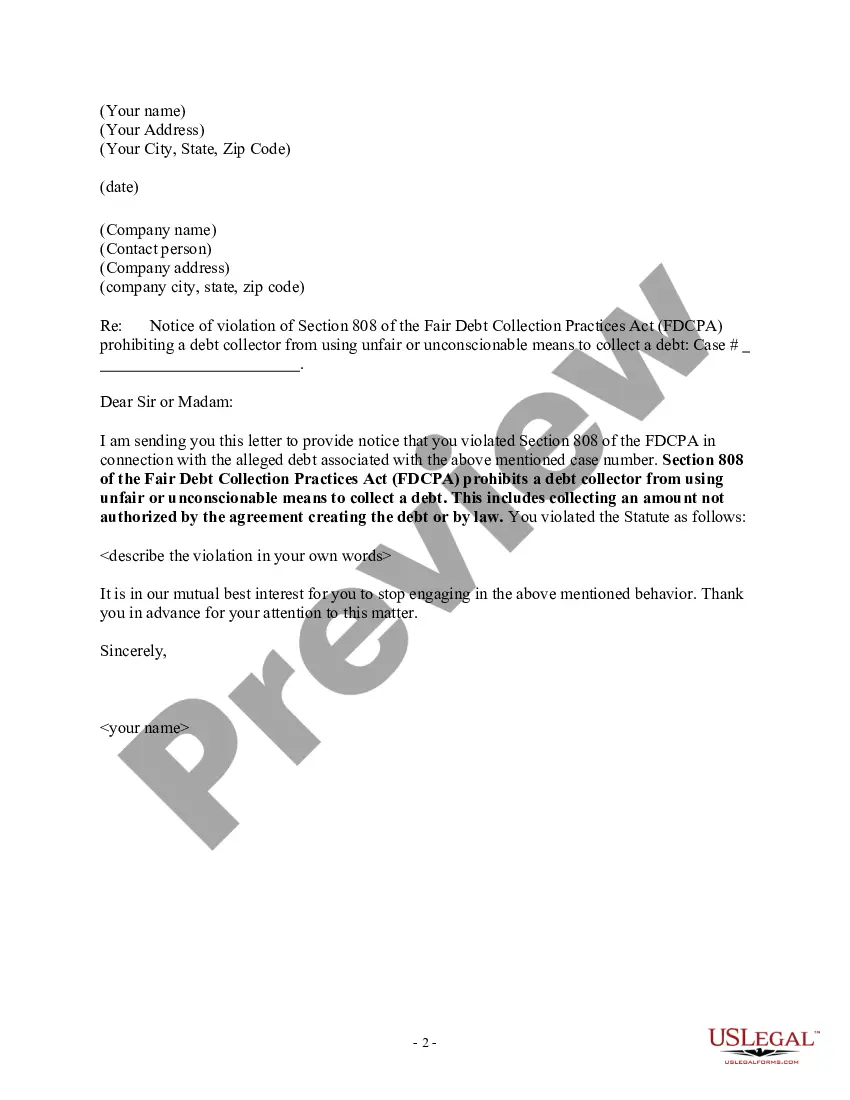
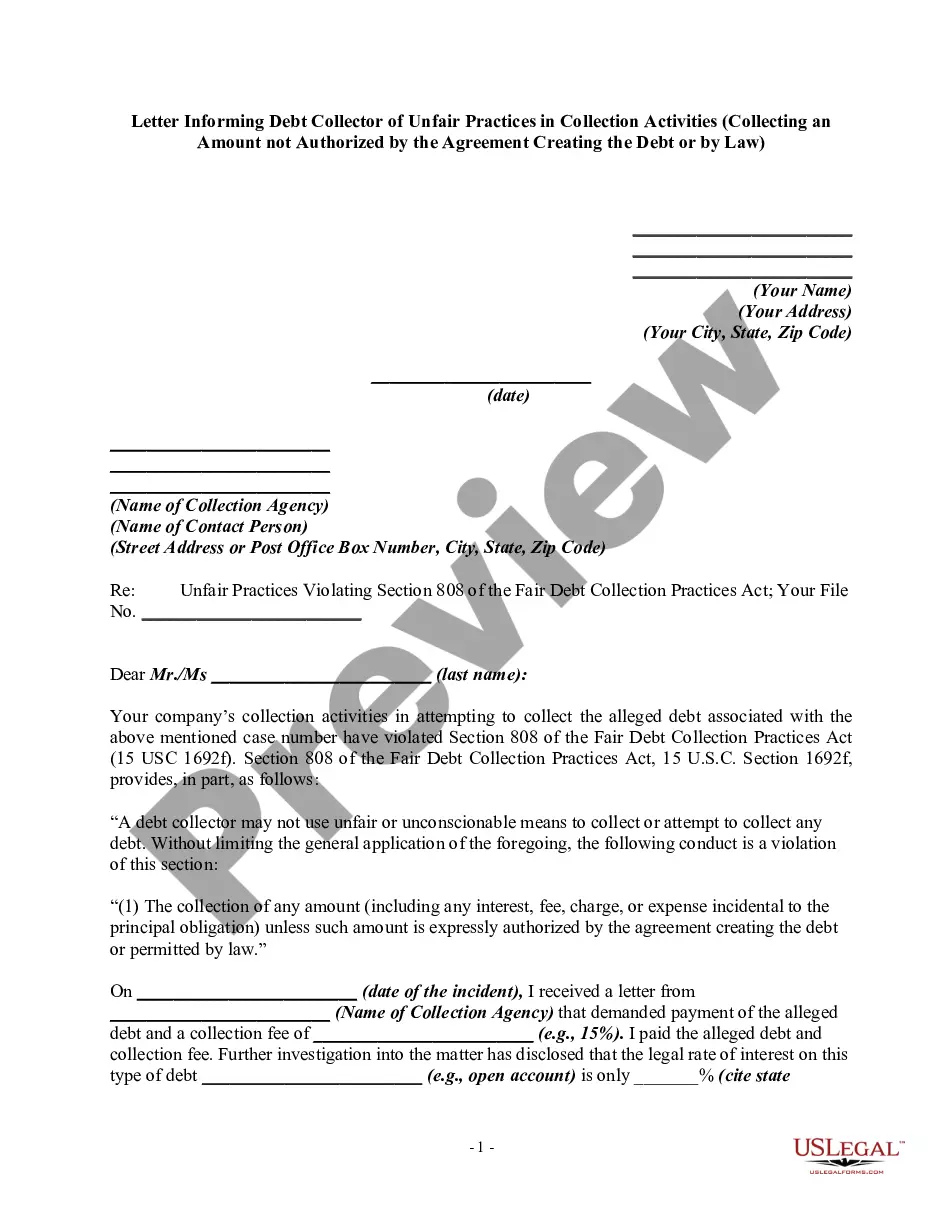
A debt collector may not use unfair or unconscionable means to collect a debt. This includes collecting an amount not authorized by the agreement creating the debt or by law.
Missouri Notice to Debt Collector - Collecting an Amount Not Authorized by Agreement or by Law
Category:
State:
Multi-State
Control #:
US-DCPA-42
Format:
Word;
Rich Text
Instant download
Description
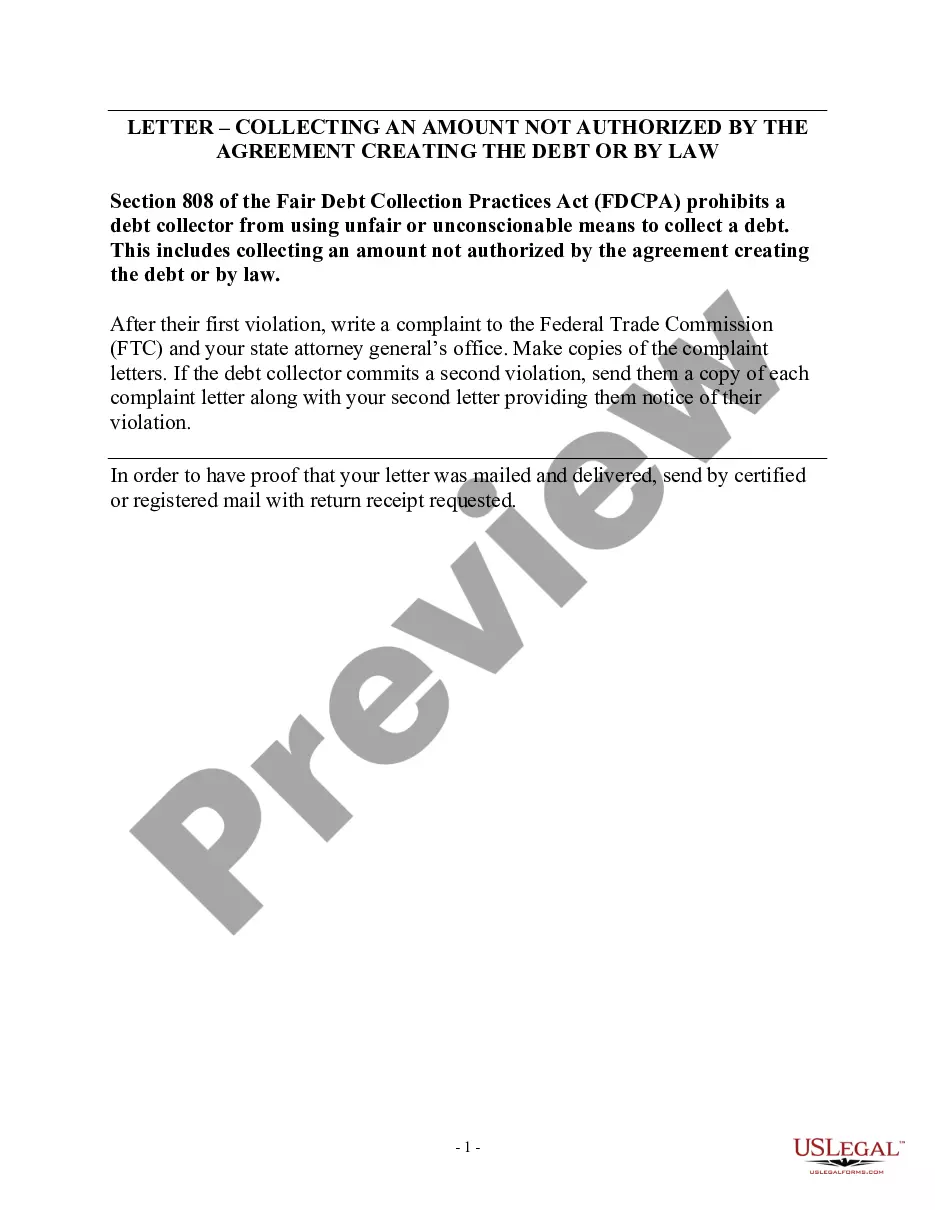
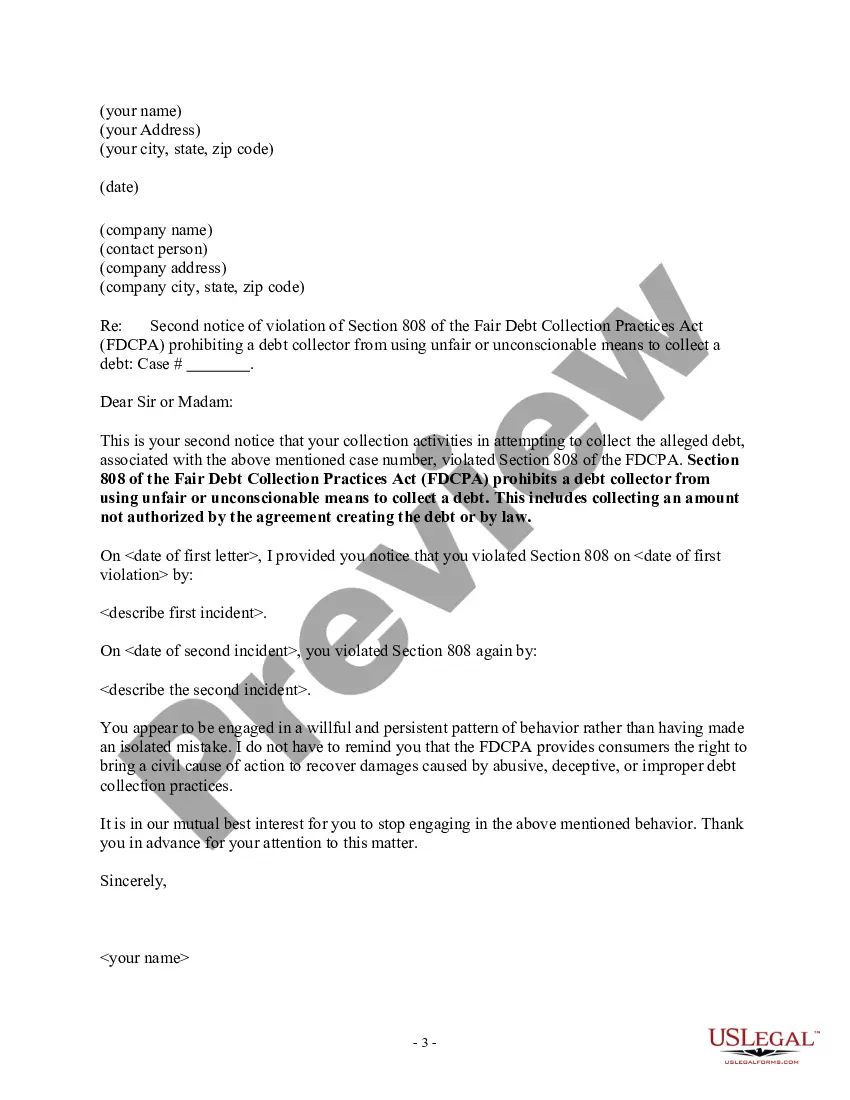
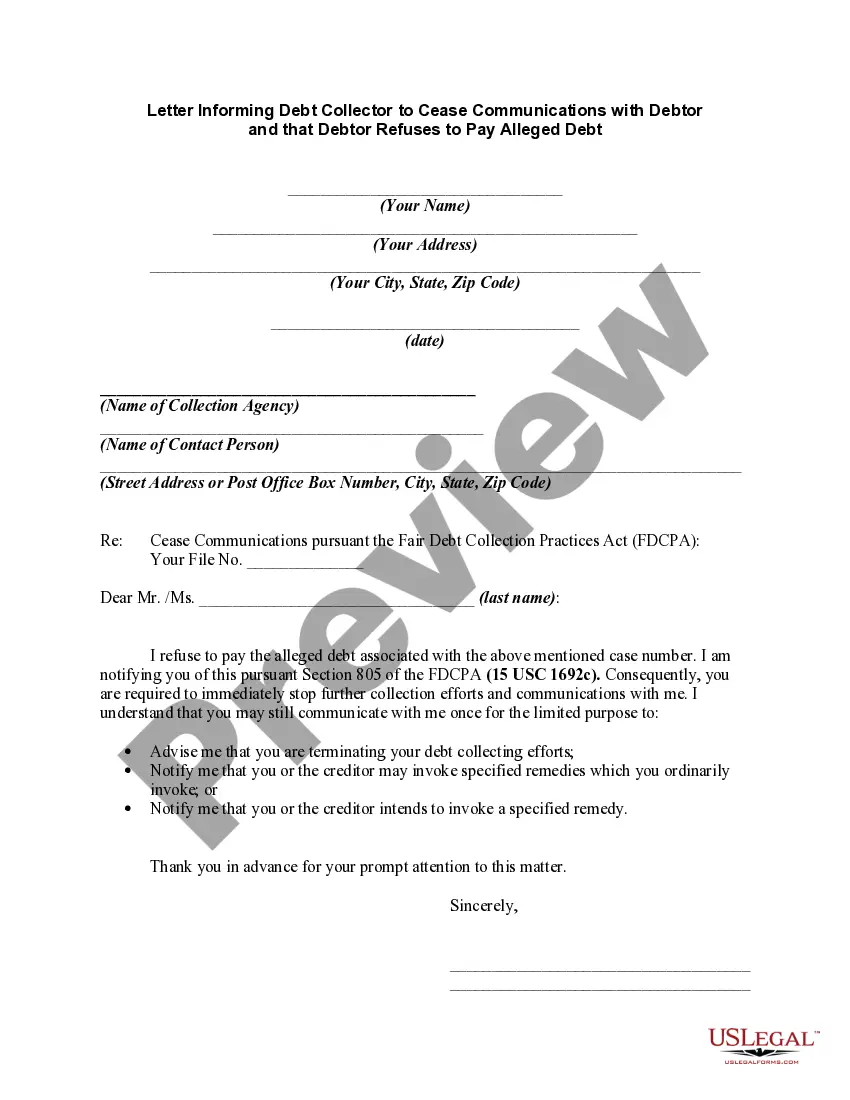
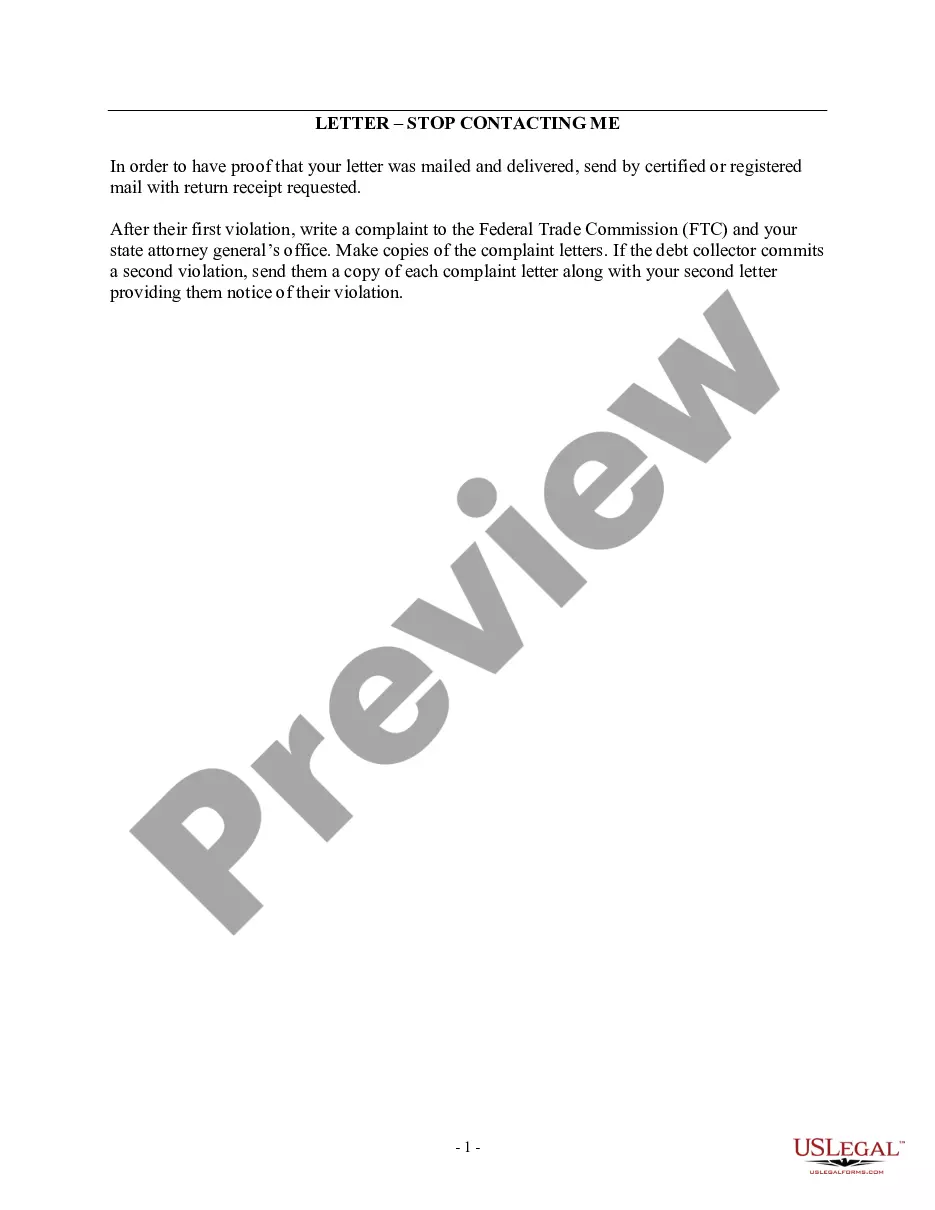
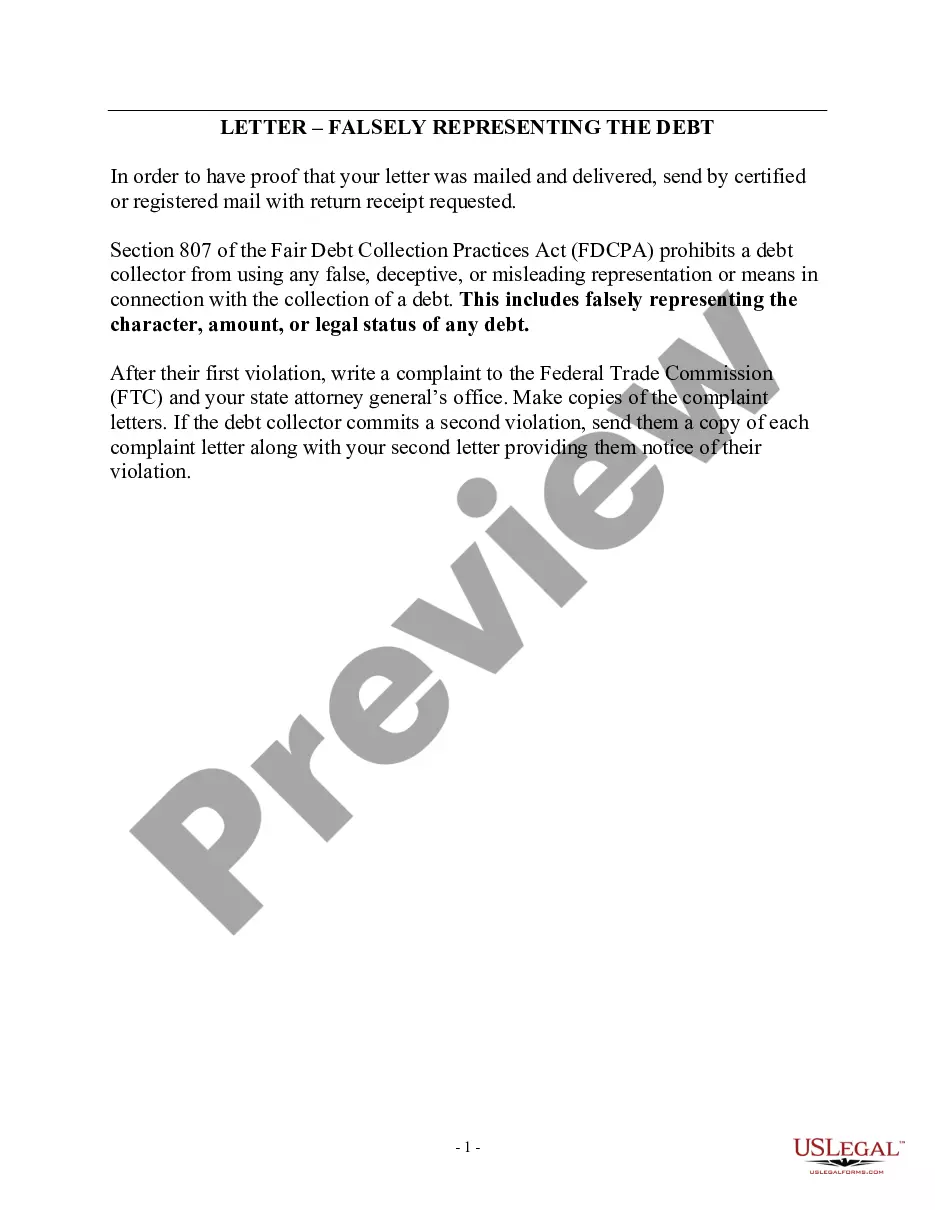
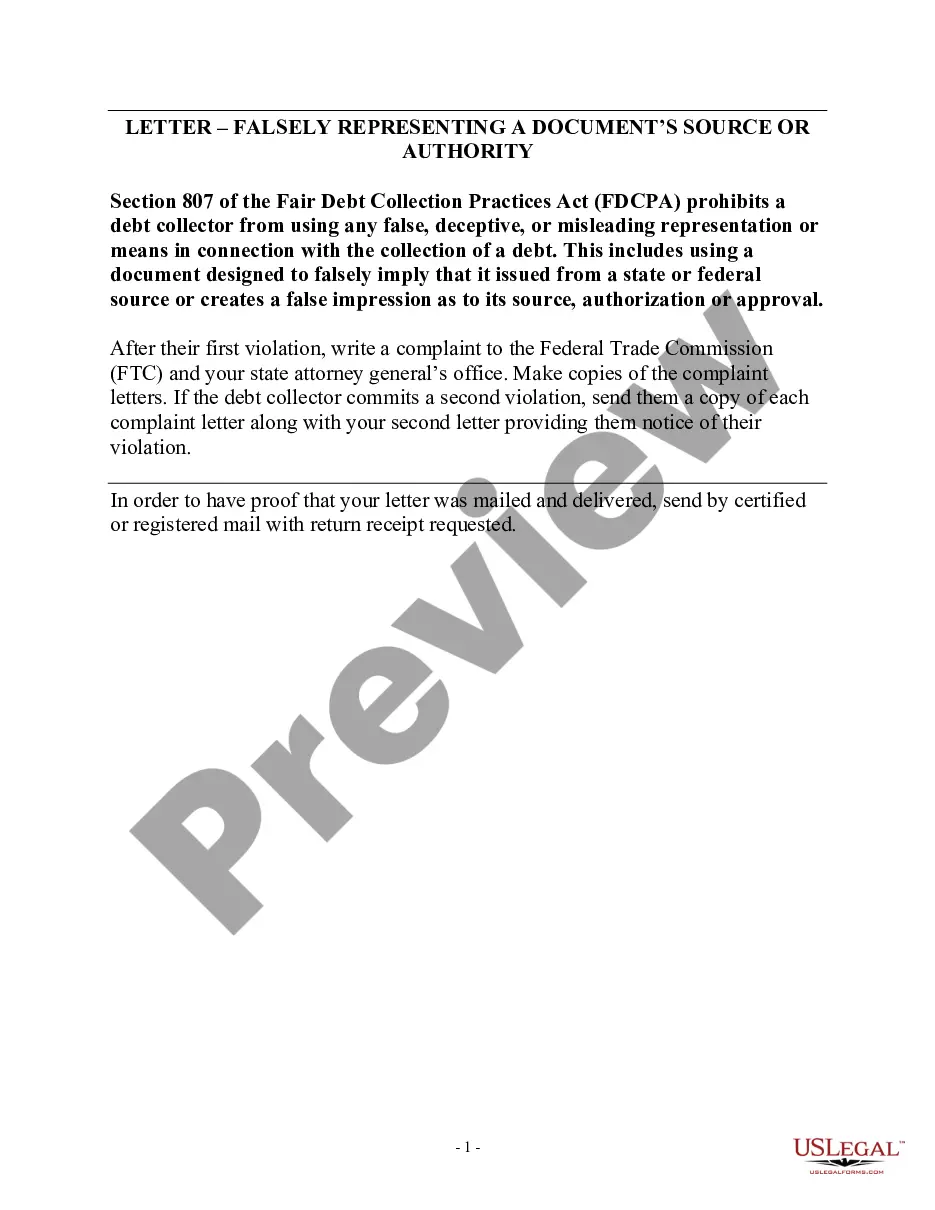
Use this form to notify a debt collector they violated the Fair Debt Collection Practices Act (FDCPA). Receiving notice from a consumer makes it more likely a debt collector will comply with the FDCPA. If they don't comply after receiving notice, your notice letter may help prove that their actions were intentional.
Free preview

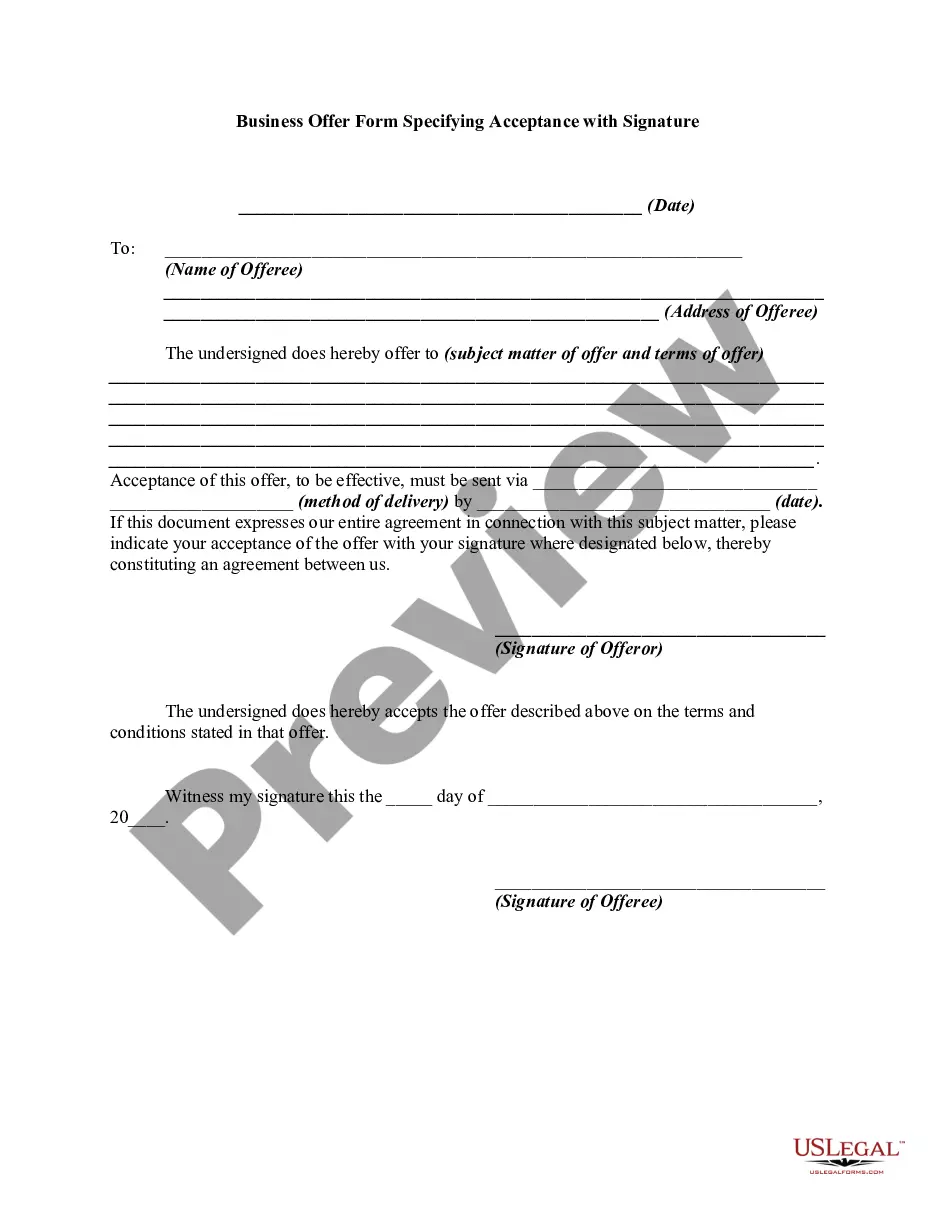
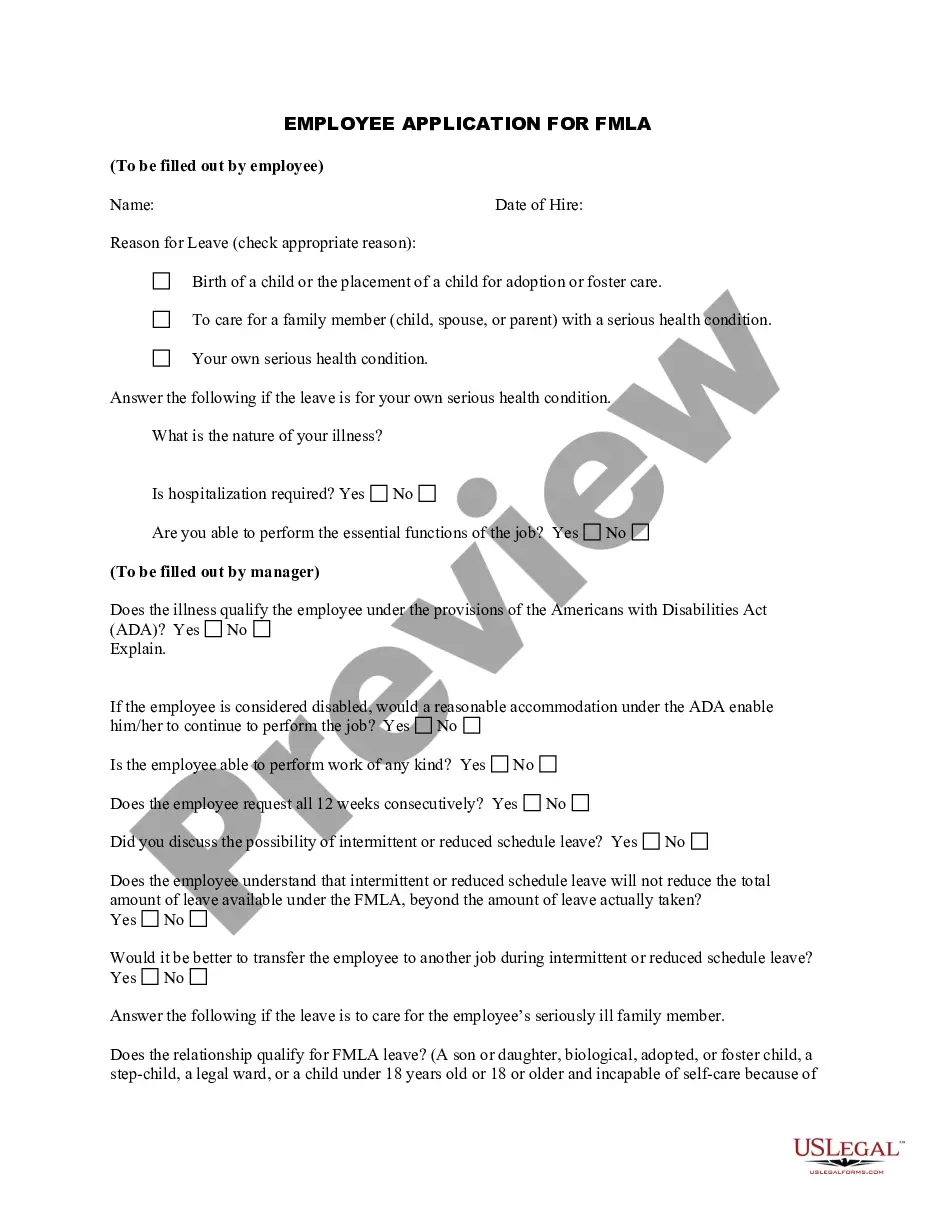
How to fill out Notice To Debt Collector - Collecting An Amount Not Authorized By Agreement Or By Law?
US Legal Forms - one of the largest libraries of legal documents in the United States - offers a range of legal document templates that you can download or print.
Utilizing the website, you can access thousands of forms for business and personal needs, categorized by types, states, or keywords.
You can retrieve the latest versions of forms such as the Missouri Notice to Debt Collector - Collecting an Amount Not Authorized by Agreement or by Law in a matter of seconds.
If the form does not suit your requirements, utilize the Search field at the top of the screen to find one that does.
Once you are satisfied with the form, confirm your selection by clicking on the Purchase now button. Then select the payment plan you prefer and provide your information to create an account.
- If you already have a membership, Log In and download the Missouri Notice to Debt Collector - Collecting an Amount Not Authorized by Agreement or by Law from your US Legal Forms account.
- The Download button appears on each form you view.
- You have access to all previously downloaded forms in the My documents tab of your account.
- If you're new to US Legal Forms, here are some basic instructions to help you get started.
- Ensure you have selected the correct form for your state/region. Click the Preview button to review the form's content.
Form popularity
FAQ
While a debt validation letter provides information about the debt the collection agency claims you owe, a verification letter must prove it. In other words, if the collection agency doesn't have enough evidence to prove you owe it, their hands may be tied.
If a debt collector fails to verify the debt but continues to go after you for payment, you have the right to sue that debt collector in federal or state court. You might be able to get $1,000 per lawsuit, plus actual damages, attorneys' fees, and court costs.
Debt collectors are legally required to send one within five days of first contact. You have within 30 days from receiving a debt validation letter to send a debt verification letter. Here's the important part: You have just 30 days to respond to a debt validation letter with your debt verification letter.
A debt validation letter should include the name of your creditor, how much you supposedly owe, and information on how to dispute the debt. After receiving a debt validation letter, you have 30 days to dispute the debt and request written evidence of it from the debt collector.
Debt collectors cannot harass or abuse you. They cannot swear, threaten to illegally harm you or your property, threaten you with illegal actions, or falsely threaten you with actions they do not intend to take. They also cannot make repeated calls over a short period to annoy or harass you.
The debt dispute letter should include your personal identifying information; verification of the amount of debt owed; the name of the creditor for the debt; and a request the debt not be reported to credit reporting agencies until the matter is resolved or have it removed from the report, if it already has been
Depending on the type of debt, Missouri statute of limitations on debt range between five to 10 years. After that period has passed, the debt becomes time-barred, which means collectors no longer have the right to sue you.
Among the insider tips, Ulzheimer shared with the audience was this: if you are being pursued by debt collectors, you can stop them from calling you ever again by telling them '11-word phrase'. This simple idea was later advertised as an '11-word phrase to stop debt collectors'.
Repeated calls. Threats of violence. Publishing information about you. Abusive or obscene language.
You are not obliged let a debt collector into your home and they don't have the right to take goods away. It's very important to understand that a debt collector is not the same as an enforcement agent or bailiff. Debt collectors have no special legal powers.