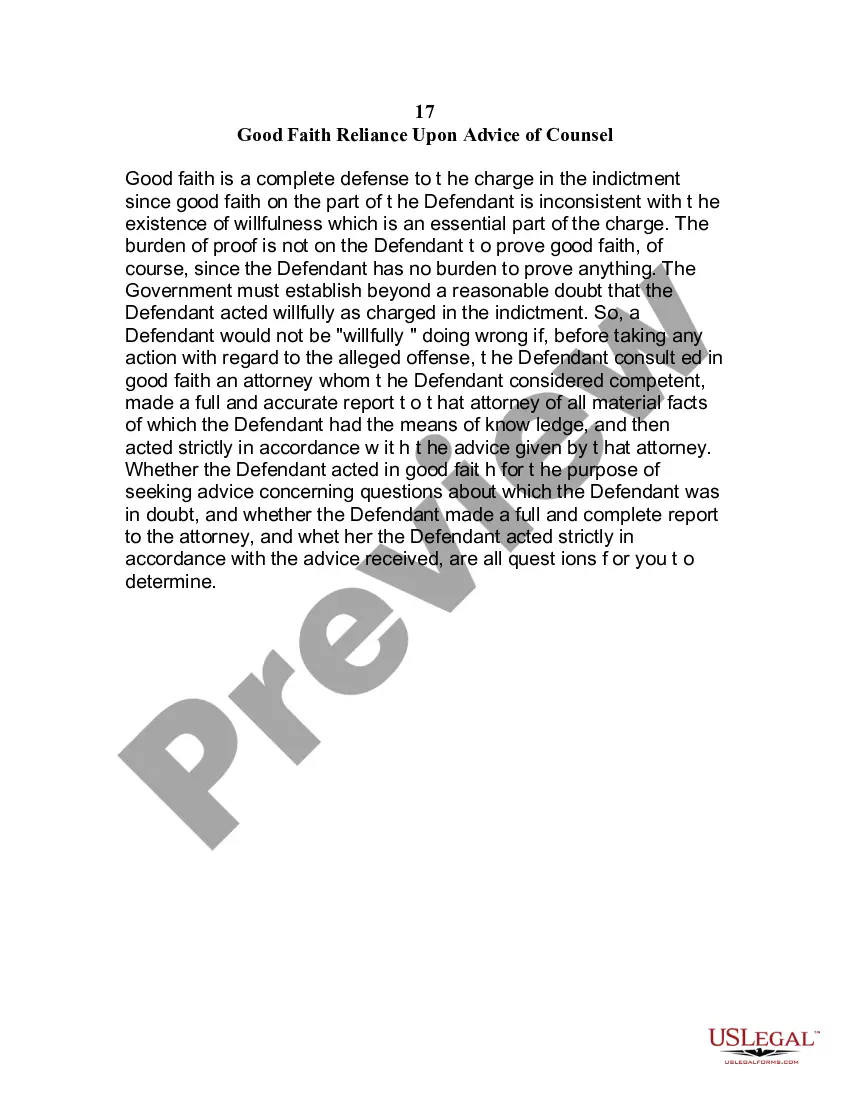
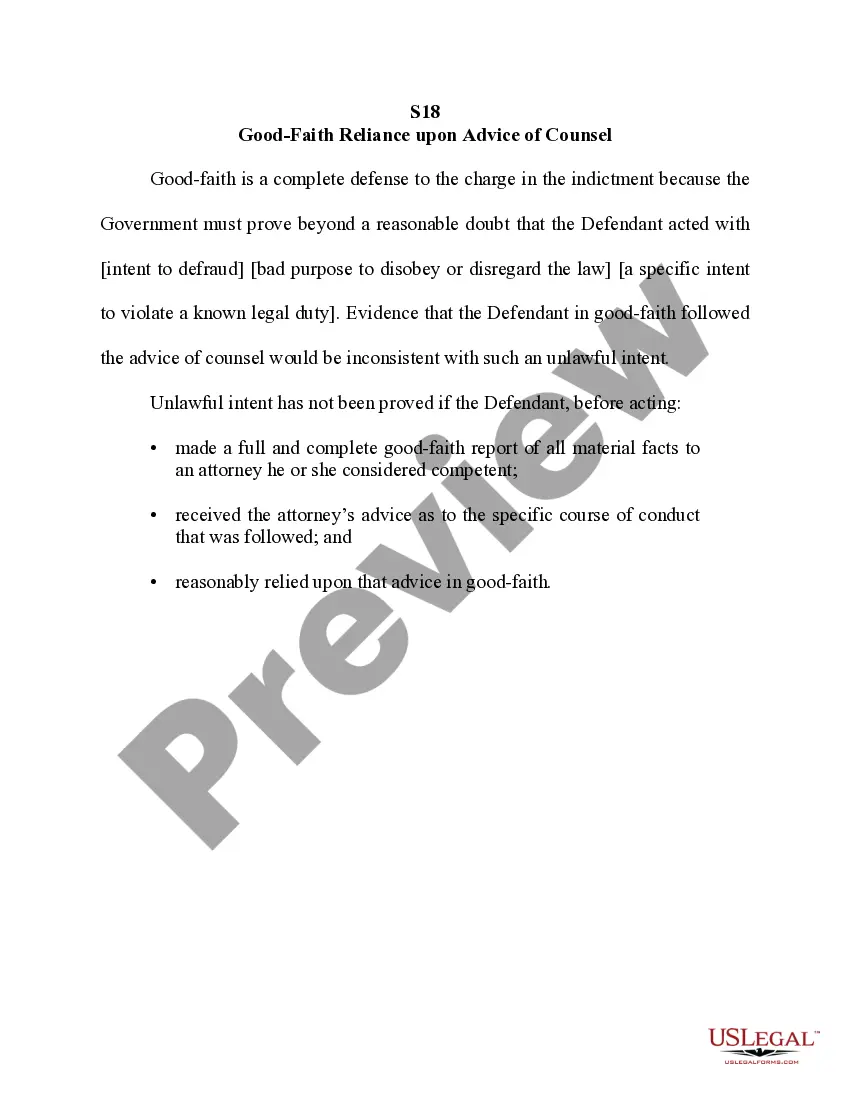
Missouri Jury Instruction - Good Faith Reliance Upon Advice of Counsel
Description

Get your form ready online
Our built-in tools help you complete, sign, share, and store your documents in one place.
Make edits, fill in missing information, and update formatting in US Legal Forms—just like you would in MS Word.
Download a copy, print it, send it by email, or mail it via USPS—whatever works best for your next step.
Sign and collect signatures with our SignNow integration. Send to multiple recipients, set reminders, and more. Go Premium to unlock E-Sign.
If this form requires notarization, complete it online through a secure video call—no need to meet a notary in person or wait for an appointment.
We protect your documents and personal data by following strict security and privacy standards.

Make edits, fill in missing information, and update formatting in US Legal Forms—just like you would in MS Word.

Download a copy, print it, send it by email, or mail it via USPS—whatever works best for your next step.

Sign and collect signatures with our SignNow integration. Send to multiple recipients, set reminders, and more. Go Premium to unlock E-Sign.

If this form requires notarization, complete it online through a secure video call—no need to meet a notary in person or wait for an appointment.

We protect your documents and personal data by following strict security and privacy standards.
Looking for another form?

How to fill out Jury Instruction - Good Faith Reliance Upon Advice Of Counsel?
Choosing the best lawful record design can be quite a have difficulties. Of course, there are a variety of templates accessible on the Internet, but how would you find the lawful form you will need? Use the US Legal Forms internet site. The service delivers a huge number of templates, including the Missouri Jury Instruction - Good Faith Reliance Upon Advice of Counsel, that you can use for business and personal needs. Every one of the varieties are inspected by specialists and meet up with state and federal specifications.
In case you are currently authorized, log in to your profile and then click the Down load button to get the Missouri Jury Instruction - Good Faith Reliance Upon Advice of Counsel. Make use of your profile to look throughout the lawful varieties you have ordered previously. Check out the My Forms tab of your profile and obtain yet another version of the record you will need.
In case you are a whole new user of US Legal Forms, allow me to share simple directions that you can follow:
- Very first, make sure you have selected the correct form to your city/county. You may look through the shape making use of the Review button and browse the shape explanation to ensure this is the best for you.
- If the form does not meet up with your preferences, take advantage of the Seach industry to get the right form.
- Once you are certain the shape is suitable, select the Get now button to get the form.
- Choose the costs strategy you would like and enter the necessary information and facts. Make your profile and pay for your order with your PayPal profile or charge card.
- Opt for the document format and acquire the lawful record design to your device.
- Full, revise and print and indication the obtained Missouri Jury Instruction - Good Faith Reliance Upon Advice of Counsel.
US Legal Forms may be the biggest catalogue of lawful varieties for which you will find various record templates. Use the service to acquire expertly-created paperwork that follow status specifications.
Form popularity
FAQ
Definition: Advice of counsel refers to the guidance given by lawyers to their clients. It can also be used as a defense in certain legal cases where a party seeks to avoid liability or punishment by claiming that they acted reasonably and in good faith on the advice of their attorney.
Definition: Advice of counsel refers to the guidance given by lawyers to their clients. It can also be used as a defense in certain legal cases where a party seeks to avoid liability or punishment by claiming that they acted reasonably and in good faith on the advice of their attorney.
Reliance on counsel is but a means of establishing "good faith" or "due care." If a problem requires the use of professional advice of a nonlegal nature, obtaining and relying on such advice should also satisfy these requirements.
The ?advice of counsel defense? is typically raised as an Affirmative Defense to refute the allegation that the insurer acted in ?bad-faith? by showing that it retained expert legal counsel to specifically address the issues regarding the coverage of a property claim or settlement of a liability action.
This defence requires proof that a person believed their conduct was necessary to defend themselves, and their conduct was a reasonable response to the circumstances as they perceived them.
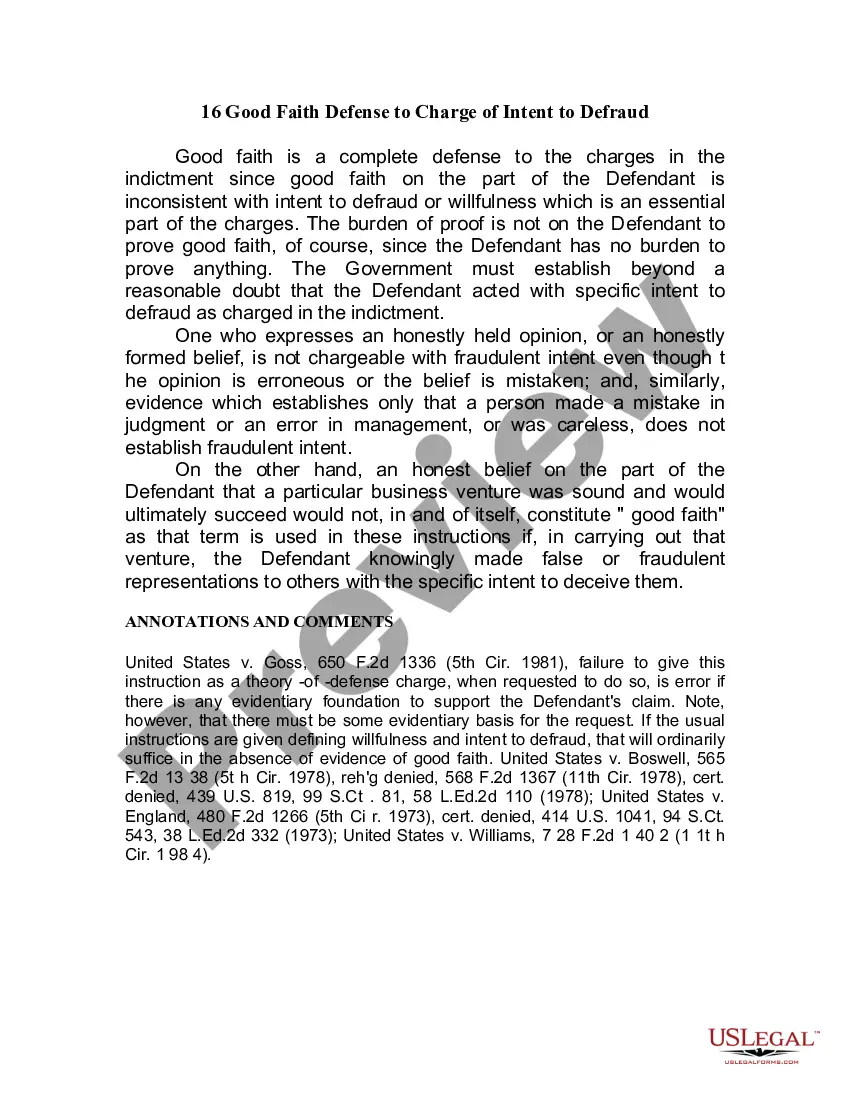
The advice of counsel defense is based on the substance of legal advice provided by counsel: the defendant argues that there was no fraudulent intent because counsel advised that the disclosure in question was lawful.
The good faith defense is that the defendant acted in good faith and did not have the necessary intent to defraud anyone. It does not matter that a person's statement or belief is wrong, there is no action for fraud unless the intent is to deceive is present.
For example, if a lawyer believes* in good faith that the conduct of the opposing lawyer or party violates criminal or other laws, the lawyer may state that if the conduct continues the lawyer will report it to criminal or administrative authorities.