Kansas Transfer on Death Deed or TOD - Beneficiary Deed for Husband and Wife or Two Individuals to Two Individuals
Overview of this form
The Transfer on Death Deed, also known as the TOD or Beneficiary Deed, allows property owners, specifically husband and wife or two individuals, to designate beneficiaries who will inherit the property upon the death of the last surviving owner. This form is distinctive because it allows the grantors to retain control over the property while alive, and the transfer becomes effective only after the death of the final grantor. Unlike a traditional will, this deed bypasses probate, providing a simpler process for transferring property ownership directly to the designated beneficiaries.
What’s included in this form
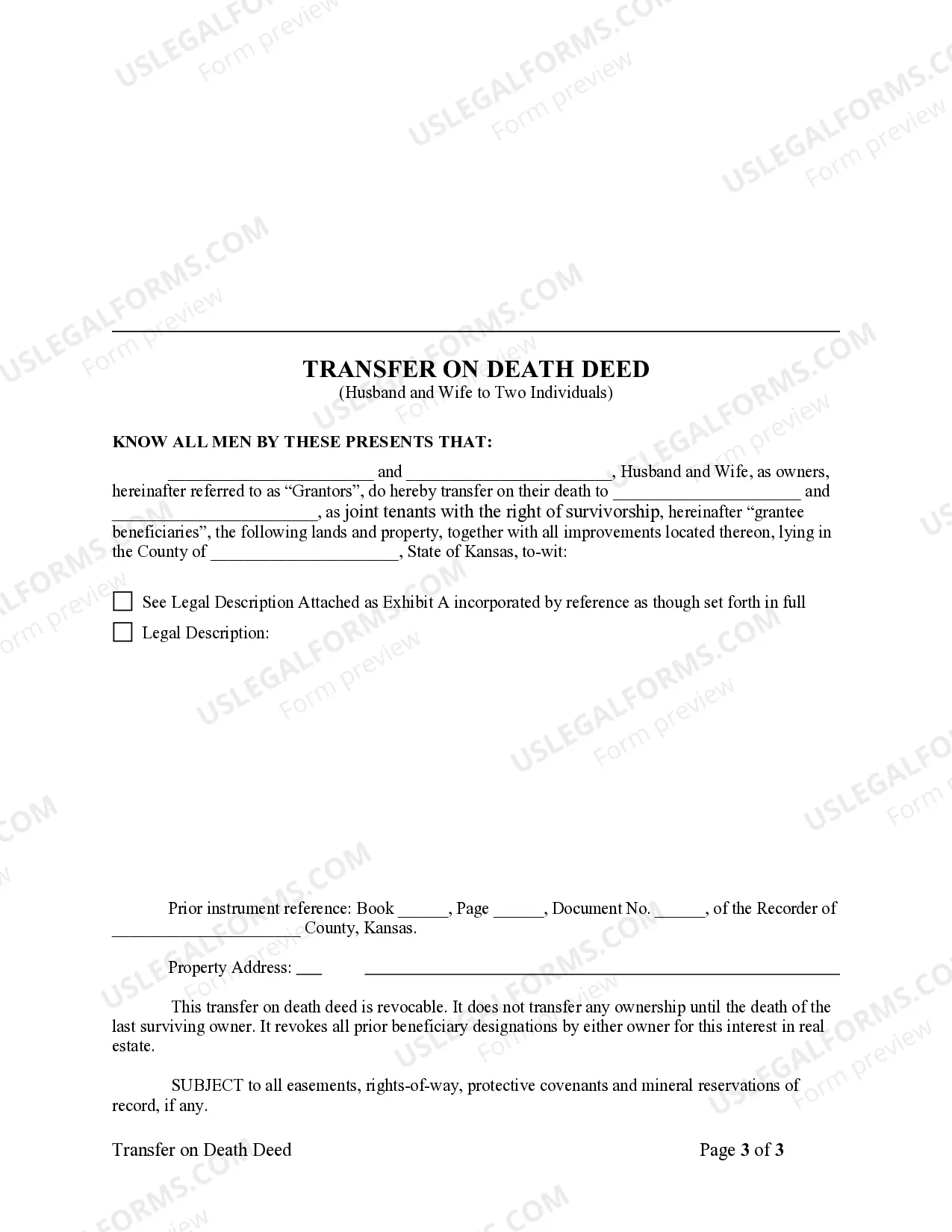
- Identification of grantors: Includes the names and details of the current owners, typically husband and wife or two individuals.
- Identification of grantees: Lists the beneficiaries who will receive the property upon the last surviving grantor's death.
- Legal description of the property: Provides a detailed description of the real estate being transferred.
- Revocation clause: Allows the grantors to revoke the deed at any time while both are alive.
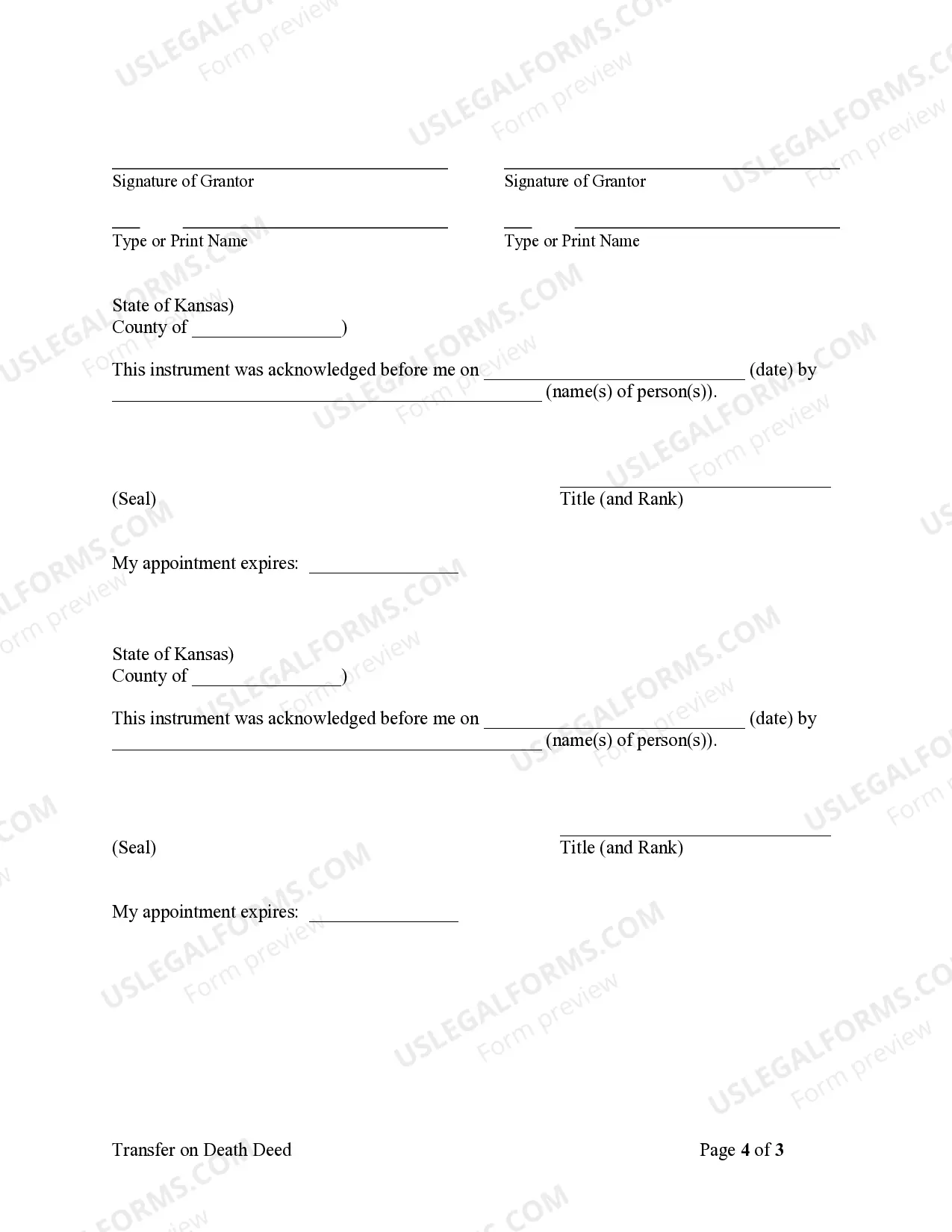
- Signatures and notarization: Requires signatures from the grantors and a notary public to validate the document.




When this form is needed
This form is useful for individuals or couples who wish to ensure that their property is transferred directly to their chosen beneficiaries without going through the lengthy probate process after their deaths. It is especially beneficial for husband and wife or two individuals wanting to clarify their intentions regarding property inheritance while retaining full control during their lifetimes.
Who needs this form
- Couples who own property together and want to designate beneficiaries.
- Individuals wishing to pass on their property directly to named beneficiaries.
- Owners seeking a revocable option for property transfer upon death.
- People looking for a simpler estate planning solution that avoids probate.
How to complete this form
- Identify the grantors: Enter the names of the husband and wife or the two individuals transferring the property.
- Specify the beneficiaries: Fill in the names of the two individuals who will receive the property upon death.
- Describe the property: Include a detailed legal description of the property being transferred.
- Sign and date the deed: Both grantors must sign the form and include the date of signing.
- Obtain notarization: Have the deed notarized to meet legal requirements.
Does this document require notarization?
Notarization is required for this form to take effect. Our online notarization service, powered by Notarize, lets you verify and sign documents remotely through an encrypted video session, available 24/7.
Get your form ready online
Our built-in tools help you complete, sign, share, and store your documents in one place.
Make edits, fill in missing information, and update formatting in US Legal Forms—just like you would in MS Word.
Download a copy, print it, send it by email, or mail it via USPS—whatever works best for your next step.
Sign and collect signatures with our SignNow integration. Send to multiple recipients, set reminders, and more. Go Premium to unlock E-Sign.
If this form requires notarization, complete it online through a secure video call—no need to meet a notary in person or wait for an appointment.
We protect your documents and personal data by following strict security and privacy standards.

Make edits, fill in missing information, and update formatting in US Legal Forms—just like you would in MS Word.

Download a copy, print it, send it by email, or mail it via USPS—whatever works best for your next step.

Sign and collect signatures with our SignNow integration. Send to multiple recipients, set reminders, and more. Go Premium to unlock E-Sign.

If this form requires notarization, complete it online through a secure video call—no need to meet a notary in person or wait for an appointment.

We protect your documents and personal data by following strict security and privacy standards.
Typical mistakes to avoid
- Failing to have the deed notarized, which could render it invalid.
- Not providing a complete legal description of the property.
- Incorrectly designating beneficiaries or failing to specify the relationship.
- Not understanding that the deed is revocable until the death of the last grantor.
Benefits of using this form online
- Convenient access: Download and complete the form from home at your convenience.
- Editability: Easily modify the form as needed before finalizing your decisions.
- Compliance assurance: Forms are drafted by licensed attorneys to meet legal standards.
- Time-saving: Bypass the need for in-person appointments with legal professionals for straightforward documents.
Looking for another form?

Form popularity
FAQ
In Kansas, a transfer on death deed allows a property owner to designate beneficiaries who will receive the property upon their death. The owner retains control and can revoke or alter the deed at any time during their lifetime. This often simplifies the transfer process for a husband and wife or two individuals to two individuals. Uslegalforms can assist you in creating a compliant Kansas TOD for your specific needs.
The California TOD deed form allows property to be automatically transferred to a new owner when the current owner dies, without the need to go through probate. It also gives the current owner retained control over the property, including the right to change his or her mind about the transfer.
If you'd like to avoid having your property going through the probate process, it's a good idea to look into a transfer on death deed. A transfer on death deed allows you to select a beneficiary who will receive your property, but only when you've passed away.
States that allow TOD deeds are Alaska, Arizona, Arkansas, California, Colorado, District of Columbia, Hawaii, Illinois, Indiana, Kansas, Maine, Minnesota, Mississippi, Missouri, Montana, Nebraska, Nevada, New Mexico, North Dakota, Ohio, Oklahoma, Oregon, South Dakota, Texas, Utah, Virginia, Washington, West Virginia,
Your deed won't be effective unless you recorded (filed) it in the local public records before your death. To get that done, take the signed deed to the land records office for the county in which the real estate is located. This office is commonly called the county recorder, land registry, or registrar of deeds.