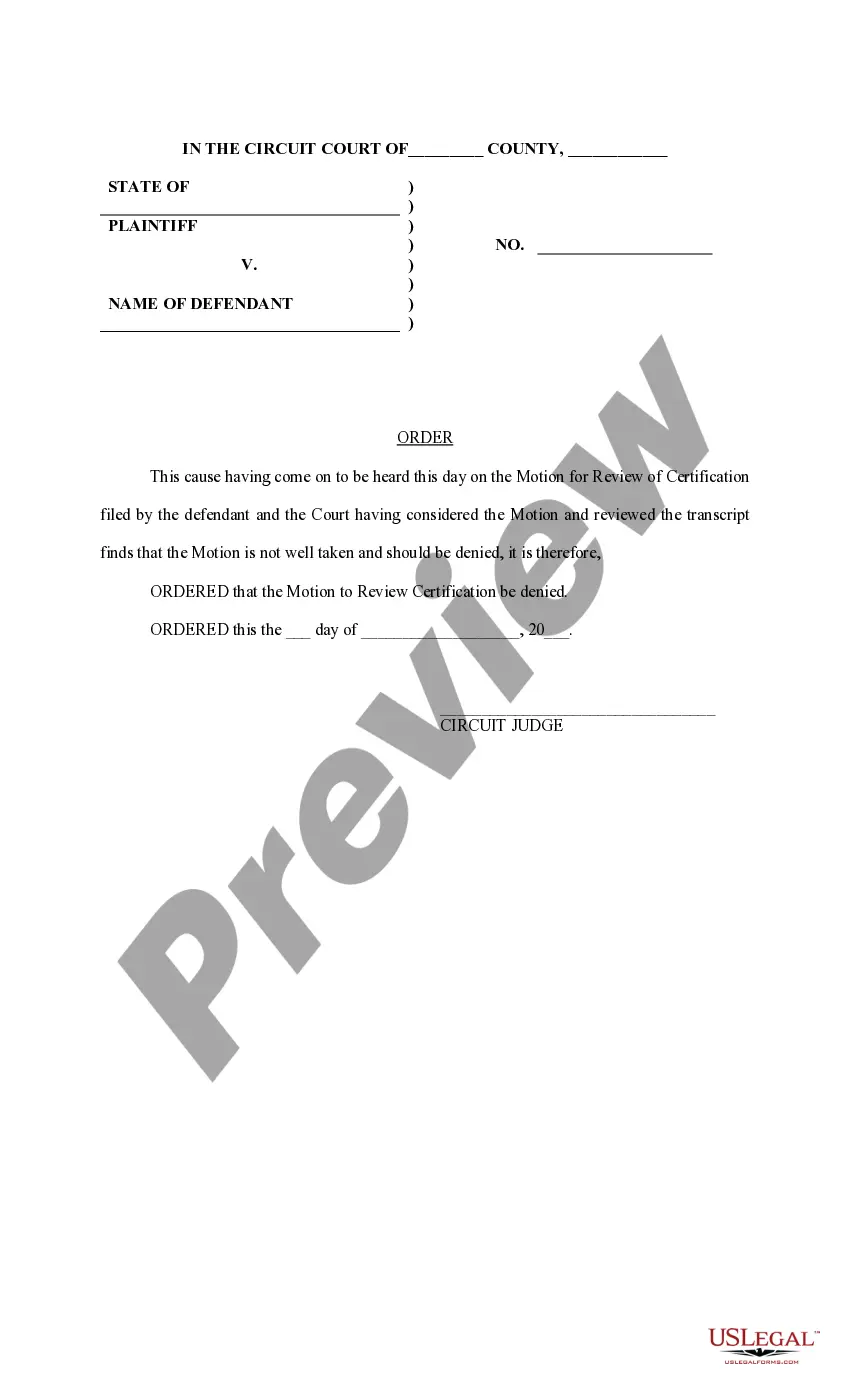
Missouri Order Denying Review of Certification
Description
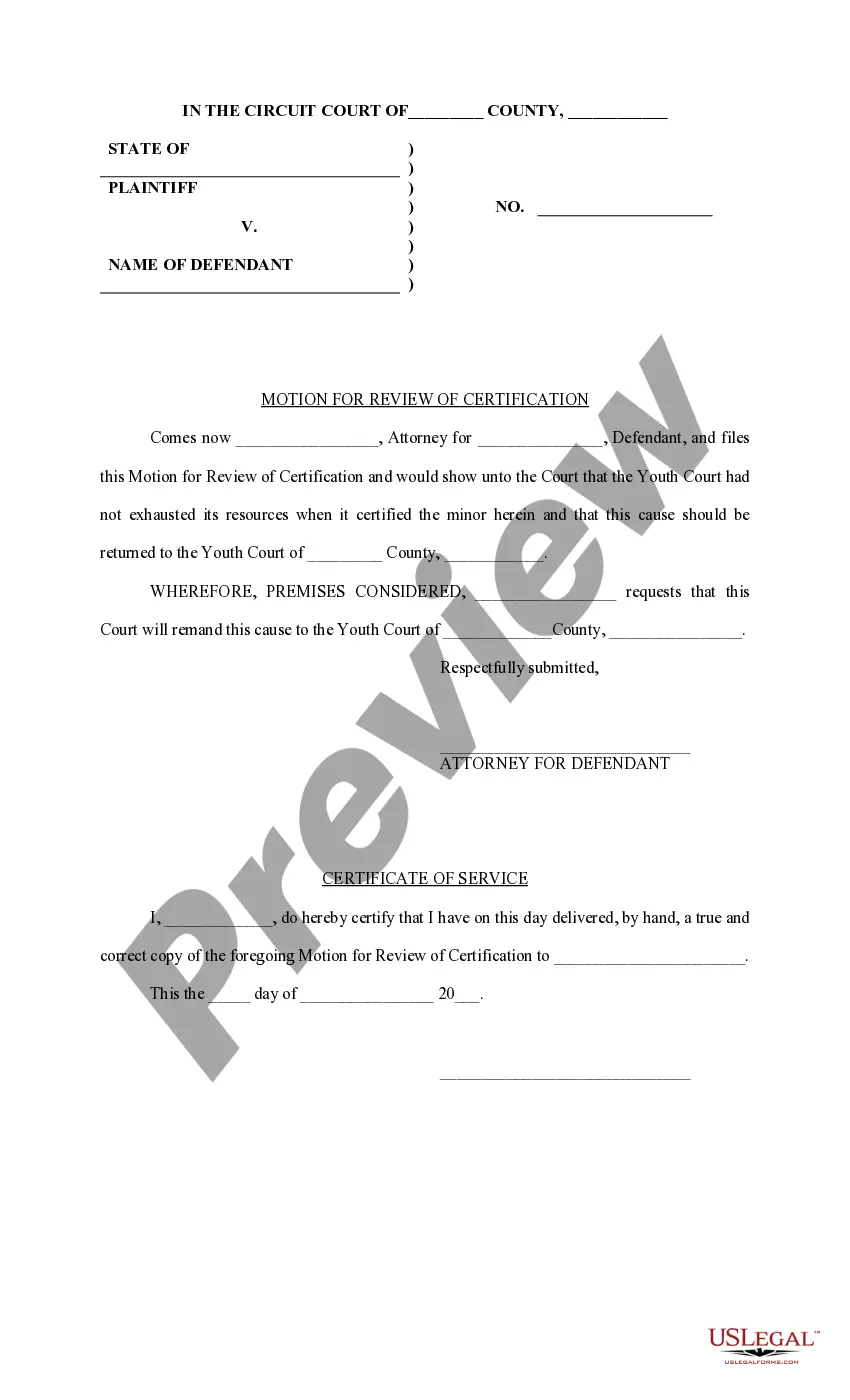

How to fill out Order Denying Review Of Certification?
US Legal Forms - one of the largest collections of legal documents in the United States - provides an extensive selection of legal form templates available for download or printing. By utilizing the website, you can access thousands of forms for business and personal purposes, organized by categories, states, or keywords. You can acquire the latest forms such as the Missouri Order Denying Review of Certification in just a few seconds.
If you already possess a monthly membership, Log In and retrieve the Missouri Order Denying Review of Certification from the US Legal Forms library. The Download option will appear on each form you review. You can access all previously obtained forms in the My documents section of your account.
If you are using US Legal Forms for the first time, here are some straightforward instructions to help you get started: Ensure you have selected the appropriate form for your city/state. Click the Preview button to examine the content of the form. Review the form description to confirm that you have selected the right one. If the form does not meet your requirements, use the Search bar at the top of the screen to find one that does. If you are satisfied with the form, confirm your choice by clicking the Get now button. Then, choose the pricing plan you prefer and provide your details to register for an account. Complete the transaction. Use your credit card or PayPal account to finalize the purchase. Select the format and download the form to your device. Make modifications. Fill out, amend, and print and sign the downloaded Missouri Order Denying Review of Certification. Every template you added to your account has no expiration date and is yours permanently. Therefore, if you wish to download or print another copy, simply go to the My documents section and click on the form you need.
US Legal Forms provides a comprehensive library of legal document templates, making it easier for users to fulfill their personal and business legal needs efficiently.
Explore a multitude of professionally crafted forms tailored to meet your specific requirements.
- Access the Missouri Order Denying Review of Certification using US Legal Forms, one of the most extensive collections of legal document templates.
- Utilize thousands of professional and state-specific templates that cater to your business or personal needs and requirements.
- Confirm the correct form selection for your jurisdiction.
- Review form content and descriptions to ensure accuracy.
- Use the search function for finding specific forms.
- Store and access your forms without expiration.
Form popularity
FAQ
Rule 84.03 - Format of Documents [Effective January 1, 2024] (a) Briefs filed in the appellate courts shall conform to the requirements of Rule 84.06. Transcripts filed in the appellate courts shall conform to the requirements of Rule 81.12.
Missouri Supreme Court Rule 84.04(d) provides that appellate briefs must contain "points relied on,"3 the purpose of which is to inform the court and the party-opponent of the specific issues of the case.
After filing a petition for rehearing If the court does not act on the petition before the decision becomes final, the petition will be deemed denied "by operation of law" (automatically without an order of any kind from the court).
If the California Supreme Court denies the petition for review, the appeal decision becomes final immediately and then the Court of Appeal issues a remittitur. If the California Supreme Court agrees to review the case, then the case moves from the Court of Appeal to the Supreme Court and a new briefing process begins.
If the California Supreme Court denies the petition for review, the appeal decision becomes final immediately and then the Court of Appeal issues a remittitur. If the California Supreme Court agrees to review the case, then the case moves from the Court of Appeal to the Supreme Court and a new briefing process begins.
The Supreme Court of Texas has discretionary jurisdiction, which means the Court can choose which cases to grant or deny. When the Court denies a Petition for Review, there is no reason given for the denial and no opinion is written.
The vast majority of petitions are simply denied by the Court without comment or explanation. The denial of a petition for a writ of certiorari signifies only that the Court has chosen not to accept the case for review and does not express the Court's view of the merits of the case.
Under Rule 33.01(c), the court shall release the defendant on his or her recognizance with the standard conditions of release set forth in Rule 33.01(b), including that the defendant: appear in court as scheduled; submit to the orders, judgment and sentence, and process of the court; not commit any new offense and ...