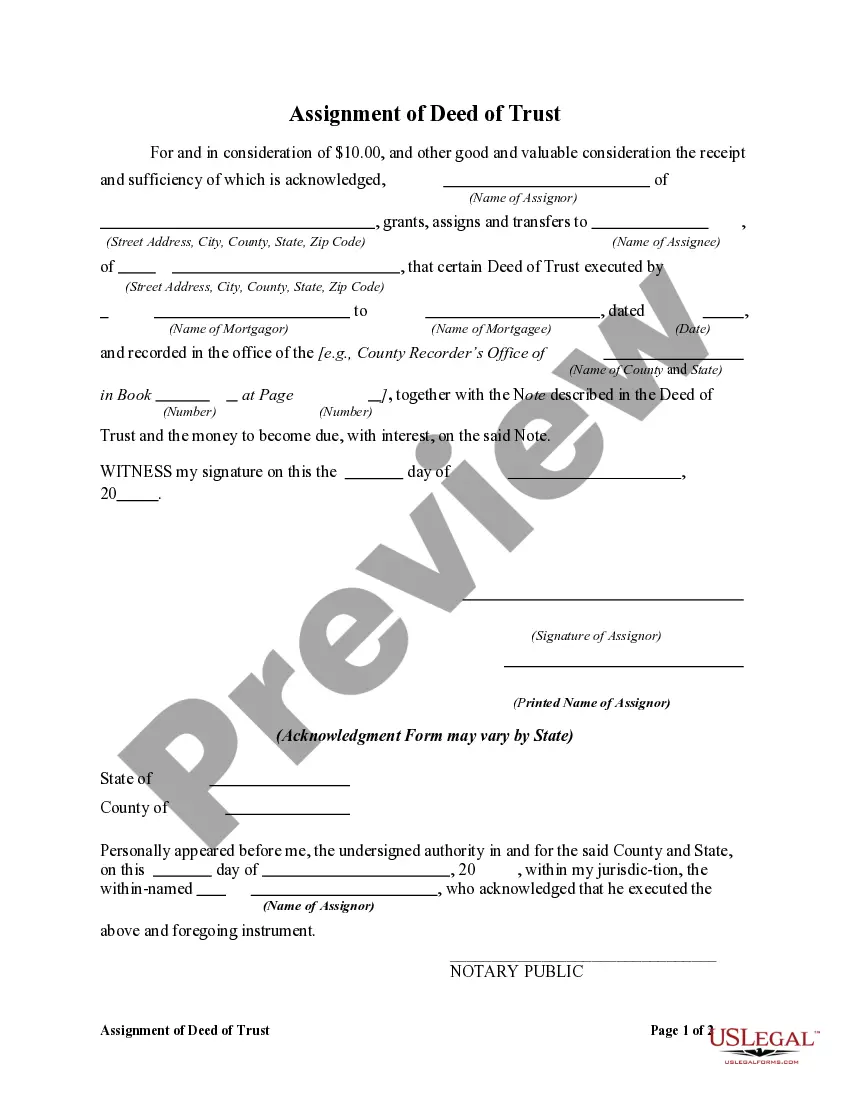
Grantor conveys and assigns all its right, title, and interest to a certain deed of trust concerning real property.
Missouri Deed of Trust - Assignment
State:
Multi-State
Control #:
US-00487
Format:
Word;
Rich Text
87 downloads
Description
Get your form ready online
Our built-in tools help you complete, sign, share, and store your documents in one place.
Built-in online Word editor
Make edits, fill in missing information, and update formatting in US Legal Forms—just like you would in MS Word.
Export easily
Download a copy, print it, send it by email, or mail it via USPS—whatever works best for your next step.
E-sign your document
Sign and collect signatures with our SignNow integration. Send to multiple recipients, set reminders, and more. Go Premium to unlock E-Sign.
Notarize online 24/7
If this form requires notarization, complete it online through a secure video call—no need to meet a notary in person or wait for an appointment.
Store your document securely
We protect your documents and personal data by following strict security and privacy standards.

Make edits, fill in missing information, and update formatting in US Legal Forms—just like you would in MS Word.

Download a copy, print it, send it by email, or mail it via USPS—whatever works best for your next step.

Sign and collect signatures with our SignNow integration. Send to multiple recipients, set reminders, and more. Go Premium to unlock E-Sign.

If this form requires notarization, complete it online through a secure video call—no need to meet a notary in person or wait for an appointment.

We protect your documents and personal data by following strict security and privacy standards.
Looking for another form?




How to fill out Deed Of Trust - Assignment?
It is feasible to spend hours online searching for the sanctioned document template that meets the federal and state requirements you need. US Legal Forms offers thousands of legal forms that have been vetted by experts.
You can easily obtain or print the Missouri Deed of Trust - Assignment from our platform. If you have a US Legal Forms account, you can Log In and click on the Acquire button. After that, you can complete, modify, print, or sign the Missouri Deed of Trust - Assignment.
Each legal document template you acquire is yours permanently. To get another copy of any purchased form, go to the My documents tab and click on the corresponding button. If you are using the US Legal Forms website for the first time, follow the simple instructions below: First, ensure that you have selected the correct document template for the state/city of your choice. Review the form outline to confirm you have chosen the right form. If available, use the Preview button to browse through the document template as well.
- If you wish to find another version of the form, utilize the Search field to locate the template that suits your needs and requirements.
- Once you have found the template you want, click Acquire now to proceed.
- Select the pricing plan you prefer, enter your credentials, and register for an account on US Legal Forms.
- Complete the transaction. You can use your Visa or Mastercard or PayPal account to pay for the legal form.
- Choose the format of the document and download it to your device.
- Make edits to the document if necessary. You can complete, modify, sign, and print the Missouri Deed of Trust - Assignment.
- Obtain and print thousands of document templates using the US Legal Forms site, which provides the largest collection of legal forms. Utilize professional and state-specific templates to address your business or personal needs.
Form popularity
FAQ
A deed of trust involves three parties: a lender, a borrower, and a trustee. The lender gives the borrower money. In exchange, the borrower gives the lender one or more promissory notes. As security for the promissory notes, the borrower transfers a real property interest to a third-party trustee.
Trustee Deed for Real Estate Located in Missouri The trustee is the administrator of the trust whose power to sell trust property, in this case, is conferred by the trust instrument, the document executed by the trust's settlor establishing the trust and containing the trust provisions.
A property deed is a legal document that transfers the ownership of real estate from a seller to a buyer. For a deed to be legal it must state the name of the buyer and the seller, describe the property that is being transferred, and include the signature of the party that is transferring the property.
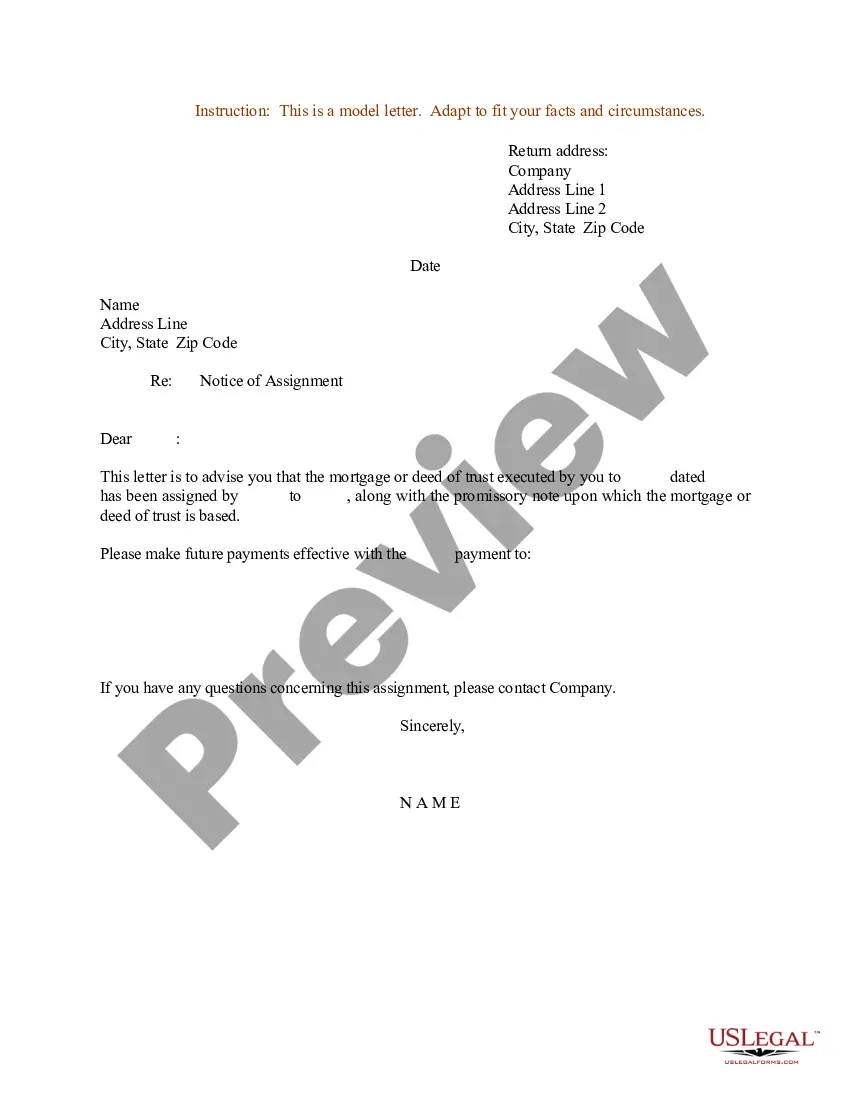
In real estate law, "assignment" is simply the transfer of a deed of trust from one party to another. This usually happens when the beneficiary of a trust deed sells their loan to another lender.
A deed of trust must be: (1) in writing, (2) contain a description of the property being used to secure the loan, and (3) be signed by the trustor or the borrower. Under the Statute of Frauds, a transfer of an interest in real property must be memorialized in writing.
A deed of trust is the most common method of securing a lien on real estate in Missouri. Mortgages are rarely used.
(In re Marriage of Wozniak (2020) 59 Cal. App. 5th 120, 133.) To be valid, a deed must be: (1) in writing; (2) name the grantor or the grantor's agent; (3) signed by the grantor or their agent; and (4) delivered and accepted by the grantee.
If your circumstances change any you are no longer able to make your payments, your Trust Deed may fail and you will still be liable for your debts or even forced into bankruptcy.
