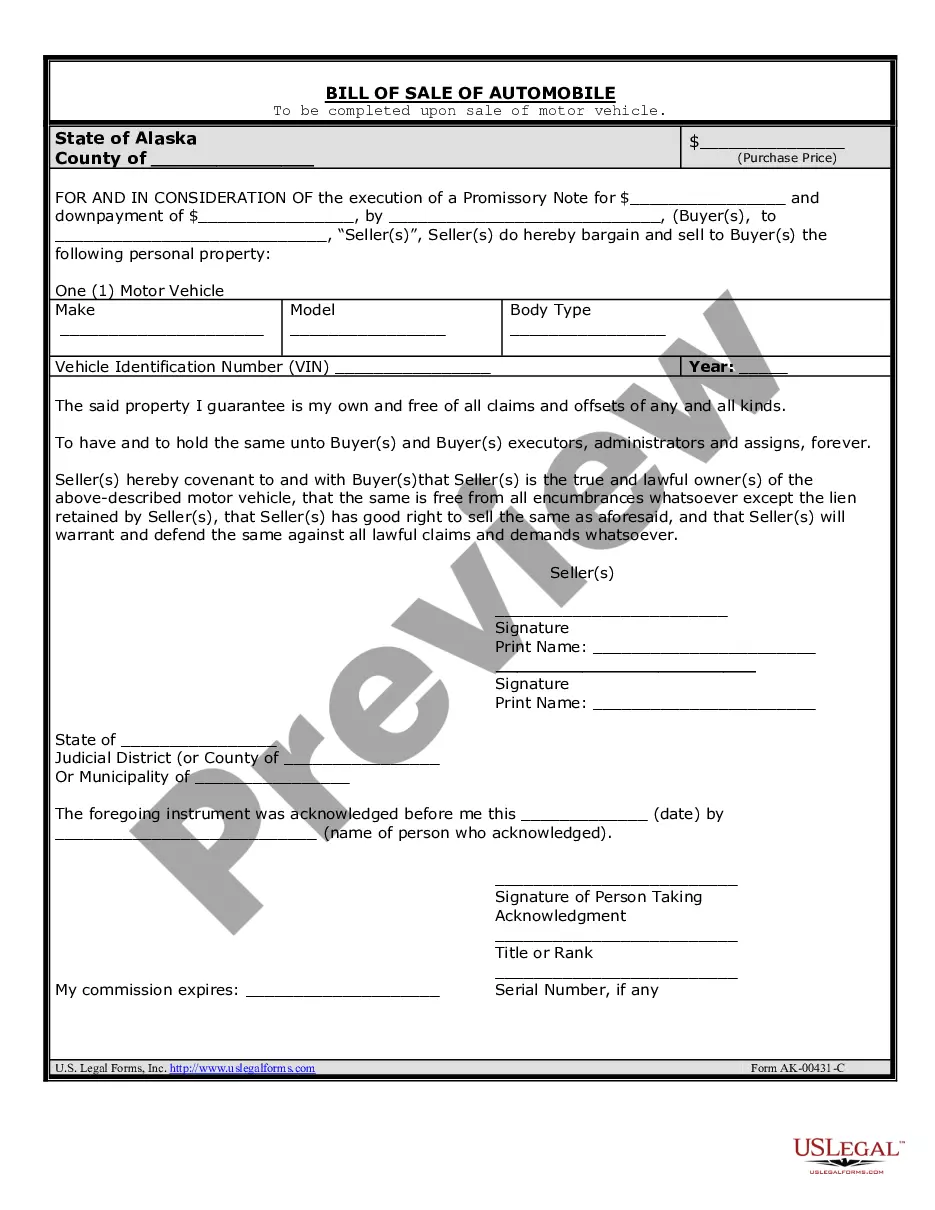
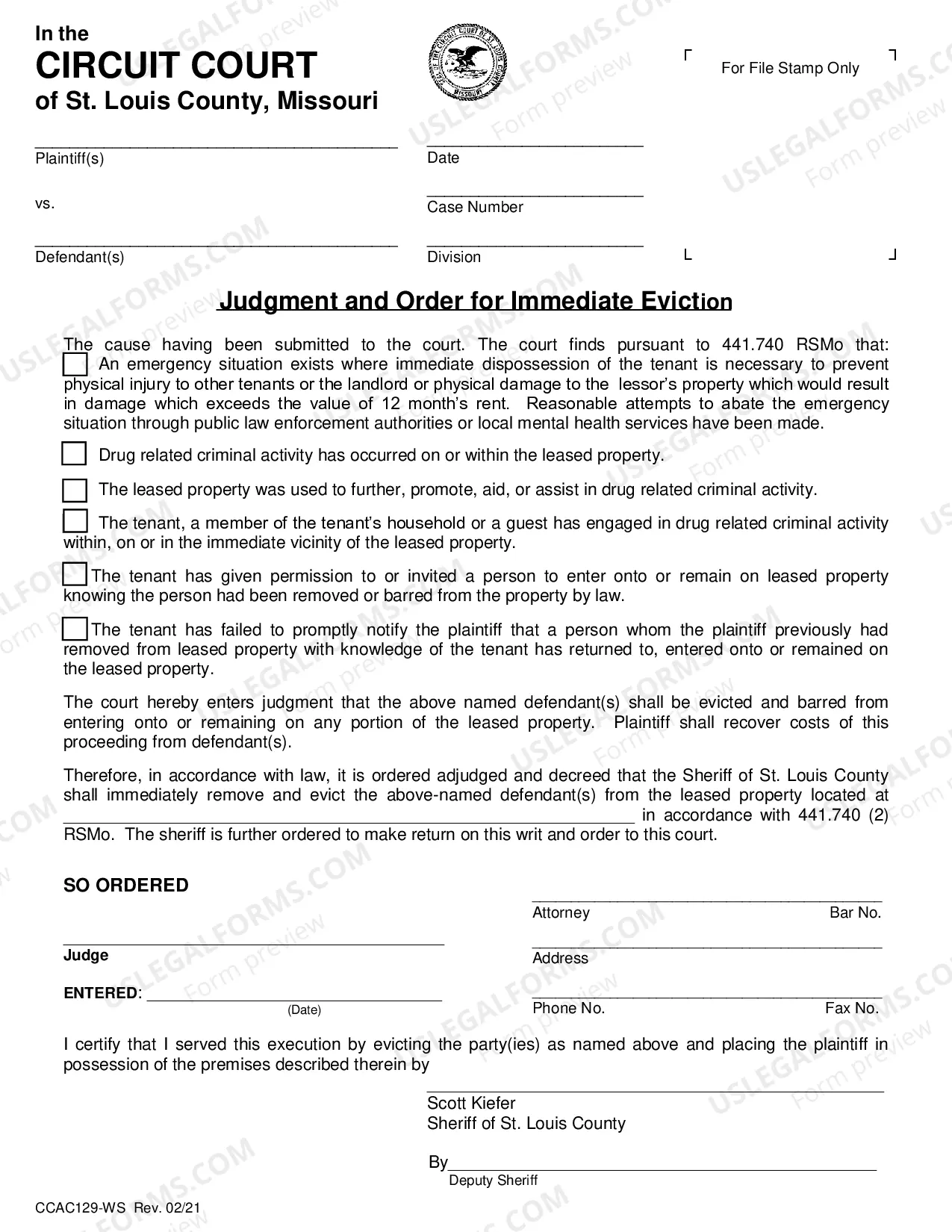
Missouri Judgment on Landlord/Tenant Petition-Drug Case Immediate Removal Pursuant to SEC.441.770, R.S. MO.
Understanding this form
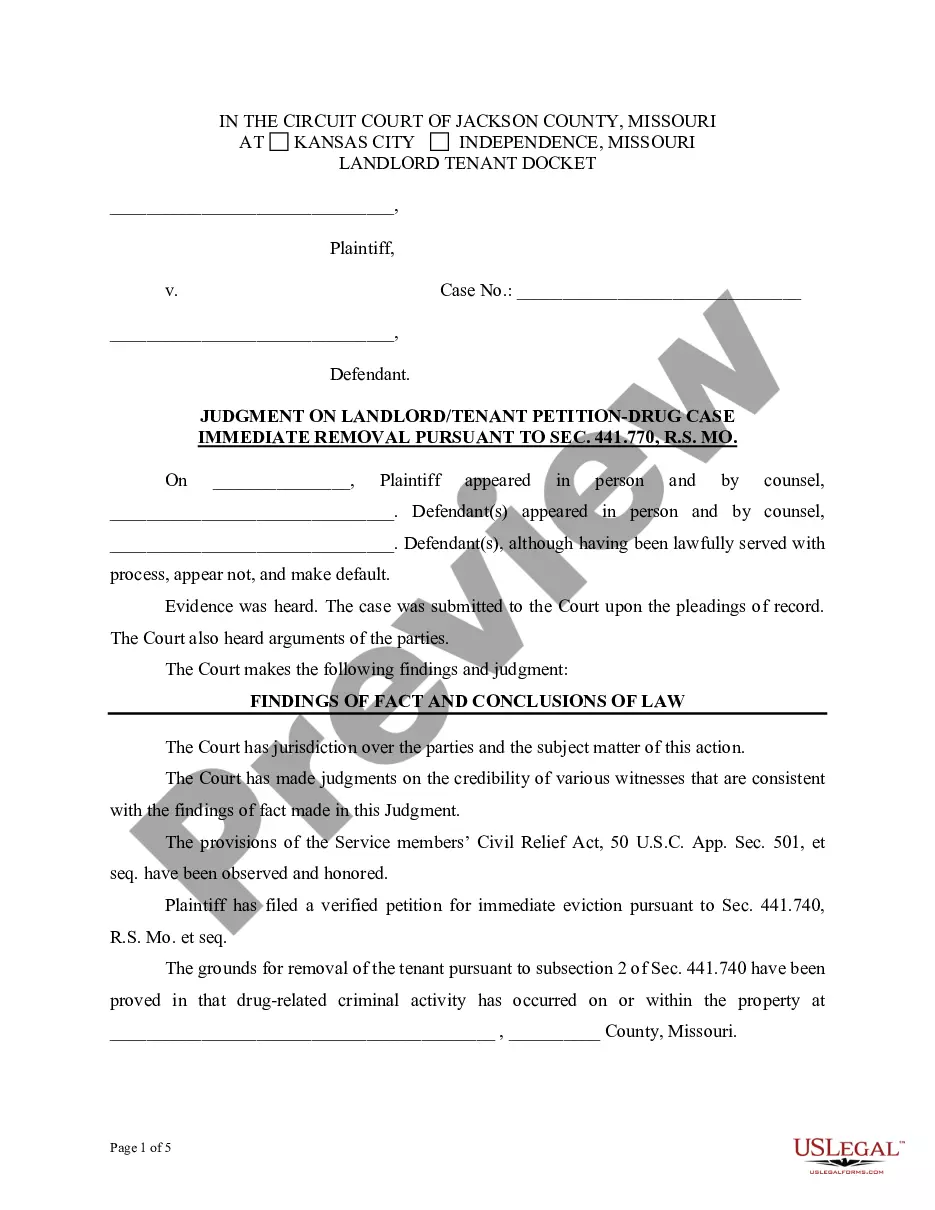
This form is a Judgment on Landlord/Tenant Petition related to a drug case. It is specifically used by landlords in Missouri who seek immediate removal of a tenant due to drug-related criminal activity occurring on or within the property. Unlike other landlord-tenant forms, this petition addresses instances involving illegal drug use, making it crucial for maintaining the safety and integrity of rented premises.
Key components of this form
- Court jurisdiction information
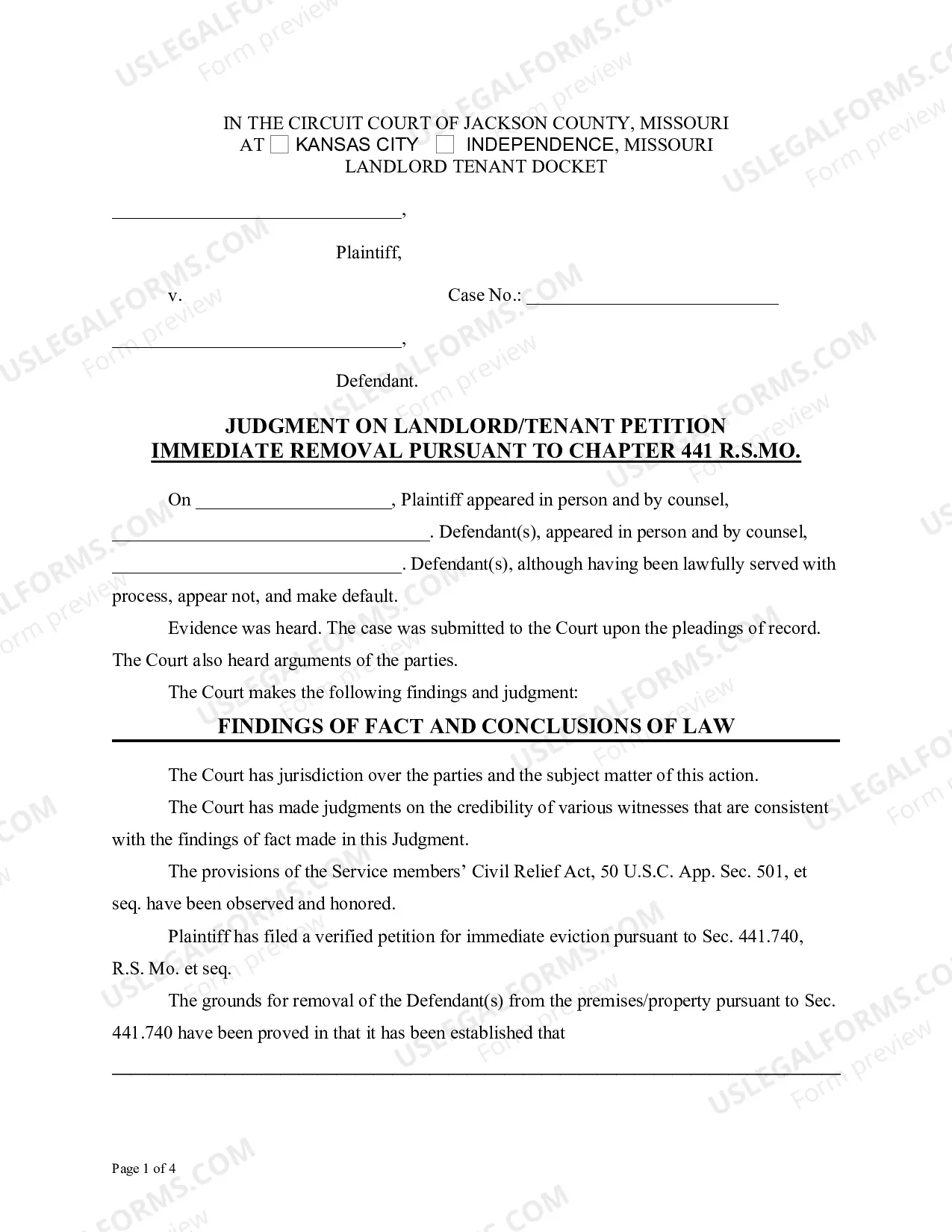
- Details of the plaintiff (landlord) and defendant (tenant)
- Findings of fact and conclusions of law regarding the case
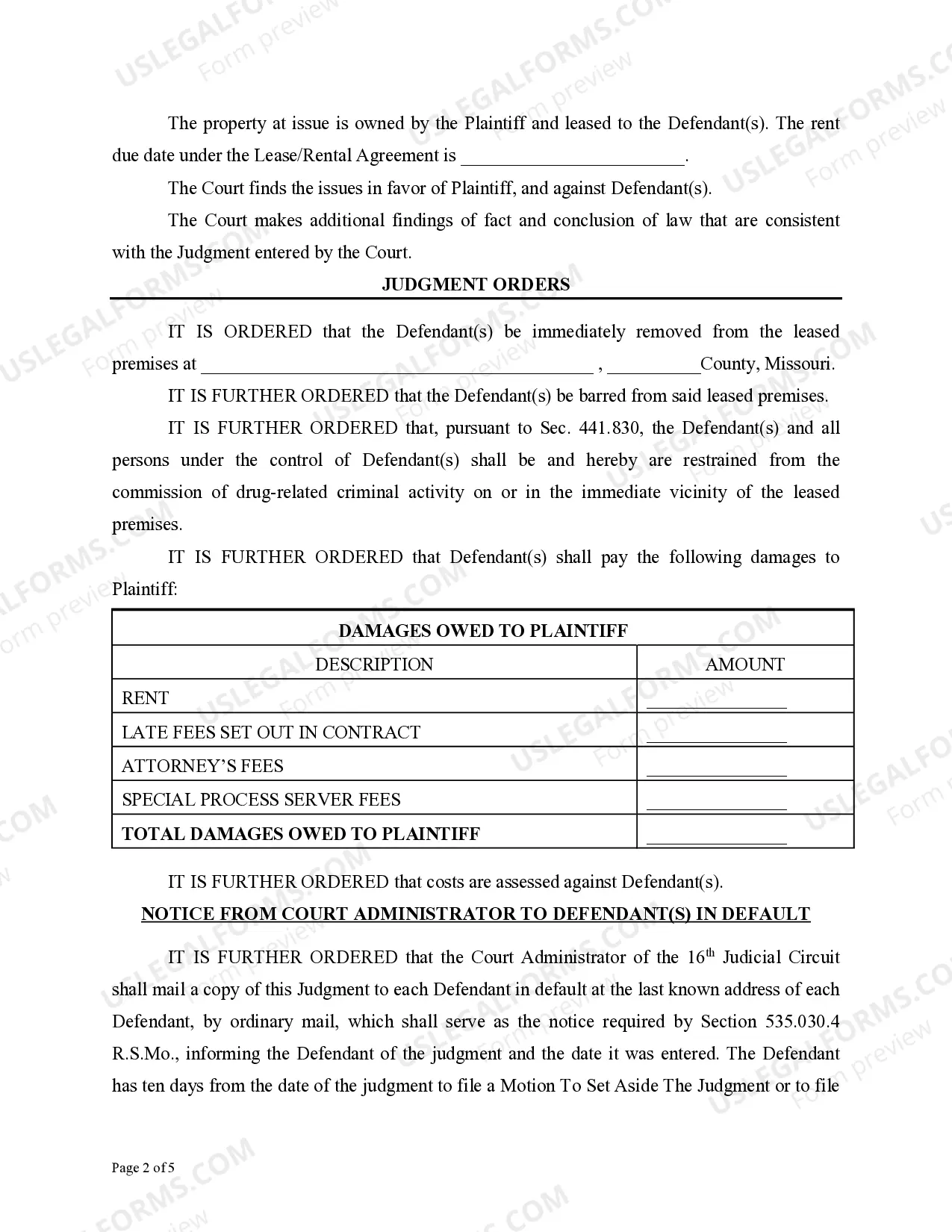
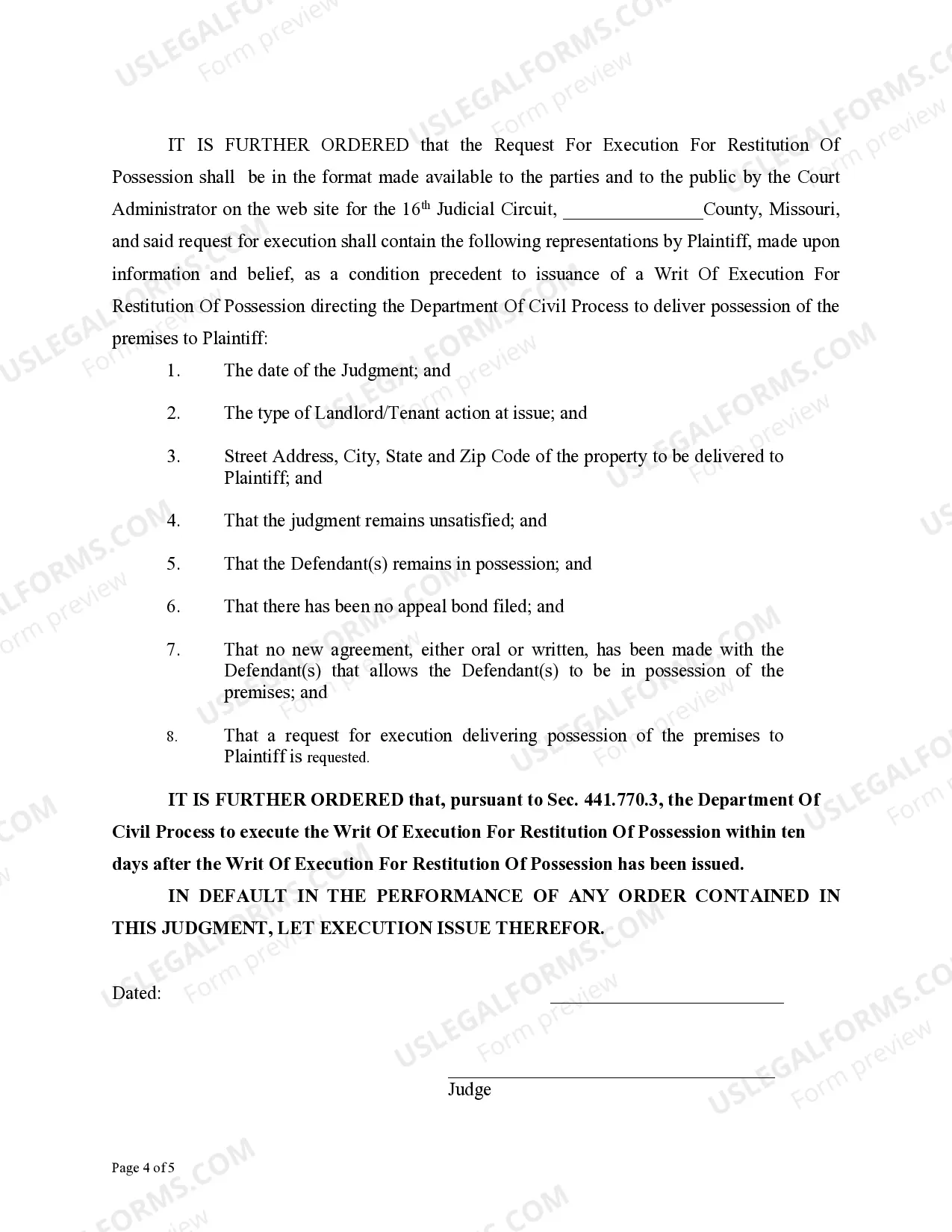
- Orders for immediate removal of the tenant
- Financial damages owed by the tenant
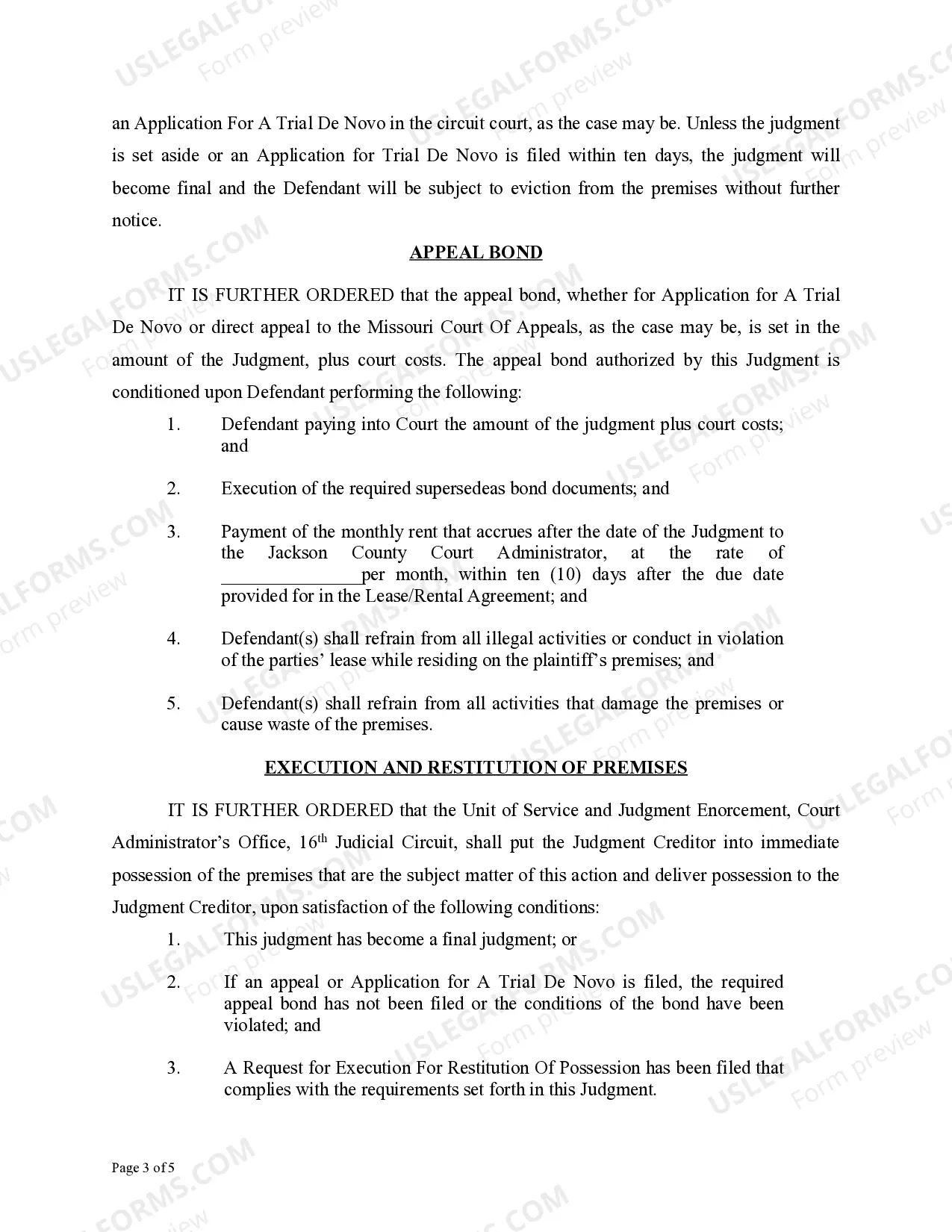
- Notice provisions for defendants in default
- Instructions for potential appeals
Common use cases
Who needs this form
This form is intended for:
- Landlords seeking to evict tenants involved in drug-related activities.
- Property managers dealing with legal issues stemming from tenant actions.
- Real estate attorneys representing landlords in eviction proceedings.
How to prepare this document
- Identify the parties involved: enter the names of the landlord (plaintiff) and tenant (defendant).
- Specify the property: include the address of the rental property in question.
- Document the date of appearance and any evidence presented in court.
- Fill in the damages owed by the tenant, including rent, late fees, and attorney fees.
- Sign the judgment and get it filed with the court clerk for record-keeping.
Is notarization required?
This form does not typically require notarization unless specified by local law. However, check with your local court or legal advisor to confirm any specific requirements that may apply.
Get your form ready online
Our built-in tools help you complete, sign, share, and store your documents in one place.
Make edits, fill in missing information, and update formatting in US Legal Forms—just like you would in MS Word.
Download a copy, print it, send it by email, or mail it via USPS—whatever works best for your next step.
Sign and collect signatures with our SignNow integration. Send to multiple recipients, set reminders, and more. Go Premium to unlock E-Sign.
If this form requires notarization, complete it online through a secure video call—no need to meet a notary in person or wait for an appointment.
We protect your documents and personal data by following strict security and privacy standards.

Make edits, fill in missing information, and update formatting in US Legal Forms—just like you would in MS Word.

Download a copy, print it, send it by email, or mail it via USPS—whatever works best for your next step.

Sign and collect signatures with our SignNow integration. Send to multiple recipients, set reminders, and more. Go Premium to unlock E-Sign.

If this form requires notarization, complete it online through a secure video call—no need to meet a notary in person or wait for an appointment.

We protect your documents and personal data by following strict security and privacy standards.
Typical mistakes to avoid
- Failing to provide sufficient evidence of drug-related activities.
- Not properly notifying the tenant of impending legal action.
- Omitting critical information such as the property address or dates.
- Ignoring local laws specific to eviction procedures.
Benefits of completing this form online
- Convenience: Download and complete the form from anywhere.
- Editability: Easily modify the form to meet your specific circumstances.
- Reliability: Forms are drafted by licensed attorneys, ensuring legal accuracy.
Looking for another form?
Form popularity
FAQ
Law 441.060 in Missouri pertains to the legal procedures surrounding eviction and landlord-tenant relationships. This statute outlines the rights of landlords and tenants, including the grounds for eviction and the notice requirements. For landlords dealing with a Missouri Judgment on Landlord/Tenant Petition-Drug Case Immediate Removal Pursuant to SEC.441.770, R.S. MO., understanding this law is essential for ensuring compliance and protecting their interests during eviction proceedings.
The eviction hardship extension in Missouri is a provision that allows tenants facing financial difficulties to request additional time before being evicted. This extension can provide crucial relief, especially in situations like job loss or medical emergencies. By understanding how the Missouri Judgment on Landlord/Tenant Petition-Drug Case Immediate Removal Pursuant to SEC.441.770, R.S. MO. interacts with these extensions, both landlords and tenants can navigate the process more effectively.
An immediate eviction notice is a legal document that a landlord issues to a tenant when they need to remove them from the rental property quickly. This type of notice typically arises in cases involving serious violations, such as drug-related activities. In Missouri, when a landlord files a Missouri Judgment on Landlord/Tenant Petition-Drug Case Immediate Removal Pursuant to SEC.441.770, R.S. MO., it accelerates the eviction process, allowing the landlord to regain possession of their property without delay.
ORAL AGREEMENT A landlord can evict the tenant or raise rent with only one month's notice. Likewise, the tenant can give notice to vacate on one month's notice. (One month's notice means a full calendar month, and must include a full rental period.
They are: Rent-and-possession ? the most-often-used remedy when tenants do not pay rent. Unlawful detainer ? eviction cases when tenants breach leases or stay after their leases expire or are terminated. Expedited evictions ? for illegal drugs, or threatened injury or property damage.
Once a judge orders you to move, after a hearing or if you fail to show in court, you will have 10 days to move from your rental property. If you fail to do so, the court will order the sheriff in your county to evict you from the rental property.
A landlord may not evict a tenant without a court order. The landlord may begin eviction proceedings if a tenant: Damages property. Fails to pay rent.
Counting the 10 days before the Writ of Possession is issued and the maximum of 2 days for the Writ to be given to the law enforcement officials, the tenant has about 3 days as the minimum amount of time to vacate the premises, unless their eviction was about illegal activity.
Judgment for ?Rent and Possession? becomes final after ten (10) days. A default judgment for ?Unlawful Detainer? becomes final after thirty (30) days. A default judgment for ?Immediate Eviction? becomes final after twenty-four (24) hours.
In Missouri, there is no statutory requirement specifying a minimum delinquency period for filing an eviction action due to nonpayment of rent. Landlords can technically file an eviction when the tenant is even a day late and a dollar short.