Missouri Corrective Deed
What is this form?
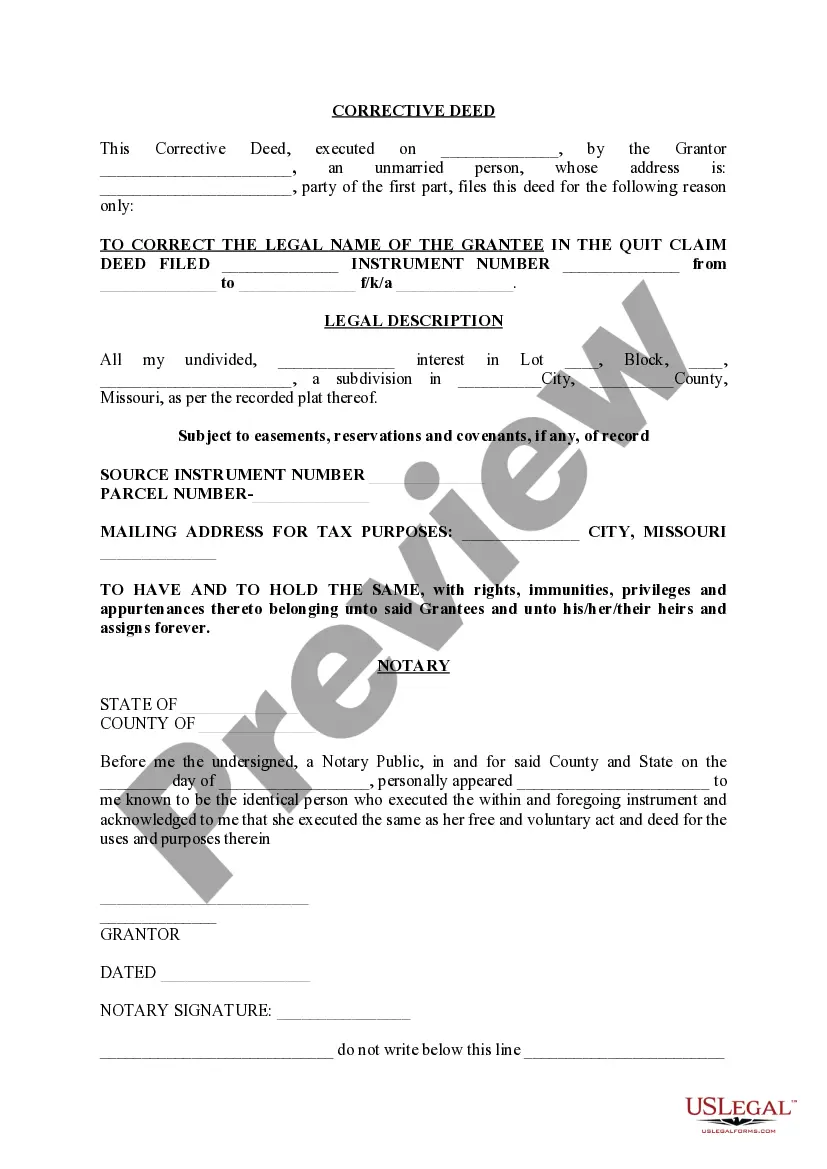
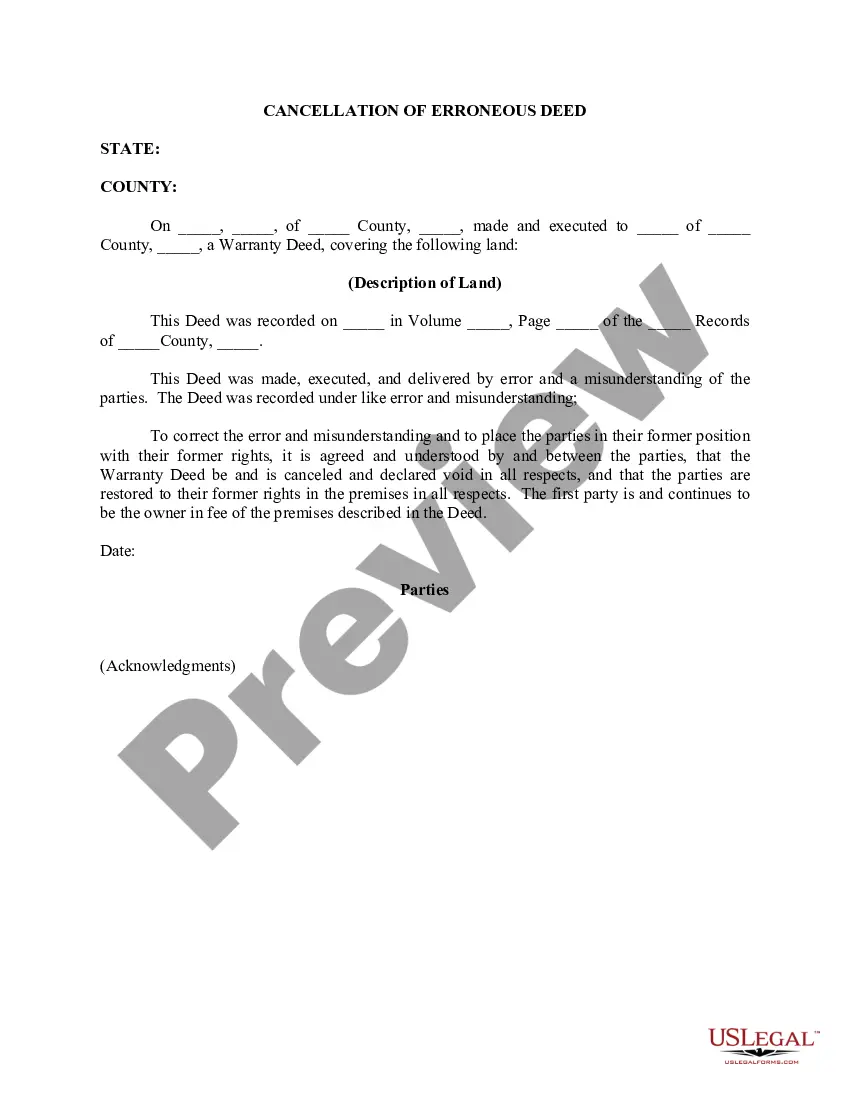
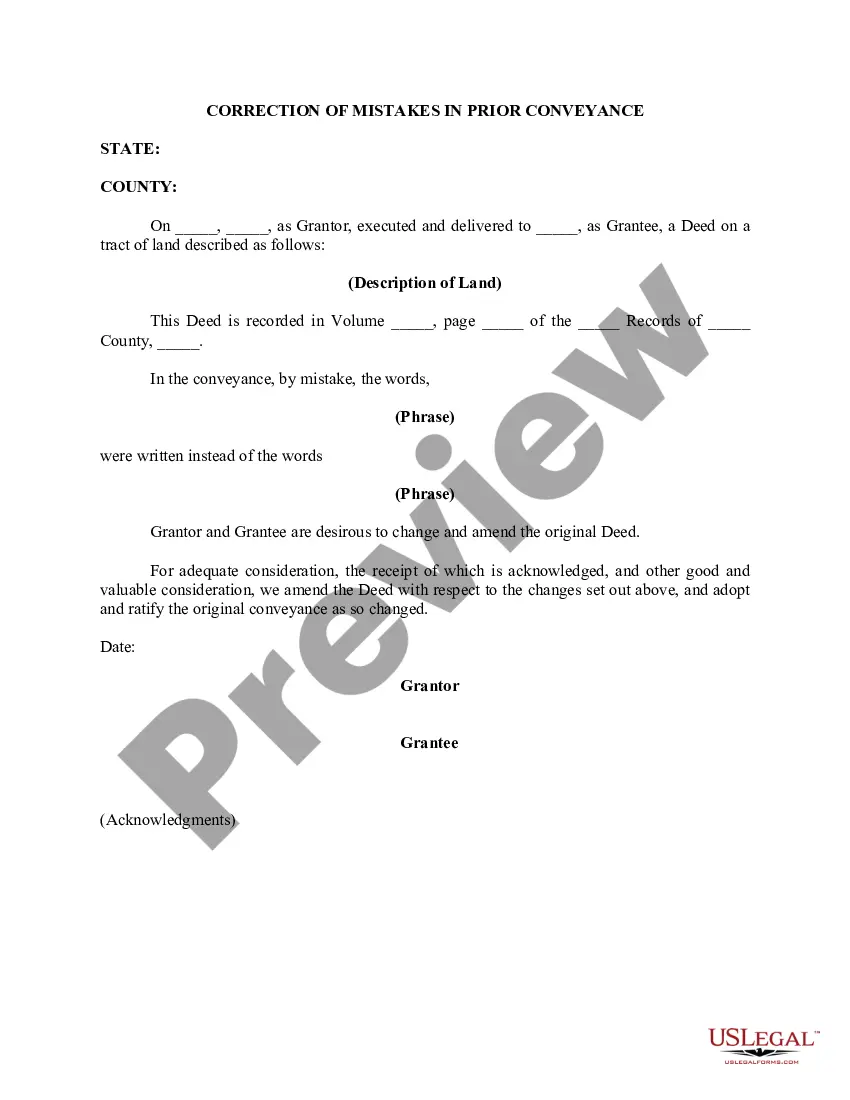
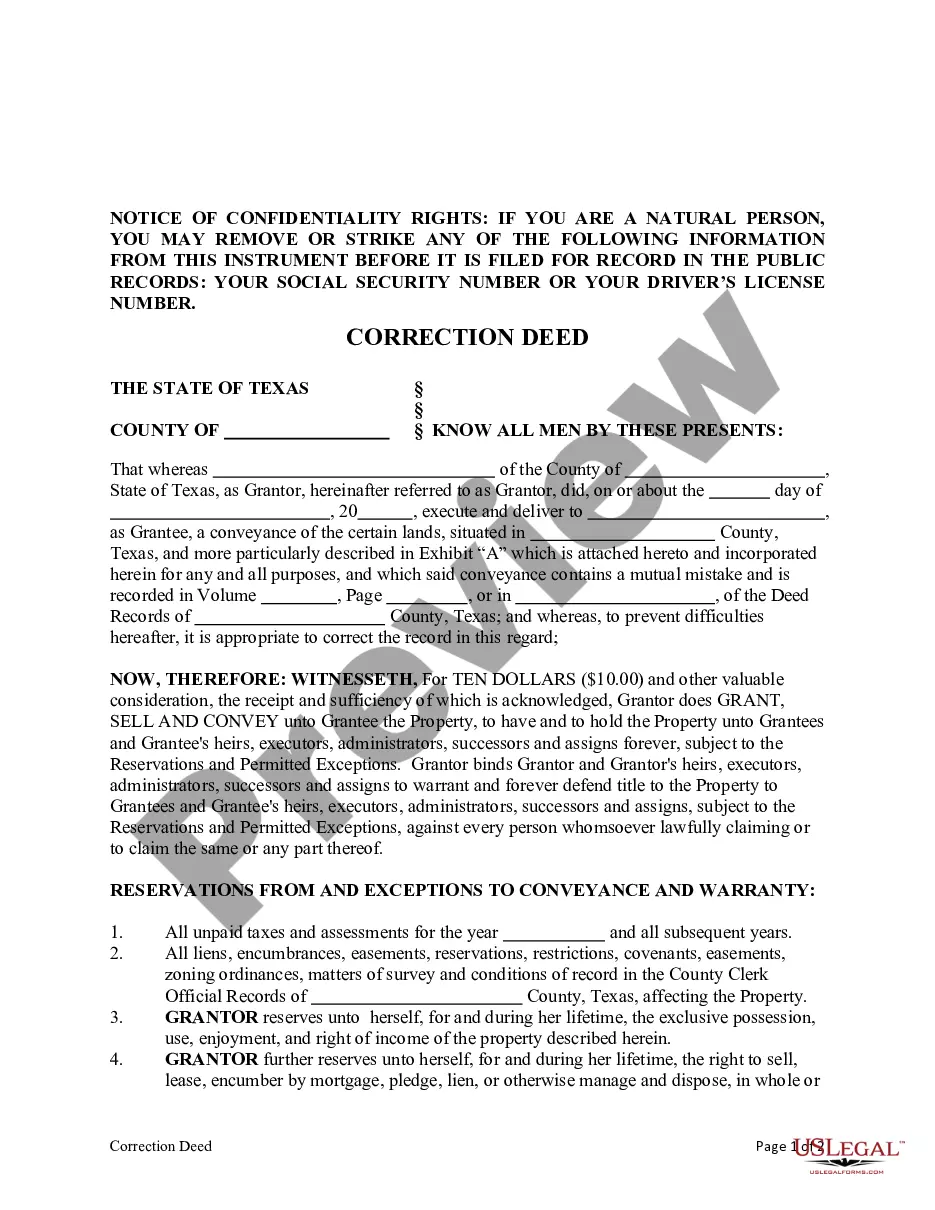
The Corrective Deed is a legal document designed to amend a previously executed deed. Its primary purpose is to correct errors regarding the legal name of the grantee, which may have been inaccurately stated in the original deed. This form serves a specific purpose distinct from standard deeds by focusing solely on rectifying name discrepancies.
Form components explained
- Date of execution by the Grantor.
- Identification of the Grantor and their address.
- Corrective statement regarding the grantee's name change.
- Legal description of the property being amended.
- Source instrument details for reference.
- Notarization section for validation of the deed.

When to use this document
This form should be used when there is a need to correct the name of the grantee in a previously filed quit claim deed. Common situations include the misspelling of the granteeâs name, a name change due to marriage or divorce, or any other circumstances where the name on the original deed does not reflect the accurate legal name of the grantee.
Who this form is for
This form is intended for:
- Property owners who need to correct a deed they have previously executed.
- Individuals dealing with name changes that affect property ownership.
- Attorneys seeking to assist clients with property law and title issues.
How to prepare this document
- Identify the parties involved, including the Grantor's and Grantee's names.
- Clearly state the reason for the correction, specifying the previous and current legal names of the Grantee.
- Provide legal description details of the property associated with the deed.
- Fill out any additional necessary information, such as instrument numbers.
- Sign the deed in the presence of a notary public to validate its execution.
Notarization requirements for this form
Yes, this form must be notarized to be legally valid. Notarization ensures that the document is properly witnessed and executed. US Legal Forms offers integrated online notarization services, available 24/7, allowing you to complete the notarization securely via video call without needing to travel.
Get your form ready online
Our built-in tools help you complete, sign, share, and store your documents in one place.
Make edits, fill in missing information, and update formatting in US Legal Forms—just like you would in MS Word.
Download a copy, print it, send it by email, or mail it via USPS—whatever works best for your next step.
Sign and collect signatures with our SignNow integration. Send to multiple recipients, set reminders, and more. Go Premium to unlock E-Sign.
If this form requires notarization, complete it online through a secure video call—no need to meet a notary in person or wait for an appointment.
We protect your documents and personal data by following strict security and privacy standards.

Make edits, fill in missing information, and update formatting in US Legal Forms—just like you would in MS Word.

Download a copy, print it, send it by email, or mail it via USPS—whatever works best for your next step.

Sign and collect signatures with our SignNow integration. Send to multiple recipients, set reminders, and more. Go Premium to unlock E-Sign.

If this form requires notarization, complete it online through a secure video call—no need to meet a notary in person or wait for an appointment.

We protect your documents and personal data by following strict security and privacy standards.
Mistakes to watch out for
- Failing to provide the correct legal name of the Grantee.
- Not including necessary details related to the original deed.
- Overlooking the notarization requirement.
- Using incorrect legal descriptions for the property.
Why complete this form online
- Convenient access to legal forms at any time.
- Editable templates allow for easy customization.
- Drafted by licensed attorneys for reliability and compliance.
- Efficient completion and saving of time compared to traditional methods.
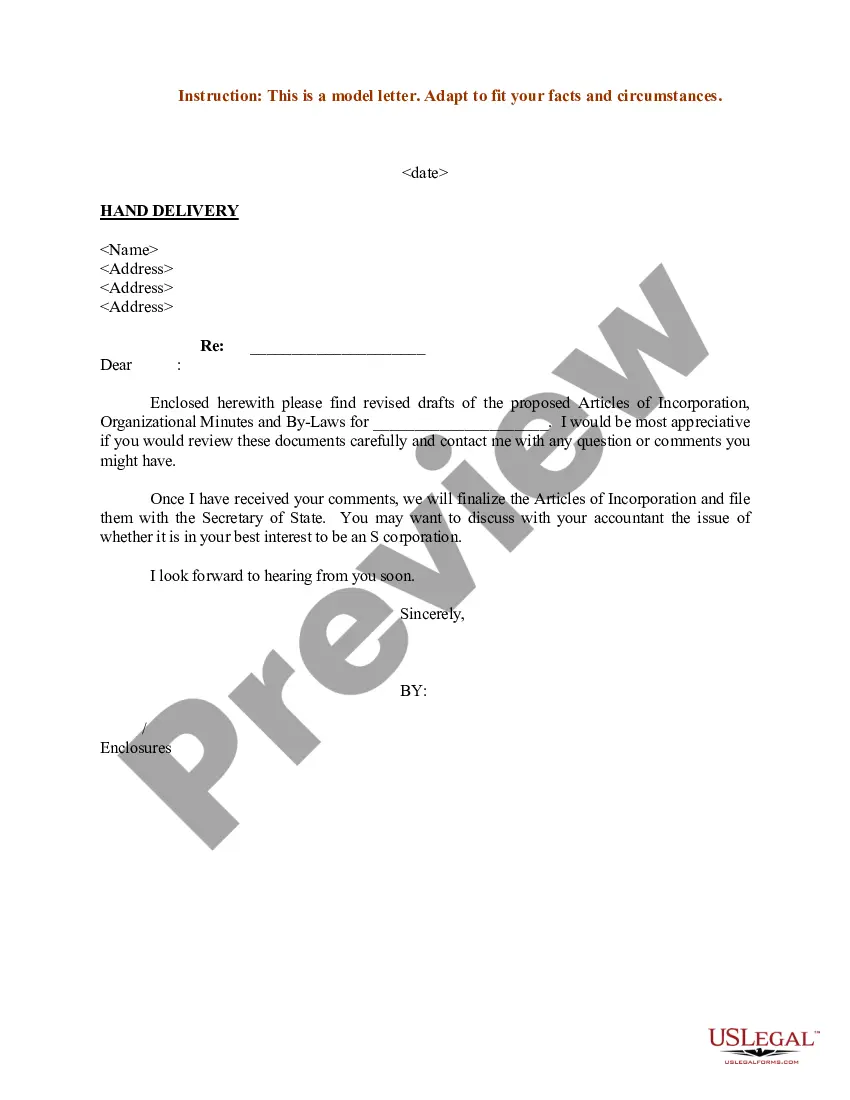
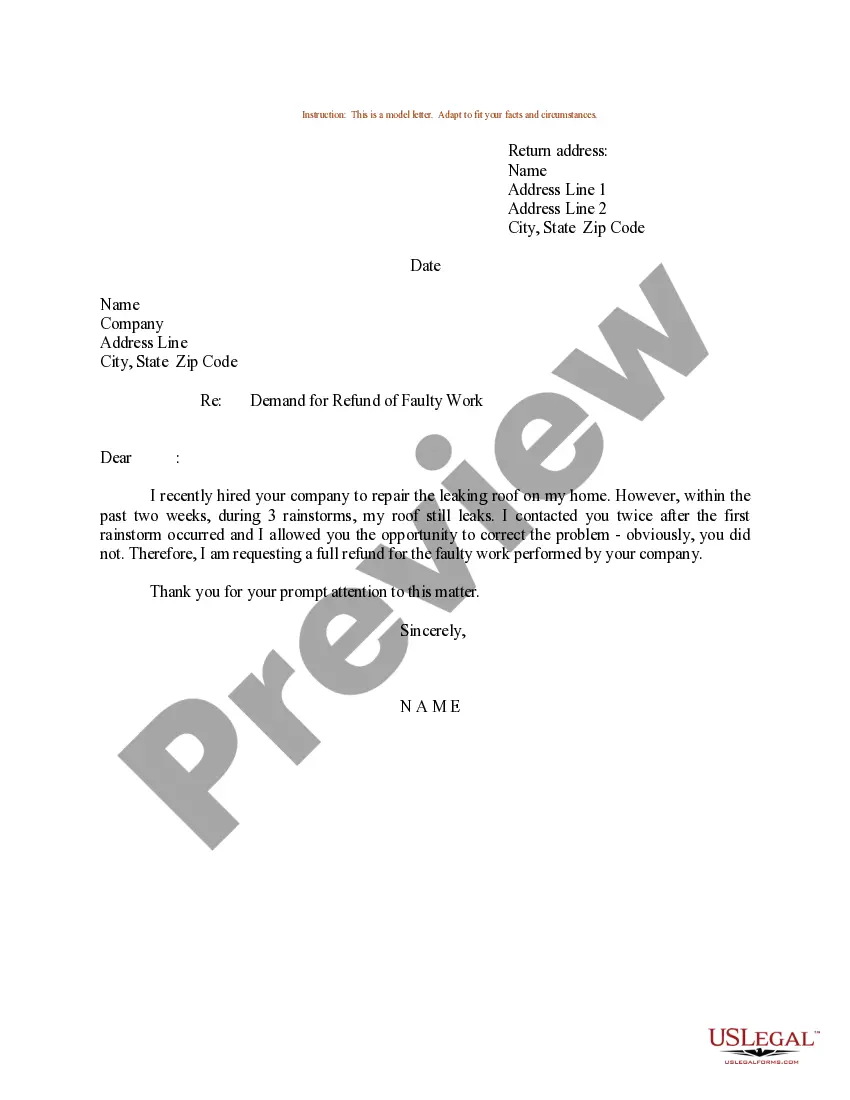
Looking for another form?
Form popularity
FAQ
To obtain a copy of your property deed in Missouri, you should first contact the recorder of deeds in the county where your property is located. Most counties provide online access to property records, allowing you to search for your Missouri Corrective Deed easily. If you prefer, you can visit the office in person or request a copy by mail. Remember to have your property's address or the legal description handy for a smoother process.
A quit claim deed may not provide the same level of protection as a Missouri Corrective Deed. When you use a quit claim deed, you transfer ownership without guaranteeing that the title is clear. This means that if there are any liens or claims against the property, the new owner inherits those issues. Additionally, a quit claim deed does not require the same level of disclosure, which can leave the new owner vulnerable to potential disputes.
Yes, a correction deed in Missouri typically needs to be notarized to ensure its validity. Notarization helps confirm the identity of the signers and the authenticity of the document. It is advisable to follow this procedure to secure the integrity of your Missouri Corrective Deed and to facilitate a smooth recording process.
Common quitclaim deed mistakes include misspelled names, incorrect property descriptions, and failure to include necessary signatures. These errors can lead to significant legal complications down the road. Using a Missouri Corrective Deed can help rectify these issues, ensuring that your property records are accurate and legally binding.
Making a correction on a legal document involves identifying the specific errors and preparing a new document, such as a Missouri Corrective Deed, to address those mistakes. Be sure to include accurate details and descriptions to prevent further issues. Additionally, consult resources like uslegalforms for templates and guidance on ensuring your corrections are completed correctly.
To complete a Scrivener's affidavit, you need to draft a document that outlines the errors made in the original deed and explains the intended corrections. Clearly state the facts and provide any necessary details to support your claims. This affidavit should be signed and notarized before being submitted alongside your Missouri Corrective Deed to rectify the original mistakes.
A corrective deed in New Jersey serves a similar purpose as a Missouri Corrective Deed, which is to rectify errors in the original deed. This type of deed is used when there are mistakes in the property's legal description or if the names of the parties involved were incorrectly stated. By filing a corrective deed, property owners can ensure their records accurately reflect the ownership and details of their property.
Yes, an Affidavit of Correction in Missouri usually needs to be notarized. Notarization adds an extra layer of verification and authenticity to the document. When you submit this affidavit along with your Missouri Corrective Deed, it helps ensure that the correction process goes smoothly and is legally binding.
To correct a deed in Missouri, you typically need to prepare a Missouri Corrective Deed that clearly identifies the errors in the original document. This corrective deed must be signed and recorded with the appropriate county recorder's office. It is essential to include the correct legal descriptions and any other relevant details to ensure the correction is valid.