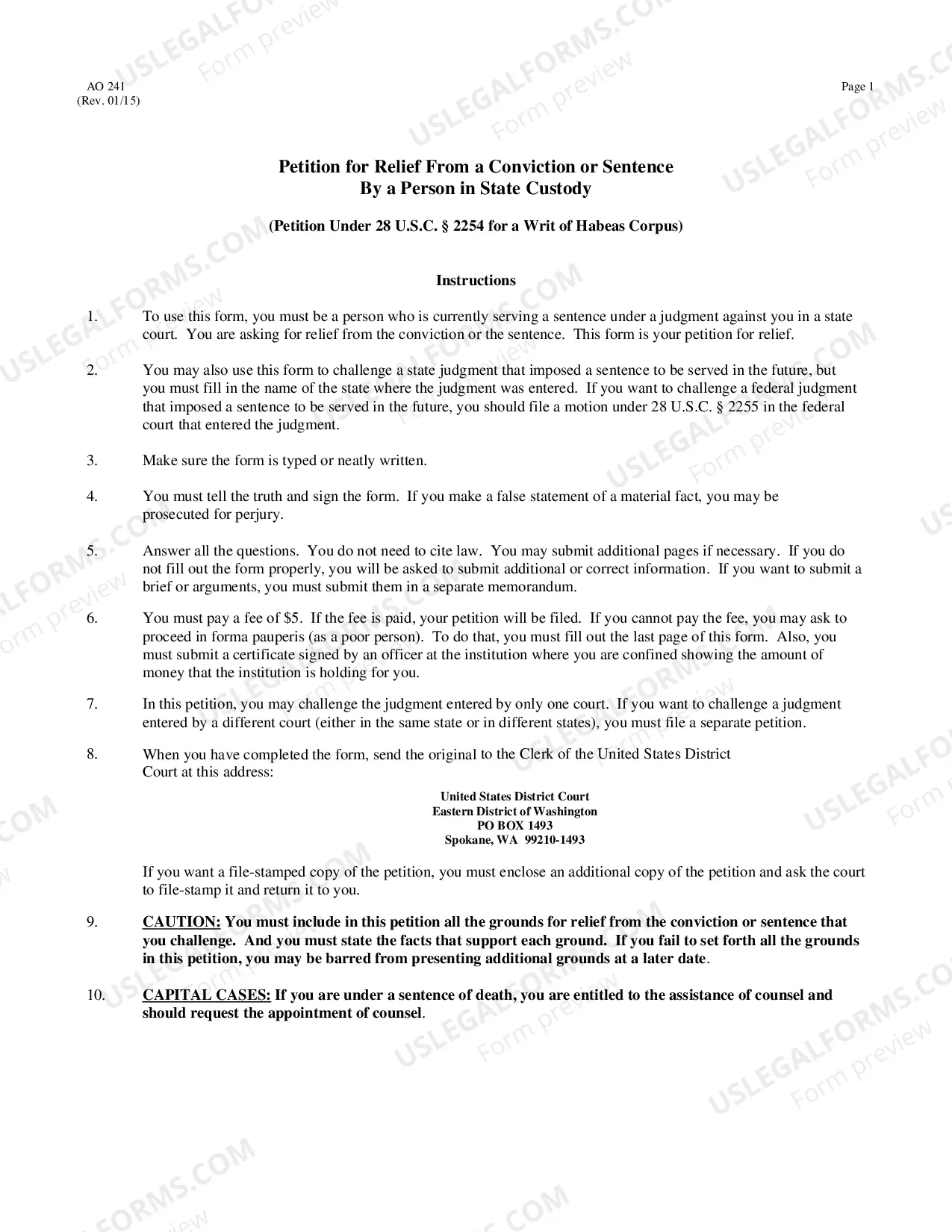
Missouri Release of Temporary Easement Agreement
Understanding this form
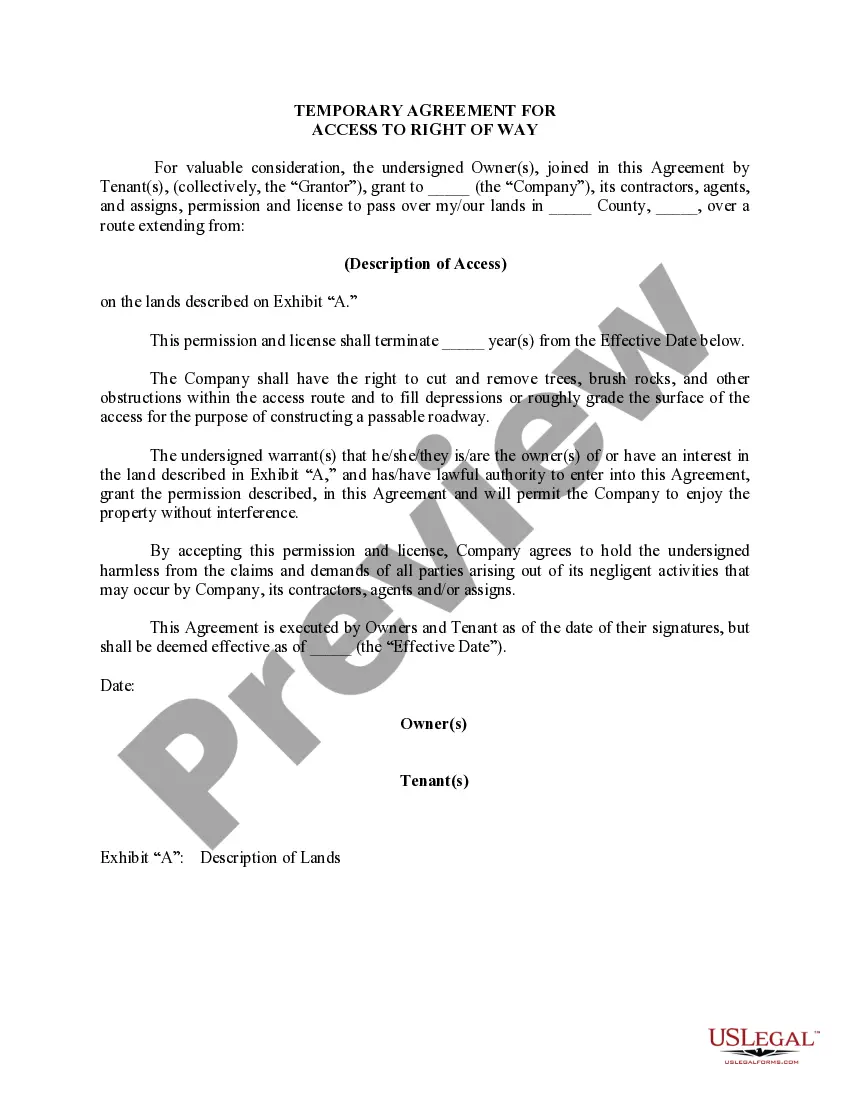
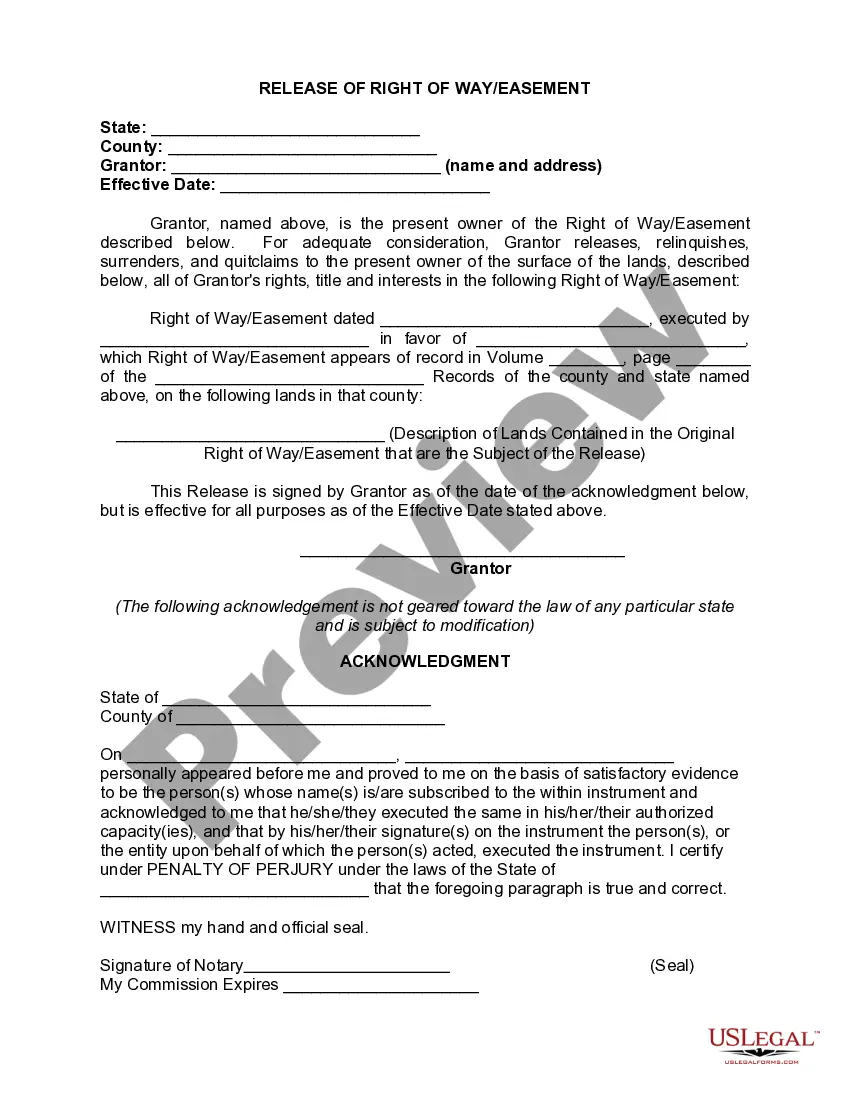
The Release of Temporary Easement Agreement is a legal document that allows property owners to grant temporary access to their land without transferring ownership. This agreement differentiates itself from sales contracts, as it specifically addresses easements â rights to use someone else's land for a specific purpose, often limited to a defined duration.
Form components explained
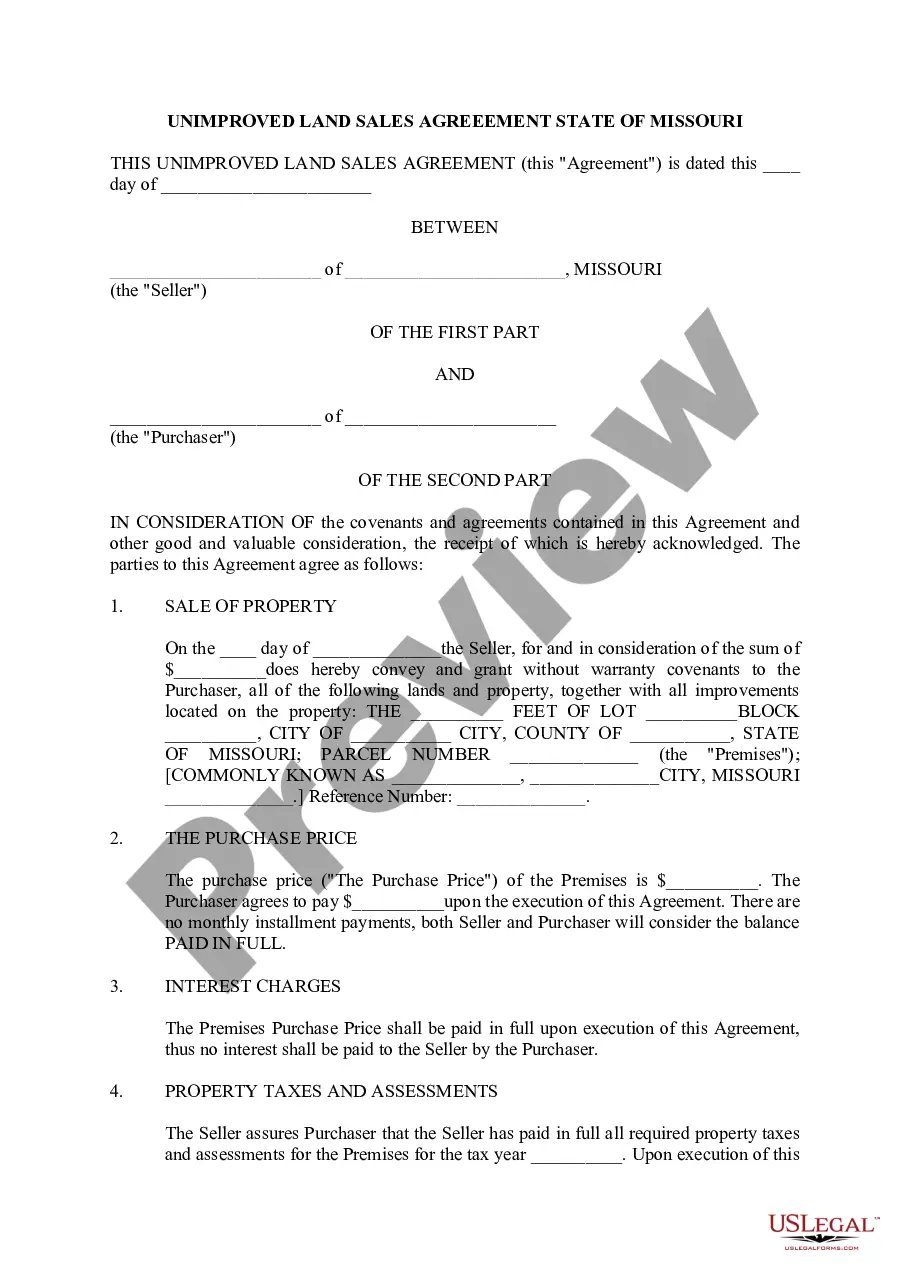
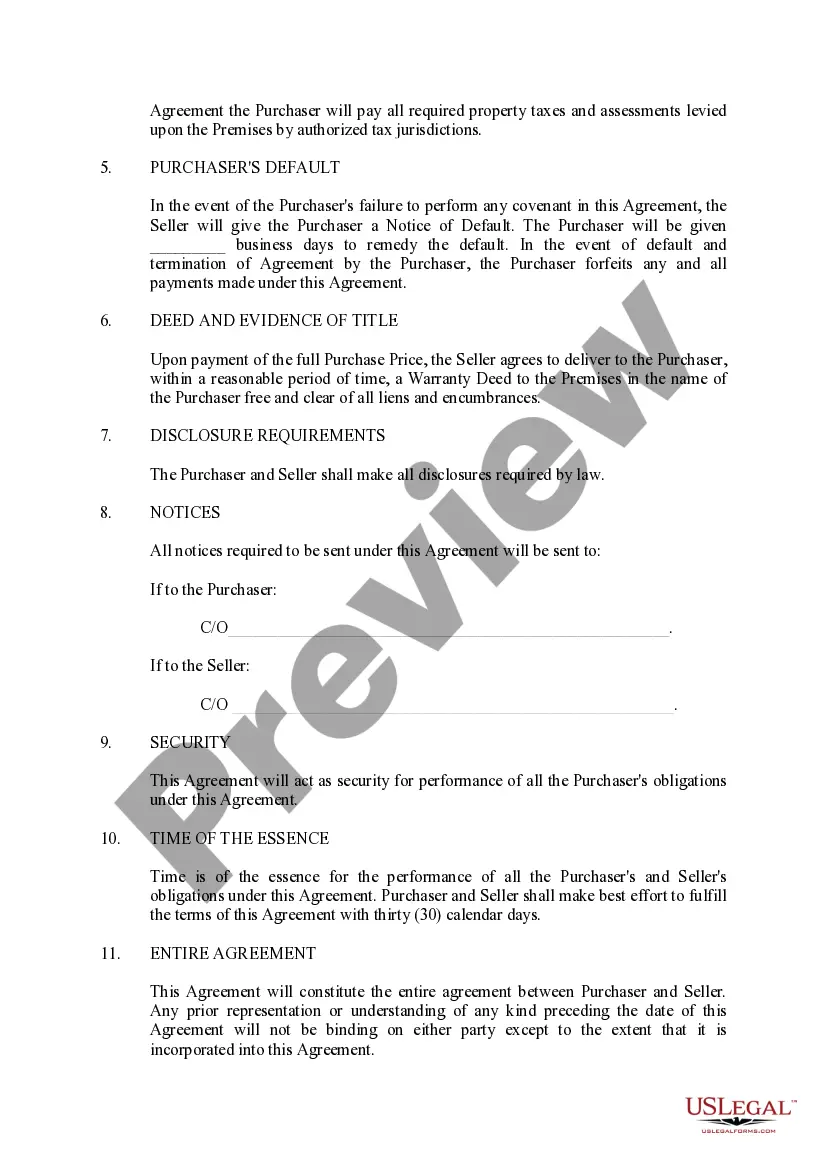
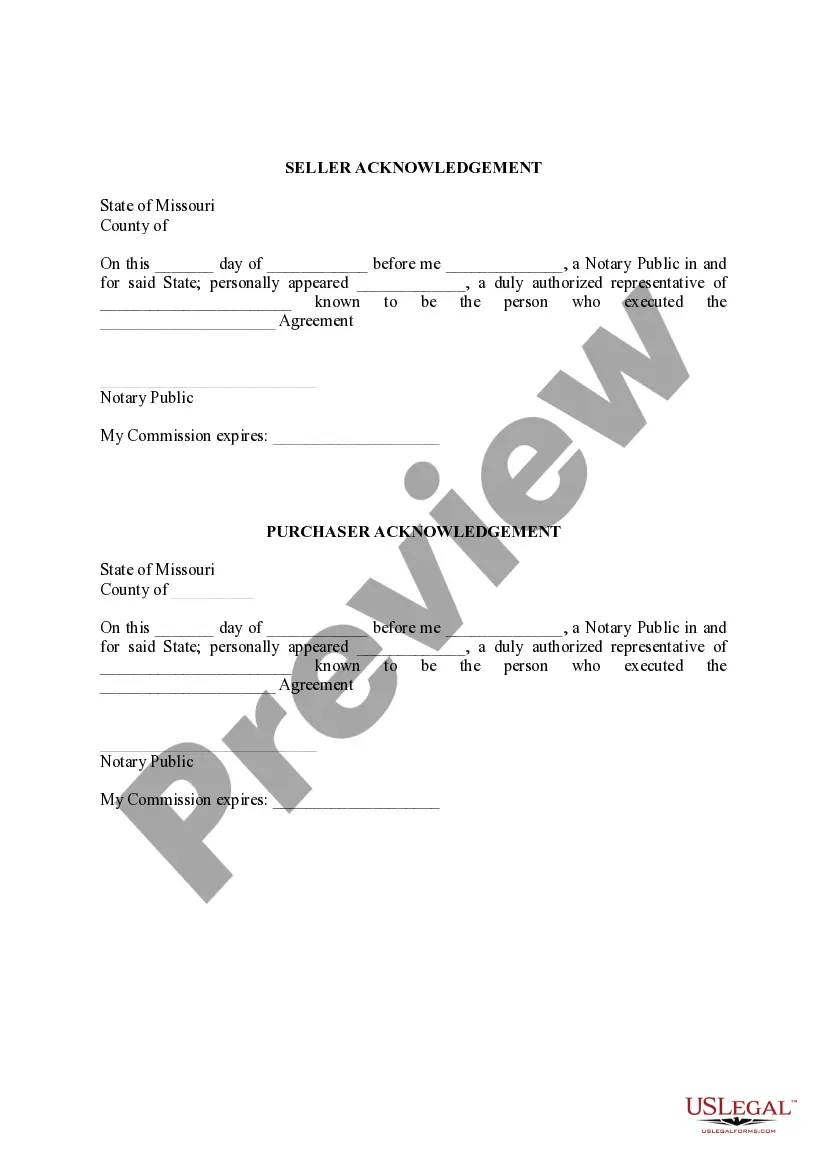
- Identification of the parties involved: Seller and Purchaser.
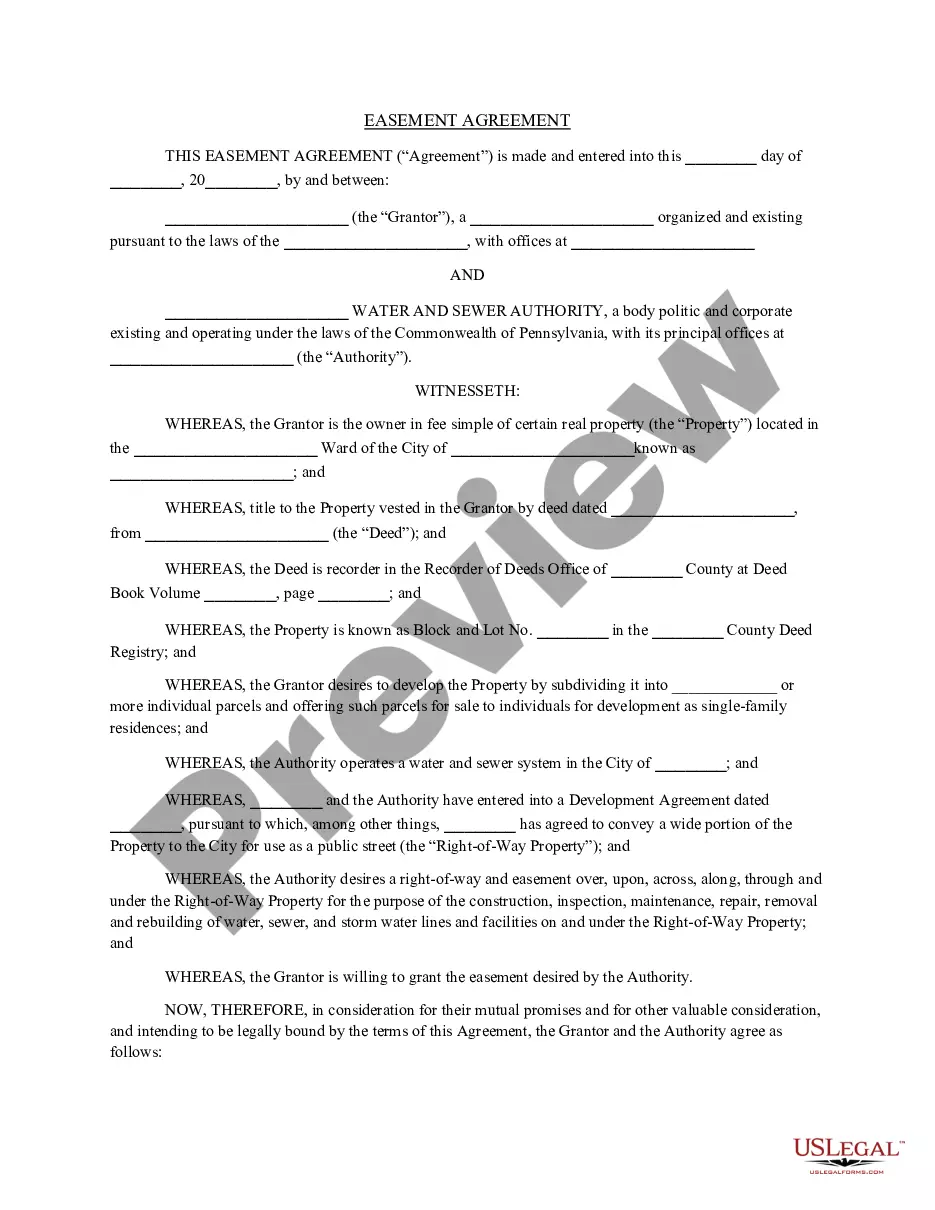
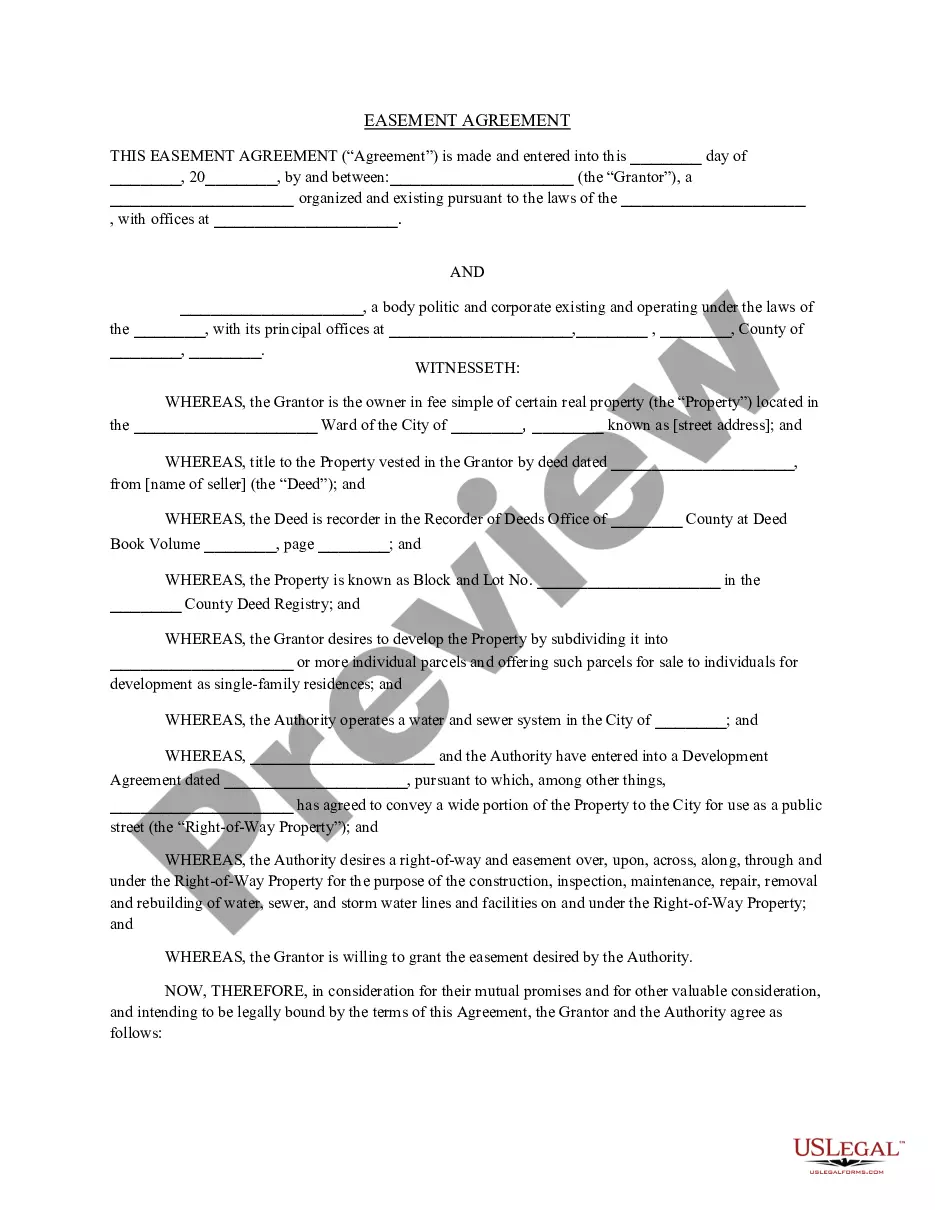
- Description of the property being affected by the easement.
- Details on the temporary duration of the easement and its intended use.
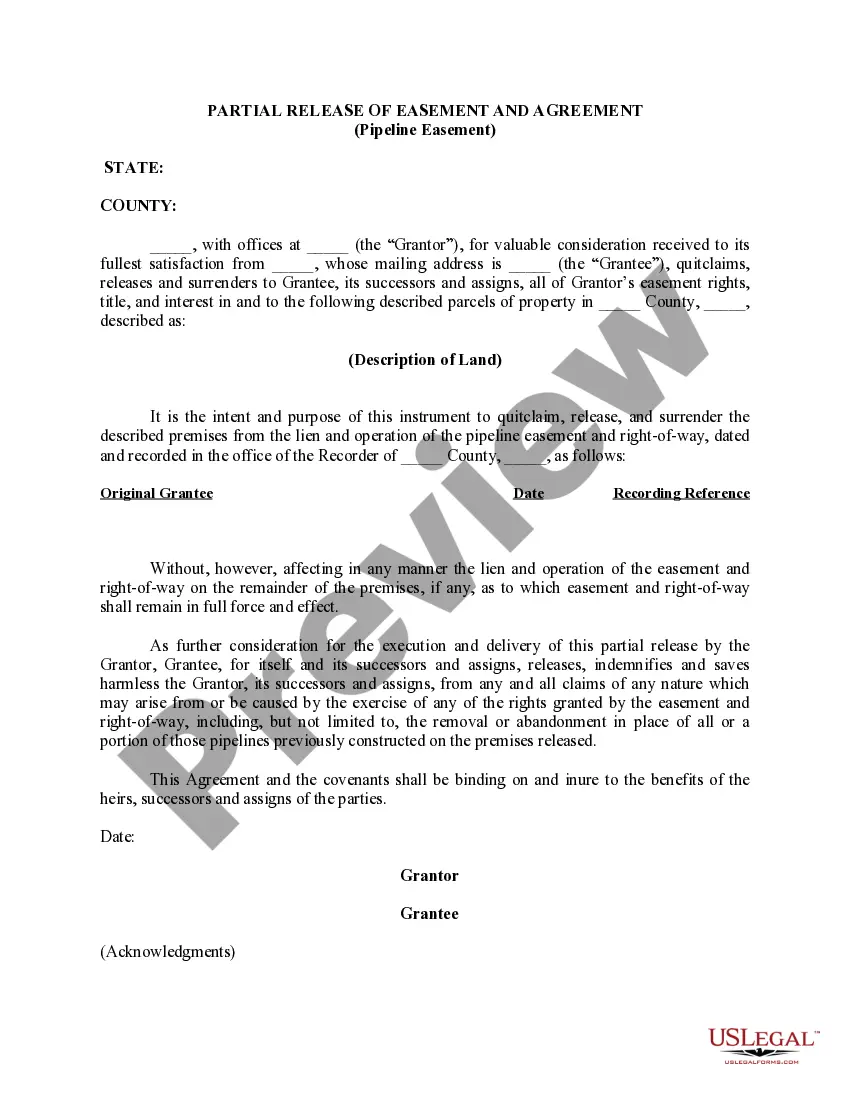
- Conditions related to the easementâs termination.
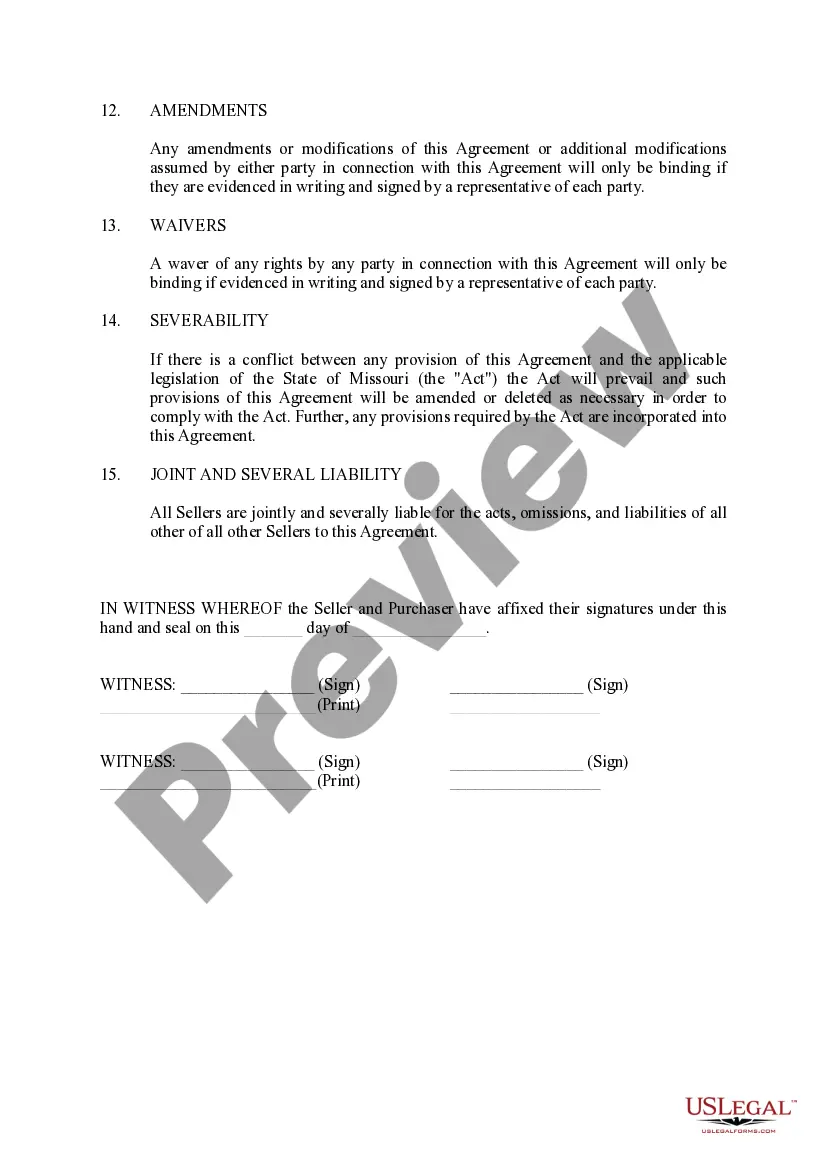
- Signatures of both parties for validation.
- Notary acknowledgment to verify signatures depending on local requirements.
When to use this document
This form is utilized when a property owner needs to grant temporary access to their land for specific purposes, such as construction, utility work, or other activities that require short-term use of the property. It ensures that both the property owner and the party seeking access clearly understand the terms of the temporary easement.
Intended users of this form
- Property owners (Sellers) who wish to allow temporary access to their land.
- Contractors or service providers (Purchasers) requiring permission to use someone elseâs land for a limited time.
- Legal professionals seeking to create a structured agreement for their clients regarding temporary access rights.
How to prepare this document
- Identify the Seller and Purchaser by entering their full names and addresses.
- Clearly describe the property involved, including the location and any relevant parcel numbers.
- Define the specific purpose and duration of the easement.
- Include any conditions related to the use and termination of the easement.
- Gather signatures from both parties and have the document notarized if necessary.
Notarization guidance
Yes, this form must be notarized to be legally valid in Missouri. Notarization helps to verify the identities and signatures of the parties involved, securing the document against potential disputes regarding its authenticity.
Get your form ready online
Our built-in tools help you complete, sign, share, and store your documents in one place.
Make edits, fill in missing information, and update formatting in US Legal Forms—just like you would in MS Word.
Download a copy, print it, send it by email, or mail it via USPS—whatever works best for your next step.
Sign and collect signatures with our SignNow integration. Send to multiple recipients, set reminders, and more. Go Premium to unlock E-Sign.
If this form requires notarization, complete it online through a secure video call—no need to meet a notary in person or wait for an appointment.
We protect your documents and personal data by following strict security and privacy standards.

Make edits, fill in missing information, and update formatting in US Legal Forms—just like you would in MS Word.

Download a copy, print it, send it by email, or mail it via USPS—whatever works best for your next step.

Sign and collect signatures with our SignNow integration. Send to multiple recipients, set reminders, and more. Go Premium to unlock E-Sign.

If this form requires notarization, complete it online through a secure video call—no need to meet a notary in person or wait for an appointment.

We protect your documents and personal data by following strict security and privacy standards.
Typical mistakes to avoid
- Failing to clearly define the purpose and duration of the easement.
- Not including complete legal descriptions of the property.
- Neglecting to have the document notarized when required.
- Overlooking the importance of mutual agreement between parties before signing.
Why use this form online
- Convenient access to the form allows for quick preparation and customization.
- Forms are often provided with instructions, ensuring that users understand how to properly fill them out.
- Reliability from legal documents drafted by licensed attorneys ensures compliance with applicable laws.
Looking for another form?
Form popularity
FAQ
Releasing an easement means that the easement holder relinquishes their rights to use someone else's property for a specified purpose. This process can be formalized through a Missouri Release of Temporary Easement Agreement, which clearly documents the termination of the easement. Releasing an easement can benefit both property owners by resolving disputes and restoring full property rights. It's advisable to consult with a legal expert to ensure that the release is valid and enforceable.
Easement laws in Missouri outline how easements are created, maintained, and terminated. Generally, easements can be established through written agreements, necessity, or prescription. It's important to understand the specifics of Missouri law, as they dictate the rights and obligations of easement holders. For those needing guidance, a Missouri Release of Temporary Easement Agreement can simplify the process and help clarify legal standing.
To terminate an easement in Missouri, you typically need to follow a legal process. This process often involves a written agreement between the parties involved, which can be formalized through a Missouri Release of Temporary Easement Agreement. You may also consider filing a quitclaim deed or obtaining a court order if necessary. Consulting a legal professional can help ensure that you complete the process correctly.
Easement law in Missouri governs how property owners can grant access rights to others. A Missouri Release of Temporary Easement Agreement outlines the terms and conditions under which these rights are granted. It is essential for both parties to understand their responsibilities and limitations to avoid future disputes. Utilizing a platform like USLegalForms can help you create a comprehensive agreement tailored to your specific needs.
Yes, an easement can be temporary. A Missouri Release of Temporary Easement Agreement allows property owners to grant others the right to use a portion of their land for a specific time. This type of easement is beneficial for projects like construction or utility work that require limited access. Once the agreed-upon time expires, the easement rights revert back to the property owner.
If a seller defaults, he must return all deposits, plus added reasonable expenses, to the buyer. The other party may also seek to compel the erring party to complete the deal under specific performance. From a buyer's point of view, it is advisable to get the sale agreement registered.
Just go to the Missouri page, find your city, and create a "real estate by owner" listing. FSBO websites: There are multiple FSBO listing websites that allow you to post your home for free or a few hundred dollars.
But, there are 12 states that are still considered non-disclosure: Alaska, Idaho, Kansas, Louisiana, Mississippi, Missouri (some counties), Montana, New Mexico, North Dakota, Texas, Utah and Wyoming. In a non-disclosure state, transaction sale prices are not available to the public.
Seller's Disclosure Statement for Residential Property (Form DSC-8000) Unlike most states, Missouri does not require the sellers of real estate to disclose information regarding a property's condition. Nonetheless, completing and providing a disclosure statement can help reassure potential buyers.
If a seller is actually breaching a contract and you can prove you have been financially damaged, you could sue. However, the amount you can sue for depends on the law in your individual state.With that said, if you can show the seller acted in bad faith, your state may allow you to seek additional damages.