Missouri Guaranty Attachment to Lease for Guarantor or Cosigner
About this form
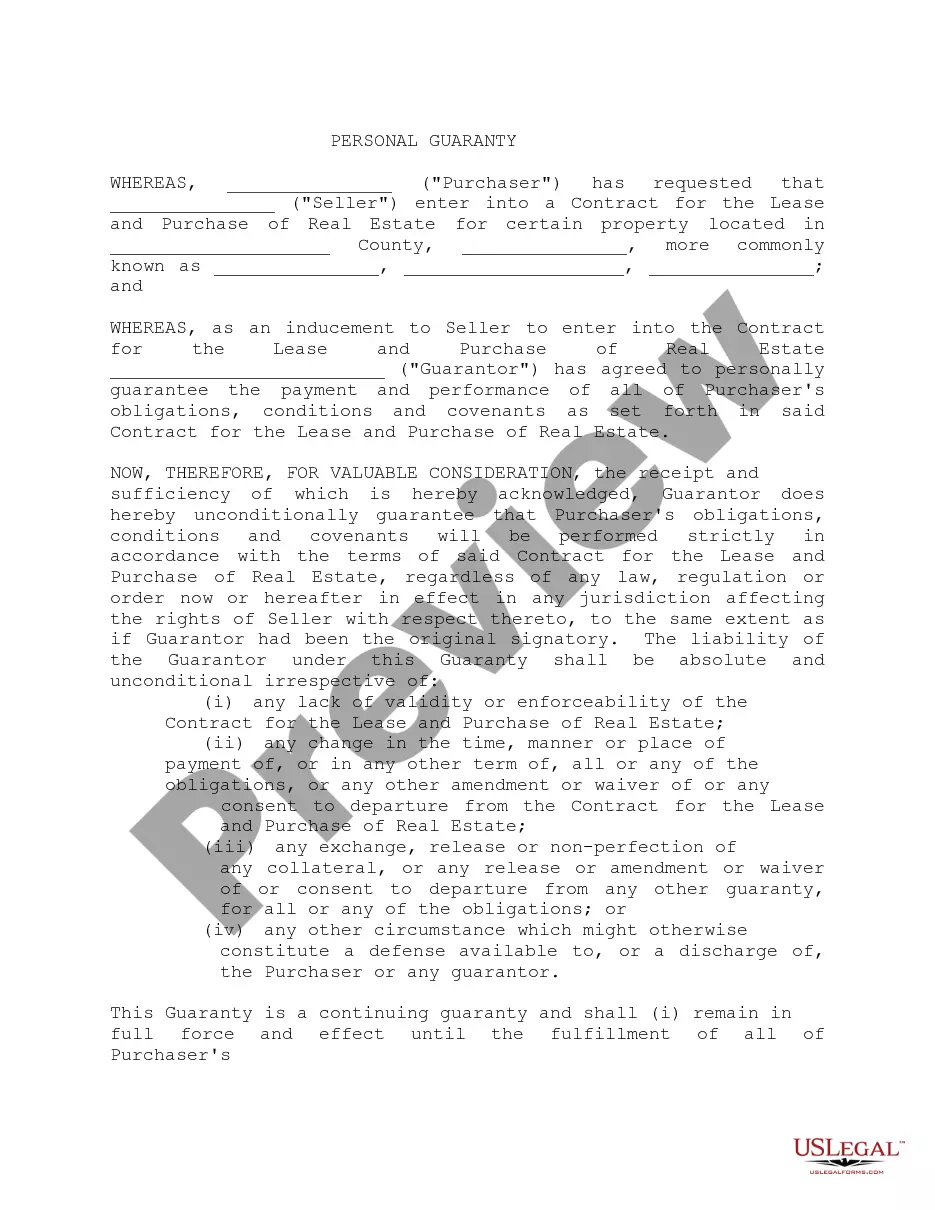
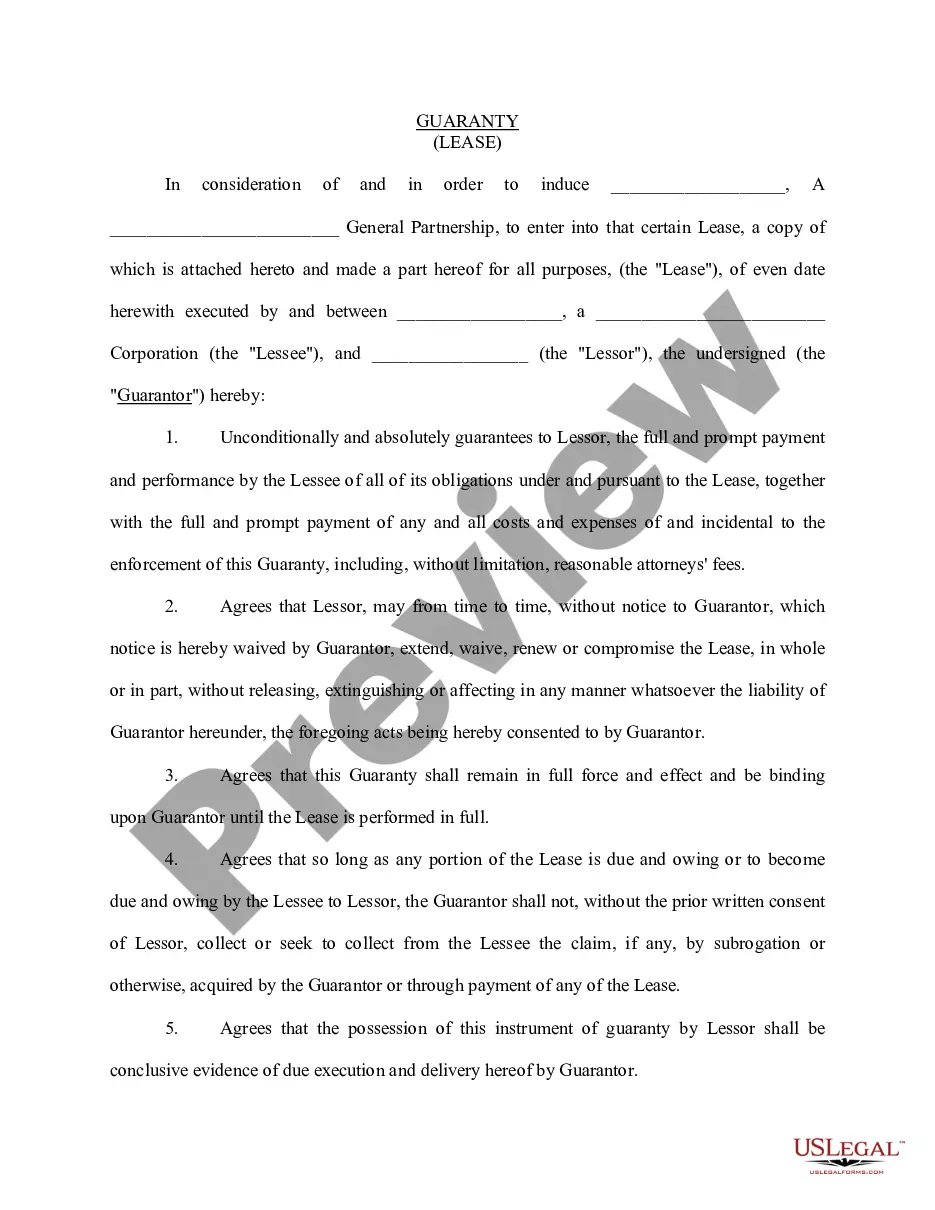
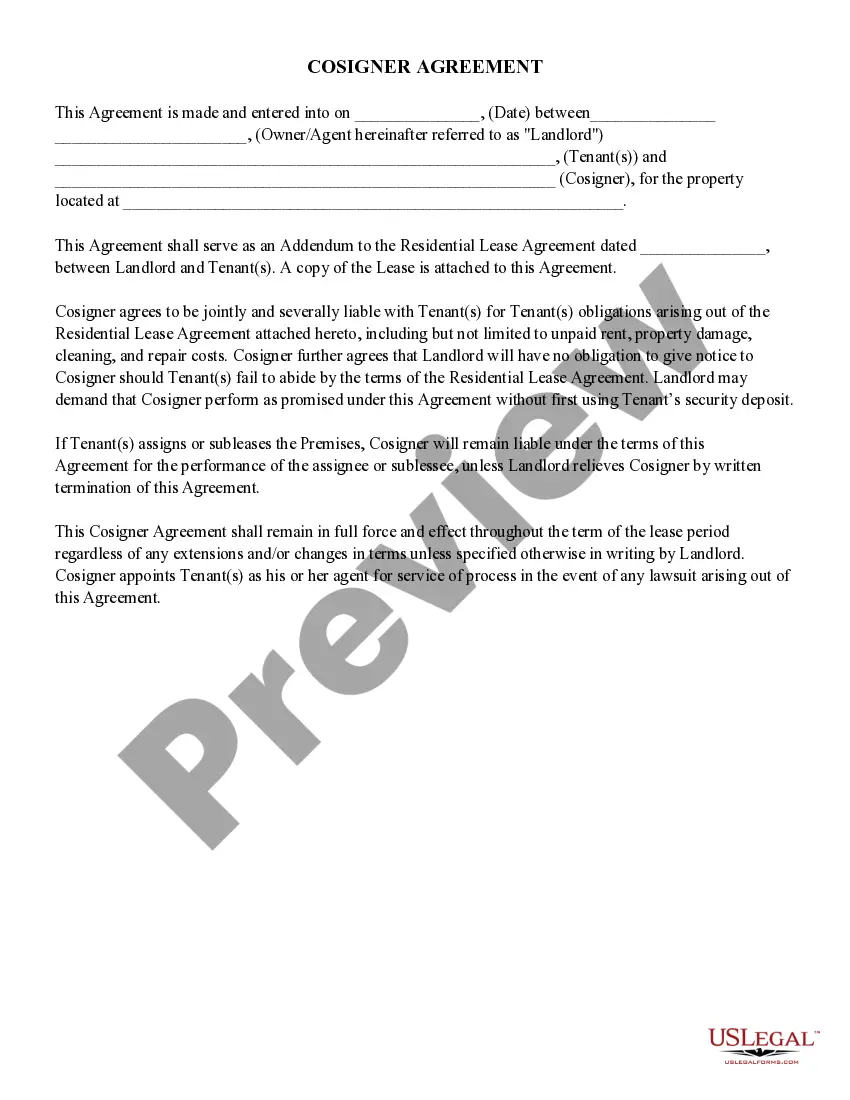
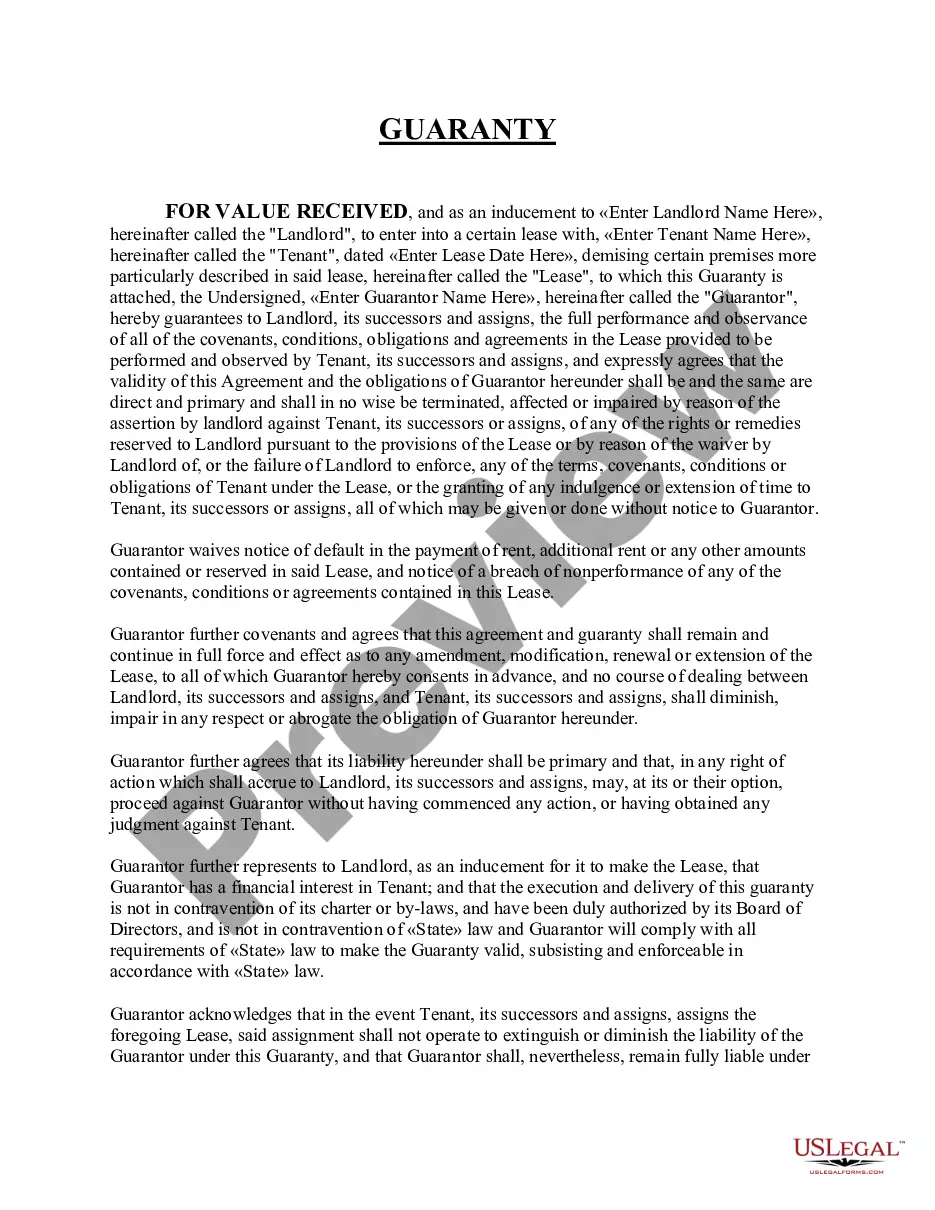
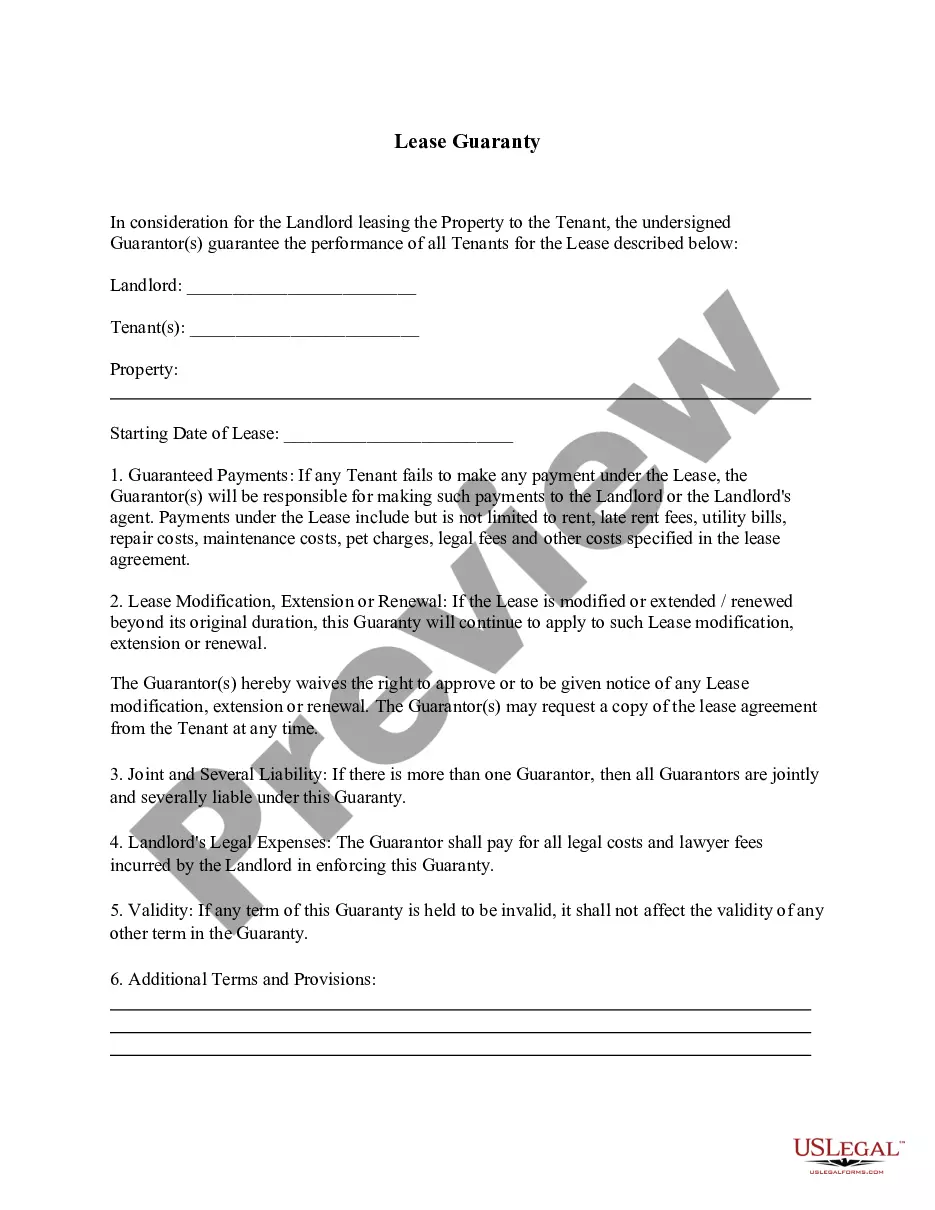
The Guaranty Attachment to Lease for Guarantor or Cosigner is a legal document that allows a third party to co-sign a lease agreement. This individual agrees to guarantee the payment of rent and takes on the responsibility to cover any unpaid rent by the tenant. Unlike a standard rental agreement, this form specifically binds the cosigner to ensure that the landlord receives payment if the tenant defaults.
Form components explained
- Co-signer/Guarantor's address: Located at the beginning of the form.
- Lessor's name and address: Identifies the landlord as part of the contractual agreement.
- Dates of signing: Important for establishing the timeframe of the lease agreement.
- Signature lines for both the co-signer and the lessor: Acknowledges consent and agreement to the terms.
When to use this form
This form should be used when a tenant requires a cosigner to secure a lease. It is particularly useful in situations where the tenant may not have adequate credit history or income to qualify for the lease on their own. The form offers landlords an additional layer of security by ensuring that another party is legally responsible for the rent payments.
Intended users of this form
- Tenants who need a co-signer to qualify for a lease.
- Landlords looking to ensure rent payment security through a guarantor.
- Individuals acting as co-signers or guarantors for someone else's lease agreement.
How to complete this form
- Identify the parties involved: Fill in the names and addresses of the guarantor, tenant, and landlord.
- Specify the property: Clearly state the address of the rental property covered by the lease.
- Enter the applicable dates: Include the date of the agreement and when the lease starts.
- Signatures: Ensure both the guarantor and the landlord sign the form to validate the agreement.
Notarization guidance
This form does not typically require notarization unless specified by local law. It is advisable to check state regulations to ensure compliance.
Get your form ready online
Our built-in tools help you complete, sign, share, and store your documents in one place.
Make edits, fill in missing information, and update formatting in US Legal Forms—just like you would in MS Word.
Download a copy, print it, send it by email, or mail it via USPS—whatever works best for your next step.
Sign and collect signatures with our SignNow integration. Send to multiple recipients, set reminders, and more. Go Premium to unlock E-Sign.
If this form requires notarization, complete it online through a secure video call—no need to meet a notary in person or wait for an appointment.
We protect your documents and personal data by following strict security and privacy standards.

Make edits, fill in missing information, and update formatting in US Legal Forms—just like you would in MS Word.

Download a copy, print it, send it by email, or mail it via USPS—whatever works best for your next step.

Sign and collect signatures with our SignNow integration. Send to multiple recipients, set reminders, and more. Go Premium to unlock E-Sign.

If this form requires notarization, complete it online through a secure video call—no need to meet a notary in person or wait for an appointment.

We protect your documents and personal data by following strict security and privacy standards.
Common mistakes
- Not including the complete address of the property being leased.
- Failing to obtain signatures from all parties involved.
- Overlooking to date the agreement, which may lead to confusion later.
Advantages of online completion
- Convenient access: Download and complete the form at your convenience.
- Editability: Easily fill in details and make necessary adjustments.
- Reliability: Forms are drafted by licensed attorneys, ensuring legal accuracy.
Summary of main points
- The Guaranty Attachment to Lease ensures rent payment coverage by a co-signer.
- It is ideal for landlords seeking security and for tenants needing guarantors.
- Verification of state-specific requirements is crucial when using the form.
Looking for another form?

Form popularity
FAQ
Deciding whether to be a cosigner or a guarantor depends on your financial situation and the level of responsibility you are willing to accept. A cosigner shares the responsibility for rent payments and may be held accountable if the tenant defaults, while a guarantor usually has a more limited obligation. Understanding the legal implications of each role is crucial. A Missouri Guaranty Attachment to Lease for Guarantor or Cosigner can provide clarity and protect your interests in either role.
The guarantor form as an attachment to a lease is a document that provides legal proof of a guarantor's commitment to cover obligations if the tenant defaults. This form includes information about the guarantor, the lease terms, and the responsibilities involved. By using a Missouri Guaranty Attachment to Lease for Guarantor or Cosigner, both landlords and tenants can protect their interests and clarify expectations. It's an essential part of ensuring financial security for the rental arrangement.
To add a guarantor to a lease agreement, first, you should discuss the arrangement with your landlord to ensure they accept a guarantor. Next, complete the necessary paperwork, which often includes a Missouri Guaranty Attachment to Lease for Guarantor or Cosigner. This document outlines the terms and conditions under which the guarantor agrees to assume financial responsibility. Finally, both parties should sign the updated lease agreement to make it official.
A lease addendum for a cosigner is a legal document that outlines the responsibilities of a cosigner in relation to the lease agreement. This addendum typically includes details about financial obligations, property rules, and the duration of the lease. By including this addendum, landlords ensure that cosigners understand their role in guaranteeing payment and compliance. Utilizing a Missouri Guaranty Attachment to Lease for Guarantor or Cosigner can simplify this process.
Ask the owner whether he allows for co-signers. Schedule a meeting with the owner and your co-signer. Sign the lease or rental agreement once the co-signer passes the property owner's requirements. Ask the landlord whether he objects to another tenant moving into the home.
Guarantors sign the lease and are responsible for the payments under the law, but they don't occupy the apartment nor are they entitled to occupy it.
Be over 21 years old. have a good credit history. have a separate bank account to the borrower you may be able to guarantee a loan for a spouse or partner, but only if you have separate bank accounts.
HOW TO FILL OUT THE GUARANTORS FORM. ADDRESS AND UNIT APPLYING FOR: Put the full address and unit of the apartment to be rented. FIRST NAME AND LAST NAME: The guarantors full name. GUARANTOR FOR: Name of the person who will be renting the apartment.
Co-signers have equal responsibility for payment of monthly rental costs, while a guarantor is generally sought for payment only when the primary signer is unable to make the rental payment.
Date the date at which the Guarantor form was signed. Guarantor the name of the Guarantor. Landlord the name of the landlord. Tenant the name of the tenant that is being Guaranteed. Property the address of the property that is being rented.