Missouri Tenant's Maintenance Repair Request Form
Understanding this form
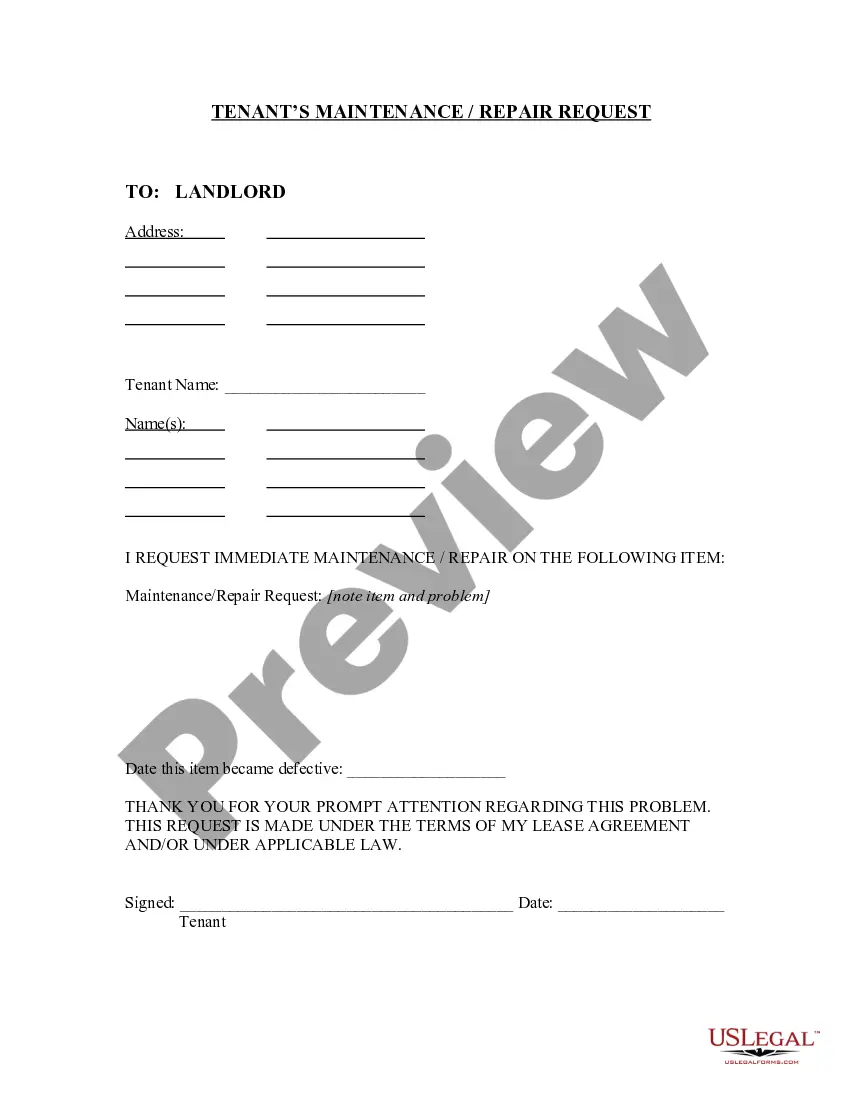
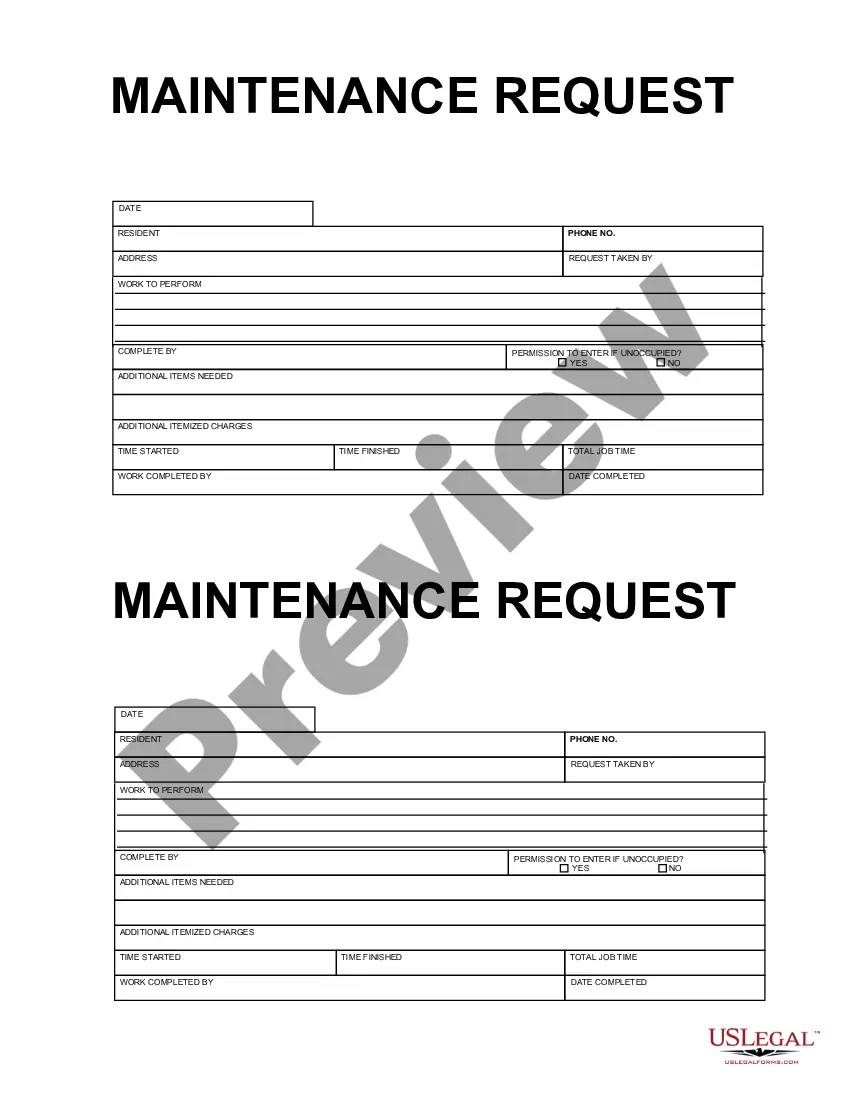
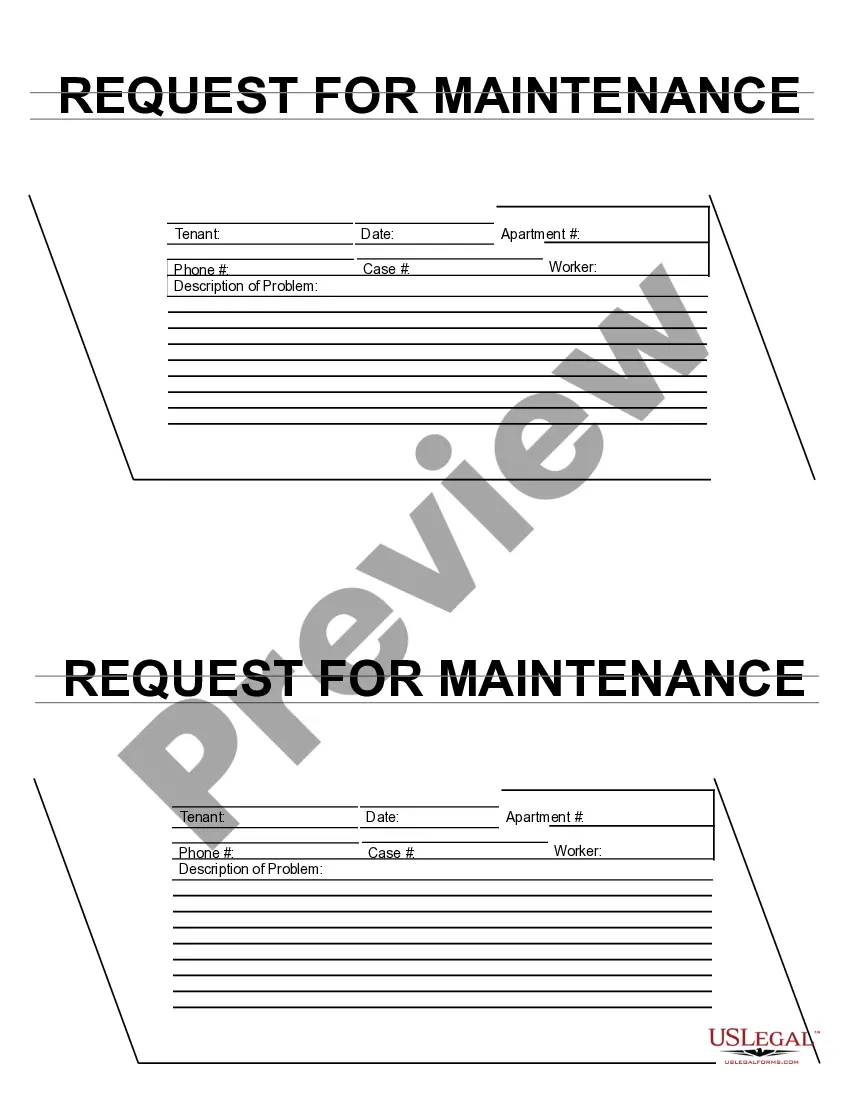
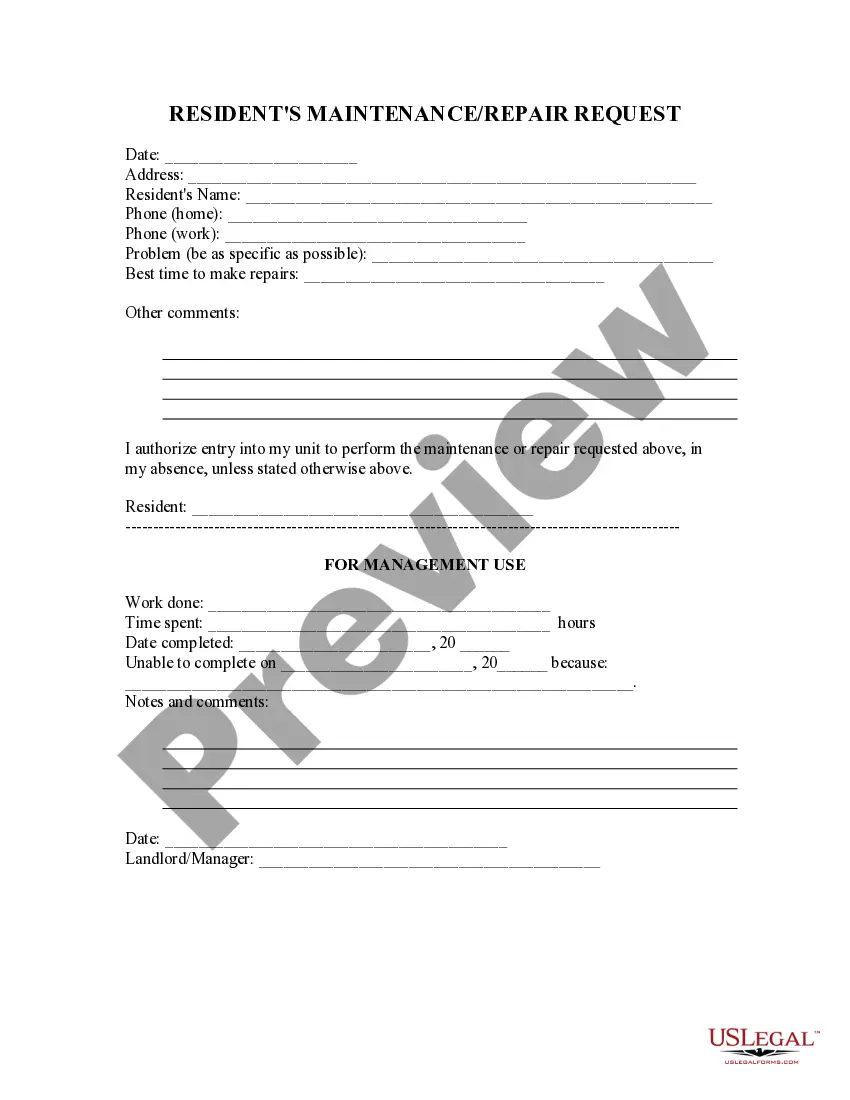
A Tenant's Maintenance Repair Request Form is designed for tenants who need to formally notify their landlord about necessary maintenance or repairs in their rented space. This form serves as a crucial legal document that documents the tenant's request and ensures compliance with state laws, distinguishing it from informal communication methods.
Key parts of this document
- Name and signature of the tenant making the request.
- Date of the request submission.
- Description of the maintenance or repair needed.
- Reference to the lease agreement terms or applicable law under which the request is made.
- Acknowledgment of prompt attention to the issue.
Common use cases
This form should be utilized when a tenant identifies any issues in the rented property that require the landlord's attention. This includes problems such as plumbing leaks, electrical issues, heating malfunctions, or other maintenance concerns that affect the habitability of the premises. Using this form provides a clear record of the request made by the tenant.
Who needs this form
- Tenants who reside in rental properties and need repairs or maintenance.
- Individuals unfamiliar with formal tenant-landlord communication procedures.
- Those looking to document their request for legal purposes.
How to prepare this document
- Identify and input your full name as the tenant.
- Specify the date you are submitting the request.
- Provide a detailed description of the maintenance or repairs needed.
- Reference your lease agreement or applicable laws that mandate landlord responsibilities.
- Sign the form where indicated to validate the request.
Does this form need to be notarized?
Notarization is not commonly needed for this form. However, certain documents or local rules may make it necessary. Our notarization service, powered by Notarize, allows you to finalize it securely online anytime, day or night.
Get your form ready online
Our built-in tools help you complete, sign, share, and store your documents in one place.
Make edits, fill in missing information, and update formatting in US Legal Forms—just like you would in MS Word.
Download a copy, print it, send it by email, or mail it via USPS—whatever works best for your next step.
Sign and collect signatures with our SignNow integration. Send to multiple recipients, set reminders, and more. Go Premium to unlock E-Sign.
If this form requires notarization, complete it online through a secure video call—no need to meet a notary in person or wait for an appointment.
We protect your documents and personal data by following strict security and privacy standards.

Make edits, fill in missing information, and update formatting in US Legal Forms—just like you would in MS Word.

Download a copy, print it, send it by email, or mail it via USPS—whatever works best for your next step.

Sign and collect signatures with our SignNow integration. Send to multiple recipients, set reminders, and more. Go Premium to unlock E-Sign.

If this form requires notarization, complete it online through a secure video call—no need to meet a notary in person or wait for an appointment.

We protect your documents and personal data by following strict security and privacy standards.
Common mistakes to avoid
- Failing to provide a clear and detailed description of the repair needed.
- Not signing or dating the form appropriately.
- Neglecting to reference specific lease agreement terms or local laws.
Benefits of using this form online
- Easy access to legal templates crafted by licensed attorneys.
- Convenience of filling out the form from home, at any time.
- Self-editable, allowing for personal customization before submission.
Summary of main points
- Using a Tenant's Maintenance Repair Request Form protects tenant rights.
- Detailed documentation of repair requests helps ensure timely action by landlords.
- Always check your state laws to confirm any specific requirements.
Looking for another form?
Form popularity
FAQ
In most circumstances, a tenant has no right to withhold rent. Missouri law provides only a very narrow exception to this rule for dangerous or unsanitary conditions that a landlord fails to fix.
Your landlord is always responsible for repairs to: the property's structure and exterior. basins, sinks, baths and other sanitary fittings including pipes and drains. heating and hot water.
Complying with all state and local health and building codes. Maintaining structural components and a reasonably weather-protected unit. Providing the necessary heat, electric, and hot and cold water facilities. Making any requested repairs promptly.
In general, tenants do not have the right to withhold rent if the landlord does not carry out repairs. Doing so could jeopardise the tenant's right to remain in the accommodation. In certain circumstances, however, a tenant can pay for repairs and deduct the cost from future rent.
Keep your rental unit as clean and safe as the condition of the premises permits. Dispose of garbage, rubbish, and other waste in a clean and safe manner. Keep plumbing fixtures as clean as their condition permits.
Routine maintenance includes monthly costs associated with maintaining the exterior curb appeal and interior common areas of the property if it applies. The property owner should include landscaping, regular exterior and interior cleaning, garbage and recycling collection to his monthly maintenance costs as well.
Tenant Rights to Withhold Rent in MissouriTenants may withhold rent or exercise the right to repair and deduct if a landlord fails to take care of important repairs, such as a broken heater.
Following building and housing codes. Keeping the unit safe and sanitary. Disposing of garbage. Maintaining plumbing fixtures. Properly operating all plumbing and electric fixtures. Maintaining appliances supplied by the landlord. Not damaging the unit.
The living space is safe and meets minimum housing, fire, building, and health standards; the heating, wiring, and plumbing work; the structure of the building is maintained including windows, doors, walls, roofs, ceilings, floors, and stairs; the fridge and stove work; and.