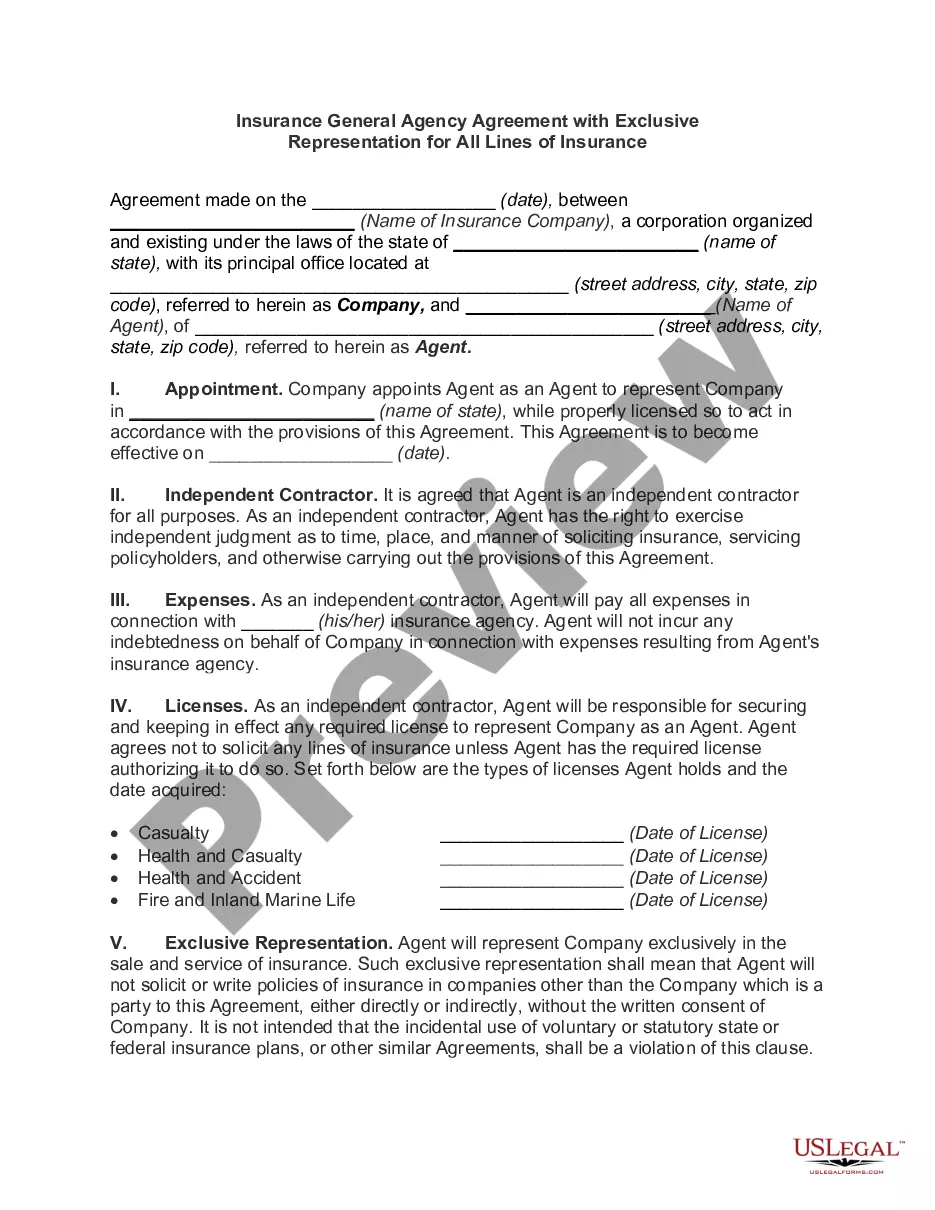
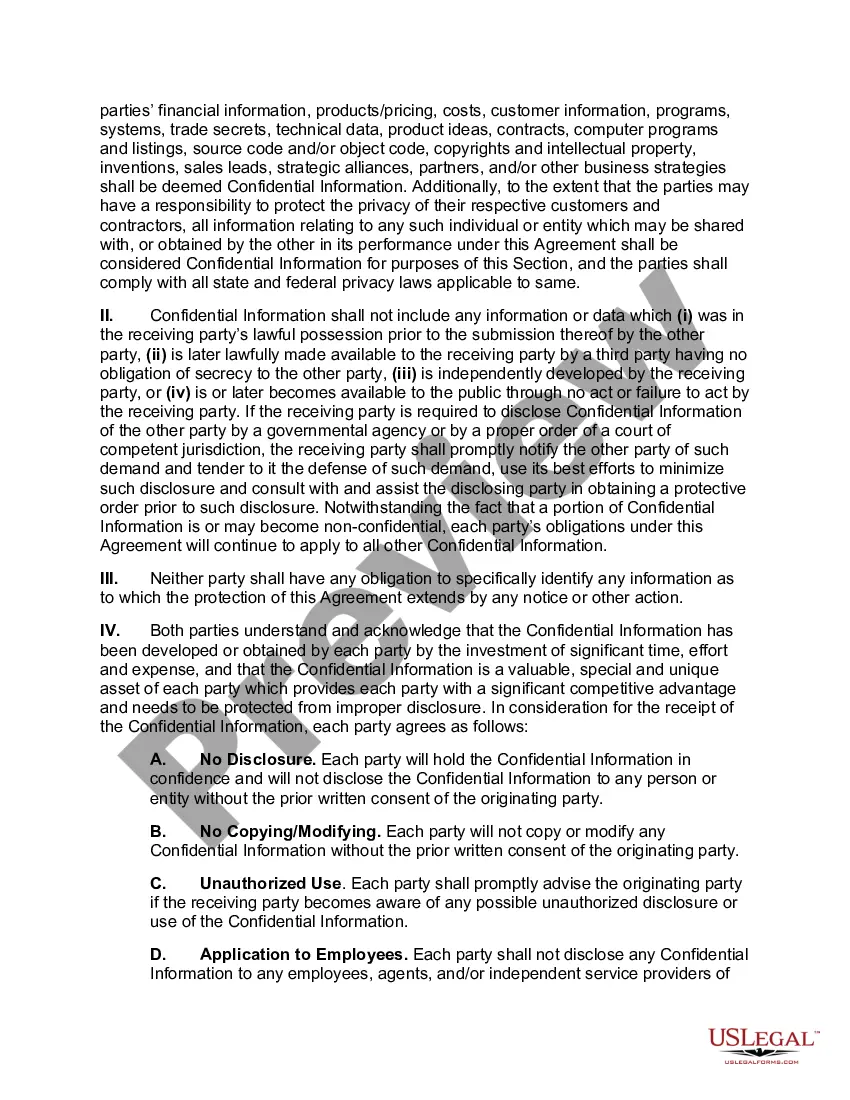
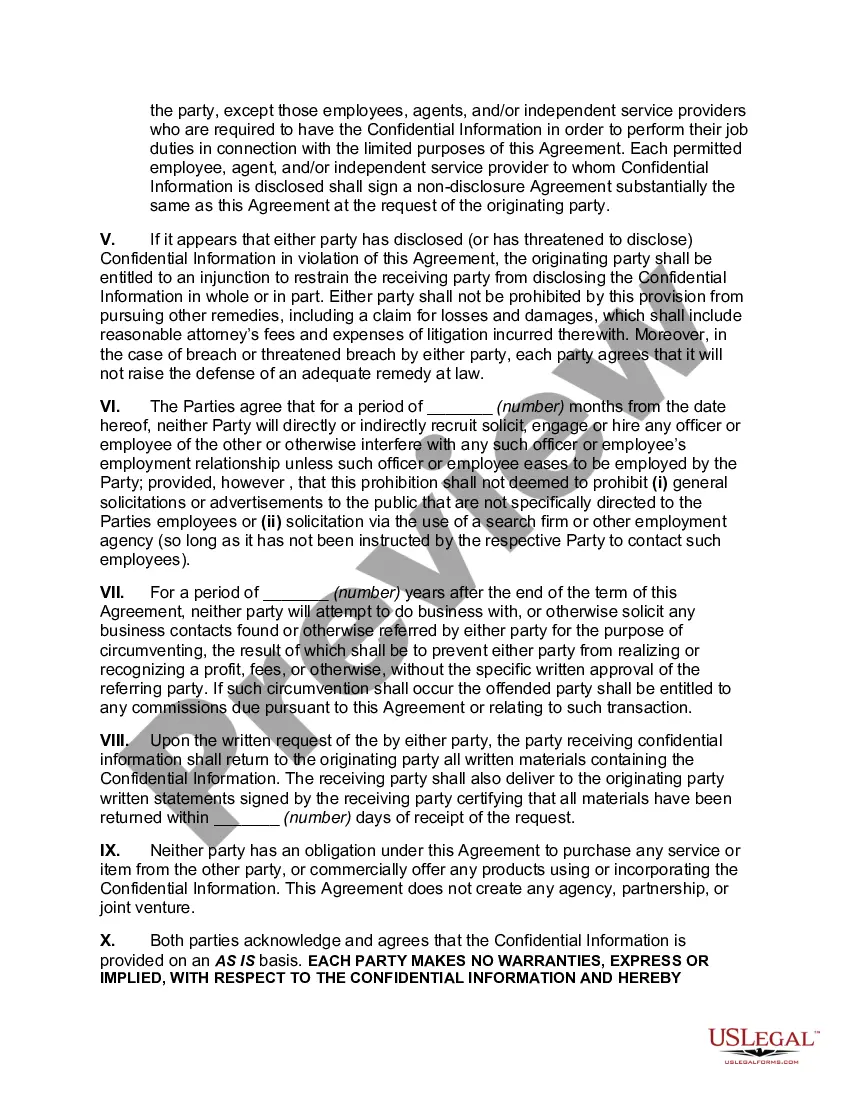
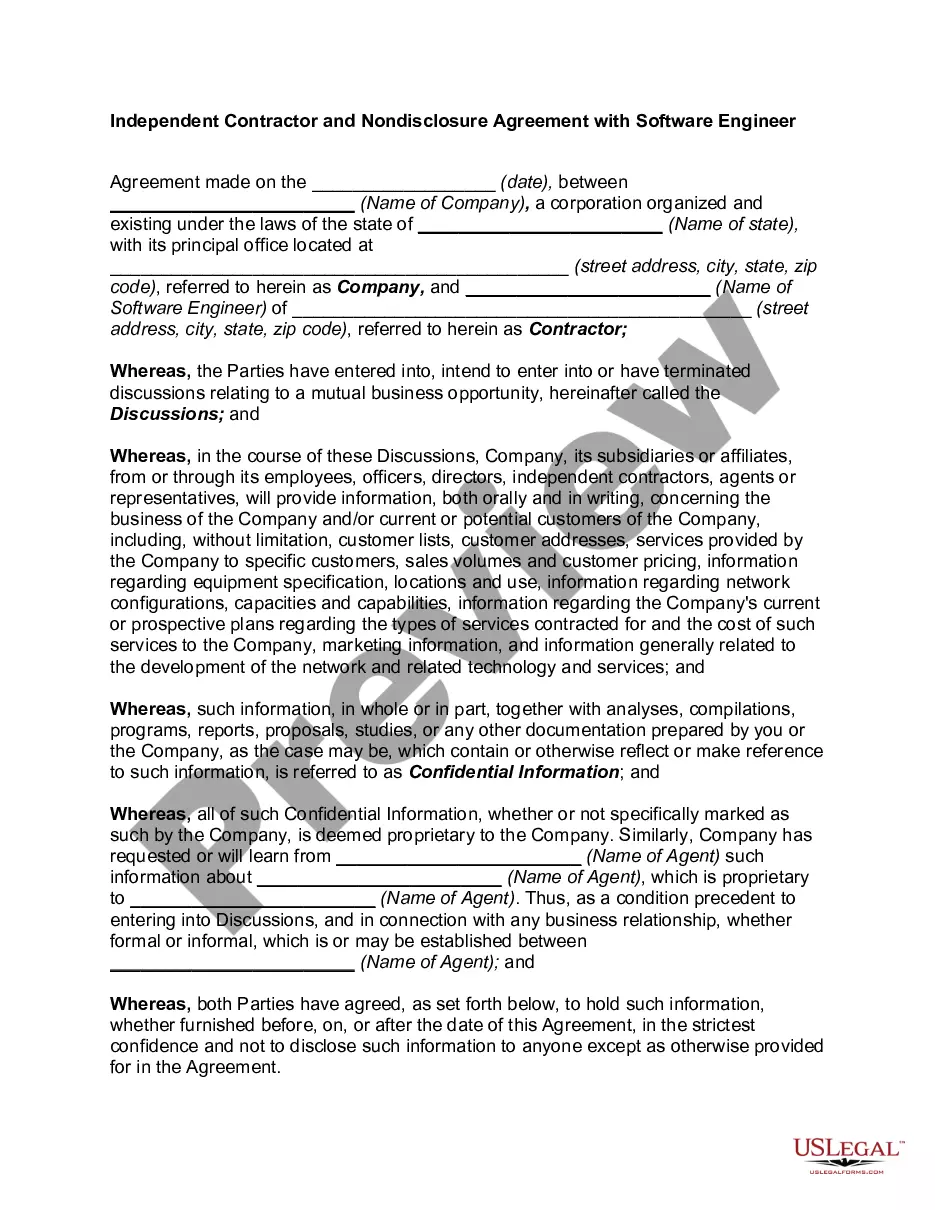
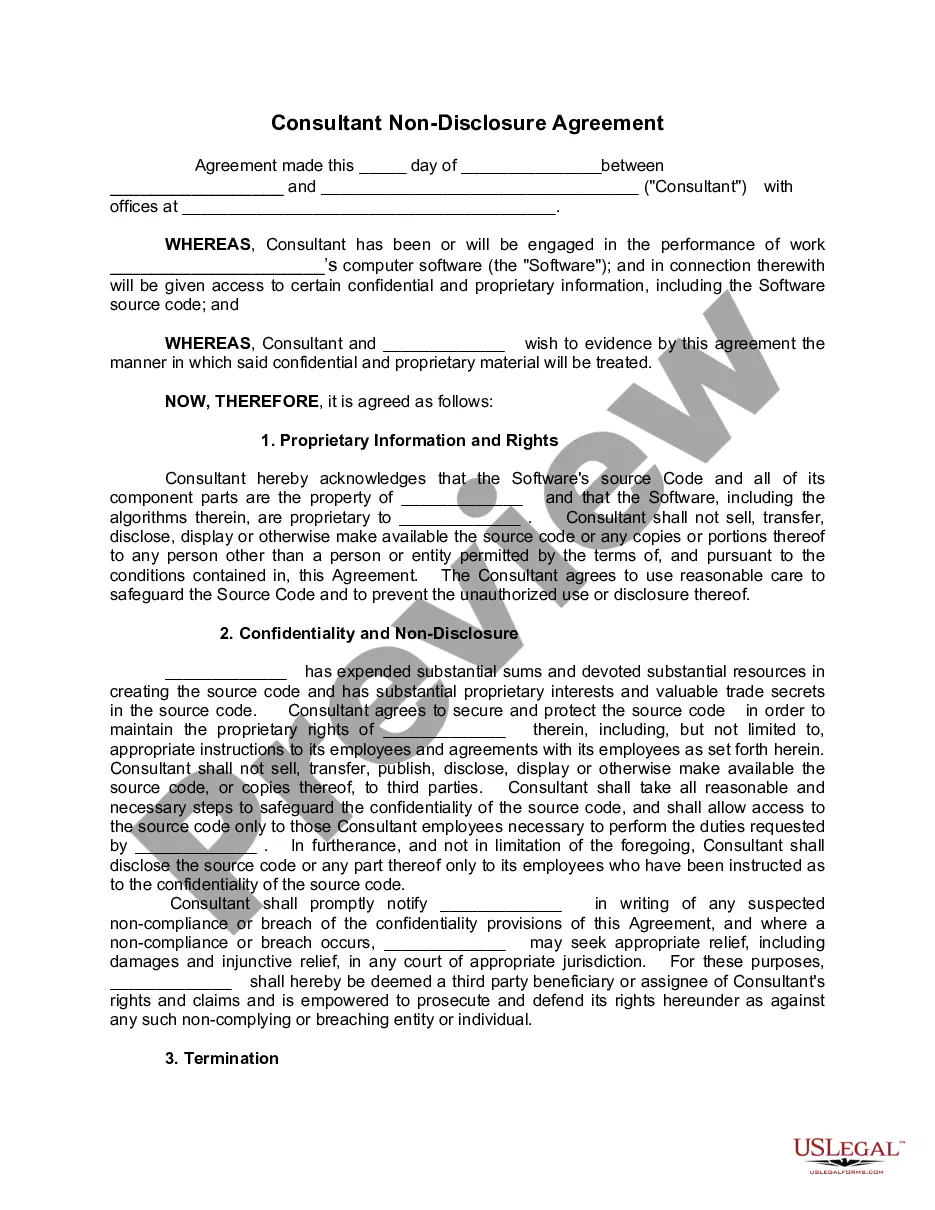
Minnesota Nondisclosure Agreement Concerning Discussions Regarding Possible Business Contractual Agreement Dealing with Software Development
Description
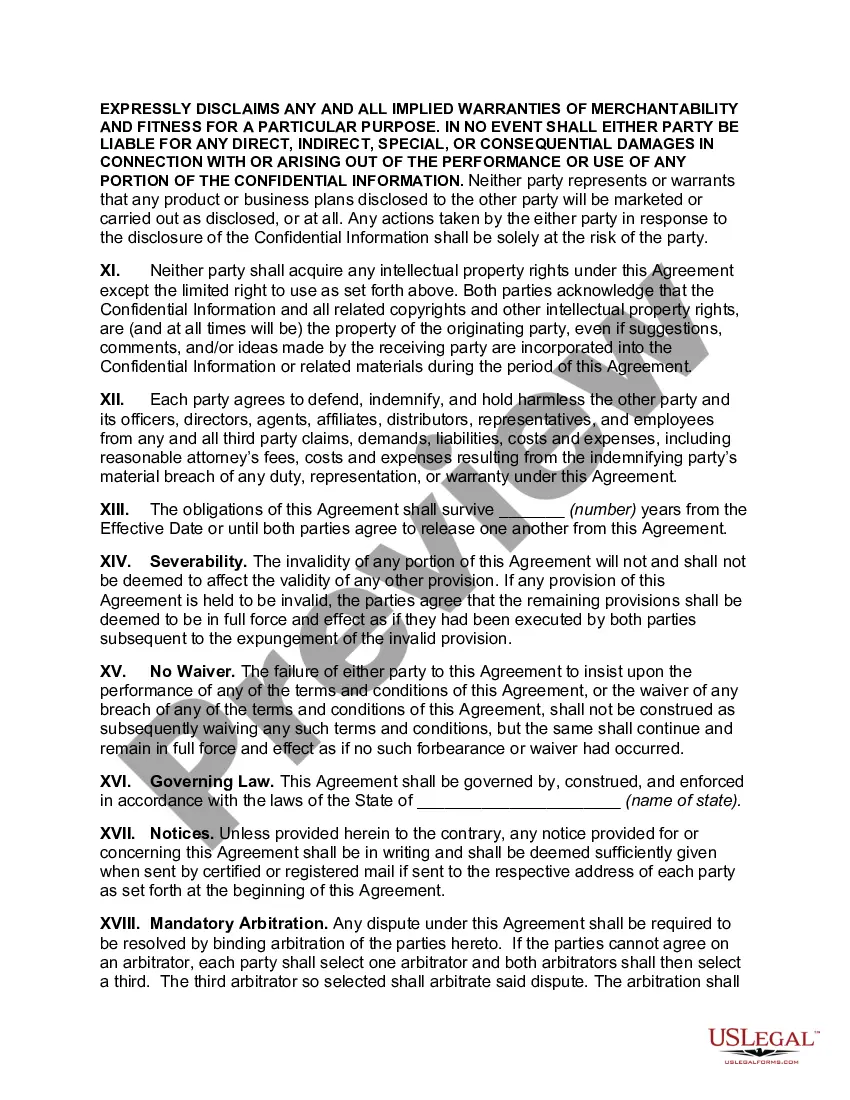
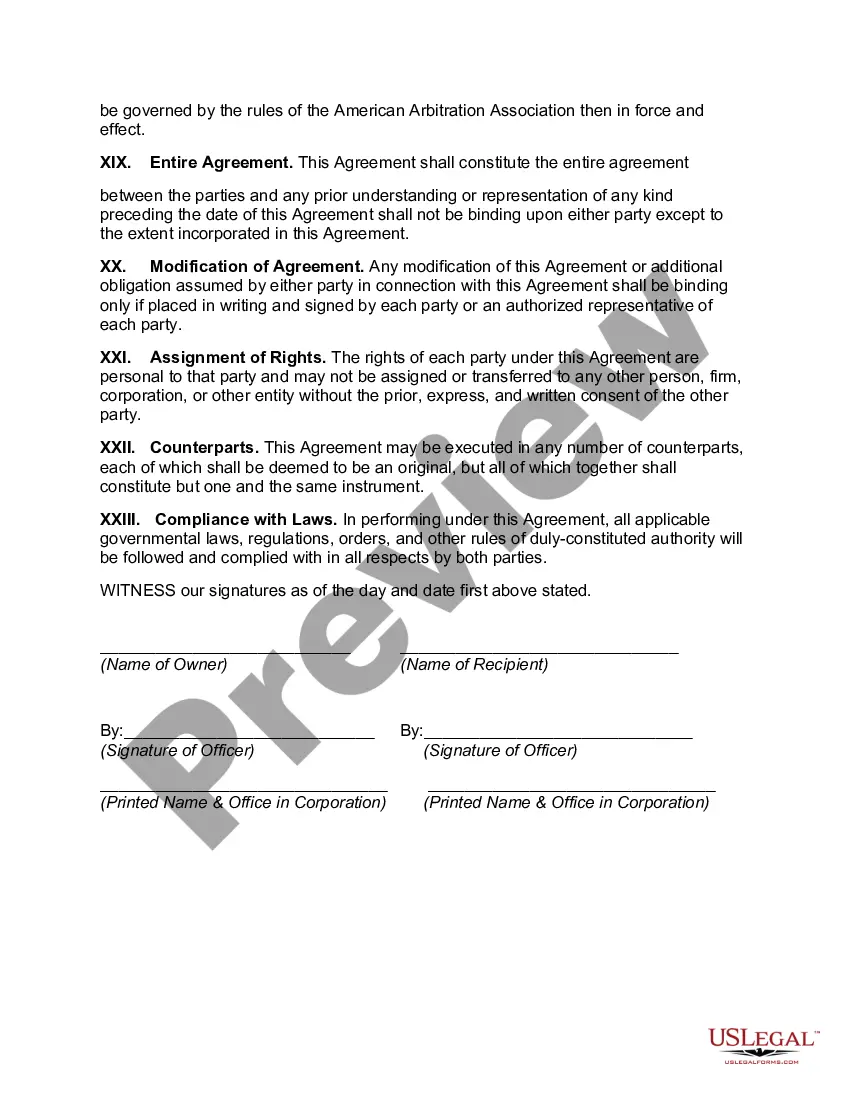

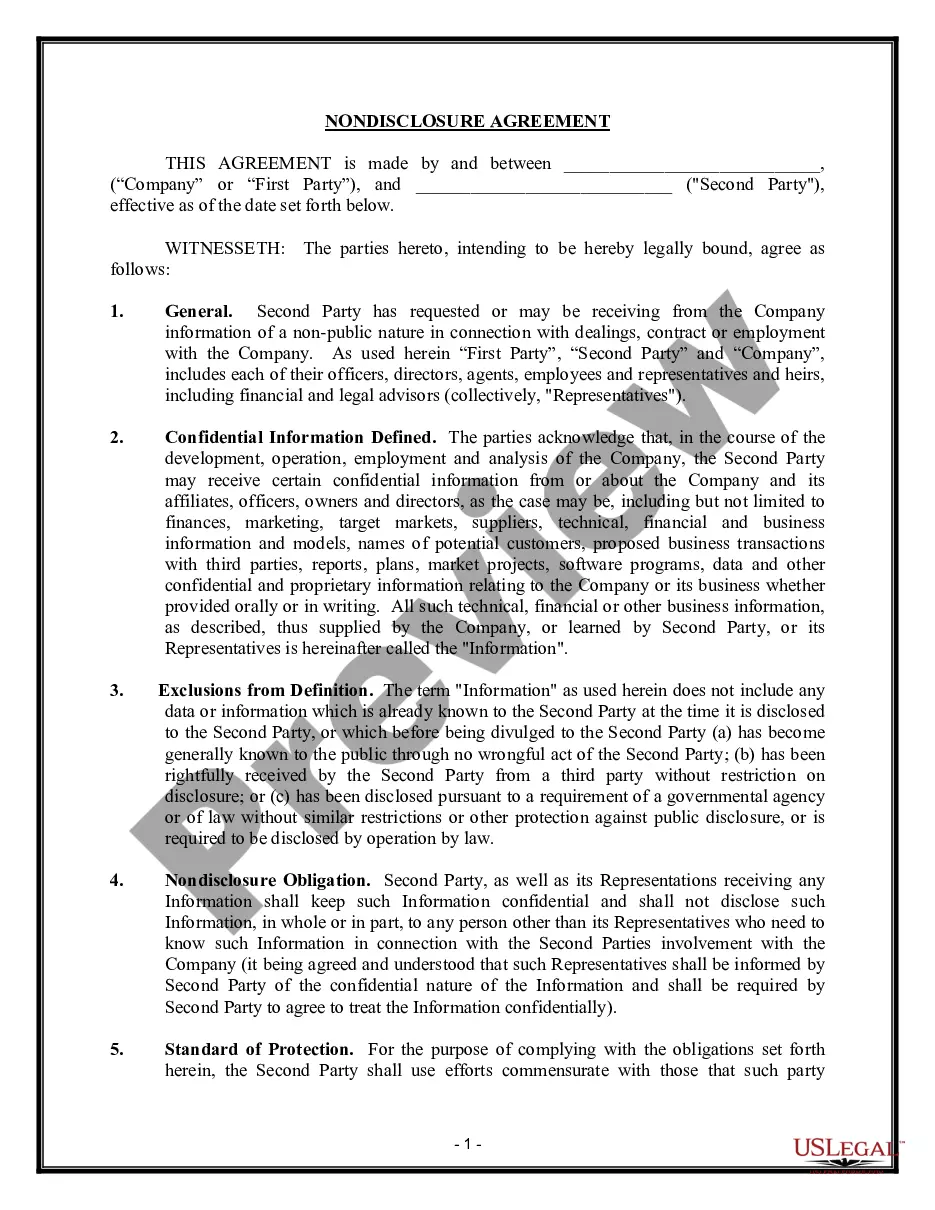
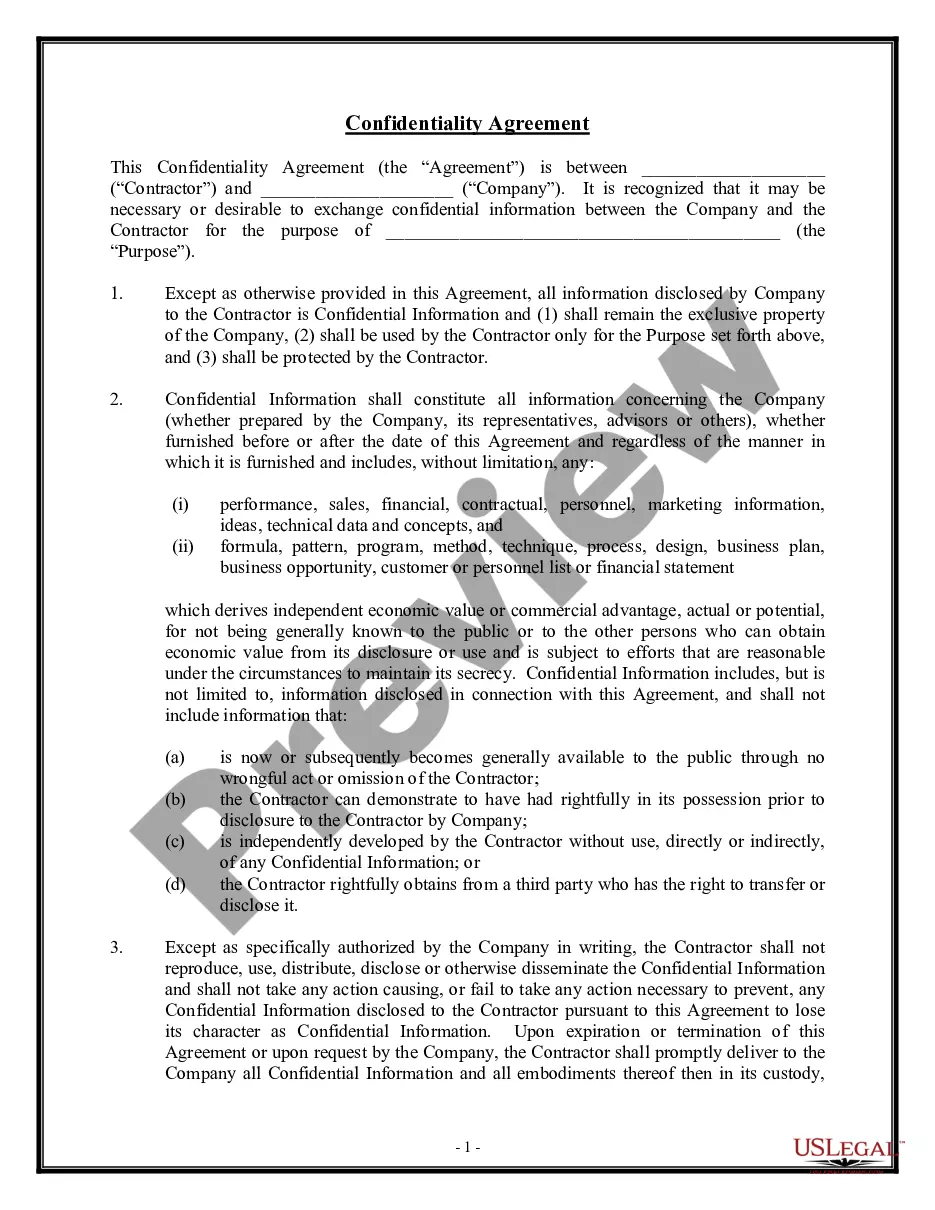
Get your form ready online
Our built-in tools help you complete, sign, share, and store your documents in one place.
Make edits, fill in missing information, and update formatting in US Legal Forms—just like you would in MS Word.
Download a copy, print it, send it by email, or mail it via USPS—whatever works best for your next step.
Sign and collect signatures with our SignNow integration. Send to multiple recipients, set reminders, and more. Go Premium to unlock E-Sign.
If this form requires notarization, complete it online through a secure video call—no need to meet a notary in person or wait for an appointment.
We protect your documents and personal data by following strict security and privacy standards.

Make edits, fill in missing information, and update formatting in US Legal Forms—just like you would in MS Word.

Download a copy, print it, send it by email, or mail it via USPS—whatever works best for your next step.

Sign and collect signatures with our SignNow integration. Send to multiple recipients, set reminders, and more. Go Premium to unlock E-Sign.

If this form requires notarization, complete it online through a secure video call—no need to meet a notary in person or wait for an appointment.

We protect your documents and personal data by following strict security and privacy standards.
Looking for another form?
How to fill out Nondisclosure Agreement Concerning Discussions Regarding Possible Business Contractual Agreement Dealing With Software Development?
Are you currently in a position where you frequently require documents for both professional or personal purposes? There are numerous legal template forms available online, but locating ones you can trust is challenging.
US Legal Forms provides thousands of template forms, including the Minnesota Nondisclosure Agreement Regarding Discussions About Potential Business Contractual Agreement Related to Software Development, designed to meet federal and state requirements.
If you are already acquainted with the US Legal Forms website and have an account, simply Log In. Subsequently, you can download the Minnesota Nondisclosure Agreement Regarding Discussions About Potential Business Contractual Agreement Related to Software Development template.
Find all the document forms you have purchased in the My documents section. You can obtain another copy of the Minnesota Nondisclosure Agreement Regarding Discussions About Potential Business Contractual Agreement Related to Software Development at any time if needed. Just select the required form to download or print the document template.
Utilize US Legal Forms, the most extensive compilation of legal documents, to save time and prevent mistakes. The service offers properly designed legal document templates that you can use for various purposes. Create your account on US Legal Forms and start making your life a bit easier.
- Search for the form you need and confirm it is for the correct city/county.
- Utilize the Review button to inspect the form.
- Read the description to verify that you have selected the correct form.
- If the form isn't what you are looking for, use the Search section to find the form that meets your needs and requirements.
- Once you have the appropriate form, click Get now.
- Select the pricing plan you want, fill in the necessary information to create your account, and pay for your order using PayPal or Visa or Mastercard.
- Choose a convenient paper format and download your copy.
Form popularity
FAQ
Typical exceptions to the definition of confidential information include (i) information publicly known or in the public domain prior to the time of disclosure, (ii) information publicly known and made generally available after disclosure through no action or inaction of the recipient, (ii) information already in the
Exceptions to Confidentiality ObligationsExceptions to Confidentiality Obligations.Exceptions to Confidential Information.General Confidentiality.Cooperation; Confidentiality.Duration of Confidentiality.Noncompetition and Confidentiality.Access to Information; Confidentiality.Waiver of Confidentiality.More items...
The key elements of Non-Disclosure Agreements:Identification of the parties.Definition of what is deemed to be confidential.The scope of the confidentiality obligation by the receiving party.The exclusions from confidential treatment.The term of the agreement.
Most of the mandatory exceptions to confidentiality are well known and understood. They include reporting child, elder and dependent adult abuse, and the so-called "duty to protect." However, there are other, lesserknown exceptions also required by law. Each will be presented in turn.
The Key Elements of Non-Disclosure AgreementsIdentification of the parties.Definition of what is deemed to be confidential.The scope of the confidentiality obligation by the receiving party.The exclusions from confidential treatment.The term of the agreement.
NDAs, or non-disclosure agreements, are legally enforceable contracts that create a confidential relationship between a person who has sensitive information and a person who will gain access to that information. A confidential relationship means one or both parties has a duty not to share that information.
Some of the exception clauses are: Information that is in the public domain. Information that the disclosing party disclosed before signing the agreement. Information received by the receiving party from a third party, wherein the third party was not obliged to keep the information confidential.
The Key Elements of Non-Disclosure AgreementsIdentification of the parties.Definition of what is deemed to be confidential.The scope of the confidentiality obligation by the receiving party.The exclusions from confidential treatment.The term of the agreement.
How to terminate the NDARead the Duration clauses. Good NDAs will have two different terms of duration.Read the termination clause. Like any other relationship, business partnerships can come to an early end unexpectedly.Read the Return of Information clause.
10 ClausesClause #1: Definition of Confidential Information.Clause #2: The Parties.Clause #3: The Terms and Duration.Clause #4: The Permitted Use of the Information.Clause #5: The Legal Obligation to Disclose.Clause #6: The Return of the Information.Clause #7: The Jurisdiction.Clause #8: The Remedies.More items...?