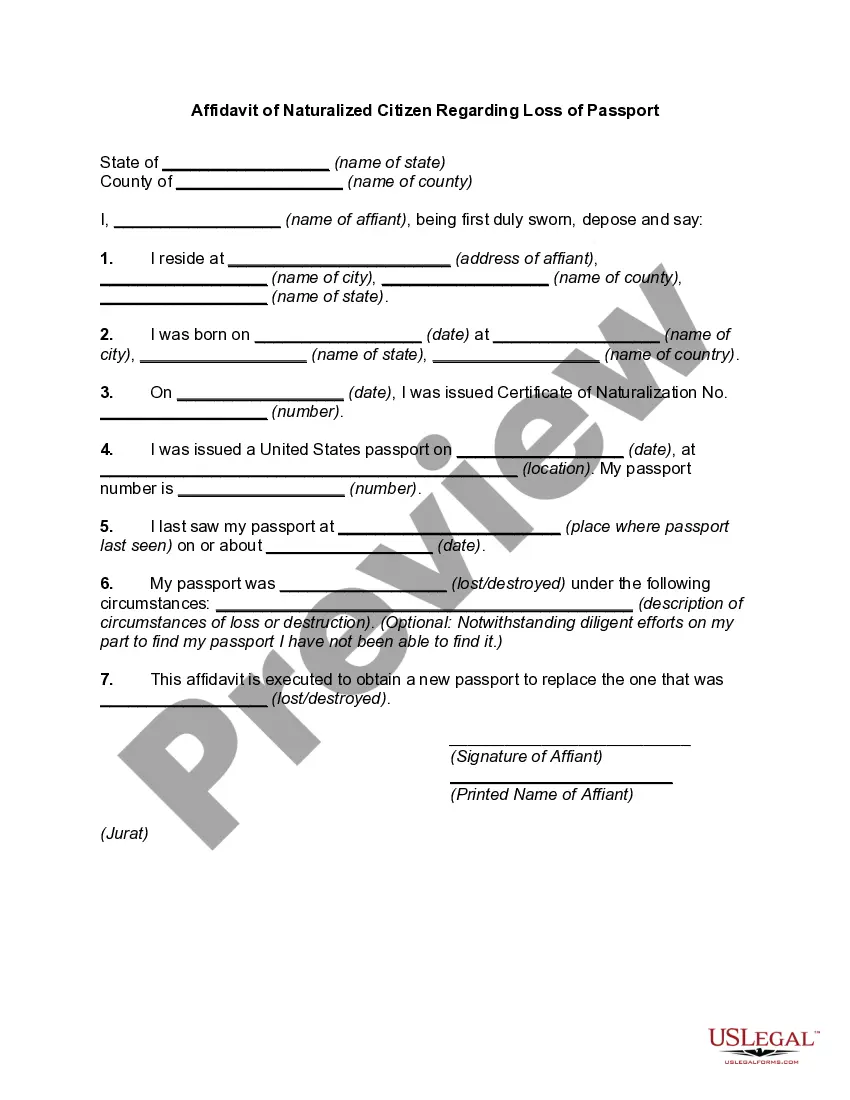
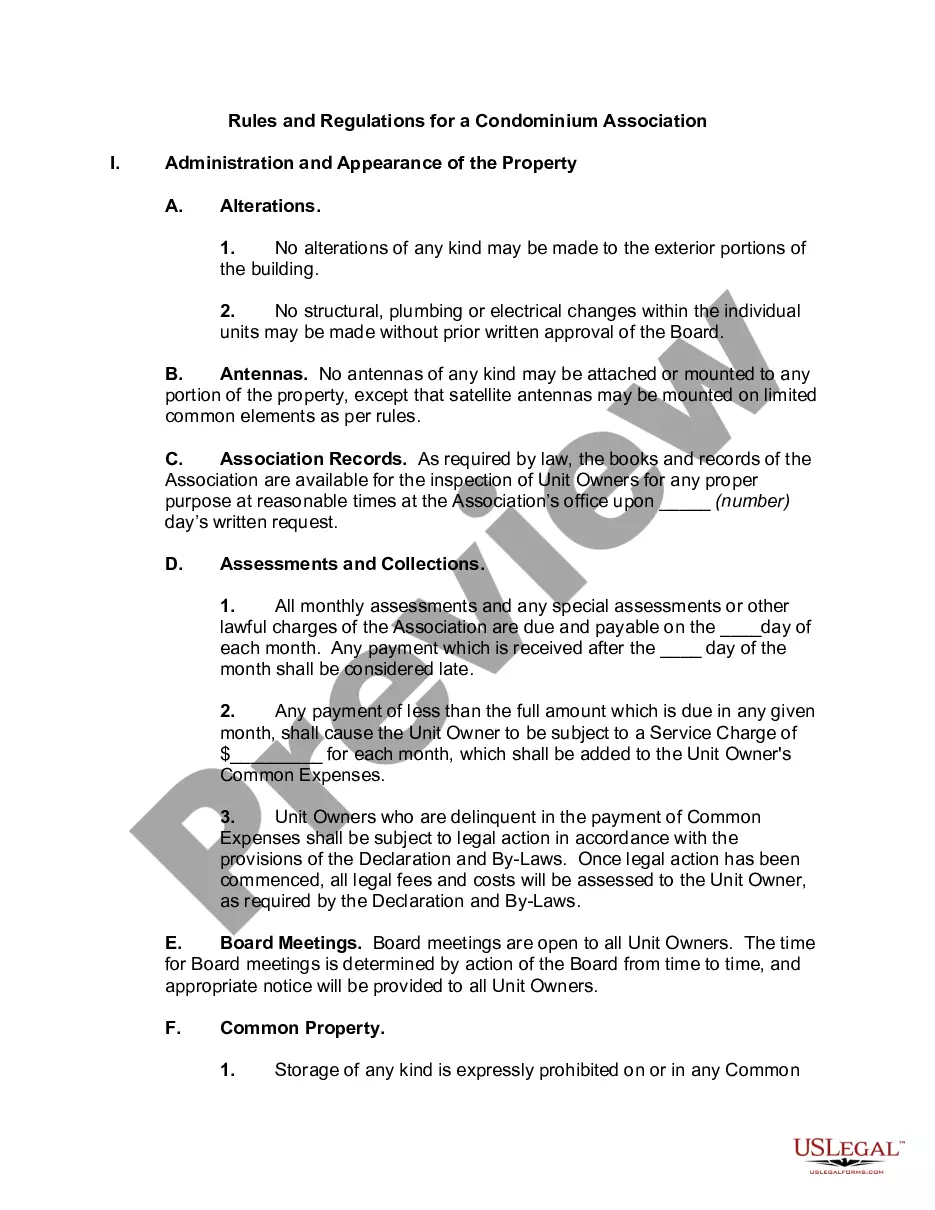
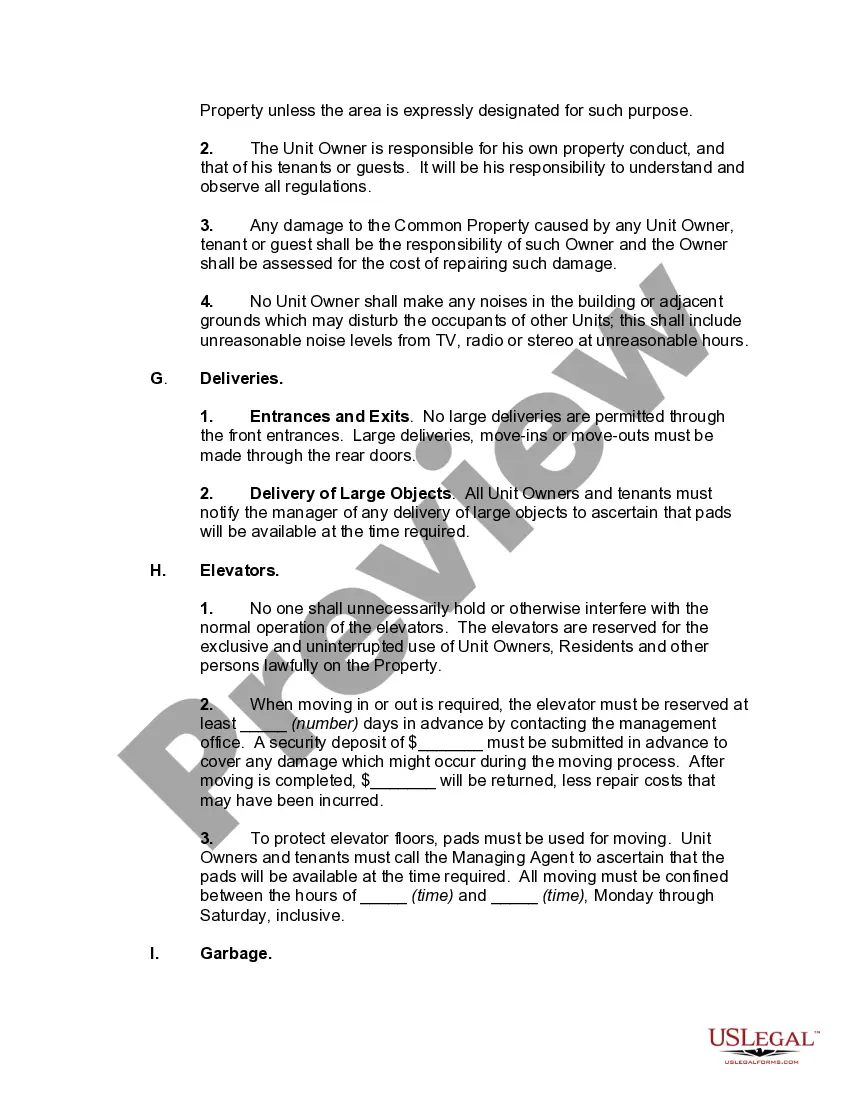
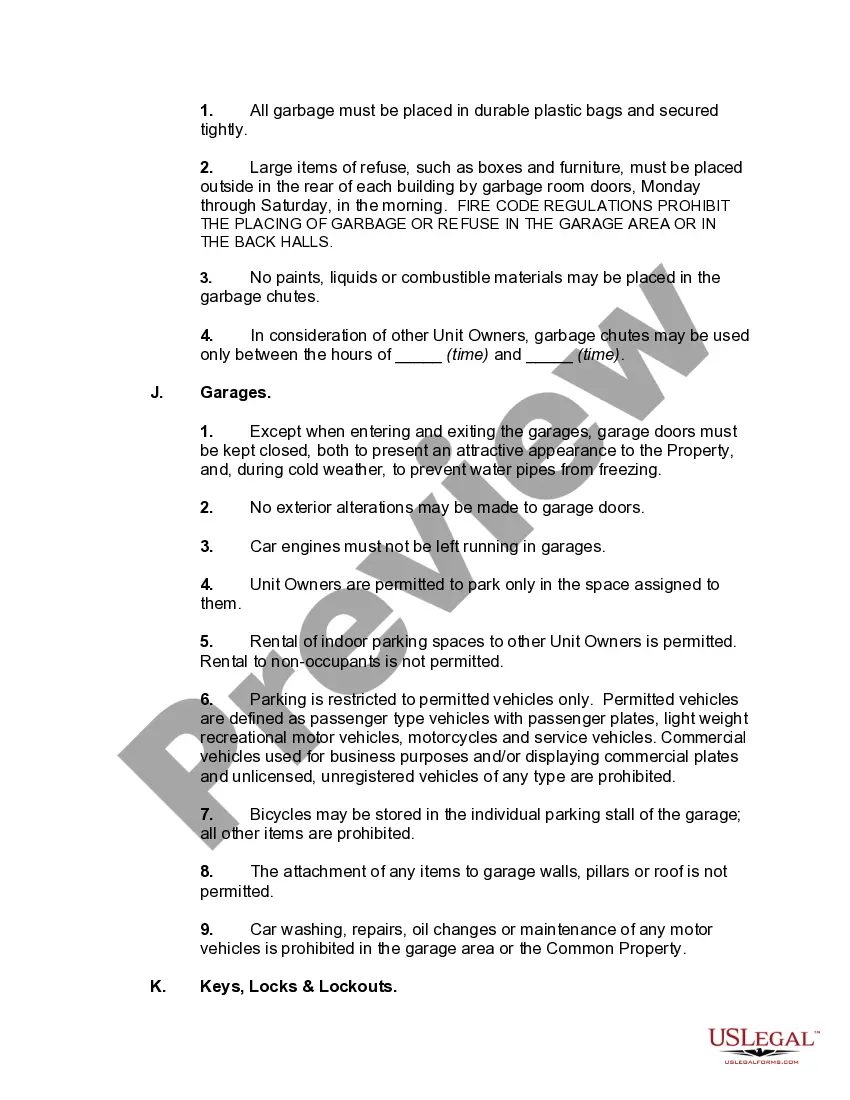
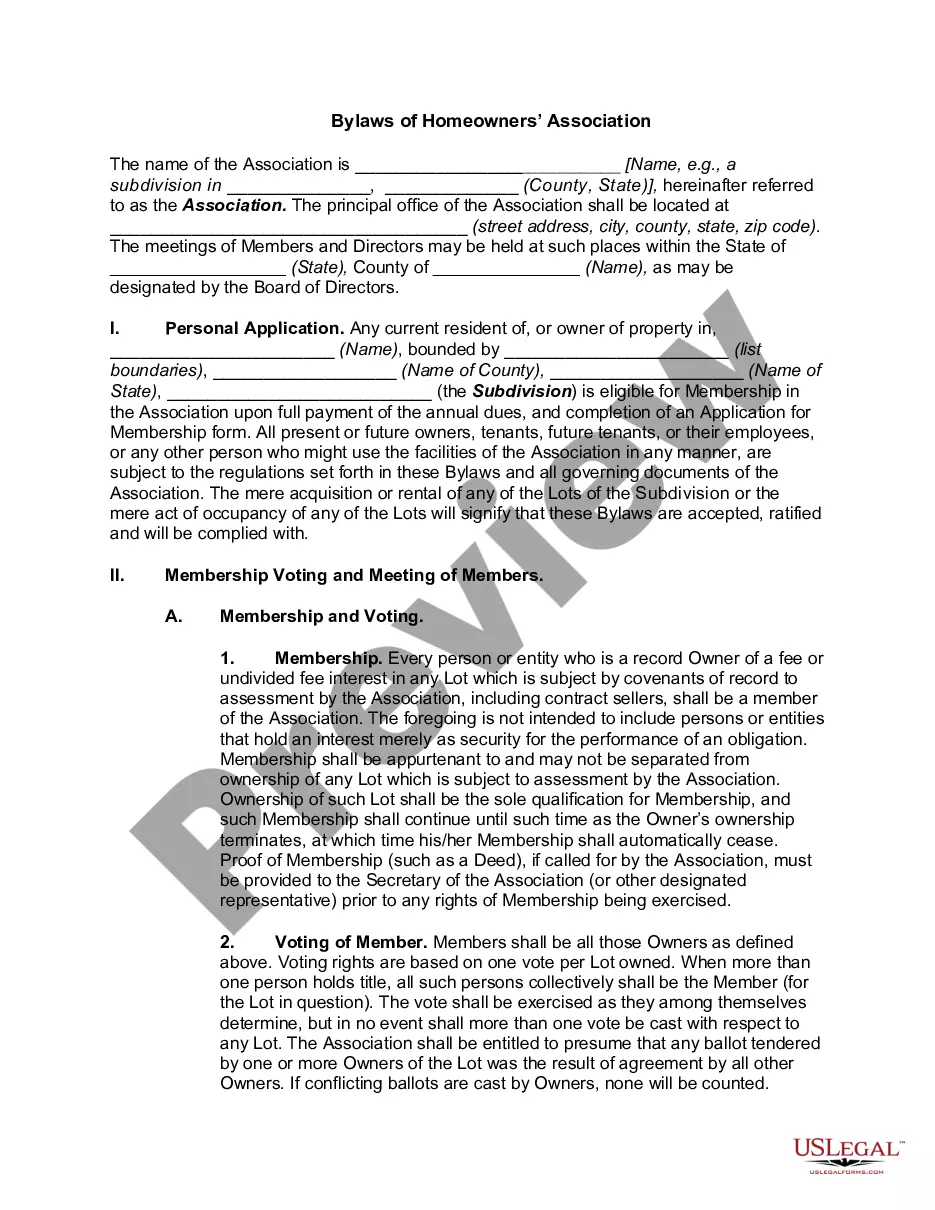
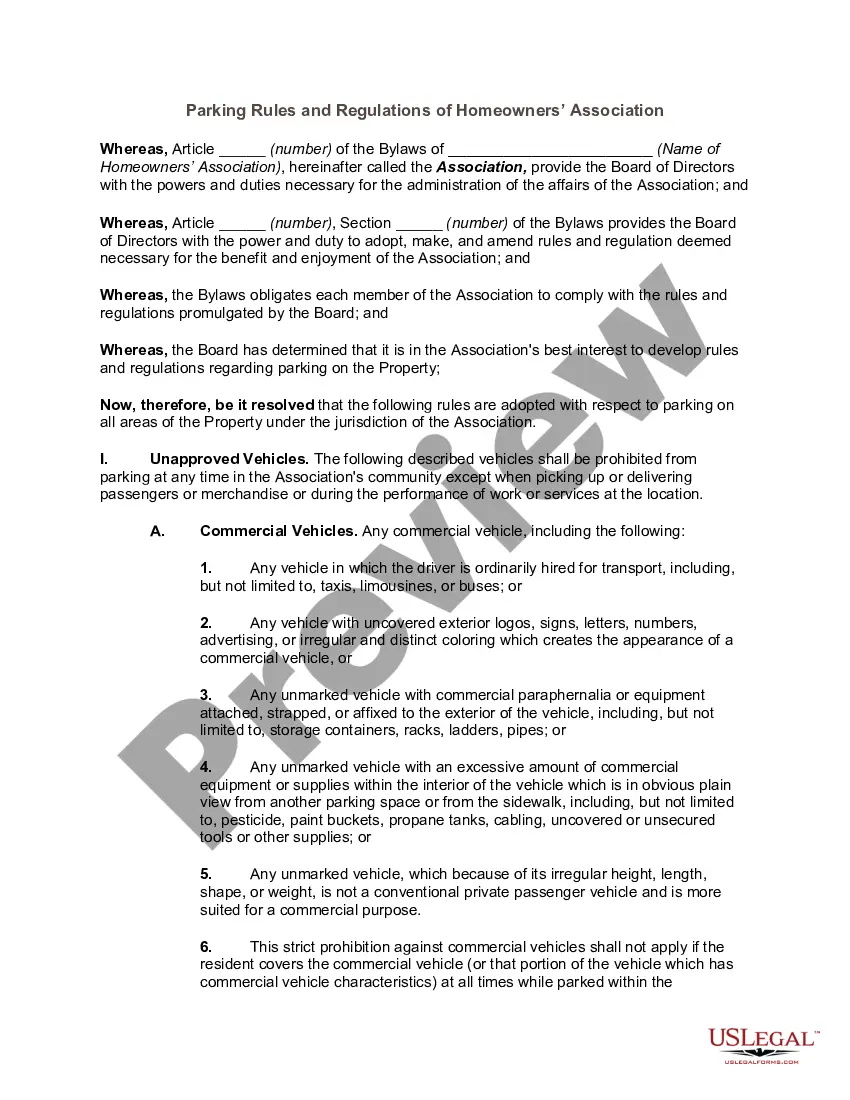
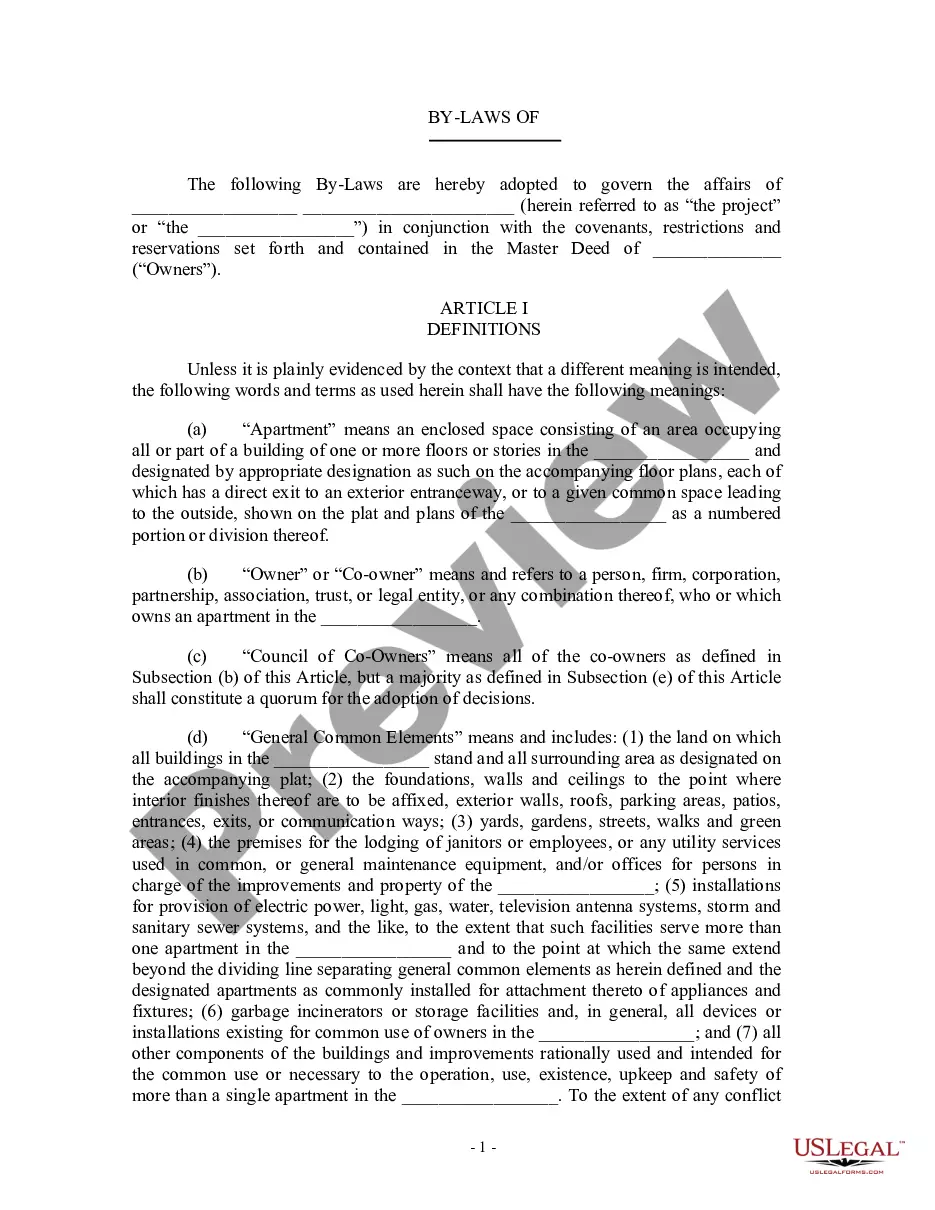
Minnesota Rules and Regulations for a Condominium Association
Description


Get your form ready online
Our built-in tools help you complete, sign, share, and store your documents in one place.
Make edits, fill in missing information, and update formatting in US Legal Forms—just like you would in MS Word.
Download a copy, print it, send it by email, or mail it via USPS—whatever works best for your next step.
Sign and collect signatures with our SignNow integration. Send to multiple recipients, set reminders, and more. Go Premium to unlock E-Sign.
If this form requires notarization, complete it online through a secure video call—no need to meet a notary in person or wait for an appointment.
We protect your documents and personal data by following strict security and privacy standards.

Make edits, fill in missing information, and update formatting in US Legal Forms—just like you would in MS Word.

Download a copy, print it, send it by email, or mail it via USPS—whatever works best for your next step.

Sign and collect signatures with our SignNow integration. Send to multiple recipients, set reminders, and more. Go Premium to unlock E-Sign.

If this form requires notarization, complete it online through a secure video call—no need to meet a notary in person or wait for an appointment.

We protect your documents and personal data by following strict security and privacy standards.
Looking for another form?

How to fill out Rules And Regulations For A Condominium Association?
You can dedicate time online trying to discover the legal format that meets the federal and state requirements you need.
US Legal Forms offers a vast collection of legal documents that are reviewed by professionals.
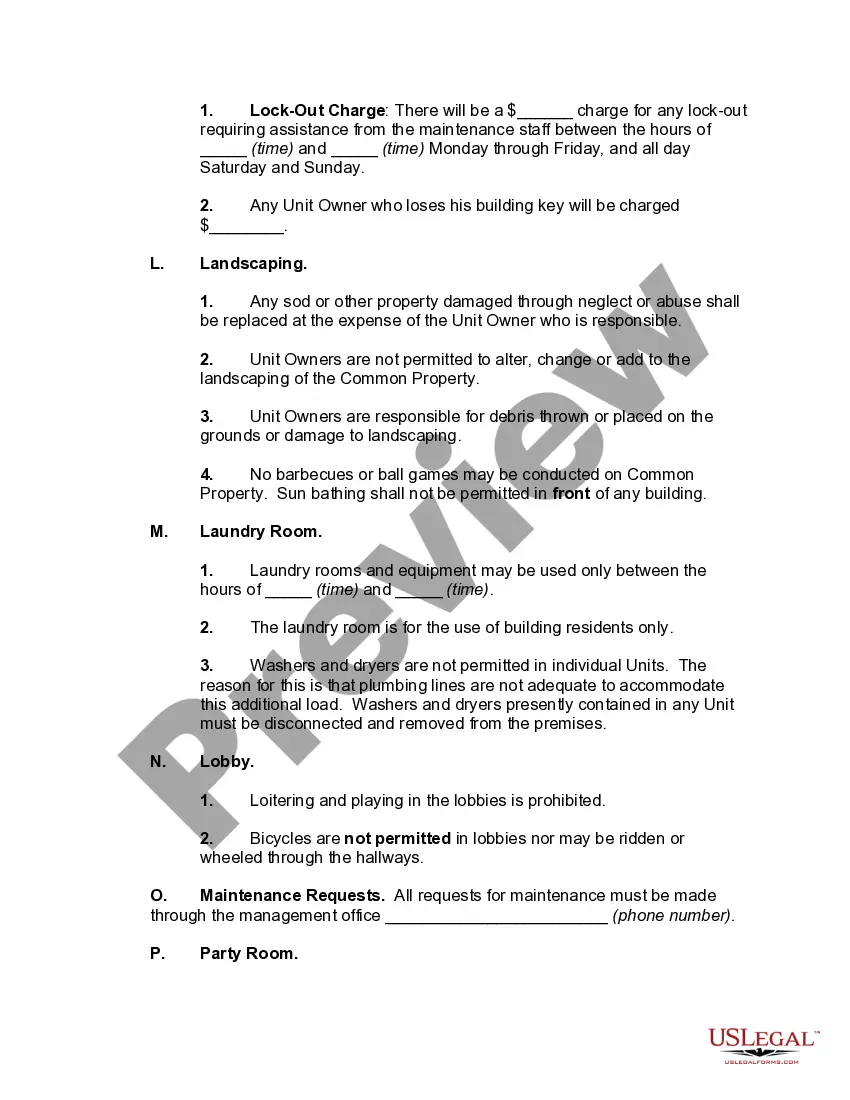
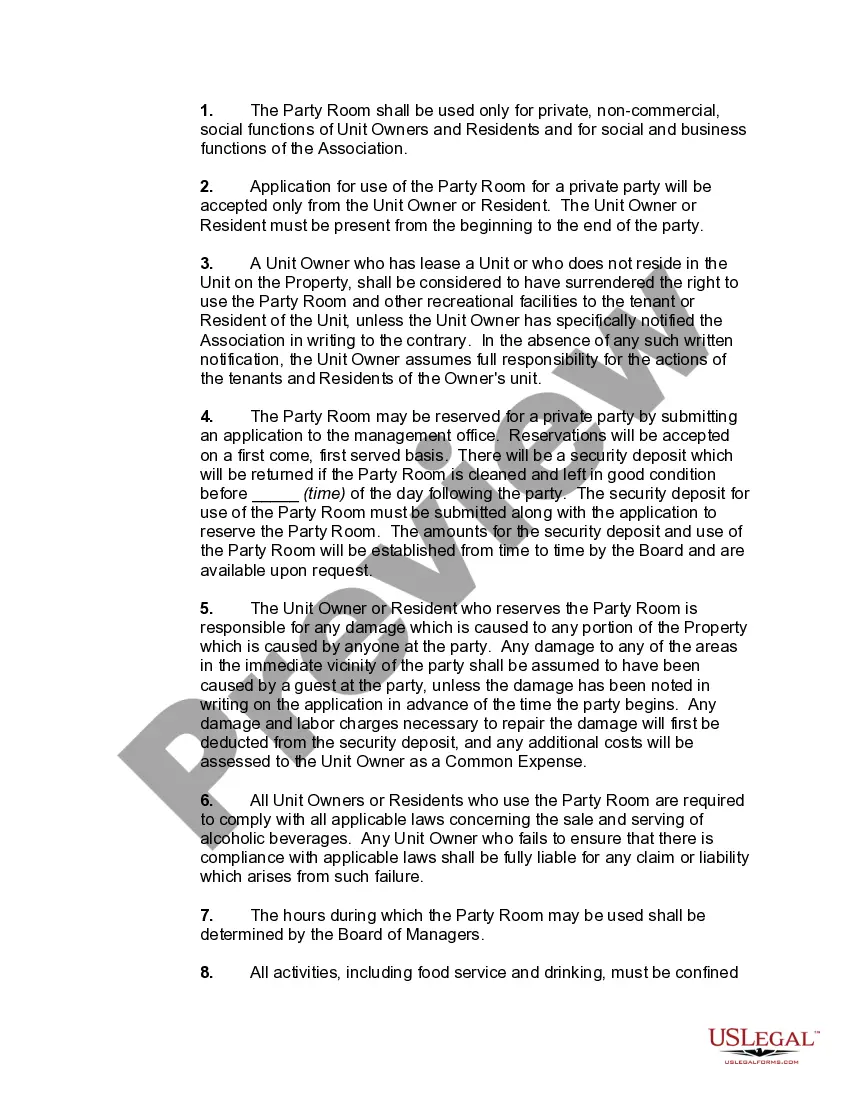
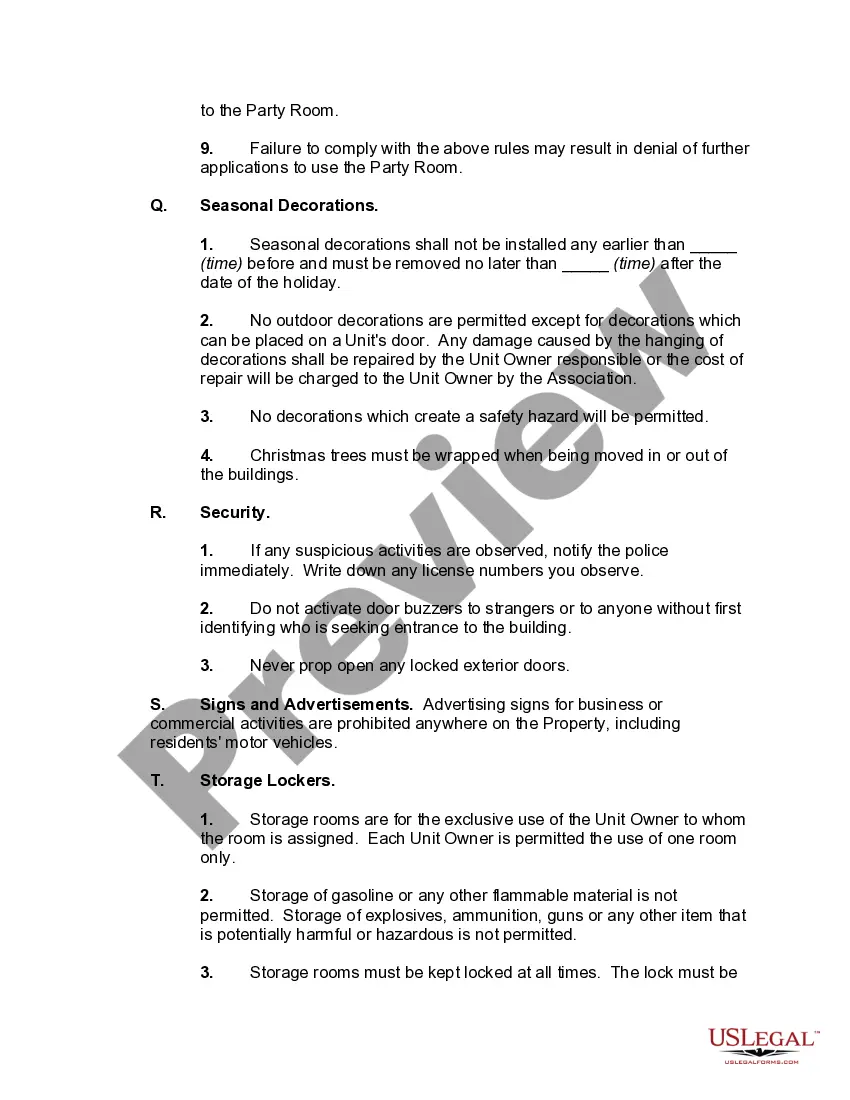
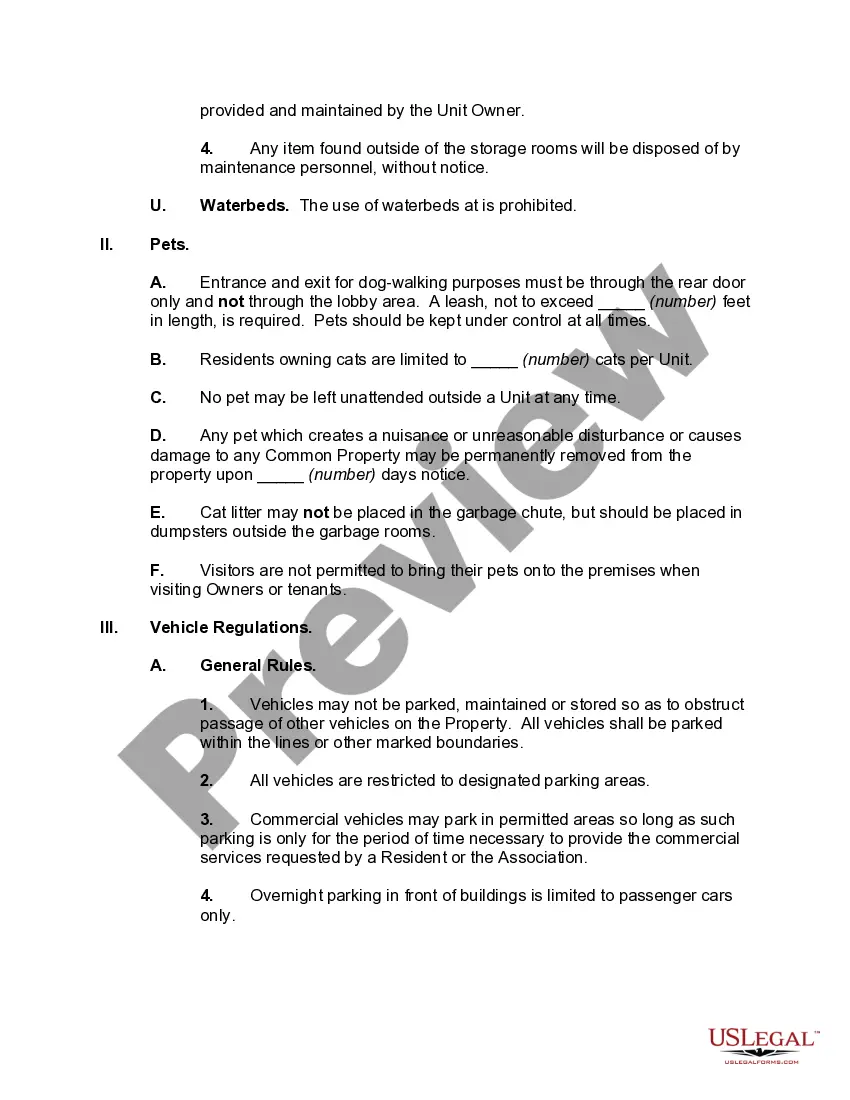
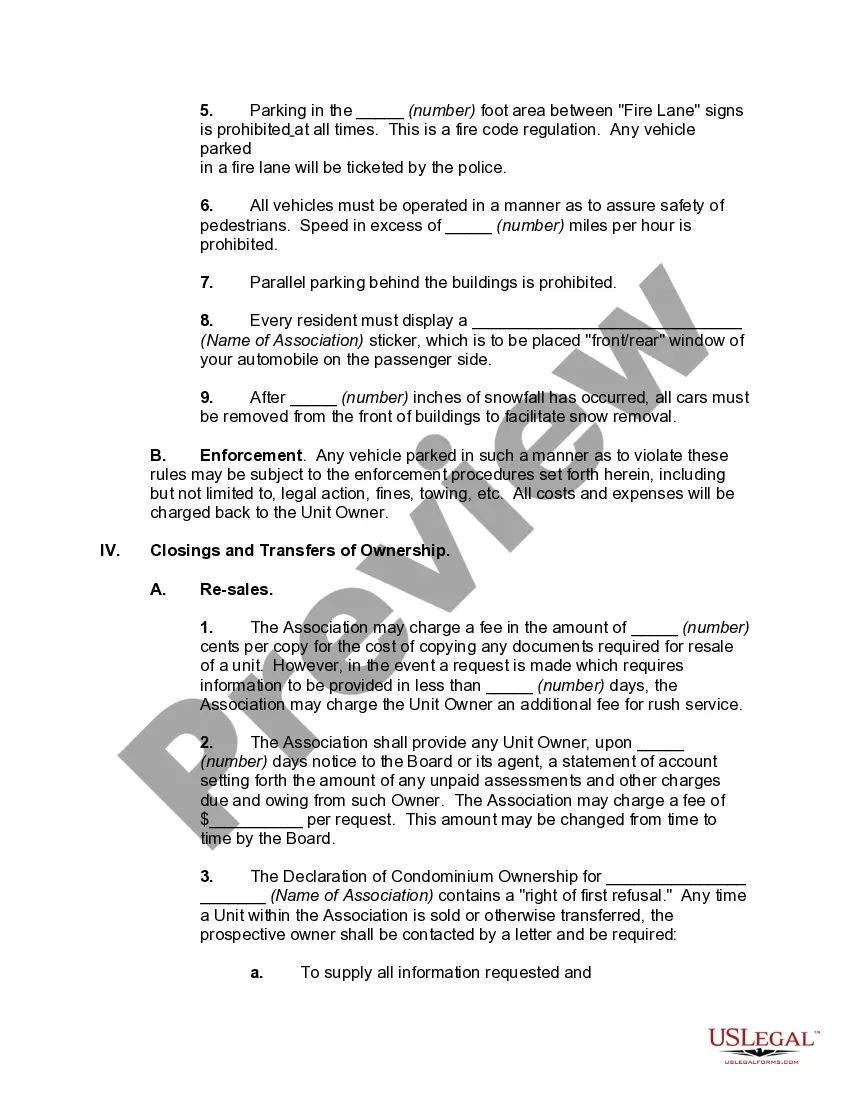
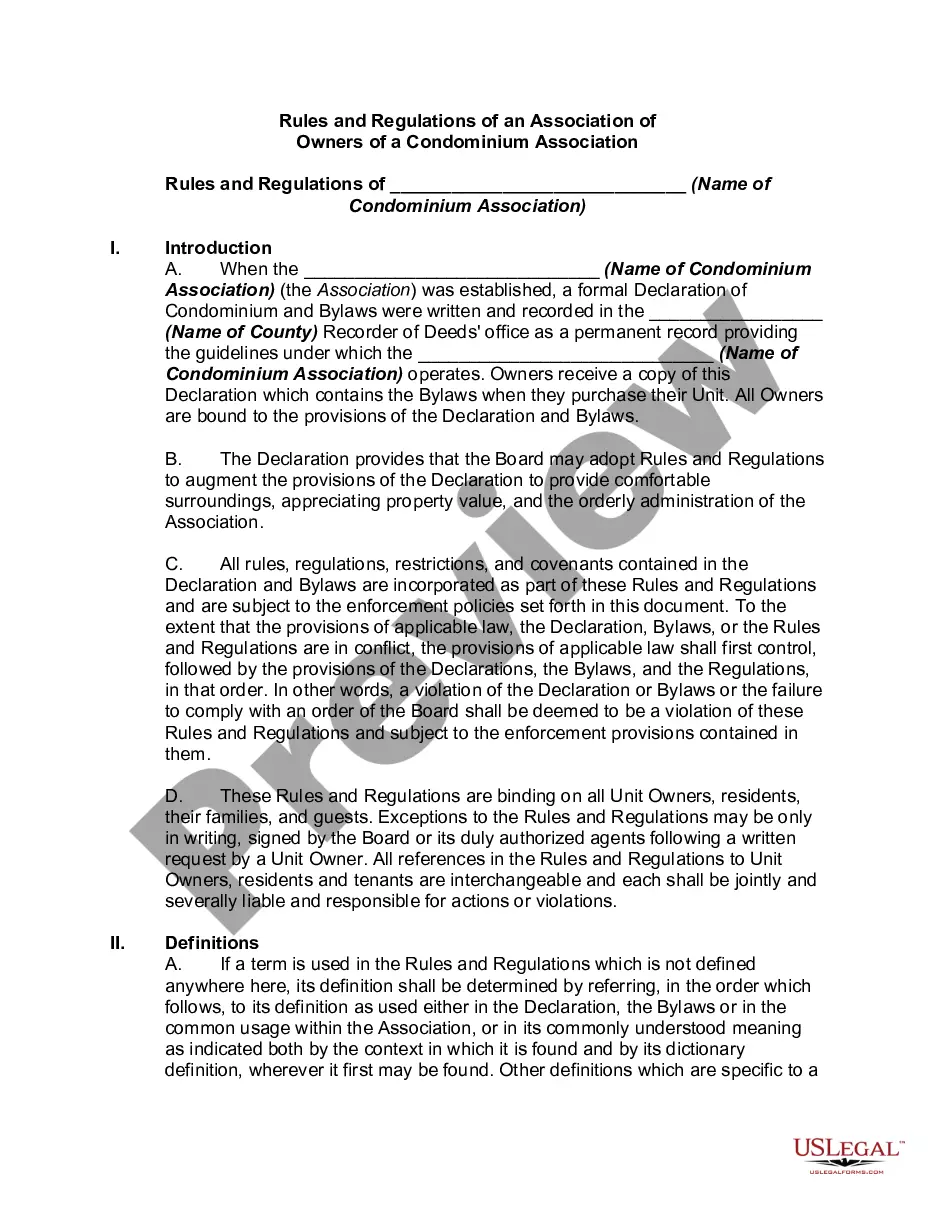
You can conveniently download or print the Minnesota Rules and Regulations for a Condominium Association from our services.
You can access and print thousands of document templates using the US Legal Forms website, which offers the largest collection of legal forms. Utilize professional and state-specific templates to address your business or personal needs.
- If you have a US Legal Forms account, you can Log In and click the Obtain button.
- Then, you can fill out, modify, print, or sign the Minnesota Rules and Regulations for a Condominium Association.
- Every legal format you purchase is yours indefinitely.
- To obtain an additional copy of the acquired form, go to the My documents tab and click the appropriate button.
- If you are using the US Legal Forms site for the first time, follow the simple instructions below.
- First, ensure that you have chosen the correct format for the state/city you select.
Form popularity
FAQ
MCIOA provides statutory authority for common interest communities formed on or after June 1, 1994. MCIOA governs condominiums formed under the Minnesota Condominium Act (prior to August 1, 1980) with limited applicability.
Generally speaking, there is no way around it. Membership must be taken seriously, rules must be followed, and dues must be paid. If you buy a home in a neighborhood that already has an established HOA, you must join as a condition of purchasing the new home.
Homeowners have the right to terminate a common interest community. To terminate a CIC, 80% of the common interest along with 80% of the mortgages must vote in favor. For a mortgage percentage, one mortgage equals one vote; no percentage of interest. In this case, both conditions must be met to pass the resolution.
In general, typical association fees for condo owners in Minnesota are between 25 and 75 cents per square foot per month.
In many jurisdictions, depending on applicable state law, the standard rule is that 80 percent of the members of the community must vote in favor of dissolving the HOA. This is typically the case, unless the HOA documents state otherwise or provide for a different rule.
Federal Laws - In addition to state law regulations, the federal government has laws that govern the operation and management of common interest communities, condominiums, cooperatives, and residential properties in the state of Minnesota. Minnesota Collection Agencies Act, Minn. Stat. ? 332.37.
Federal Laws - In addition to state law regulations, the federal government has laws that govern the operation and management of common interest communities, condominiums, cooperatives, and residential properties in the state of Minnesota. Minnesota Collection Agencies Act, Minn. Stat. ? 332.37.
Minnesota is home to a number of condominium and homeowners associations. These associations, though, must remain compliant with many state laws.