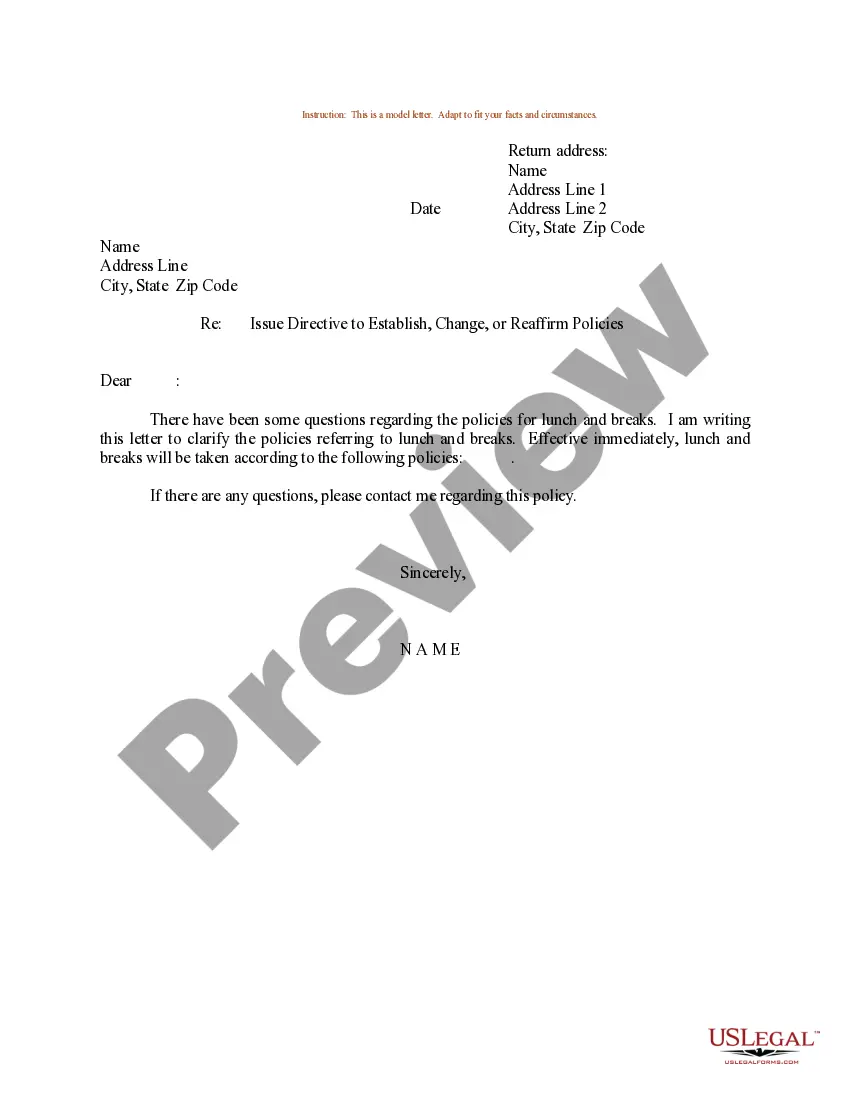
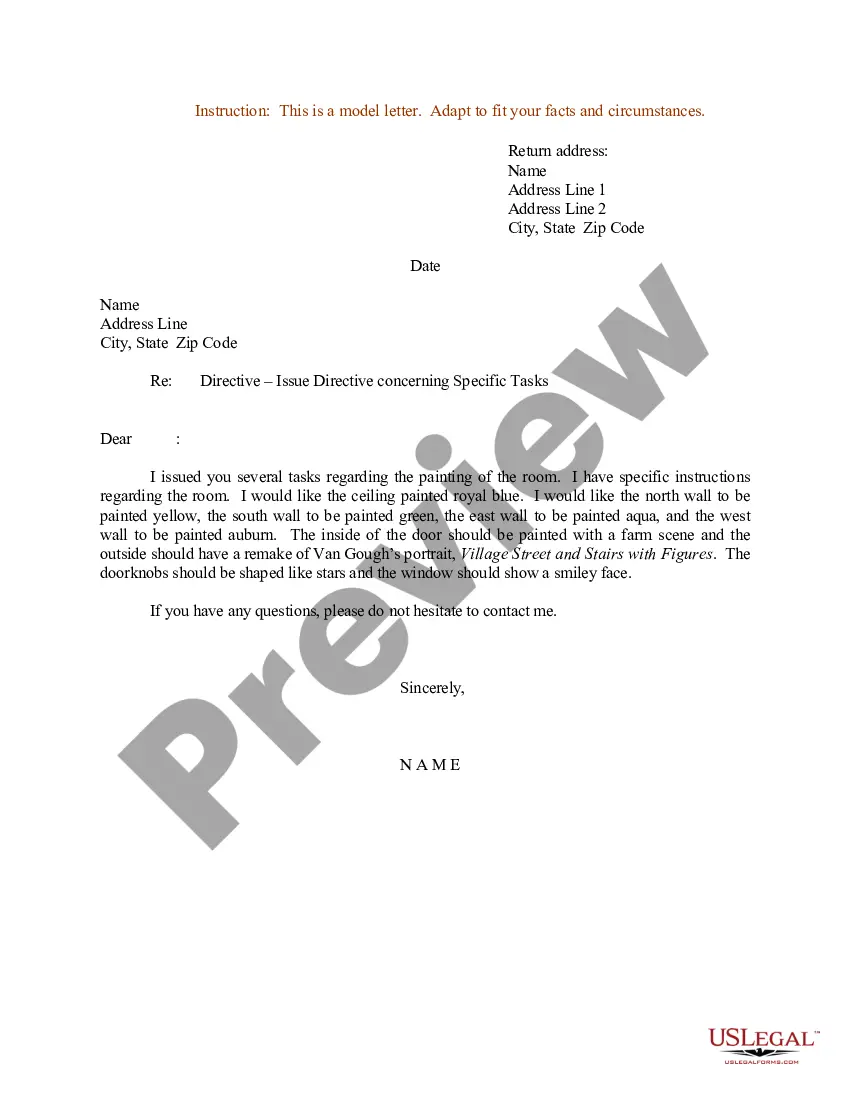
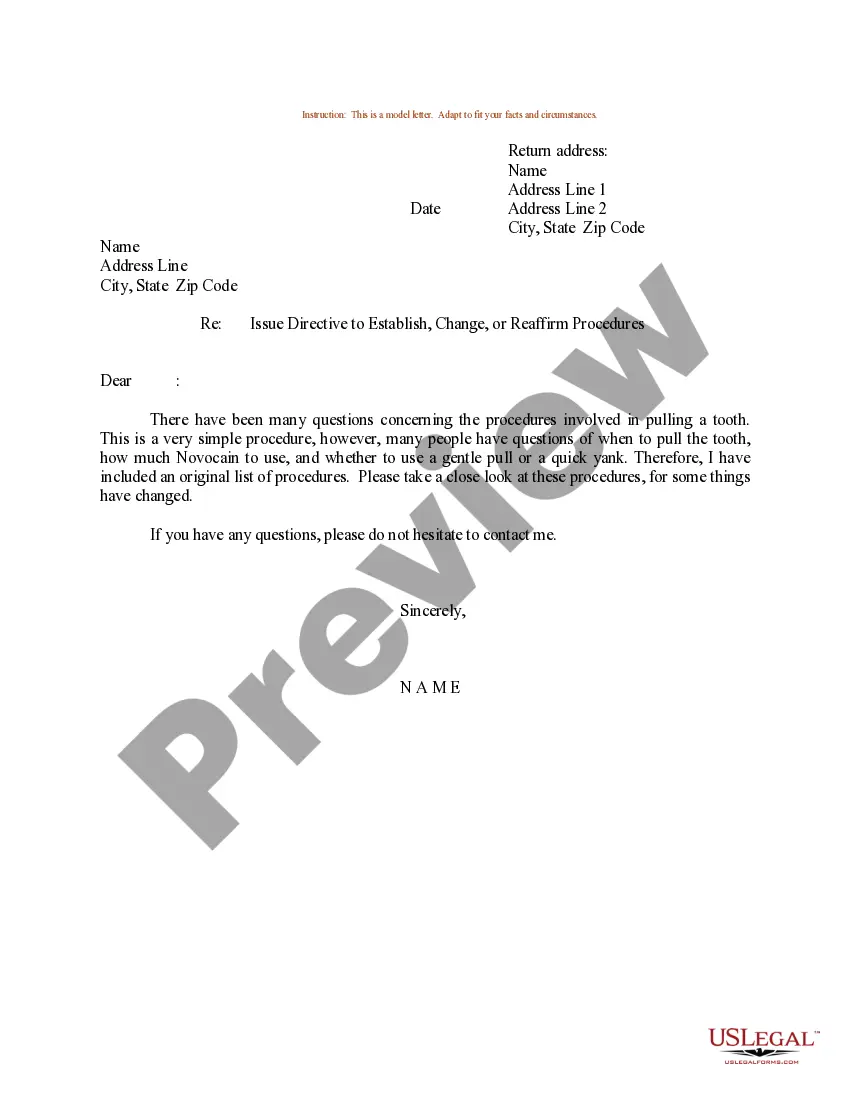
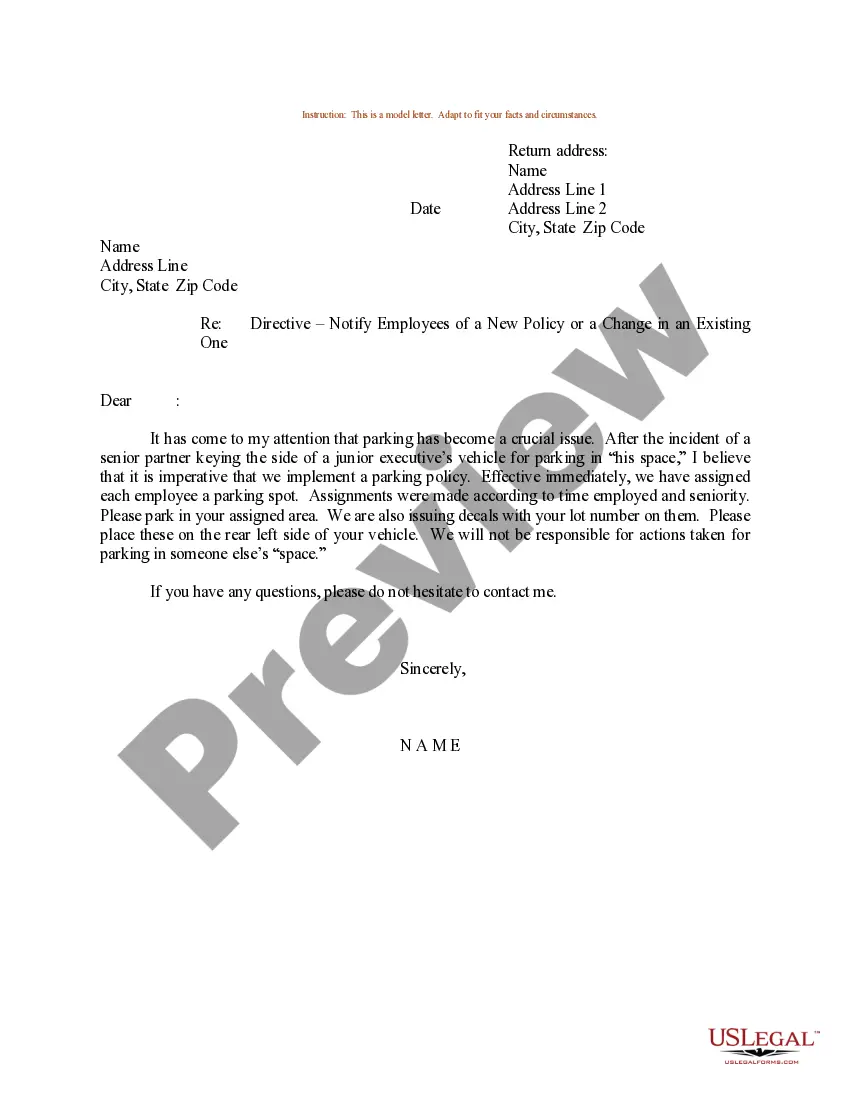
Minnesota Sample Letter for Directive - Establish, Change, or Reaffirm Policies
Description
Get your form ready online
Our built-in tools help you complete, sign, share, and store your documents in one place.
Make edits, fill in missing information, and update formatting in US Legal Forms—just like you would in MS Word.
Download a copy, print it, send it by email, or mail it via USPS—whatever works best for your next step.
Sign and collect signatures with our SignNow integration. Send to multiple recipients, set reminders, and more. Go Premium to unlock E-Sign.
If this form requires notarization, complete it online through a secure video call—no need to meet a notary in person or wait for an appointment.
We protect your documents and personal data by following strict security and privacy standards.

Make edits, fill in missing information, and update formatting in US Legal Forms—just like you would in MS Word.

Download a copy, print it, send it by email, or mail it via USPS—whatever works best for your next step.

Sign and collect signatures with our SignNow integration. Send to multiple recipients, set reminders, and more. Go Premium to unlock E-Sign.

If this form requires notarization, complete it online through a secure video call—no need to meet a notary in person or wait for an appointment.

We protect your documents and personal data by following strict security and privacy standards.
Looking for another form?


How to fill out Sample Letter For Directive - Establish, Change, Or Reaffirm Policies?
US Legal Forms - one of the largest collections of legal documents in the United States - offers a broad selection of legal form templates that you can download or print.
By utilizing the site, you will find a vast number of forms for business and personal purposes, organized by categories, states, or keywords.
You can access the latest versions of forms like the Minnesota Sample Letter for Directive - Establish, Change, or Reaffirm Policies in just a few minutes.
Read the form description to confirm that you have chosen the appropriate document.
If the form does not meet your requirements, utilize the Search feature at the top of the screen to find one that does.
- If you already hold a membership, Log In and download the Minnesota Sample Letter for Directive - Establish, Change, or Reaffirm Policies from the US Legal Forms catalog.
- The Download button will appear on every form you view.
- You have access to all previously downloaded forms in the My documents section of your account.
- To initiate your use of US Legal Forms for the first time, follow these basic steps.
- Make sure you have selected the correct form for your city/state.
- Click on the Preview button to review the details of the form.
Form popularity
FAQ
1. Use respectful words such as "please" when giving orders to your employees. Although they are obliged to follow your instructions, you will establish goodwill that will make your job as manager easier. Employees are more likely to respect a manager who shows them respect as well.
Make your announcement using a staff meeting, department meetings headed by department heads, an email announcement and/or a written memo. Explain to your employees the who, what, where, when, why and how of the changes, rather than just telling them that you are making changes.
How to Write a Directive Letter. Clearly state your request or indicate what needs to be done and give as much detail as necessary for the task, project, or other assignment to be accomplished. If a problem needs to be resolved, clearly indicate what the problem is and, if desired, how you would like it to be solved.
When Writing to Decision Makers2026Use the correct address and salutation.Use your own words and stationery.Keep your message focused.Be specific.Know your facts.If you can, find out how your decision maker voted on this issue or similar issues in the past.Be timely.Say thank you
State, summarize, or enclose a copy of the policy. Itemize the essential elements, if appropriate. Close by expressing appreciation and reiterating the importance of the information you have conveyed. Offer to respond to questions and problems.
It should be clear and precise, without any doubts. You must also make sure to mention all the requirements in the letter precisely. The letter must have an order of request containing all the essential details of the project or the task, including the period for completing the assignment.
How to communicate policy changes to employeesBe very clear about these changes.Consider face-to-face communication.Ensure new work policies are easy to find.Use employees as champions.Provide adequate training.Ask for employee input when writing company policies.Be open to two-way communication.
Explain the policy change in specific, clear language. Explain when the new policy will take effect, the consequences of not following the policy, and any details that the employee or client will need to carry out the change. Thank the client or employee for her time and cooperation.
Get to the point immediately by stating the new or changed policy. Explain the reasons for the policy and its benefits for both employees and the company. Employees will respond more positively when they understand the reasons for the policy and if they believe that it protects everyone's best interests.
Explain the policy change in specific, clear language. Explain when the new policy will take effect, the consequences of not following the policy, and any details that the employee or client will need to carry out the change. Thank the client or employee for her time and cooperation.