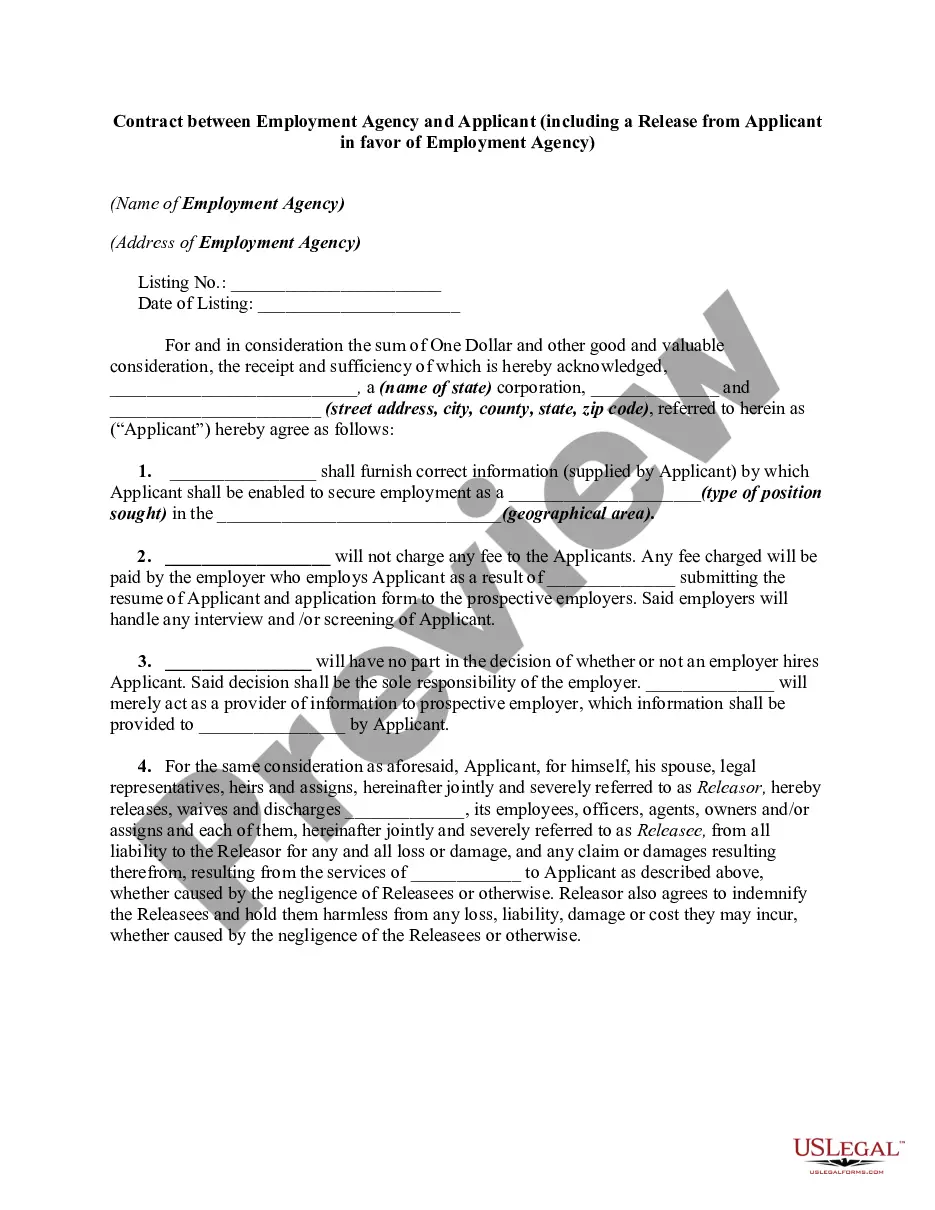
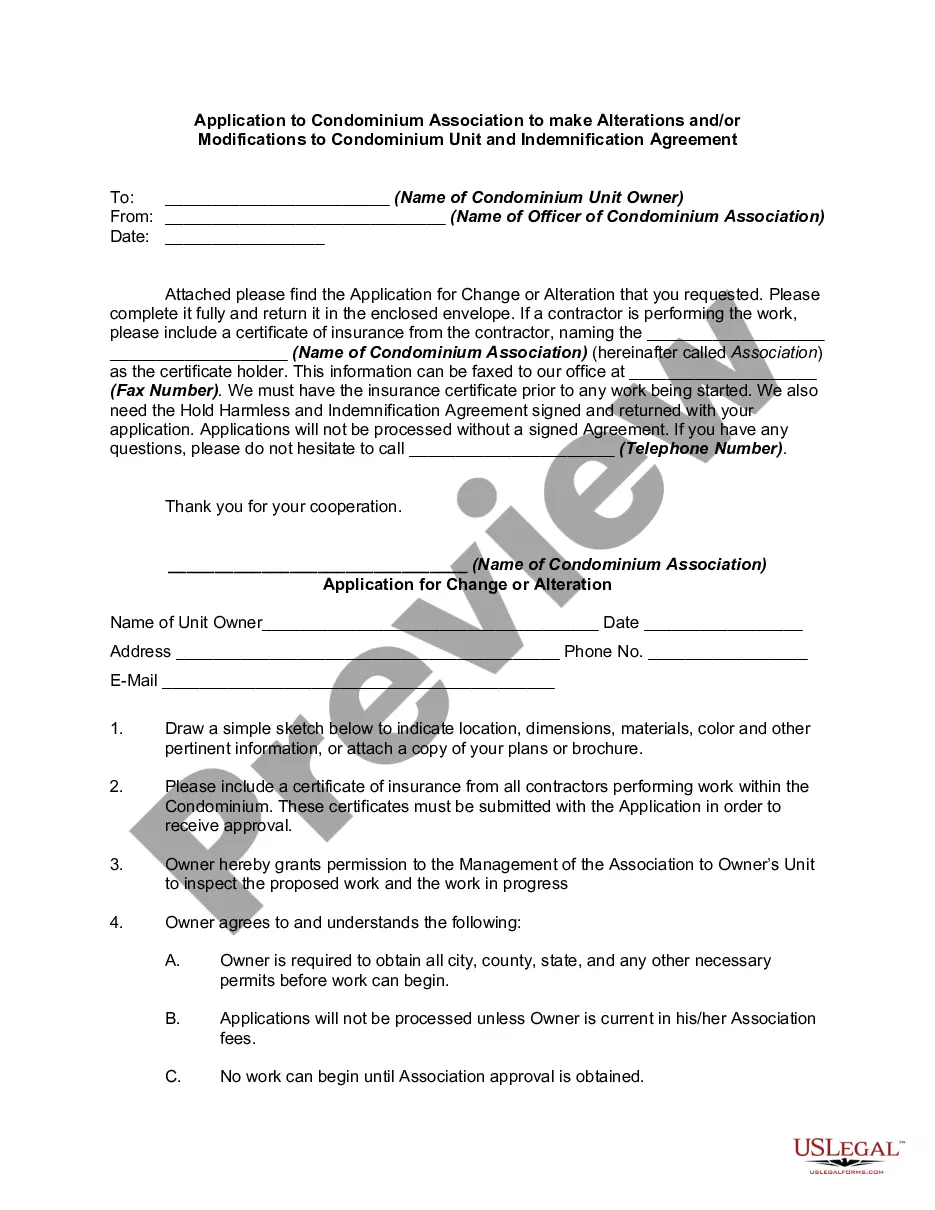
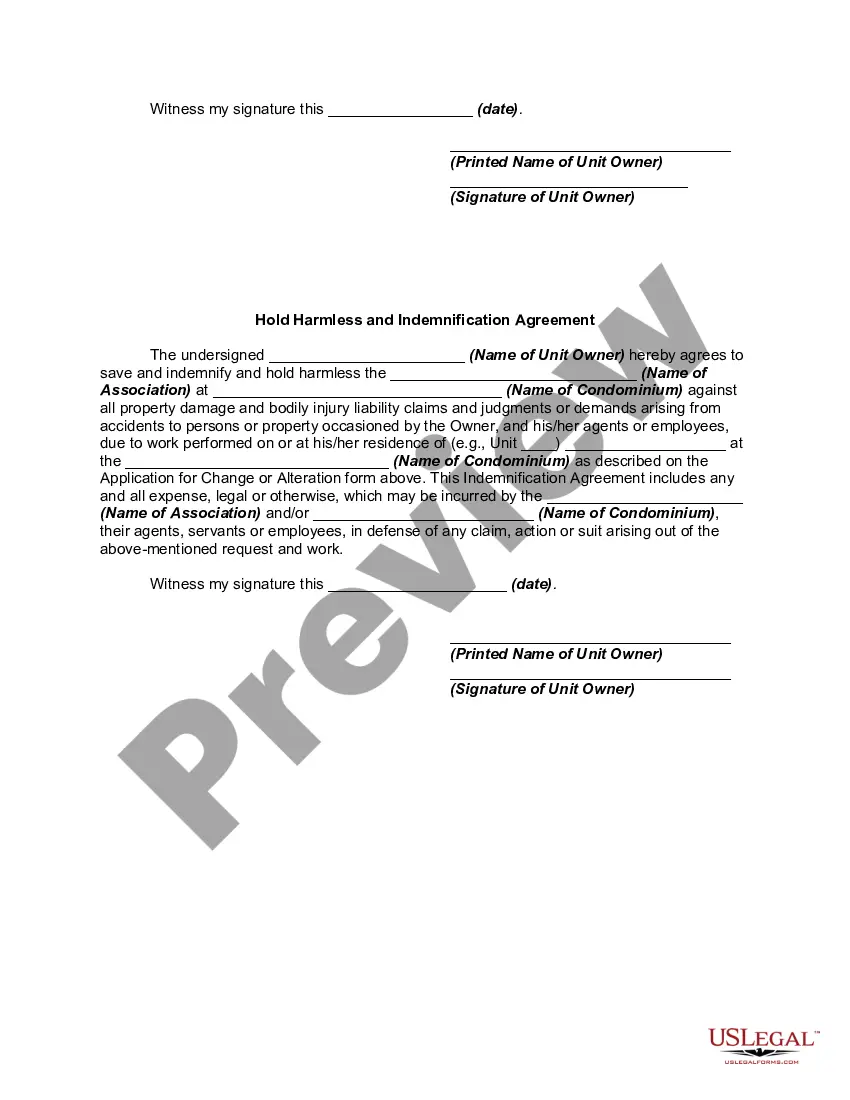
Minnesota Application to Condominium Association to make Alterations and/or Modifications to Condominium Unit and Indemnification Agreement
Description
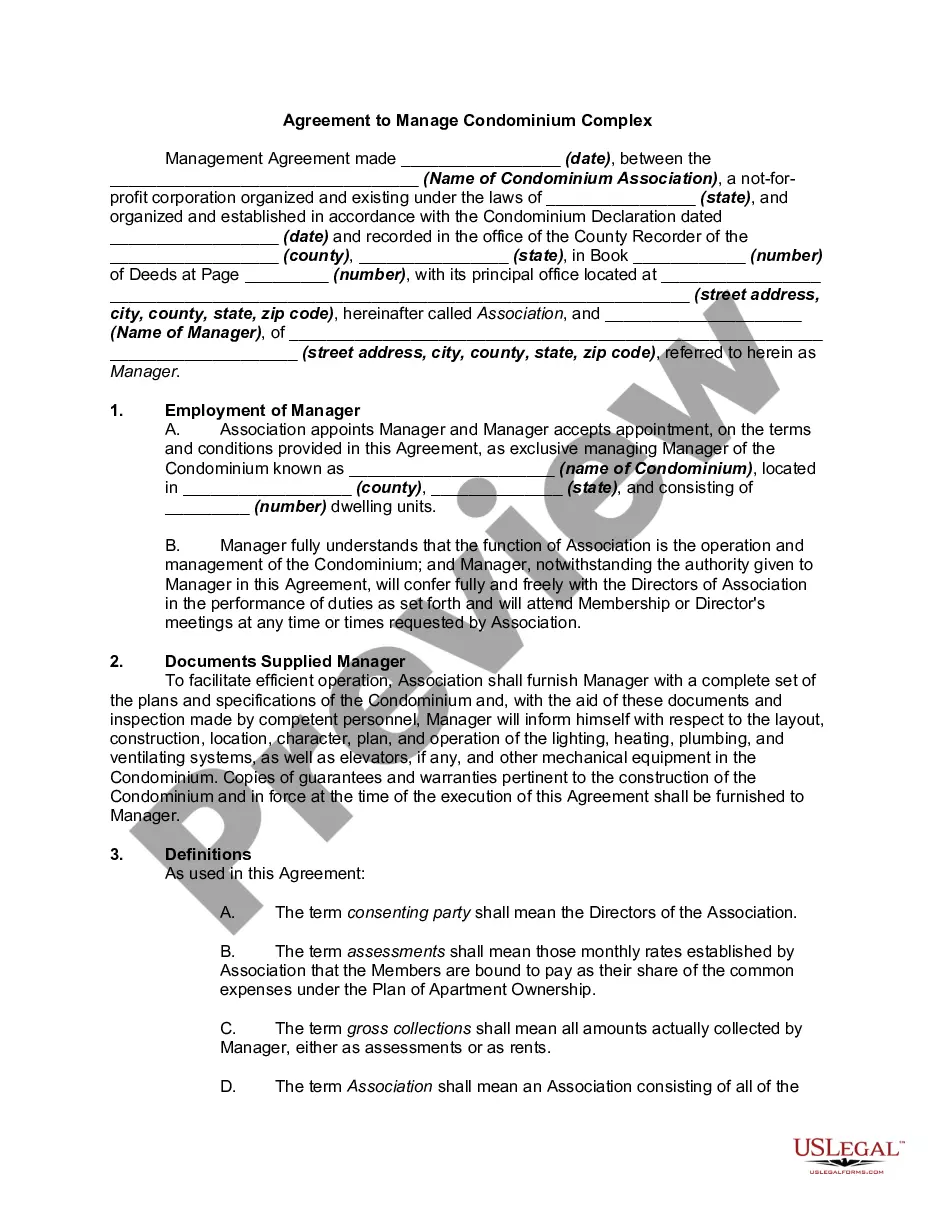
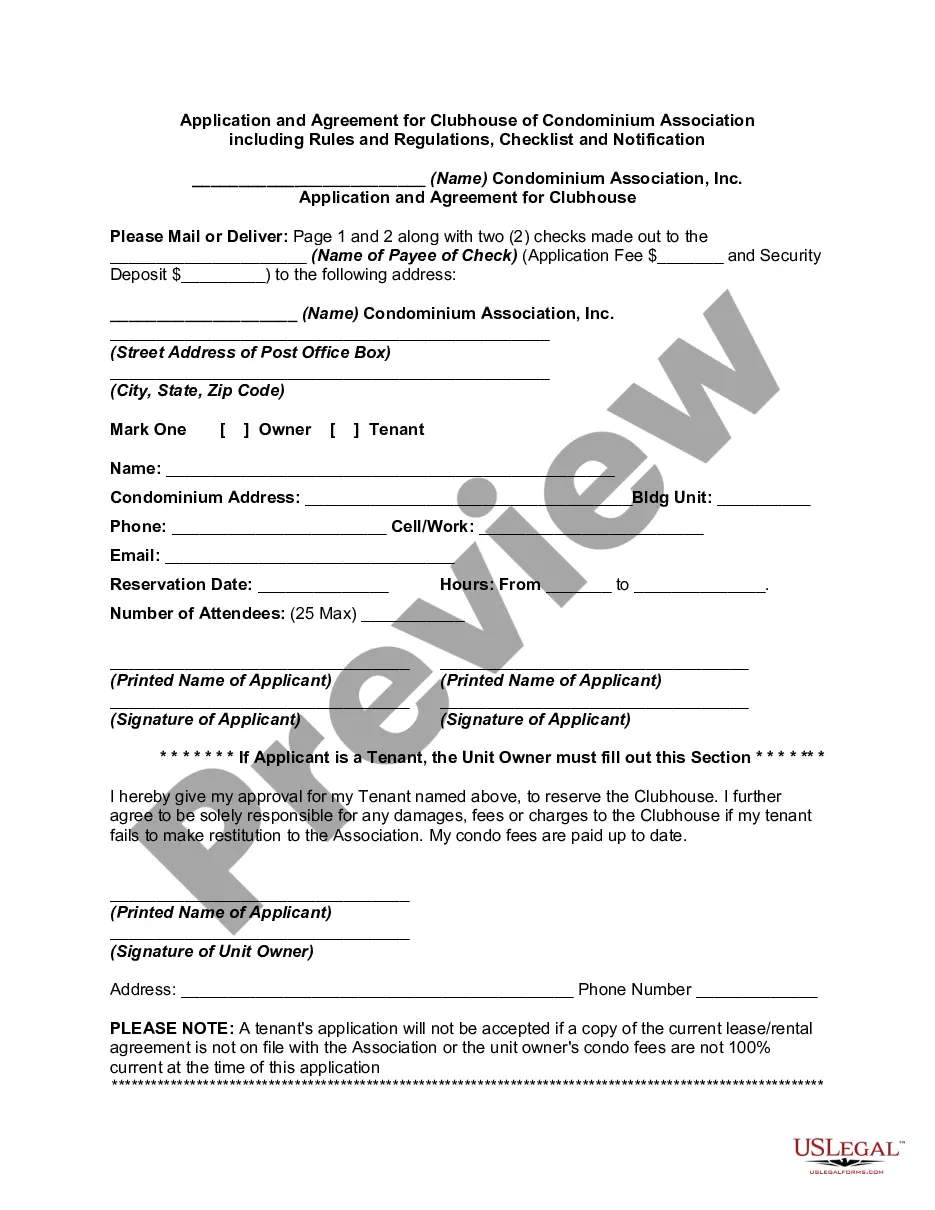
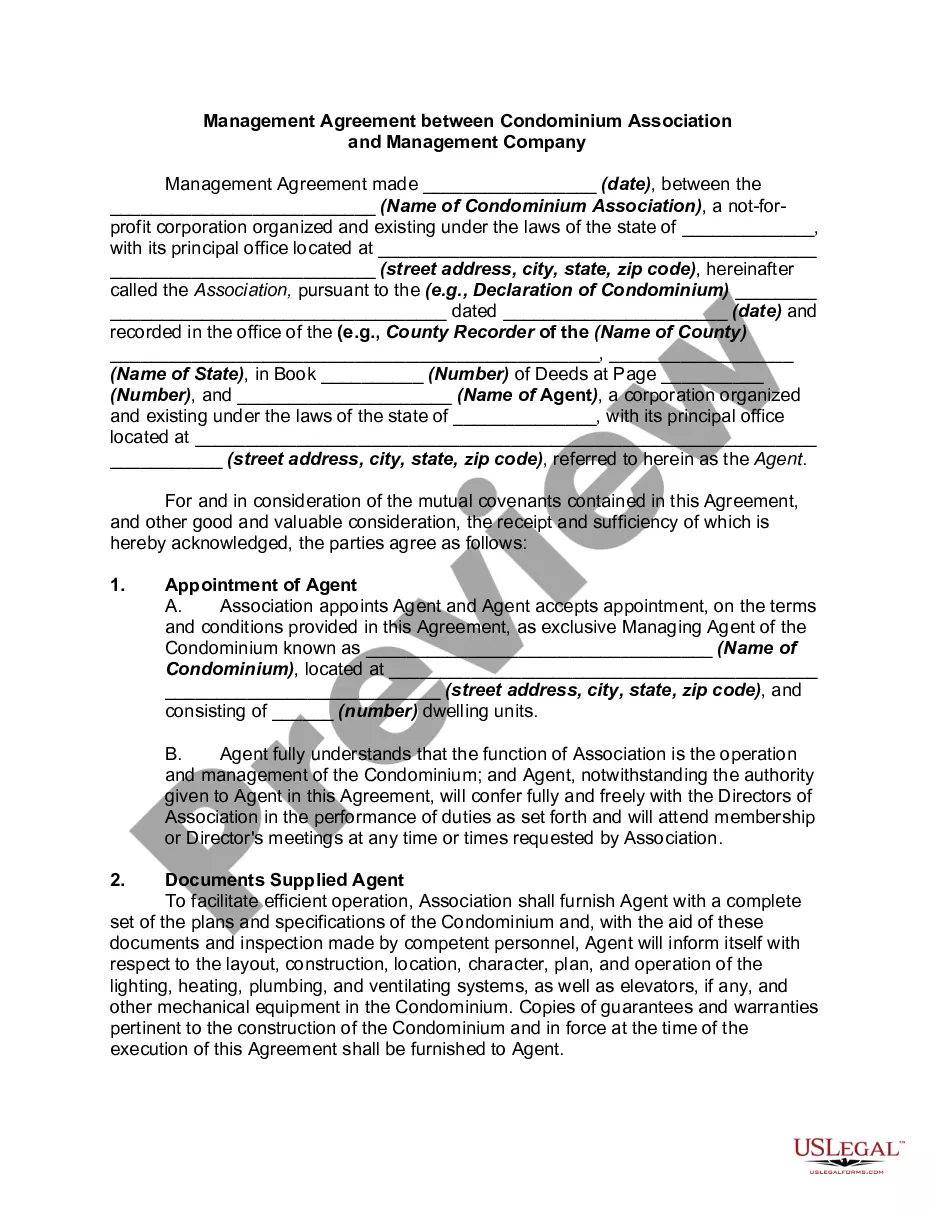
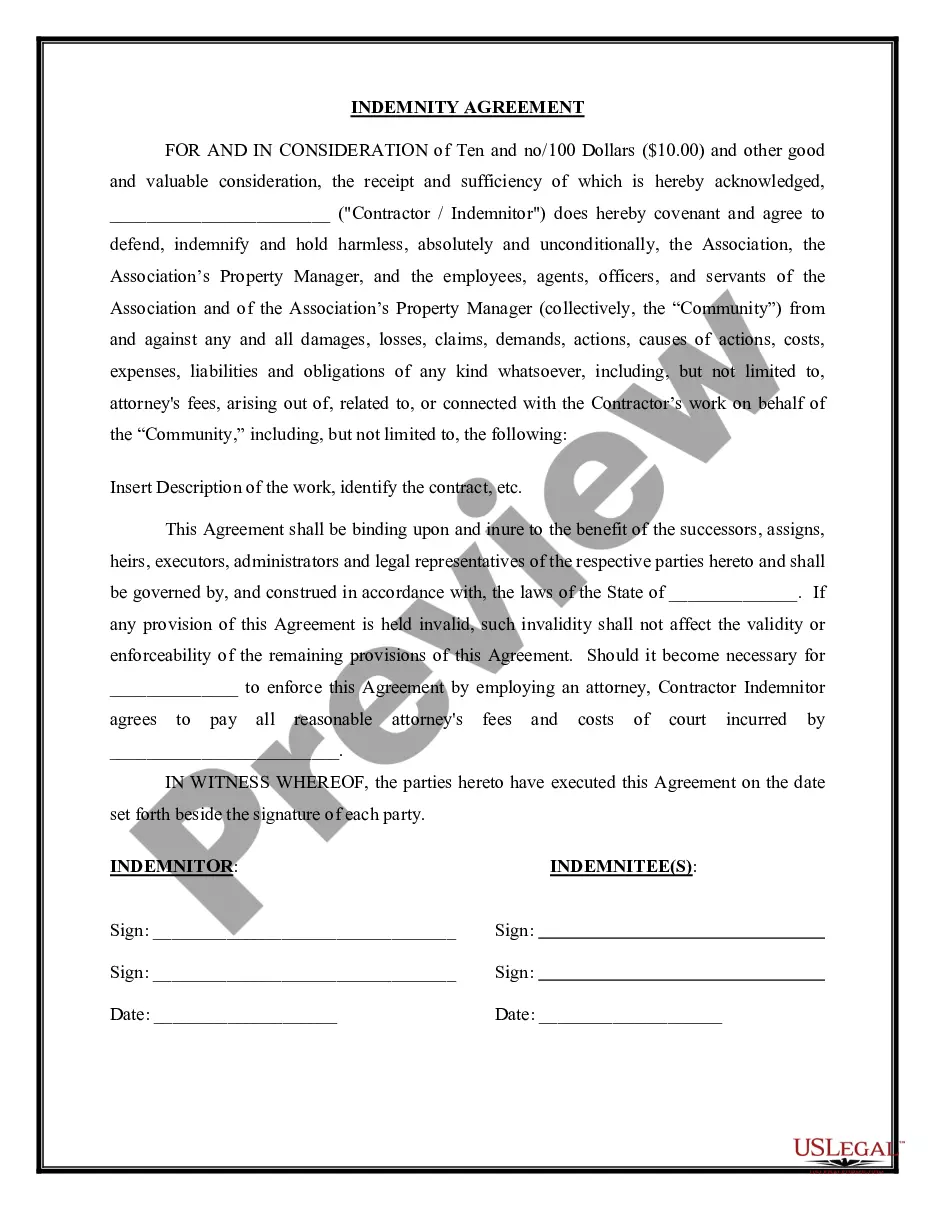
Get your form ready online
Our built-in tools help you complete, sign, share, and store your documents in one place.
Make edits, fill in missing information, and update formatting in US Legal Forms—just like you would in MS Word.
Download a copy, print it, send it by email, or mail it via USPS—whatever works best for your next step.
Sign and collect signatures with our SignNow integration. Send to multiple recipients, set reminders, and more. Go Premium to unlock E-Sign.
If this form requires notarization, complete it online through a secure video call—no need to meet a notary in person or wait for an appointment.
We protect your documents and personal data by following strict security and privacy standards.

Make edits, fill in missing information, and update formatting in US Legal Forms—just like you would in MS Word.

Download a copy, print it, send it by email, or mail it via USPS—whatever works best for your next step.

Sign and collect signatures with our SignNow integration. Send to multiple recipients, set reminders, and more. Go Premium to unlock E-Sign.

If this form requires notarization, complete it online through a secure video call—no need to meet a notary in person or wait for an appointment.

We protect your documents and personal data by following strict security and privacy standards.
Looking for another form?



How to fill out Application To Condominium Association To Make Alterations And/or Modifications To Condominium Unit And Indemnification Agreement?
If you want to complete, down load, or produce lawful file themes, use US Legal Forms, the most important collection of lawful varieties, that can be found on-line. Take advantage of the site`s simple and easy handy search to discover the paperwork you need. A variety of themes for organization and person functions are sorted by groups and says, or search phrases. Use US Legal Forms to discover the Minnesota Application to Condominium Association to make Alterations and/or Modifications to Condominium Unit and Indemnification Agreement within a few click throughs.
When you are already a US Legal Forms client, log in in your account and click the Download switch to obtain the Minnesota Application to Condominium Association to make Alterations and/or Modifications to Condominium Unit and Indemnification Agreement. Also you can gain access to varieties you formerly acquired within the My Forms tab of your account.
If you use US Legal Forms for the first time, refer to the instructions under:
- Step 1. Be sure you have selected the form to the correct area/country.
- Step 2. Utilize the Review option to look over the form`s articles. Do not forget about to see the explanation.
- Step 3. When you are unhappy with the type, take advantage of the Research area towards the top of the display screen to locate other versions of your lawful type design.
- Step 4. Once you have located the form you need, click the Get now switch. Select the costs plan you choose and add your references to sign up for an account.
- Step 5. Procedure the deal. You can use your bank card or PayPal account to finish the deal.
- Step 6. Select the file format of your lawful type and down load it on your product.
- Step 7. Comprehensive, revise and produce or sign the Minnesota Application to Condominium Association to make Alterations and/or Modifications to Condominium Unit and Indemnification Agreement.
Each lawful file design you buy is the one you have eternally. You might have acces to every single type you acquired with your acccount. Click on the My Forms segment and select a type to produce or down load once again.
Be competitive and down load, and produce the Minnesota Application to Condominium Association to make Alterations and/or Modifications to Condominium Unit and Indemnification Agreement with US Legal Forms. There are millions of specialist and state-certain varieties you can use for the organization or person requirements.
Form popularity
FAQ
The Minnesota Common Interest Ownership Act, or MCIOA, governs the legal standing and obligations of townhome associations, primarily condominium associations, created on or after June 1, 1994.
The Massachusetts Condominium Statute oversees the creation, operation, and management of condominium associations. A condo association can elect to be governed by this Act by recording a master deed or declaration with the register of deeds in the county where the association is located.
Unit owners ultimately pay for maintenance in common areas through their HOA dues and periodic assessments for major projects outside of the annual budget. Monies collected via dues are put into a reserve account fund that the association uses for the maintenance of the common areas.
The section provides that when the common funds and property of the association have been exhausted, the individual unit owners are liable for the balance due. Unit owners are the proper party to advance unit-related claims. This section controls when an improvement can be made to the common areas of the condominium.
Massachusetts HOA Laws and Regulations Homeowners associations in Massachusetts are not governed or regulated by any act.
The HOA is responsible for the upkeep and repair of common areas, while unit owners are responsible for interior repairs and maintenance. Governing documents provide comprehensive regulations to ensure uniform enforcement of rules within a community.
What Are My Rights as a Condo Owner? As a condo owner, you have the right to use your unit as provided in the master deed ? if it's a residential condominium unit ? in a way that allows you to maintain a reasonable standard of living as required by Massachusetts health, safety and building laws.