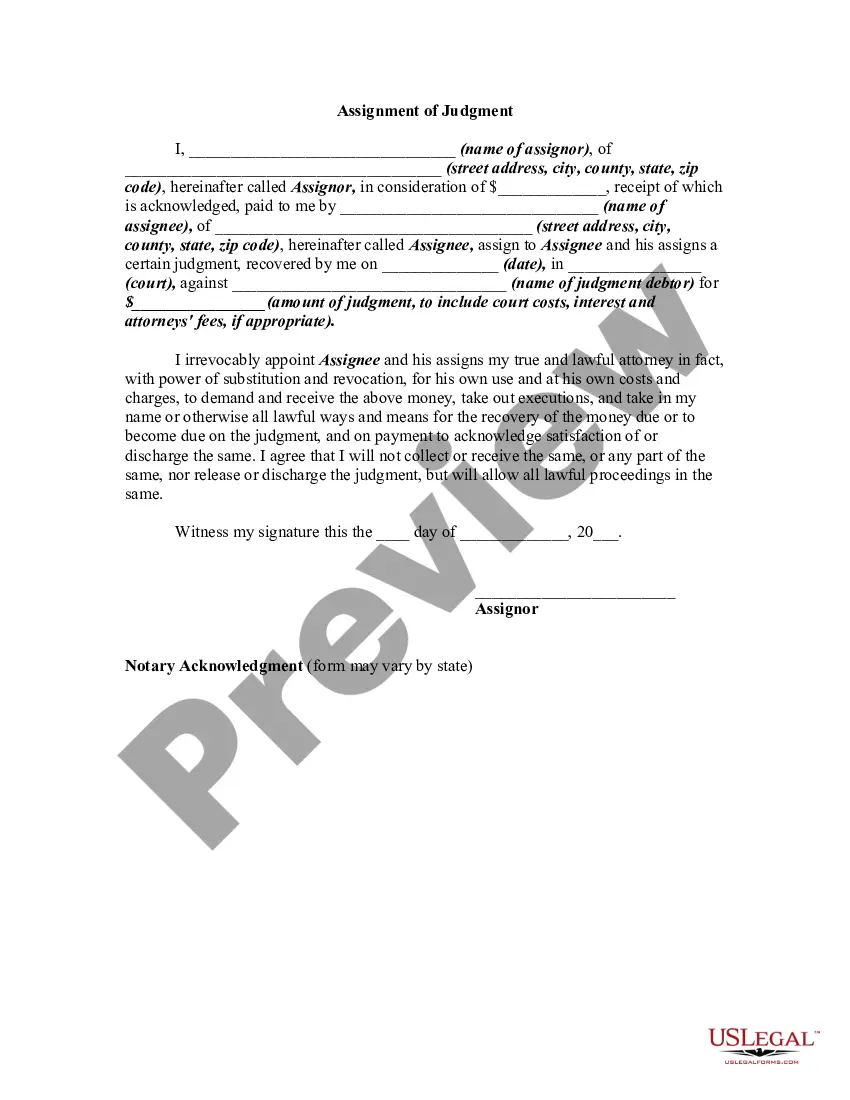
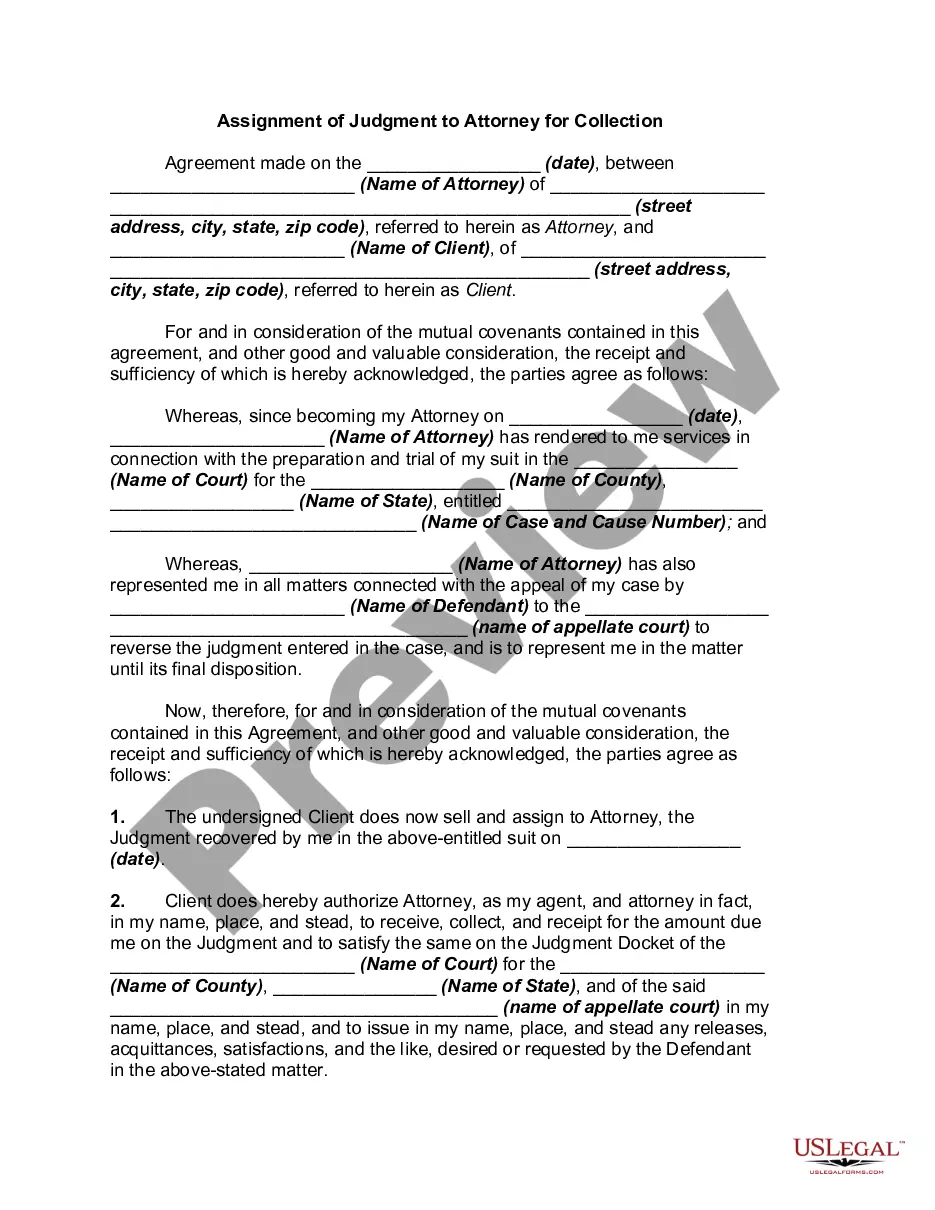
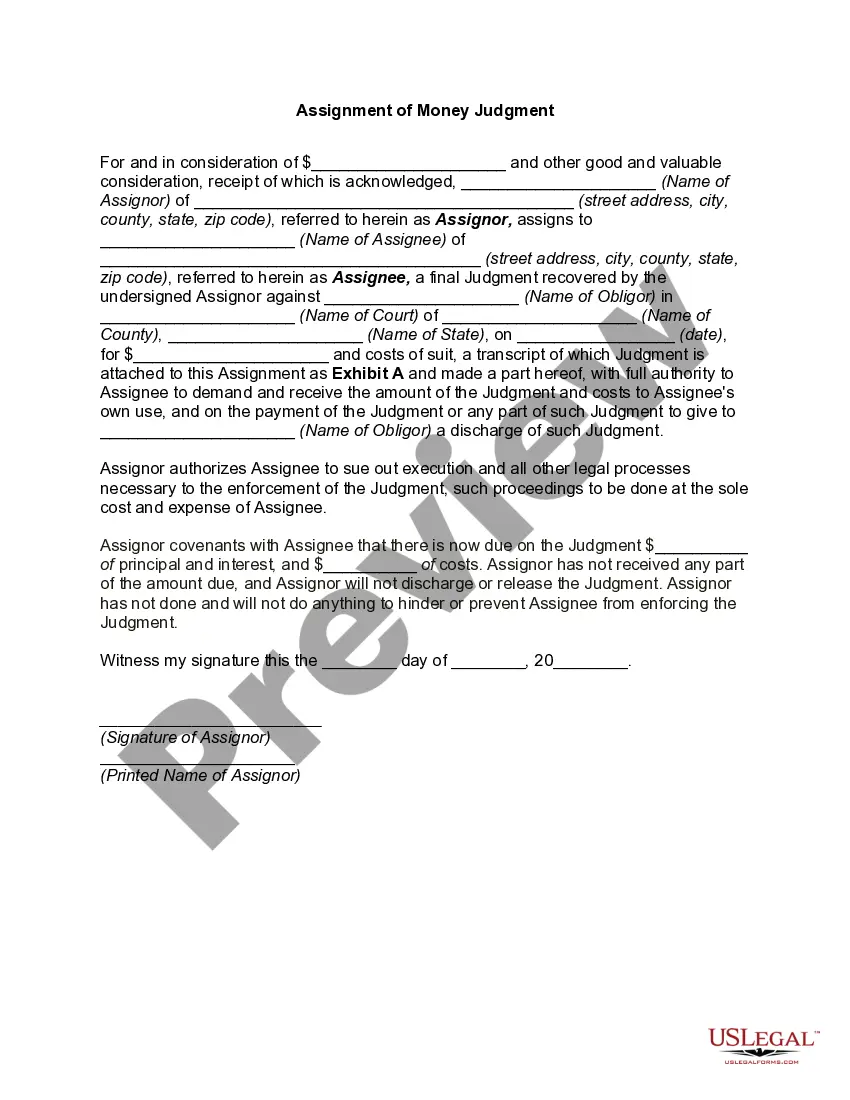
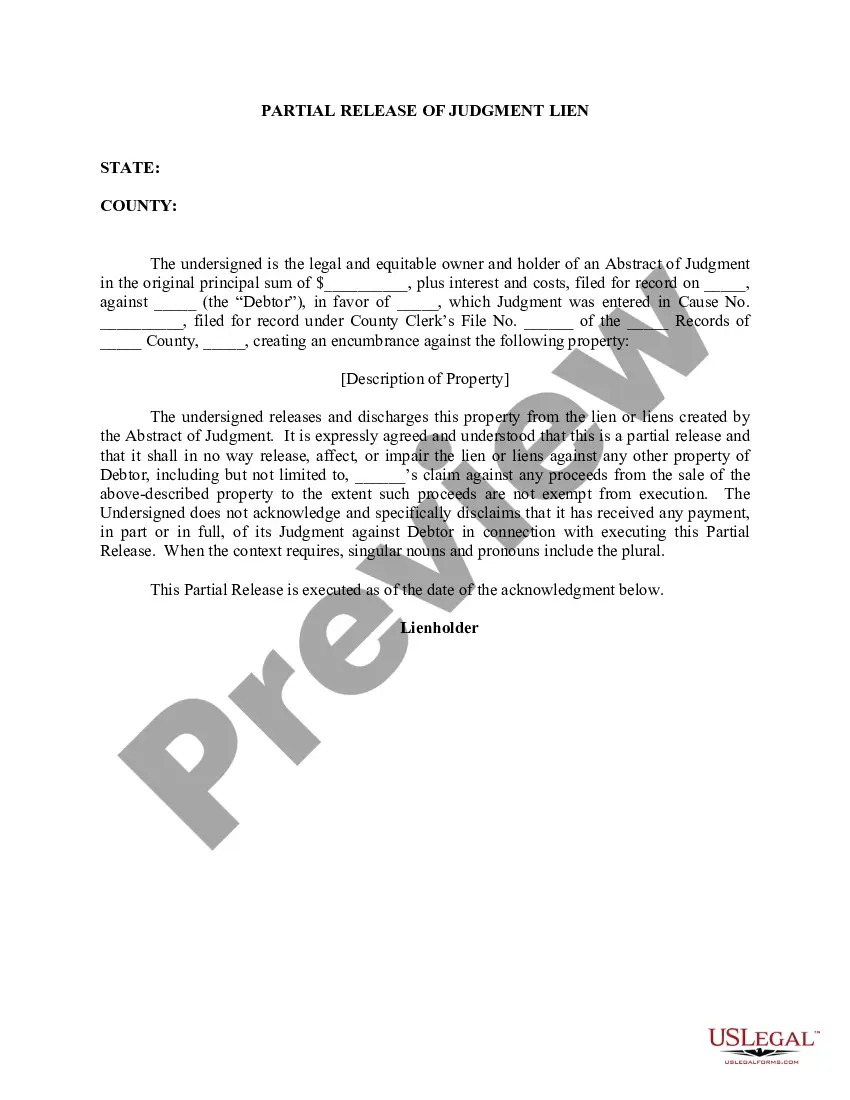
Minnesota Assignment of Judgment
Description
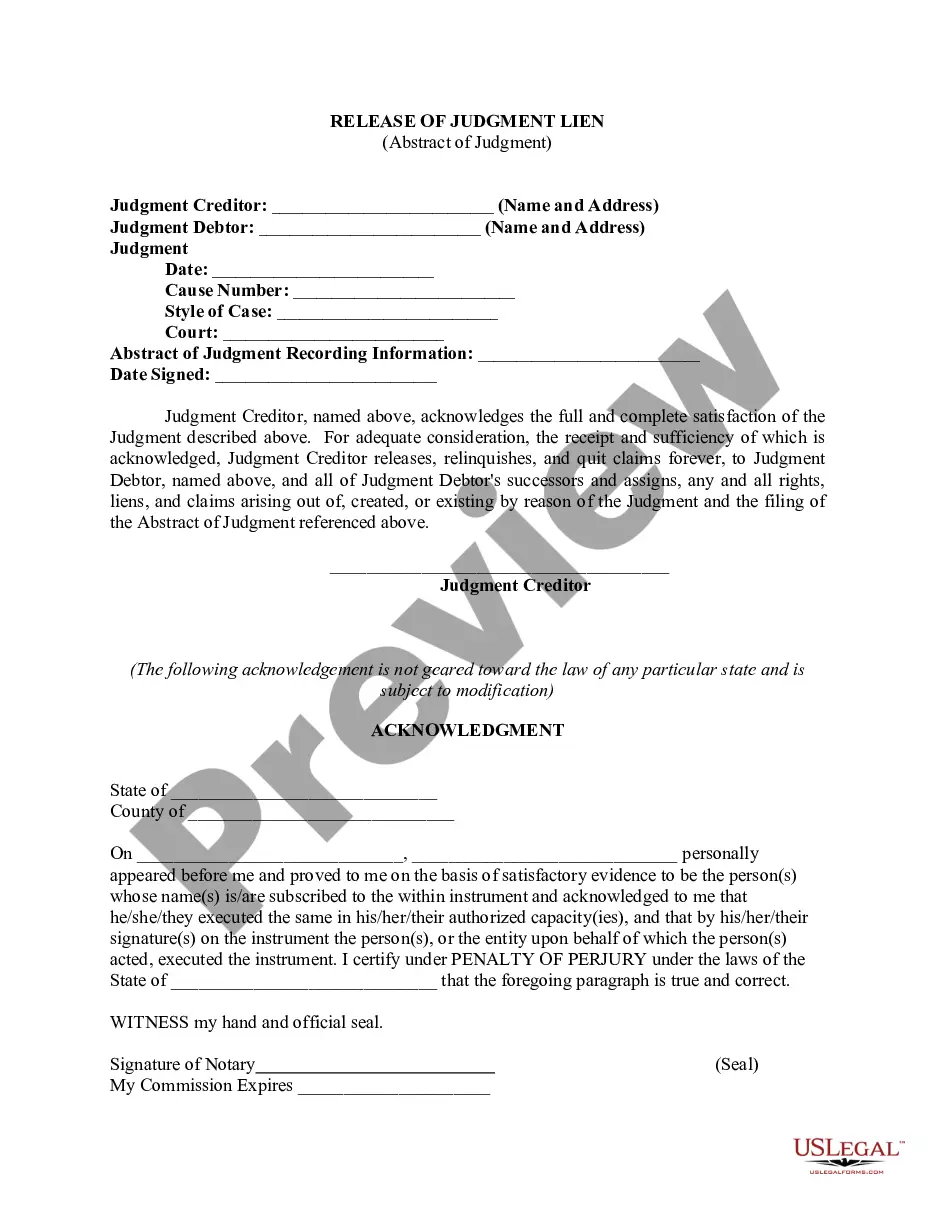
Get your form ready online
Our built-in tools help you complete, sign, share, and store your documents in one place.
Make edits, fill in missing information, and update formatting in US Legal Forms—just like you would in MS Word.
Download a copy, print it, send it by email, or mail it via USPS—whatever works best for your next step.
Sign and collect signatures with our SignNow integration. Send to multiple recipients, set reminders, and more. Go Premium to unlock E-Sign.
If this form requires notarization, complete it online through a secure video call—no need to meet a notary in person or wait for an appointment.
We protect your documents and personal data by following strict security and privacy standards.

Make edits, fill in missing information, and update formatting in US Legal Forms—just like you would in MS Word.

Download a copy, print it, send it by email, or mail it via USPS—whatever works best for your next step.

Sign and collect signatures with our SignNow integration. Send to multiple recipients, set reminders, and more. Go Premium to unlock E-Sign.

If this form requires notarization, complete it online through a secure video call—no need to meet a notary in person or wait for an appointment.

We protect your documents and personal data by following strict security and privacy standards.
Looking for another form?

How to fill out Assignment Of Judgment?
US Legal Forms - one of the largest collections of legal documents in the USA - offers a broad variety of legal form templates that you can download or print. By utilizing the site, you can access thousands of forms for commercial and personal purposes, organized by categories, states, or keywords. You can find the latest versions of forms such as the Minnesota Assignment of Judgment in just a few minutes.
If you already possess a monthly subscription, Log In and download the Minnesota Assignment of Judgment from the US Legal Forms library. The Download button will be visible on every template you view. You can access all previously acquired forms from the My documents tab of your account.
If you are using US Legal Forms for the first time, here are simple instructions to help you get started: Ensure you have selected the correct form for your city/state. Click the Preview button to review the form's content. Check the form details to confirm you have chosen the right form. If the form doesn’t meet your needs, utilize the Search field at the top of the screen to find one that does. If you are happy with the form, confirm your choice by clicking the Buy now button. Then, select the pricing plan you prefer and provide your details to register for an account. Process the transaction. Use a credit card or PayPal account to complete the transaction. Choose the format and download the form to your device. Make edits. Fill out, revise, print, and sign the downloaded Minnesota Assignment of Judgment.
- Every template you added to your account has no expiration date and is yours forever.
- So, if you wish to download or print another version, simply navigate to the My documents section and click on the form you need.
- Access the Minnesota Assignment of Judgment through US Legal Forms, the most extensive library of legal document templates.
- Utilize thousands of professional and state-specific templates that meet your business or personal needs and requirements.
Form popularity
FAQ
The statute of limitations for bringing a lawsuit for breach of contract under Minnesota law is six (6) years. This means that a creditor or debt collector can sue you anytime within six (6) years from the date of your last purchase or last payment, whichever was later.
In Minnesota, the statute of limitations is six years and begins on the date of the last payment on an account. This also means that if you make a payment on your debt at any time in the six years, the clock restarts.
Ing to the Fair Credit Reporting Act (FCRA), negative items can appear on your credit report for up to 7 years. These include items such as debt collections and late payments. The time frame begins from the original date of the delinquency (the date of the missed payment).
Rule 520(a) establishes a 20-day time period for obtaining an order to vacate a default judgment order or order for judgment of dismissal. The 20 days is measured from the mailing of the notice of judgment, and the law requires that an additional three days be added to the time period when notice is served by mail.
Step 1: Docket the judgment. ... Step 2: Request an Order for Disclosure. ... Step 3: Request an Order to Show Cause. ... Step 4: Send the judgment debtor notice that you plan to start collecting. ... Step 5: Request a Writ of Execution from court administration. ... Step 6: Take the paperwork to the sheriff's office.
In most states, debt collectors can still attempt to collect debts after the statute of limitations expires. They can try to get you to pay the debt by sending you letters or calling you as long as they do not violate the law when doing so. They can't sue or threaten to sue you if the statute of limitations has passed.
The time period between your last contact with the creditor ? whether it was a payment made, a letter or a telephone conversation ? has been six years, this means that the debt has become ?statue barred? and the creditor is no longer allowed to pursue you for payment or take any further legal action against you.
Rule 56. A party may move for summary judgment, identifying each claim or defense - or the part of each claim or defense - on which summary judgment is sought.