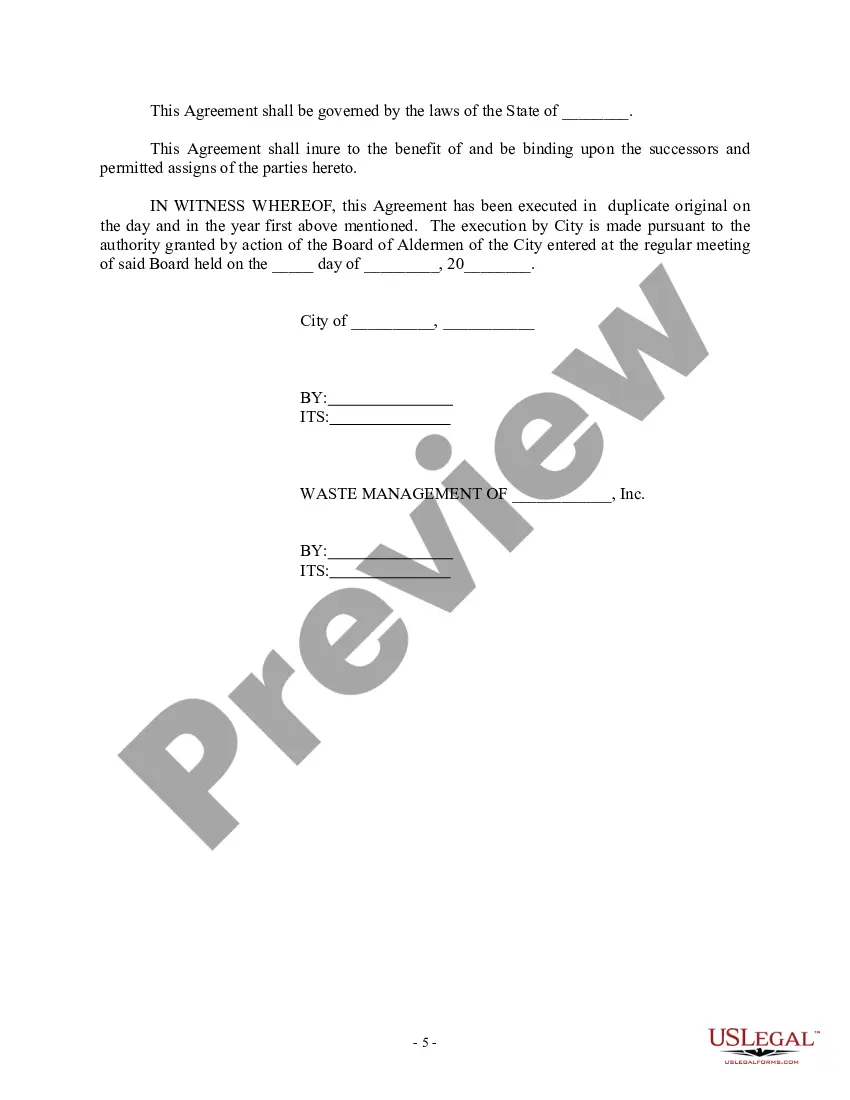
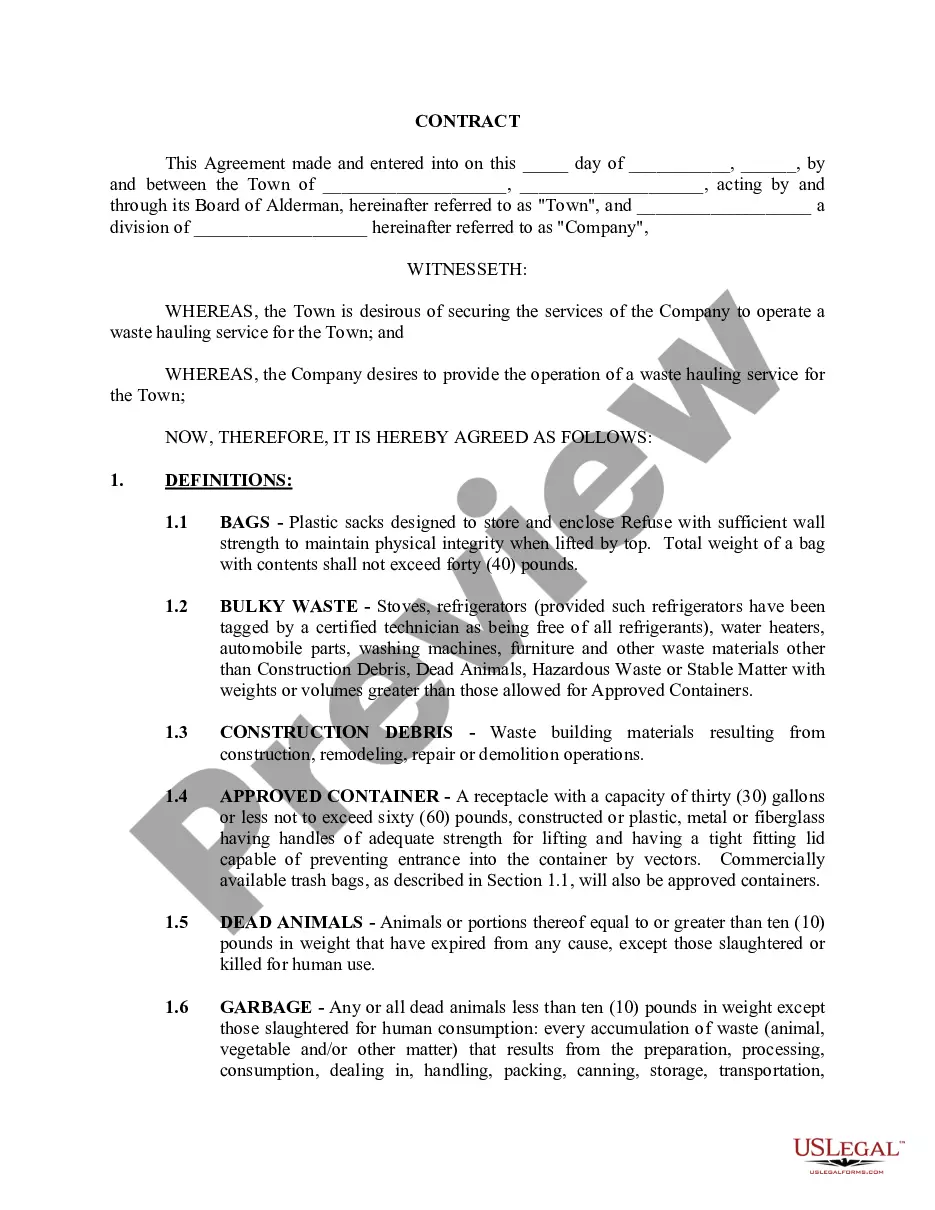
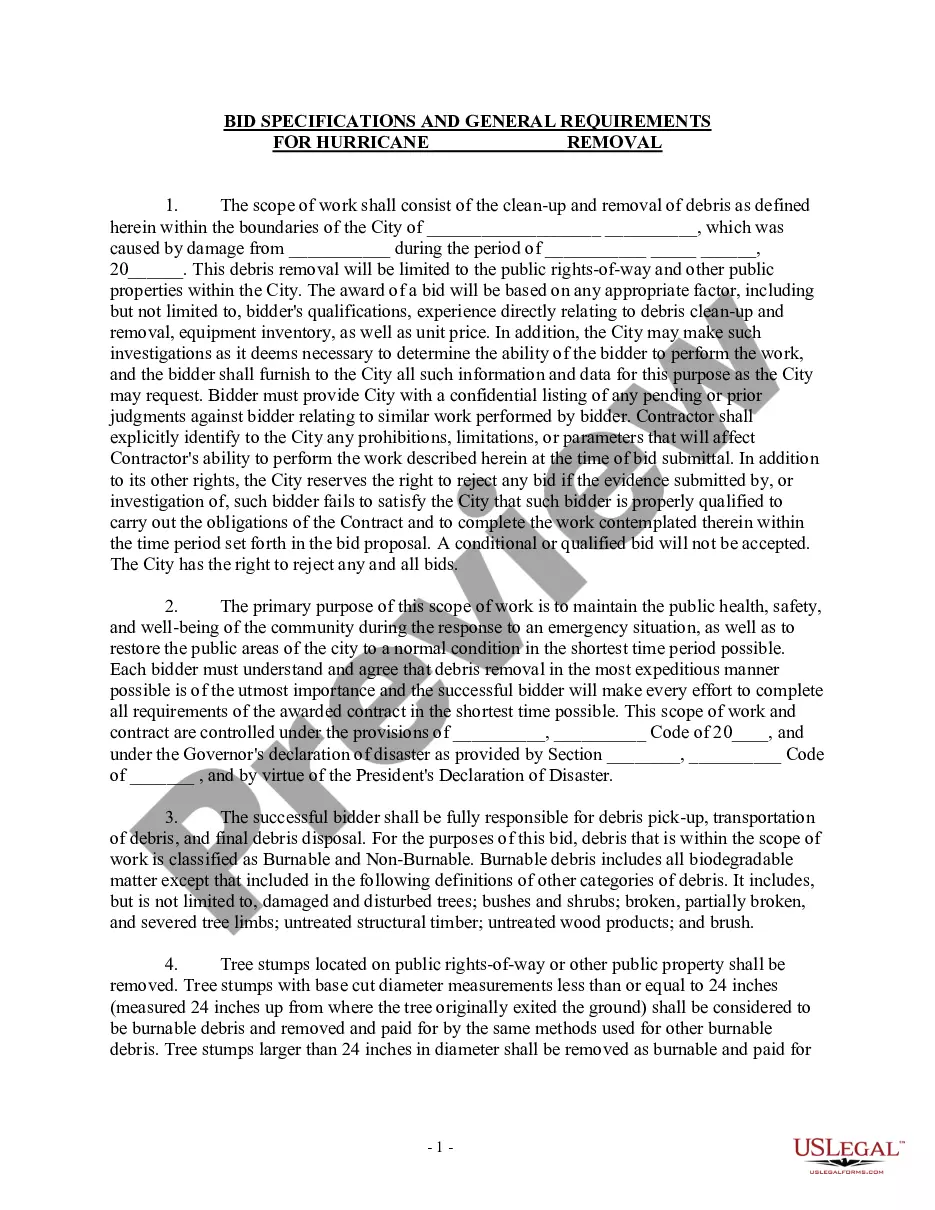
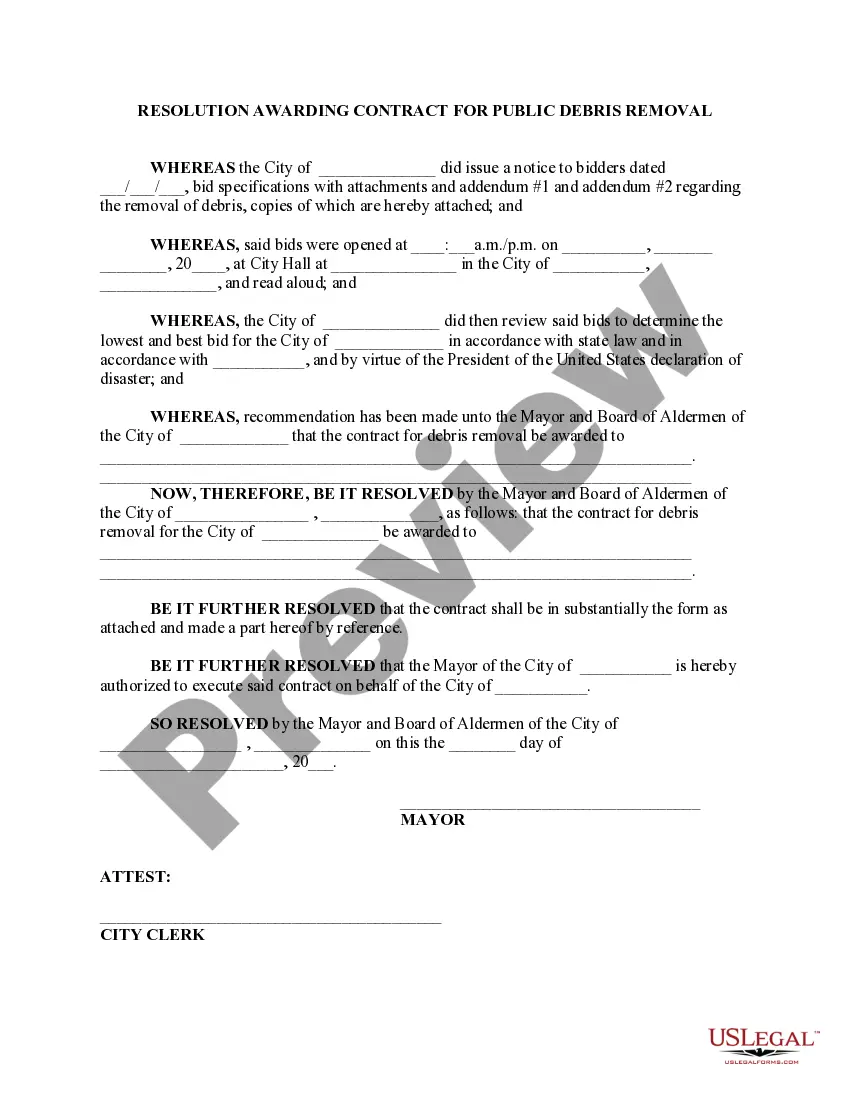
Minnesota Trash Collection and Hauling Contract
Description

Get your form ready online
Our built-in tools help you complete, sign, share, and store your documents in one place.
Make edits, fill in missing information, and update formatting in US Legal Forms—just like you would in MS Word.
Download a copy, print it, send it by email, or mail it via USPS—whatever works best for your next step.
Sign and collect signatures with our SignNow integration. Send to multiple recipients, set reminders, and more. Go Premium to unlock E-Sign.
If this form requires notarization, complete it online through a secure video call—no need to meet a notary in person or wait for an appointment.
We protect your documents and personal data by following strict security and privacy standards.

Make edits, fill in missing information, and update formatting in US Legal Forms—just like you would in MS Word.

Download a copy, print it, send it by email, or mail it via USPS—whatever works best for your next step.

Sign and collect signatures with our SignNow integration. Send to multiple recipients, set reminders, and more. Go Premium to unlock E-Sign.

If this form requires notarization, complete it online through a secure video call—no need to meet a notary in person or wait for an appointment.

We protect your documents and personal data by following strict security and privacy standards.
Looking for another form?


How to fill out Trash Collection And Hauling Contract?
US Legal Forms - one of the largest collections of legal documents in the United States - offers a variety of legal form templates that you can download or print. By using the site, you can access thousands of forms for business and personal purposes, organized by categories, states, or keywords. You can find the most recent forms like the Minnesota Trash Collection and Hauling Contract in just minutes.
If you already have a monthly subscription, Log In and download the Minnesota Trash Collection and Hauling Contract from the US Legal Forms library. The Download button will appear on every form you view. You can access all previously downloaded forms in the My documents section of your account.
To utilize US Legal Forms for the first time, here are simple steps to help you get started: Ensure you have selected the correct form for your city/state. Click on the Preview button to review the form’s content. Check the form description to confirm that you have chosen the right form. If the form doesn’t meet your requirements, use the Search area at the top of the screen to find one that does. If you are satisfied with the form, confirm your choice by clicking the Get now button. Then, select the pricing plan you prefer and provide your details to register for an account. Process the transaction. Use your credit card or PayPal account to finalize the transaction. Choose the format and download the form to your device. Make edits. Complete, modify, print, and sign the downloaded Minnesota Trash Collection and Hauling Contract. Every template you added to your account has no expiration date and remains yours indefinitely. So, if you wish to download or print another copy, simply visit the My documents section and click on the form you need.
With US Legal Forms, you can streamline your document management process and ensure you have the necessary legal paperwork at your fingertips.
This platform provides a reliable resource for finding and managing legal documents efficiently.
- Access the Minnesota Trash Collection and Hauling Contract with US Legal Forms, one of the most comprehensive libraries of legal document templates.
- Utilize a vast array of professional and state-specific templates that cater to your business or personal needs.
- Download or print forms at any time without any restrictions.
- Enjoy the convenience of having all your documents organized in one place.
- Take advantage of easy navigation and user-friendly interface.
- Ensure compliance with legal requirements through reliable templates.
Form popularity
FAQ
A permit is required for anyone in the business of solid waste collection or recyclable materials collection, removal or transport for hire or salvage over the streets or public right-of-way in Miami-Dade County.
The waste management plan should cover these things: Specify who is responsible for managing waste on site. Establish goals and objectives. Estimate the waste types and amounts involved. Set targets for reducing the amount of each waste sent to landfill. Describe recycling/reuse methods for each material.
Steps to Start Your Own Waste Management Business Pick a specialization. ... Analyze the market. ... Register your business. ... Look for Investment. ... Get all relevant permits and licenses. ... Purchase the necessary equipment. ... Hire qualified staff. ... Market your business.
What is Construction and Demolition Waste? Construction and demolition (C&D) waste is generated from construction, renovation, repair, and demolition of houses, large building structures, roads, bridges, piers, and dams. C&D waste is made up of wood, steel, concrete, gypsum, masonry, plaster, metal, and asphalt.
Solid waste hauling means the collection and transportation to a disposal site of trash and garbage (but not construction and demolition debris; medical waste; hazardous waste; organic waste; or special waste, such as contaminated soil, or sludge; or recyclable materials) from residential, commercial and industrial ...
Waste contractor means a person, licensed in terms of Chapter 6, who collects, stores, transports, deposits, disposes, treats, handles or cleans up any waste generated by any other person, but does not include any person who - Based on 6 documents.
Over 90% of construction waste are inert and are known as public fill. Public fill includes debris, rubble, earth and concrete which is suitable for land reclamation and site formation. When properly sorted, materials such as concrete and asphalt can be recycled for use in construction.
Disposal of waste means: the collection, sorting, transport and treatment of waste as well as its storage and tipping above or under ground; the transformation operations necessary for its re-use, recovery or recycling.