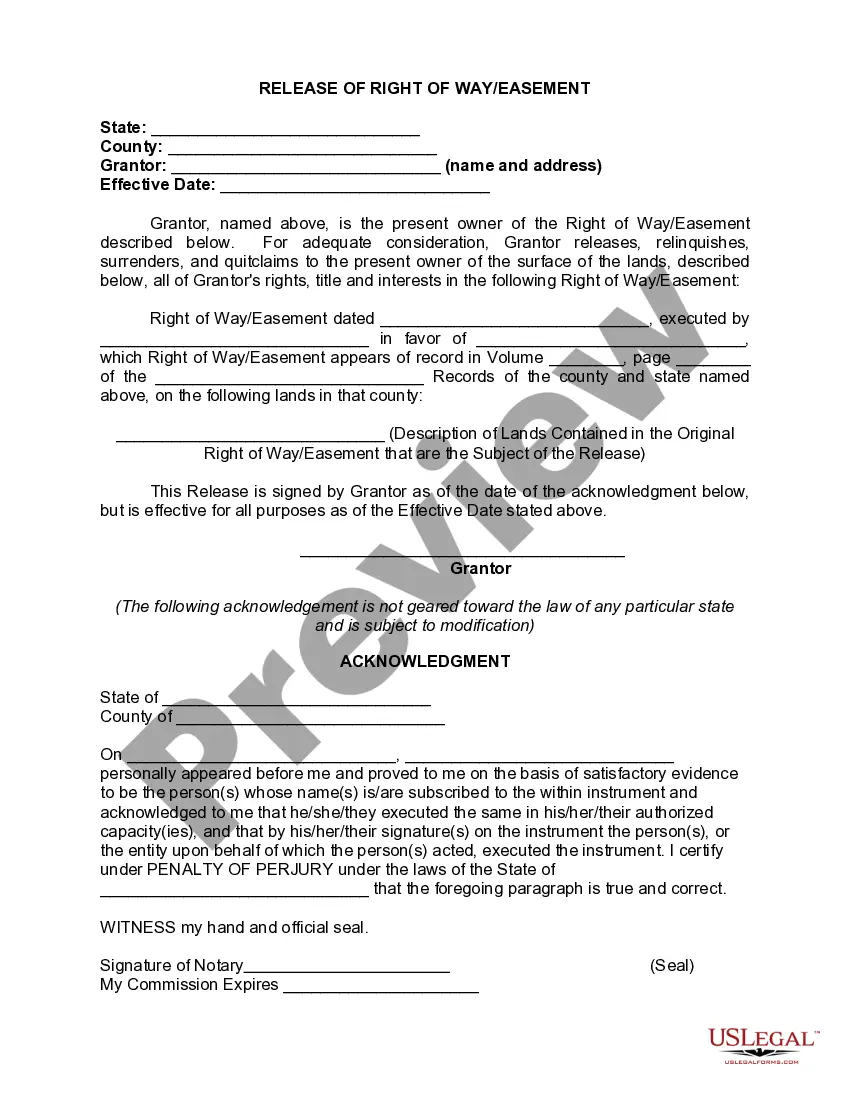
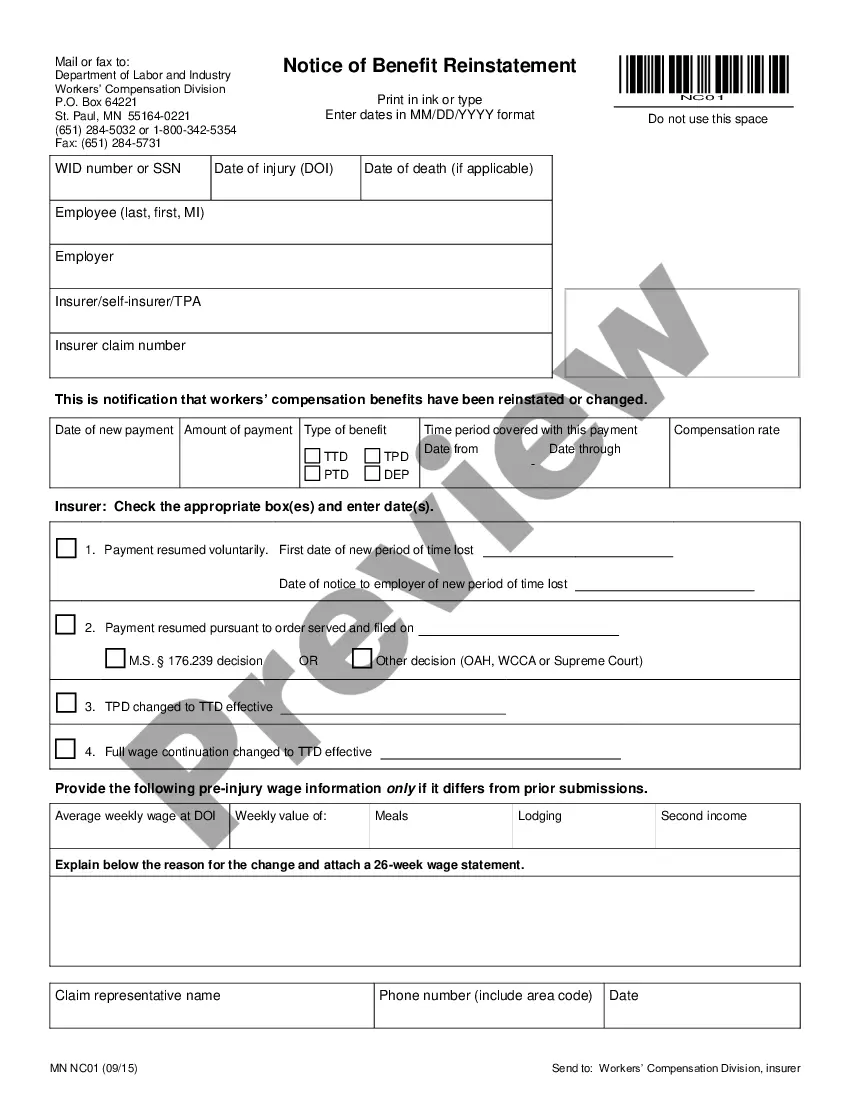
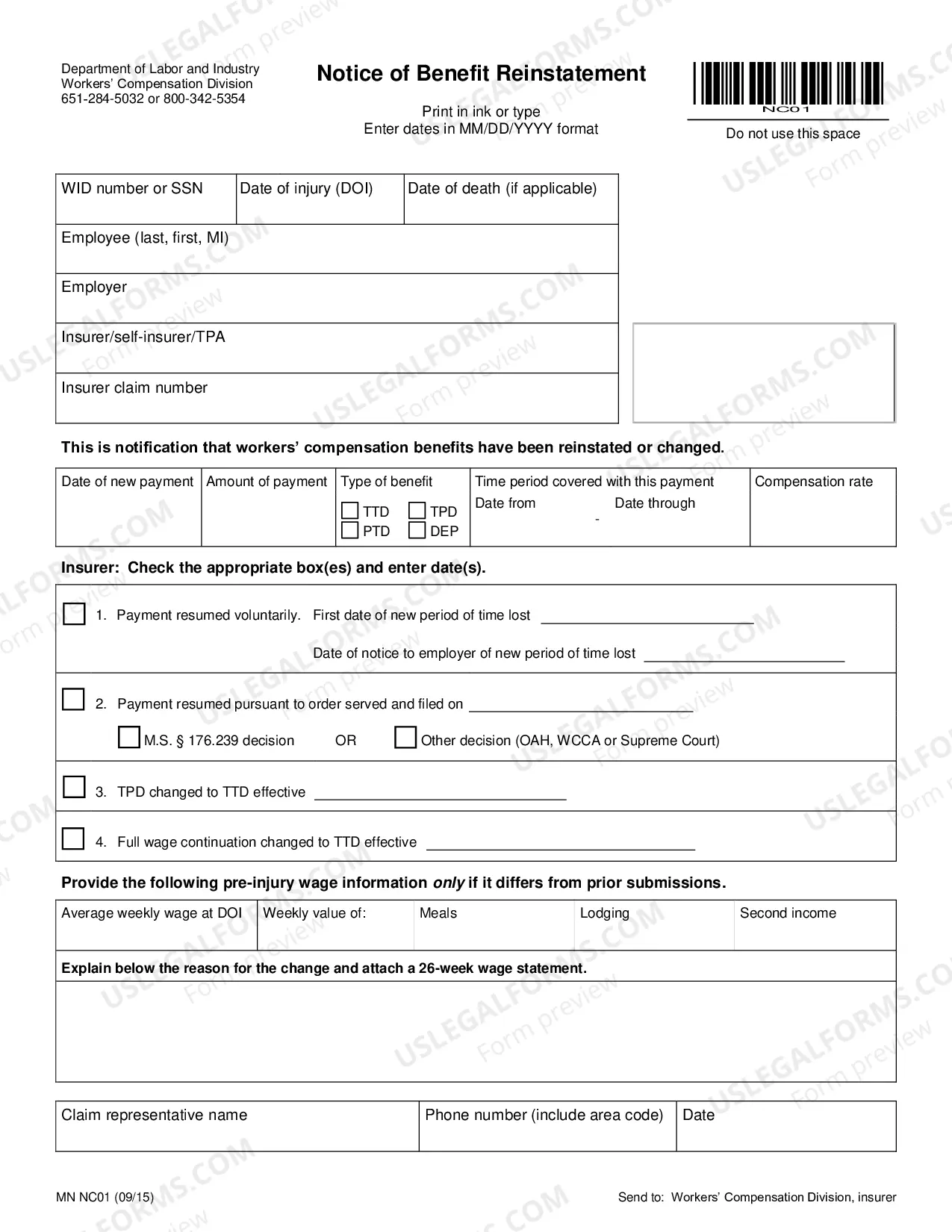
This is one of the official Workers' Compensation forms for the state of Minnesota.
Minnesota Notice of Benefit Reinstatement for Workers' Compensation
Instant download
This website is not affiliated with any governmental entity
Public form
Description
Get your form ready online
Our built-in tools help you complete, sign, share, and store your documents in one place.
Built-in online Word editor
Make edits, fill in missing information, and update formatting in US Legal Forms—just like you would in MS Word.
Export easily
Download a copy, print it, send it by email, or mail it via USPS—whatever works best for your next step.
E-sign your document
Sign and collect signatures with our SignNow integration. Send to multiple recipients, set reminders, and more. Go Premium to unlock E-Sign.
Notarize online 24/7
If this form requires notarization, complete it online through a secure video call—no need to meet a notary in person or wait for an appointment.
Store your document securely
We protect your documents and personal data by following strict security and privacy standards.

Make edits, fill in missing information, and update formatting in US Legal Forms—just like you would in MS Word.

Download a copy, print it, send it by email, or mail it via USPS—whatever works best for your next step.

Sign and collect signatures with our SignNow integration. Send to multiple recipients, set reminders, and more. Go Premium to unlock E-Sign.

If this form requires notarization, complete it online through a secure video call—no need to meet a notary in person or wait for an appointment.

We protect your documents and personal data by following strict security and privacy standards.
Looking for another form?
How to fill out Minnesota Notice Of Benefit Reinstatement For Workers' Compensation?
Obtain any template from 85,000 legal documents including Minnesota Notice of Benefit Reinstatement for Workers' Compensation online with US Legal Forms. Each template is crafted and updated by state-licensed attorneys.
If you have a subscription, Log In. Once you reach the form’s page, click the Download button and navigate to My documents to access it.
If you haven’t subscribed yet, follow these steps.
With US Legal Forms, you will consistently have rapid access to the appropriate downloadable sample. The platform offers you access to documents and categorizes them to streamline your search. Utilize US Legal Forms to acquire your Minnesota Notice of Benefit Reinstatement for Workers' Compensation swiftly and efficiently.
- Review the state-specific criteria for the Minnesota Notice of Benefit Reinstatement for Workers' Compensation that you wish to utilize.
- Examine the description and preview the template.
- Once you are certain the sample meets your needs, click Buy Now.
- Choose a subscription plan that fits your financial situation.
- Establish a personal account.
- Make a payment using one of two available methods: by card or through PayPal.
- Select a format to download the document in; two choices are available (PDF or Word).
- Download the file to the My documents tab.
- After your reusable form is downloaded, print it out or store it on your device.
Form popularity
FAQ
The short answer is yes, the workers comp insurance company can stop paying you weekly checks for any reason or no reason, just like you can stop paying the bills that you owe, which is what may happen if they stop paying you.
You will receive temporary total disability benefits if you are unable to work after the seventh day of disability. If you are unable to work more than 14 days, then the first seven days become payable. These pay two-thirds of your average weekly wages. Once you return to the job, your benefits will stop.
Yes. A portion of the benefits must usually be repaid.This right of the workers' compensation insurance carrier to be repaid a portion of its benefits is called subrogation. On the other hand, the workers' compensation insurance carrier must usually pay its share of attorneys' fees and expenses in the lawsuit.
If you are in financial need, anywhere in California, you can call 2-1-1, a clearing house for benefits which will direct you to local resources available to you. It is a free service. IF TEMPORARY DISABILITY ENDS, AND YOU CANNOT GO BACK TO WORK, FILE FOR EDD (State Disability Benefits).
Because workers' compensation is a temporary measure by design, yes, the insurance company can stop payment. However, they must provide you 30 days notice before they do so, informing you that your benefits will stop and why.Your doctor determines you are able to return to work.
The truth is that workers comp benefits don't last forever; in California, injured workers can only receive workers compensation benefits for 104 weeks within a period of five years for most injuries.
As long as you have been given permission to go back to work, you should still be able to receive your workers' compensation benefits. Depending on the details of your case, you might also be able to pursue a settlement.
When it comes to workers' compensation, a return to work will generally mean an end to benefits. It is important not to return to work until you are fully recovered, and a medical professional has determined it is safe to return.
In the typical workers' compensation claim filed in California, benefits can be provided for 104 weeks or 2 years' worth.