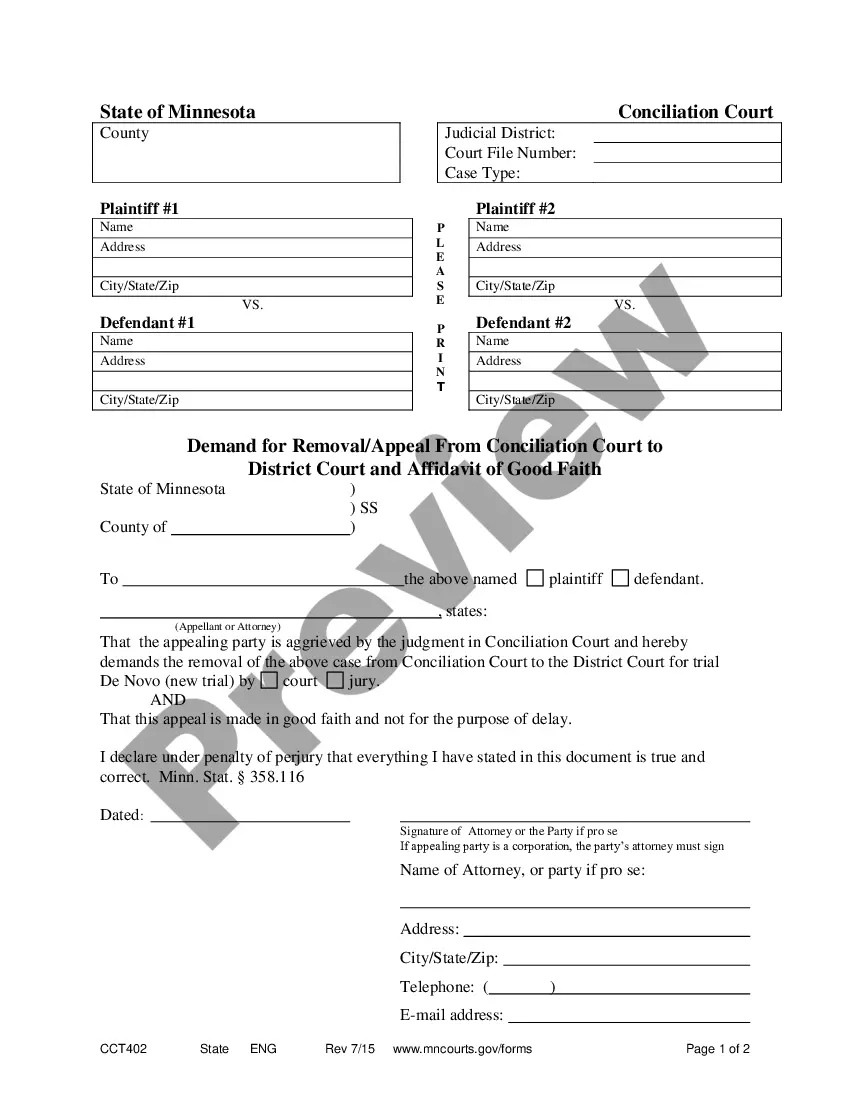
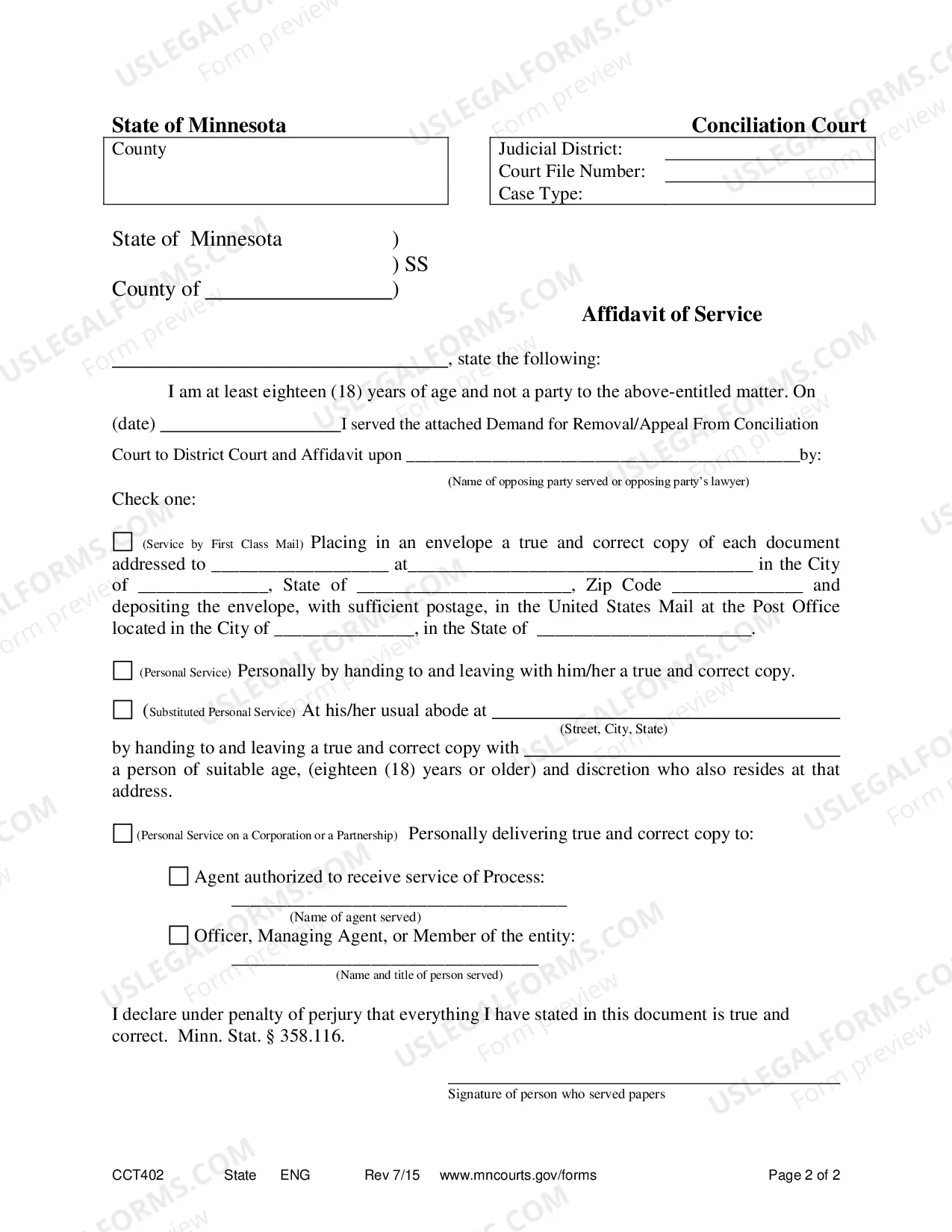
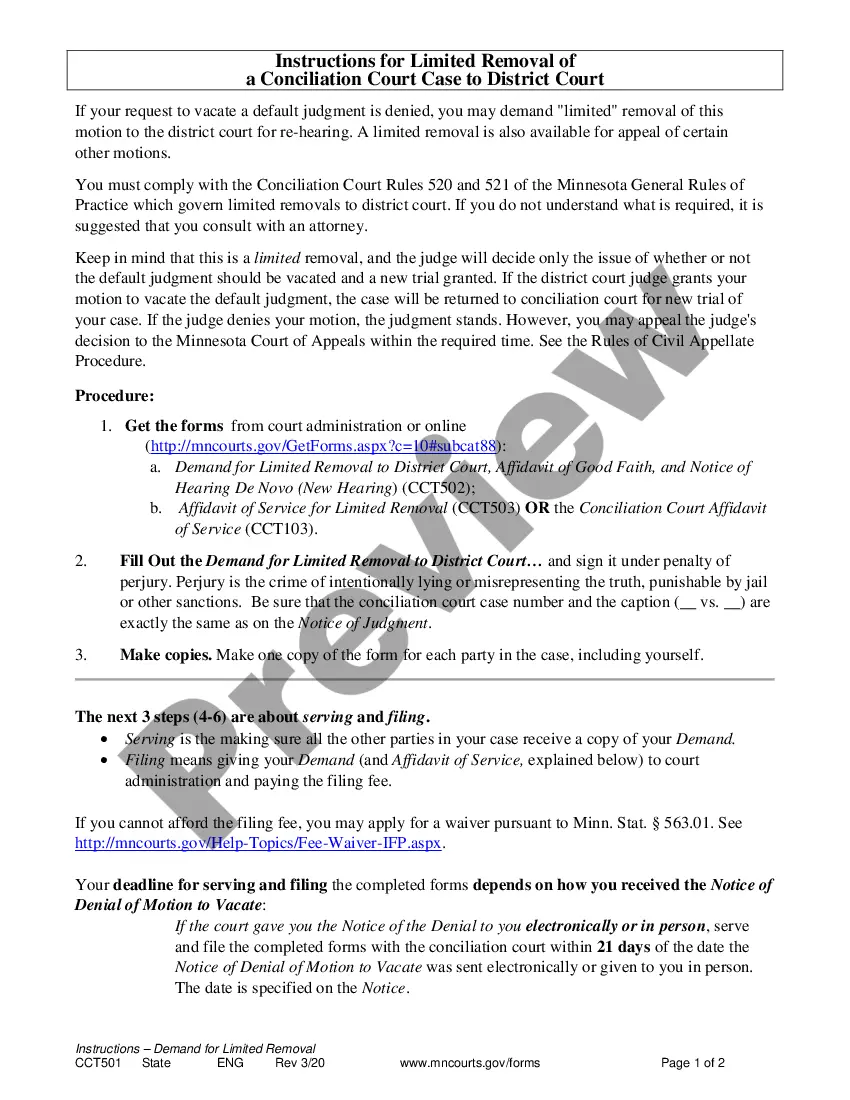
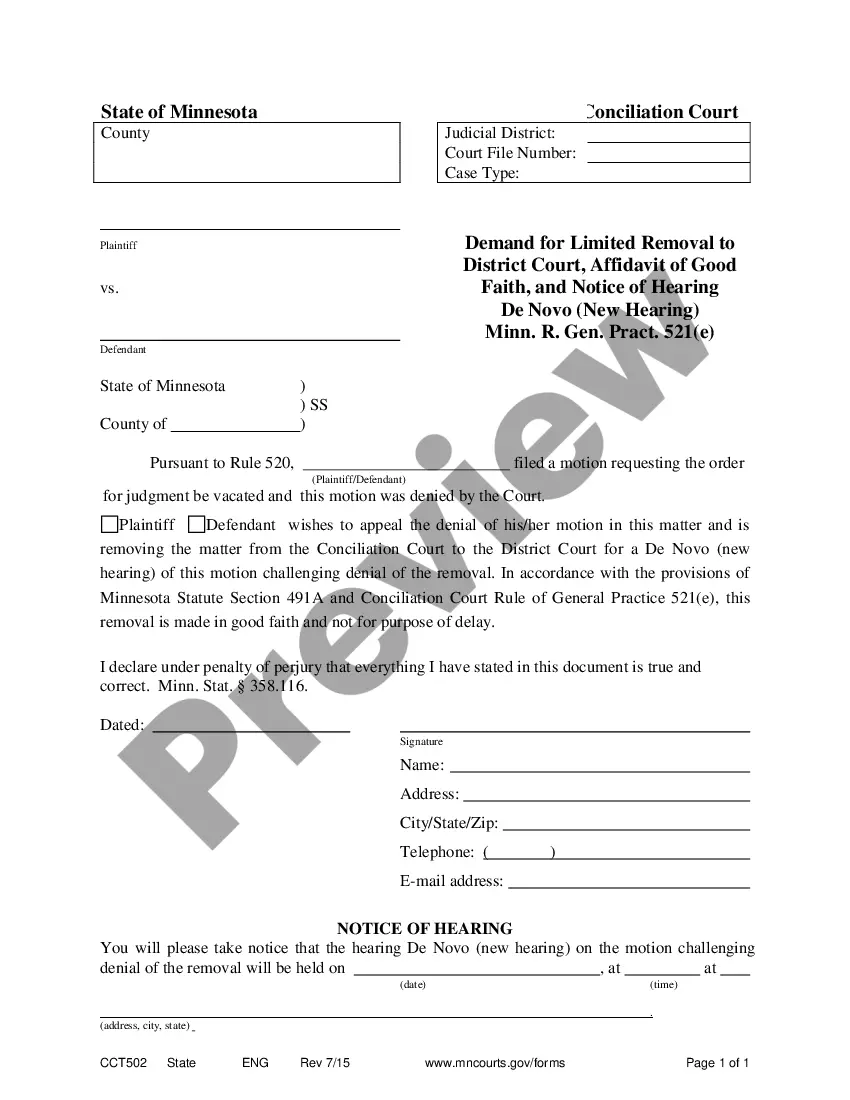
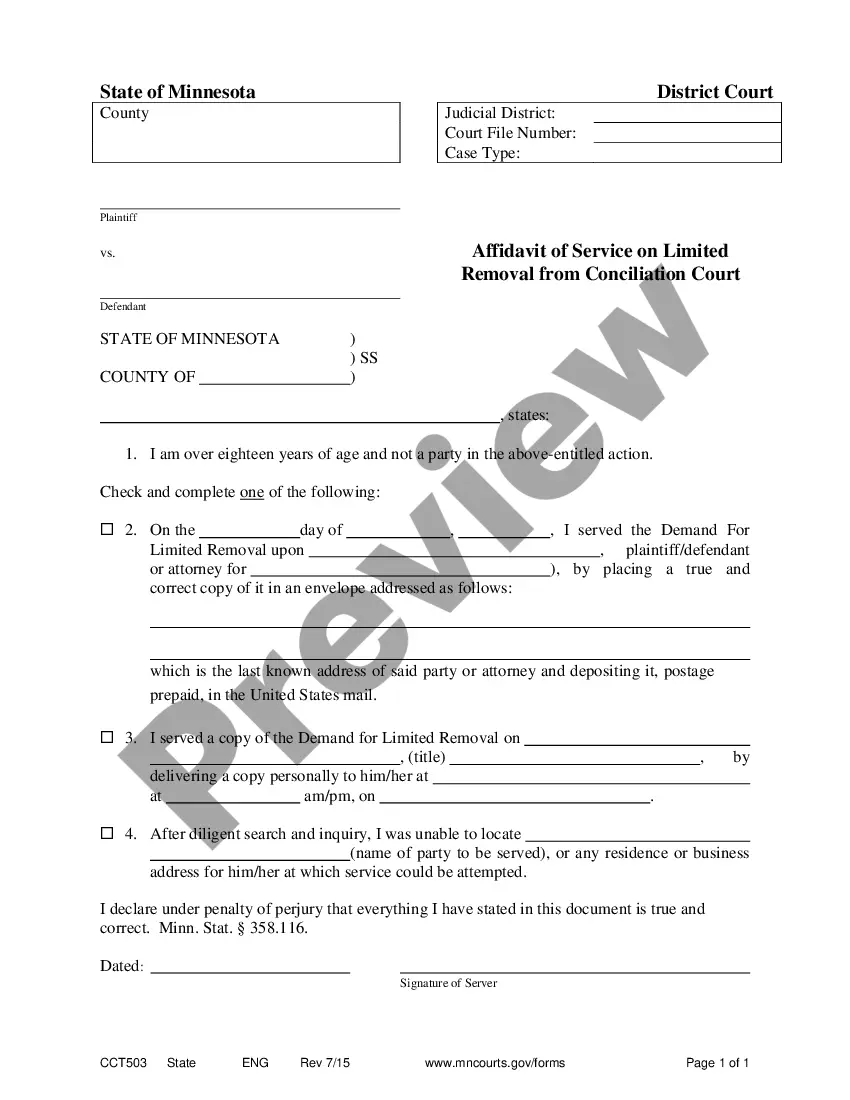
This is an official Minnesota court form for use in a civil case, a Demand for Removal - Appeal. USLF amends and updates these forms as is required by Minnesota Statutes and Law.
Minnesota Demand for Removal - Appeal
Instant download
This website is not affiliated with any governmental entity
Public form
Description
Free preview
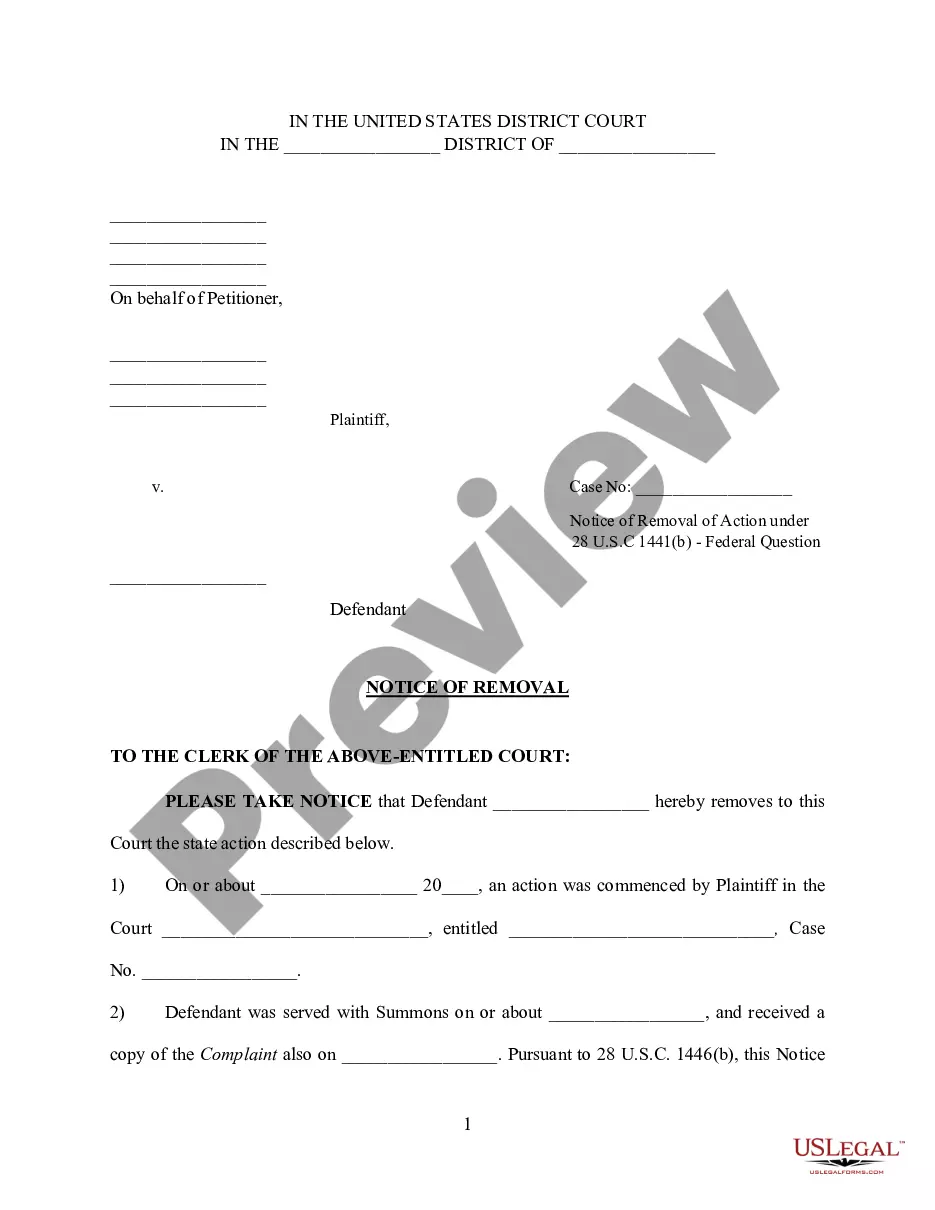
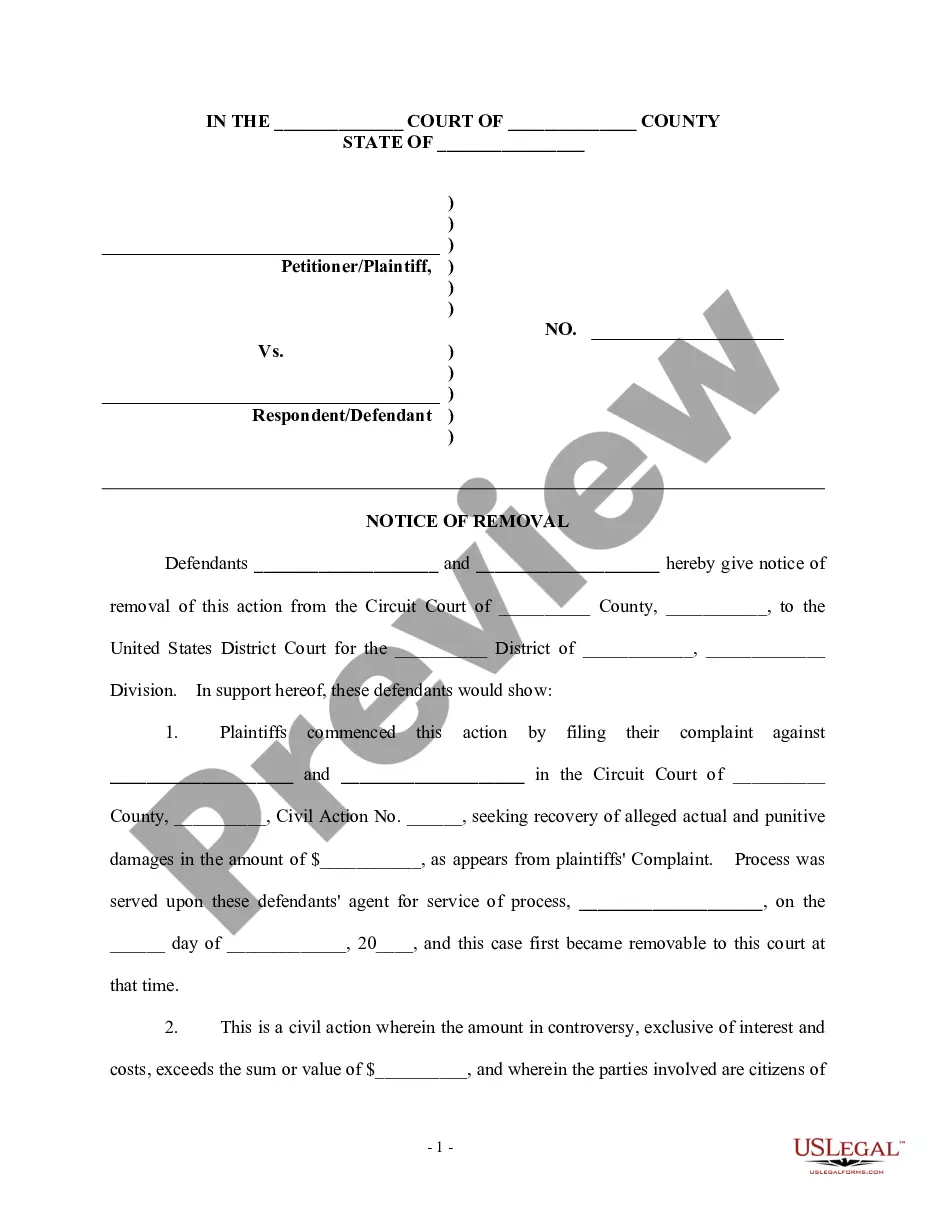
Get your form ready online
Our built-in tools help you complete, sign, share, and store your documents in one place.
Built-in online Word editor
Make edits, fill in missing information, and update formatting in US Legal Forms—just like you would in MS Word.
Export easily
Download a copy, print it, send it by email, or mail it via USPS—whatever works best for your next step.
E-sign your document
Sign and collect signatures with our SignNow integration. Send to multiple recipients, set reminders, and more. Go Premium to unlock E-Sign.
Notarize online 24/7
If this form requires notarization, complete it online through a secure video call—no need to meet a notary in person or wait for an appointment.
Store your document securely
We protect your documents and personal data by following strict security and privacy standards.

Make edits, fill in missing information, and update formatting in US Legal Forms—just like you would in MS Word.

Download a copy, print it, send it by email, or mail it via USPS—whatever works best for your next step.

Sign and collect signatures with our SignNow integration. Send to multiple recipients, set reminders, and more. Go Premium to unlock E-Sign.

If this form requires notarization, complete it online through a secure video call—no need to meet a notary in person or wait for an appointment.

We protect your documents and personal data by following strict security and privacy standards.
Looking for another form?

How to fill out Minnesota Demand For Removal - Appeal?
Obtain any type from 85,000 legal documents including Minnesota Demand for Removal - Appeal online with US Legal Forms. Each template is composed and refreshed by state-authorized legal experts.
If you possess a subscription, Log In. After you are on the form’s page, click the Download button and navigate to My documents to access it.
If you have not subscribed yet, adhere to the steps below: Check the state-specific criteria for the Minnesota Demand for Removal - Appeal you wish to utilize. Review the description and preview the example. When you are confident the template meets your needs, click on Buy Now. Select a subscription plan that fits your budget effectively. Establish a personal account. Remit payment using either of two convenient methods: by credit card or through PayPal. Choose a format to download the document in; two options are available (PDF or Word). Download the file to the My documents section. Once your reusable template is downloaded, print it out or save it to your device.
- With US Legal Forms, you will consistently have immediate access to the appropriate downloadable sample.
- The service will provide you with access to forms and categorizes them to ease your search.
- Utilize US Legal Forms to acquire your Minnesota Demand for Removal - Appeal swiftly and effortlessly.
Form popularity
FAQ
Appeals are decided by panels of three judges working together. The appellant presents legal arguments to the panel, in writing, in a document called a "brief." In the brief, the appellant tries to persuade the judges that the trial court made an error, and that its decision should be reversed.
As a general rule, the final judgment of a lower court can be appealed to the next higher court only once. In any one case, the number of appeals thus depends on how many courts are superior to the court that made the decision, and sometimes what the next high court decides or what the basis for your appeal is.
You must file the original, signed notice of appeal and statement of the case (not copies) with the Clerk of the Appellate Courts. You must file all documents relating to your appeal with the Clerk of the Appellate Courts. You cannot file papers by sending them directly to the judges of the court.
Rate of about 40 percent in defendants' appeals of trials. Plaintiffs achieve reversal in about 4 percent of all filed cases ending in trial judgments and suffer affirmance in about 16 percent of such cases. This yields a reversal rate of about 18 percent in plaintiffs' appeals of trials.