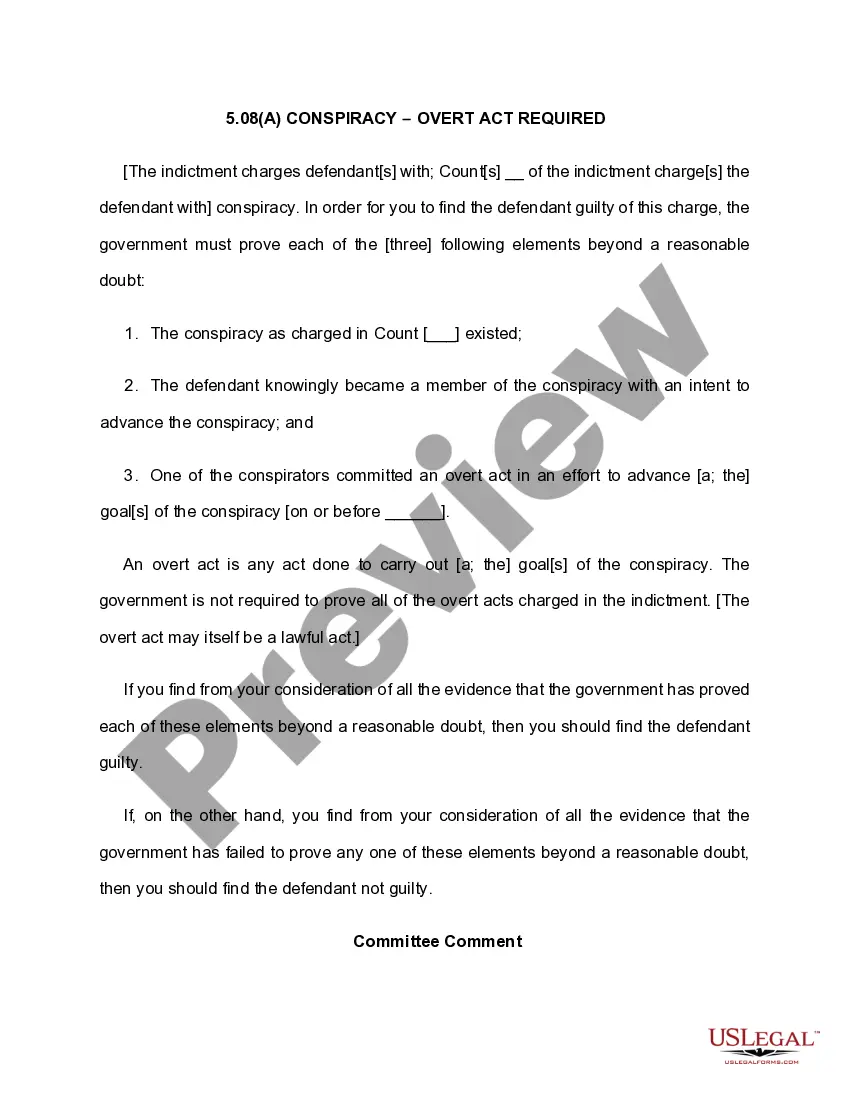
Minnesota Discovery - Deposition Subpoena for service by Sheriff
Overview of this form
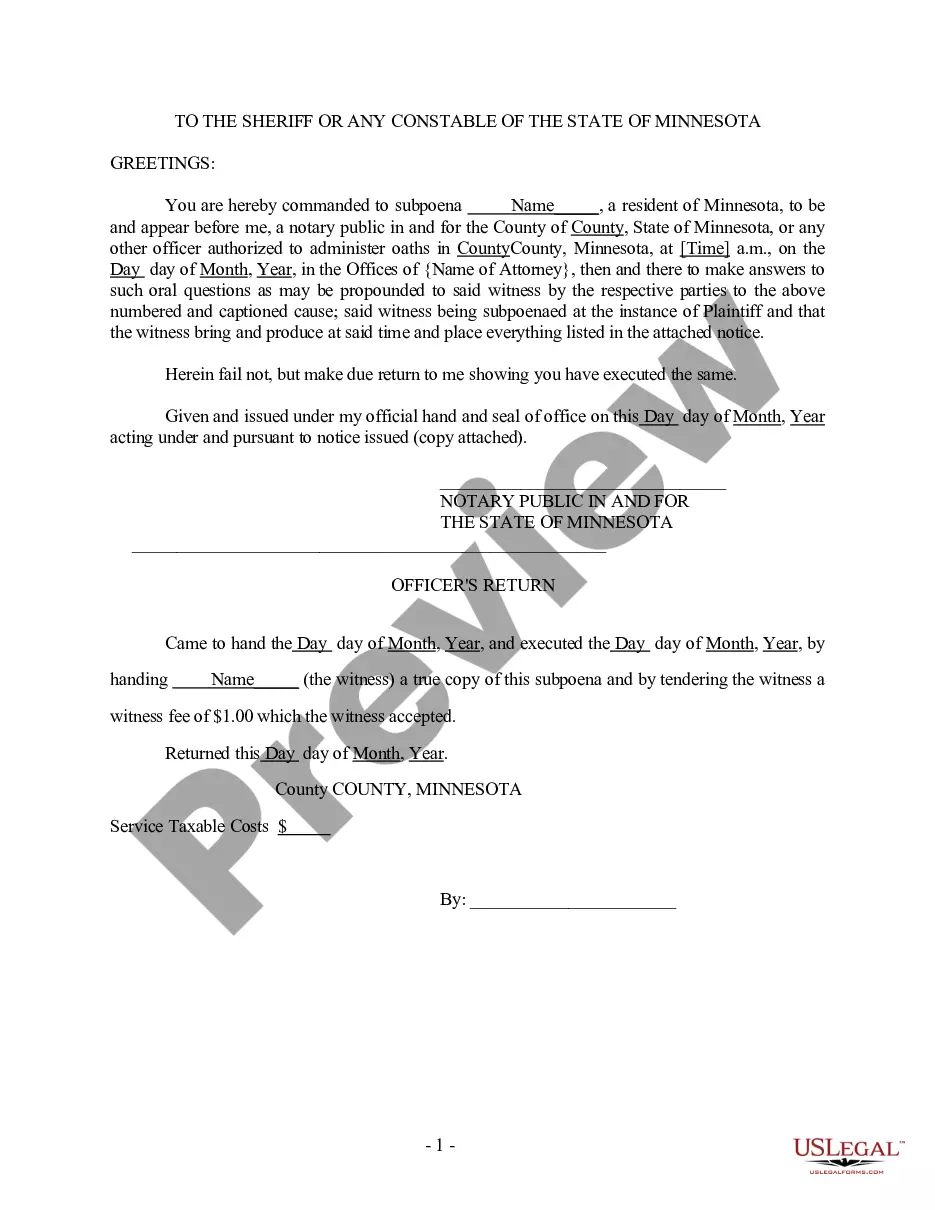
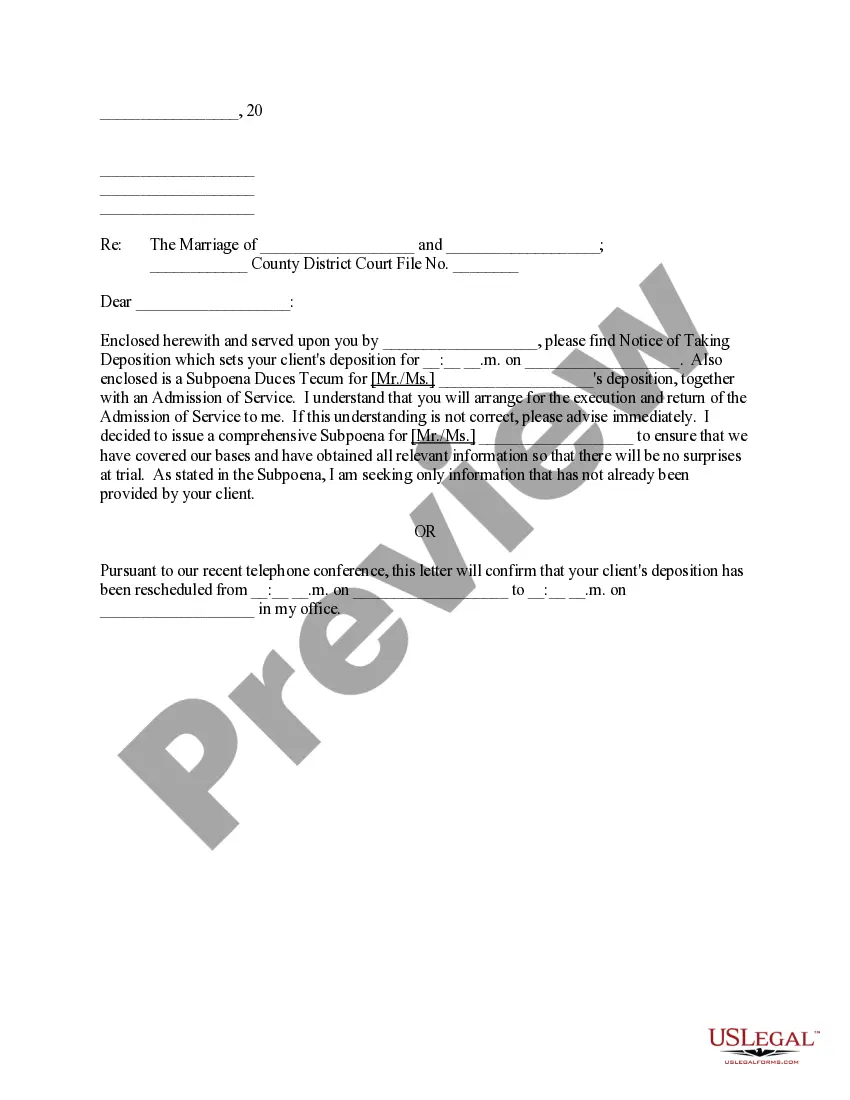
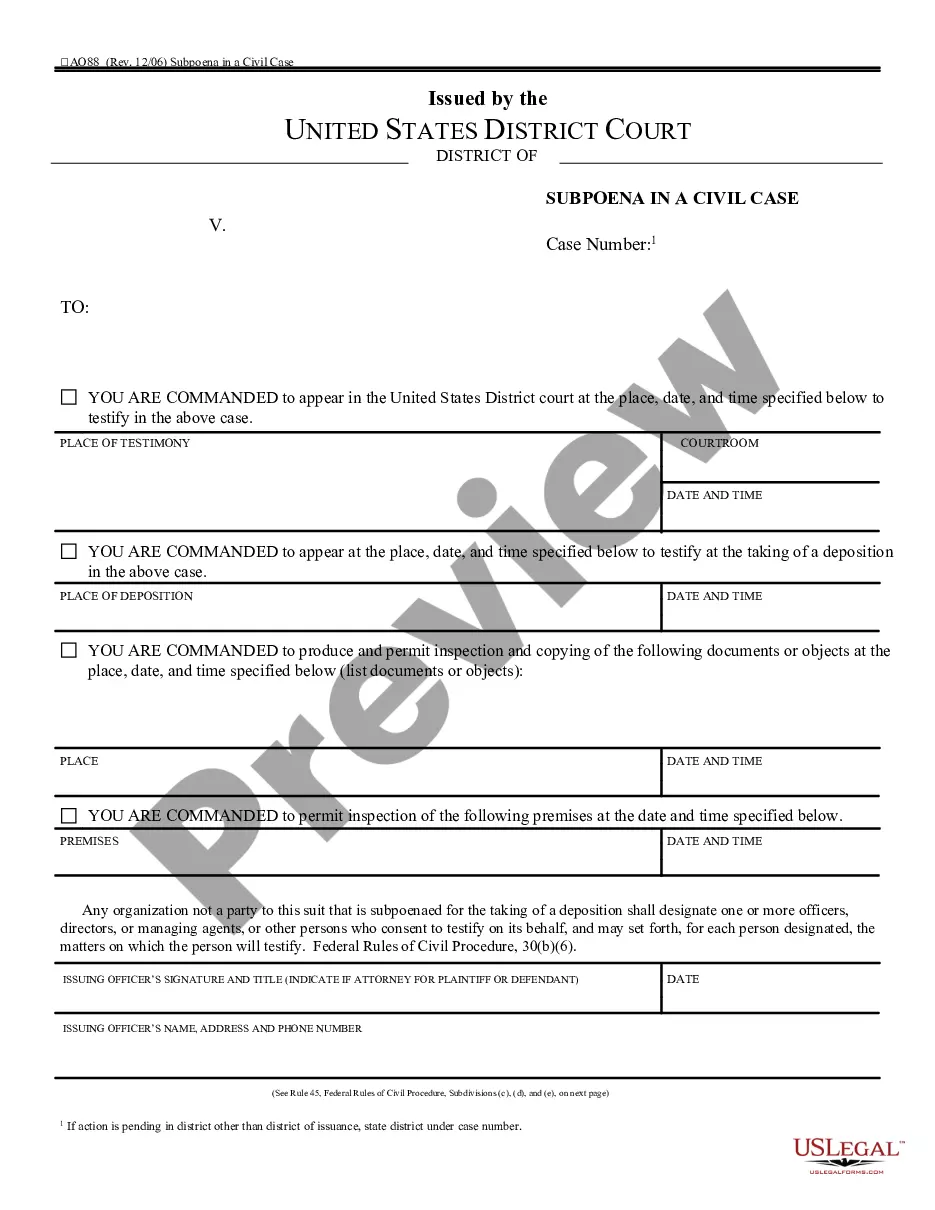
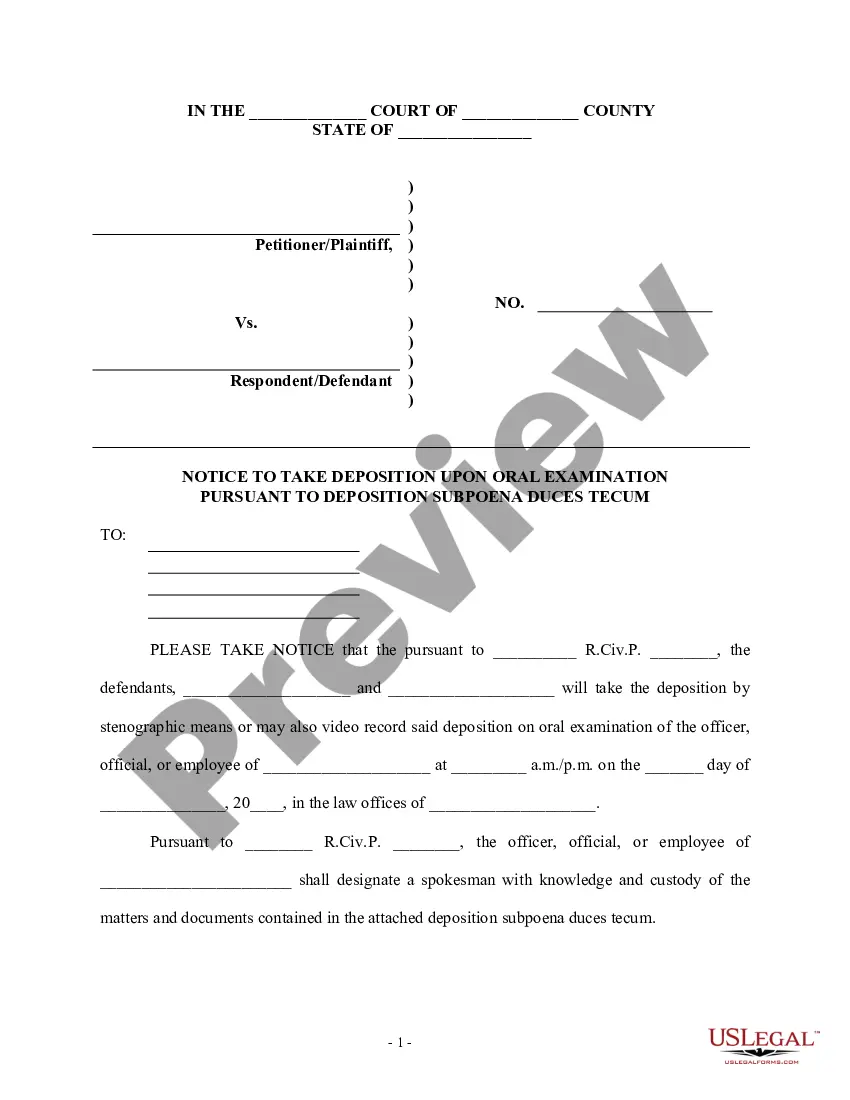
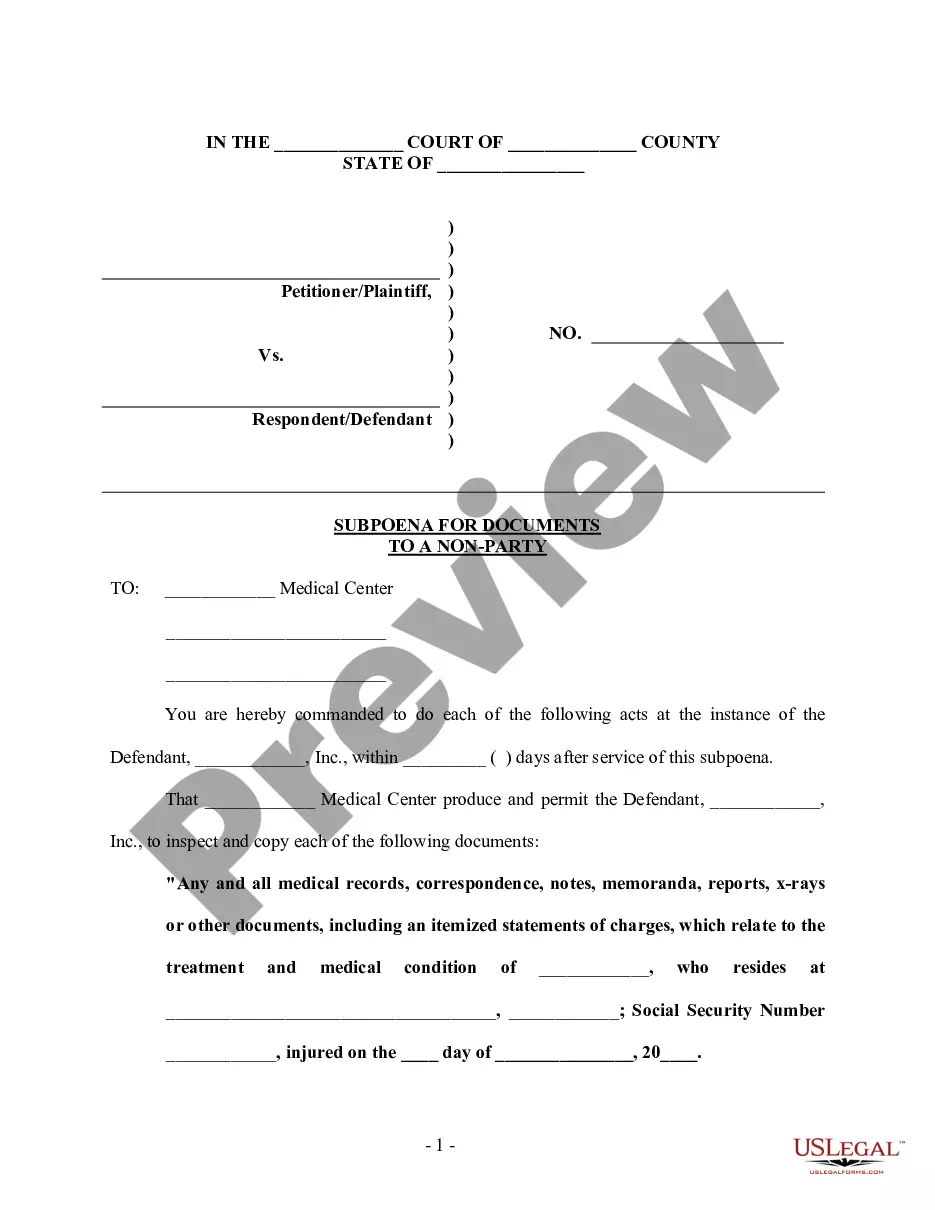
The Discovery - Deposition Subpoena for service by Sheriff is a legal document used to compel a witness to appear for a deposition in a legal case. Unlike other subpoenas, this specific form requests that a sheriff or authorized officer serves the subpoena, ensuring that the witness is properly informed of their obligation to testify and produce evidence. This form is essential for gathering testimony and information crucial to the resolution of a legal matter.
Key parts of this document
- Witness details: Includes the name and address of the witness being subpoenaed.
- Date and time: Specifies when the witness must appear for the deposition.
- Location: Indicates the place where the deposition will take place.
- Officer's return portion: Contains a section for the officer to confirm service of the subpoena.
- Notice of items to produce: Lists any documents or materials the witness must bring.
When to use this form
This form is used during the discovery phase of litigation, where parties seek testimony and evidence from witnesses. If you are engaged in a legal dispute and require a witness's testimony or documents to support your case, you will need to serve a deposition subpoena. This form is particularly relevant when standard methods of obtaining cooperation have been ineffective.
Who needs this form
The following individuals or parties should consider using this form:
- Attorneys representing clients in civil litigation.
- Individuals involved in lawsuits requiring witness testimony.
- Legal professionals seeking documentation or evidence from witnesses.
Completing this form step by step
- Identify the witness: Fill in the witness's name and address at the top of the form.
- Enter the deposition details: Specify the date, time, and location for the deposition.
- Include the attorney's information: Write the name of the attorney representing the party issuing the subpoena.
- Review the notice items: Include any documents or items the witness is required to bring.
- Notarize the form: Have the document executed by a notary public as required.
Notarization guidance
Yes, this form must be notarized to be legally valid. You can utilize US Legal Forms' integrated online notarization service, available 24/7 through a secure video call. This process ensures that your document is legally equivalent to in-person notarization without the need for travel.
Get your form ready online
Our built-in tools help you complete, sign, share, and store your documents in one place.
Make edits, fill in missing information, and update formatting in US Legal Forms—just like you would in MS Word.
Download a copy, print it, send it by email, or mail it via USPS—whatever works best for your next step.
Sign and collect signatures with our SignNow integration. Send to multiple recipients, set reminders, and more. Go Premium to unlock E-Sign.
If this form requires notarization, complete it online through a secure video call—no need to meet a notary in person or wait for an appointment.
We protect your documents and personal data by following strict security and privacy standards.

Make edits, fill in missing information, and update formatting in US Legal Forms—just like you would in MS Word.

Download a copy, print it, send it by email, or mail it via USPS—whatever works best for your next step.

Sign and collect signatures with our SignNow integration. Send to multiple recipients, set reminders, and more. Go Premium to unlock E-Sign.

If this form requires notarization, complete it online through a secure video call—no need to meet a notary in person or wait for an appointment.

We protect your documents and personal data by following strict security and privacy standards.
Mistakes to watch out for
- Failing to provide proper witness details, making the subpoena invalid.
- Ignoring legal timeframes for serving the subpoena.
- Failing to include specific items the witness must bring to the deposition.
Why complete this form online
- Convenience of downloading and printing the form instantly.
- Editable fields allow personalization to fit your specific needs.
- Access to professionally drafted documents, enhancing reliability.
Summary of main points
- A deposition subpoena is essential for obtaining witness testimony and documents in legal disputes.
- Ensure the form is completed accurately and notarized to maintain its legality.
- This form is tailored for use in Minnesota, adhering to state-specific regulations.
Looking for another form?
Form popularity
FAQ
Rule 69 in Minnesota pertains to the enforcement of judgments and the procedures for executing a judgment in civil cases. This rule outlines how a judgment creditor can collect on a judgment, including the use of various legal tools. Understanding Rule 69 can be beneficial for those engaging in Minnesota Discovery - Deposition Subpoena for service by Sheriff, as it helps clarify the steps to take following a favorable judgment.
Rule 45 of the Minnesota Rules of Civil Procedure governs the issuance and service of subpoenas. It specifies the process for compelling testimony and production of documents in legal proceedings. This rule is vital for those utilizing Minnesota Discovery - Deposition Subpoena for service by Sheriff, as it provides clear guidelines on how to properly issue and respond to subpoenas to ensure compliance.
In Minnesota, a subpoena does not necessarily have to be served by a sheriff. Parties can serve subpoenas themselves or may choose to use a professional process server. However, involving the sheriff can add a layer of reliability and formality, especially in sensitive cases. For those navigating the complexities of Minnesota Discovery - Deposition Subpoena for service by Sheriff, understanding your options for serving subpoenas is essential.
Rule 26 of the Minnesota Rules of Civil Procedure outlines the general provisions governing discovery. This rule emphasizes the importance of full disclosure of relevant information and evidence between parties. It promotes fairness and efficiency in the legal process, ensuring that all parties have access to necessary documents and testimonies. Understanding Rule 26 is crucial for anyone involved in Minnesota Discovery - Deposition Subpoena for service by Sheriff.
In California, no officer or employee of a state or local governmental agency may request the financial records of a customer in connection with a civil or criminal investigation, unless the financial records are described with particularity and are consistent with the scope and requirements of the investigation.
No probable cause is required to issue a subpoena. The government can issue a subpoenain the name of the grand jury, but really by the prosecutors who run the grand juryjust to see if a crime might have been committed.
A subpoena is an order from a court to produce a person or evidence. Operationally, they can be issued by law enforcement agencies or attorneys who are representing parties in the case. If the propriety of the subpoena is questioned, the party to whom the subpoena is issued can ask for a hearing to quash the subpoena.
If it is delivered in person, it must be served at least 10 days before the court date; For a Notice to Attend AND Bring Documents: You must have it served by mail at least 25 days before the court date. If it is delivered in person, it must be served at least 20 days before the court date.
Lawyers who are licensed in the state usually have the power to issue a subpoena. However, individuals who are a party to a lawsuit and other individuals may also be able to issue a subpoena, depending on the rules of civil or criminal procedure in the court that has jurisdiction of the case.
No. Without an active case a subpoena will not be issued by the court. A subpoena is an exercise of the court's authority and without a case the court has no authority. Law enforcement can get a warrant upon probable cause, but not a private...