11.2.13 Indirect Infringement - Contributory Infringement
What is this form?
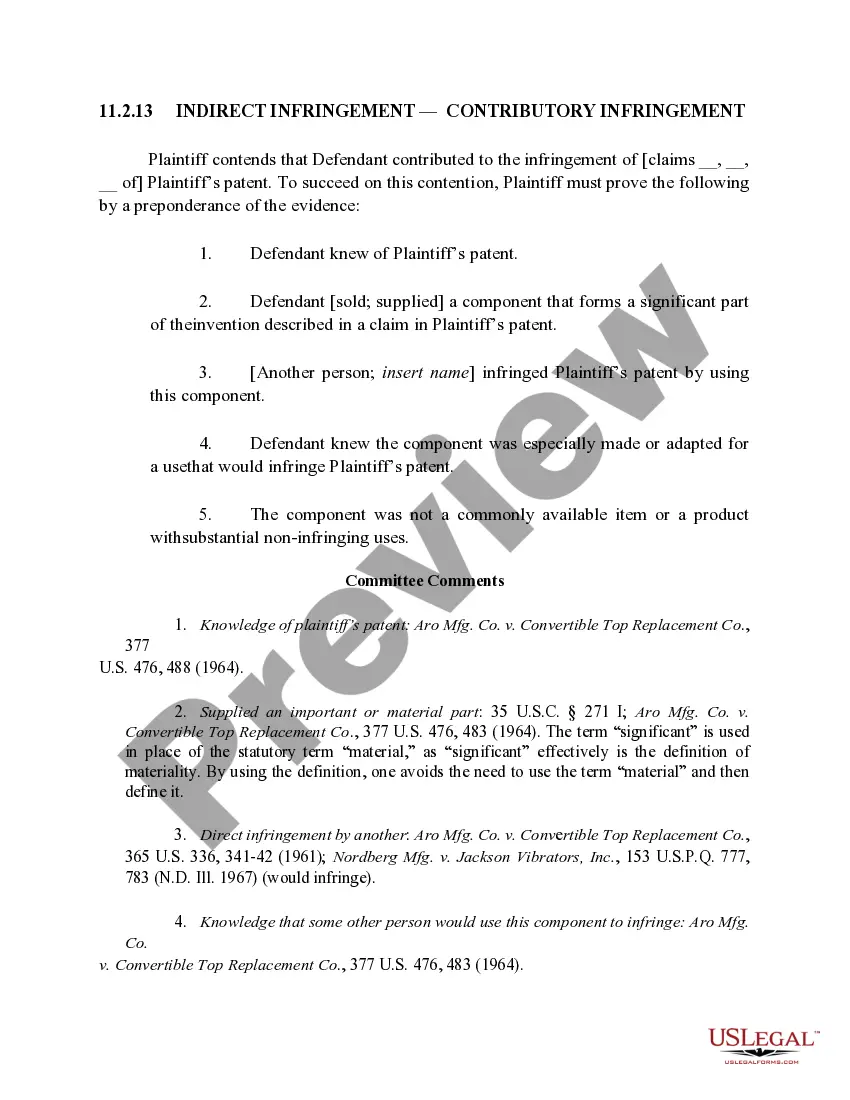
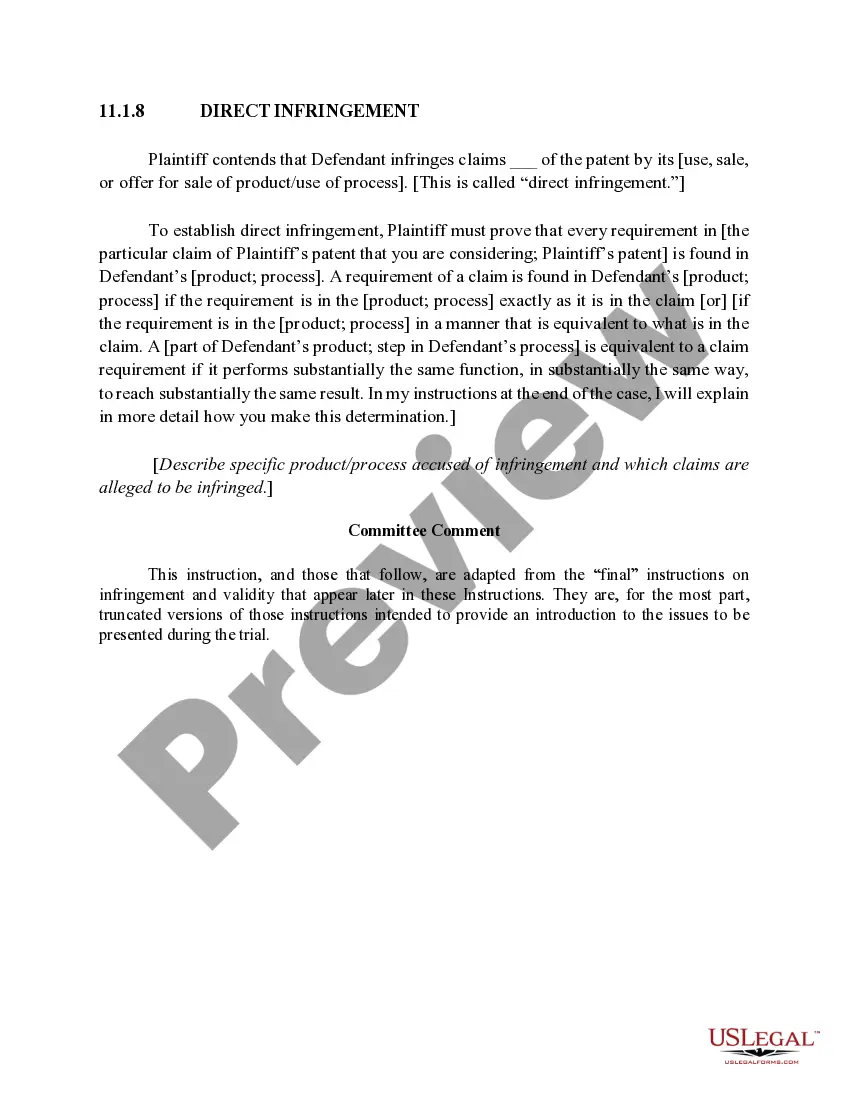
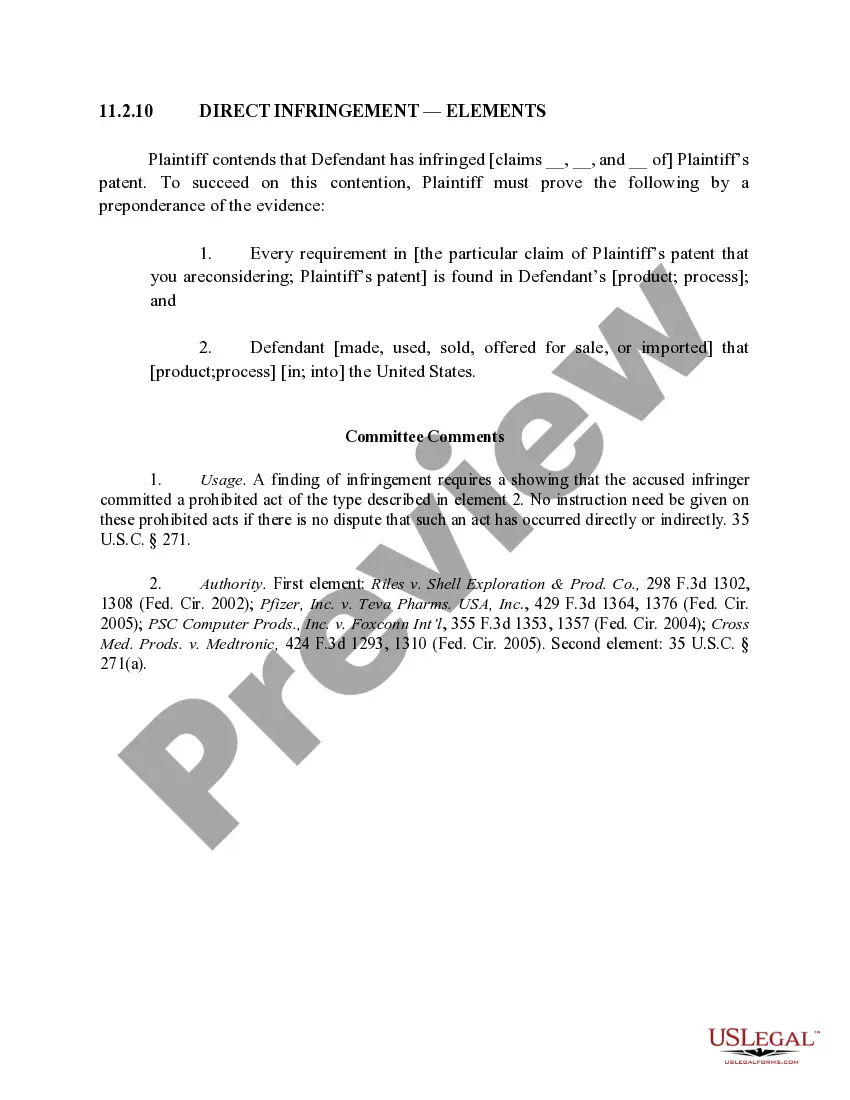
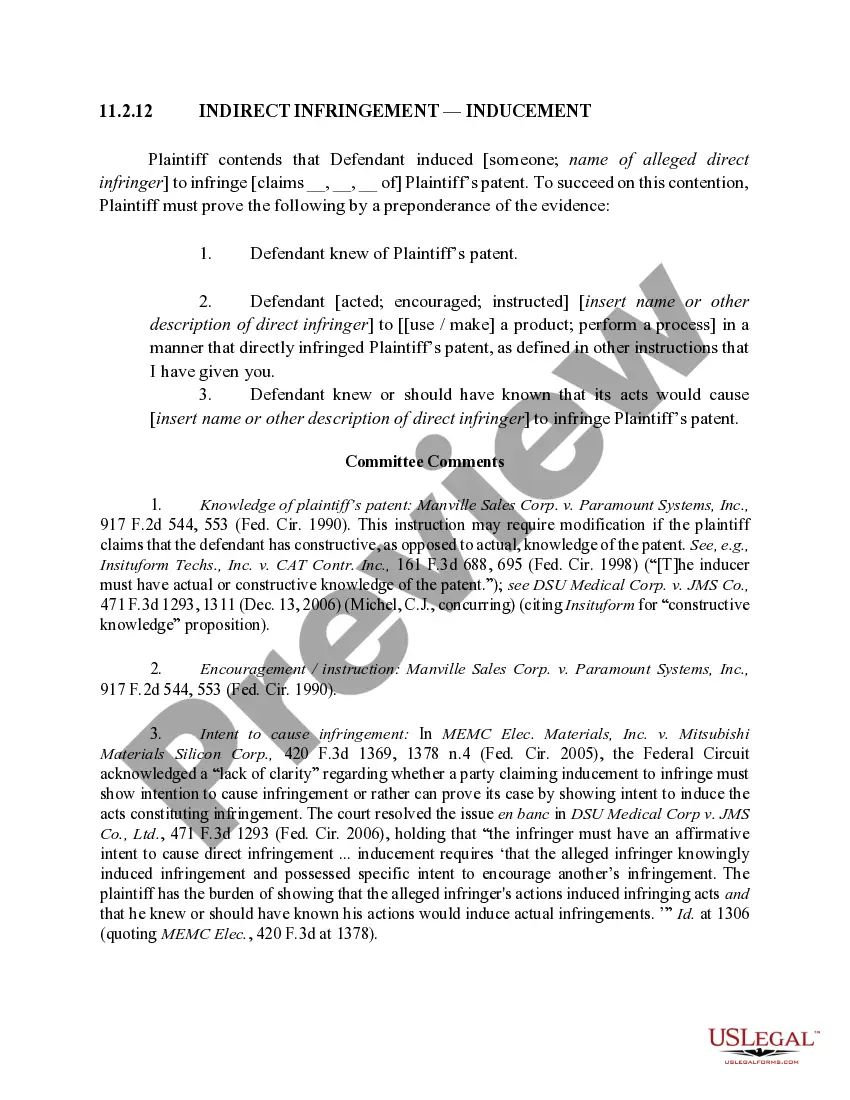
The 11.2.13 Indirect Infringement - Contributory Infringement form is a legal document used to initiate a claim of contributory infringement of a patent. This form is particularly important in cases where a plaintiff believes that a defendant has aided and abetted another party in infringing on their patent rights. It defines the legal requirements needed to prove contributory infringement, distinguishing it from direct infringement and other types of claims.
Key components of this form
- Allegation that the defendant knew of the plaintiff's patent.
- Proof that the defendant supplied a significant component that is part of the patented invention.
- Evidential claim that another person infringed the patent using the supplied component.
- Demonstration that the defendant knew the component was specifically made to infringe the patent.
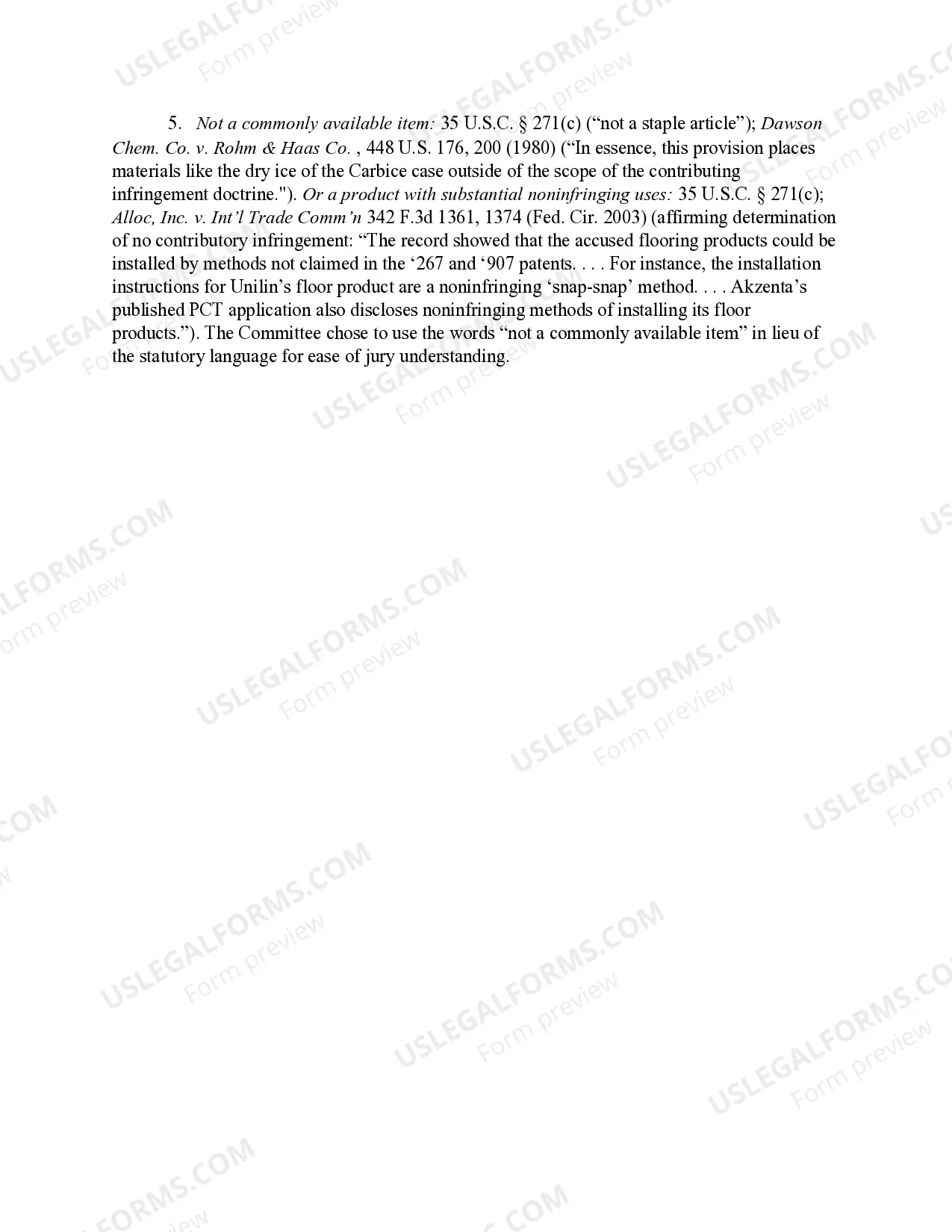
- Assertion that the component has no substantial non-infringing uses.
When to use this form
This form should be used when a patent holder believes that another party is infringing on their patent through the assistance of a third-party supplier. Common scenarios include cases where a manufacturer provides a crucial component to a product that ultimately infringes the patent without directly infringing it themselves.
Who this form is for
Eligible users of this form include:
- Patent holders seeking to protect their intellectual property rights.
- Attorneys representing clients in patent infringement cases.
- Individuals or entities involved in patent disputes related to contributory infringement.
Completing this form step by step
- Identify the plaintiff and defendant, including their full legal names and addresses.
- State the specific patent claims that are believed to be infringed.
- Explain how the defendant contributed to the infringement, detailing the supplied component.
- Provide evidence that supports knowledge of the patent and the purpose of the component.
- Include any additional information that may substantiate the claim of contributory infringement.
Notarization requirements for this form
This form does not typically require notarization unless specified by local law. However, it is always prudent to check with a legal professional regarding specific state requirements.
Get your form ready online
Our built-in tools help you complete, sign, share, and store your documents in one place.
Make edits, fill in missing information, and update formatting in US Legal Forms—just like you would in MS Word.
Download a copy, print it, send it by email, or mail it via USPS—whatever works best for your next step.
Sign and collect signatures with our SignNow integration. Send to multiple recipients, set reminders, and more. Go Premium to unlock E-Sign.
If this form requires notarization, complete it online through a secure video call—no need to meet a notary in person or wait for an appointment.
We protect your documents and personal data by following strict security and privacy standards.

Make edits, fill in missing information, and update formatting in US Legal Forms—just like you would in MS Word.

Download a copy, print it, send it by email, or mail it via USPS—whatever works best for your next step.

Sign and collect signatures with our SignNow integration. Send to multiple recipients, set reminders, and more. Go Premium to unlock E-Sign.

If this form requires notarization, complete it online through a secure video call—no need to meet a notary in person or wait for an appointment.

We protect your documents and personal data by following strict security and privacy standards.
Common mistakes
- Failing to provide sufficient evidence of the defendant's knowledge of the patent.
- Not clearly identifying the specific patent claims being infringed.
- Overlooking the requirement to demonstrate that the component has no substantial non-infringing uses.
Why use this form online
- Convenience of downloading and accessing the form anytime.
- Editability allows for customization without legal software.
- Reliability of content drafted by licensed attorneys ensures legal accuracy.
Legal use & context
- This form is essential in federal and state patent infringement cases.
- It establishes a clear basis for holding parties accountable for contributory infringement.
- Failure to use the correct legal framework may weaken the case.
Key takeaways
- The form is crucial for claiming contributory infringement of a patent.
- Proper completion is important to ensure legal standing.
- Consulting with legal experts can enhance the effectiveness of the claim.
Looking for another form?
Form popularity
FAQ
To reiterate, direct copyright infringement involves the actual copying of work. Comparatively, indirect infringement involves dealing with an object which infringes on someone's work. To ensure you don't fall victim to someone infringing on your copyright be sure to protect your work.
Contributory infringement is a form of secondary liability for direct infringement of a patent, copyright, or trademark. It is a means by which a person may be held liable for infringement even though they did not actually engage in infringing activities.
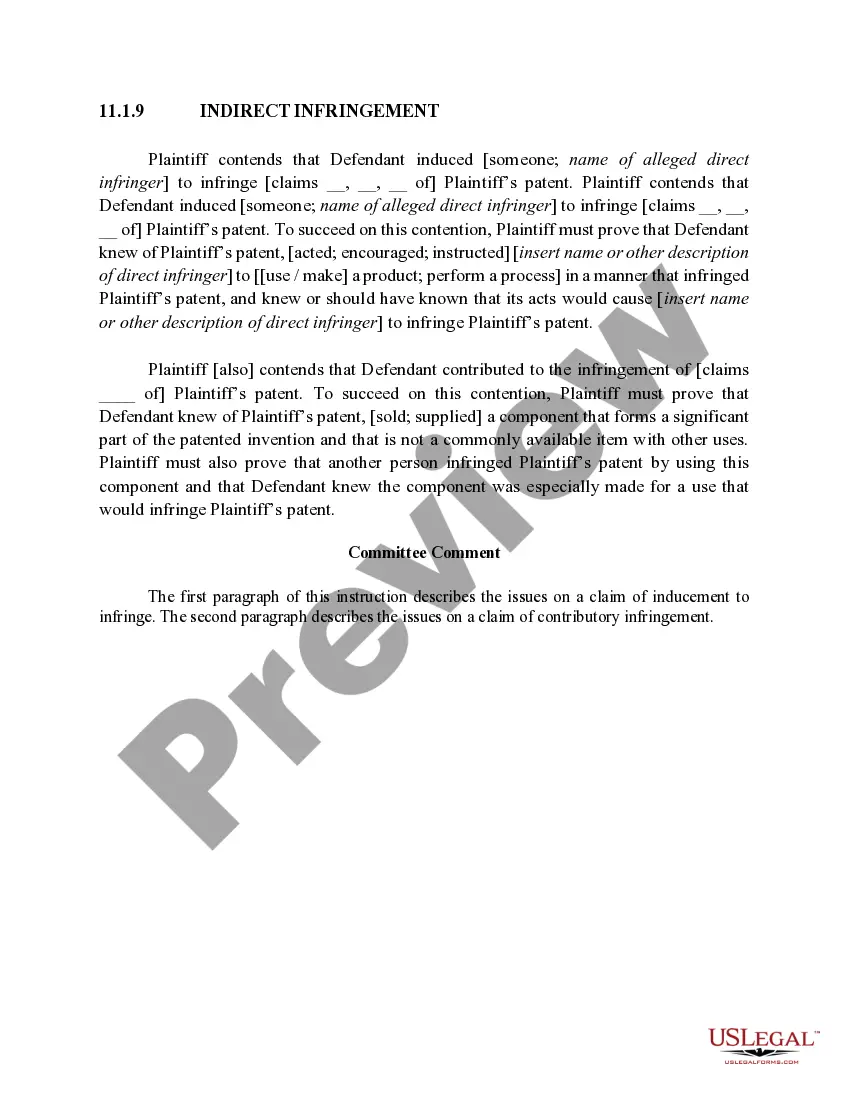
The party who performs all of the steps is liable as a direct infringer, while the inducer is liable as an indirect infringer. Contributory infringement, which is not relevant here, exists when a defendant sells or offers to sell a component that can only be used in infringing a patented invention.
Indirect patent infringement is the violation of a patent with or without the knowledge of the infringer. A person or company obtains a patent to prevent other people from using an idea or invention. In some cases, however, another person may not be aware of the patent.
Indirect patent infringement occurs when someone violates an IP owner's rights without directly infringing. An example is a distributor selling an infringing device. This can occur through inducement or contributory patent infringement.
For contributory infringement to exist, the component must have no substantial non-infringing uses. For example, if someone sold a product that would be useful only if combined into a patented product, that might be considered contributory infringement.