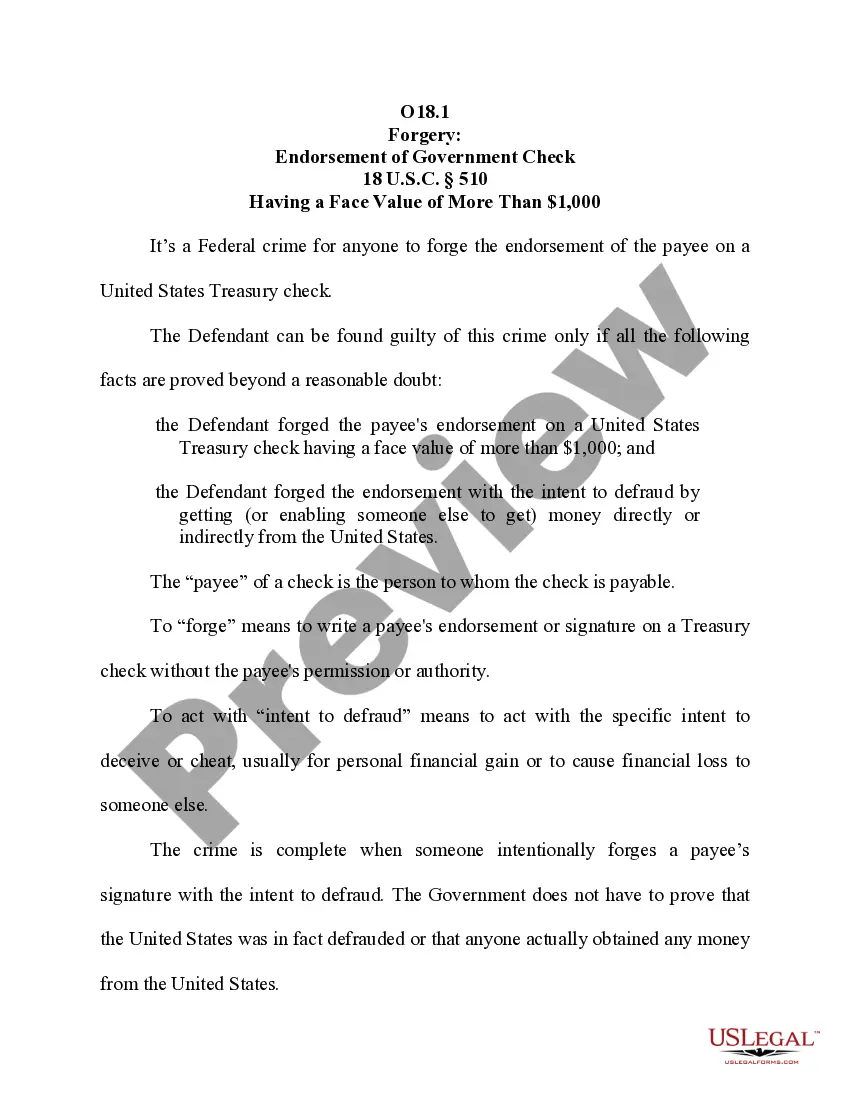
Minnesota Nonearning Disclosure
Overview of this form
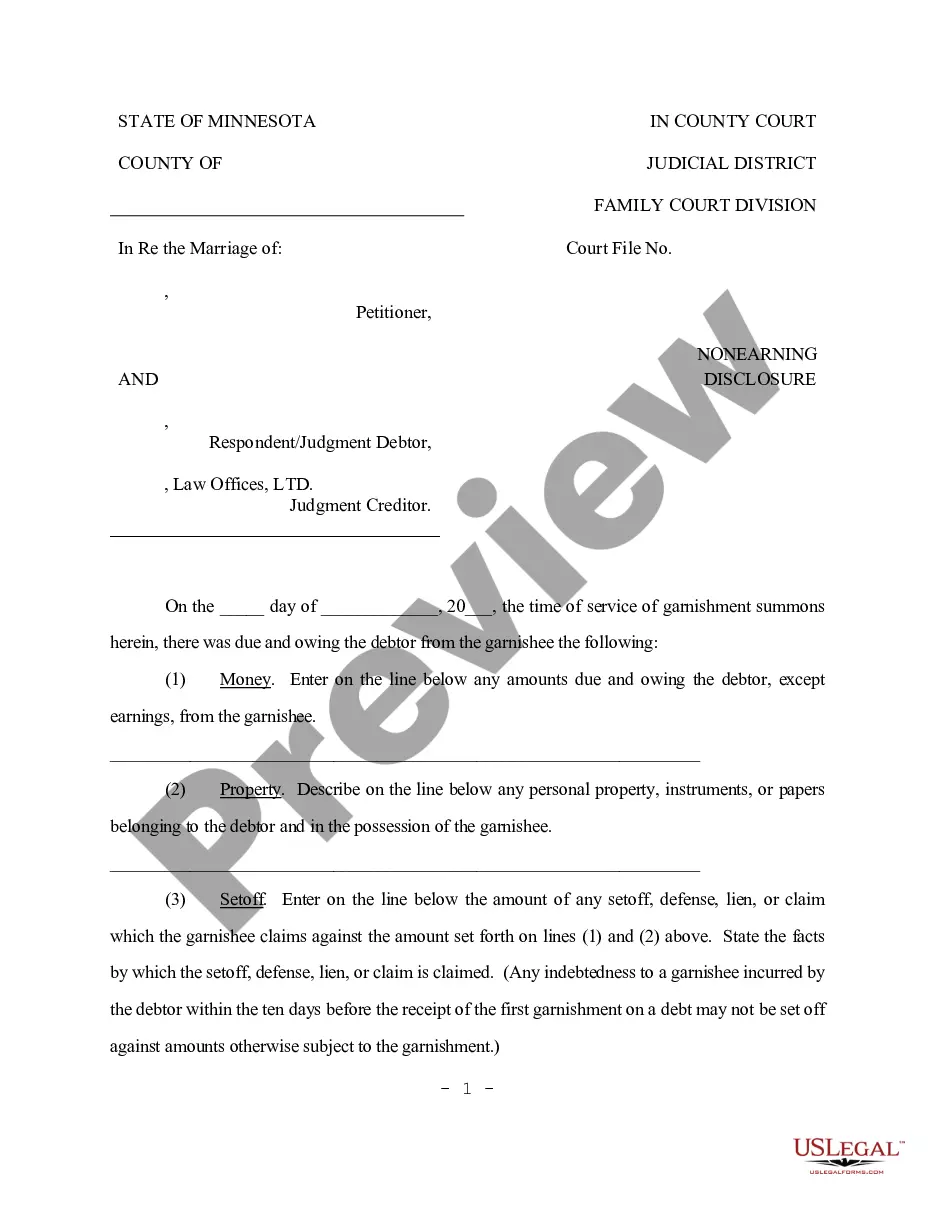
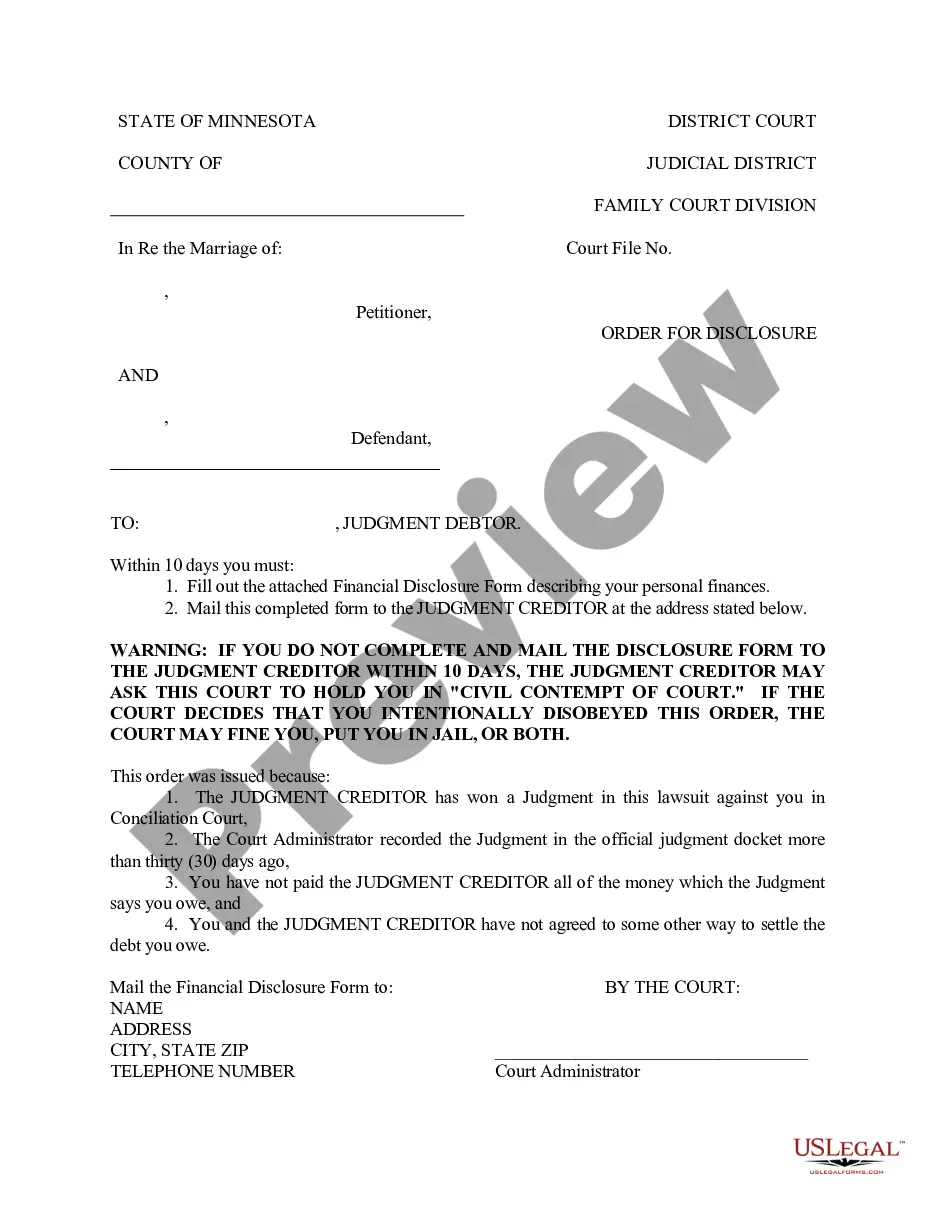
The Nonearning Disclosure is a legal worksheet designed to help individuals or entities disclose setoffs and exemptions related to garnishments. It distinguishes specific financial obligations and claims against a debtorâs property, which may not involve garnished earnings. By accurately completing this form, the garnishee outlines any offsets and exemptions that may affect the garnishment process, providing clarity to all parties involved.
What’s included in this form
- Money: List amounts due, excluding earnings, owed by the garnishee.
- Property: Describe personal property or instruments belonging to the debtor.
- Setoff: State any defenses or claims against the amounts owed.
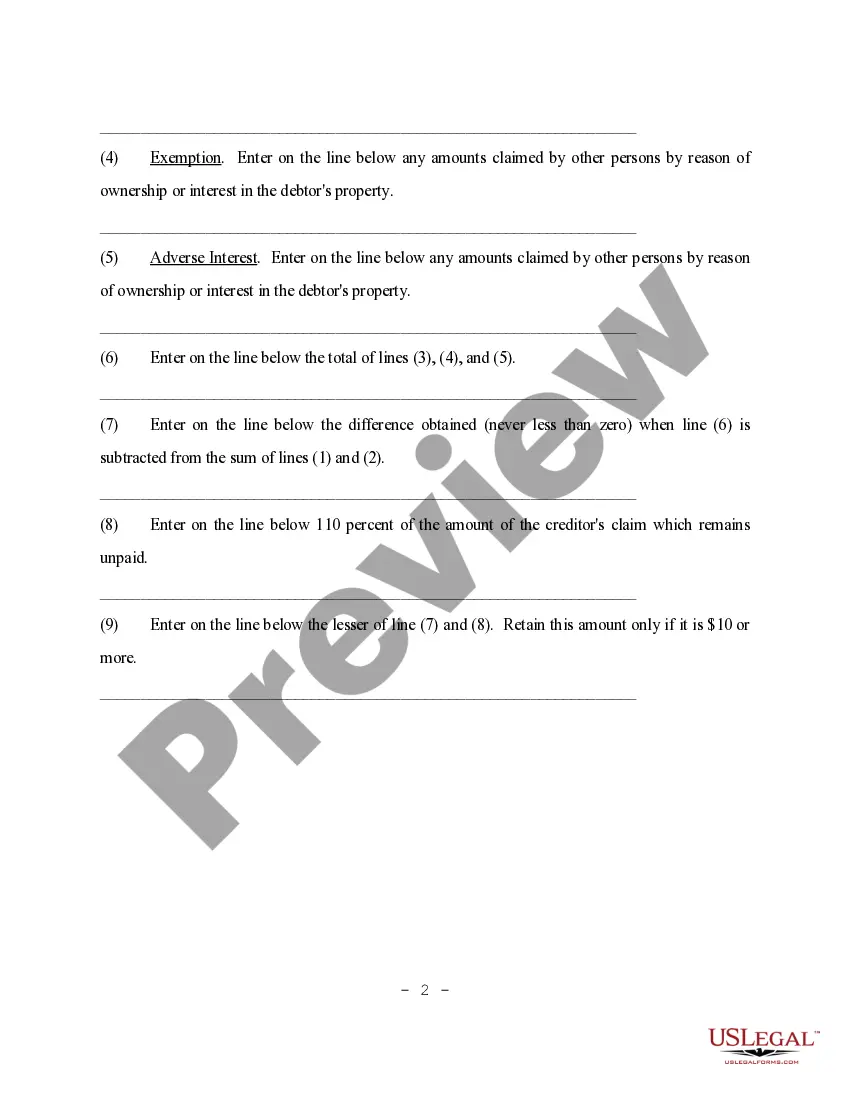
- Exemption: Specify any claims made by other parties on the debtor's property.
- Adverse Interest: Record amounts claimed by other individuals regarding the debtor's property.
- Total Calculation: Provide a total of setoffs, exemptions, and claims.
- Final Amount: Calculate the lesser of stated values, retaining specific amounts when applicable.
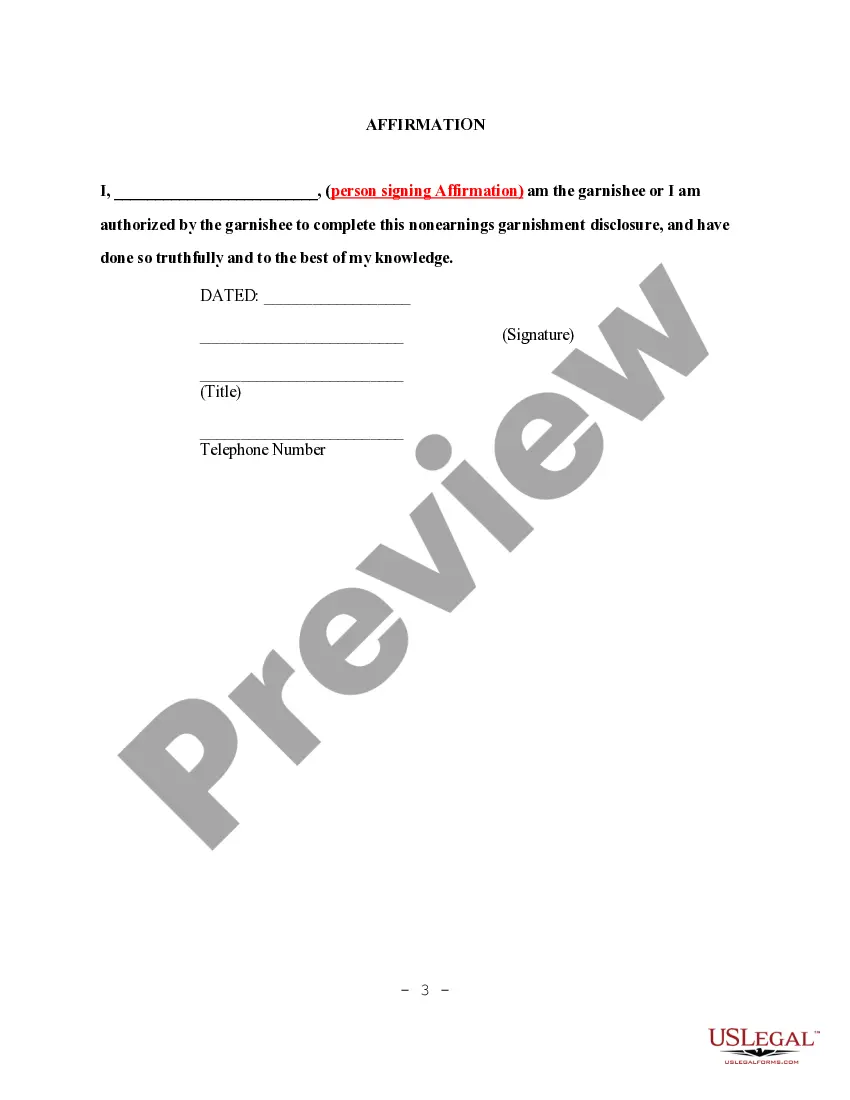
- Affirmation: Sign and date the form to confirm accuracy.
Situations where this form applies
This form is typically used in situations involving garnishments where a creditor seeks to recover funds owed by a debtor. It is essential when the garnishee needs to disclose any relevant financial information that may impact the garnishment process, such as setoffs, defenses, or claims of exemption that could influence the amount to be garnished.
Who can use this document
- Garnishees: Individuals or entities holding funds or property of the debtor that may be subject to garnishment.
- Creditors: Persons or businesses owed money who want to initiate or pursue garnishment action.
- Debtors: Individuals who are aware of garnishment proceedings and wish to clarify their financial obligations.
Steps to complete this form
- Identify the amounts due from the garnishee, ensuring to exclude earnings.
- Describe any personal property belonging to the debtor that the garnishee possesses.
- Record any setoffs, claims, or defenses that the garnishee asserts against the obligation.
- Document any amounts claimed by others regarding the debtorâs property.
- Calculate and write down the necessary totals as specified in the worksheet.
- Sign and date the form, affirming that all information is accurate and complete.
Does this form need to be notarized?
This form does not typically require notarization unless specified by local law. It is advisable to check with local regulations to confirm whether notarization is necessary for your particular situation.
Get your form ready online
Our built-in tools help you complete, sign, share, and store your documents in one place.
Make edits, fill in missing information, and update formatting in US Legal Forms—just like you would in MS Word.
Download a copy, print it, send it by email, or mail it via USPS—whatever works best for your next step.
Sign and collect signatures with our SignNow integration. Send to multiple recipients, set reminders, and more. Go Premium to unlock E-Sign.
If this form requires notarization, complete it online through a secure video call—no need to meet a notary in person or wait for an appointment.
We protect your documents and personal data by following strict security and privacy standards.

Make edits, fill in missing information, and update formatting in US Legal Forms—just like you would in MS Word.

Download a copy, print it, send it by email, or mail it via USPS—whatever works best for your next step.

Sign and collect signatures with our SignNow integration. Send to multiple recipients, set reminders, and more. Go Premium to unlock E-Sign.

If this form requires notarization, complete it online through a secure video call—no need to meet a notary in person or wait for an appointment.

We protect your documents and personal data by following strict security and privacy standards.
Common mistakes
- Failing to accurately list all amounts owed and property details.
- Not completing the sections on setoffs or claims which may lead to incomplete disclosures.
- Neglecting to sign or date the form prior to submission, which may invalidate the disclosure.
- Forgetting to consult state-specific guidelines that may affect the completion of the form.
Why use this form online
- Convenient access: Download and complete the form from anywhere at any time.
- Editability: Modify the form easily to fit your specific situation without the need for paper processing.
- Accuracy: Use professionally drafted templates to ensure legal compliance and clarity.
What to keep in mind
- The Nonearning Disclosure is crucial for accurately reporting financial obligations during garnishment processes.
- Completing the form requires careful attention to detail to avoid common mistakes.
- Using the form online offers convenience and access to professional templates.
Looking for another form?
Form popularity
FAQ
When selling property, you need to disclose all known defects and any relevant history that could affect the buyer's interest. This includes issues with the land, such as zoning problems or environmental concerns. Utilizing the Minnesota Nonearning Disclosure ensures you fulfill your legal obligations and maintain a trustworthy relationship with potential buyers.
In Minnesota, sellers must disclose any known issues that could influence a buyer's decision, such as water damage or previous repairs. Additionally, sellers should provide information about the home's history and any relevant inspections. The Minnesota Nonearning Disclosure emphasizes the importance of transparency in the selling process.
In Minnesota, expert disclosure requires sellers to provide detailed information about the property’s condition if they have conducted any professional inspections. This may include reports from home inspectors or contractors. Adhering to the Minnesota Nonearning Disclosure helps ensure that buyers are fully informed about the property's status.
When selling your house, you need to declare any known issues that may affect the property’s value or safety. This includes disclosing any repairs that have been made, along with their history. Following the Minnesota Nonearning Disclosure guidelines ensures you provide potential buyers with a comprehensive view of the home.
A seller must disclose any known defects or issues that could impact the property value or safety. This can include problems with the roof, plumbing, or electrical systems. According to the Minnesota Nonearning Disclosure, being transparent about these concerns helps protect both the seller and the buyer in the transaction.
When selling a house in Minnesota, sellers must disclose material facts that could affect the buyer's decision. This includes information about the property's condition, such as past flooding, structural issues, or pest infestations. The Minnesota Nonearning Disclosure requires that sellers provide this information clearly and honestly to potential buyers.
The disclosure requirements for real estate in Minnesota include providing information about any material defects and the property's overall condition. Sellers must complete the Minnesota Nonearning Disclosure form, which outlines these requirements. Understanding and fulfilling these obligations is crucial for a successful sale and helps avoid potential legal issues.
The order for disclosure in Minnesota typically involves sellers providing the Minnesota Nonearning Disclosure early in the transaction process. This allows buyers to review the property's condition before making an offer. Proper timing in disclosure can lead to smoother negotiations and a more transparent transaction.
To enforce a judgment in Minnesota, you generally need to follow specific legal procedures, including filing for garnishment or levying property. It’s essential to understand your rights and the process involved. The Minnesota Nonearning Disclosure can be a valuable resource in ensuring all disclosures are met, potentially affecting your case.
Real estate agents are obligated to disclose material facts that may influence a buyer's decision. This includes information about the property's history, any legal issues, and other significant factors. Utilizing the Minnesota Nonearning Disclosure ensures agents meet their legal responsibilities and maintain professional integrity.