Minnesota Stipulation and Order to Transfer Dissolution Case to Inactive Status
Overview of this form
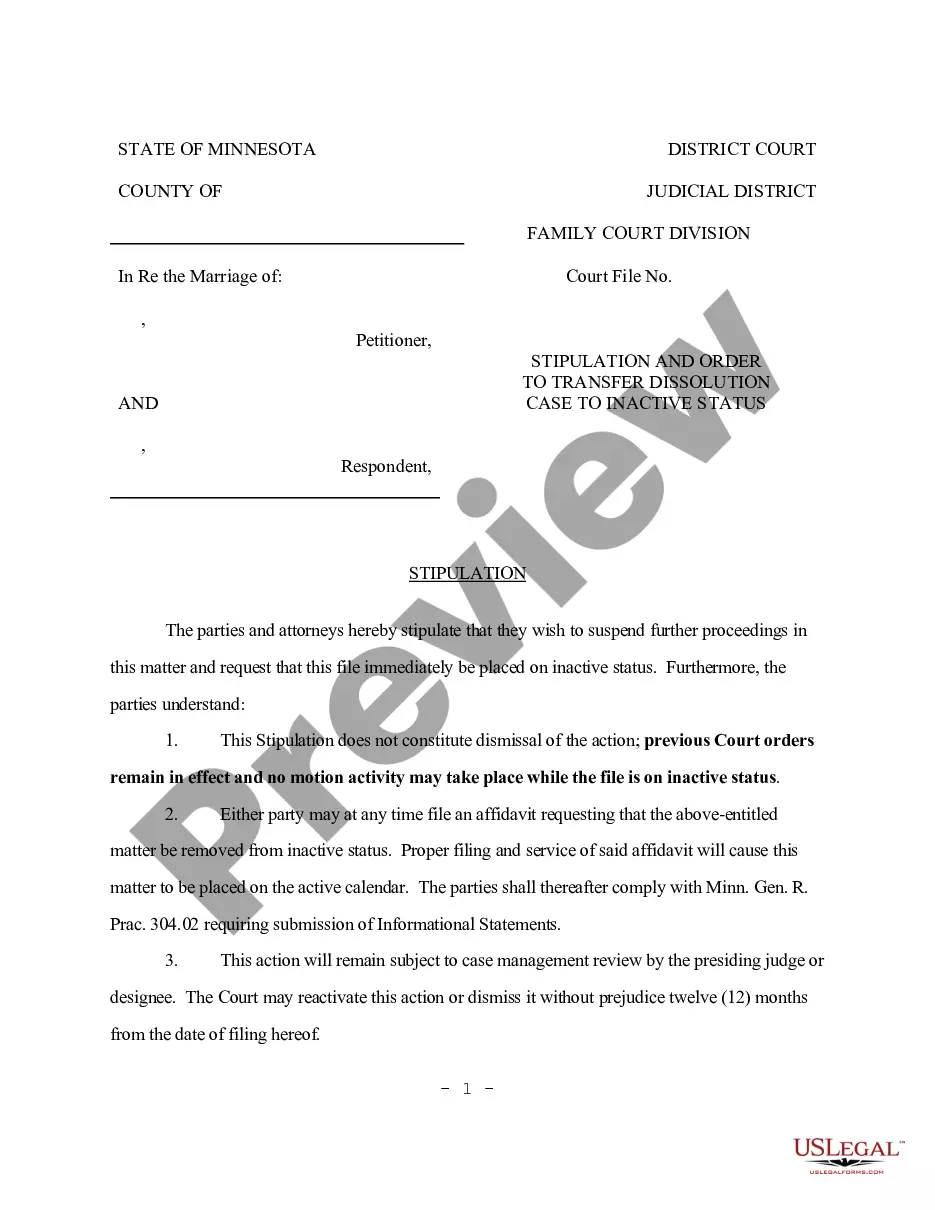
The Stipulation and Order to Transfer Dissolution Case to Inactive Status is a legal document that allows parties in a dissolution case to temporarily suspend further proceedings. This form does not dismiss the case but instead places it in inactive status, subject to review by the court. It provides clarity on the status of the case and outlines the rights of the parties involved while ensuring that previous court orders remain in effect.
Key parts of this document
- Identification of the parties: Names of the petitioner and respondent.
- Stipulation statement: Agreement by both parties to suspend the case.
- Conditions of inactivity: Explanation that the case remains under court review and may be reactivated or dismissed within twelve months.
- Affidavit for reactivation: Process for either party to request the case be returned to active status.
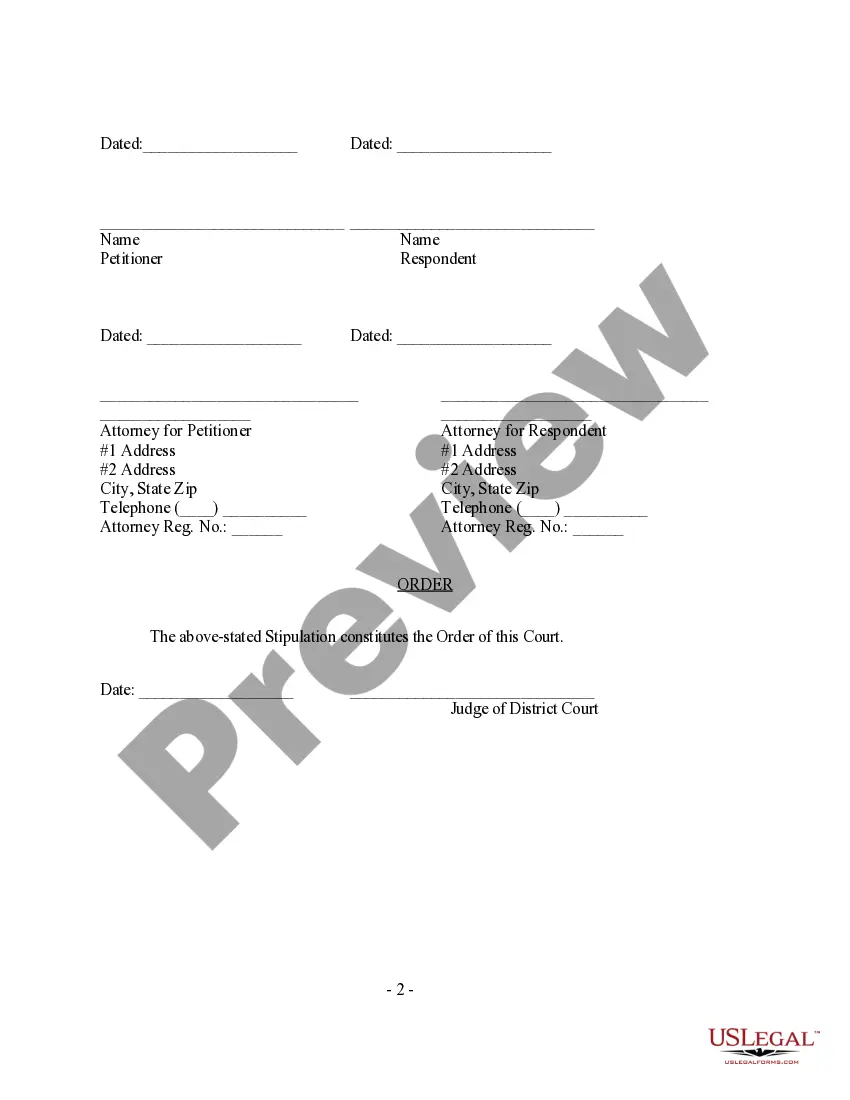
- Signature lines: Spaces for attorney and party signatures to approve the stipulation.
When to use this document
This form is typically used when both parties involved in a dissolution case want to pause their legal proceedings without officially dismissing the case. Situations may include needing time to negotiate terms, gather information, or when personal circumstances require a temporary halt in legal efforts. This form ensures that the case can be resumed without re-filing, simplifying the process for the parties involved.
Who this form is for
- Parties involved in a divorce or dissolution case in Minnesota.
- Attorneys representing clients who desire to place their case in inactive status.
- Individuals looking to maintain the legal standing of their case while taking a break from proceedings.
Instructions for completing this form
- Identify the parties by entering the names of the petitioner and respondent at the beginning of the form.
- Complete the date fields indicating when the stipulation is being signed.
- Both parties must sign the document, confirming their agreement to suspend proceedings.
- Include attorney signatures and contact information as required.
- File the completed stipulation with the appropriate district court to place the case in inactive status.
Notarization guidance
This form does not typically require notarization to be legally valid. However, some jurisdictions or document types may still require it. US Legal Forms provides secure online notarization powered by Notarize, available 24/7 for added convenience.
Get your form ready online
Our built-in tools help you complete, sign, share, and store your documents in one place.
Make edits, fill in missing information, and update formatting in US Legal Forms—just like you would in MS Word.
Download a copy, print it, send it by email, or mail it via USPS—whatever works best for your next step.
Sign and collect signatures with our SignNow integration. Send to multiple recipients, set reminders, and more. Go Premium to unlock E-Sign.
If this form requires notarization, complete it online through a secure video call—no need to meet a notary in person or wait for an appointment.
We protect your documents and personal data by following strict security and privacy standards.

Make edits, fill in missing information, and update formatting in US Legal Forms—just like you would in MS Word.

Download a copy, print it, send it by email, or mail it via USPS—whatever works best for your next step.

Sign and collect signatures with our SignNow integration. Send to multiple recipients, set reminders, and more. Go Premium to unlock E-Sign.

If this form requires notarization, complete it online through a secure video call—no need to meet a notary in person or wait for an appointment.

We protect your documents and personal data by following strict security and privacy standards.
Typical mistakes to avoid
- Failing to have both parties sign the form, which may invalidate the stipulation.
- Incorrectly assuming that the stipulation itself dismisses the case, rather than simply placing it on inactive status.
- Not providing the necessary attorney information, which is required for proper legal representation verification.
Benefits of completing this form online
- Convenient access: Download the form immediately without needing to visit a law office.
- Editability: Fill out the form at your own pace and make changes as needed.
- Reliability: Use a legally compliant template that adheres to Minnesota's court requirements.
Looking for another form?

Form popularity
FAQ
In Minnesota, the time it takes for a divorce to be final can vary. Generally, a divorce can take anywhere from six months to a year, depending on the complexity of the case and whether both parties agree on the terms. If a Minnesota Stipulation and Order to Transfer Dissolution Case to Inactive Status is filed, it may affect the timeline, so it's important to stay informed and consult legal resources for guidance. Using platforms like US Legal Forms can help streamline the process and ensure you have the necessary documents.
Yes, you can look up divorce records in Minnesota. The Minnesota Department of Health maintains vital records, including divorce decrees. To access these records, you may need to provide specific information such as the names of the parties involved and the date of the divorce. If you are dealing with a Minnesota Stipulation and Order to Transfer Dissolution Case to Inactive Status, understanding these records can be crucial for your case.
The Minnesota guide and file for divorce is a user-friendly resource designed to help individuals navigate the divorce process in Minnesota. This tool provides essential forms and detailed instructions for filing a Minnesota Stipulation and Order to Transfer Dissolution Case to Inactive Status. By using this guide, you can streamline your divorce proceedings, ensuring that you complete all necessary steps accurately. If you require additional support, US Legal Forms offers a comprehensive platform to assist you with your legal documentation needs.
In Minnesota, there is no specific separation period required before you can file for divorce. You can file for divorce as soon as you choose, regardless of whether you have been living apart. However, if you seek a Minnesota Stipulation and Order to Transfer Dissolution Case to Inactive Status, it may be beneficial to establish a timeline for your separation and any related arrangements. Legal assistance can help clarify your options and rights.
Yes, a divorce decree can be amended in Minnesota under certain circumstances. You will need to file a motion with the court explaining why the amendment is necessary and what changes you are requesting. The Minnesota Stipulation and Order to Transfer Dissolution Case to Inactive Status can be a useful tool in this process, helping to manage your case efficiently. It is wise to consult a legal expert to understand the implications of any amendments.
To add an addendum to your divorce decree, you must file a new document with the court that issued the original decree. This document should clearly outline the changes or additional terms you wish to include. Utilizing a Minnesota Stipulation and Order to Transfer Dissolution Case to Inactive Status can facilitate this process and ensure that all parties are aware of the new terms. Legal advice can be beneficial in ensuring proper compliance with court rules.
Yes, it is possible to divorce in Minnesota without the other person signing. If your spouse does not respond or participate in the divorce proceedings, you can request a default judgment after proper notification. This process includes filing for a Minnesota Stipulation and Order to Transfer Dissolution Case to Inactive Status to ensure that your legal rights are recognized. Consulting with a lawyer can help you navigate this situation effectively.
To amend your divorce decree in Minnesota, you typically need to file a motion with the court that issued the original decree. This motion should outline the specific changes you seek and the reasons for those changes. Utilizing a Minnesota Stipulation and Order to Transfer Dissolution Case to Inactive Status may help streamline the process and clarify your intentions. Always consider seeking assistance from a legal professional for guidance.
In Minnesota, even if your name is not on a deed, you may still have rights to the property acquired during the marriage. This can include rights to share in the equity or proceeds from the sale of the property. If your marriage ends, you can seek a Minnesota Stipulation and Order to Transfer Dissolution Case to Inactive Status to help clarify your rights. Consulting with a legal expert can provide you with a clearer understanding of your situation.
In Minnesota, you can remarry immediately after your divorce is final. This is true even if you have filed a Minnesota Stipulation and Order to Transfer Dissolution Case to Inactive Status. It is important to resolve all legal matters related to your divorce before moving on. If you have questions about the process, uslegalforms offers resources to help you navigate your legal journey.