Minnesota Discovery - Format for Response to Request for Production of Documents
What is this form?
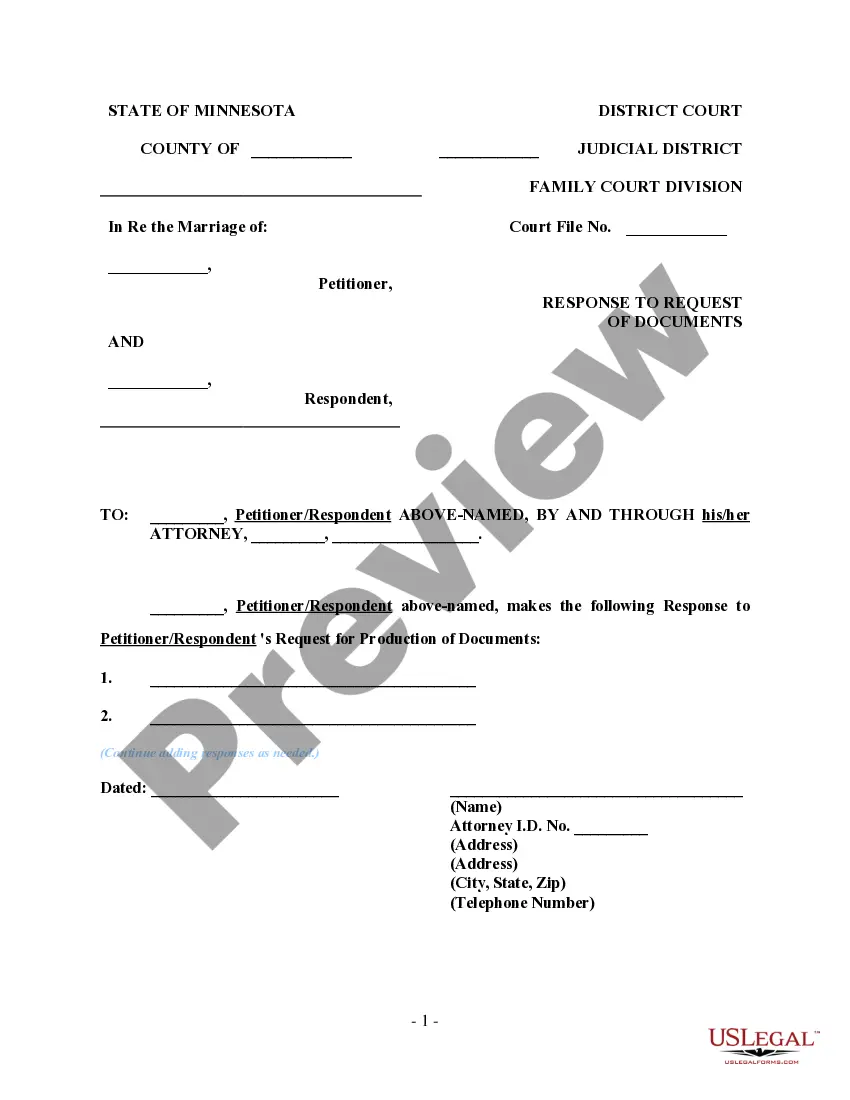
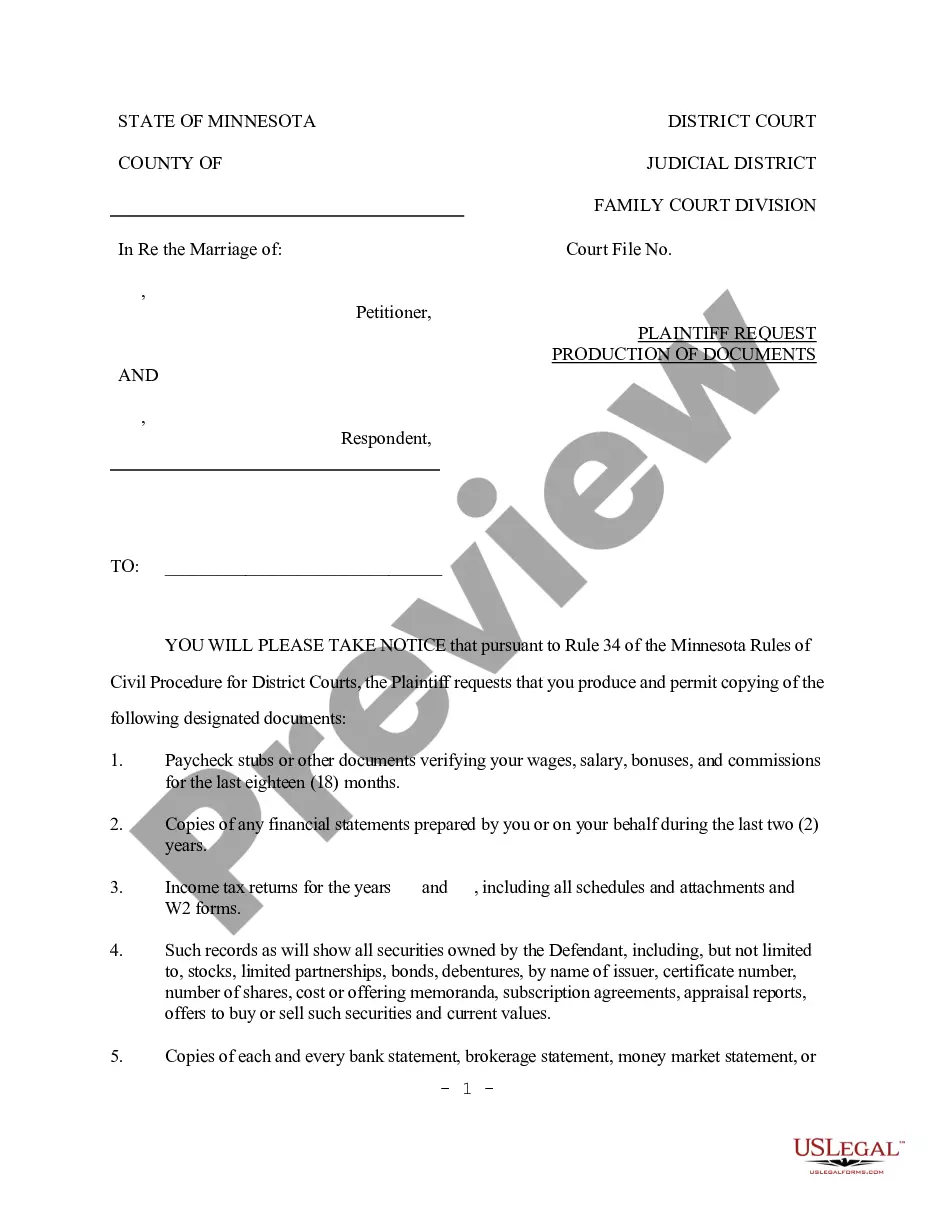
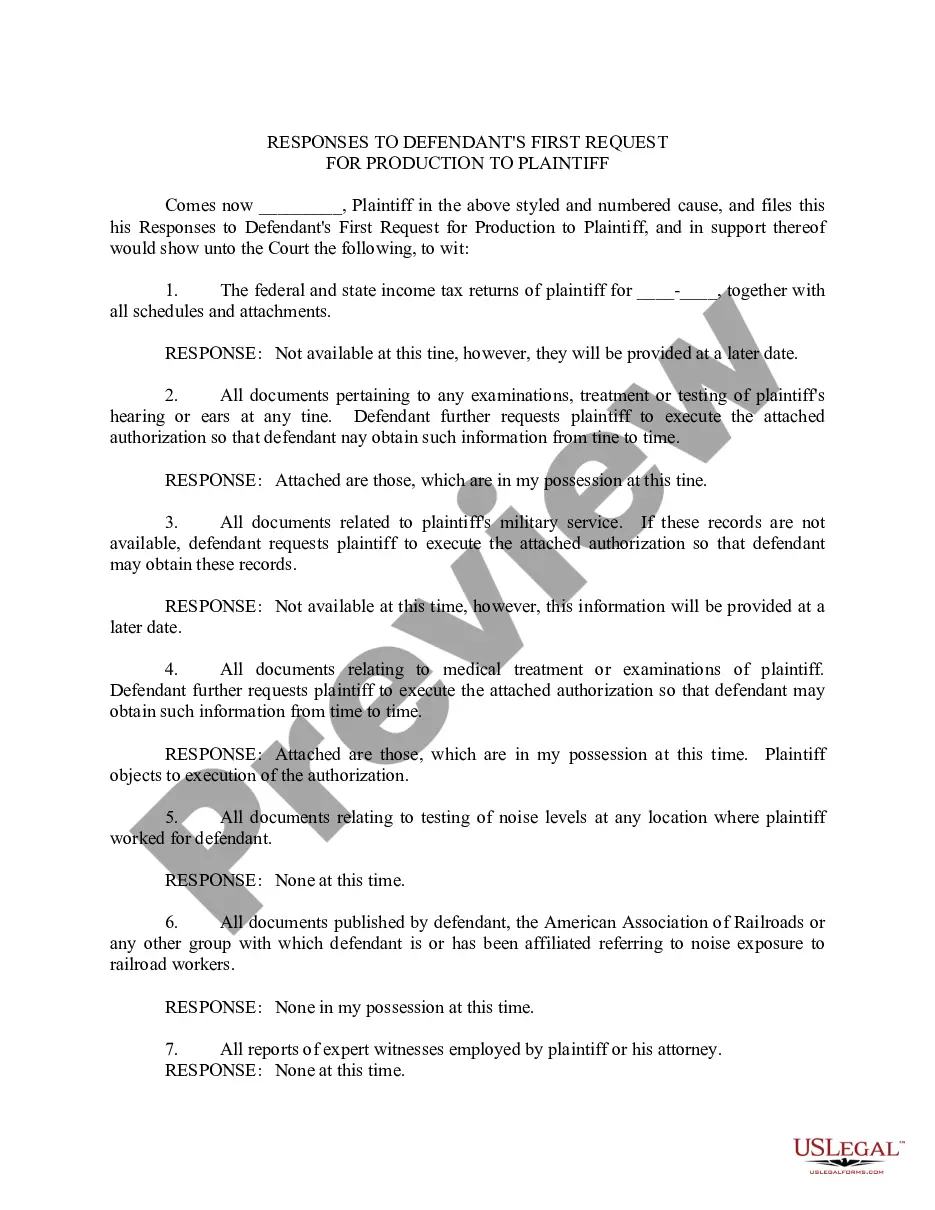
The Discovery - Format for Response to Request for Production of Documents is a legal document used when one party in a legal proceeding is required to respond to another partyâs request for specific documents. This form enables the respondent to formally acknowledge and outline the documents they are willing to produce. It serves a crucial role in the discovery process, setting it apart from other legal forms related to document requests by ensuring the response is structured and comprehensive.
Key parts of this document
- Identification of the parties involved in the legal case.
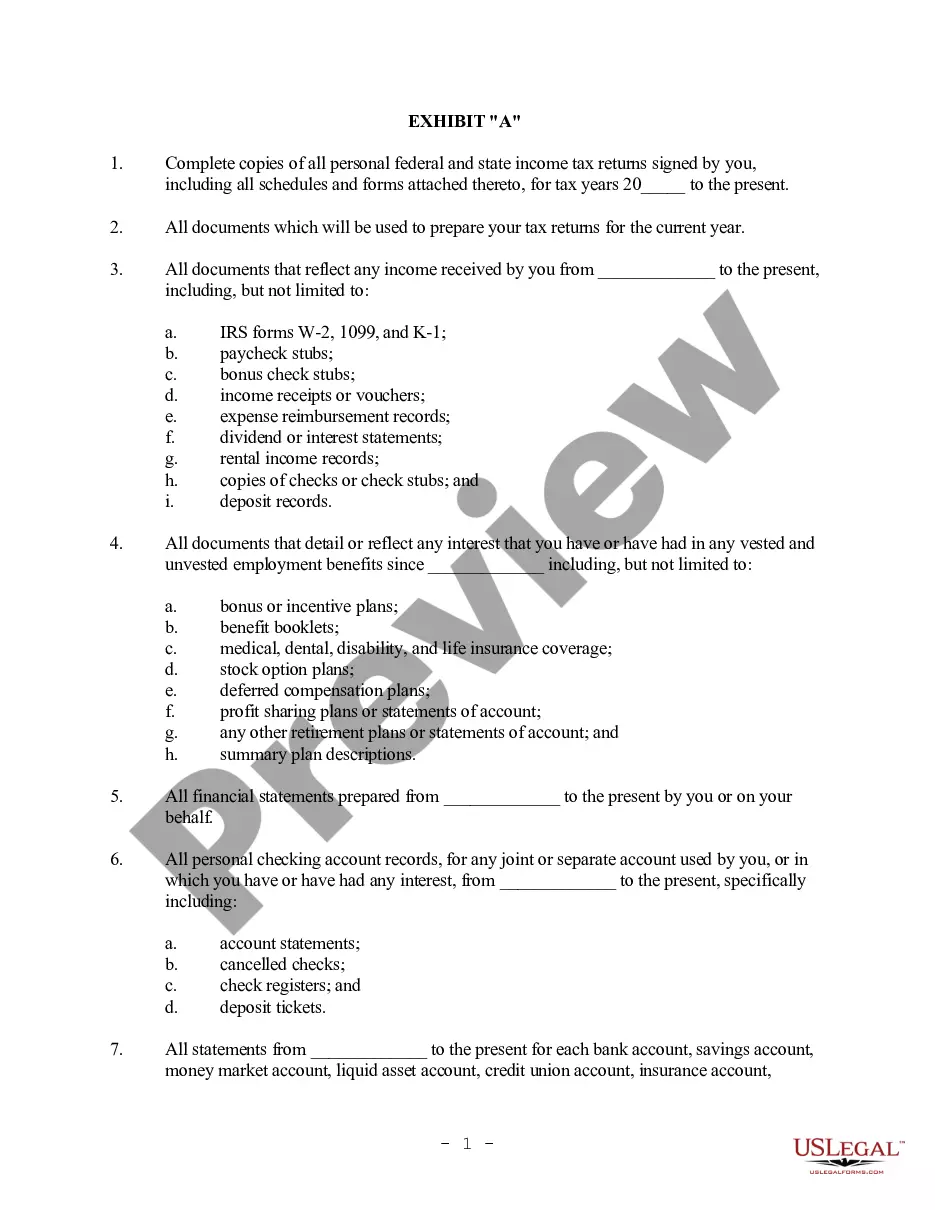
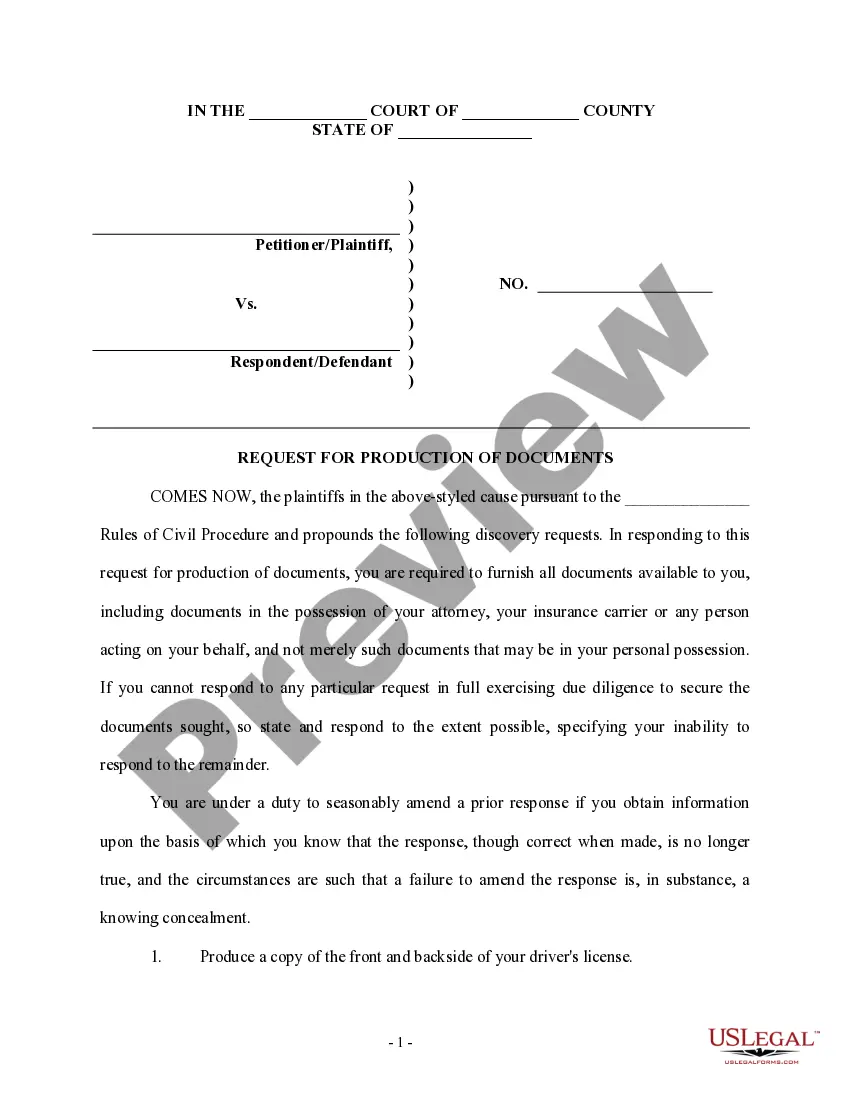
- Sections for detailing the specific documents requested.
- Space for additional responses as necessary.
- Date of the response and the attorney's information.
When to use this document
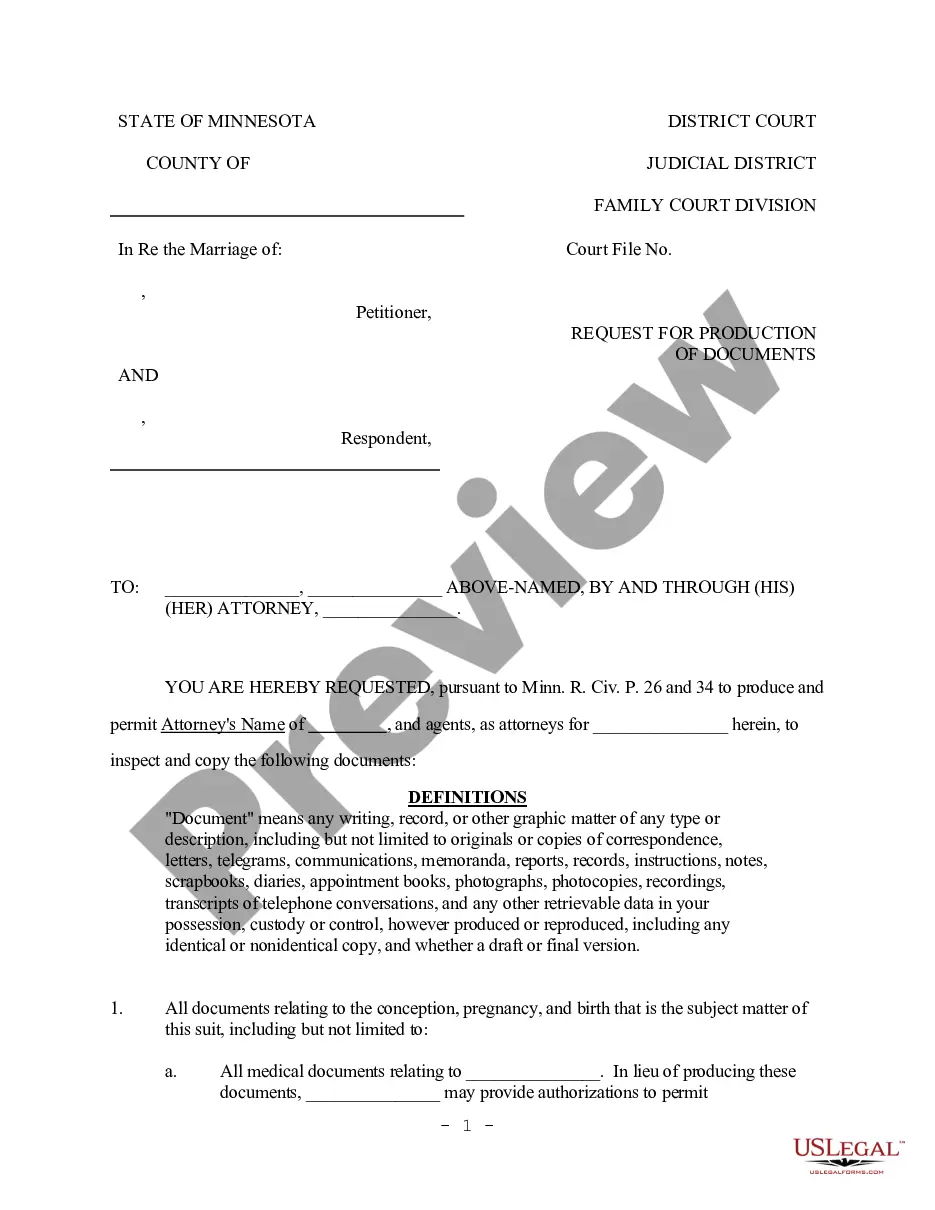
This form should be used in situations where a party has submitted a request for production of documents in the context of a legal dispute. It is particularly applicable in civil litigation cases, where document exchange is essential for case preparation and discovery compliance. Use this form when you are the respondent and are required to provide documentation or clarify your position regarding the request.
Who needs this form
- Respondents in a legal proceeding who have received a request for document production.
- Attorneys representing parties in civil litigation.
- Individuals seeking to formalize their response regarding document requests.
Completing this form step by step
- Enter the names of the petitioner and respondent at the top of the form.
- Clearly outline the documents requested by the opposing party.
- Provide your response to each request, indicating which documents you will produce and which, if any, you will not.
- Include the date of the response at the designated section.
- Sign the form and fill in your attorney identification number and contact information.
Does this document require notarization?
This form does not typically require notarization unless specified by local law. Ensure to check local regulations to confirm whether notarization is necessary for your specific case.
Get your form ready online
Our built-in tools help you complete, sign, share, and store your documents in one place.
Make edits, fill in missing information, and update formatting in US Legal Forms—just like you would in MS Word.
Download a copy, print it, send it by email, or mail it via USPS—whatever works best for your next step.
Sign and collect signatures with our SignNow integration. Send to multiple recipients, set reminders, and more. Go Premium to unlock E-Sign.
If this form requires notarization, complete it online through a secure video call—no need to meet a notary in person or wait for an appointment.
We protect your documents and personal data by following strict security and privacy standards.

Make edits, fill in missing information, and update formatting in US Legal Forms—just like you would in MS Word.

Download a copy, print it, send it by email, or mail it via USPS—whatever works best for your next step.

Sign and collect signatures with our SignNow integration. Send to multiple recipients, set reminders, and more. Go Premium to unlock E-Sign.

If this form requires notarization, complete it online through a secure video call—no need to meet a notary in person or wait for an appointment.

We protect your documents and personal data by following strict security and privacy standards.
Mistakes to watch out for
- Failing to fully respond to each specific document request.
- Not including a signature or necessary identification information.
- Missing the deadline for submitting the response, which can affect legal proceedings.
Benefits of completing this form online
- Easy access and download from anywhere, allowing for flexibility and convenience.
- Editable format lets you customize the document to meet your specific needs.
- Pre-drafted by licensed attorneys, ensuring legal accuracy and compliance.
- This form is legally binding once completed and submitted as part of the discovery process.
- It establishes a record of your response to the discovery request, which can be used in court if necessary.
- Failure to respond could result in legal penalties or loss of rights related to the requested documents.
What to keep in mind
- Understand the form's purpose in the legal process of document production.
- Accurately respond to all requested documents, ensuring compliance with legal requirements.
- Pay attention to your jurisdiction's specific rules regarding discovery and document requests.
Looking for another form?

Form popularity
FAQ
To file a request for production of documents, prepare your request in writing, detailing what documents you seek. Ensure it adheres to the Minnesota Discovery rules. After drafting, file the request with the court and serve it to the opposing party. Using the US Legal Forms platform can simplify this process by providing templates and guidelines tailored to your needs.
To respond to requests for production of documents, first, review the request carefully. Next, gather the relevant documents and prepare a written response that aligns with the Minnesota Discovery - Format for Response to Request for Production of Documents. Be sure to include any objections if necessary, and serve the response to the requesting party timely. This organized approach helps maintain the integrity of your case.
To object to a request for production, you must clearly state your objections in writing. Specify the reasons for your objection, citing any applicable rules or legal grounds. Your response should be thorough and comply with the Minnesota Discovery guidelines. Utilizing resources from US Legal Forms can assist you in crafting a proper objection.
Yes, a request for production is a vital part of the discovery process. It allows parties to obtain documents and evidence that are relevant to the case. Engaging effectively in this phase is essential for a strong case. Understanding the Minnesota Discovery - Format for Response to Request for Production of Documents can streamline this process.
To respond to a document request email, start by acknowledging the request and clarify any deadlines. Then, gather the requested documents and ensure they meet the Minnesota Discovery - Format for Response to Request for Production of Documents. Finally, attach the documents to your email response, and consider providing a brief summary of what you are including. This approach ensures clarity and keeps communication professional.
Generally, you do not need to file your discovery responses with the court. Instead, you should serve them to the requesting party in accordance with the Minnesota Discovery rules. This helps maintain a clear record of what has been shared without overwhelming the court system. For efficient management, you might consider using the US Legal Forms platform.
In Minnesota, you typically have 30 days to respond to a request for production of documents. This timeframe is crucial to ensure compliance with the Minnesota Discovery rules. Failing to respond within this period may result in legal consequences. Therefore, it's important to organize your documents promptly.
When replying to a document request email, start by acknowledging the request and outlining your plan for response. Clearly state your intention to comply and refer to the Minnesota Discovery - Format for Response to Request for Production of Documents as your guiding framework. If you need additional time or have questions, communicate those promptly. This approach helps maintain a professional tone and demonstrates your commitment to the legal process.
When responding to a request for production of documents, your approach should include reviewing the request carefully and assembling the relevant documents. Adhering to the Minnesota Discovery - Format for Response to Request for Production of Documents is essential for ensuring compliance. Clearly indicate any objections and provide justifications for documents you cannot produce. This structured response fosters transparency and maintains the integrity of the discovery process.
To verify discovery responses, you should cross-check the provided documents against the original request. Ensure that all requested items are included and that the responses align with the Minnesota Discovery - Format for Response to Request for Production of Documents. It can also be beneficial to consult with legal counsel to ensure thoroughness and accuracy. This verification process safeguards against incomplete or misleading information.