Minnesota Notice of Default in Payment of Rent as Warning Prior to Demand to Pay or Terminate for Residential Property
Description

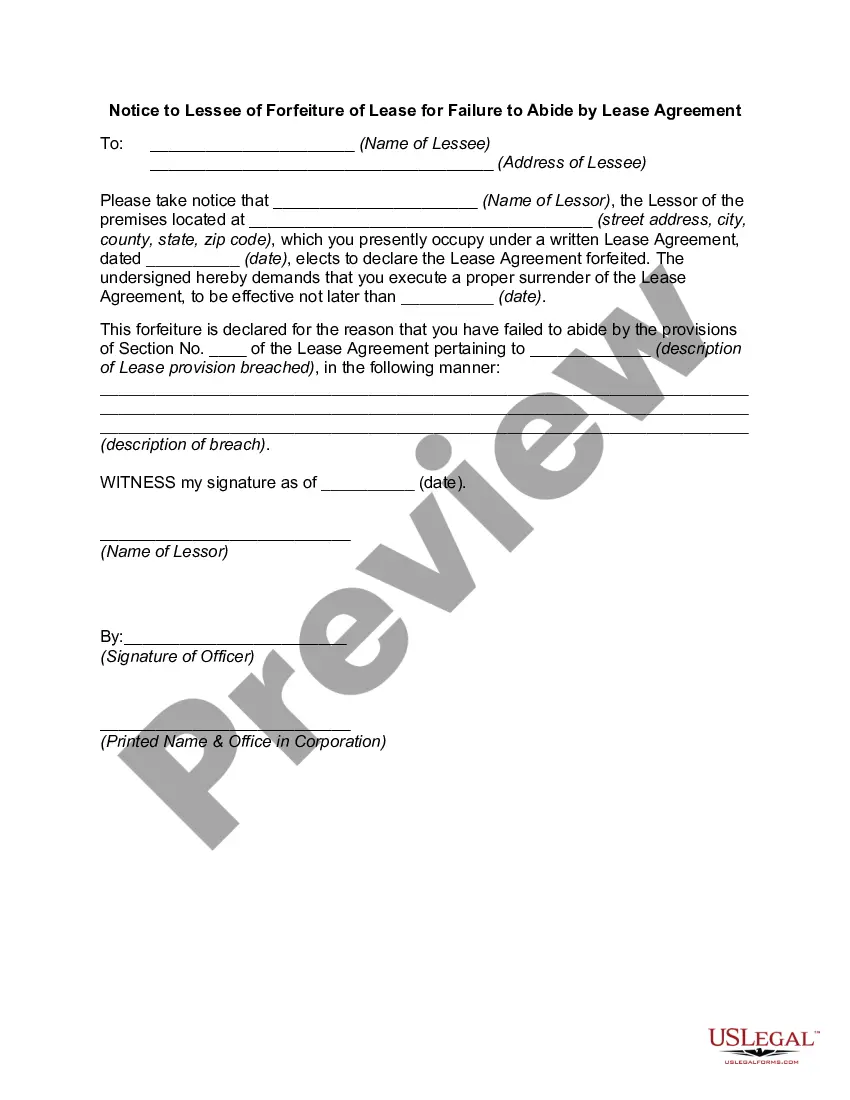


How to fill out Minnesota Notice Of Default In Payment Of Rent As Warning Prior To Demand To Pay Or Terminate For Residential Property?
Obtain any type from 85,000 legal records including Minnesota Notice of Default in Payment of Rent as Warning Prior to Demand to Pay or Terminate for Residential Property online with US Legal Forms. Each template is created and refreshed by state-certified lawyers.
If you already hold a subscription, Log In. After you reach the form’s page, click on the Download button and navigate to My documents to retrieve it.
If you have not subscribed yet, follow the instructions given below: Check the state-specific criteria for the Minnesota Notice of Default in Payment of Rent as Warning Prior to Demand to Pay or Terminate for Residential Property you intend to utilize. Review the description and view the sample. When you are assured that the sample meets your needs, simply click Buy Now. Select a subscription plan that fits your finances. Set up a personal account. Make payment in one of two convenient ways: by credit card or through PayPal. Choose a format to download the document in; two choices are available (PDF or Word). Download the document to the My documents section. When your reusable form is downloaded, either print it out or save it to your device.
- With US Legal Forms, you will always have immediate access to the correct downloadable sample.
- The service provides access to documents and categorizes them to simplify your search.
- Utilize US Legal Forms to quickly and easily acquire your Minnesota Notice of Default in Payment of Rent as Warning Prior to Demand to Pay or Terminate for Residential Property.
Form popularity
FAQ
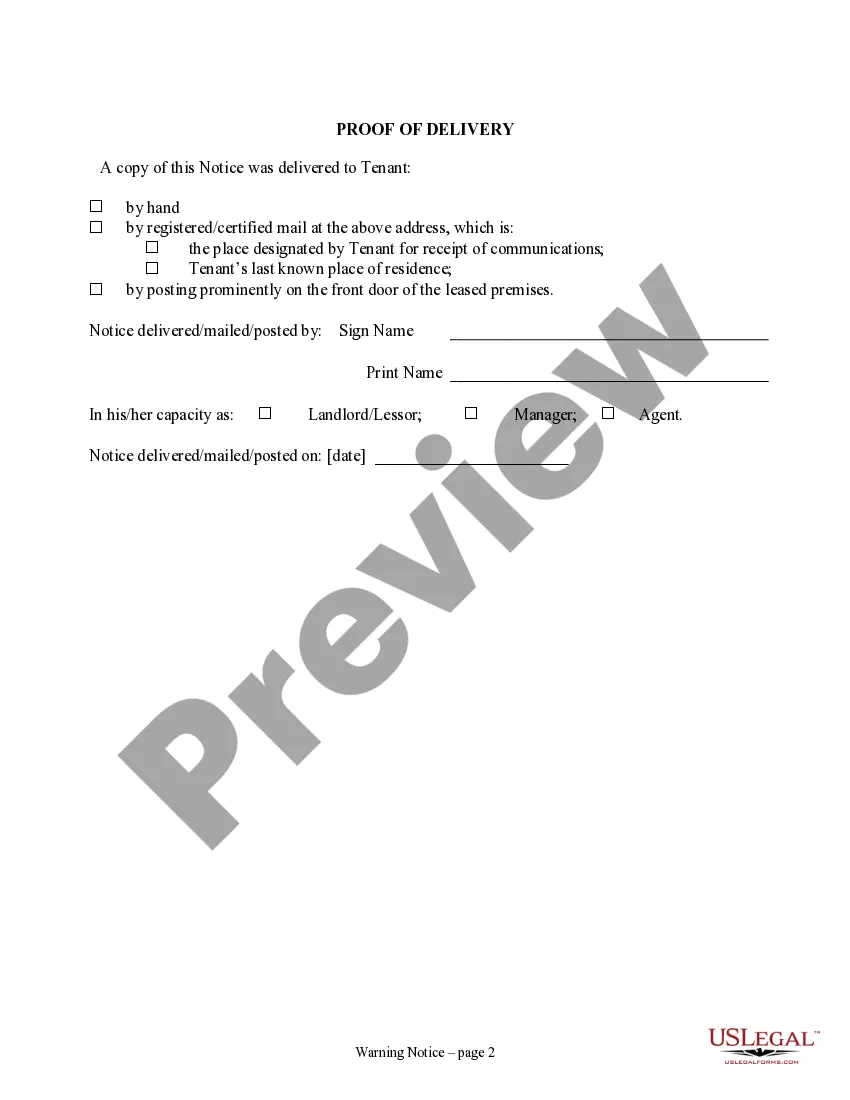
Writing a warning notice to a tenant involves being clear and concise about the issue at hand, such as the Minnesota Notice of Default in Payment of Rent as Warning Prior to Demand to Pay or Terminate for Residential Property. Start with the date and tenant information, followed by a straightforward description of the rent default. It's essential to outline the consequences of not addressing the issue promptly, helping the tenant understand the seriousness of the situation. Consider using US Legal Forms to access templates that guide you in crafting a legally sound warning notice.
To give notice on a rental property template, start by clearly stating the purpose of the notice, which in this case is the Minnesota Notice of Default in Payment of Rent as Warning Prior to Demand to Pay or Terminate for Residential Property. Ensure you include the tenant's name, the property address, and the specific details of the rent due. Using a professional template can streamline this process, making it easier to communicate your intentions effectively. Platforms like US Legal Forms offer customizable templates that ensure your notice meets legal requirements.
A default in rent payment refers to a failure to pay rent by the agreed-upon due date. In Minnesota, this default can lead to significant consequences, including eviction proceedings. The Minnesota Notice of Default in Payment of Rent as Warning Prior to Demand to Pay or Terminate for Residential Property provides a structured approach for landlords to notify tenants of their payment issues and outline the next steps. Utilizing platforms like uslegalforms can help landlords navigate this process effectively and ensure compliance with legal requirements.
A tenant's default of rent occurs when they fail to pay rent on time according to the terms of their lease agreement. This situation triggers the Minnesota Notice of Default in Payment of Rent as Warning Prior to Demand to Pay or Terminate for Residential Property, serving as a formal notification to the tenant about their overdue payments. Understanding this default is crucial for both tenants and landlords, as it can lead to legal actions if not resolved promptly.
Minnesota's statute 504b applies to various aspects of landlord-tenant relationships, specifically focusing on the rental agreements. It covers the obligations of landlords regarding the maintenance of property, the rights of tenants to a habitable living space, the process for eviction, and importantly, the Minnesota Notice of Default in Payment of Rent as Warning Prior to Demand to Pay or Terminate for Residential Property. This statute ensures that both parties are aware of their rights and responsibilities.
A notice of default in rent payment warning is a document that alerts tenants to their overdue rent and serves as a formal warning of potential consequences. This notice typically outlines the amount due and the timeframe for making payment before further action is taken. In Minnesota, this process is encapsulated in the Minnesota Notice of Default in Payment of Rent as Warning Prior to Demand to Pay or Terminate for Residential Property, which is essential for both landlords and tenants to understand.
Being in default on rent payments means that a tenant has failed to fulfill their financial obligations as outlined in their lease agreement. This situation can lead to legal actions, including eviction, if not addressed promptly. It's important for tenants to understand the implications of such defaults, particularly in relation to the Minnesota Notice of Default in Payment of Rent as Warning Prior to Demand to Pay or Terminate for Residential Property.
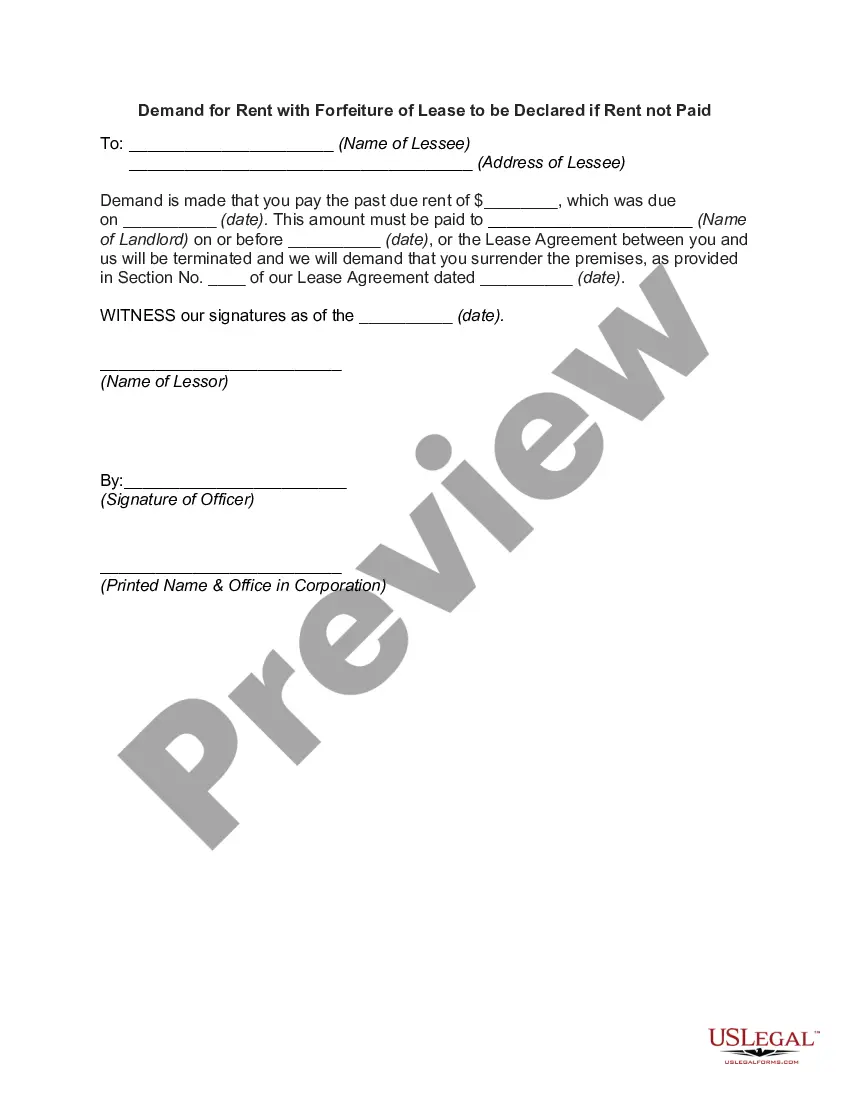
A notice to pay or quit demand for rent is a legal document that requires a tenant to either pay their overdue rent or vacate the rental property. This notice serves as a critical step in the eviction process, indicating that the landlord is serious about recovering their rent. In Minnesota, such documents often relate to the Minnesota Notice of Default in Payment of Rent as Warning Prior to Demand to Pay or Terminate for Residential Property.
The RTB warning notice is a formal communication sent to tenants indicating that they owe rent and must take action to pay their arrears. This notice is an essential step in the process of addressing rental payment issues. It serves to inform tenants of their rights and obligations, similar to the Minnesota Notice of Default in Payment of Rent as Warning Prior to Demand to Pay or Terminate for Residential Property.
The purpose of a notice of default is to inform the tenant that they are not complying with the terms of their lease, particularly regarding rent payments. This notice acts as an official warning, giving the tenant a chance to rectify the situation before further legal actions are taken. In Minnesota, this notice is part of the process leading to the Minnesota Notice of Default in Payment of Rent as Warning Prior to Demand to Pay or Terminate for Residential Property.