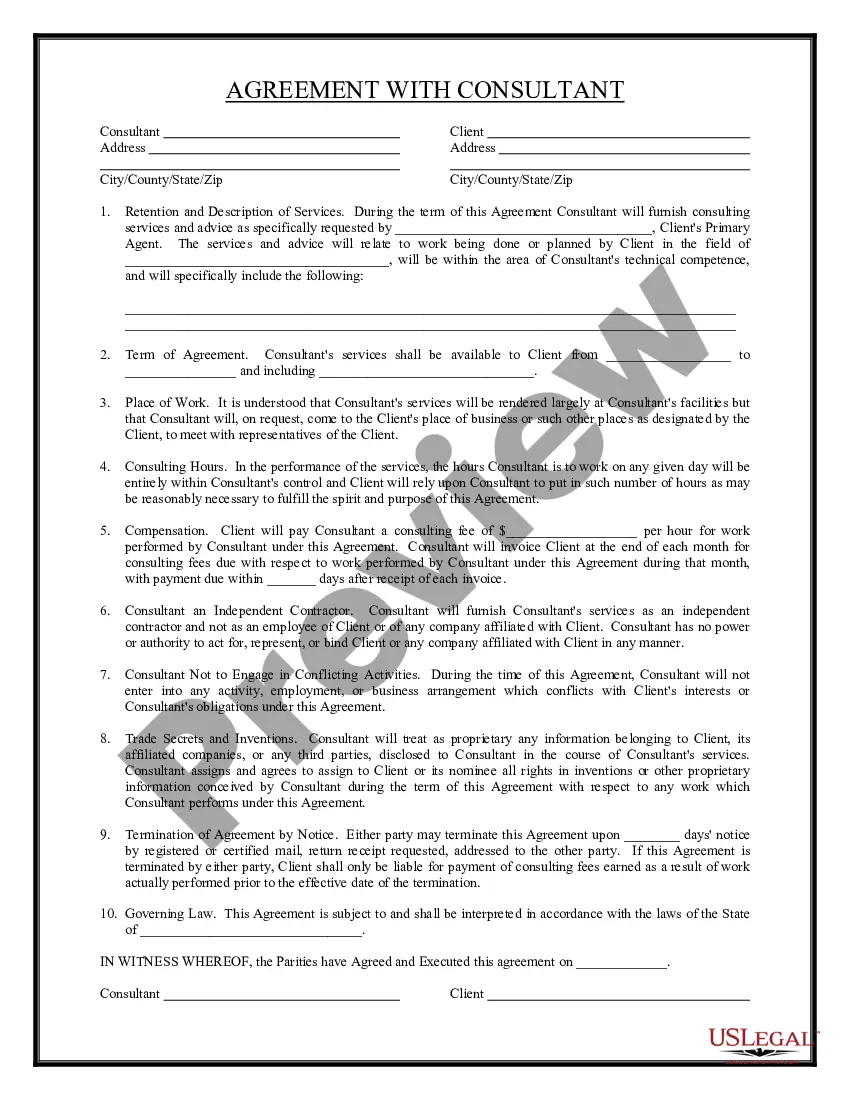
This form is a due diligence checklist that outlines information pertinent to five percent shareholders in a business transaction.
Michigan Five Percent Shareholder Checklist
Category:
State:
Multi-State
Control #:
US-DD06026
Format:
Word;
PDF;
Rich Text
Instant download
Description
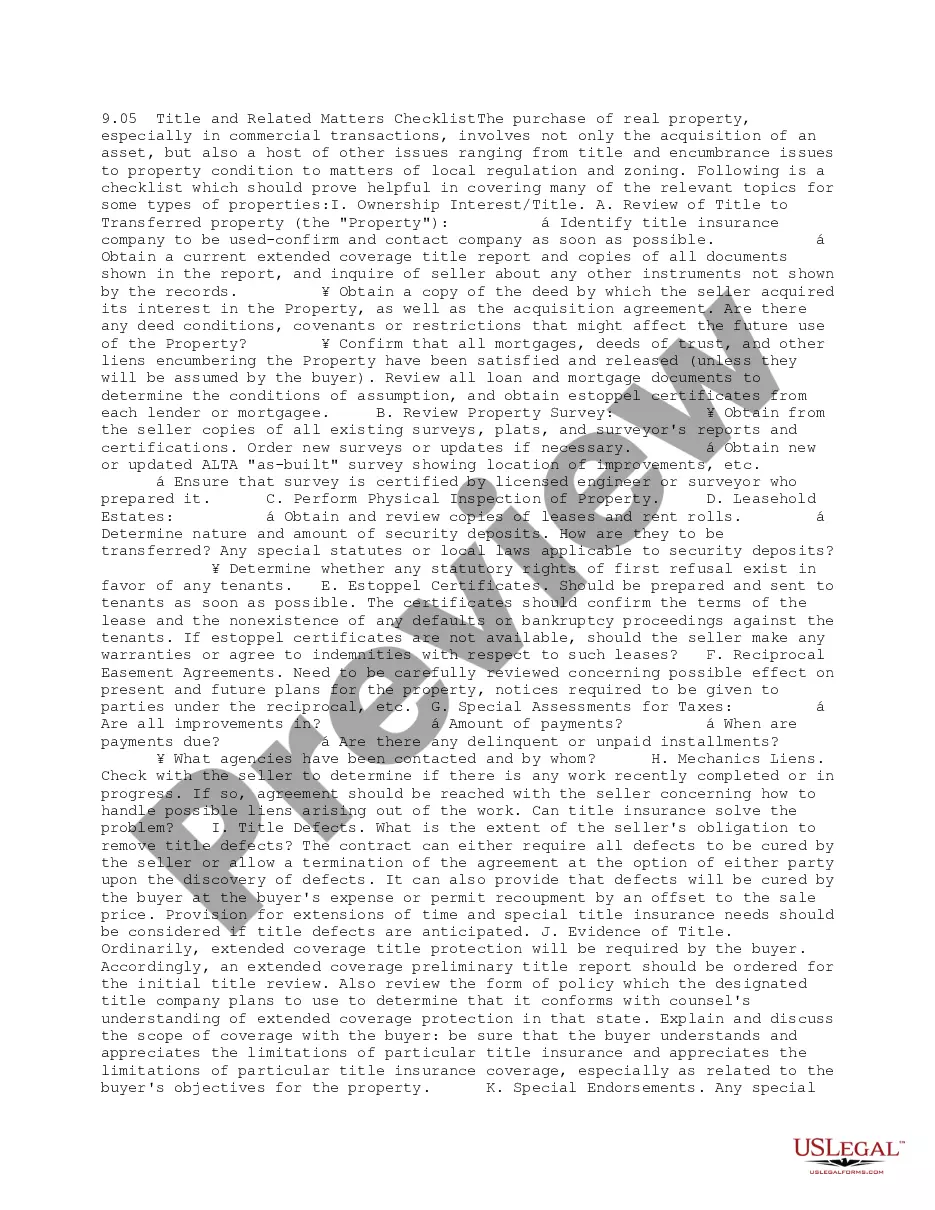
Free preview



Get your form ready online
Our built-in tools help you complete, sign, share, and store your documents in one place.
Built-in online Word editor
Make edits, fill in missing information, and update formatting in US Legal Forms—just like you would in MS Word.
Export easily
Download a copy, print it, send it by email, or mail it via USPS—whatever works best for your next step.
E-sign your document
Sign and collect signatures with our SignNow integration. Send to multiple recipients, set reminders, and more. Go Premium to unlock E-Sign.
Notarize online 24/7
If this form requires notarization, complete it online through a secure video call—no need to meet a notary in person or wait for an appointment.
Store your document securely
We protect your documents and personal data by following strict security and privacy standards.
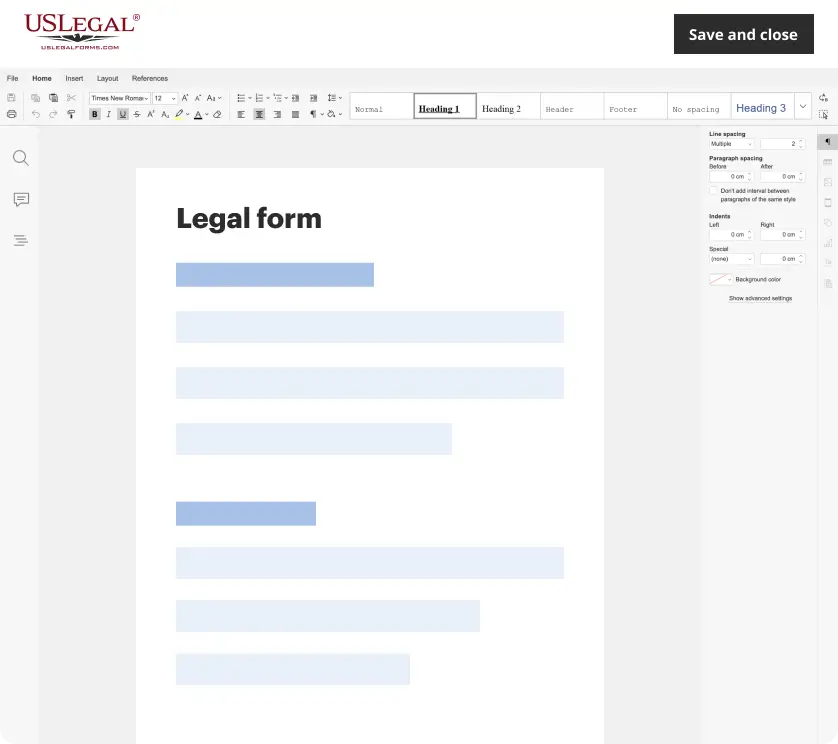
Make edits, fill in missing information, and update formatting in US Legal Forms—just like you would in MS Word.
Download a copy, print it, send it by email, or mail it via USPS—whatever works best for your next step.
Sign and collect signatures with our SignNow integration. Send to multiple recipients, set reminders, and more. Go Premium to unlock E-Sign.

If this form requires notarization, complete it online through a secure video call—no need to meet a notary in person or wait for an appointment.
We protect your documents and personal data by following strict security and privacy standards.
Looking for another form?







How to fill out Five Percent Shareholder Checklist?
It is feasible to spend time on the web trying to locate the valid document template that fulfills the federal and state requirements you will need.
US Legal Forms offers thousands of valid forms that have been reviewed by specialists.
You can download or print the Michigan Five Percent Shareholder Checklist from our service.
If available, use the Review option to preview the document template as well.
- If you already possess a US Legal Forms account, you may Log In and click on the Download option.
- After that, you can complete, edit, print, or sign the Michigan Five Percent Shareholder Checklist.
- Every valid document template you acquire is yours for eternity.
- To obtain another copy of a purchased form, visit the My documents tab and click on the appropriate option.
- If you are accessing the US Legal Forms website for the first time, follow the simple instructions below.
- First, confirm that you have selected the correct document template for the region/city of your choice.
- Review the form details to ensure you have chosen the right one.
Form popularity
FAQ
Transferring a property title to a family member in Michigan typically involves completing a Quit Claim Deed or a Warranty Deed. You must also file the deed with the local Register of Deeds office to ensure proper documentation. The Michigan Five Percent Shareholder Checklist can assist you through this process, ensuring everything is done correctly.
Conclusively, the shareholders are owners of stock in the corporation. They are not the owners of a corporation's assets.
While certain rights do exist to protect minority shareholders in specified areas, discussed below, the simple fact is that the shareholder who controls 51% of the stock is able to run the company pretty much as he or she wishes.
A majority shareholder is a person or entity who holds more than 50% of shares of a company. If the majority shareholder holds voting shares, they dictate the direction of the company through their voting power.
Owners are Shareholders BusinessDictionary.com defines a shareholder as An individual, group, or organization that owns one or more shares in a company, and in whose name the share certificate is issued. Hence, owners of a corporation are called shareholders or stockholders.
The terms stockholder and shareholder both refer to the owner of shares in a company, which means that they are part-owners of a business. Thus, both terms mean the same thing, and you can use either one when referring to company ownership.
For determining highly compensated employees: If the employer is a corporation, a 5% owner is any person who owns more than 5% of the outstanding stock of the corporation or possesses more than 5% of the total combined voting power of all stock of the corporation.
The Role Of A Shareholder The shareholders are the owners of the company and provide financial backing in return for potential dividends over the lifetime of the company.
5% Shareholder means any entity that has, held or beneficially owns 5% or more voting right and right to elect board members in another entity.
A shareholder, also referred to as a stockholder, is a person, company, or institution that owns at least one share of a company's stock, known as equity. Because shareholders essentially own the company, they reap the benefits of a business's success.