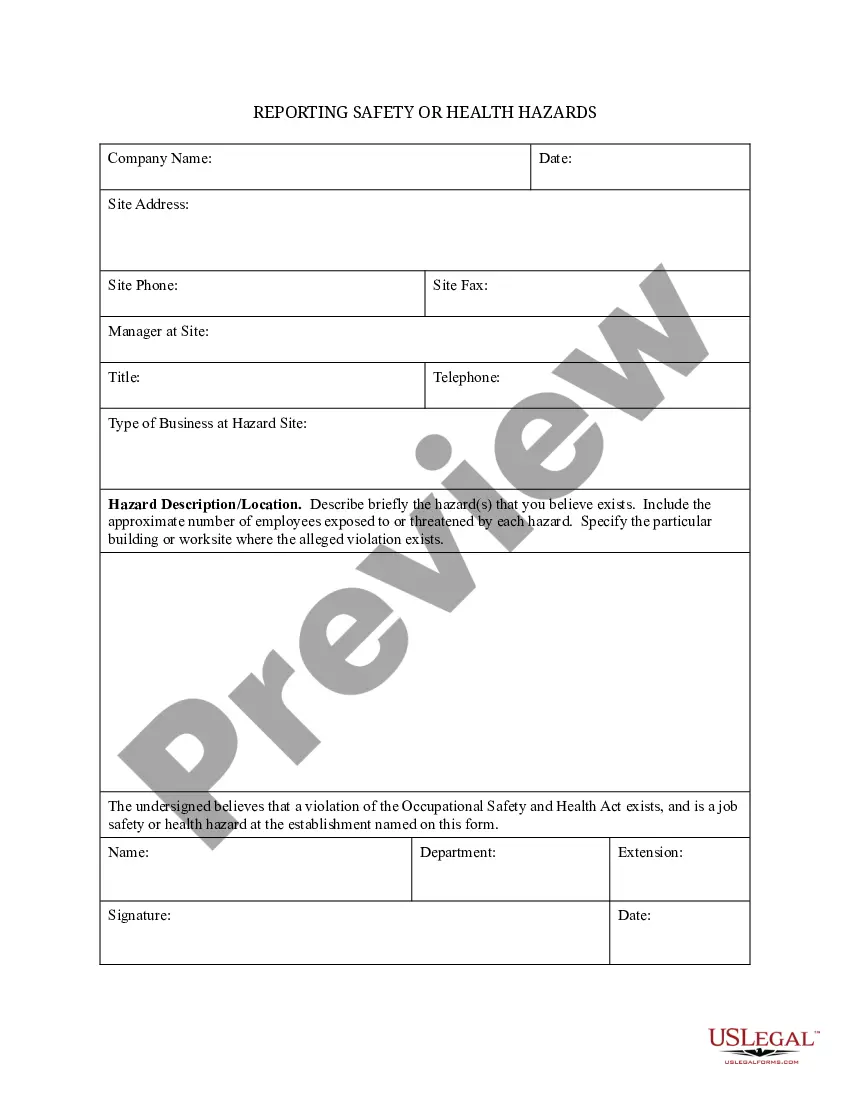
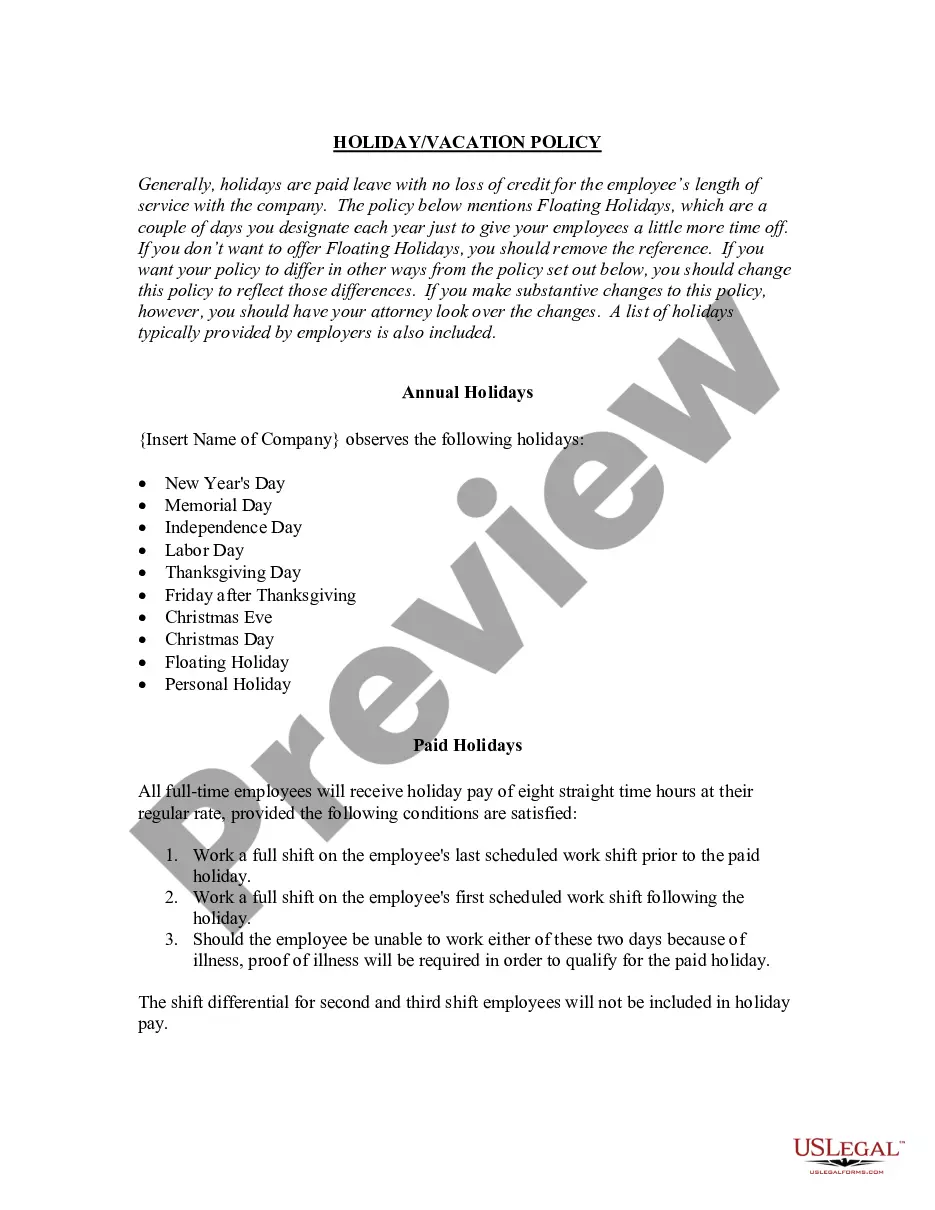
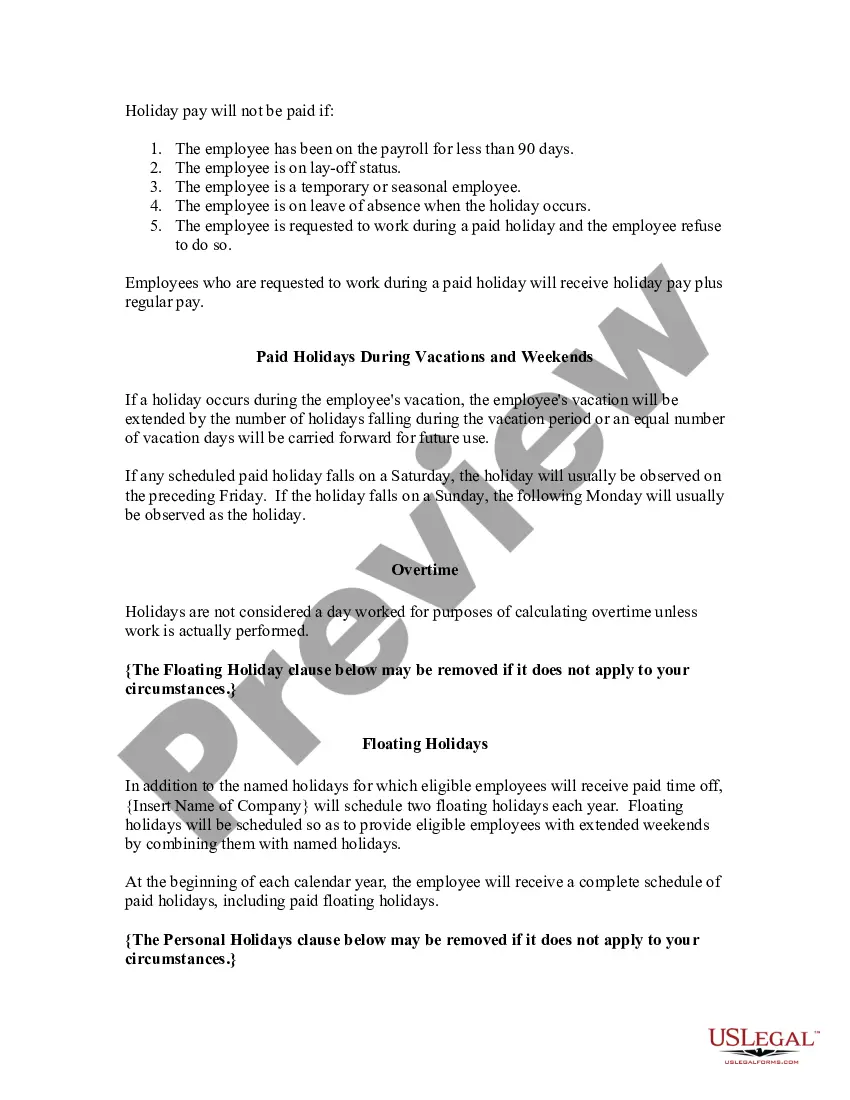
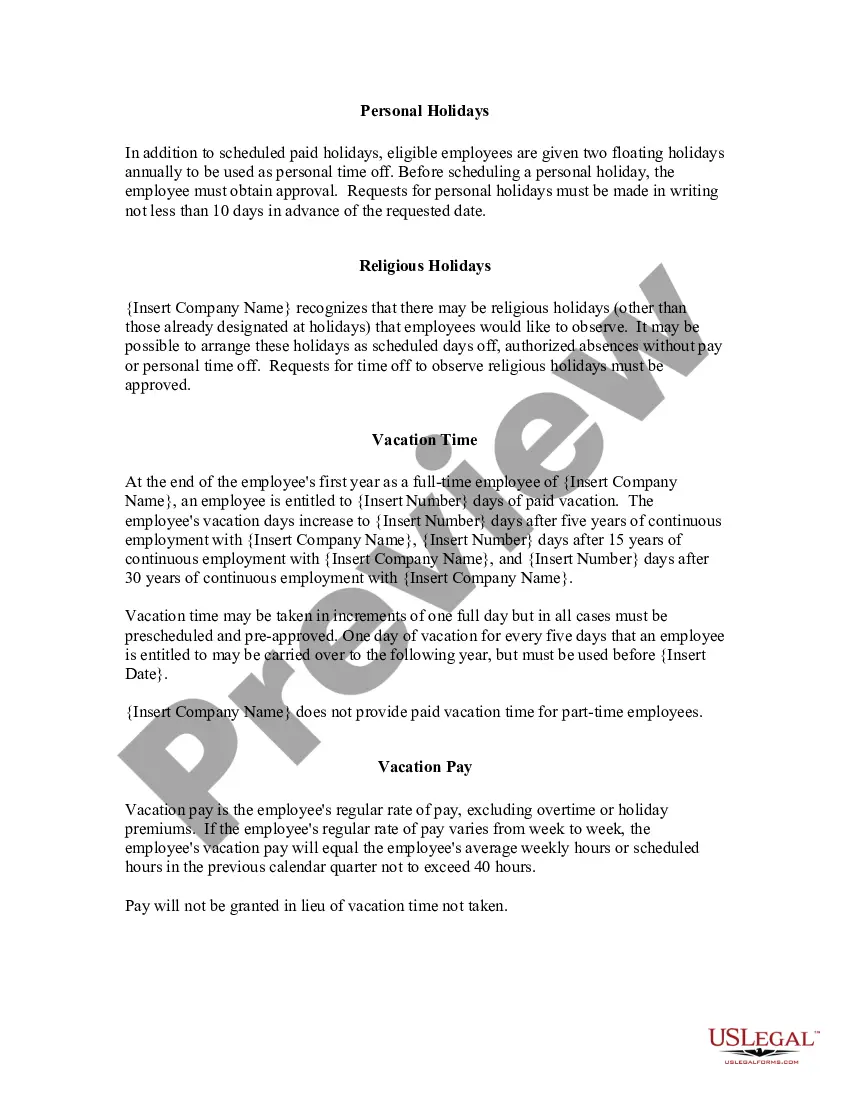
Michigan Holiday Vacation Policy
Description
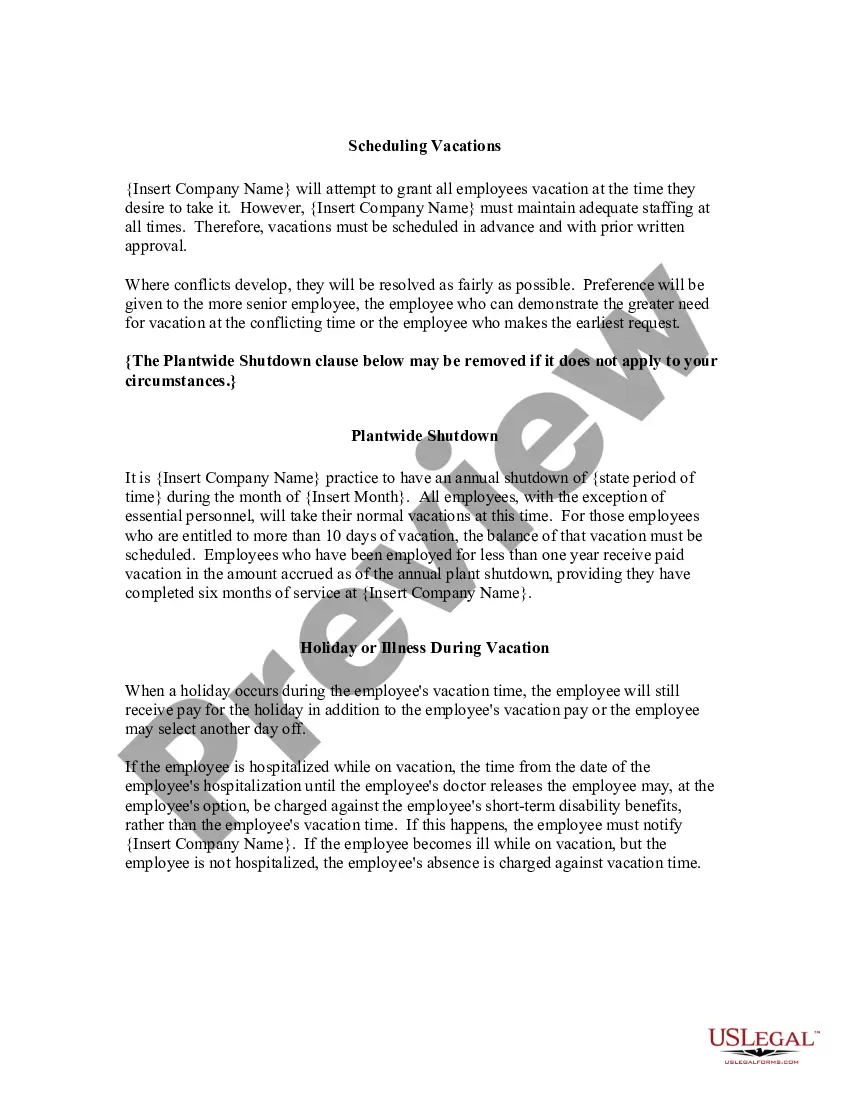
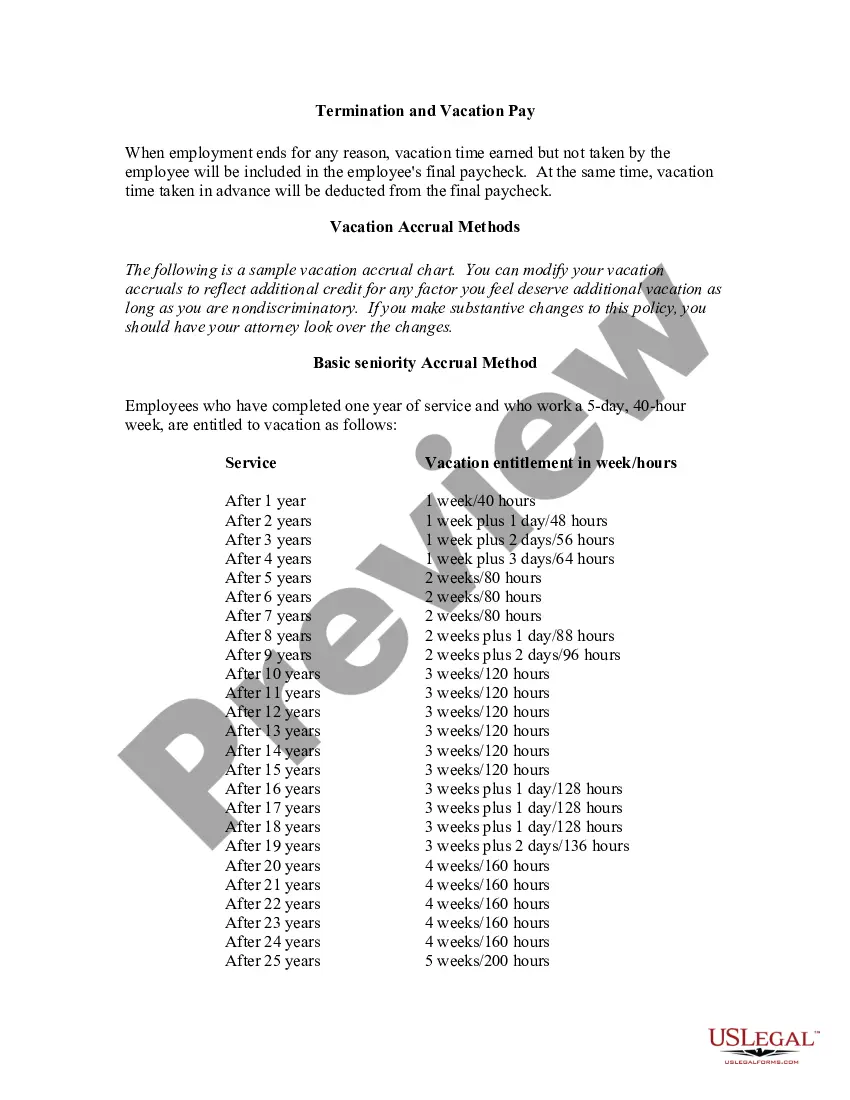
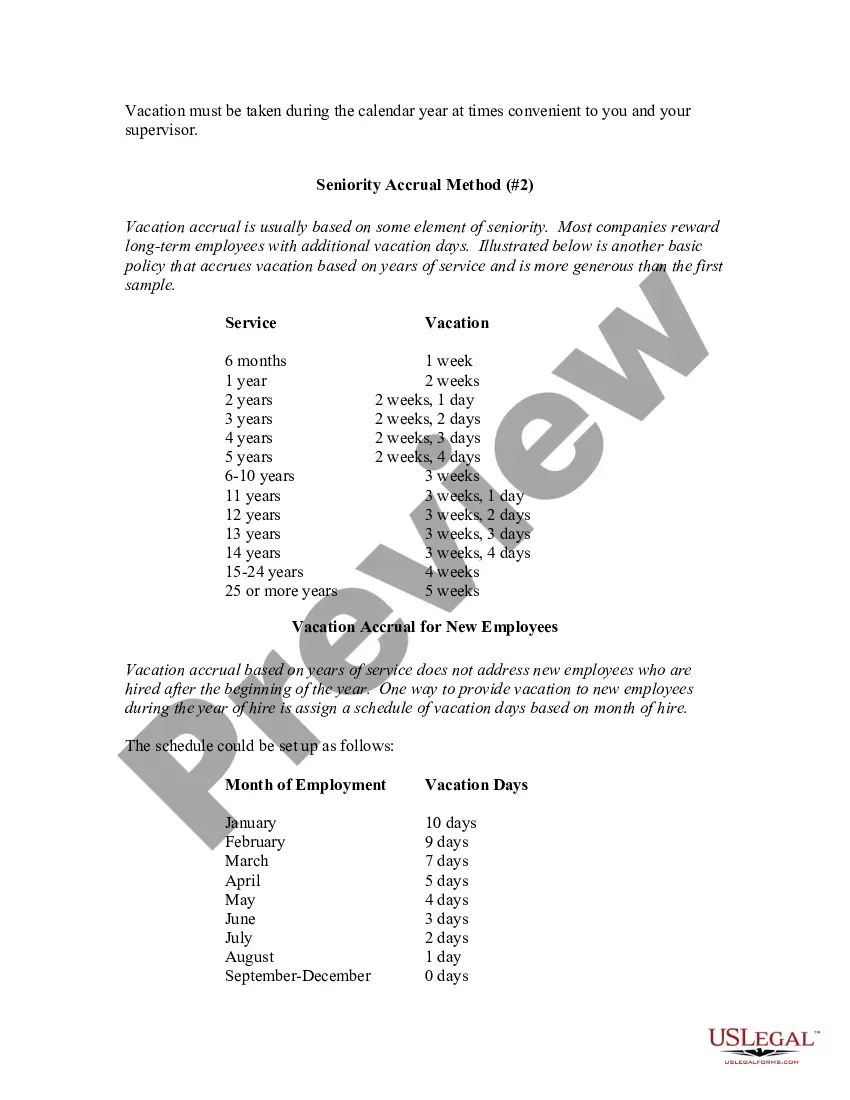
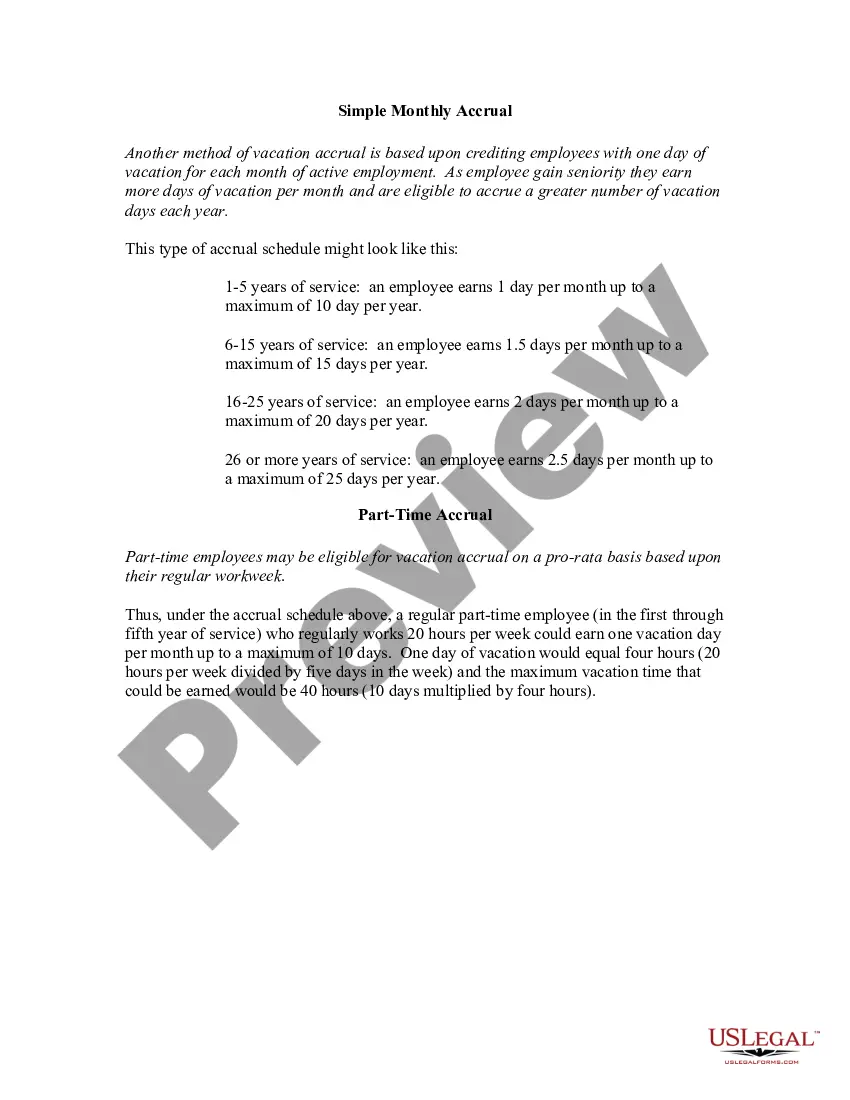
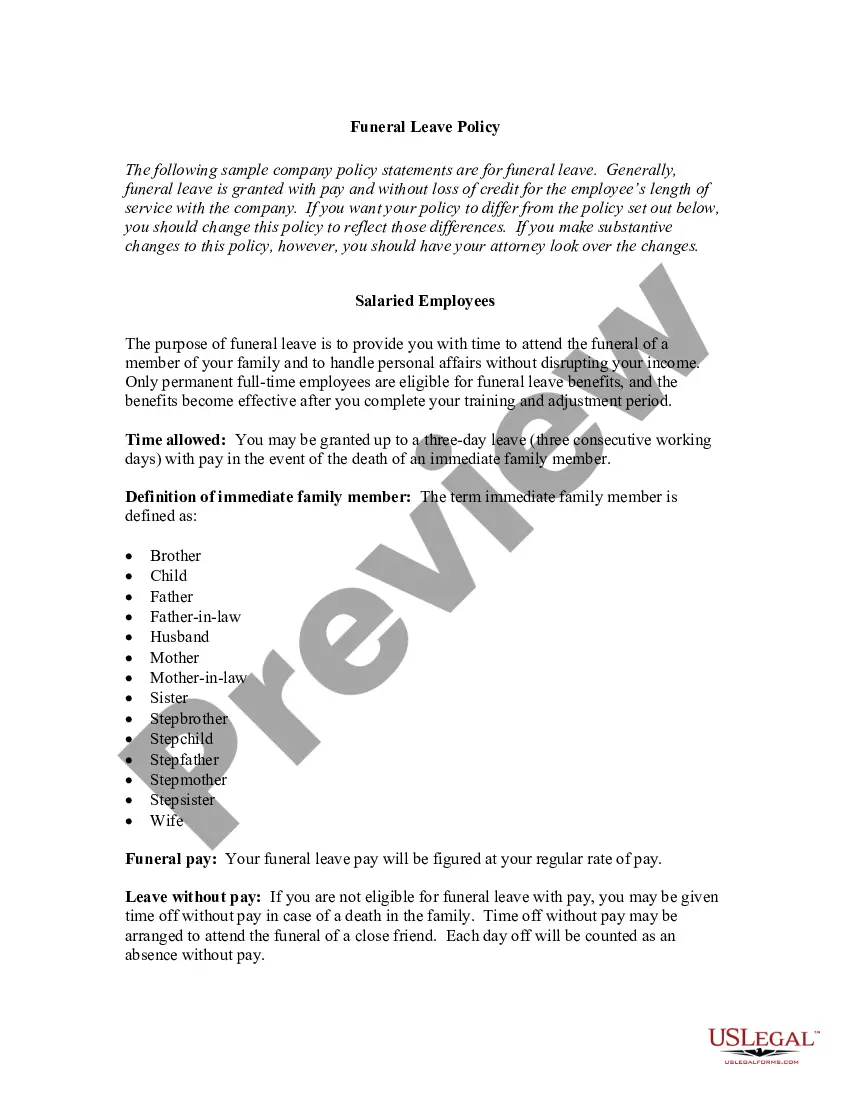
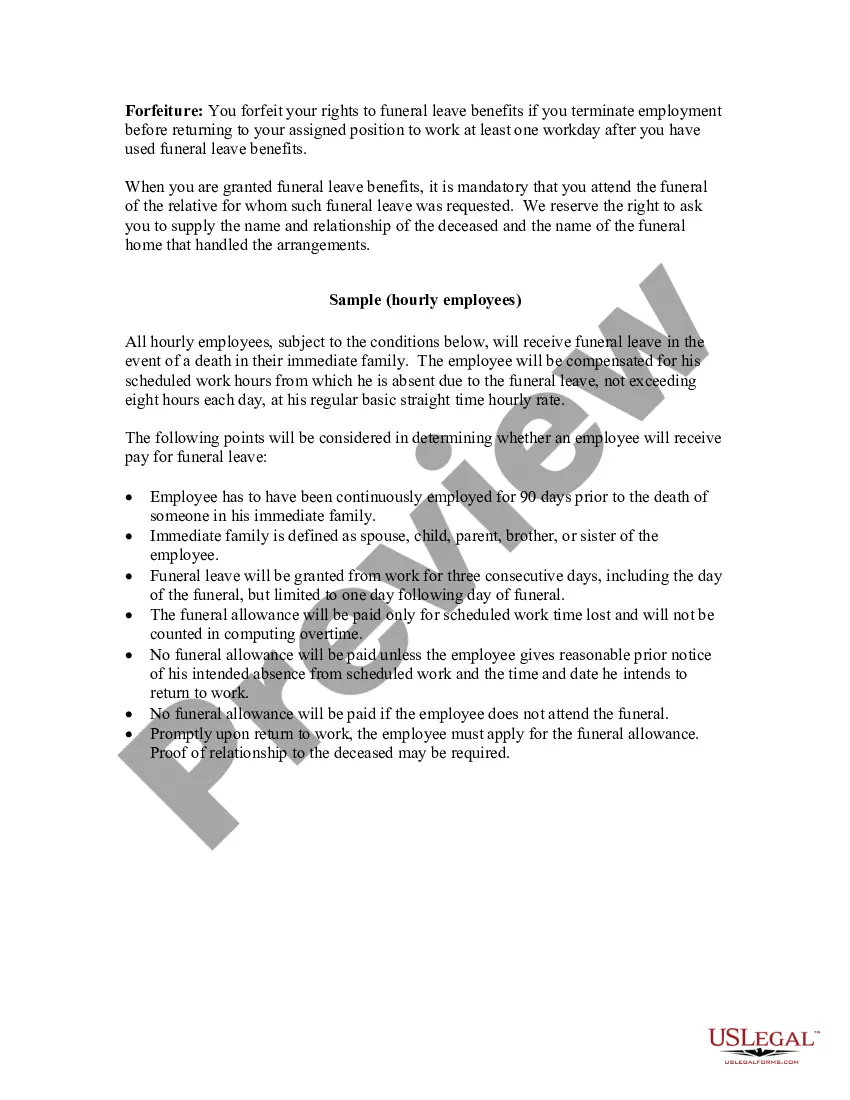
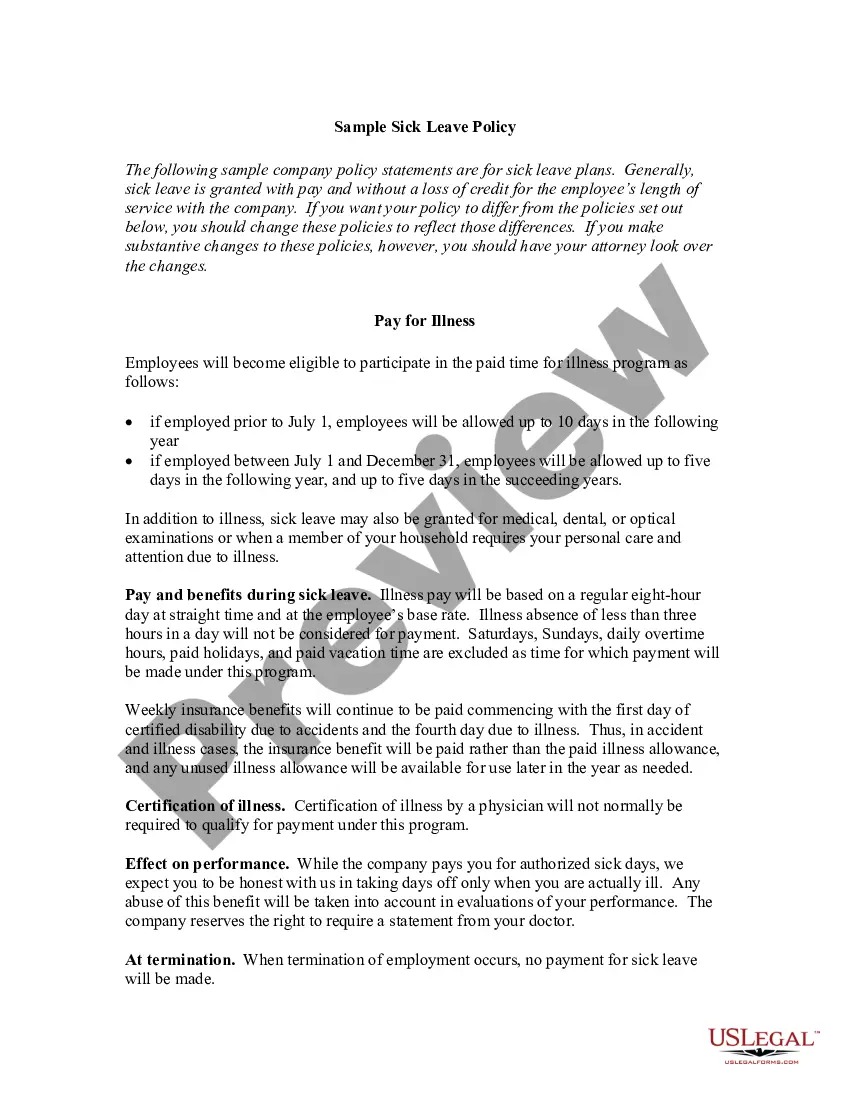

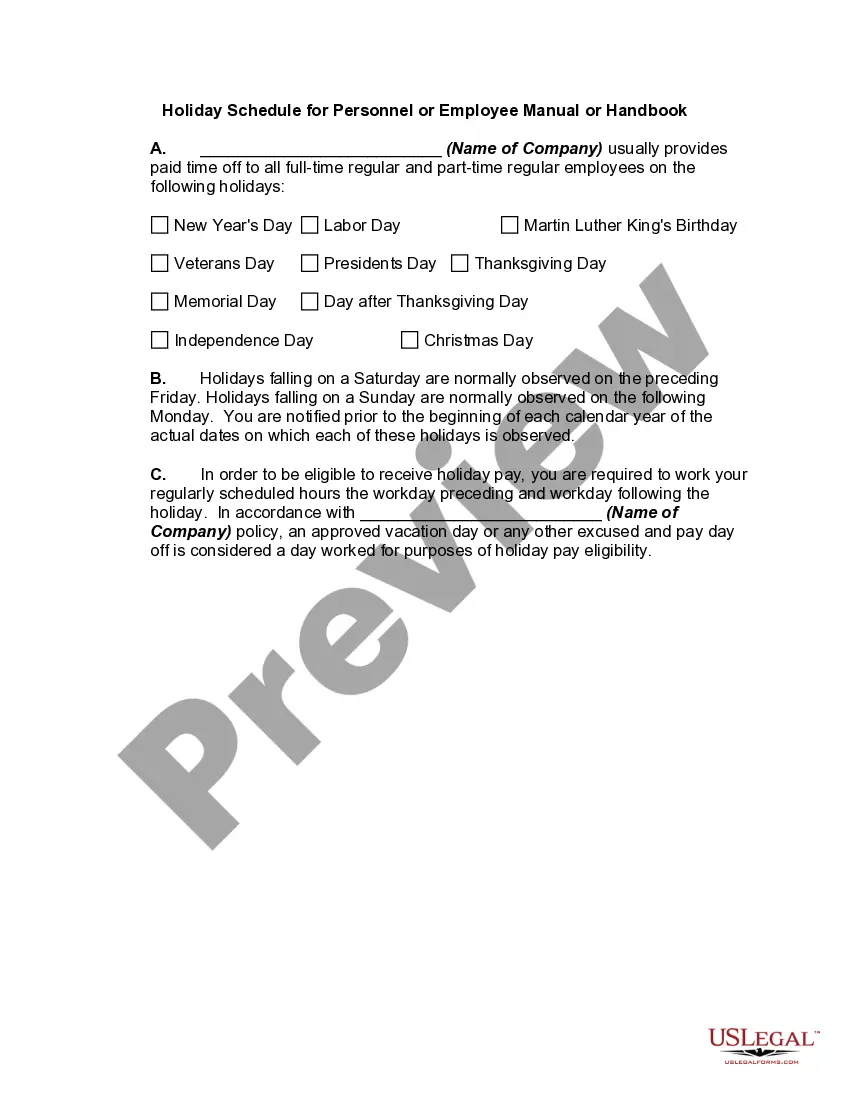

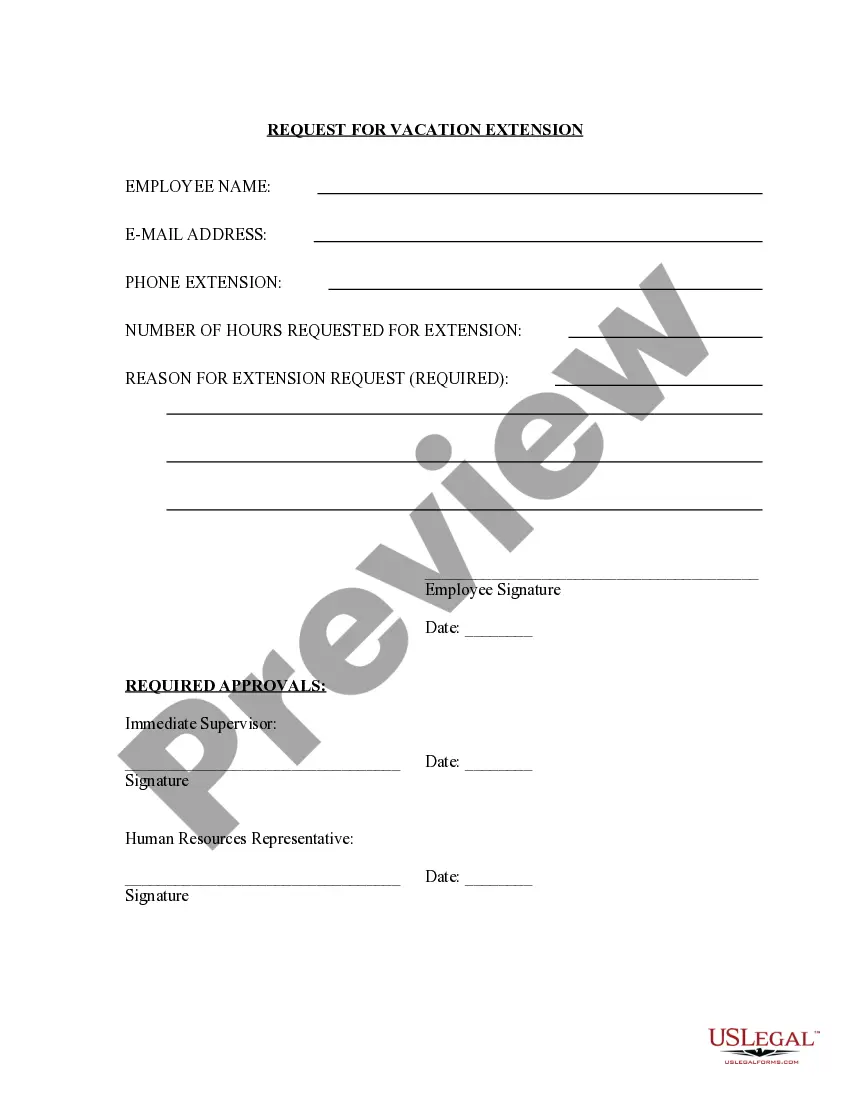
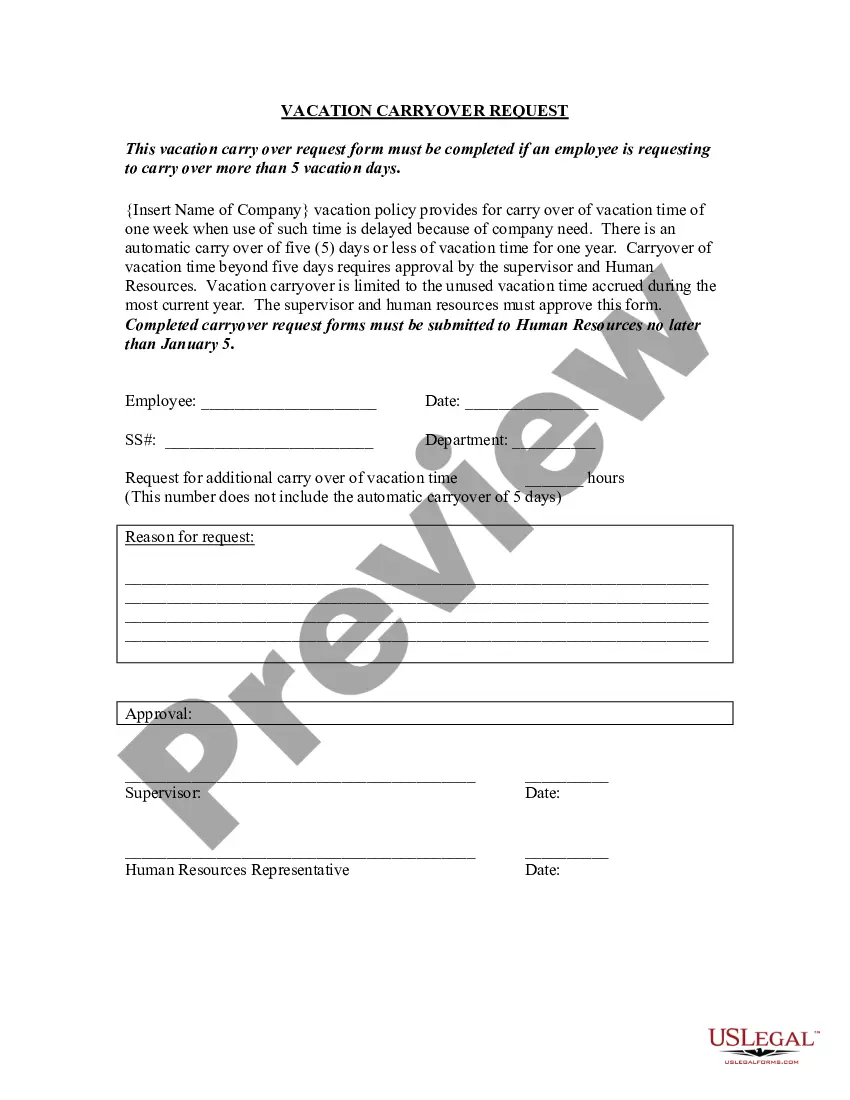
Get your form ready online
Our built-in tools help you complete, sign, share, and store your documents in one place.
Make edits, fill in missing information, and update formatting in US Legal Forms—just like you would in MS Word.
Download a copy, print it, send it by email, or mail it via USPS—whatever works best for your next step.
Sign and collect signatures with our SignNow integration. Send to multiple recipients, set reminders, and more. Go Premium to unlock E-Sign.
If this form requires notarization, complete it online through a secure video call—no need to meet a notary in person or wait for an appointment.
We protect your documents and personal data by following strict security and privacy standards.

Make edits, fill in missing information, and update formatting in US Legal Forms—just like you would in MS Word.

Download a copy, print it, send it by email, or mail it via USPS—whatever works best for your next step.

Sign and collect signatures with our SignNow integration. Send to multiple recipients, set reminders, and more. Go Premium to unlock E-Sign.

If this form requires notarization, complete it online through a secure video call—no need to meet a notary in person or wait for an appointment.

We protect your documents and personal data by following strict security and privacy standards.
Looking for another form?


How to fill out Holiday Vacation Policy?
US Legal Forms - one of the numerous largest collections of legal forms in the United States - offers a vast selection of legal document templates that you can download or print.
By using the website, you can access thousands of forms for business and personal purposes, categorized by types, states, or keywords.
You can find the most recent forms, such as the Michigan Holiday Vacation Policy, in moments.
Review the form description to confirm that you have selected the right form.
If the form does not meet your requirements, use the Search option at the top of the page to find one that does.
- If you possess a subscription, Log In to download the Michigan Holiday Vacation Policy from the US Legal Forms catalog.
- The Download button will be available on every form you encounter.
- You can access all previously downloaded forms in the My documents section of your account.
- To utilize US Legal Forms for the first time, follow these simple instructions to get started.
- Ensure you have selected the correct form for your city/state.
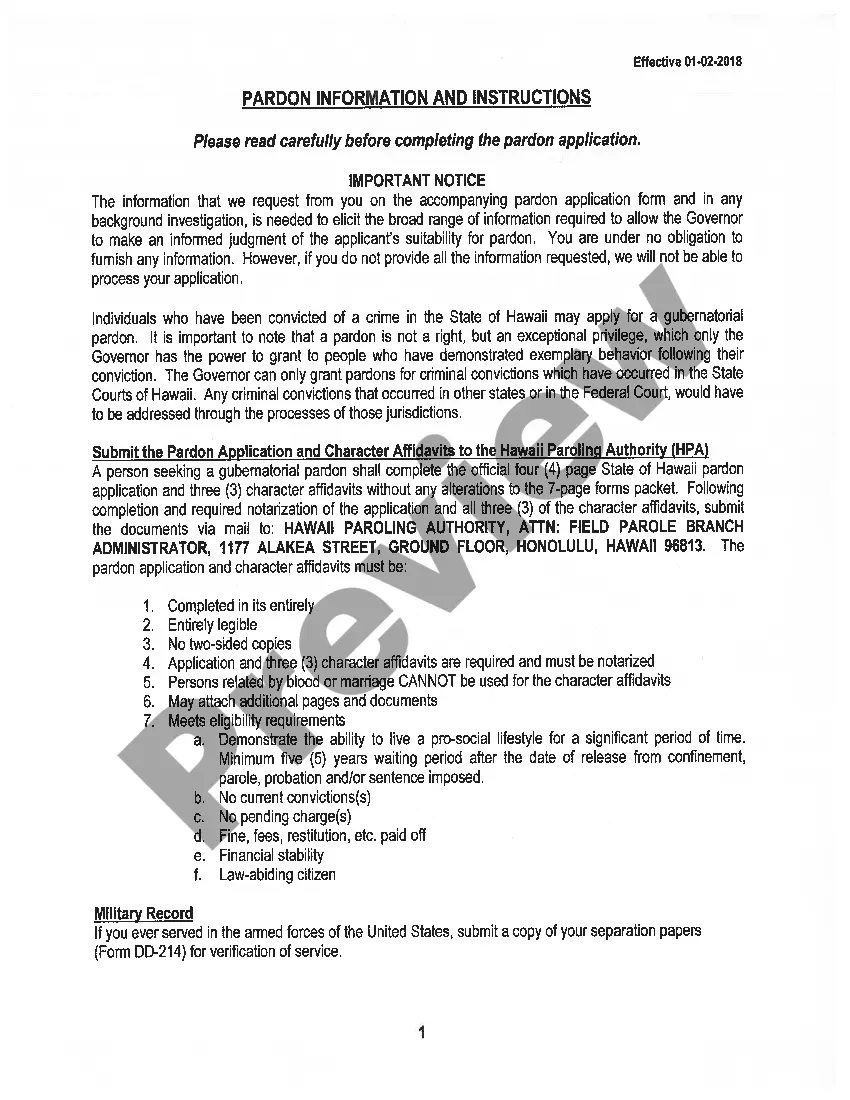
- Click the Preview button to inspect the content of the form.
Form popularity
FAQ
State of Michigan employees typically earn vacation days based on their years of service. Generally, employees begin with a base amount, which increases with continued employment, aligning with the Michigan Holiday Vacation Policy. It's essential for workers to understand this policy to effectively plan their time off. Utilizing vacation days can enhance work-life balance and overall job satisfaction.
Yes, an employer in Michigan can deny PTO requests based on their policy. While employees can request time off, the approval ultimately rests with the employer. It is prudent to refer to the Michigan Holiday Vacation Policy and your company’s specific guidelines for clarity.
Under the Fair Labor Standards Act, an employer does not have to offer paid vacation time to its employees. However, if you get paid vacation as a condition of employment, state law dictates how it is to be paid to you upon termination or during a layoff.
An employer will not be legally obligated to pay an employee for accrued, unused vacation time if the employer's policy does not address the issue. For additional information on final wage payments, please see the Paychecks topical analysis.
No Michigan law requires that employers: Pay premium pay to employees who work on holidays.
The law provides for the accrual of one hour of paid time off for every 35 hours of actual work. If your policy meets or exceeds the law's accrual criteria, you are all set. Michigan's law requires a carryover of unused benefits of up to 40 hours if the employer is on a pro-rata accrual method.
Withholding Vacation Pay Being required to payout vacation time, employers cannot withhold earned vacation time if the employer stated they do payout as company policy or in the employee contract.
According to the Bureau of Labor Statistics, on average American workers receive 10 days of paid time off per year, after they've completed one year of service. That time doesn't include sick days and holidays. While the number goes up or down a bit, depending on industry and region, 10 is the national average.
Holiday Pay, Sick Leave, and Paid VacationsNeither federal nor Michigan wage and hour laws require employers to pay you higher wages to work on weekends or holidays. They also do not require employers to give paid sick leave or vacation time.
Government guidance states: Holiday pay should be paid for the time when annual leave is taken. An employer cannot include an amount for holiday pay in the hourly rate (known as 'rolled-up holiday pay'). If a current contract still includes rolled-up pay, it needs to be re-negotiated.