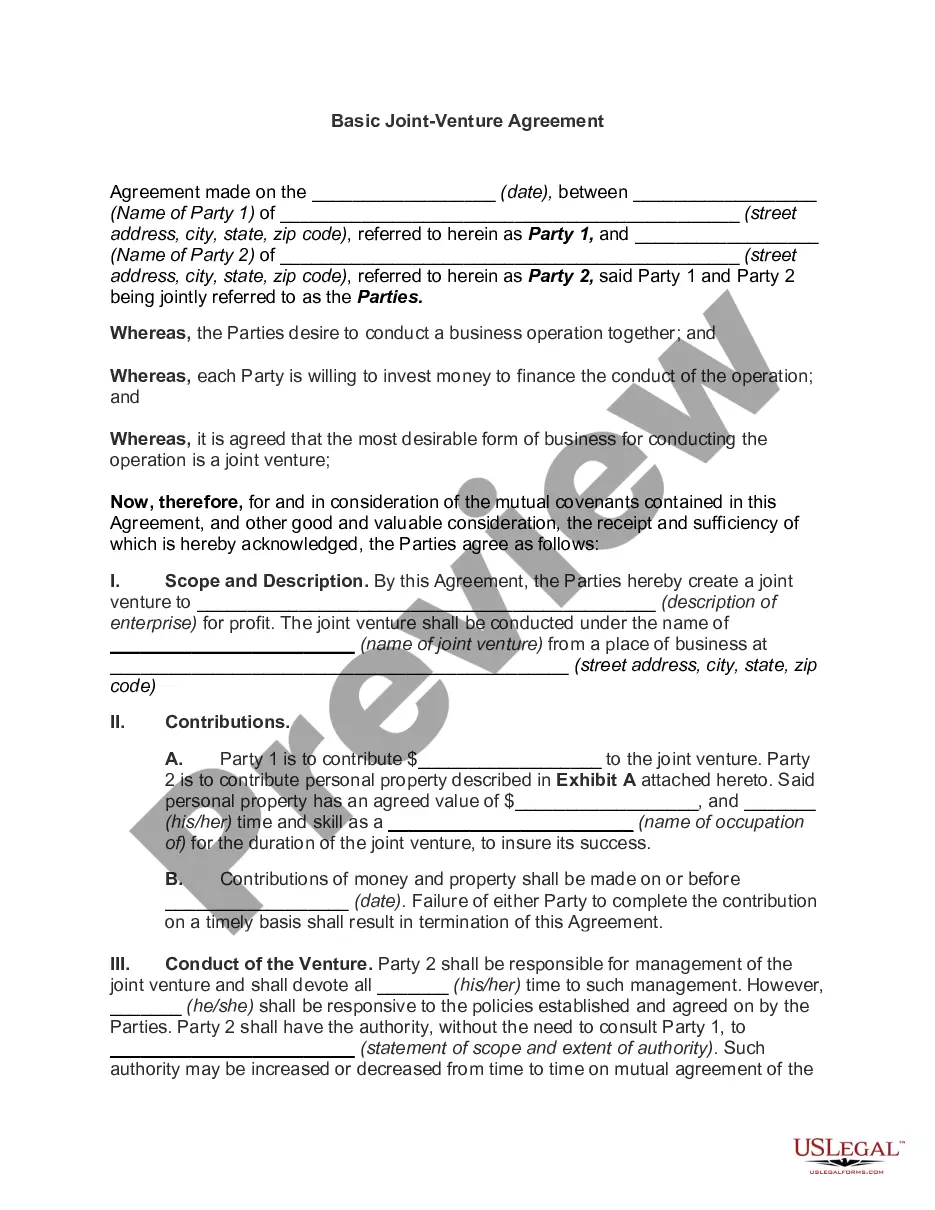
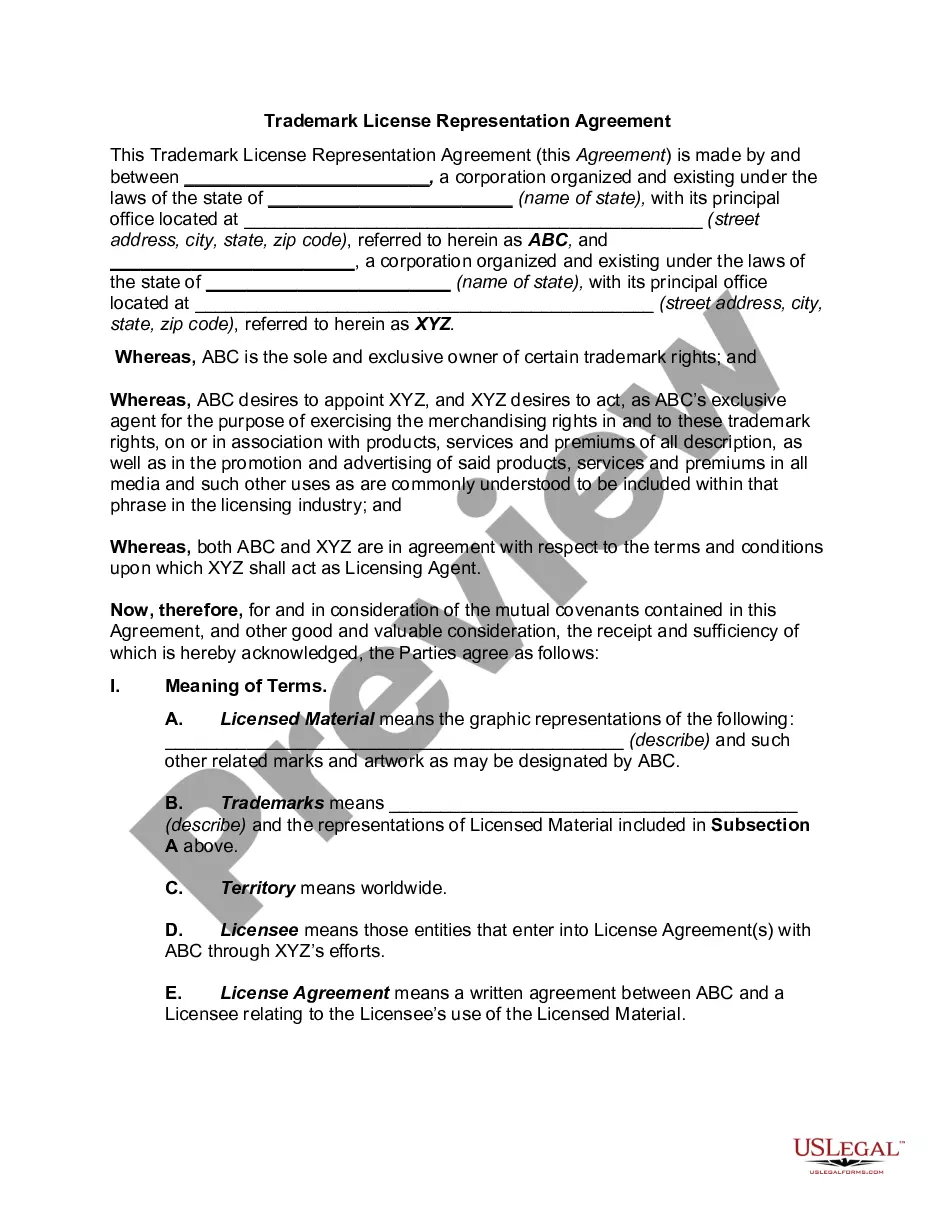
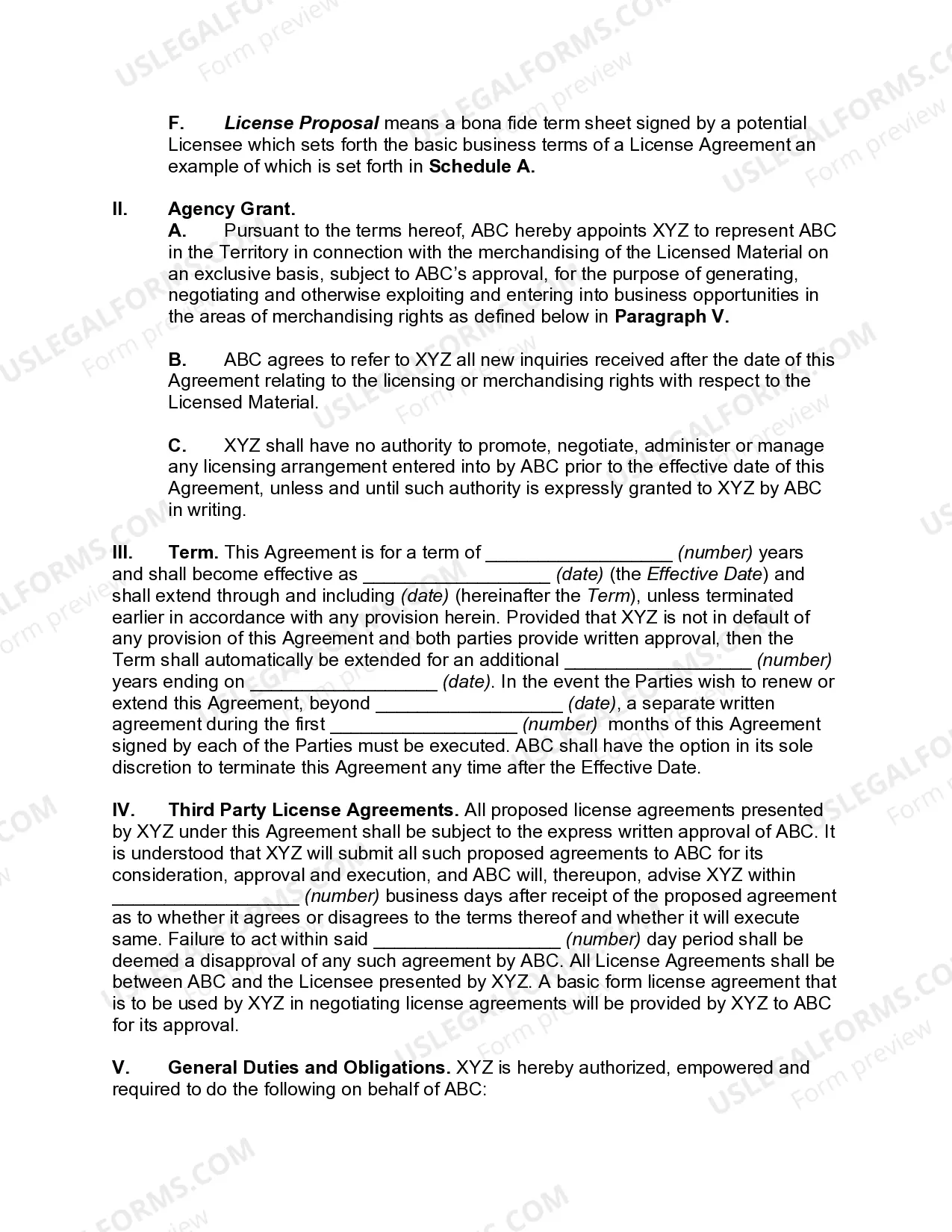
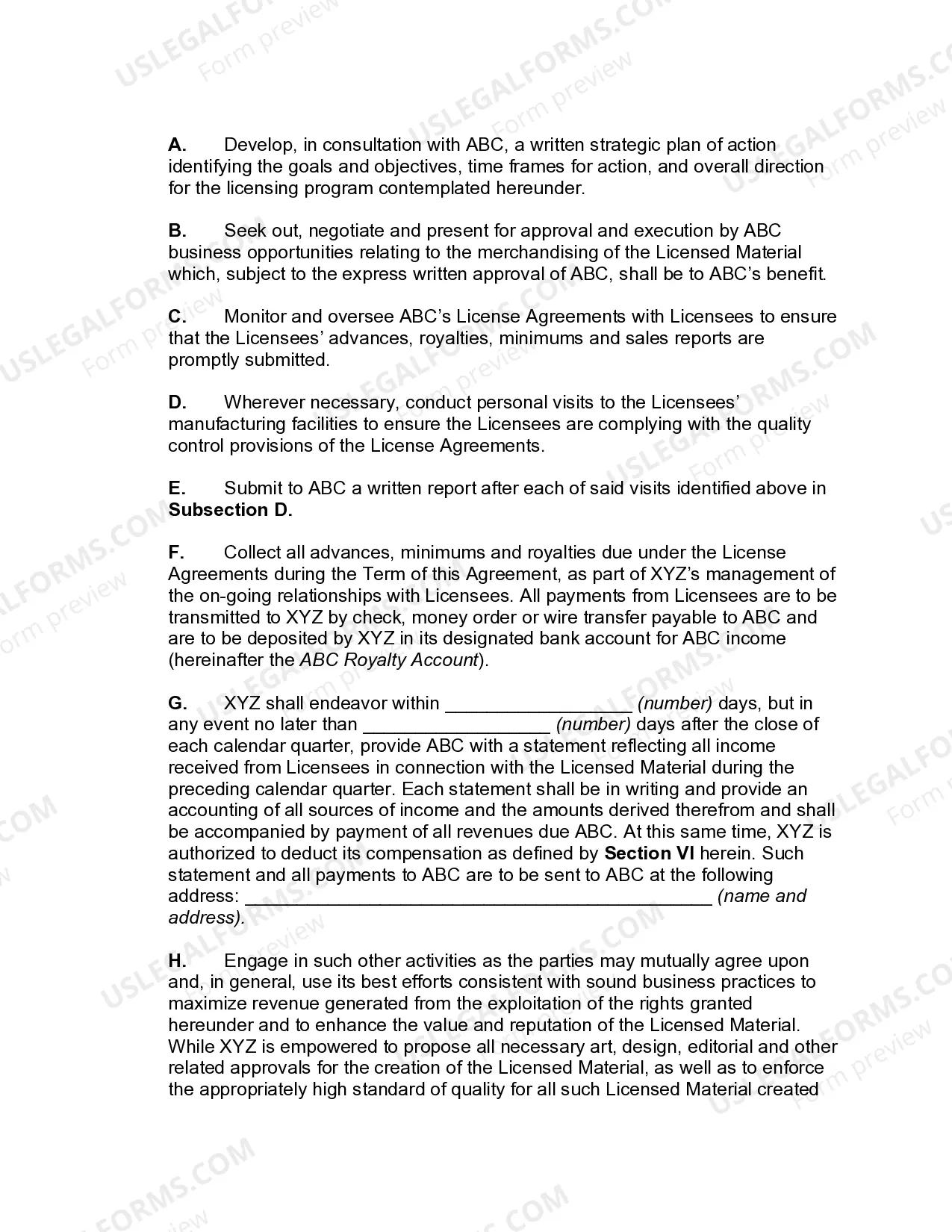
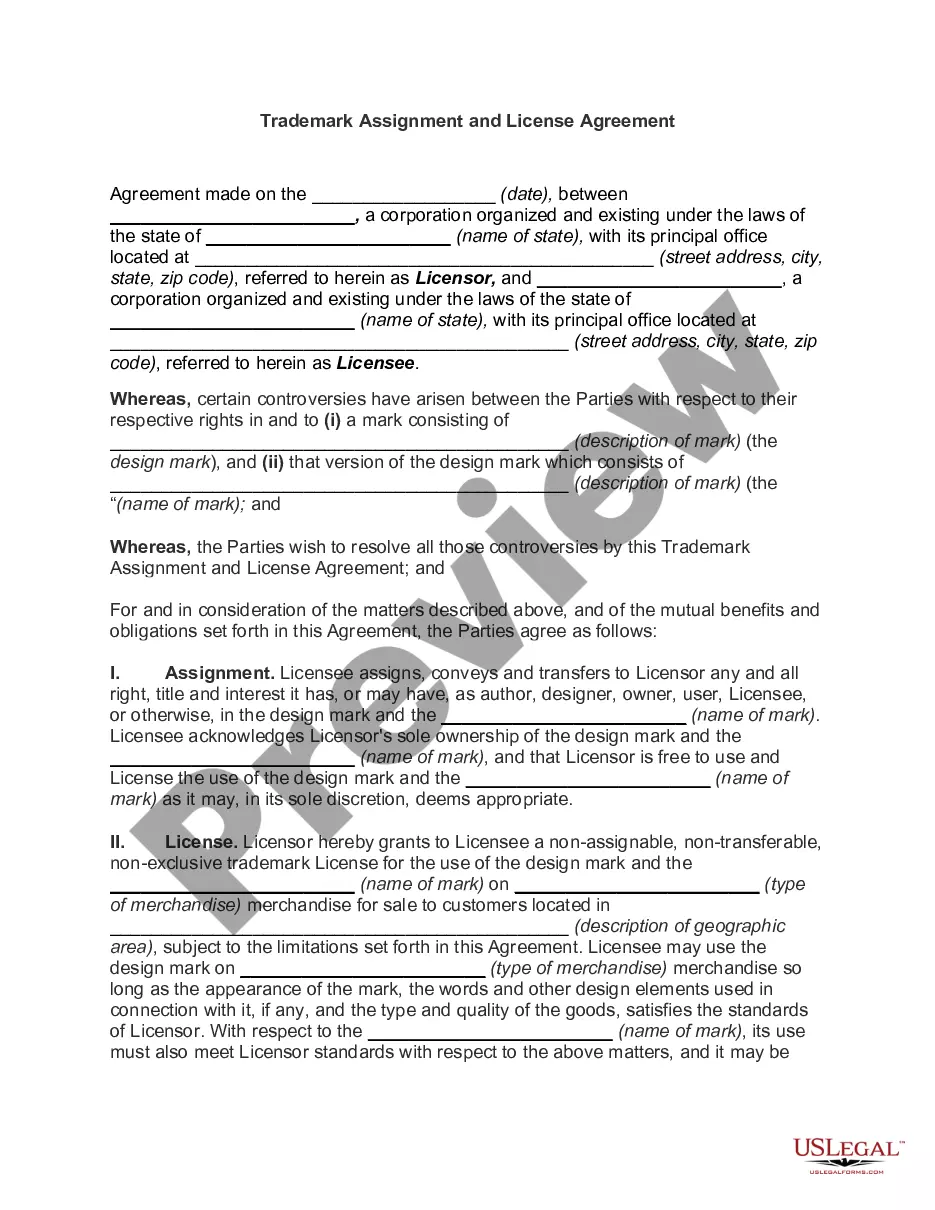
Michigan Trademark License Representation Agreement
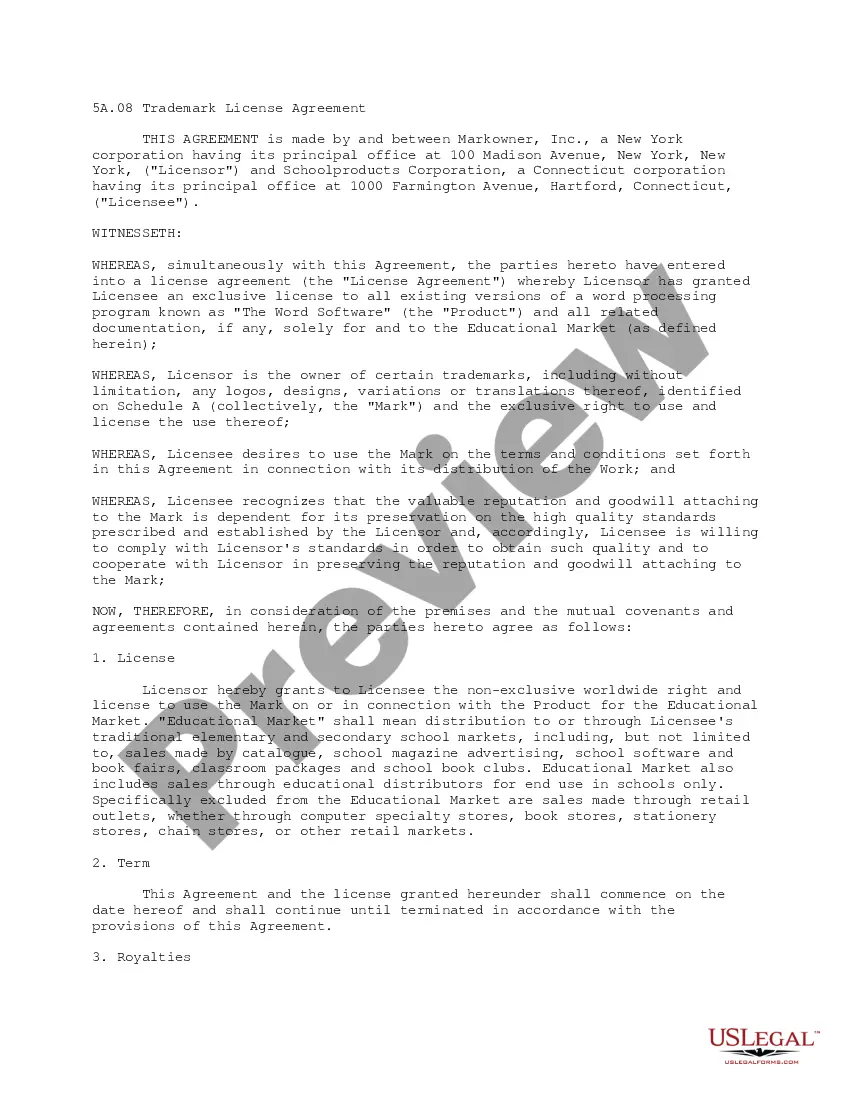
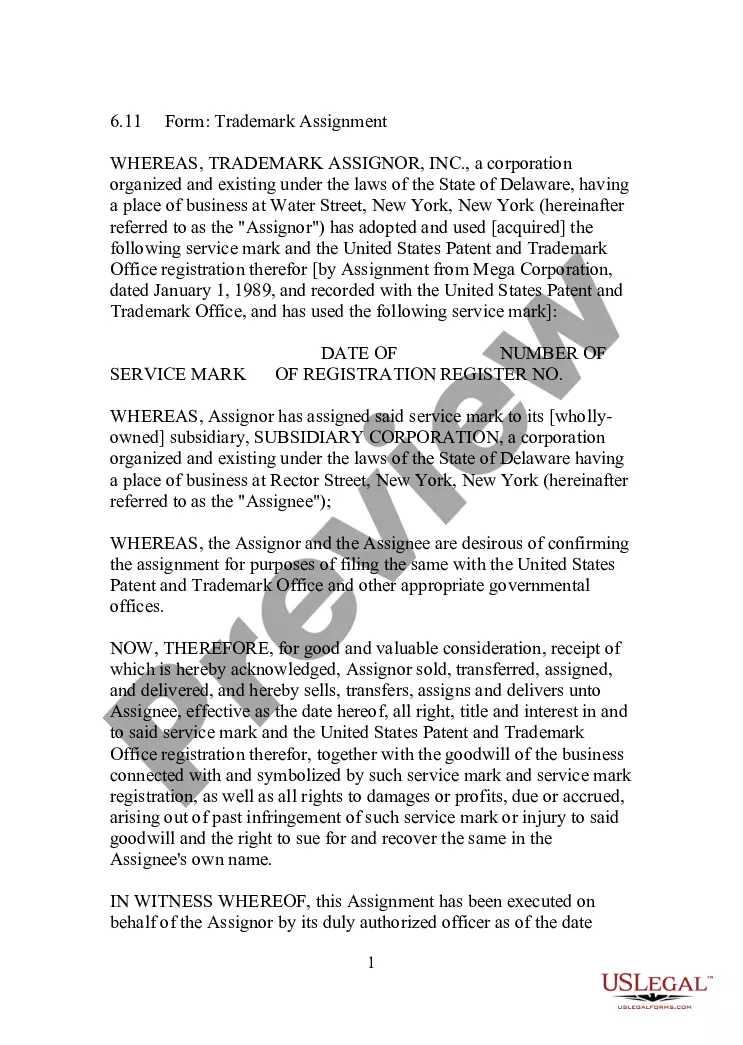
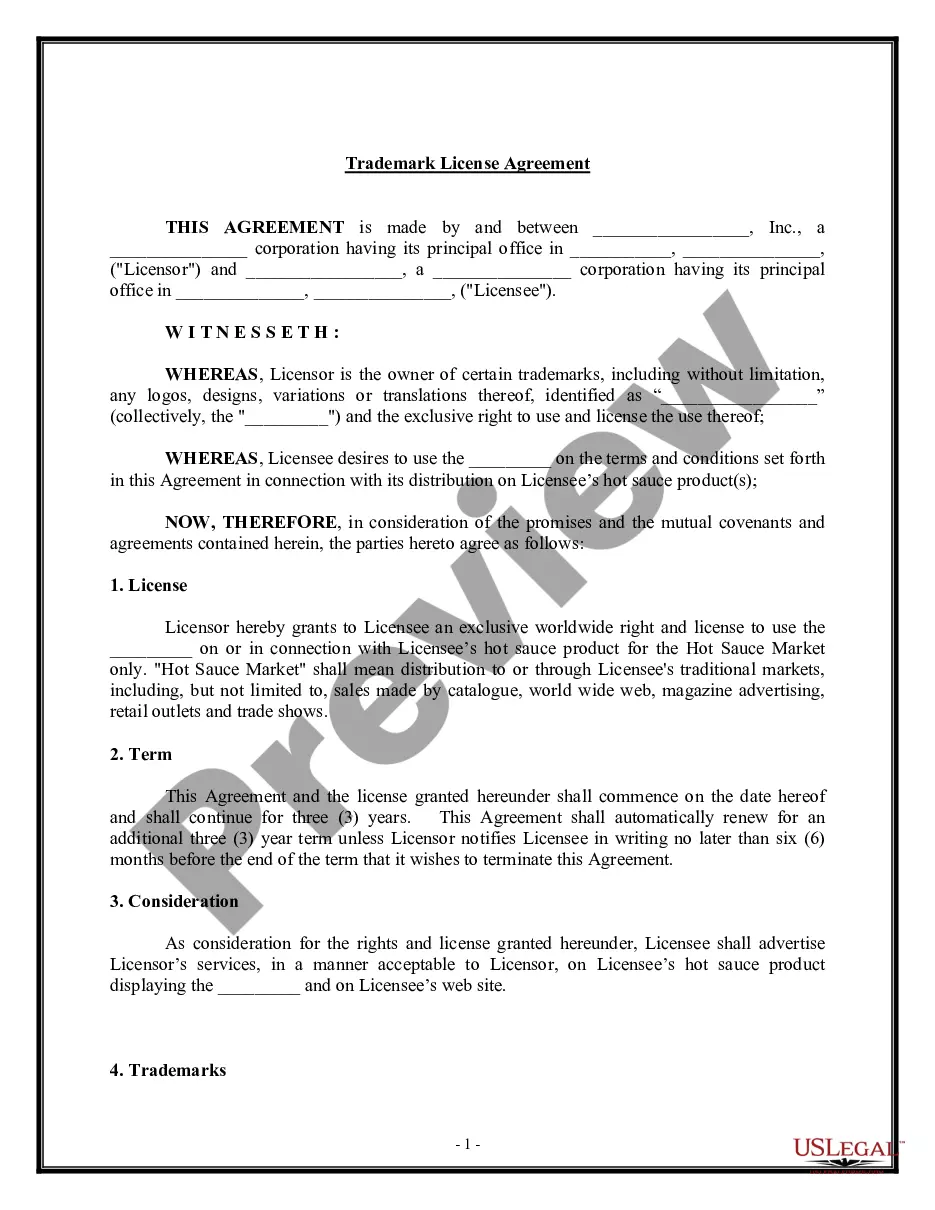
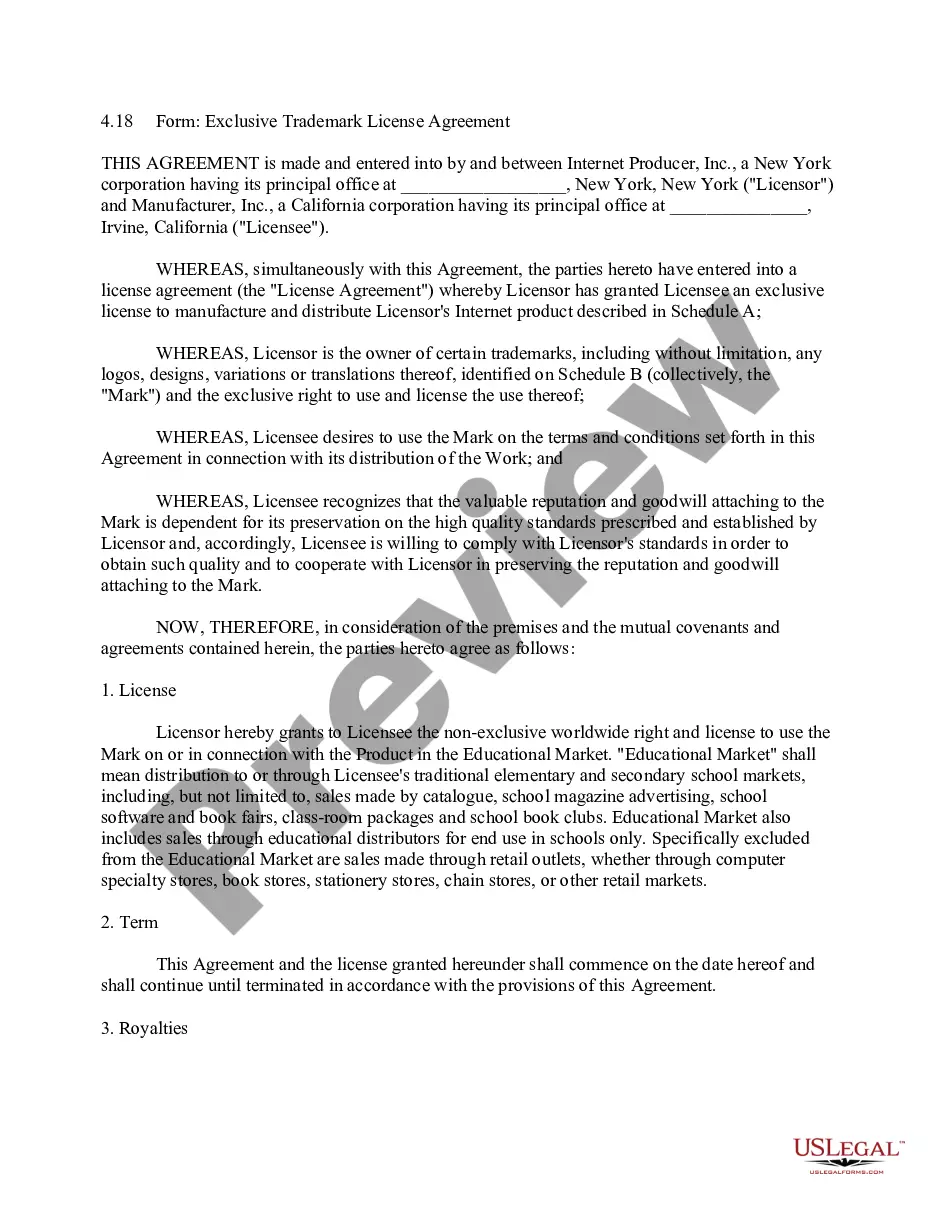
Description

Get your form ready online
Our built-in tools help you complete, sign, share, and store your documents in one place.
Make edits, fill in missing information, and update formatting in US Legal Forms—just like you would in MS Word.
Download a copy, print it, send it by email, or mail it via USPS—whatever works best for your next step.
Sign and collect signatures with our SignNow integration. Send to multiple recipients, set reminders, and more. Go Premium to unlock E-Sign.
If this form requires notarization, complete it online through a secure video call—no need to meet a notary in person or wait for an appointment.
We protect your documents and personal data by following strict security and privacy standards.

Make edits, fill in missing information, and update formatting in US Legal Forms—just like you would in MS Word.

Download a copy, print it, send it by email, or mail it via USPS—whatever works best for your next step.

Sign and collect signatures with our SignNow integration. Send to multiple recipients, set reminders, and more. Go Premium to unlock E-Sign.

If this form requires notarization, complete it online through a secure video call—no need to meet a notary in person or wait for an appointment.

We protect your documents and personal data by following strict security and privacy standards.
Looking for another form?
How to fill out Trademark License Representation Agreement?
If you wish to obtain, acquire, or print legal document templates, utilize US Legal Forms, the largest selection of legal forms available online.
Take advantage of the website's straightforward and user-friendly search to find the documents you require.
Numerous templates for business and personal purposes are organized by categories and states, or keywords. Use US Legal Forms to access the Michigan Trademark License Representation Agreement in just a few clicks.
Every legal document format you download is yours permanently. You have access to every form you downloaded within your account. Click on the My documents section and select a form to print or download again.
Be proactive and download, and print the Michigan Trademark License Representation Agreement with US Legal Forms. There are many professional and state-specific forms available for your business or personal needs.
- If you are already a US Legal Forms customer, Log In to your account and then click the Download button to obtain the Michigan Trademark License Representation Agreement.
- You can also access forms you have previously downloaded in the My documents tab of your account.
- If you are using US Legal Forms for the first time, follow the steps below.
- Step 1. Ensure you have selected the form for the correct area/region.
- Step 2. Utilize the Review option to assess the form's content. Don’t forget to read the description.
- Step 3. If you are dissatisfied with the form, make use of the Search field at the top of the screen to find other versions of the legal form format.
- Step 4. Once you have found the form you need, click on the Get now button. Select the pricing plan you prefer and provide your credentials to register for the account.
- Step 5. Complete the transaction. You can use your Visa or MasterCard or PayPal account to finalize the purchase.
- Step 6. Choose the format of the legal form and download it to your device.
- Step 7. Fill out, edit, and print or sign the Michigan Trademark License Representation Agreement.
Form popularity
FAQ
The licensing of the trademark allows the registered proprietor to let others use the mark without assigning the ownership of the mark. The proprietor can also put other limitations on the use of the mark through the terms that he puts into the licensing agreement.
A trademark licensing agreement is a legal contract between a trademark owner and another party that have agreed to use the trademark on preapproved terms decided between the contracting parties.
Precisely identifying which intellectual property will be the subject of the license is necessary to ensure both parties are on the same page and not exceeding their rights.Scope of the Grant.Exclusivity.Territory.Term.Compensation.Termination.Conclusion.
Types of Trade LicensesExclusive License: The licensee gains sole commercial rights to the trademark.Sole license: The licensee and licensor can use the trademark.Non-exclusive license: The licensee, licensor, and any outside individuals the licensor also assigns a license to can use the trademark.
The steps for making a license agreement are as follows:Download a template for a licensing agreement.Choose your role as the licensor or licensee.Define the license(s) in the agreement.Decide whether the license is exclusive or not.Settle the matter of fees and payment schedule.Add a renewal date and rules.More items...?
A licensing agreement is a legal contract between two parties, known as the licensor and the licensee. In a typical licensing agreement, the licensor grants the licensee the right to produce and sell goods, apply a brand name or trademark, or use patented technology owned by the licensor.
Key Takeaways. A licensing agreement allows one party (the licensee) to use and/or earn revenue from the property of the owner (the licensor). Licensing agreements generate revenues, called royalties, earned by a company for allowing its copyrighted or patented material to be used by another company.
The licensing of the trademark allows the registered proprietor to let others use the mark without assigning the ownership of the mark. The proprietor can also put other limitations on the use of the mark through the terms that he puts into the licensing agreement.
The contract stipulates the type of agreement, the length of the relationship, payments and royalties that are due and when, and the extent to which licensing is allowed. Licensing also allows both parties to retain control over certain facets of the deal, including exclusivity and how a product or service is marketed.
The steps for making a license agreement are as follows:Download a template for a licensing agreement.Choose your role as the licensor or licensee.Define the license(s) in the agreement.Decide whether the license is exclusive or not.Settle the matter of fees and payment schedule.Add a renewal date and rules.More items...?