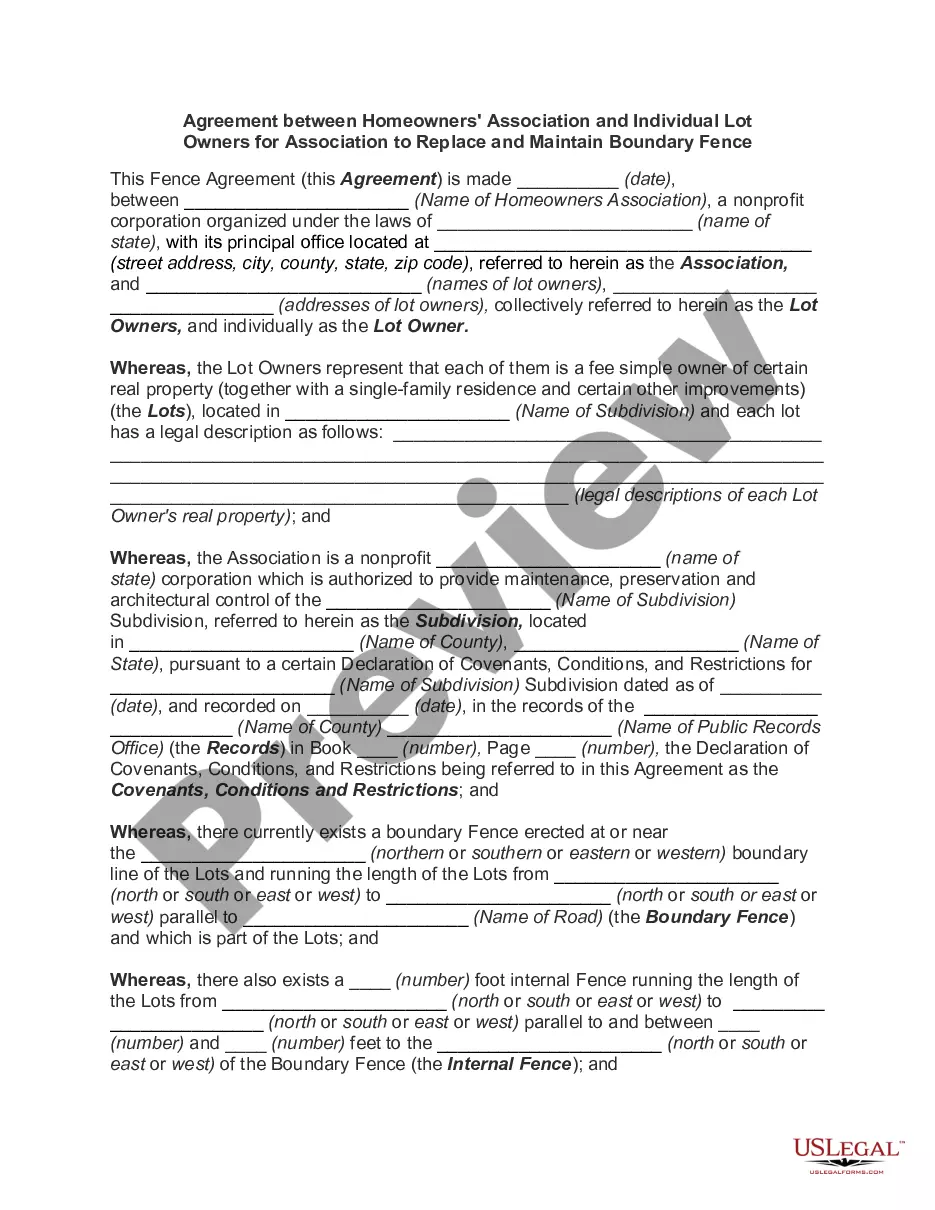
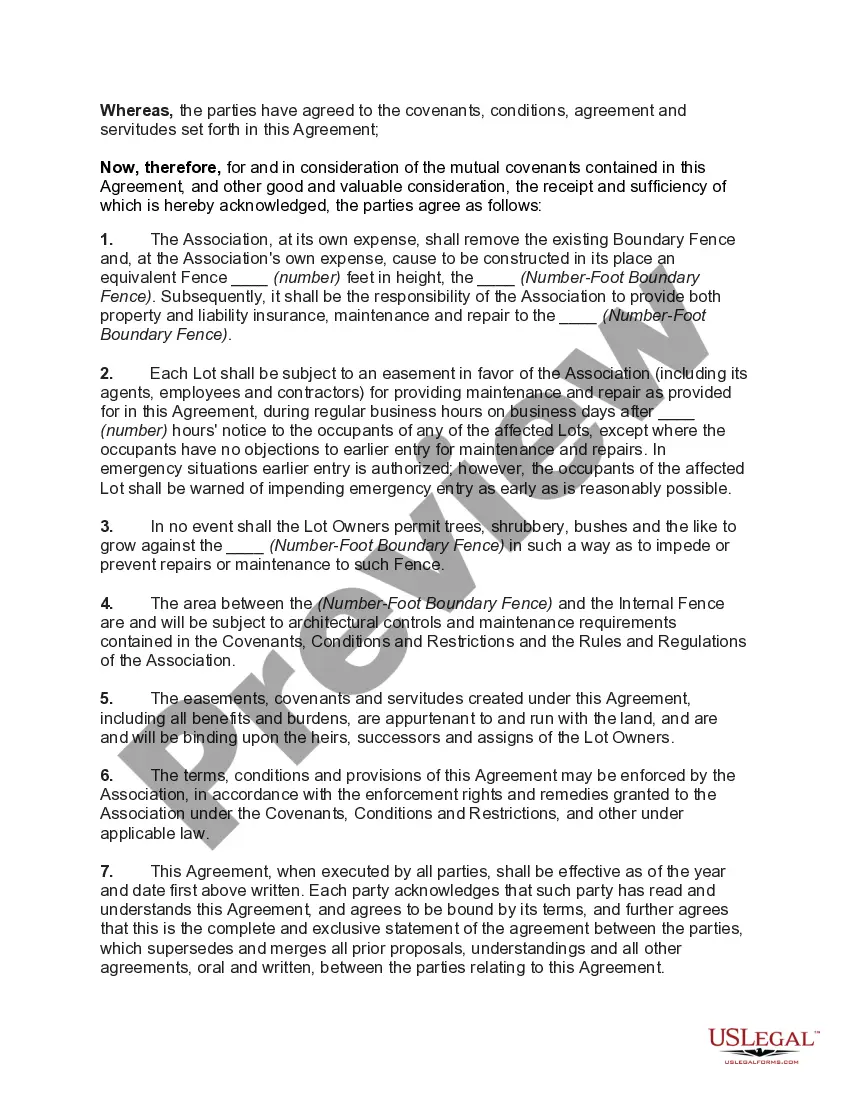
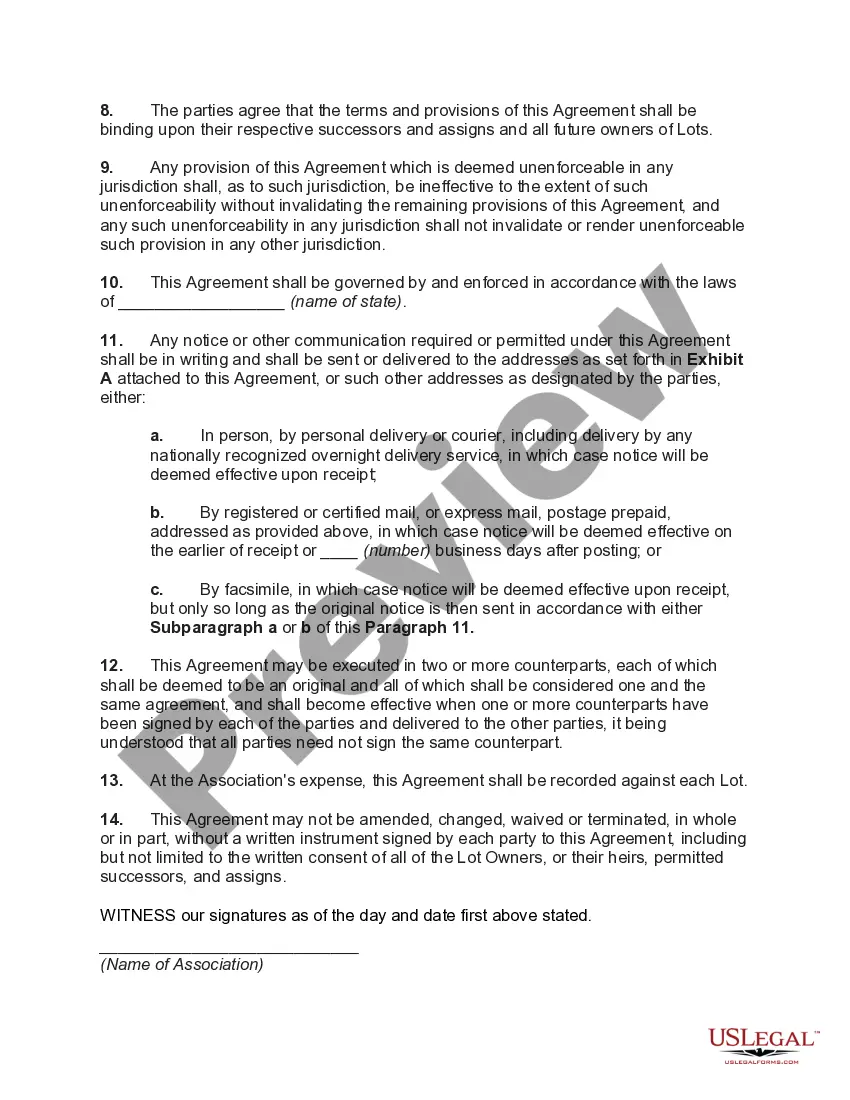
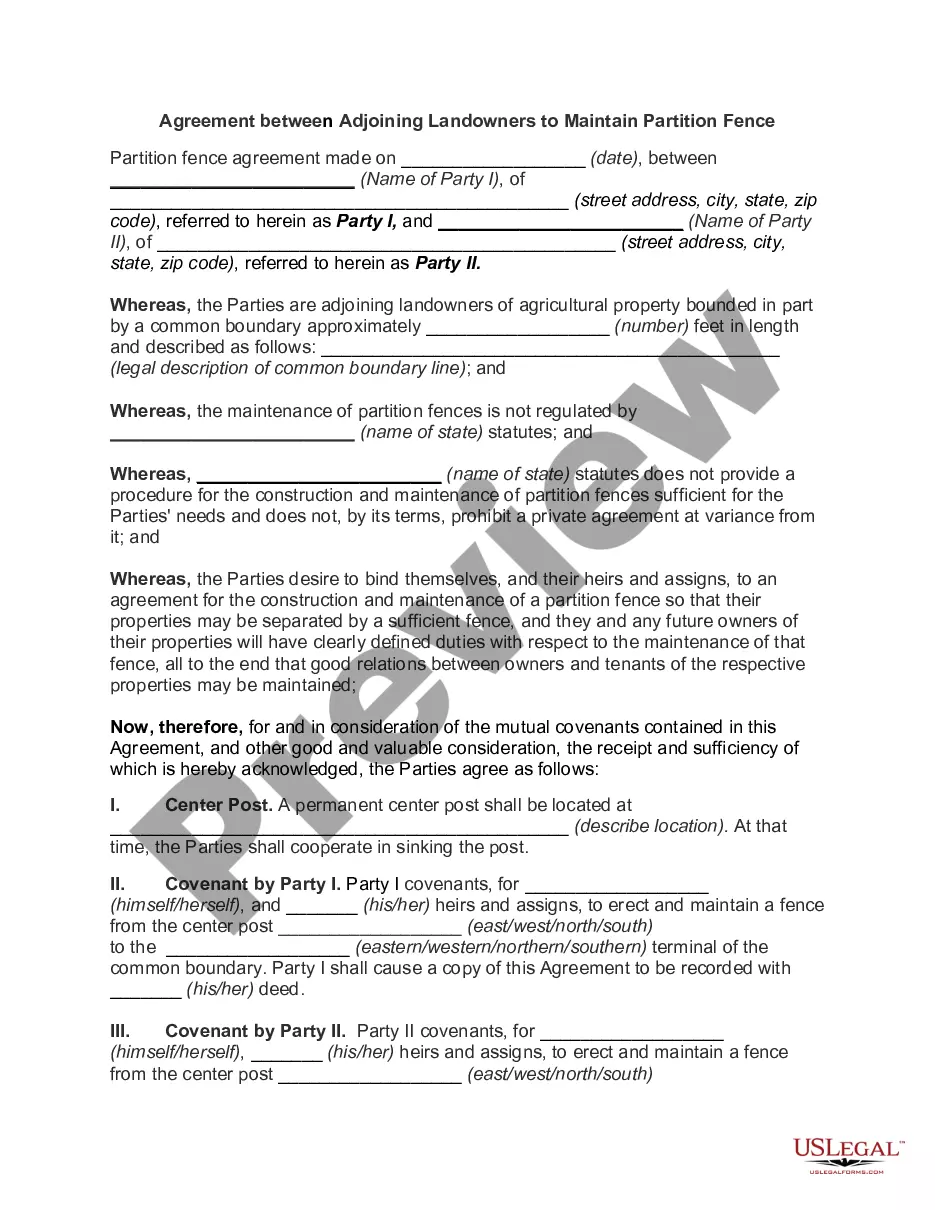
Michigan Agreement between Homeowners' Association and Individual Lot Owners for Association to Replace and Maintain Boundary Fence
Description
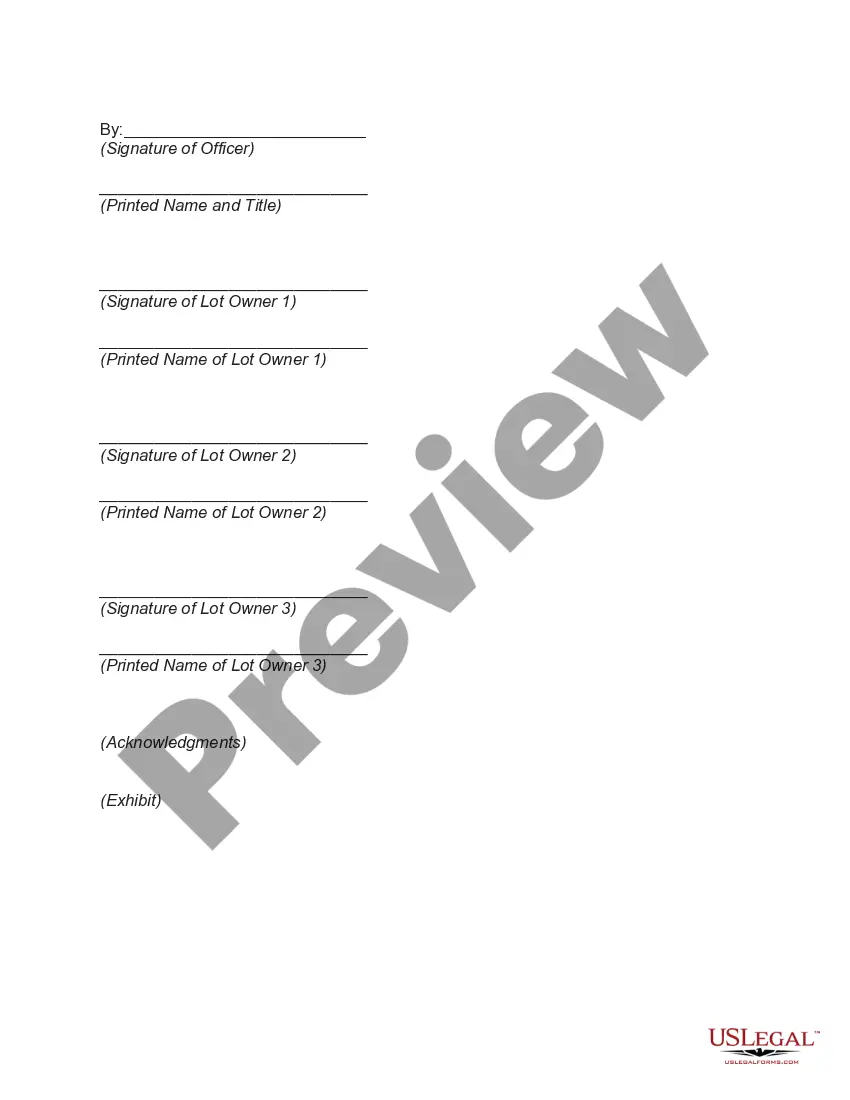
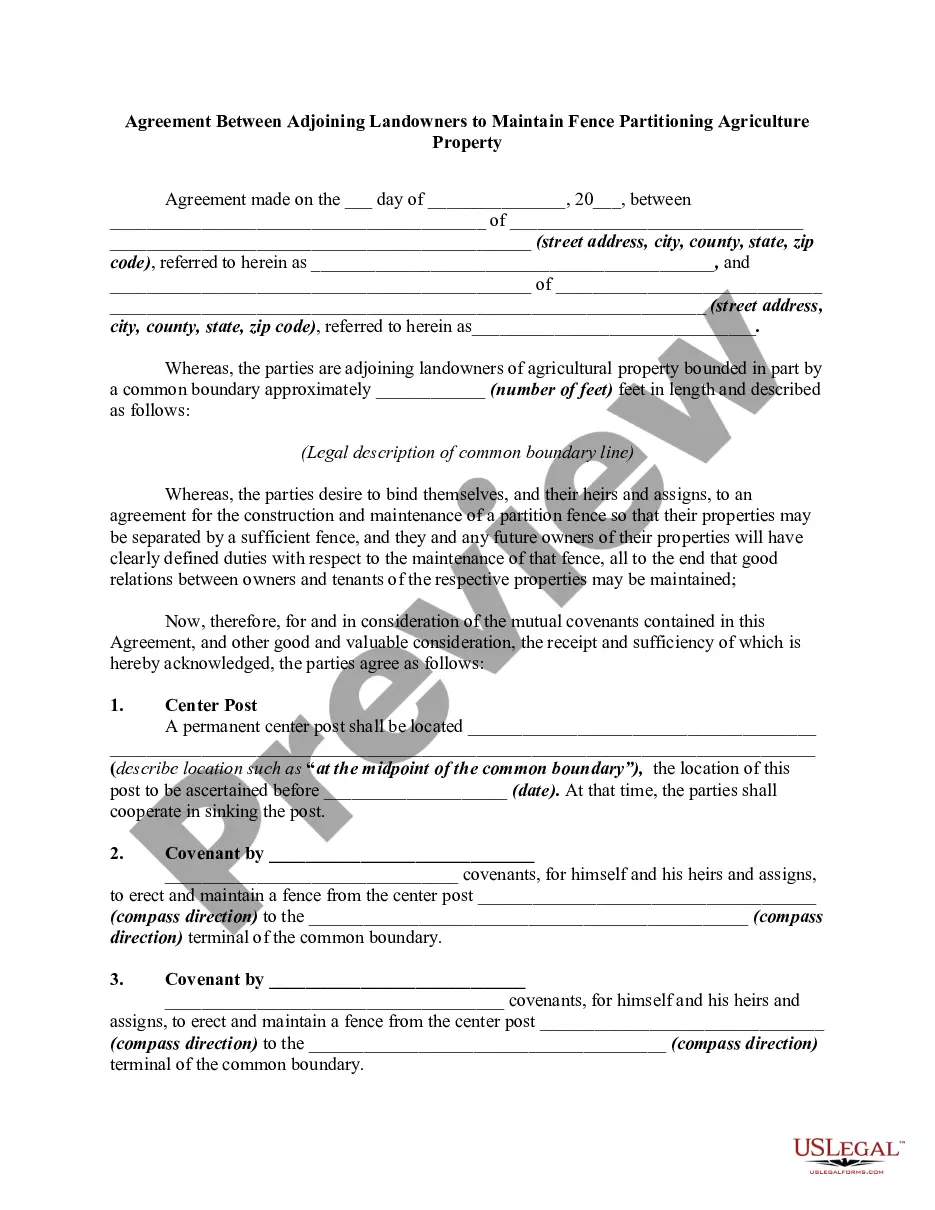
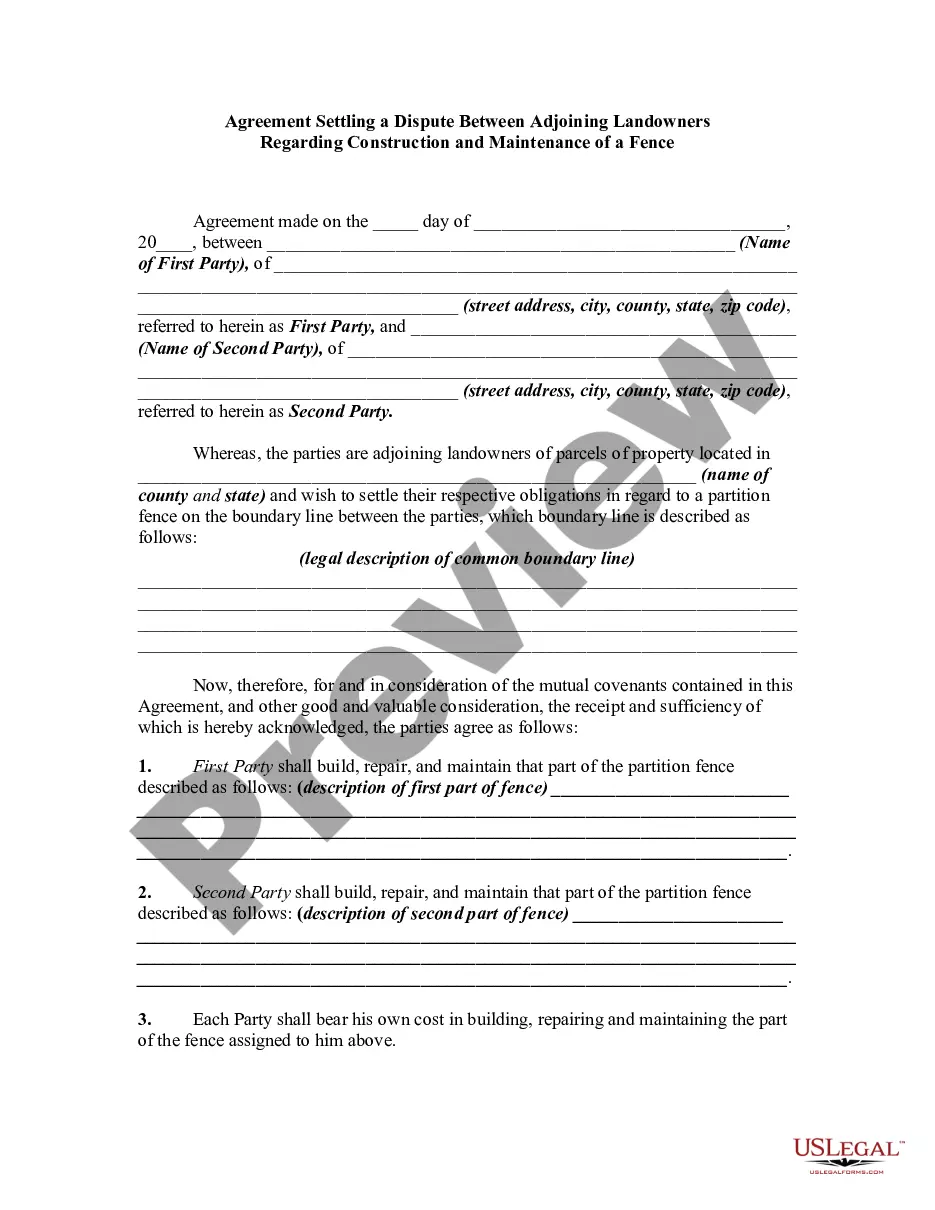
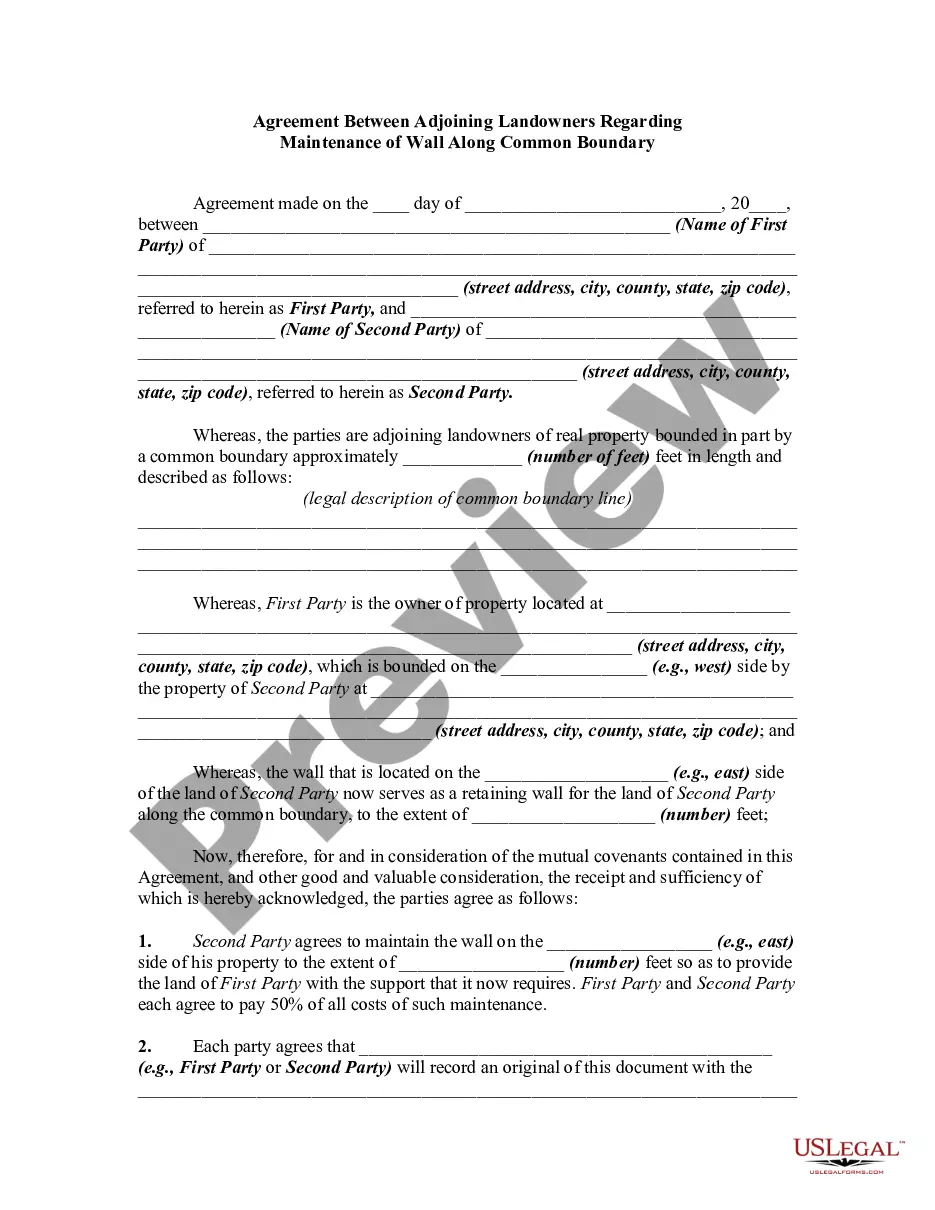
Get your form ready online
Our built-in tools help you complete, sign, share, and store your documents in one place.
Make edits, fill in missing information, and update formatting in US Legal Forms—just like you would in MS Word.
Download a copy, print it, send it by email, or mail it via USPS—whatever works best for your next step.
Sign and collect signatures with our SignNow integration. Send to multiple recipients, set reminders, and more. Go Premium to unlock E-Sign.
If this form requires notarization, complete it online through a secure video call—no need to meet a notary in person or wait for an appointment.
We protect your documents and personal data by following strict security and privacy standards.

Make edits, fill in missing information, and update formatting in US Legal Forms—just like you would in MS Word.

Download a copy, print it, send it by email, or mail it via USPS—whatever works best for your next step.

Sign and collect signatures with our SignNow integration. Send to multiple recipients, set reminders, and more. Go Premium to unlock E-Sign.

If this form requires notarization, complete it online through a secure video call—no need to meet a notary in person or wait for an appointment.

We protect your documents and personal data by following strict security and privacy standards.
Looking for another form?

How to fill out Agreement Between Homeowners' Association And Individual Lot Owners For Association To Replace And Maintain Boundary Fence?
If you need to finalize, download, or create authorized document templates, utilize US Legal Forms, the largest collection of legal forms available online.
Take advantage of the site's straightforward and user-friendly search to locate the documents you need.
Various templates for business and personal purposes are organized by categories and jurisdictions, or keywords.
Step 4. Once you find the form you need, click the Buy now button. Choose the pricing plan you prefer and enter your credentials to register for the account.
Step 5. Proceed with the purchase. You can use your credit card or PayPal account to finalize the transaction.
- Utilize US Legal Forms to acquire the Michigan Agreement between Homeowners' Association and Individual Lot Owners for Association to Replace and Maintain Boundary Fence with just a few clicks.
- If you are already a US Legal Forms user, sign in to your account and click the Acquire button to find the Michigan Agreement between Homeowners' Association and Individual Lot Owners for Association to Replace and Maintain Boundary Fence.
- You can also access forms you have previously downloaded in the My documents tab of your account.
- If you are using US Legal Forms for the first time, follow these directions below.
- Step 1. Ensure you have selected the form corresponding to your specific city/region.
- Step 2. Use the Review option to view the form's content. Be sure to read through the description.
- Step 3. If you are dissatisfied with the form, utilize the Search area at the top of the screen to discover alternative versions in the legal document format.
Form popularity
FAQ
You are not breaking the law per se when you don't adhere to the HOA rules or pay your HOA fees. Failure to do either of those, however, can still result in serious consequences e.g, fines, prohibitions on using the community facilities, and, ultimately, the establishment of liens on your home.
Covenants, conditions, and restrictions (also called "CC&Rs") are used by many "common interest" developments, including condominiums and co-ops, to regulate the use, appearance, and maintenance of property.
ContentsKnow Rules and Bylaws.Expect the Best from Your HOA.Communicate With Other Members.Stay Involved.Get Approval Before You Make Changes.Run for a Position on the Board.Pay Your Dues on Time.If You're Fined, Accept It and Pay.More items...
12 Guaranteed Ways To (Legally) Annoy Your HOAAsk For Copies Of Statements.Put Up Religious Statues Or Signs.Invest in Solar Panels or TV Satellites.Start Planting!Read The Contract.(Over)Use The Amenities.Hang Your Clothes.Catch Someone Else.More items...?4 days ago
Inconsistent, Arbitrary, or Capricious Enforcement. Even a validly enacted, substantively sound covenant can be nonetheless unenforceable if the HOA's enforcement is procedurally improper, or is conducted inconsistently or for an inappropriate purpose.
Yes, homeowners association bylaws are generally legally binding and enforceable. Typical provisions found in homeowner association bylaws include: Frequency of board meetings. Meeting and quorum requirements.
Here are six ways to effectively fight with your homeowners, co-op or condo association:Know the rules. You should have read all the government documents, including the rules and regulations, before you closed on your purchase.Respond in writing.Don't argue the rule.Know the penalties.
The CC&Rs set out the rules of the HOA community. They describe the requirements and limitations of what you can do with your property. The goal of the CC&Rs is to protect, preserve, and enhance property values in the community. The bylaws, on the other hand, govern how the HOA operates.
In many jurisdictions, depending on applicable state law, the standard rule is that 80 percent of the members of the community must vote in favor of dissolving the HOA. This is typically the case, unless the HOA documents state otherwise or provide for a different rule.