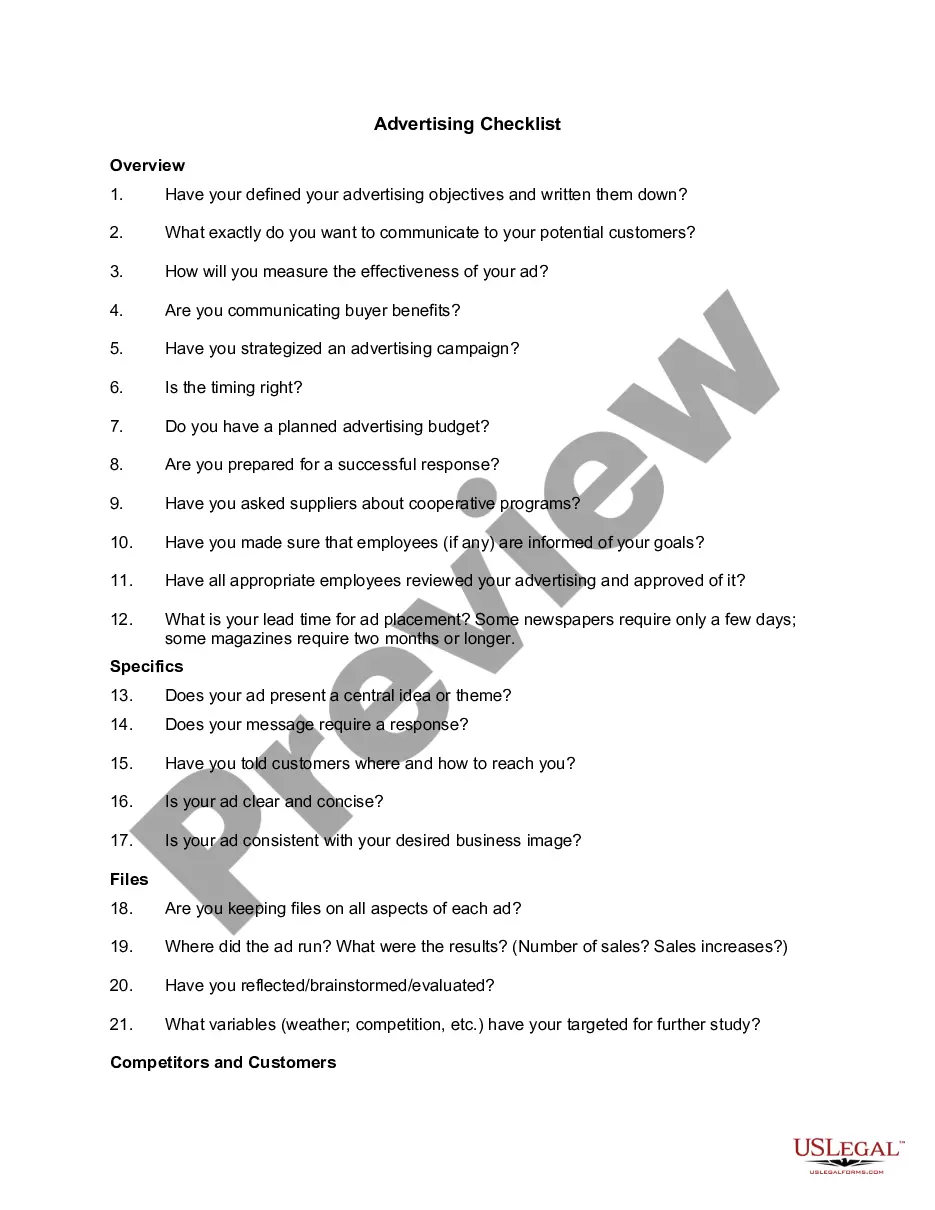
Michigan Advertising Checklist
Description
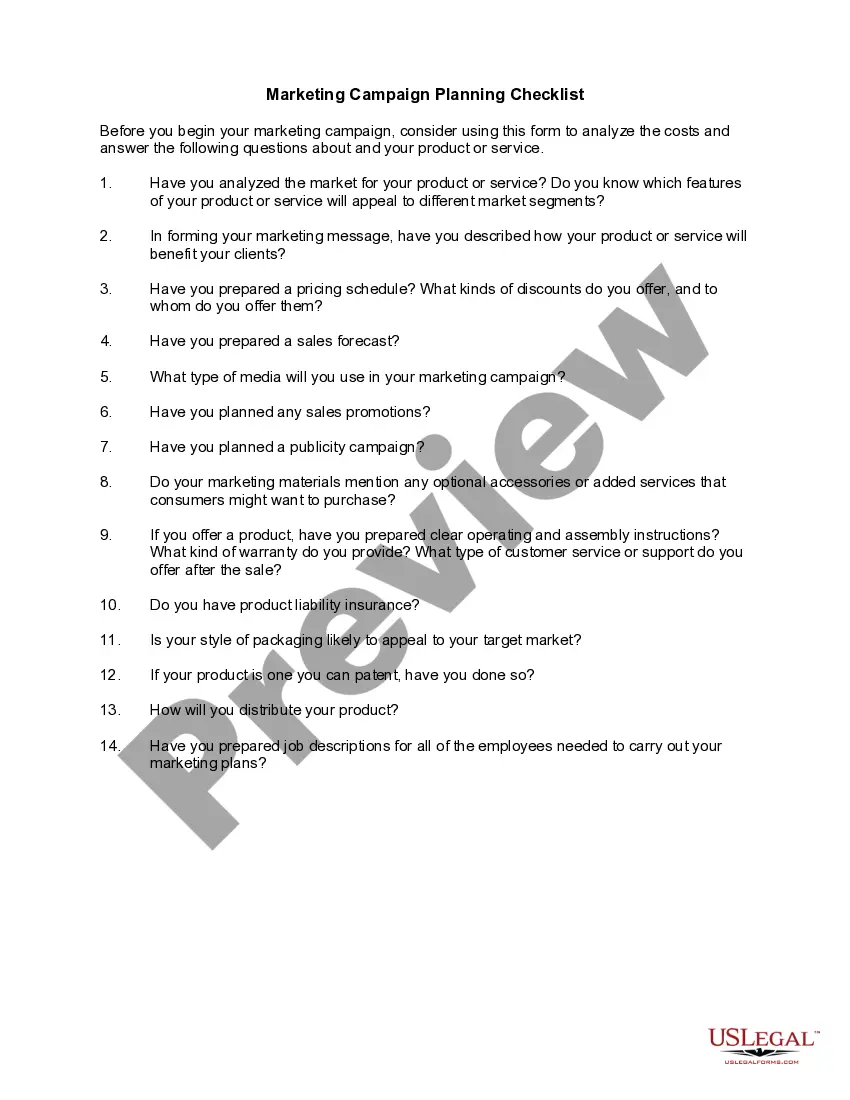
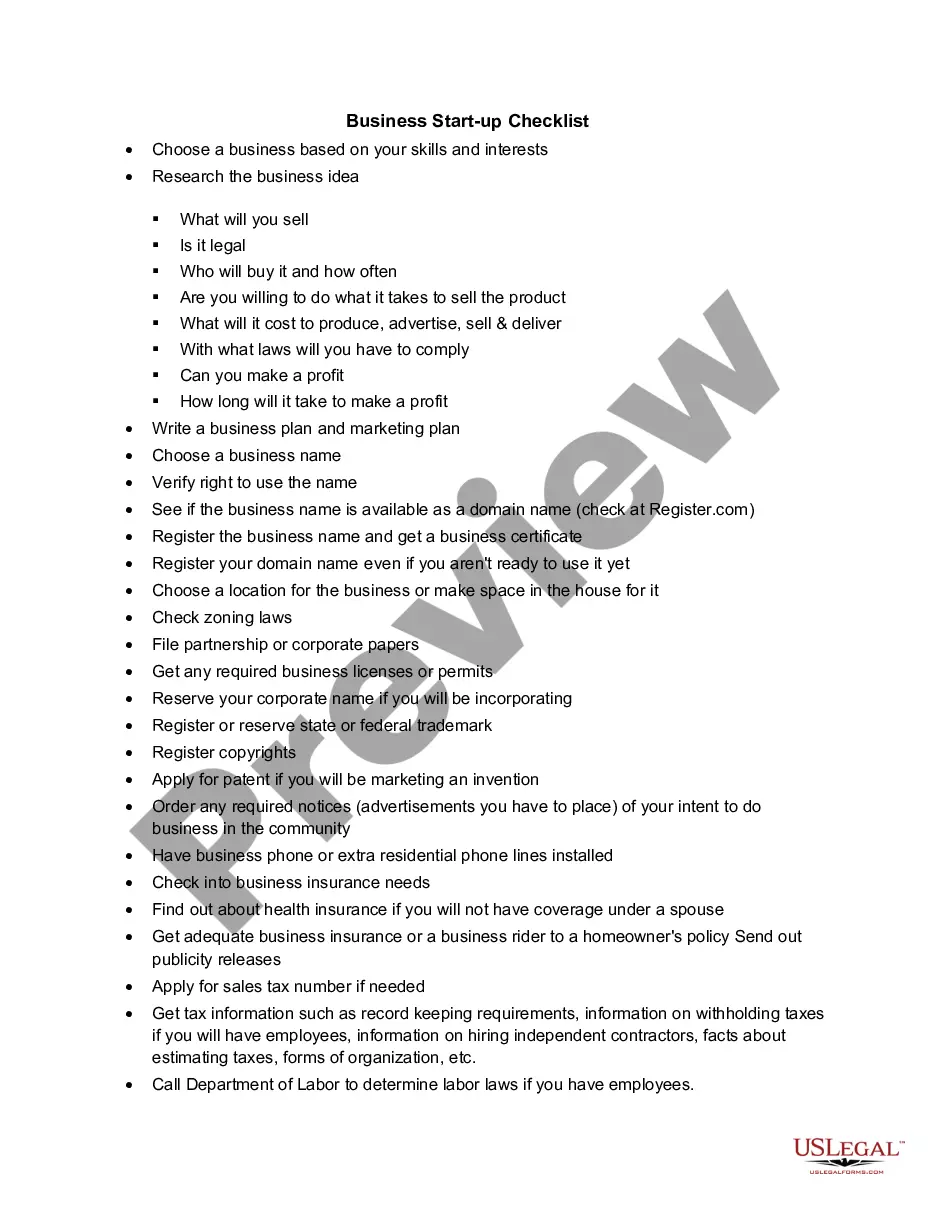
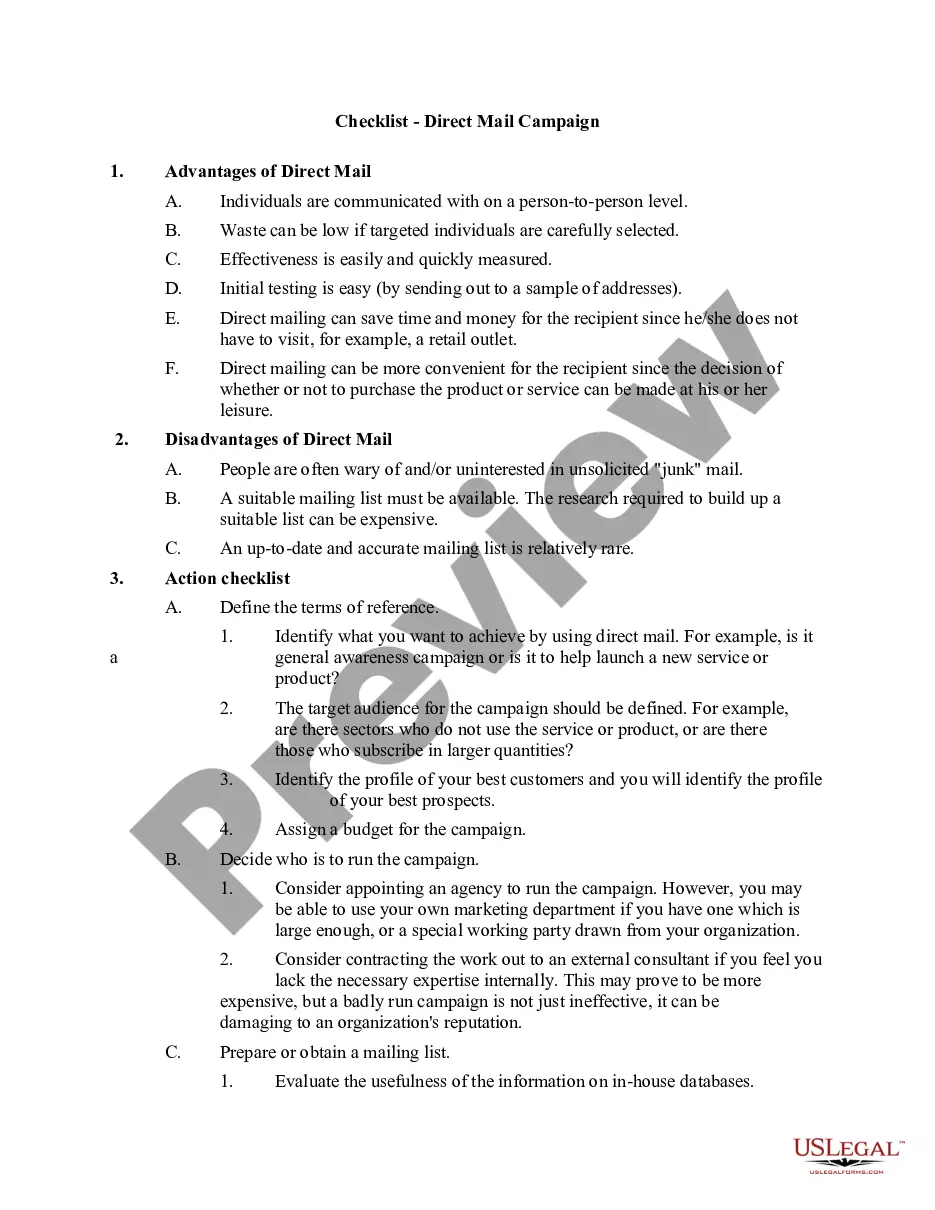
Get your form ready online
Our built-in tools help you complete, sign, share, and store your documents in one place.
Make edits, fill in missing information, and update formatting in US Legal Forms—just like you would in MS Word.
Download a copy, print it, send it by email, or mail it via USPS—whatever works best for your next step.
Sign and collect signatures with our SignNow integration. Send to multiple recipients, set reminders, and more. Go Premium to unlock E-Sign.
If this form requires notarization, complete it online through a secure video call—no need to meet a notary in person or wait for an appointment.
We protect your documents and personal data by following strict security and privacy standards.

Make edits, fill in missing information, and update formatting in US Legal Forms—just like you would in MS Word.

Download a copy, print it, send it by email, or mail it via USPS—whatever works best for your next step.

Sign and collect signatures with our SignNow integration. Send to multiple recipients, set reminders, and more. Go Premium to unlock E-Sign.

If this form requires notarization, complete it online through a secure video call—no need to meet a notary in person or wait for an appointment.

We protect your documents and personal data by following strict security and privacy standards.
Looking for another form?



How to fill out Advertising Checklist?
You can spend time online looking for the legal document template that fulfills the state and federal requirements you desire.
US Legal Forms offers a vast array of legal templates that are vetted by professionals.
It is easy to download or print the Michigan Advertising Checklist from your service.
To find another version of the template, utilize the Lookup field to locate the template that suits your needs and requirements.
- If you already possess a US Legal Forms account, you can Log In and click on the Obtain button.
- Then, you can fill out, modify, print, or sign the Michigan Advertising Checklist.
- Every legal document template you purchase is yours indefinitely.
- To get another copy of any purchased form, go to the My documents section and click on the corresponding button.
- If you are accessing the US Legal Forms website for the first time, follow the simple instructions below.
- First, confirm that you have selected the correct document template for the region/city of your choice.
- Review the form description to ensure you have chosen the accurate template.
Form popularity
FAQ
A broker's advertisement must include their legal name, the brokerage name, and the designation of licensed status, as stated in the Michigan Advertising Checklist. This information assures clients of the broker's legitimacy and professionalism. Furthermore, including clear contact details helps potential clients connect easily, fostering better customer relations.
When crafting an advertisement, it is essential to include your name, contact information, and the name of your brokerage, adhering to the Michigan Advertising Checklist. Clear and relevant property details will also attract potential clients, so include key selling points. A visually appealing format can help capture attention, but always prioritize clarity and honesty.
To file a sole proprietorship in Michigan, you need to name your business and ensure it complies with state regulations outlined in the Michigan Advertising Checklist. Begin by registering your business name with the county clerk's office. Additionally, if you plan to use any names other than your legal name, you must file for a 'Doing Business As' (DBA) certificate.
An agent's advertisements must follow the Michigan Advertising Checklist to ensure compliance with legal standards. Essential elements include the agent's name, the name of their brokerage, and a clear design that avoids false or misleading information. It's crucial to ensure the advertisement prominently features the brokerage's information, as this builds trust and maintains transparency with potential clients.
In real estate advertising, avoid using language that could be considered discriminatory. Words that imply a preference for certain groups such as 'family-friendly' or phrases that suggest exclusivity should be excluded. Additionally, terms that could mislead consumers, such as 'best' or 'unique,' should be used cautiously. Consulting the Michigan Advertising Checklist can help you navigate these restrictions effectively.
To write an advertisement effectively, begin by defining your target audience. Next, outline the key points you want to communicate, focusing on the benefits of your product or service. After that, craft a strong headline that grabs attention. Finally, review your advertisement against the Michigan Advertising Checklist to ensure it meets all legal requirements and market expectations.
In Michigan, advertising in real estate must abide by both state and federal regulations. Key rules include identifying your brokerage, avoiding deceptive practices, and ensuring that all advertisements are clear and not misleading. Following the Michigan Advertising Checklist can help real estate professionals stay compliant with these legal standards while effectively promoting properties.
The basic rule of advertising in real estate is honesty. All claims made in advertisements must be accurate and not misleading. This ensures that potential buyers receive a clear understanding of what a property offers and helps to establish trust. A Michigan Advertising Checklist can guide you in creating truthful and compliant real estate advertisements.