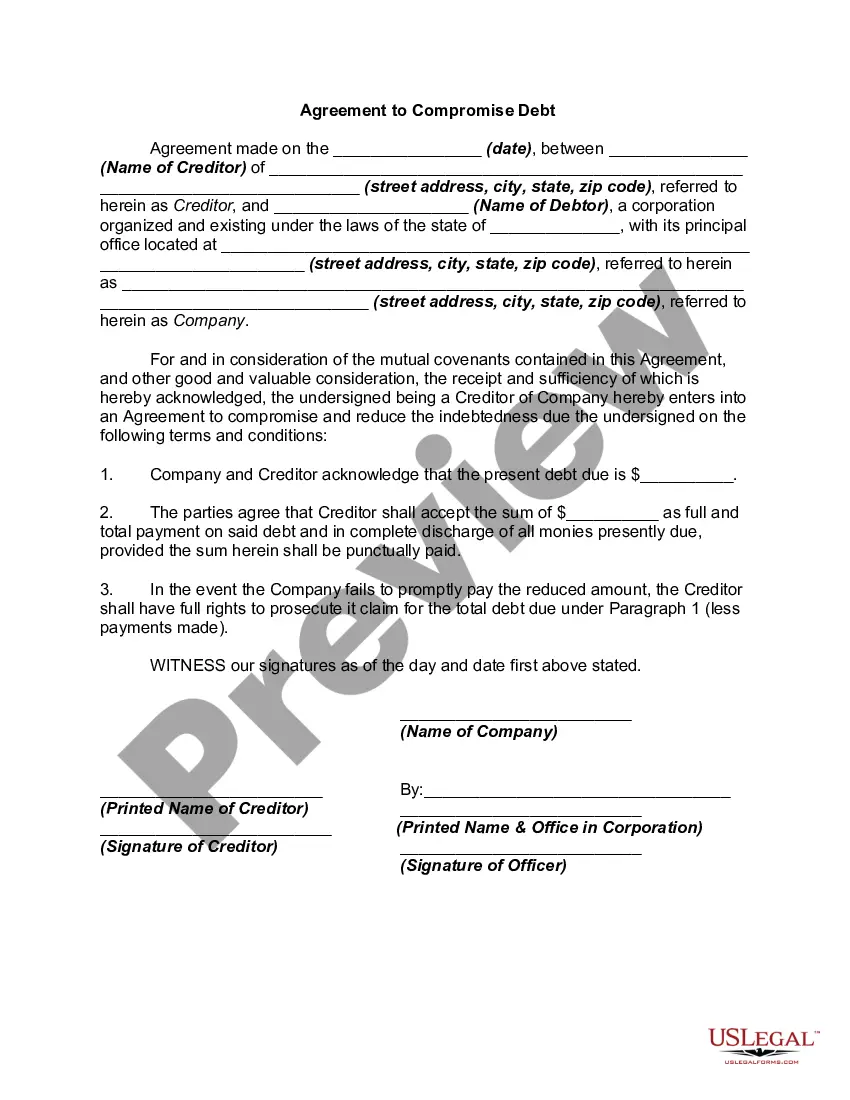
Michigan Agreement to Compromise Debt
Description
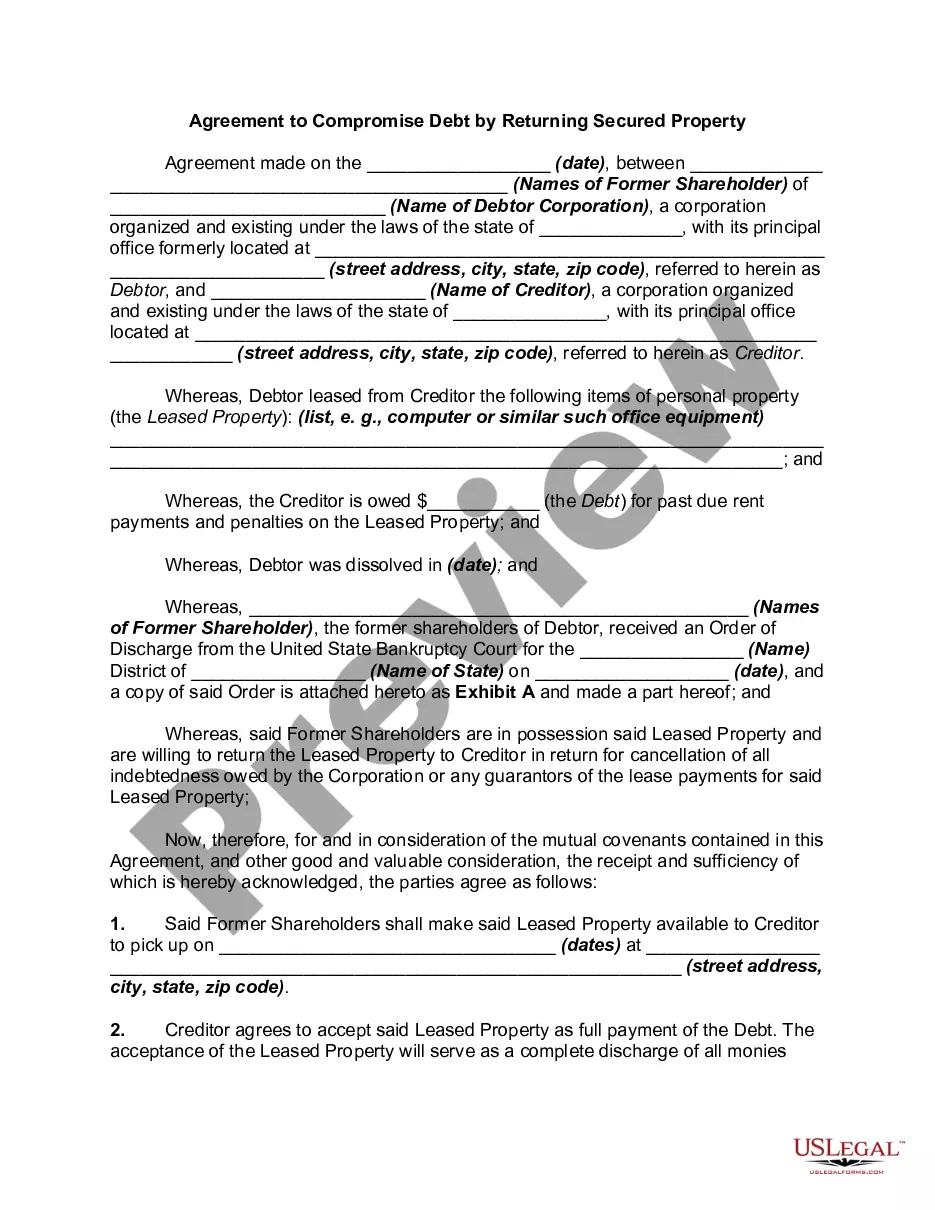
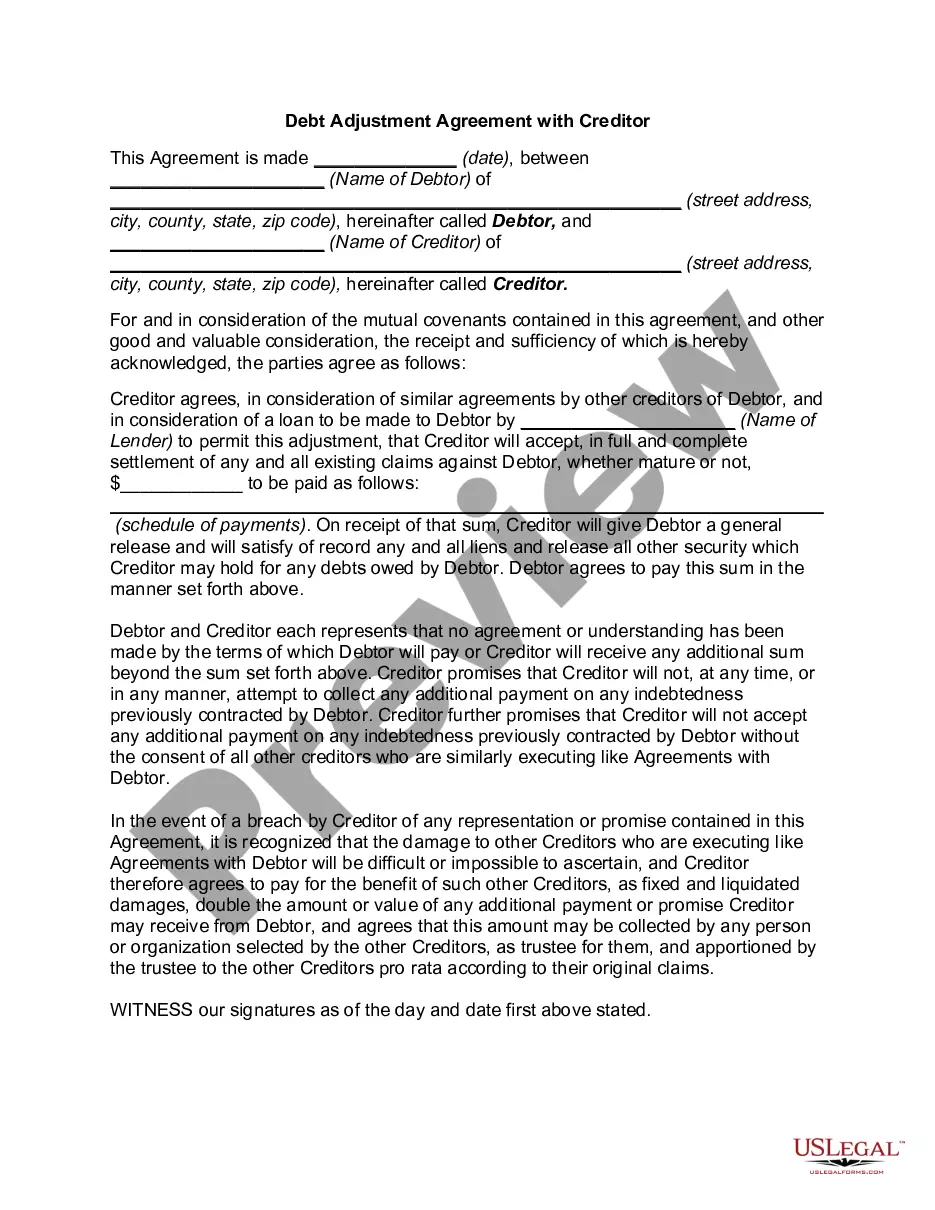
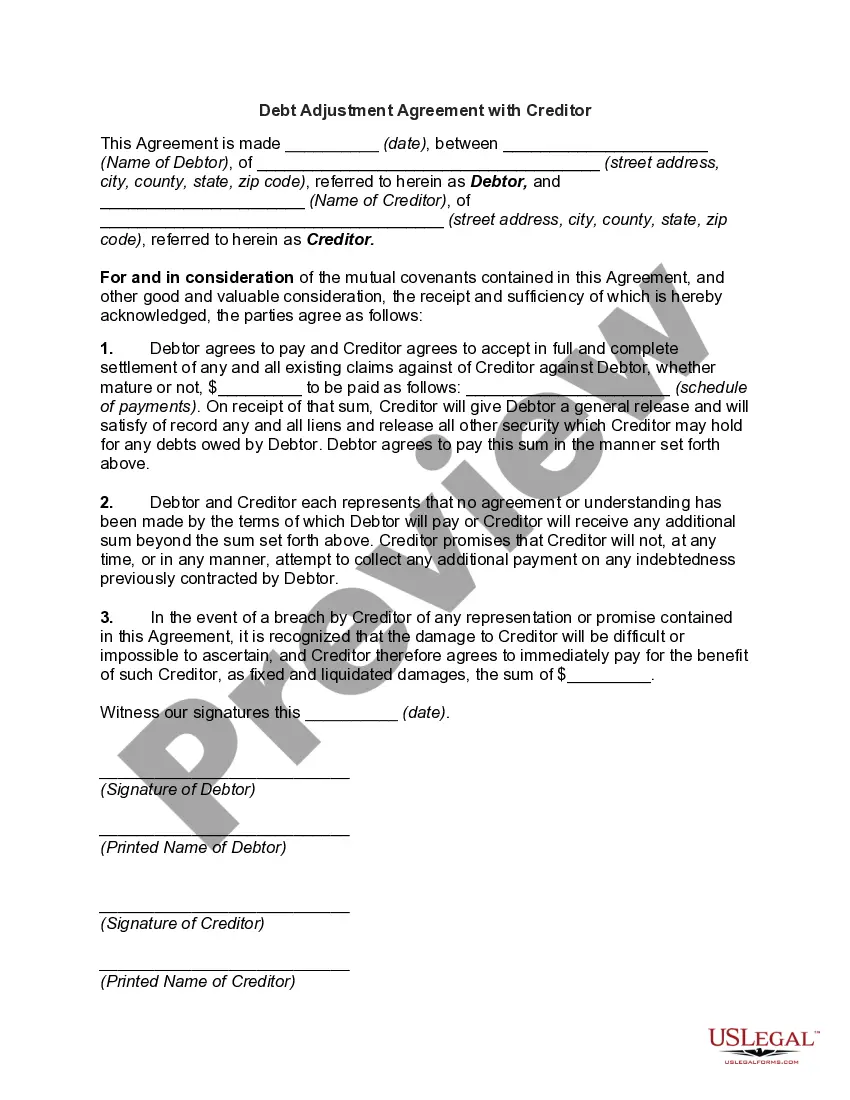
Get your form ready online
Our built-in tools help you complete, sign, share, and store your documents in one place.
Make edits, fill in missing information, and update formatting in US Legal Forms—just like you would in MS Word.
Download a copy, print it, send it by email, or mail it via USPS—whatever works best for your next step.
Sign and collect signatures with our SignNow integration. Send to multiple recipients, set reminders, and more. Go Premium to unlock E-Sign.
If this form requires notarization, complete it online through a secure video call—no need to meet a notary in person or wait for an appointment.
We protect your documents and personal data by following strict security and privacy standards.

Make edits, fill in missing information, and update formatting in US Legal Forms—just like you would in MS Word.

Download a copy, print it, send it by email, or mail it via USPS—whatever works best for your next step.

Sign and collect signatures with our SignNow integration. Send to multiple recipients, set reminders, and more. Go Premium to unlock E-Sign.

If this form requires notarization, complete it online through a secure video call—no need to meet a notary in person or wait for an appointment.

We protect your documents and personal data by following strict security and privacy standards.
Looking for another form?



How to fill out Agreement To Compromise Debt?
Are you currently in a circumstance where you require documents for professional or personal purposes nearly every day? There is a wide array of legal document templates available online, but finding reliable versions is not simple.
US Legal Forms offers an extensive collection of template formats, including the Michigan Agreement to Compromise Debt, which is designed to comply with both state and federal regulations.
If you are already familiar with the US Legal Forms website and possess an account, just Log In. After that, you can download the Michigan Agreement to Compromise Debt template.
- Locate the template you require and ensure it is for the correct city/region.
- Utilize the Preview feature to examine the document.
- Review the description to confirm that you have selected the correct template.
- If the template does not align with what you are looking for, use the Search field to find the template that fulfills your needs and requirements.
- Once you identify the correct template, click Purchase now.
- Select the payment plan you want, fill out the necessary information to create your account, and complete the transaction using your PayPal or credit card.
- Choose a suitable file format and download your copy.
Form popularity
FAQ
To get an offer in compromise approved for a Michigan Agreement to Compromise Debt, you need to submit your application along with all the required documentation. This process involves detailing your financial situation, including income, expenses, and any debts. Once you submit your application, the relevant agency will review your information to determine your eligibility. By using platforms like US Legal Forms, you can easily access the necessary forms and guidance to improve your chances of approval.
An offer in compromise can impact your credit score, but the degree varies based on your overall credit history. While it may cause a temporary dip in your score, settling your debts can ultimately work in your favor by improving your financial standing over time. To navigate this effectively, consider using USLegalForms, which provides valuable resources to help you understand your credit situation.
Compromising debt means negotiating with creditors to settle your debts for a lower amount than what you originally owed. The Michigan Agreement to Compromise Debt outlines this process, aiming to help individuals find a feasible solution to their financial struggles. Ultimately, this can relieve you from the burden of excessive debt and offer a fresh start.
To apply for an offer in compromise in Michigan, begin by gathering all necessary financial information, including your income and expenses. Then, complete the required forms, which can often be found on the USLegalForms platform. Taking these steps ensures you present a strong case that highlights your financial hardships and maximizes your chance of approval.
The Michigan Agreement to Compromise Debt can be a smart choice for those struggling with overwhelming debt. It allows you to settle your obligations for less than you owe, which can provide immediate financial relief. However, it's essential to consider your entire financial situation before proceeding. Utilizing resources like USLegalForms can help guide you through the process effectively.
Yes, you can file your own offer in compromise, which is often referred to as a Michigan Agreement to Compromise Debt. However, navigating the process can be complex. You need to ensure that your paperwork is accurate and that you meet all the requirements set forth by the state. Using a platform like USLegalForms can guide you through this process, making sure your documents are in order and increasing your chances of a successful compromise.
To qualify for an offer in compromise, you typically need to demonstrate that paying your full tax liability creates financial hardship. Factors like income, expenses, and asset value are key considerations. By reviewing the guidelines of the Michigan Agreement to Compromise Debt and seeking assistance from platforms like uslegalforms, you can determine your eligibility and move forward confidently.
The Michigan offer in compromise form is a legal document that taxpayers submit to request a reduction in their tax debt. This form outlines your financial situation and offers a proposed settlement amount. Familiarizing yourself with the Michigan Agreement to Compromise Debt can enhance your understanding before you fill out the form.
Winning an offer in compromise involves proving to the creditor that settling for less is more beneficial than pursuing the full amount owed. You must provide detailed financial information to support your case. The Michigan Agreement to Compromise Debt offers a pathway to achieving this, and using resources like uslegalforms can help you prepare a compelling submission.
In Michigan, the state can generally collect back taxes for a period of up to six years from the date the tax was due. However, in certain situations, this period may be extended. Understanding the timelines within the Michigan Agreement to Compromise Debt framework can help you strategize your financial plan effectively.