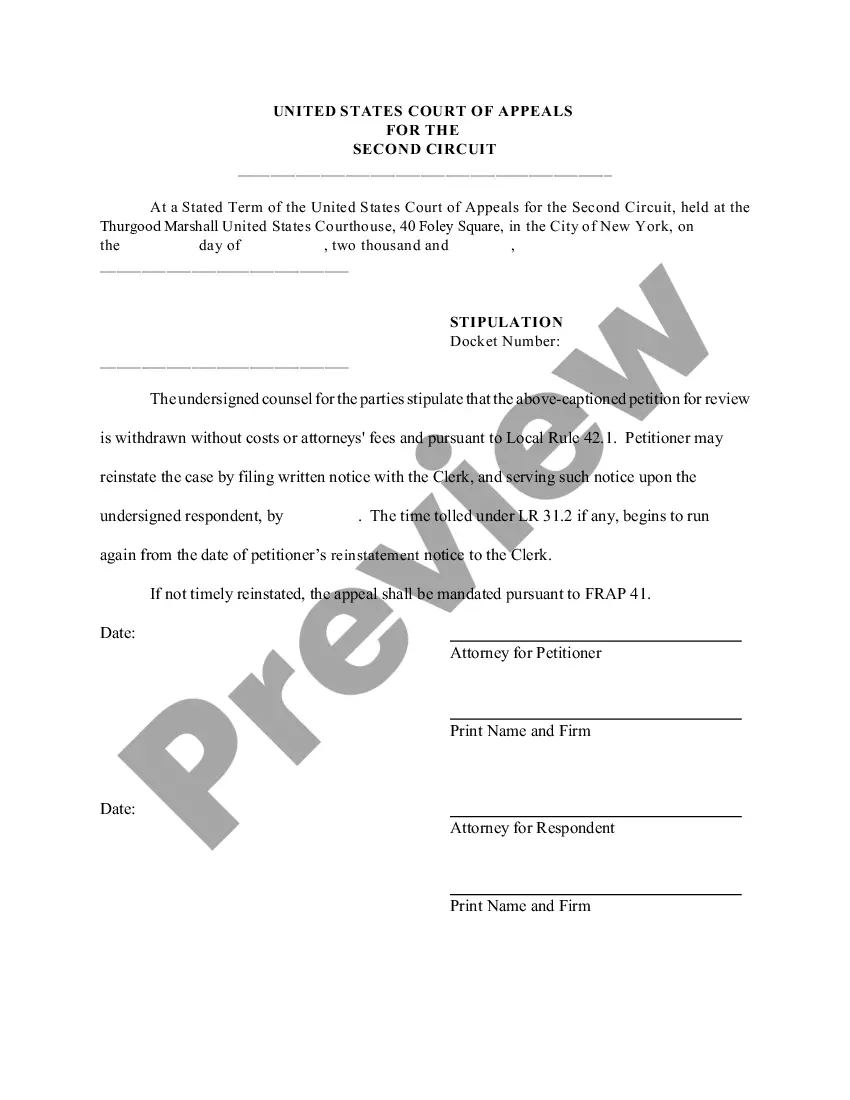
Michigan Agreed Judgment
Description

Get your form ready online
Our built-in tools help you complete, sign, share, and store your documents in one place.
Make edits, fill in missing information, and update formatting in US Legal Forms—just like you would in MS Word.
Download a copy, print it, send it by email, or mail it via USPS—whatever works best for your next step.
Sign and collect signatures with our SignNow integration. Send to multiple recipients, set reminders, and more. Go Premium to unlock E-Sign.
If this form requires notarization, complete it online through a secure video call—no need to meet a notary in person or wait for an appointment.
We protect your documents and personal data by following strict security and privacy standards.

Make edits, fill in missing information, and update formatting in US Legal Forms—just like you would in MS Word.

Download a copy, print it, send it by email, or mail it via USPS—whatever works best for your next step.

Sign and collect signatures with our SignNow integration. Send to multiple recipients, set reminders, and more. Go Premium to unlock E-Sign.

If this form requires notarization, complete it online through a secure video call—no need to meet a notary in person or wait for an appointment.

We protect your documents and personal data by following strict security and privacy standards.
Looking for another form?


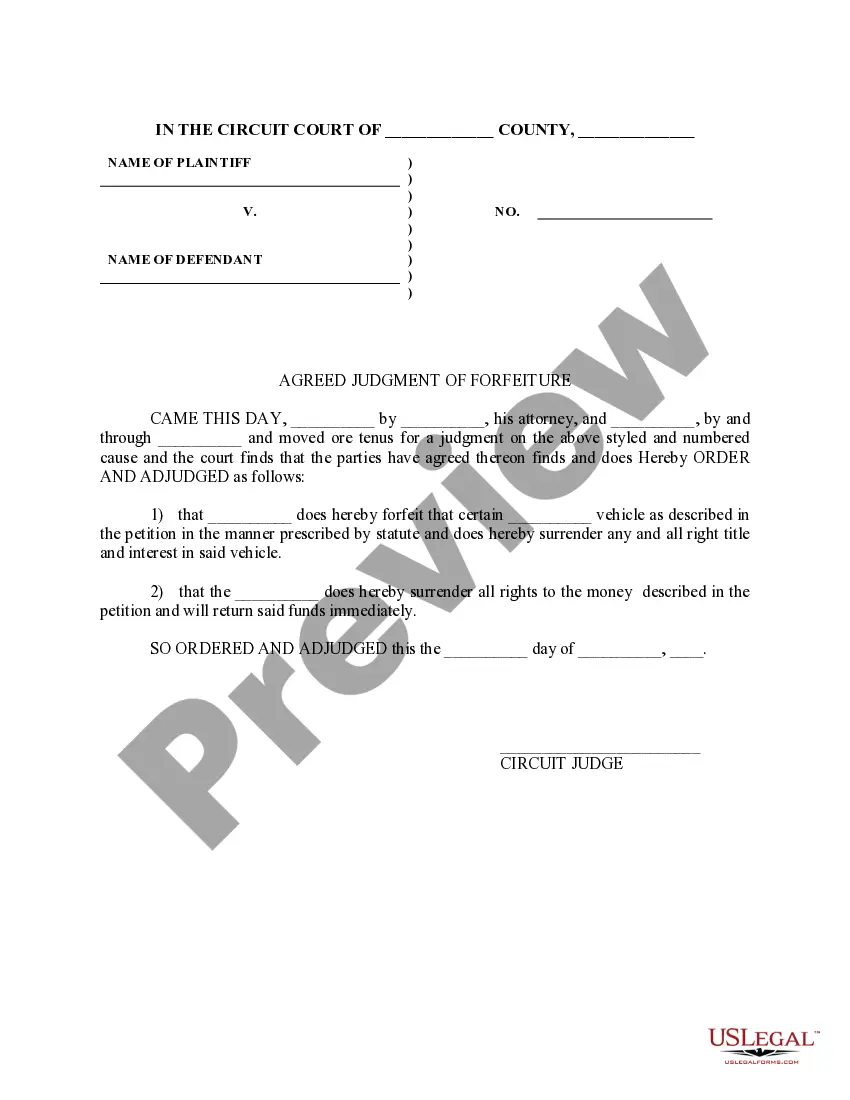
How to fill out Agreed Judgment?
You can spend hours online searching for the legal document web template that meets the federal and state regulations you need. US Legal Forms offers thousands of legal forms that are verified by experts. It is easy to obtain or create the Michigan Agreed Judgment from your service.
If you already have a US Legal Forms account, you can Log In and then click the Download button. After that, you can complete, modify, print, or sign the Michigan Agreed Judgment. Every legal document web template you acquire is yours permanently. To get another copy of the purchased form, go to the My documents tab and click the appropriate button.
If you are using the US Legal Forms website for the first time, follow the simple instructions below: Initially, ensure that you have selected the correct document web template for the county/town of your choice. Review the form description to confirm you have chosen the right form. If available, use the Preview button to view the document web template as well.
Utilize professional and state-specific templates to address your business or personal needs.
- To find another version of the form, use the Search field to locate the template that meets your needs and requirements.
- Once you have found the template you want, click Get now to proceed.
- Select the pricing plan you prefer, enter your information, and register for an account on US Legal Forms.
- Complete the purchase. You can use your Visa or Mastercard or PayPal account to pay for the legal document.
- Choose the format of the document and download it to your device.
- Make adjustments to your document if necessary. You can complete, alter, and sign and print the Michigan Agreed Judgment.
- Download and print thousands of document templates using the US Legal Forms website, which offers the largest selection of legal forms.
Form popularity
FAQ
If you never knew you were being sued, and motion for default judgment is filed against you, you should respond with a Motion to Vacate Judgment, also known as a Motion to Set Aside Judgment.
If you and your landlord come to an agreement about your eviction, you can present it to a judge. An example of such an agreement is a consent judgment. If the judge signs it, it ends the case.
In New Jersey, that time is 35 days. In federal cases, that time is 21 days. This response is typically in the form of an answer to the complaint or a motion to dismiss. If the defendant fails to respond within the given timeframe, the plaintiff may request the court place an entry of default against the defendant.
After a default judgment, the Plaintiff will try to collect the money you owe. The Plaintiff may be able to take money from your paycheck or bank account and put a lien on your property. If you don't have any assets to pay the debt, you can let the Plaintiff. They may give up or try to collect in the future.
Yes, you can settle a debt even if a lawsuit has already been filed against you. Some lenders may allow you to pay off your debt through either a repayment plan or partial lump-sum settlement.
If you do not pay the judgment, the judge can order you to appear in court. This is called an Application And Order For Appearance and Examination (EJ-125) . You can be ordered into court every 4 months to furnish information to aid in the enforcement of judgment until you pay the judgment.
If a denial of responsibility is not made within 20 days of the issuance of the ticket, or if the defendant fails to appear for a scheduled hearing, a Default Judgment is entered.
If the defendant does not pay the judgment as ordered, you will have to collect your money through an execution against property or a garnishment. To get an execution against property or garnishment, you will first need to know: Where the defendant lives and works.