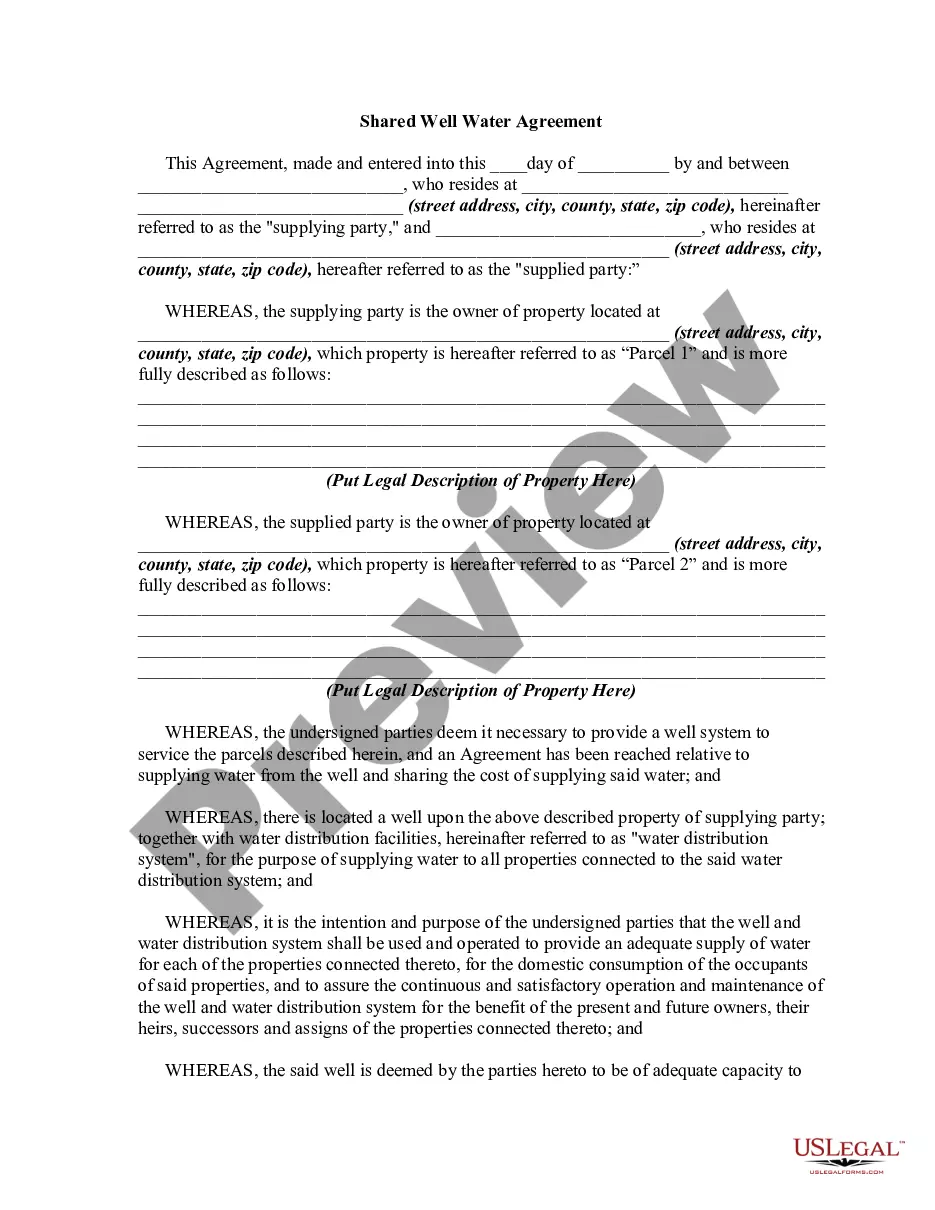
Michigan Shared Well Water Agreement

Description
Get your form ready online
Our built-in tools help you complete, sign, share, and store your documents in one place.
Make edits, fill in missing information, and update formatting in US Legal Forms—just like you would in MS Word.
Download a copy, print it, send it by email, or mail it via USPS—whatever works best for your next step.
Sign and collect signatures with our SignNow integration. Send to multiple recipients, set reminders, and more. Go Premium to unlock E-Sign.
If this form requires notarization, complete it online through a secure video call—no need to meet a notary in person or wait for an appointment.
We protect your documents and personal data by following strict security and privacy standards.

Make edits, fill in missing information, and update formatting in US Legal Forms—just like you would in MS Word.

Download a copy, print it, send it by email, or mail it via USPS—whatever works best for your next step.

Sign and collect signatures with our SignNow integration. Send to multiple recipients, set reminders, and more. Go Premium to unlock E-Sign.

If this form requires notarization, complete it online through a secure video call—no need to meet a notary in person or wait for an appointment.

We protect your documents and personal data by following strict security and privacy standards.
Looking for another form?




How to fill out Shared Well Water Agreement?
Have you ever found yourself in a situation where you require documentation for various business or specific purposes almost every time.
There are numerous legal document templates accessible online, but locating versions that you can rely on is challenging.
US Legal Forms offers thousands of form templates, including the Michigan Shared Well Water Agreement, that are designed to comply with state and federal regulations.
Once you find the appropriate form, simply click Acquire now.
Choose the pricing plan you prefer, fill out the necessary information to create your account, and complete the order using your PayPal or credit card.
- If you are already acquainted with the US Legal Forms website and possess an account, simply Log In.
- After that, you can download the Michigan Shared Well Water Agreement template.
- If you do not have an account and wish to start using US Legal Forms, follow these steps.
- Locate the form you need and ensure it corresponds to the correct city/state.
- Utilize the Review button to examine the form.
- Read the description to confirm you have selected the right form.
- If the form is not what you’re looking for, use the Lookup section to find the form that fits your requirements.
Form popularity
FAQ
Avoid using, mixing or storing hazardous chemicals, such as paint, fertilizer, pesticides, motor oil, gas, weed killer or other pollutants near your well. Do not dump waste near your well or near sinkholes, as this may contaminate your water supply.
The United States Environmental Protection Agency's (USEPA's) regulations for public drinking water systems do not apply to privately owned wells. However, Michigan does have well construction standards, which if followed should provide safe and reliable water.
FREE WELL WATER TESTING! Approved Supply The minimum depth allowable in Michigan for a drinking water well is 25 feet. All wells must terminate a minimum of 12 inches above grade and cannot be located in a below grade pit.
2 requires that prior to construction of a new or replacement residential or Type III public well, or other type of water supply, and prior to extensive repair to an existing well, a person must apply for and obtain a water supply construction permit from District Health Department No. 2.
The definition of a Shared Well is a water well that provides water for home or irrigation use to two to several homes. In most cases, a shared water well that provides water to more than four homes would be categorized as a community well.
Michigan's Natural Resources and Environmental Protection Act (NREPA), Part 327, declares that groundwater and surface water are one single hydrologic system. Groundwater can recharge surface water, and surface water on occasion loses water to and recharges groundwater.
Because shared wells serve two to four households, the rate of wear they experience will be much greater, resulting in the need for more frequent repairs and maintenance. Homeowners who share the benefits of the well should also share in the cost to fix it, maintain it, or replace it.
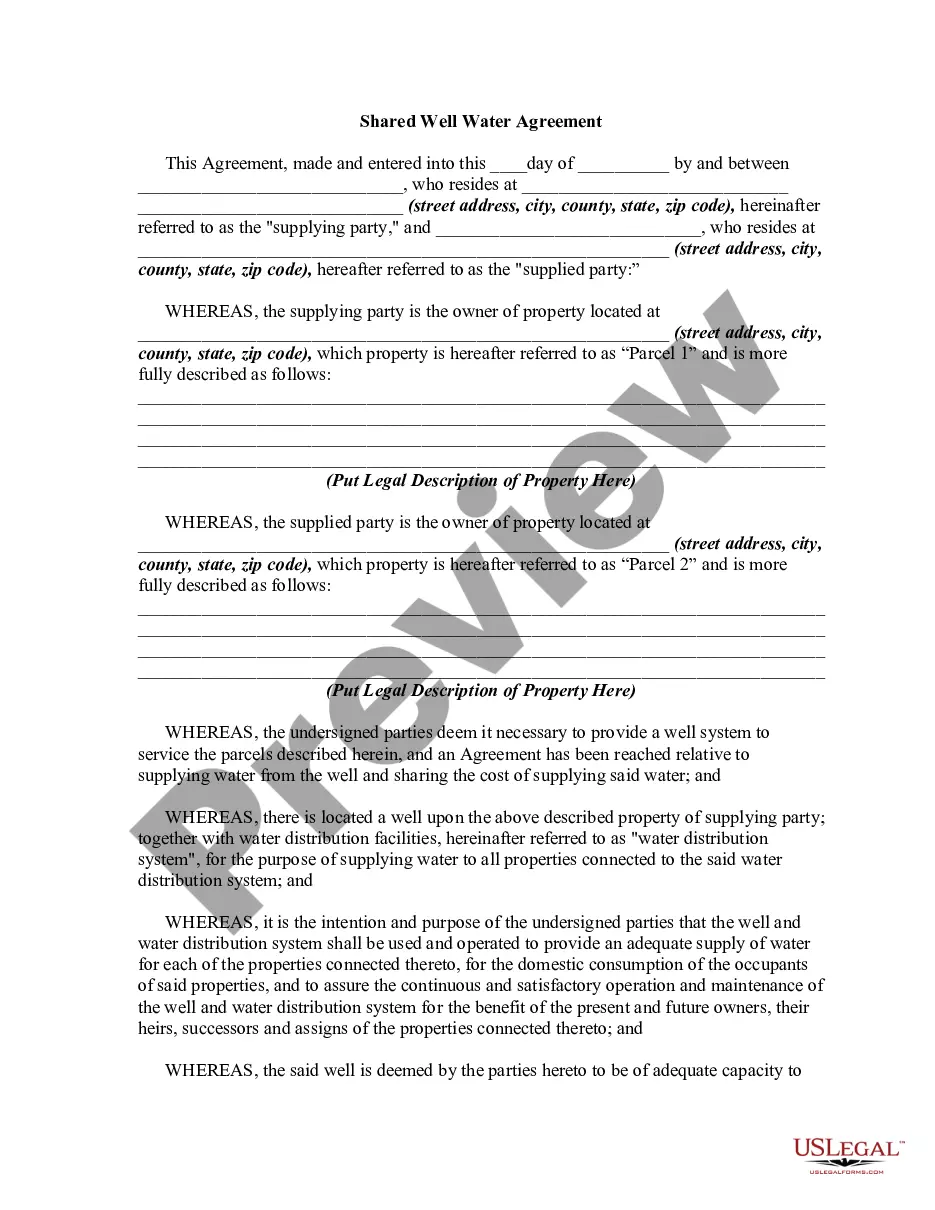
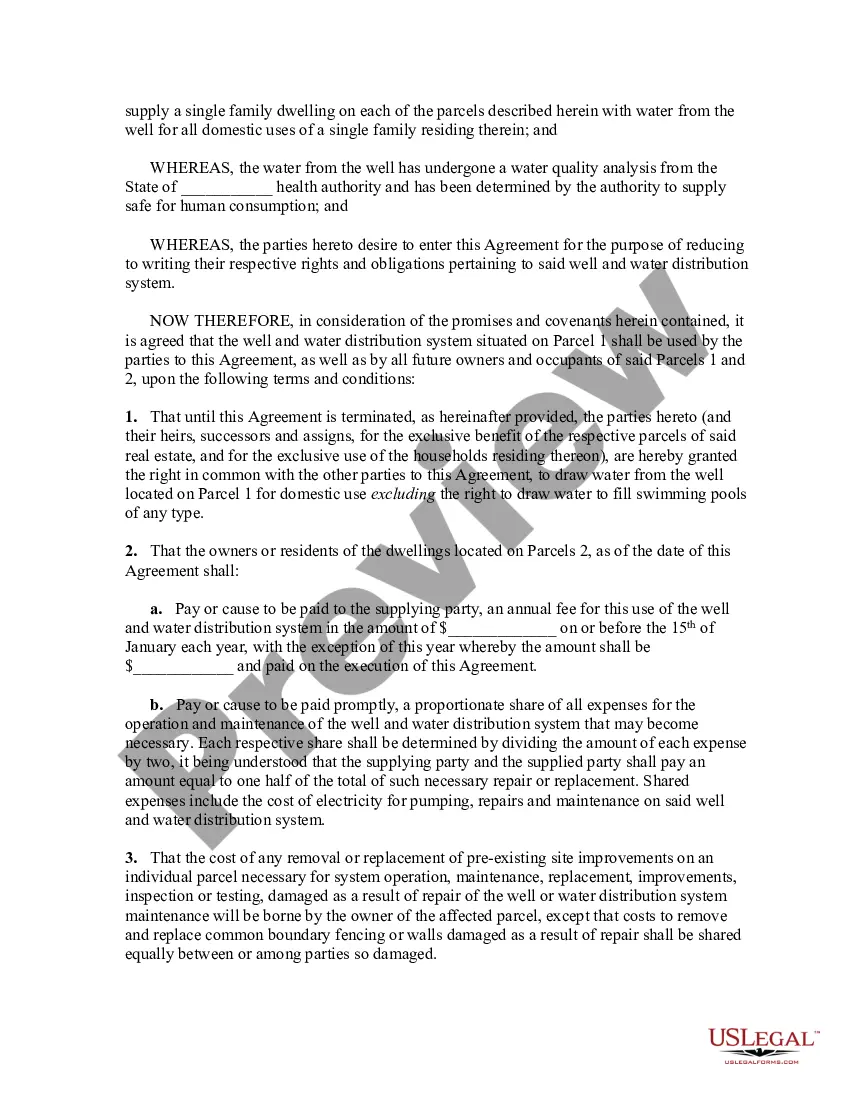
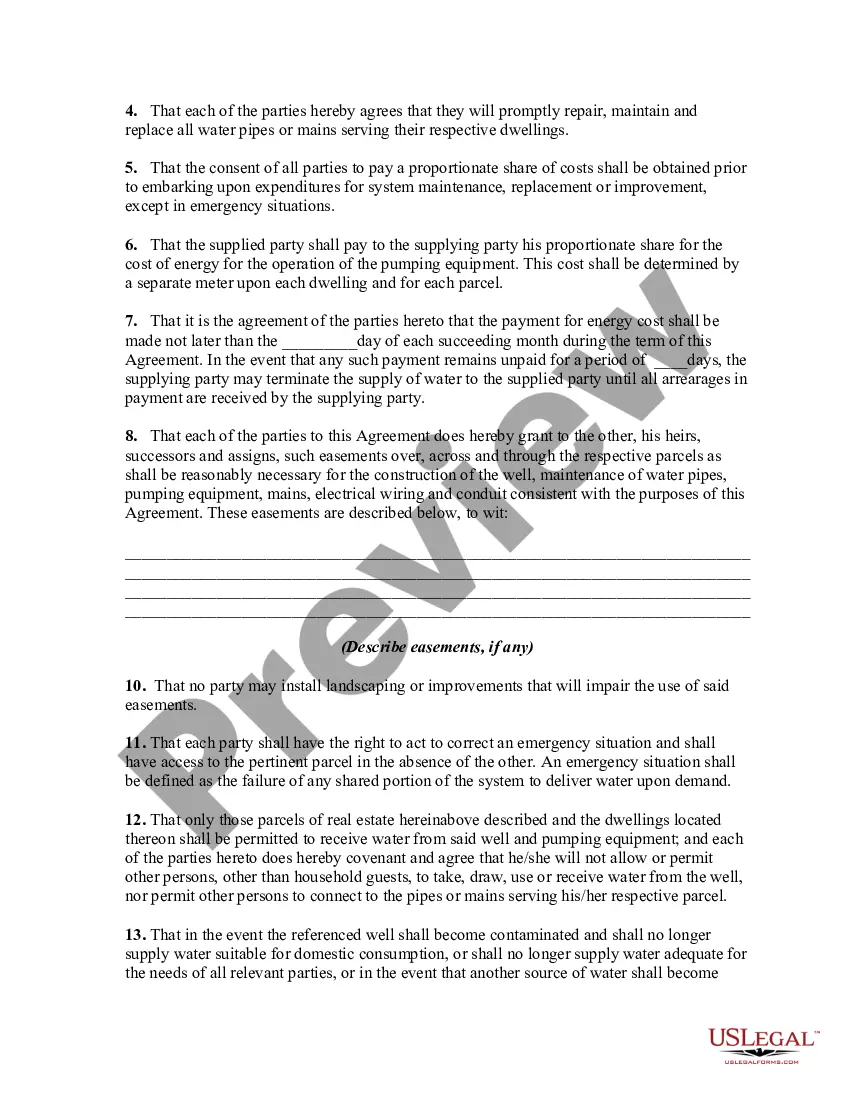
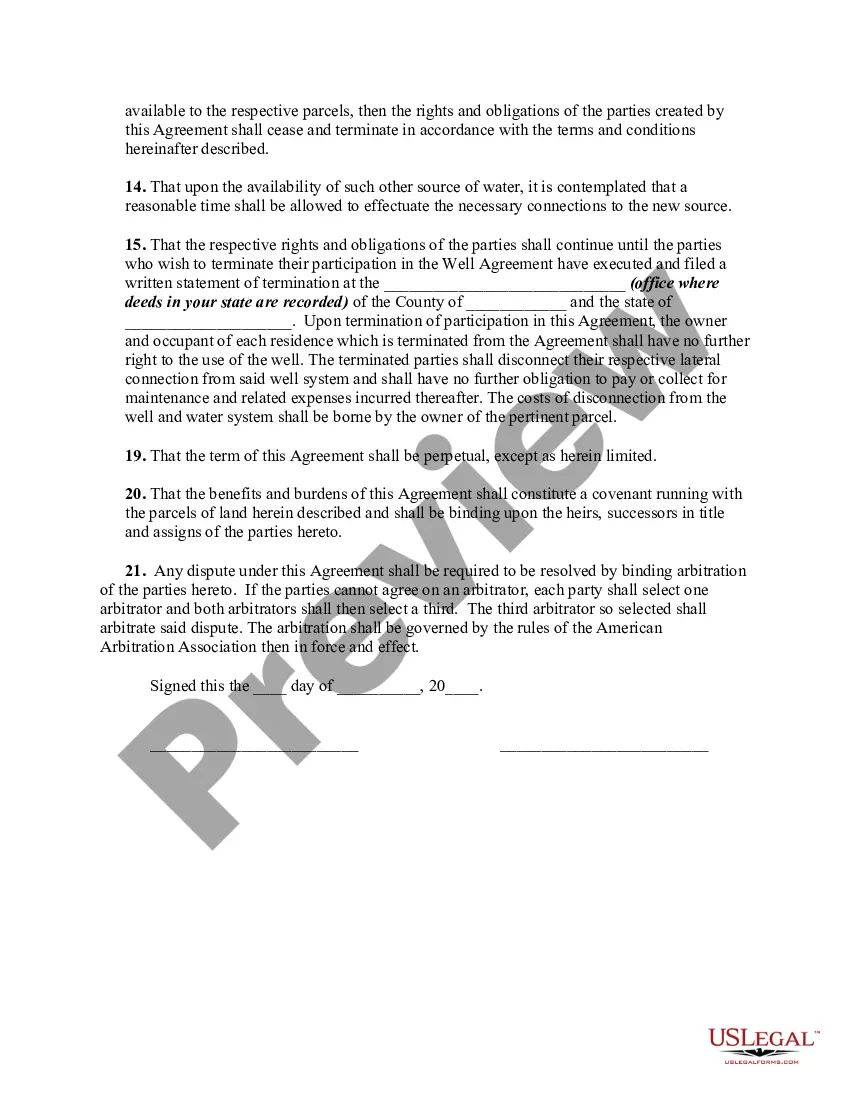
A shared well agreement is a legal document that is used to create an agreement between two or more property owners who share access to a common well. This agreement outlines the rights and responsibilities of each party involved in the shared well.