Michigan Master Deed
What this document covers
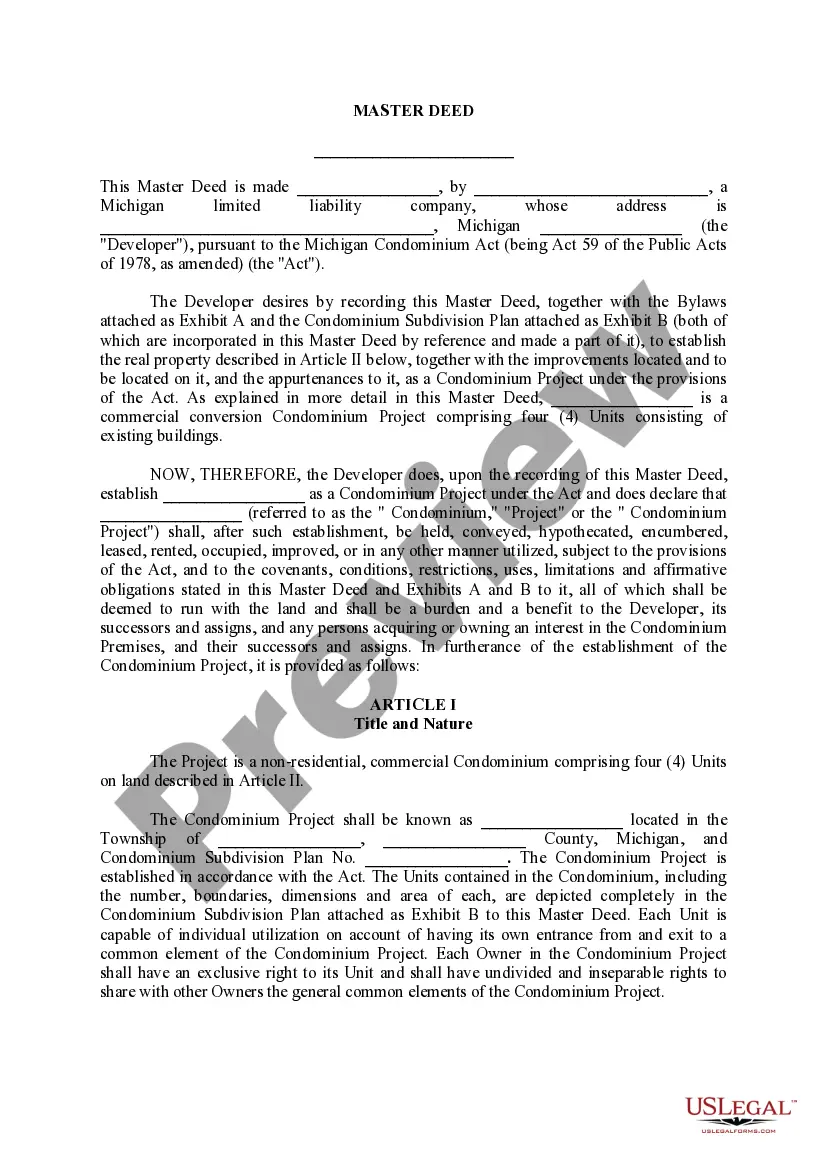
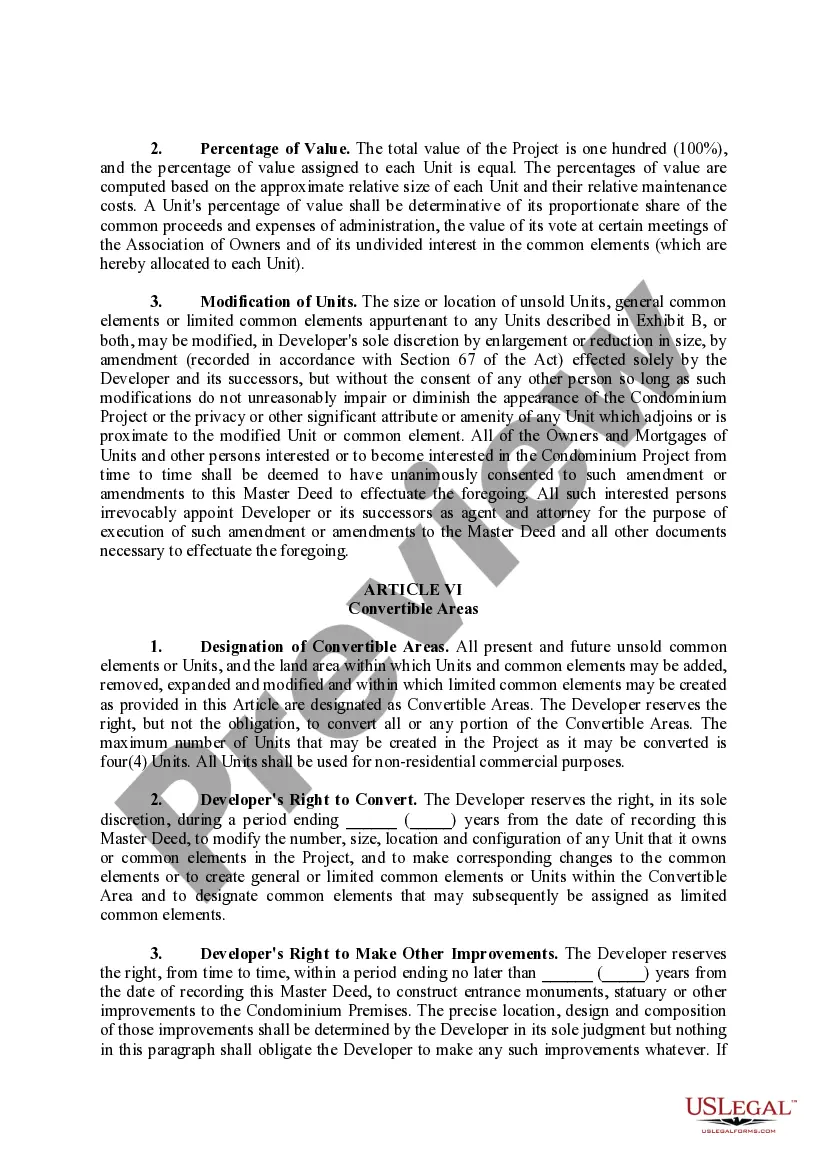
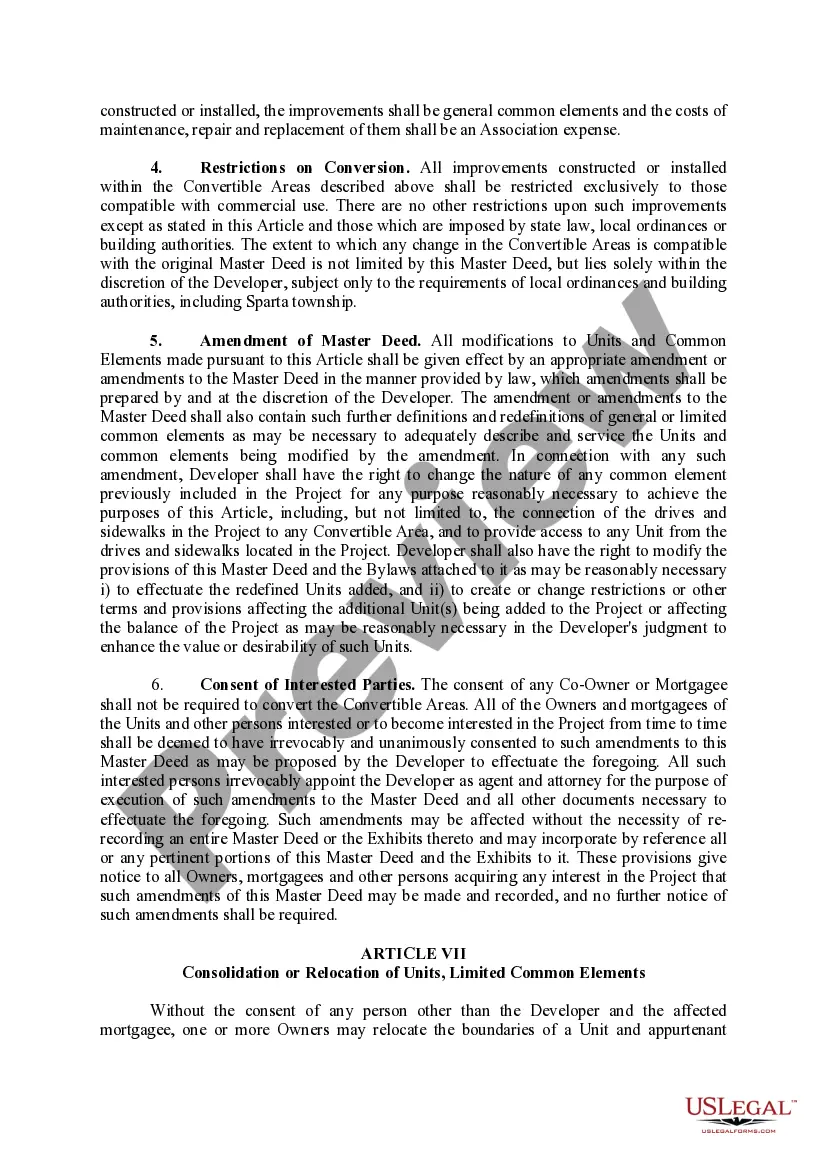
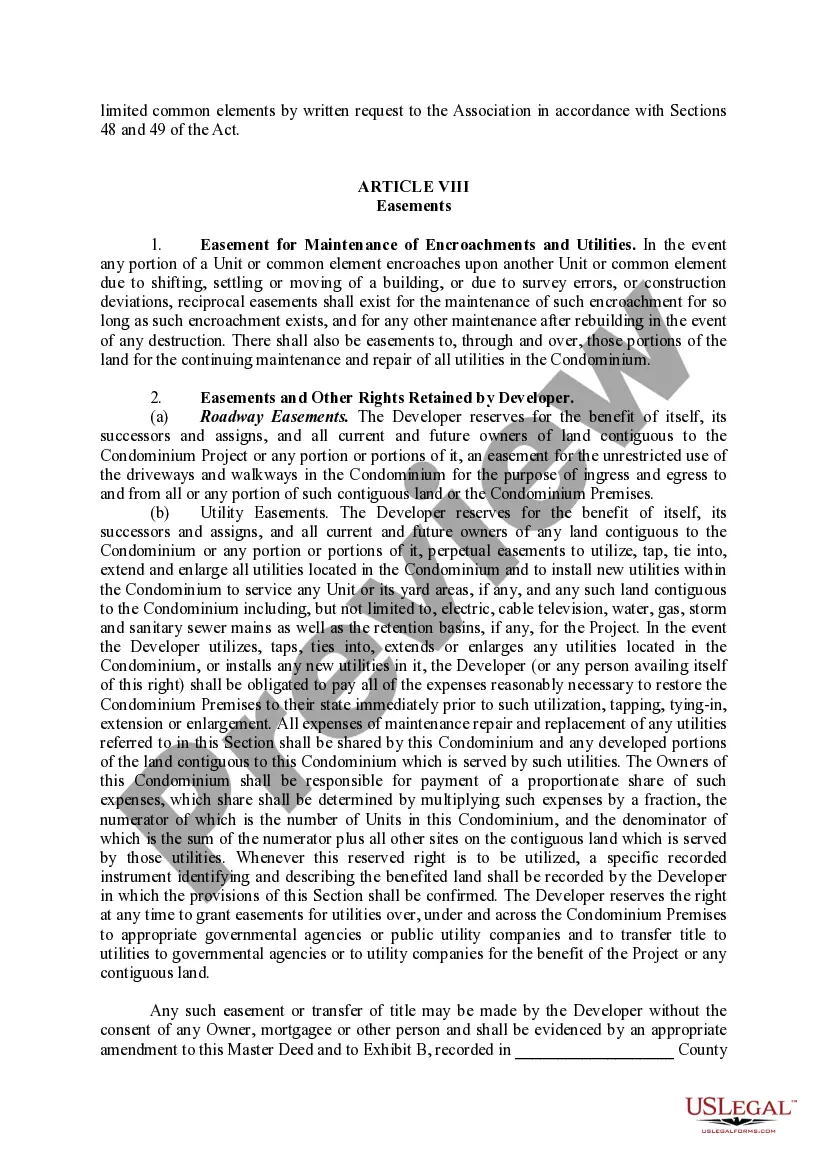
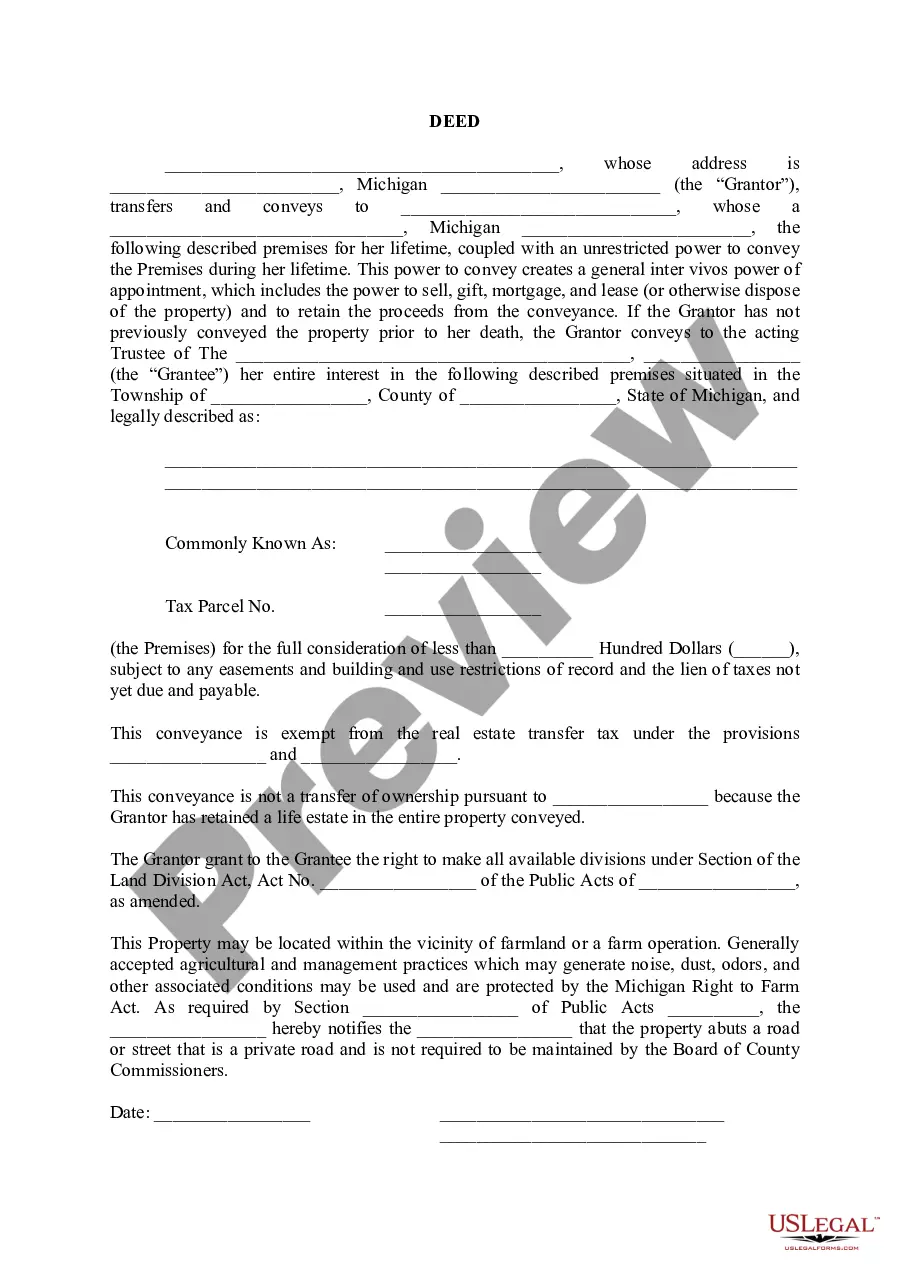
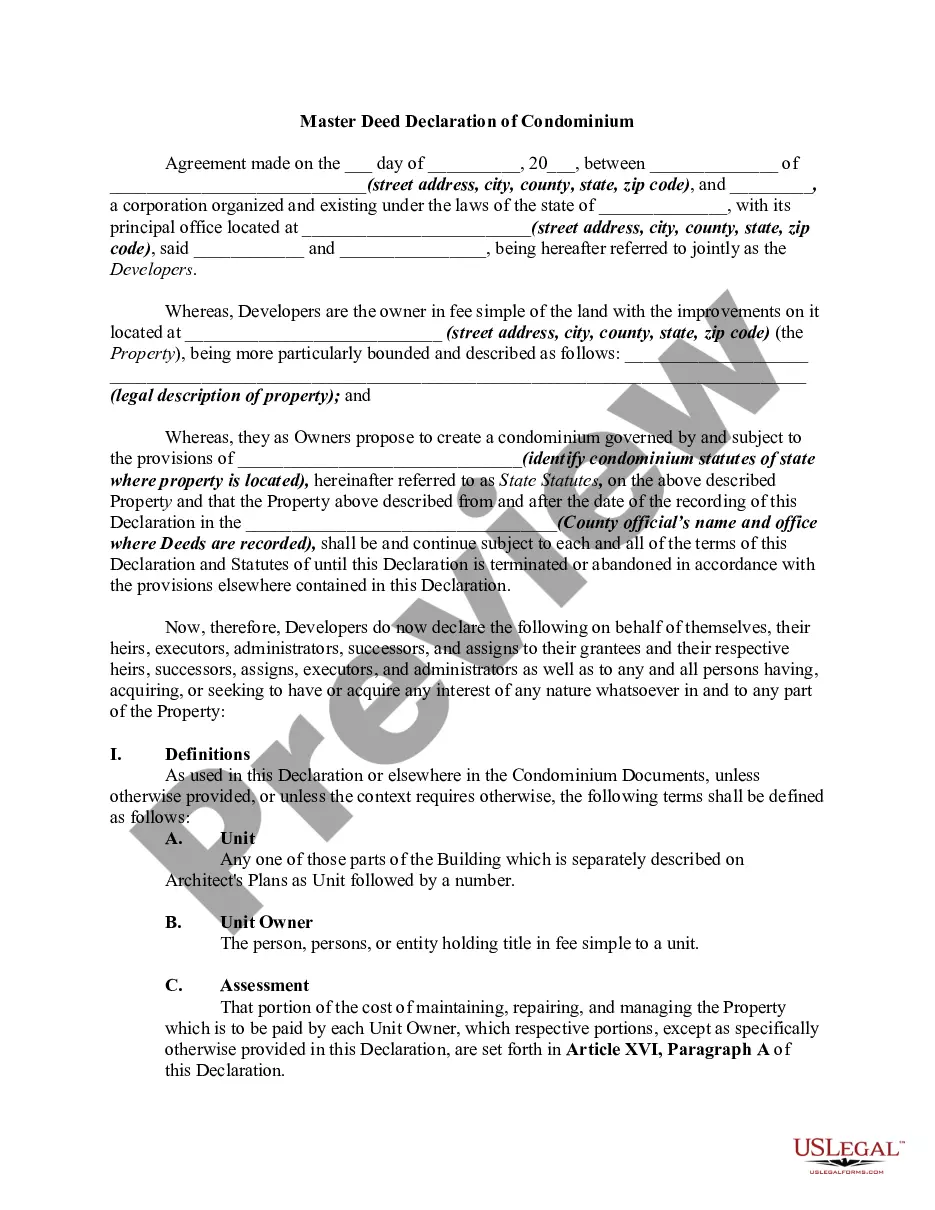
The Master Deed is a foundational document used to establish and govern a condominium project. This legal form outlines the rights and responsibilities of condominium unit owners, detailing property descriptions, common elements, and the regulations governing the condominium association. Unlike other real estate documents, the Master Deed specifically focuses on the unique aspects of condominium ownership and management, making it essential for developers and condominium project members.
Key components of this form
- Title and nature of the project.
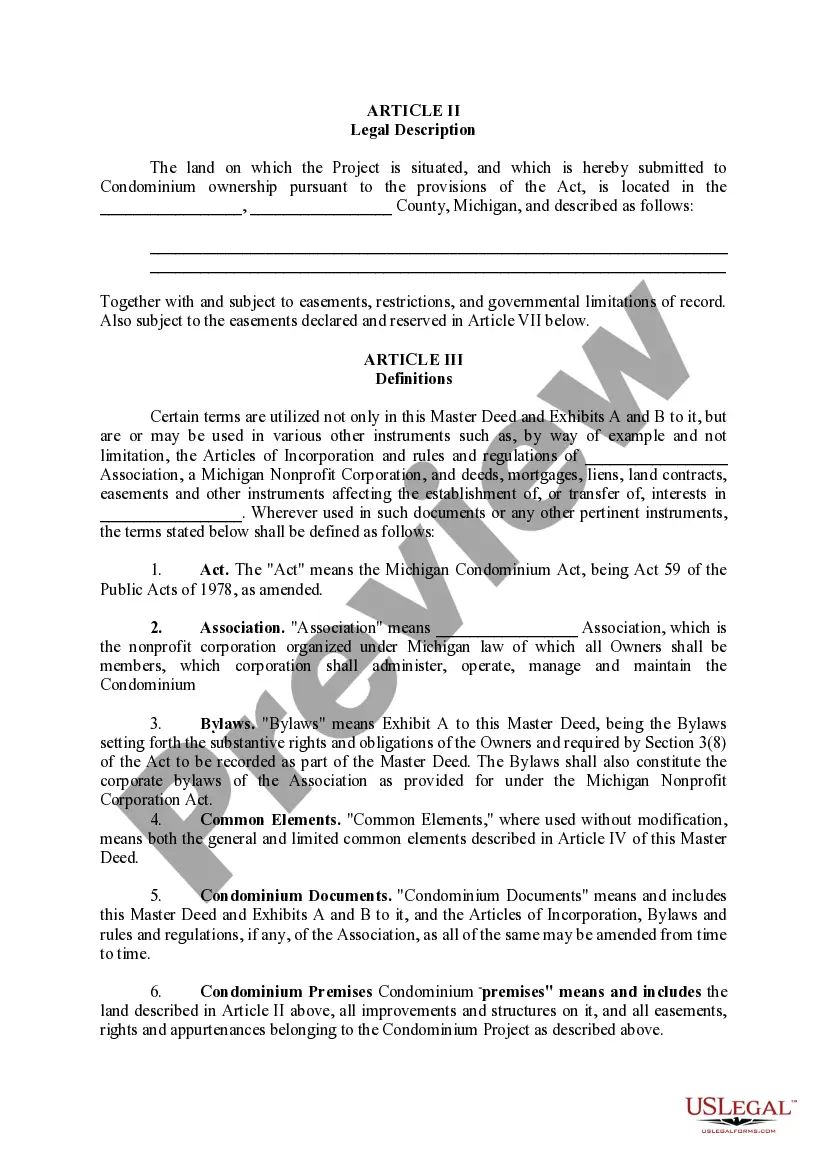
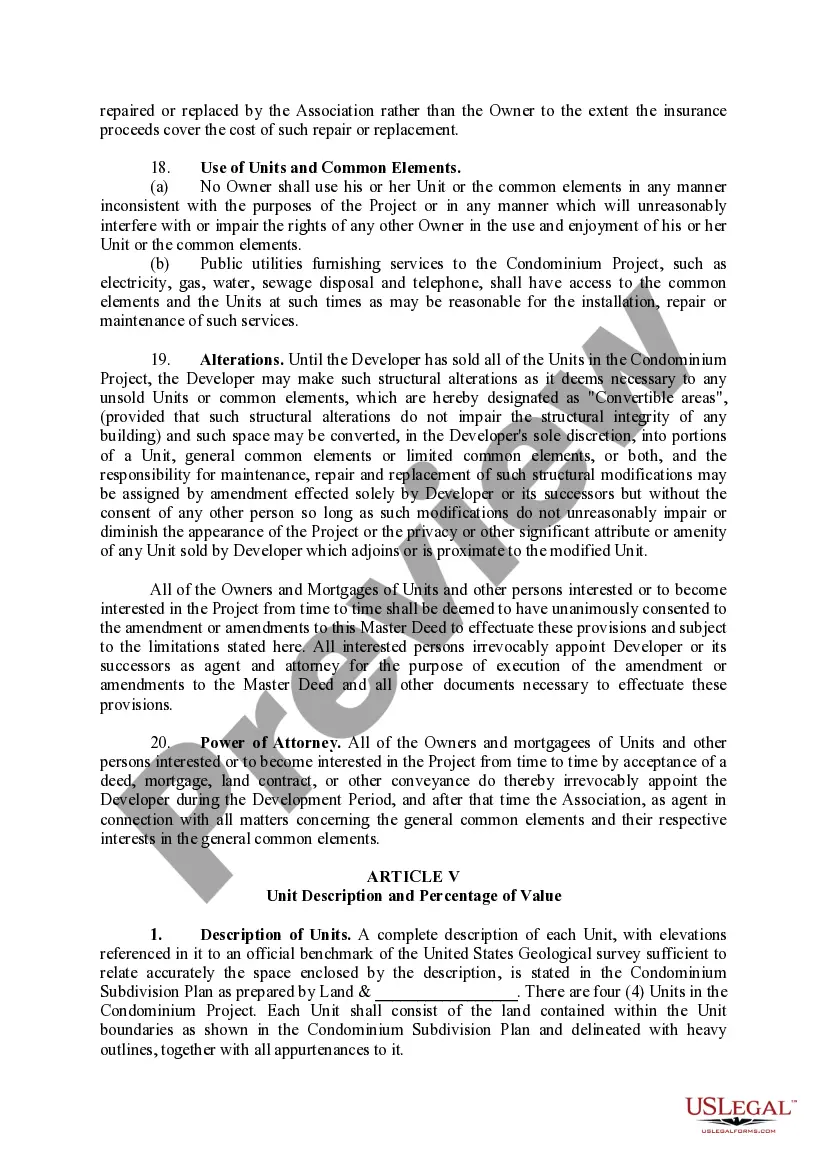
- Legal description of the property involved.
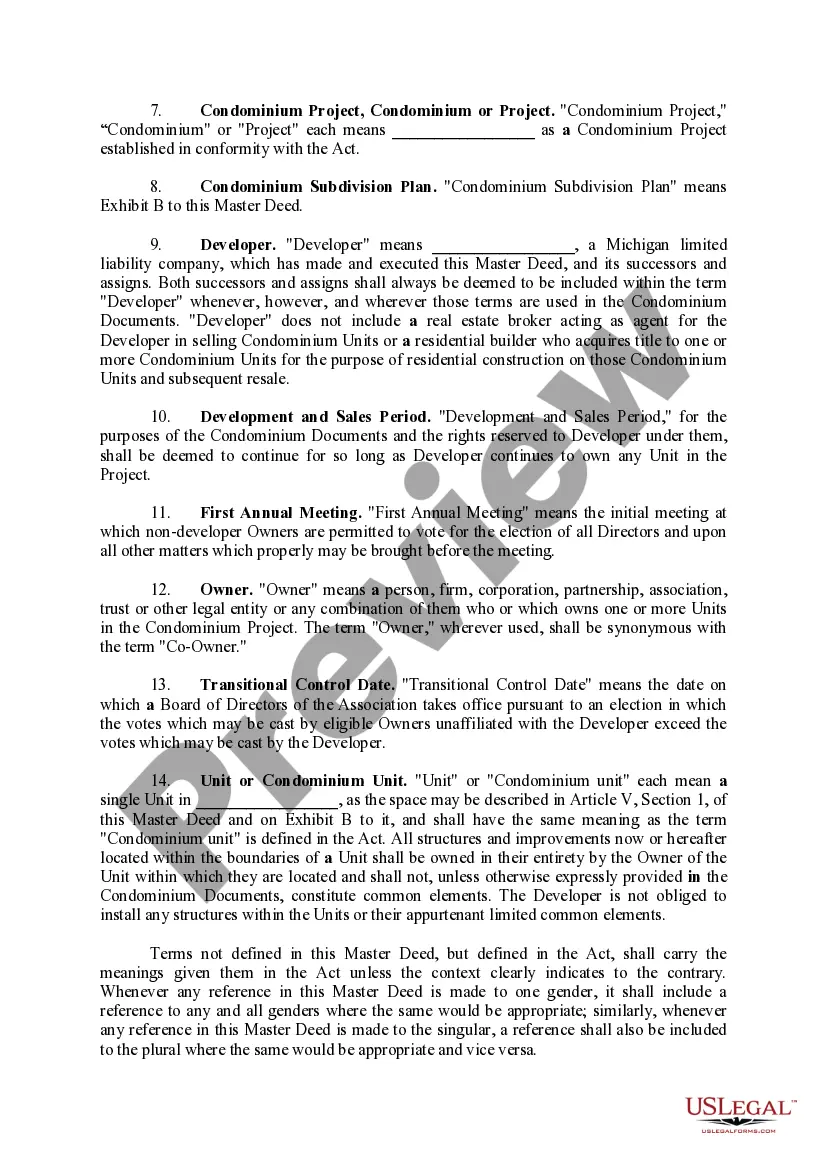
- Definitions of key terms related to the condominium.
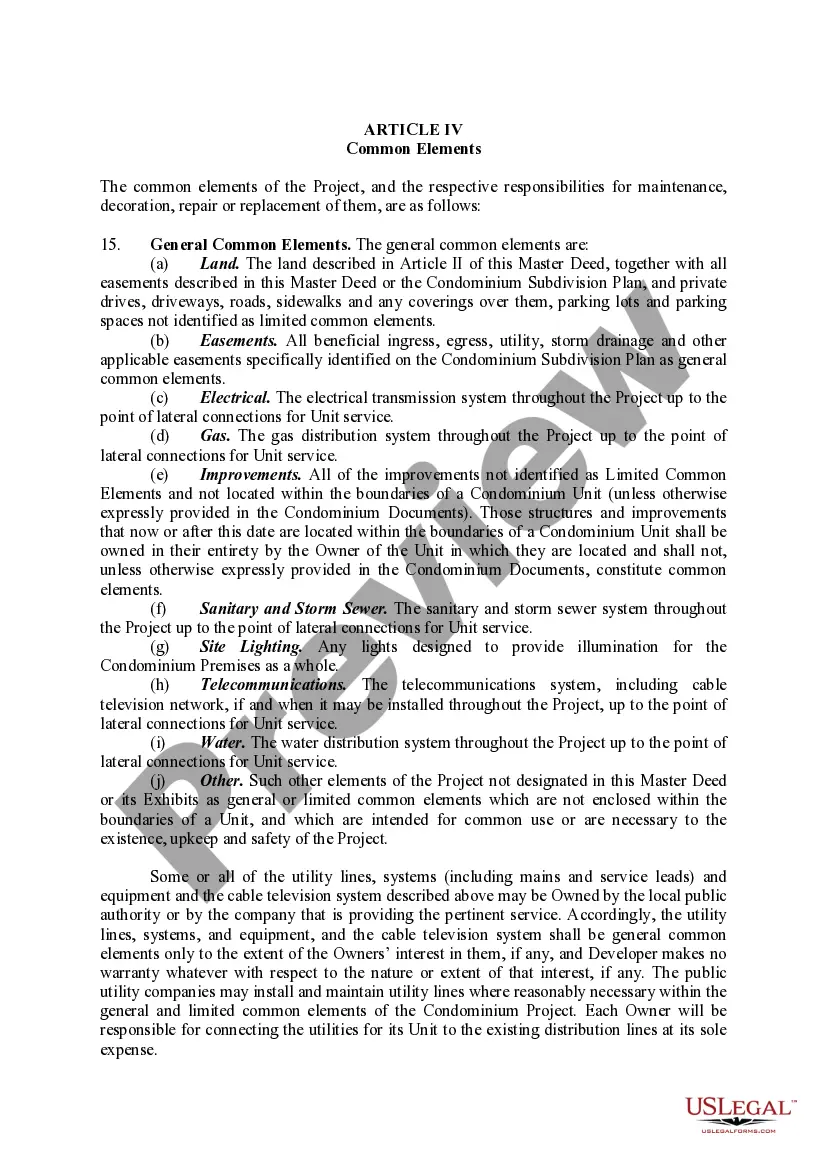
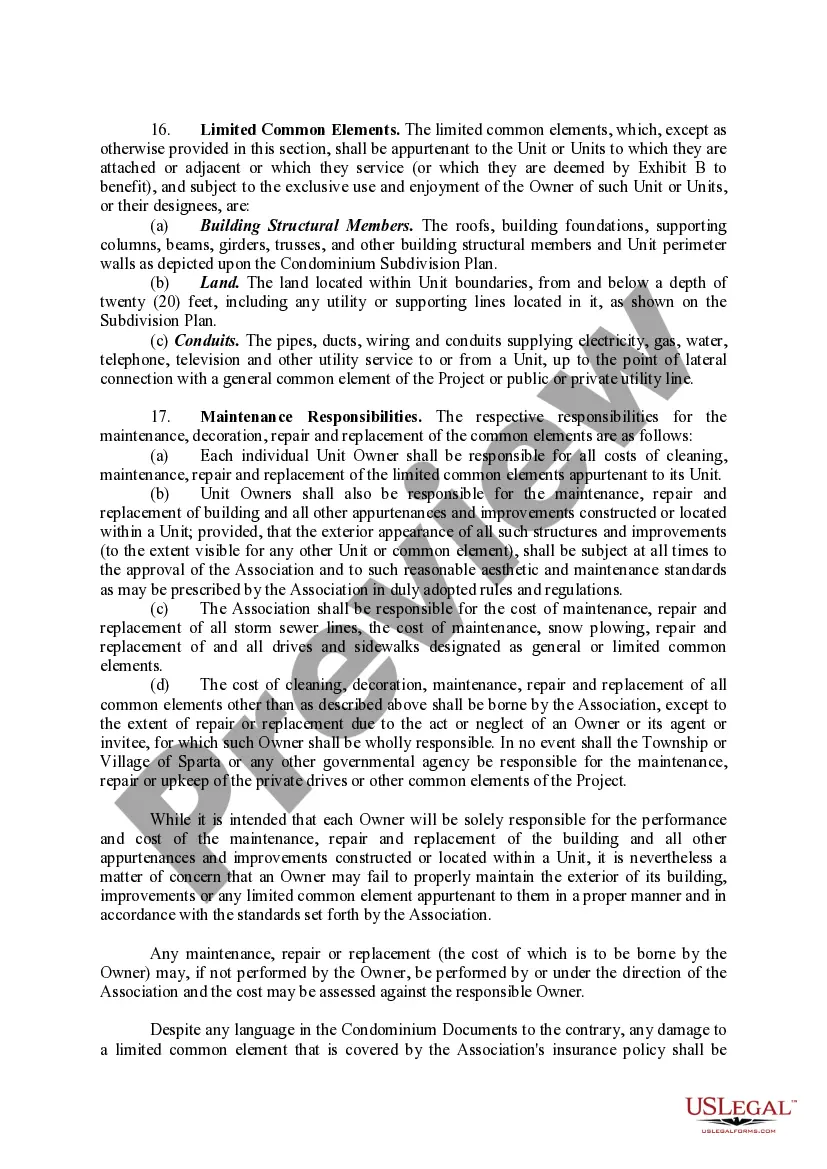
- Detailed description of common and limited common elements.
- Provisions for maintenance responsibilities and alterations.
- Amendment and termination procedures for the Master Deed.

When to use this document
This form should be used when establishing a new condominium project, whether commercial or residential. Developers or property owners need to file a Master Deed to officially recognize the project and outline the governing rules to manage the property effectively. It is essential for creating a legal framework that defines ownership rights and responsibilities among unit owners.
Intended users of this form
- Condominium developers looking to establish new projects.
- Property owners who wish to convert existing properties into condominiums.
- Real estate attorneys facilitating condominium documentation.
- Current unit owners needing to understand their rights and responsibilities under the condominium framework.
Instructions for completing this form
- Identify the parties involved, including the developer and the condominium association.
- Describe the property being designated as a condominium, including unit details and common elements.
- Specify the ownership interests and the proportionate value of each unit.
- Draft and attach the Bylaws and Condominium Subdivision Plan as required exhibits.
- Obtain the necessary signatures and then record the Master Deed with the appropriate county office.
Notarization requirements for this form
This form does not typically require notarization unless specified by local law. However, it is advisable to consult with a legal expert to confirm whether notarization is essential for your particular circumstances before submitting the form to the appropriate county office.
Get your form ready online
Our built-in tools help you complete, sign, share, and store your documents in one place.
Make edits, fill in missing information, and update formatting in US Legal Forms—just like you would in MS Word.
Download a copy, print it, send it by email, or mail it via USPS—whatever works best for your next step.
Sign and collect signatures with our SignNow integration. Send to multiple recipients, set reminders, and more. Go Premium to unlock E-Sign.
If this form requires notarization, complete it online through a secure video call—no need to meet a notary in person or wait for an appointment.
We protect your documents and personal data by following strict security and privacy standards.

Make edits, fill in missing information, and update formatting in US Legal Forms—just like you would in MS Word.

Download a copy, print it, send it by email, or mail it via USPS—whatever works best for your next step.

Sign and collect signatures with our SignNow integration. Send to multiple recipients, set reminders, and more. Go Premium to unlock E-Sign.

If this form requires notarization, complete it online through a secure video call—no need to meet a notary in person or wait for an appointment.

We protect your documents and personal data by following strict security and privacy standards.
Avoid these common issues
- Failing to include all necessary exhibits (Bylaws, Subdivision Plan) as part of the Master Deed.
- Inaccurate property descriptions can lead to legal disputes among owners.
- Not obtaining all required signatures before recording the document.
- Overlooking compliance with local laws affecting condominium projects.
Benefits of completing this form online
- Convenience of completing the form at your own pace, at any time.
- Easy customization to meet specific project needs and compliance requirements.
- Immediate access to templates drafted by legal professionals.
- Ability to download and print for official recording at your convenience.
Looking for another form?
Form popularity
FAQ
In Michigan, a quitclaim deed must include the names of both the grantor and the grantee, a legal description of the property, and the date of the conveyance. It's also essential to have the grantor's signature notarized. Recording the quitclaim deed with the county register of deeds is crucial to ensure the transfer is legally recognized. If you're looking for guidance in creating a Michigan Master Deed or a quitclaim deed, uslegalforms can provide the resources you need.
A Michigan Master Deed establishes the ownership structure of a condominium or a similar property. It outlines the rights and responsibilities of unit owners and defines the common areas. This document also typically includes details about governance, maintenance fees, and restrictions. Having a clear Michigan Master Deed helps ensure that all owners understand their obligations and rights.
A Michigan Master Deed is a crucial document that establishes a condominium project. It outlines the specifics of the property and defines the rights and responsibilities of the owners and the association. This document serves as the foundation for managing the condominium's common areas, rules, and regulations. Understanding the Michigan Master Deed helps owners navigate community living effectively.
Once a deed has been recorded, it is part of the public record and cannot be changed. It is possible, however, to amend that record by adding a newly executed deed, usually called correction or corrective deed, deed of correction or, in some states, deed of confirmation.
The Master Dispute Declaration is a recorded document which includes as exhibits some of the documents required or permitted by Title 7.The only reliable method of providing a complete plan of Title 7 implementation which is binding on the original buyer and resale purchasers is through a recorded document.
"However," says Garfinkel, "the bylaws in a condominium are the rules and regulation the condo owners are governed by; they are set up to protect the interest of the owners." The condominium bylaws are a self-governing document for the association.
The CC&Rs are a legally binding document filed with the state, and the bylaws are the procedures by which the association is run. Those documents require a vote of the members to change. The rules are voted on by the board of directors, following procedures set up by the association and complying with state law.
While some states have laws that prohibit condominium and homeowner associations from restricting political signs, Michigan is not one of them.
AN ACT relative to condominiums and condominium projects; to prescribe powers and duties of the administrator; to provide certain protections for certain tenants, senior citizens, and persons with disabilities relating to conversion condominium projects; to provide for escrow arrangements; to provide an exemption from