Michigan Discharge of Lis Pendens
Overview of this form
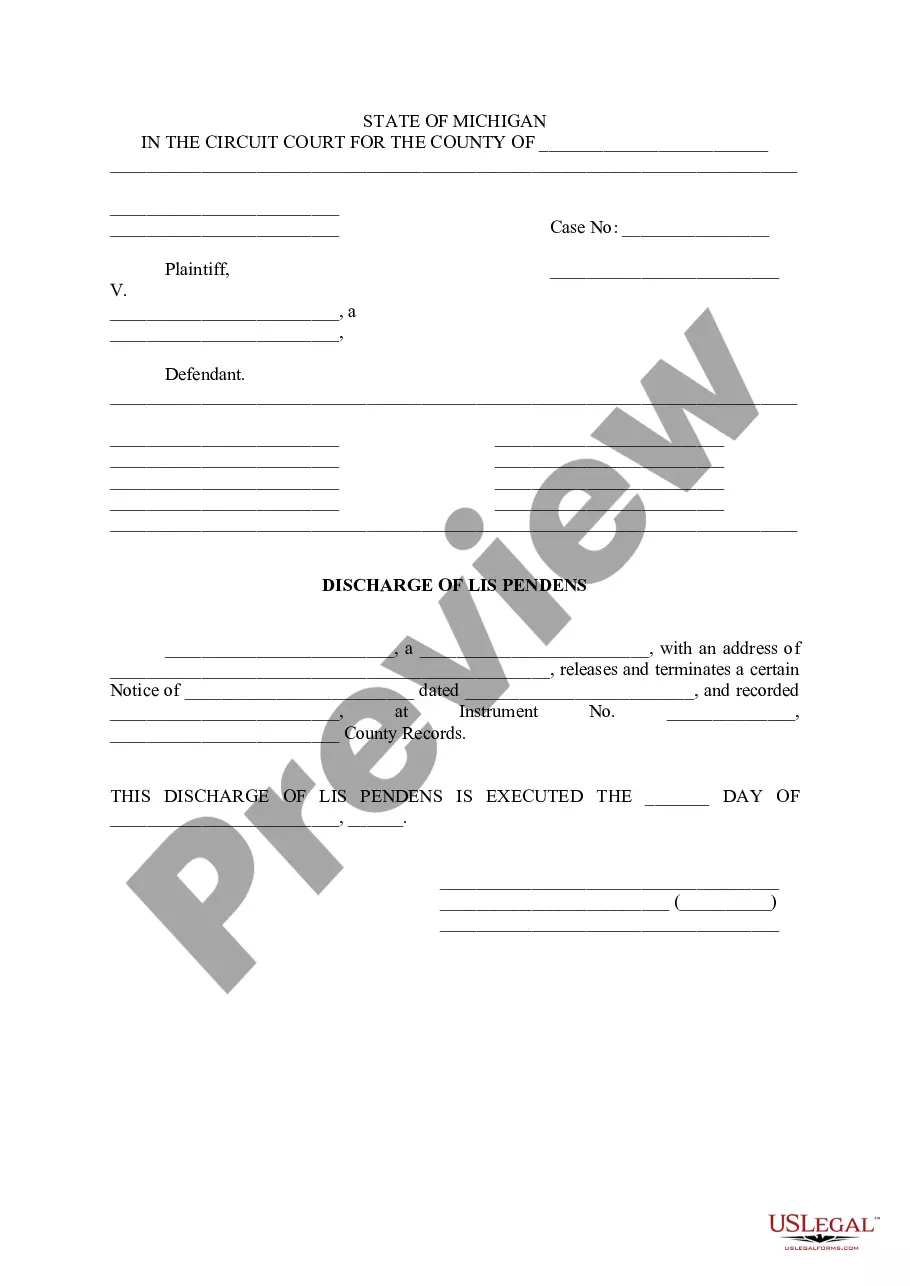
The Discharge of Lis Pendens form is a legal document that releases the notice of pending legal actions affecting the title to a property. This form is essential for individuals or entities looking to remove a previously recorded notice that can cloud the title of their property due to ongoing lawsuits. It is crucial to differentiate this form from other property-related documents, as it specifically addresses the discharge of legal claims on property titles.
Form components explained
- The case number, indicating the specific court case related to the lis pendens.
- The parties involved, including the plaintiff and defendant names.
- The description of the notice of lis pendens being discharged, including its date and recording information.
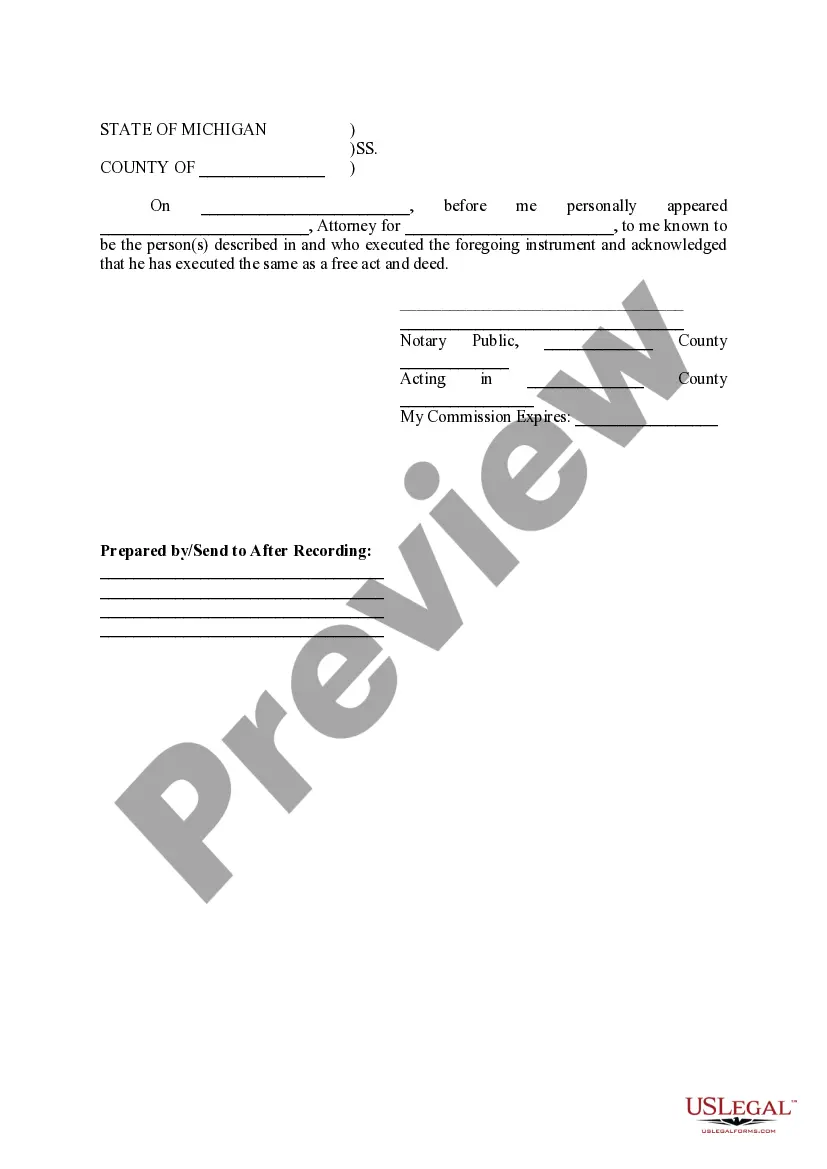
- Signatures from the releasing party or their legal representative, along with acknowledgment by a notary public.


Common use cases
This form is typically used in situations where a legal action that affected a property title has been resolved, or the involved parties have reached an agreement. If a lis pendens was previously recorded but is no longer necessary, this form allows the affected party to clear the title and ensure the property can be sold or refinancing efforts can proceed without encumbrance from the notice. It is relevant after court decisions or settlements that eliminate the need for the lis pendens.
Who can use this document
This form should be used by:
- Property owners seeking to discharge a lis pendens that has been filed against their property.
- Attorneys representing clients involved in legal actions affecting property titles.
- Anyone involved in a lawsuit where a lis pendens has been recorded but is now settled or dismissed.
Steps to complete this form
- Identify the parties involved in the legal action by filling in the plaintiff and defendant names.
- Reference the case number to locate the specific legal action associated with the lis pendens.
- Provide details about the original notice of lis pendens, including the date it was filed and the recording instrument number.
- Obtain necessary signatures from the party releasing the lis pendens, ensuring they are dated correctly.
- Have the document notarized to validate the release of the lis pendens legally.
Is notarization required?
Yes, this form must be notarized to be legally valid. This ensures that the signatures are authentic and the document is recognized by the court. US Legal Forms provides integrated online notarization services available 24/7, allowing you to complete the process securely via a video call without the need for travel.
Get your form ready online
Our built-in tools help you complete, sign, share, and store your documents in one place.
Make edits, fill in missing information, and update formatting in US Legal Forms—just like you would in MS Word.
Download a copy, print it, send it by email, or mail it via USPS—whatever works best for your next step.
Sign and collect signatures with our SignNow integration. Send to multiple recipients, set reminders, and more. Go Premium to unlock E-Sign.
If this form requires notarization, complete it online through a secure video call—no need to meet a notary in person or wait for an appointment.
We protect your documents and personal data by following strict security and privacy standards.

Make edits, fill in missing information, and update formatting in US Legal Forms—just like you would in MS Word.

Download a copy, print it, send it by email, or mail it via USPS—whatever works best for your next step.

Sign and collect signatures with our SignNow integration. Send to multiple recipients, set reminders, and more. Go Premium to unlock E-Sign.

If this form requires notarization, complete it online through a secure video call—no need to meet a notary in person or wait for an appointment.

We protect your documents and personal data by following strict security and privacy standards.
Common mistakes
- Failing to include the correct case number, which can lead to confusion or an incomplete discharge.
- Not providing accurate details about the original lis pendens notice.
- Neglecting to sign or date the document before submission, making it invalid.
- Forgetting to have the document notarized when required, which can hinder its enforceability.
Benefits of using this form online
- Convenience of downloading the form directly, saving time on paperwork.
- Editability allows you to fill out the form accurately before finalizing.
- Reliability of having attorney-drafted content to ensure compliance with legal requirements.
Summary of main points
- The Discharge of Lis Pendens is essential for clearing property titles from pending legal actions.
- It is crucial to follow proper procedures, including notarization, to ensure the document's validity.
- This form is typically used by property owners and their legal representatives.
Looking for another form?

Form popularity
FAQ
A cancellation of lis pendens is a legal document that removes the notice of pending litigation from public records. This process is crucial when a dispute is resolved, allowing property owners to sell or refinance their properties without the cloud of litigation hanging over them. In Michigan, obtaining a discharge of lis pendens can streamline real estate transactions and restore clear title. You can rely on USLegalForms to guide you through the necessary steps for a Michigan discharge of lis pendens, ensuring you have the right documentation.
A lis pendens is valid for four years in Michigan before it requires renewal. This validity period allows for ample time to resolve the underlying claims. You should remain informed about your rights and options, including utilizing the Michigan Discharge of Lis Pendens, to ensure your interests in property are safeguarded.
A lis pendens in Michigan typically remains in effect for five years. It can be renewed if necessary, ensuring that pending legal actions are properly noted. If you find yourself entangled in legal issues affecting property, look into the Michigan Discharge of Lis Pendens options available to clarify your situation.
In Michigan, a debt generally becomes uncollectible after six years. This timeframe begins from the last activity or payment on the debt. If you are facing challenges with debts, understanding your rights is vital. You may want to consider the Michigan Discharge of Lis Pendens process to resolve related legal claims.
In Michigan, lien releases typically do not need to be notarized to be effective. However, it is always best to check specific requirements depending on the type of lien and local regulations. When dealing with a Michigan Discharge of Lis Pendens, understanding the exact steps required can save you time and prevent future complications. For efficient and straightforward help, consider using the US Legal Forms platform, which offers resources tailored to Michigan lien law.
A Lis Pendens Can be Removed, Foreclosed or Expunged, Even if it was Validly Recorded. Under California law, a lis pendens may be expunged by filing a motion with the court based upon a showing that: the claimant has not made a real property claim in their underlying lawsuit, or.
A lis pendens may be removed through a motion to expunge. A motion to expunge may be granted if the underlying lawsuit or other court action does not contain a real property claim that has probable validity. The motion will be granted it if is more likely than not that the underlying lawsuit or claim will fail.
Once the lis pendens is filed, it will become part of the public record because it is a constructive notice. This also means that if you didn't receive notification directly (perhaps you were sent a letter that got lost in the mail), the lis pendens still remains in effect.
A lis pendens may be removed through a motion to expunge. A motion to expunge may be granted if the underlying lawsuit or other court action does not contain a real property claim that has probable validity. The motion will be granted it if is more likely than not that the underlying lawsuit or claim will fail.
Releasing a lis pendens in California requires that the party that signed the original lis pendens, or their successor in interest, must sign and record the notice of release of lis pendens . The signature on the notice of release of a lis pendens must be notarized.