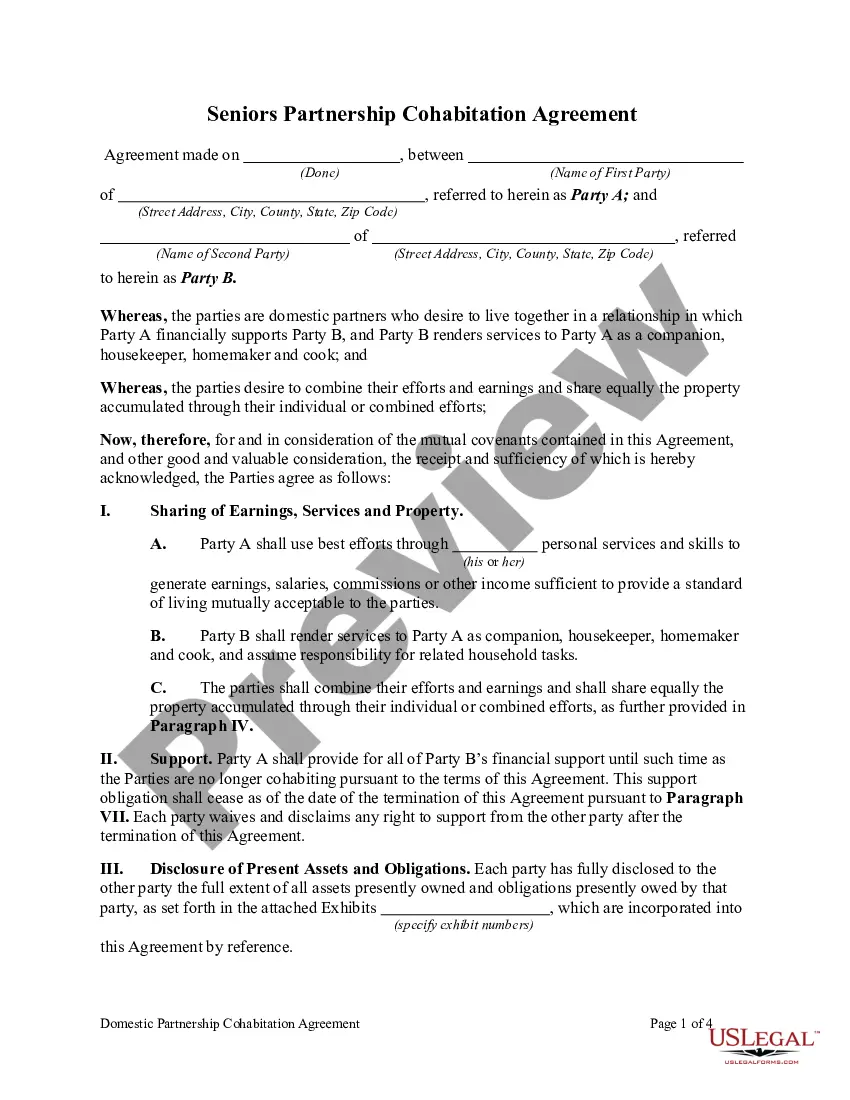
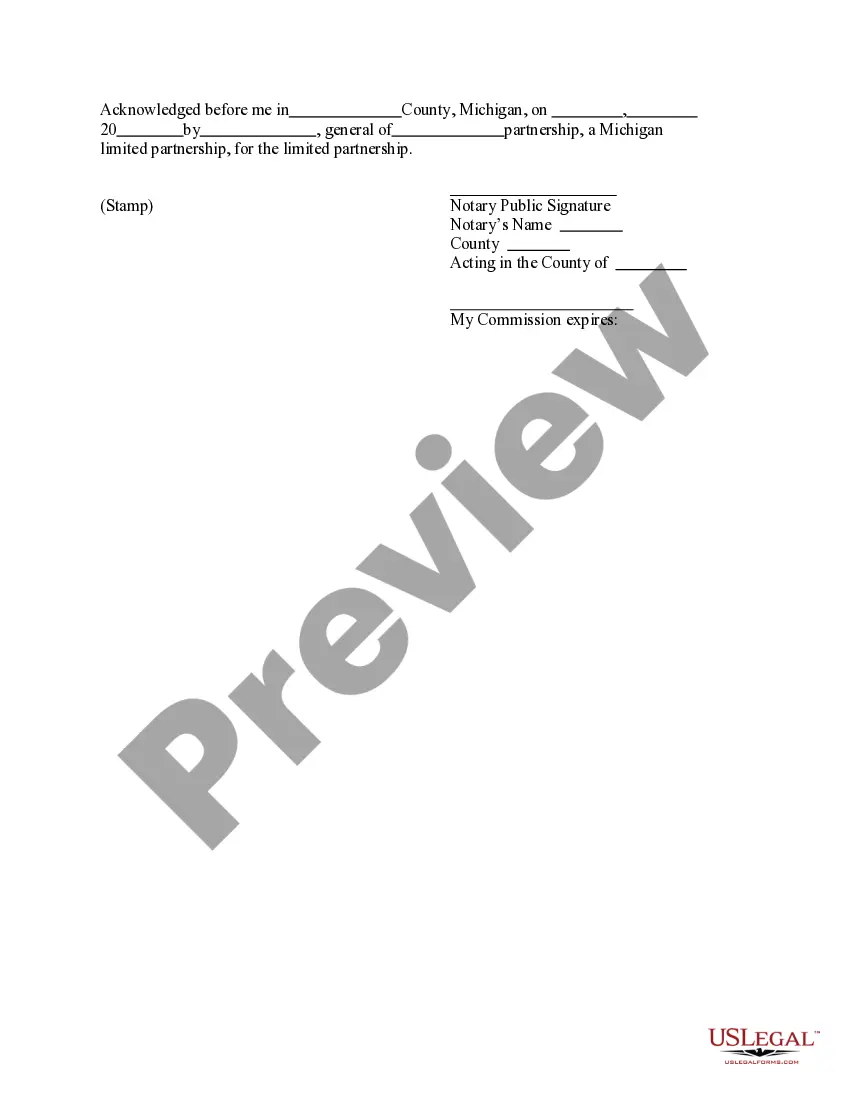
Michigan Acknowledgment for a Limit Partnership
What this document covers
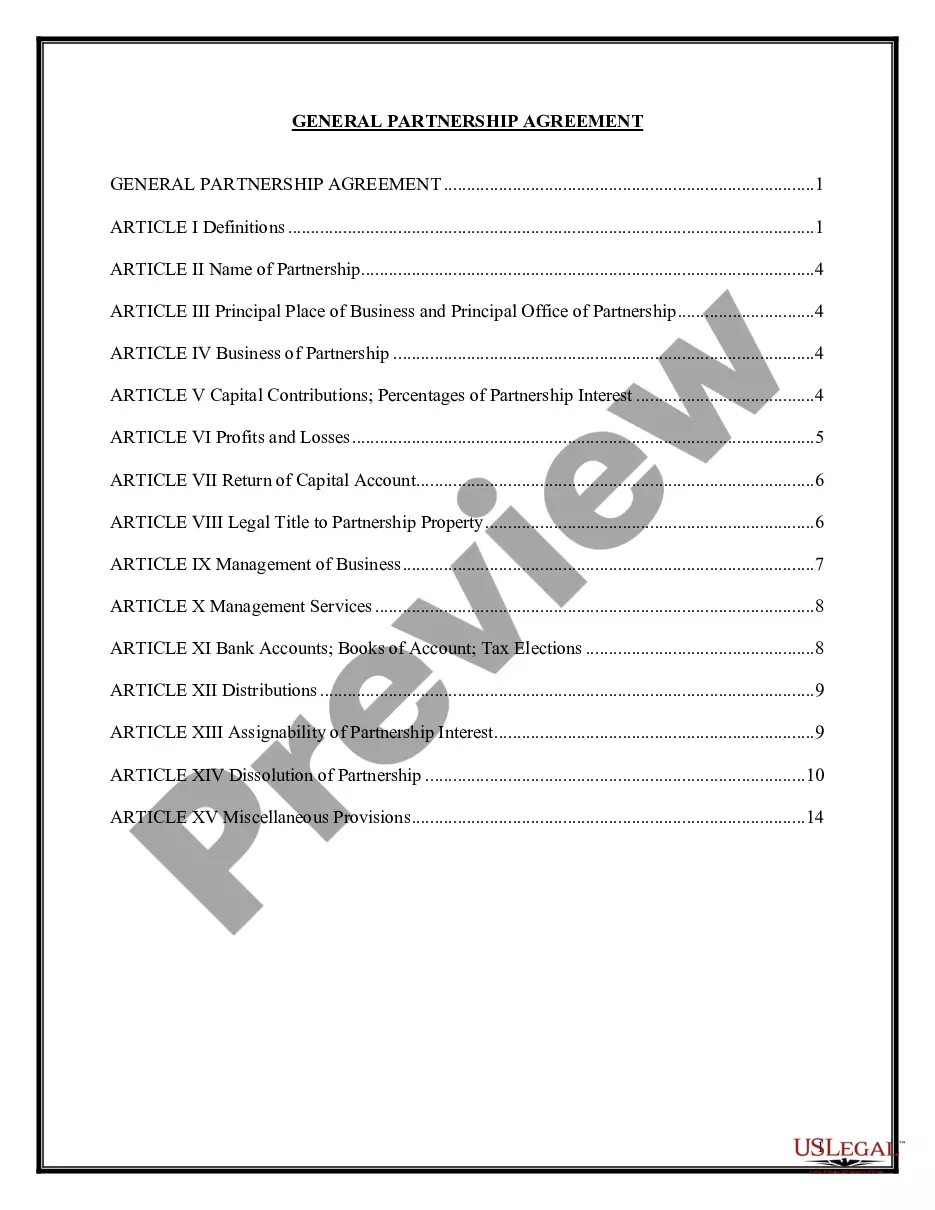
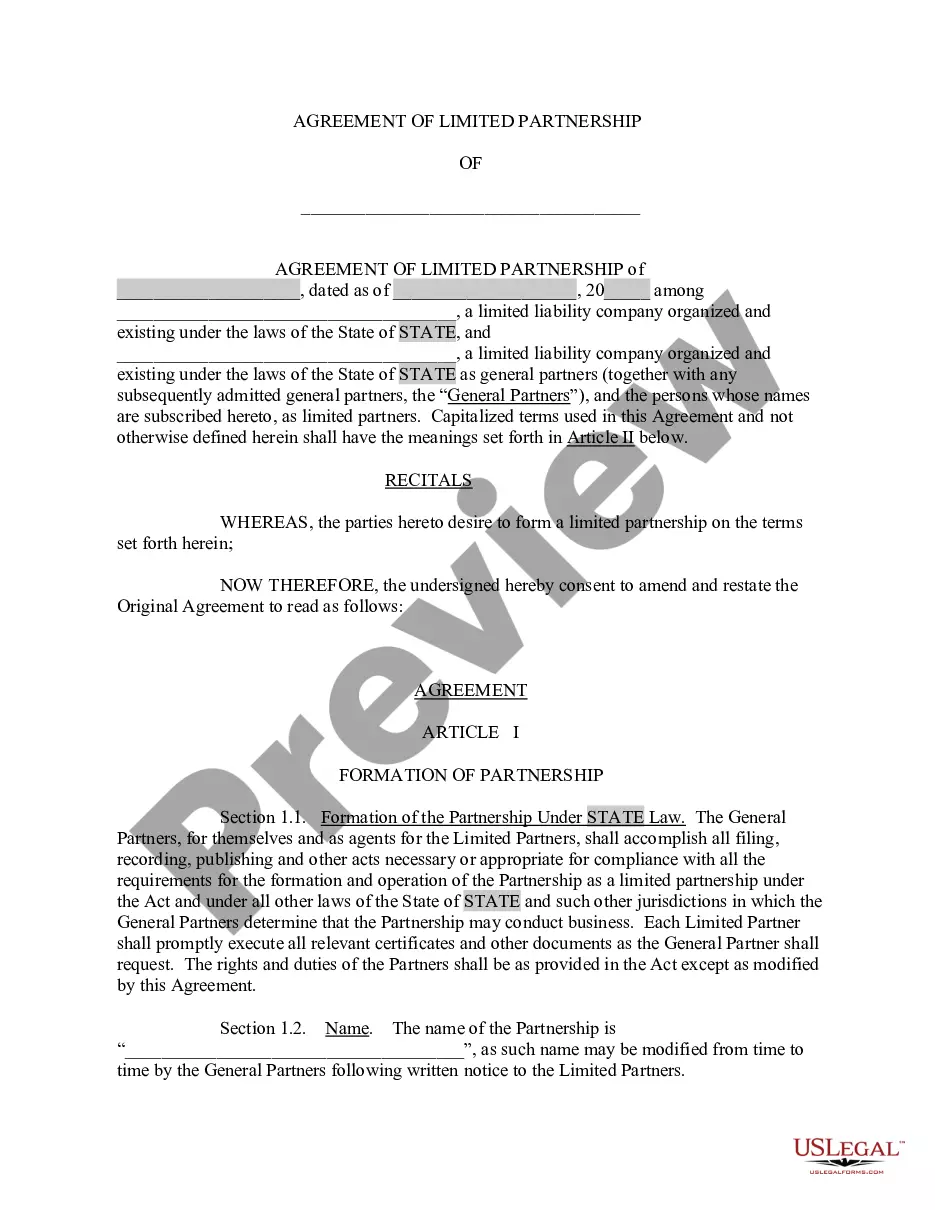
The Acknowledgment for a Limited Partnership is a crucial legal document used to affirm the existence and agreement of a limited partnership. This form signifies the formal recognition of partners' roles and responsibilities within the partnership. Unlike general partnership agreements, this document specifically emphasizes the limited liability status of partners, ensuring compliance with jurisdictional regulations. This makes it an essential tool for any business seeking to define its operational framework and protect its partners' interests.
Form components explained
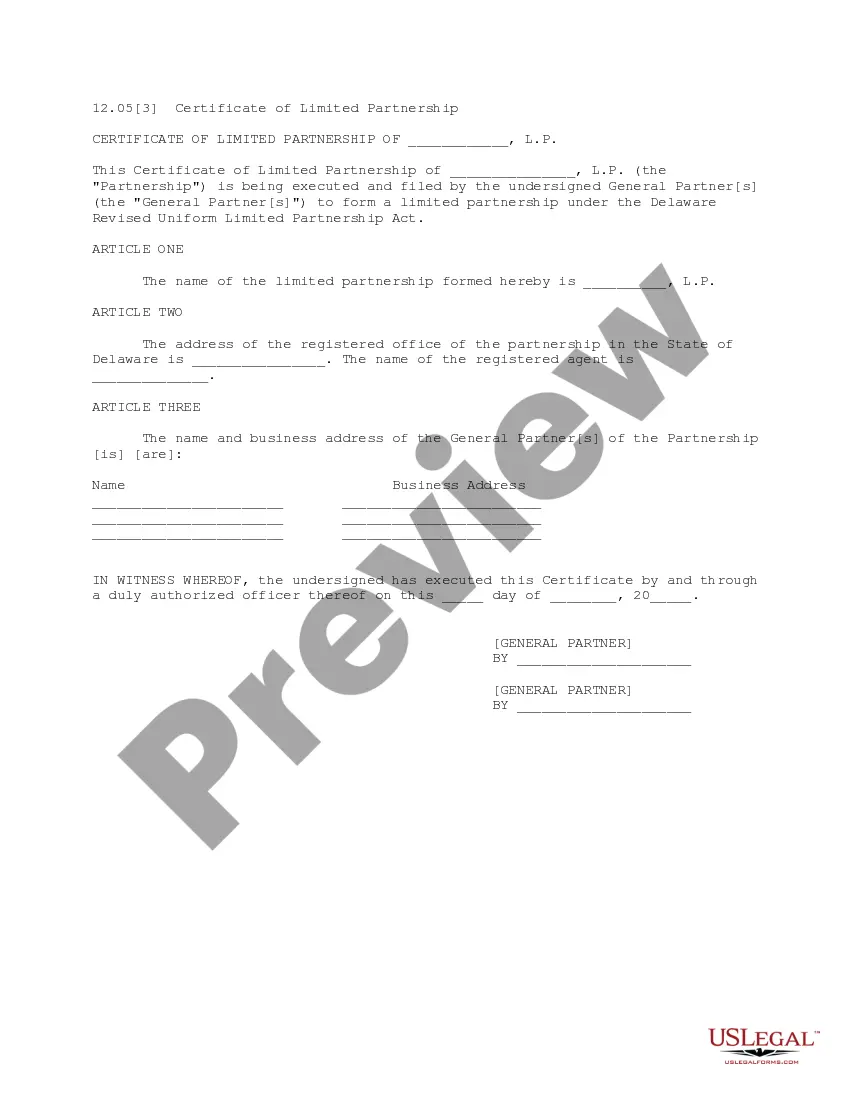
- Identification of the limited partnership and its principal place of business.
- Details of the general partner and limited partners involved.
- Signatures of all partners to acknowledge agreement.
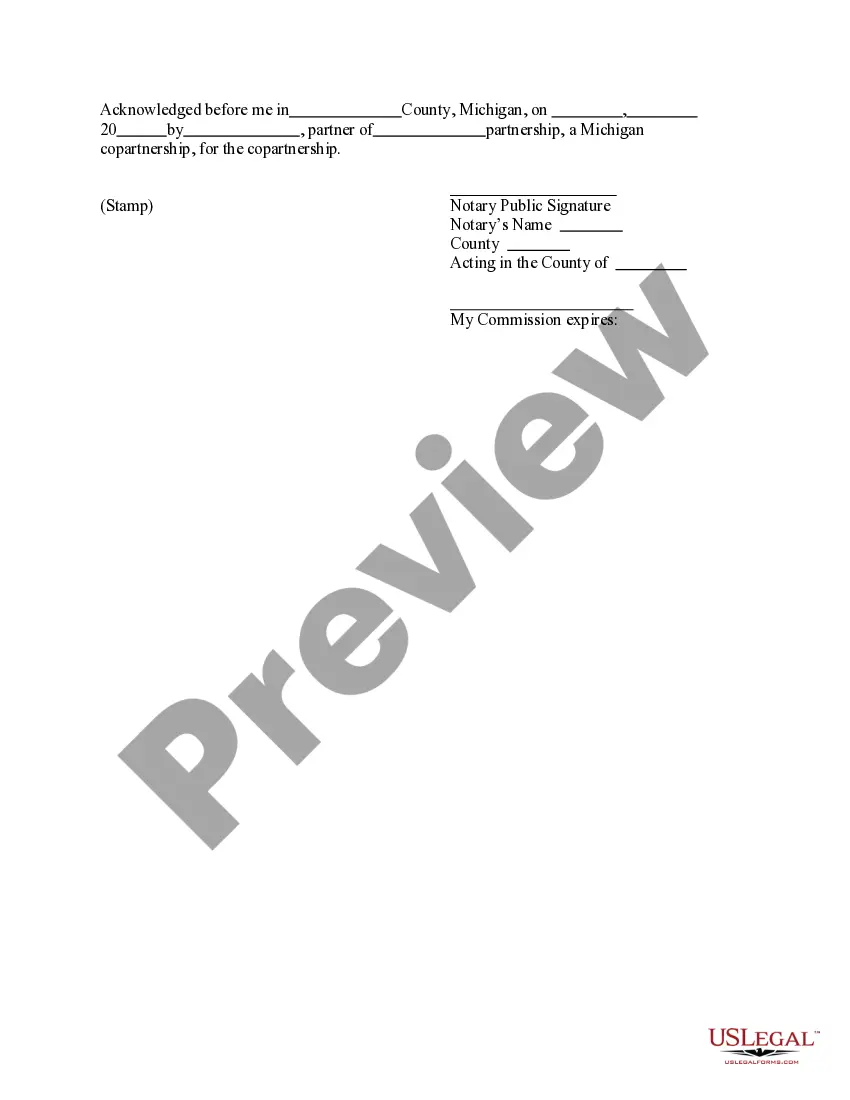
- Notary block for official witnessing of the acknowledgment.
Common use cases
This form is essential when establishing a limited partnership, especially in scenarios where the limited partners wish to limit their personal liability for the partnership's debts. It is commonly used by businesses in need of formalizing relationships among partners and ensuring compliance with state rules governing limited partnerships. Use this form whenever documenting the roles and responsibilities of partners in the formation stages of a limited partnership.
Who this form is for
- Business owners forming a limited partnership.
- General partners looking to clearly define their authority.
- Limited partners wishing to establish their liability protections.
- Legal professionals assisting clients in structuring business partnerships.
How to prepare this document
- Identify and enter the name of the limited partnership.
- List the names and addresses of all partners involved, including their roles.
- Include the date of the agreement and signatures of all partners for acknowledgment.
- Have the document notarized to authenticate the signatures.
- Keep copies for all partners and file with the appropriate state agency if required.
Does this document require notarization?
Yes, this form must be notarized to be legally valid. Notarization verifies the identities of the signers and ensures that the document has been completed correctly. US Legal Forms offers integrated online notarization services available 24/7, providing a secure video call experience that is legally equivalent to traditional notarization without the need for travel.
Get your form ready online
Our built-in tools help you complete, sign, share, and store your documents in one place.
Make edits, fill in missing information, and update formatting in US Legal Forms—just like you would in MS Word.
Download a copy, print it, send it by email, or mail it via USPS—whatever works best for your next step.
Sign and collect signatures with our SignNow integration. Send to multiple recipients, set reminders, and more. Go Premium to unlock E-Sign.
If this form requires notarization, complete it online through a secure video call—no need to meet a notary in person or wait for an appointment.
We protect your documents and personal data by following strict security and privacy standards.

Make edits, fill in missing information, and update formatting in US Legal Forms—just like you would in MS Word.

Download a copy, print it, send it by email, or mail it via USPS—whatever works best for your next step.

Sign and collect signatures with our SignNow integration. Send to multiple recipients, set reminders, and more. Go Premium to unlock E-Sign.

If this form requires notarization, complete it online through a secure video call—no need to meet a notary in person or wait for an appointment.

We protect your documents and personal data by following strict security and privacy standards.
Common mistakes
- Failing to include all partnersâ names and signatures.
- Not notarizing the document when required by law.
- Leaving out the partnership's principal place of business.
- Not providing accurate information about the roles of each partner.
Why use this form online
- Convenience of accessing and downloading the form at any time.
- Editability allows users to customize the form easily.
- Reliable legal templates drafted by licensed attorneys to ensure compliance.
Looking for another form?
Form popularity
FAQ
The most common mistake made by a notary is failing to properly identify the signer before performing an acknowledgment. This step is crucial in a Michigan Acknowledgment for a Limit Partnership, as it establishes the signer's identity and protects against fraud. Additionally, notaries sometimes overlook the requirement of completing the acknowledgment form correctly, which can lead to issues later on. Staying informed about the best practices can help prevent these errors, and resources like USLegalForms can provide guidance and templates to ensure compliance.
An example of an acknowledgment for a notary in Michigan is a document where the signer affirms their identity and the voluntary nature of their signature. This document serves as proof that the signer appeared before the notary, ensuring the integrity of the executed document. For those dealing with a Michigan Acknowledgment for a Limit Partnership, utilizing proper acknowledgment can help secure legal standing and protect both parties involved. To simplify this process, you can explore USLegalForms for templates tailored to your needs.
An acknowledgment is a specific type of declaration confirming a signer's identity and intention, while a notary is the official who performs this acknowledgment. A notary acts as a witness in the acknowledgment process, ensuring the signer is aware of what they are agreeing to. In backgrounds such as a Michigan Acknowledgment for a Limited Partnership, the notary's role is vital to uphold the integrity and legality of the document.
The purpose of an acknowledgment on the deed is to ensure that the parties involved understand and consent to the terms of the document. For a Michigan Acknowledgment for a Limited Partnership, this step establishes the legitimacy of the partnership and prevents disputes in the future. Ultimately, it offers protection to all parties by solidifying their agreement.
In legal terms, acknowledgment refers to a formal declaration made before a notary or other authorized official, confirming the authenticity of a signature. This process is crucial in transactions involving a Michigan Acknowledgment for a Limited Partnership, as it provides assurance that all parties are aware and agree to the terms outlined in the document. It reinforces the legal standing of the agreement.
One key requirement of an acknowledgment notary is that they must verify the identity of the signer through valid identification. They must also ensure that the signer understands the contents of the document, such as a Michigan Acknowledgment for a Limited Partnership. By fulfilling these requirements, the notary helps to ensure the document's integrity.
Acknowledged and notarized are related terms but are not the same. Acknowledgment involves confirming the identity of the signer and their intention, often before a notary public. In Michigan, an Acknowledgment for a Limited Partnership typically requires notarization to be legally binding, enhancing the document's validity for all parties involved.
Acknowledging a signature means confirming that the person who signed a document did so voluntarily and with the intent of executing that document. In the context of a Michigan Acknowledgment for a Limited Partnership, it assures that parties understand what they are signing. This process adds an extra layer of security and authenticity, helping to prevent fraudulent acts.