Michigan The District Court for the 41-A District
What is this form?
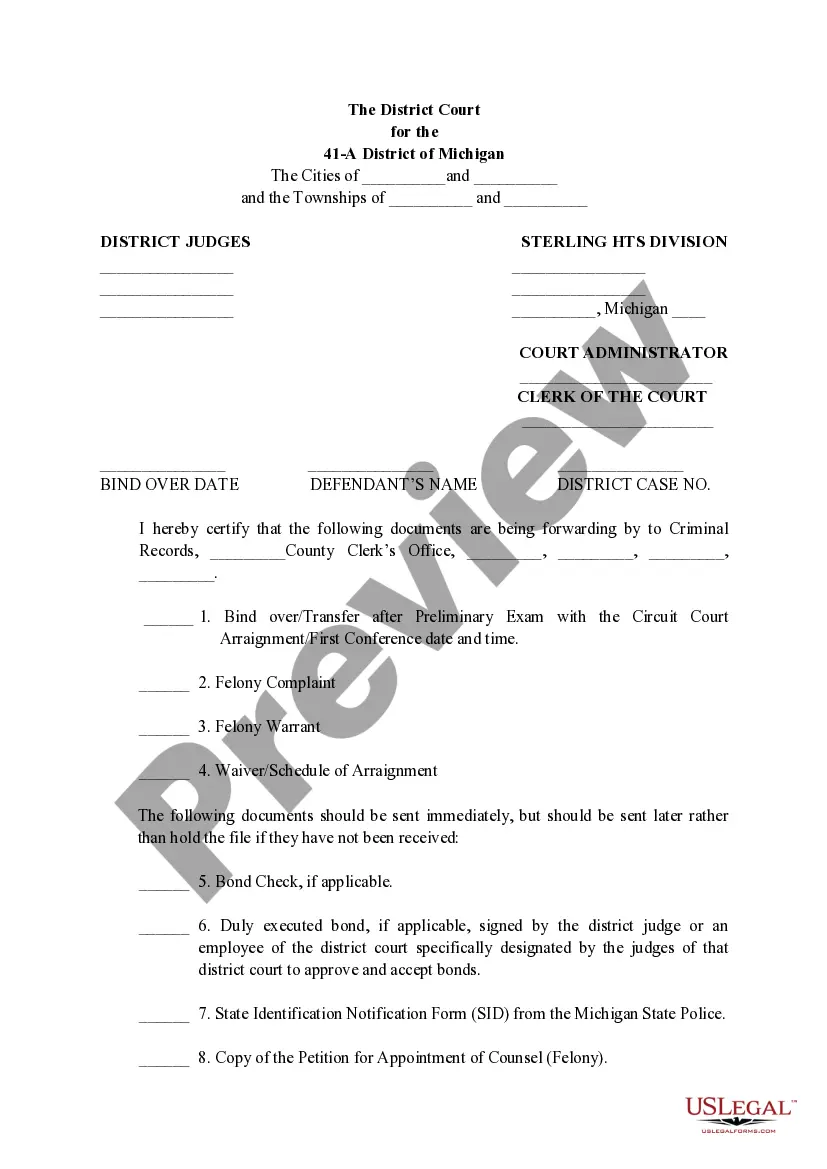
The District Court for the 41-A District form is a legal document used in Michigan to facilitate the process of transferring a felony case from the District Court to the Circuit Court. This form is essential for documenting the bind over hearing, where a judge determines whether there is sufficient evidence for the case to proceed to trial. It is specifically tailored for the 41-A District and highlights the procedural requirements for felony cases, distinguishing itself from forms used in other jurisdictions or for different case types.
Key components of this form
- District judges and court information specific to the 41-A District.
- Fields for the bind over date, defendantâs name, and district case number.
- Certification section for forwarding relevant documents to the county clerk's office.
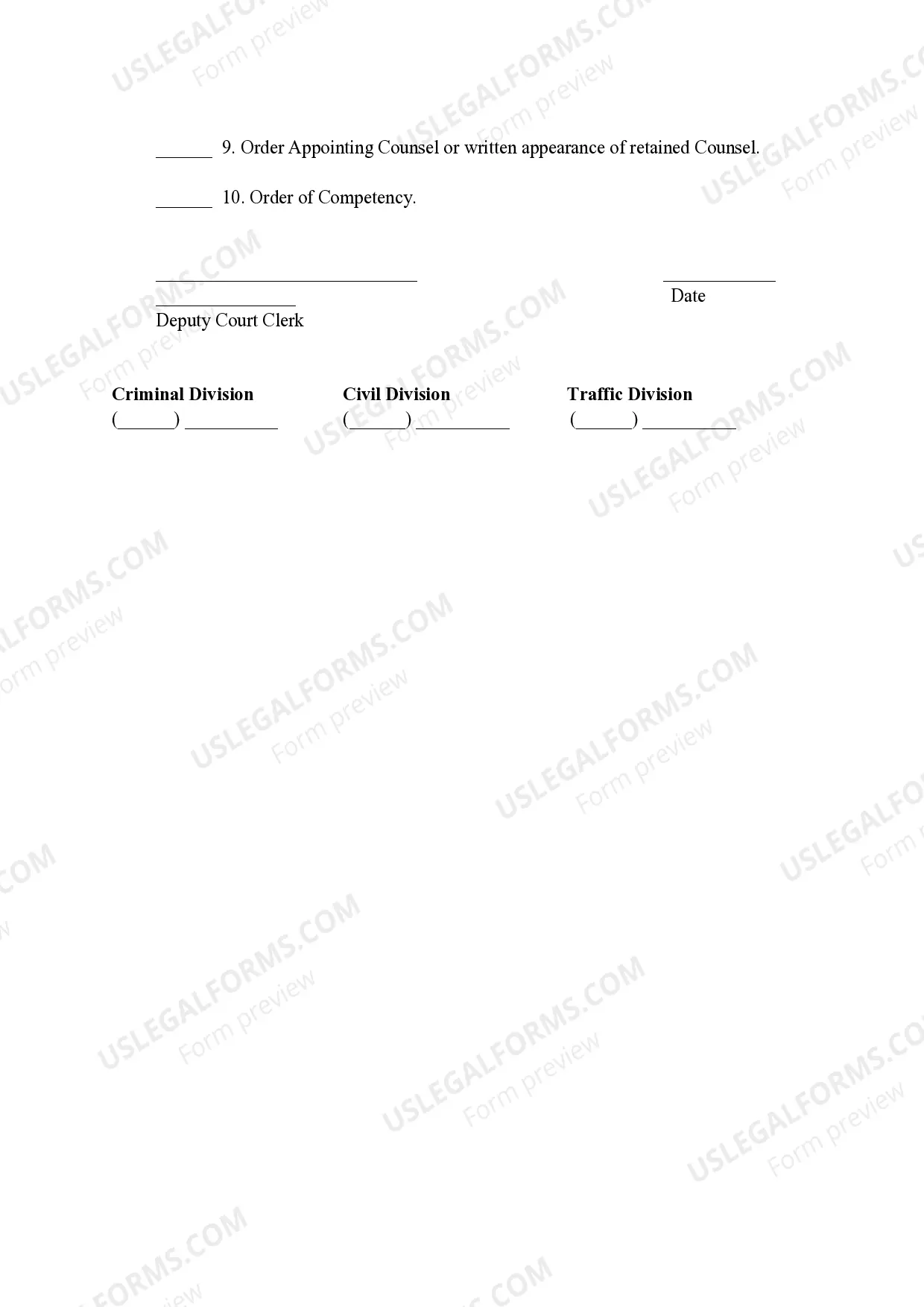
- List of documents required for the transfer process.
- Space for signatures from court officials, assuring the form's validity.
When to use this document
This form should be used when a felony defendant has been bound over for trial following a preliminary examination in the District Court. It is necessary to complete this transfer to the Circuit Court, which handles felony cases. Utilizing this form ensures that all related documents are appropriately submitted, facilitating the progress of the legal proceedings.
Who this form is for
- Defendants involved in felony cases within the 41-A District of Michigan.
- Attorneys representing defendants in felony charges who need to transfer cases to the Circuit Court.
- Court clerks and administrators managing the documentation and processing of felony cases.
Steps to complete this form
- Enter the names of the cities and townships relevant to the case at the top of the form.
- Fill in the bind over date, defendantâs name, and the district case number in the designated fields.
- Check off the documents being forwarded to the County Clerkâs Office as listed on the form.
- Sign and date the certification section at the bottom, ensuring proper authorization.
- Ensure that all necessary signatures are obtained from district judges or designated court employees.
Does this document require notarization?
This form does not typically require notarization unless specified by local law. Always verify the requirements to ensure compliance.
Get your form ready online
Our built-in tools help you complete, sign, share, and store your documents in one place.
Make edits, fill in missing information, and update formatting in US Legal Forms—just like you would in MS Word.
Download a copy, print it, send it by email, or mail it via USPS—whatever works best for your next step.
Sign and collect signatures with our SignNow integration. Send to multiple recipients, set reminders, and more. Go Premium to unlock E-Sign.
If this form requires notarization, complete it online through a secure video call—no need to meet a notary in person or wait for an appointment.
We protect your documents and personal data by following strict security and privacy standards.

Make edits, fill in missing information, and update formatting in US Legal Forms—just like you would in MS Word.

Download a copy, print it, send it by email, or mail it via USPS—whatever works best for your next step.

Sign and collect signatures with our SignNow integration. Send to multiple recipients, set reminders, and more. Go Premium to unlock E-Sign.

If this form requires notarization, complete it online through a secure video call—no need to meet a notary in person or wait for an appointment.

We protect your documents and personal data by following strict security and privacy standards.
Typical mistakes to avoid
- Failing to include all required documents listed on the form.
- Not obtaining the necessary signatures before submission.
- Leaving fields blank, especially key information such as dates and case numbers.
- Submitting the form after the deadline for the preliminary examination.
Why complete this form online
- Immediate access to the form for quick completion and submission.
- Editability allows users to ensure accuracy before finalizing the document.
- Reliability of having a professionally drafted form that meets legal standards.
Legal use & context
- This form is legally recognized for transferring felony cases in Michigan.
- Incorrectly completed forms may lead to delays in legal proceedings.
- This document serves as an official record in the court system, affecting the progress of the case.
Looking for another form?
Form popularity
FAQ
Michigan has several district courts, including Michigan The District Court for the 41-A District. These courts serve various counties and have specific regions of jurisdiction and responsibility. Each district court addresses different legal matters, thereby ensuring that residents have convenient access to justice. If you need to navigate the court system, platforms like US Legal Forms can assist you in understanding which court applies to your situation.
The primary difference lies in their jurisdiction and types of cases handled. Local courts deal with more minor matters, such as traffic violations, while Michigan The District Court for the 41-A District handles more serious civil and criminal cases. Moreover, district courts offer a broader range of services and functions, often addressing issues that affect the community directly. Understanding this distinction can guide you in choosing the right court for your legal needs.
You can contact the Michigan courts through several channels for any inquiries or assistance. Each court, including Michigan The District Court for the 41-A District, has a dedicated phone line and website where you can find the information you need. Additionally, you can visit the courthouse in person for more direct communication. Utilizing resources like US Legal Forms can help simplify the process of finding necessary contact details.
A case may go to district court for various reasons, including the type and severity of the case. Michigan The District Court for the 41-A District handles civil cases, like small claims, and certain criminal matters. When a dispute arises that falls within their jurisdiction, parties typically present their cases here for a resolution. This court serves as a crucial entry point into the legal system.