Michigan Report And Recommendation
Understanding this form
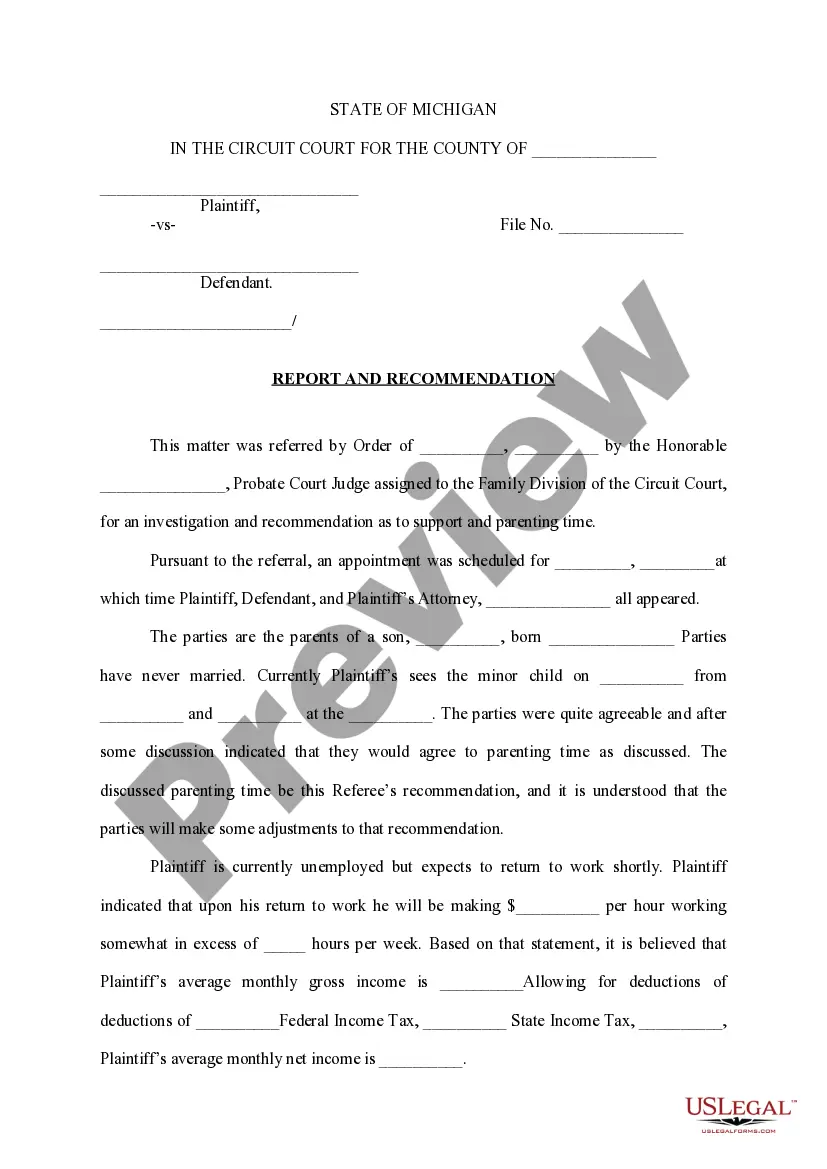
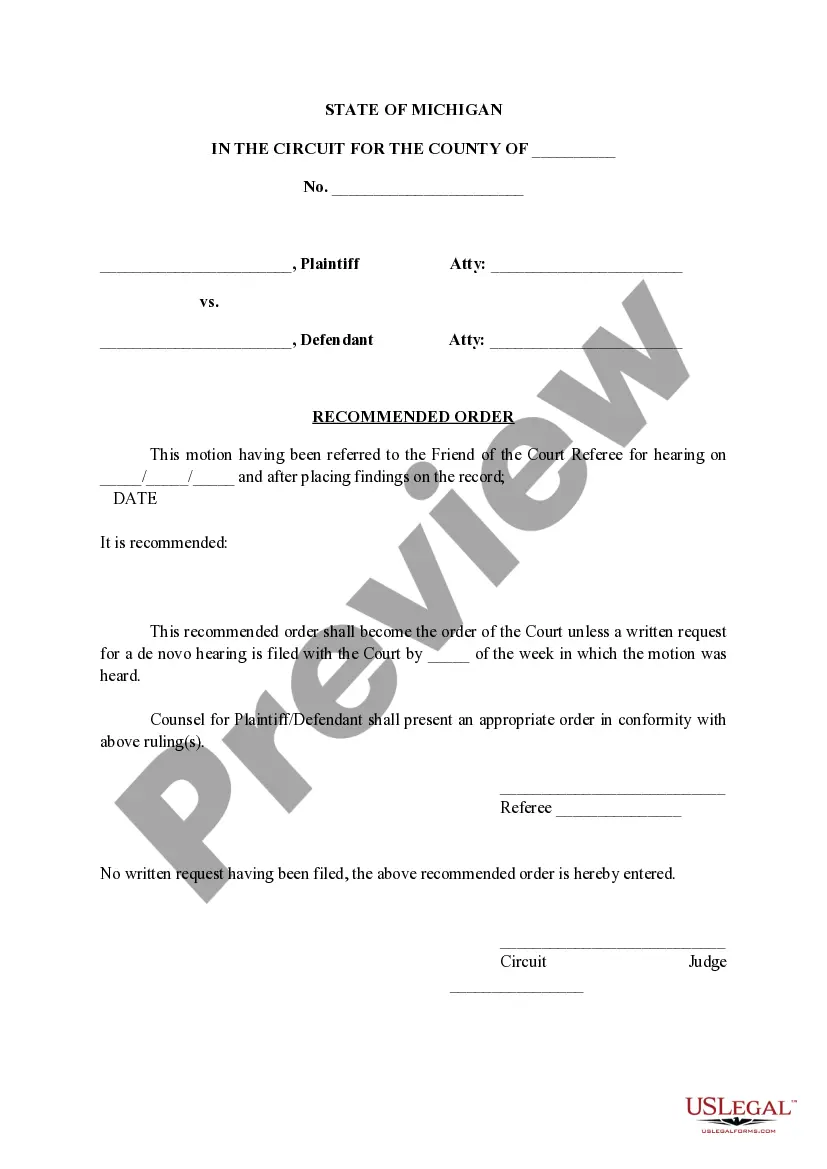
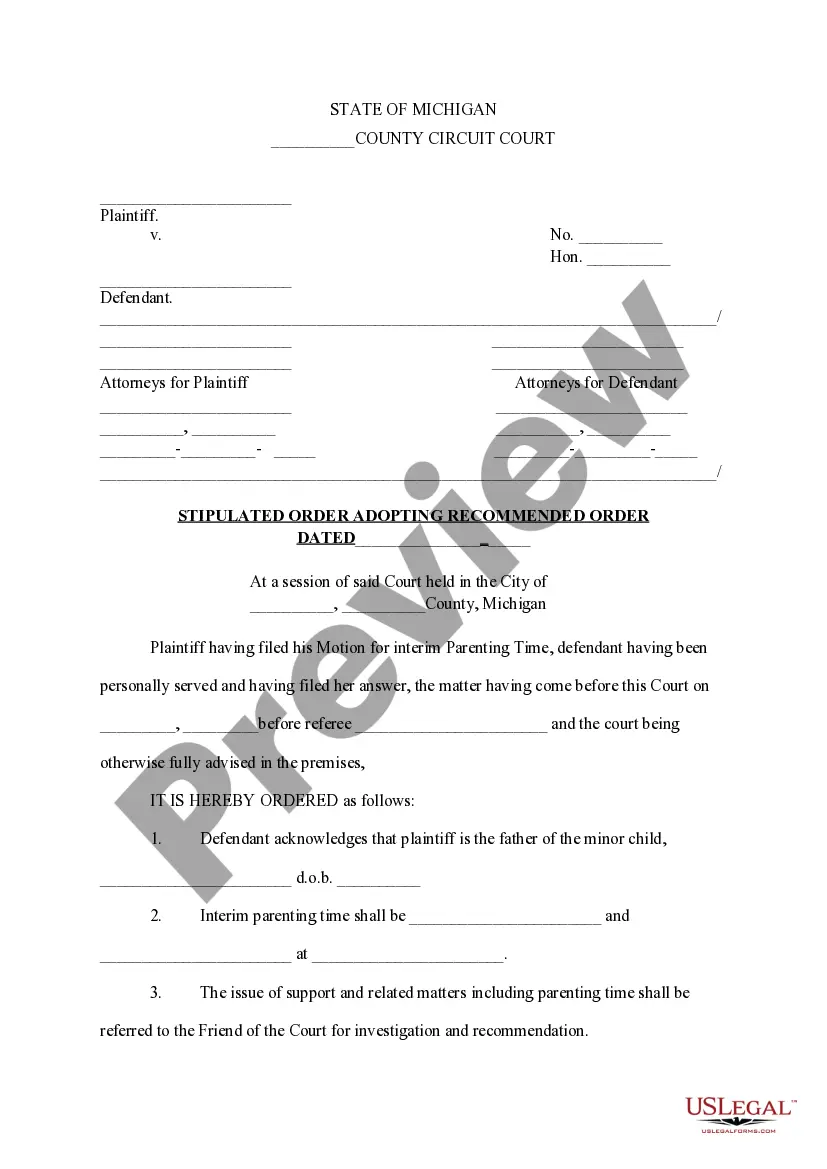
The Report and Recommendation is a legal document used in family court proceedings. It is generated by a mediator when the parties involved in a dispute cannot reach an agreement. This form outlines the mediator's findings and recommendations regarding parenting time and child support, which are then submitted to the court for consideration. Unlike similar forms, this document specifically reflects insights from mediation, providing a structured approach to resolving family disputes in a court setting.
Main sections of this form
- The title and identification of the court and parties involved.
- Details of the referral order from the court.
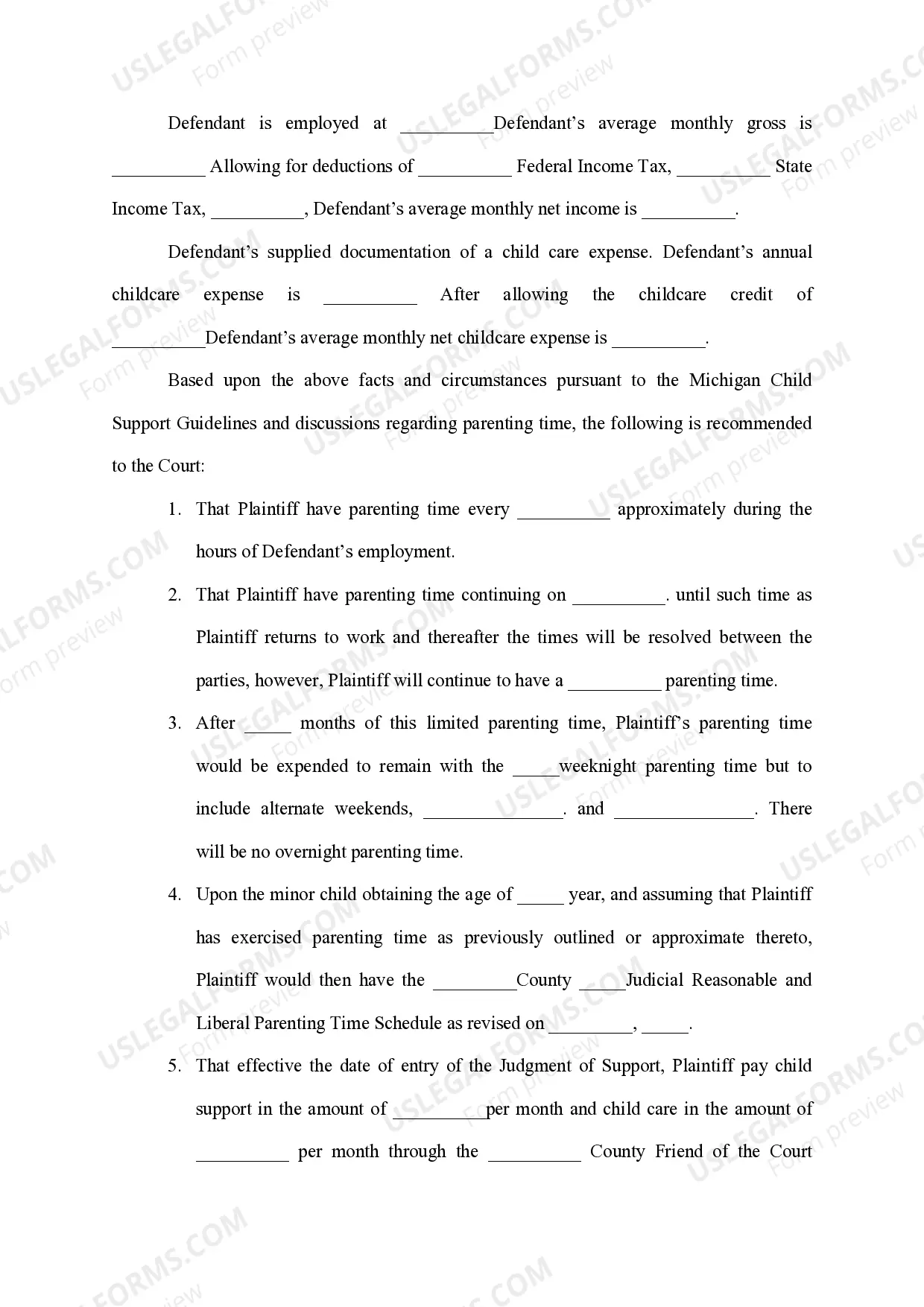
- Information about parenting time arrangements and child support calculations.
- Financial details concerning the parties, including income and expenses.
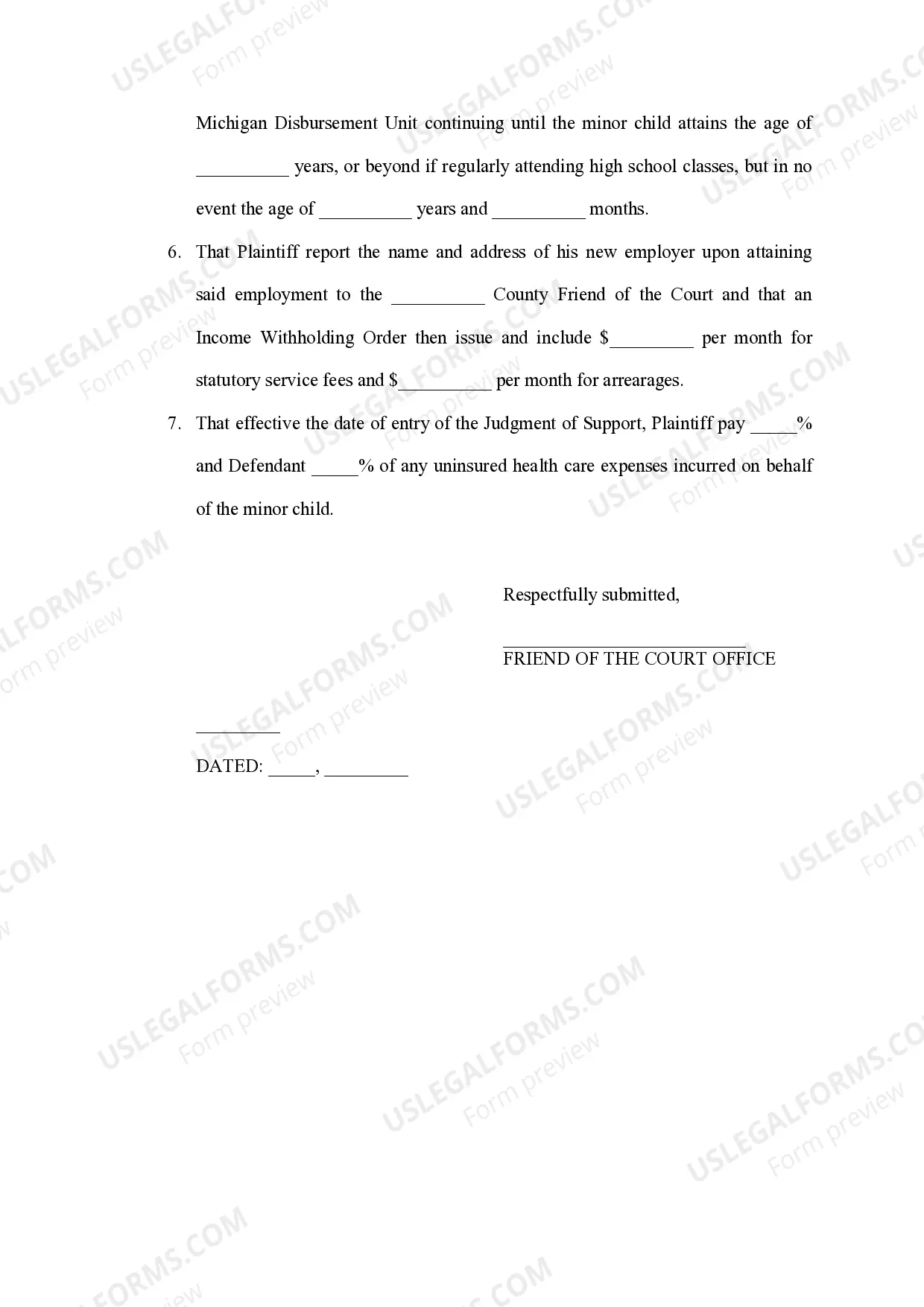
- Recommendations on parenting time and support amounts due to the court.
- Signature section for the Friend of the Court office.
Situations where this form applies
This form should be used when parents, after mediation, cannot agree on issues regarding child custody or support. It is particularly relevant in cases where the court has ordered a mediation session to come to a resolution on parenting time and financial responsibilities, ensuring the best interests of the child are upheld.
Who needs this form
- Parents who are involved in child custody disputes that require court intervention.
- Individuals participating in mediation as part of family law proceedings.
- Legal representatives looking to submit a formal recommendation to the court on behalf of their clients.
Completing this form step by step
- Start by entering the names of the plaintiff and defendant, along with the file number and county.
- Fill in the referral date and the name of the Probate Court Judge.
- Provide details regarding the minor child, including their name and date of birth.
- Document the current employment status and income information for both parties.
- Outline the proposed parenting time schedule and any support payments required.
- Sign and date the form at the bottom to finalize the report.
Does this form need to be notarized?
This form does not typically require notarization unless specified by local law. Ensure to check any specific requirements in Michigan that may necessitate notarization in certain cases.
Get your form ready online
Our built-in tools help you complete, sign, share, and store your documents in one place.
Make edits, fill in missing information, and update formatting in US Legal Forms—just like you would in MS Word.
Download a copy, print it, send it by email, or mail it via USPS—whatever works best for your next step.
Sign and collect signatures with our SignNow integration. Send to multiple recipients, set reminders, and more. Go Premium to unlock E-Sign.
If this form requires notarization, complete it online through a secure video call—no need to meet a notary in person or wait for an appointment.
We protect your documents and personal data by following strict security and privacy standards.

Make edits, fill in missing information, and update formatting in US Legal Forms—just like you would in MS Word.

Download a copy, print it, send it by email, or mail it via USPS—whatever works best for your next step.

Sign and collect signatures with our SignNow integration. Send to multiple recipients, set reminders, and more. Go Premium to unlock E-Sign.

If this form requires notarization, complete it online through a secure video call—no need to meet a notary in person or wait for an appointment.

We protect your documents and personal data by following strict security and privacy standards.
Common mistakes to avoid
- Failing to include accurate income information for both parties.
- Not specifying agreed-upon parenting time accurately.
- Forgetting to sign the form, which may render it invalid.
- Using outdated legal guidelines when calculating support obligations.
Benefits of using this form online
- Convenience of accessing and completing the form from anywhere.
- Ability to edit and save the document as needed before finalizing.
- Access to accurate, attorney-drafted content that meets legal standards.
Looking for another form?
Form popularity
FAQ
Rule 2.313 in Michigan addresses the process of discovery and the use of requests for production of documents. This rule allows parties in a case to obtain necessary evidence from each other, facilitating a transparent legal process. It plays an essential role in preparing for hearings and aligns with the Michigan Report And Recommendation framework. Utilizing platforms like uslegalforms can help you understand and apply this rule effectively.
The 7 day rule in Michigan court pertains to the timeline that parties must follow when responding to certain motions. Specifically, when a motion is served, the opposing party has seven days to file a response. This rule ensures that all parties have a fair opportunity to present their viewpoints. Understanding the 7 day rule is crucial for navigating the Michigan Report And Recommendation process effectively.
In Michigan, the best interest of the child is determined by several factors, including emotional ties, stability, and the child's preference. The Michigan Report And Recommendation outlines these considerations clearly, emphasizing the importance of maintaining strong, healthy relationships with both parents. Understanding these factors can greatly improve your chances during custody proceedings. Always strive to put your child's welfare first in any legal matter.
One of the most significant mistakes in a custody battle is failing to prioritize the child's needs. Courts focus on the best interests of the child as outlined in the Michigan Report And Recommendation. Parents should avoid negative talk about the other parent in front of the child or taking actions that could harm the child's emotional well-being. Seeking legal counsel can help you navigate these sensitive issues effectively.
To respond to a summons for debt collection in Michigan, first, review the document carefully. Identify the deadline to file your answer, as failing to do so may lead to a default judgment. In your response, include your defenses and any counterclaims you might have. For clarity, consider utilizing resources like the Michigan Report And Recommendation to better understand the legal process and for guidance.
The $550 check in Michigan goes to eligible residents who have filed their tax returns and meet the state's criteria for receiving support. Typically, this includes individuals and families with specific income levels, ensuring that the assistance reaches those in need. For a clear breakdown of eligibility and benefits, the Michigan Report And Recommendation provides tailored insights and directions. By reviewing this report, you can confirm your eligibility and understand the next steps to obtain your refund.
The $550 refund in Michigan refers to a payment issued by the state to eligible taxpayers as part of a broader economic relief initiative. This refund aims to provide financial support to individuals who meet specific income requirements. To learn more about the application process and eligibility criteria, you can consult the Michigan Report And Recommendation for comprehensive guidance. This document serves as an essential resource for understanding how the refund impacts you.
To file your Michigan annual report online, head to the official LARA website for a user-friendly experience. You'll need to create or log into your account to access the filing system. Make sure you have your business information ready for a seamless process. The Michigan Report And Recommendation will guide you through any complexities you might encounter.
Filing your Michigan annual report online is a straightforward process. Start by visiting the Michigan Department of Licensing and Regulatory Affairs (LARA) website. There, you can access the online filing portal where you’ll complete and submit your report. Utilizing the Michigan Report And Recommendation can help clarify the necessary steps and requirements.
When dealing with incidents that require reporting to the Michigan Department of Natural Resources (DNR), timely action is essential. You typically need to file your report within 24 hours of the incident. Delays can complicate matters, so it’s wise to act swiftly. For specific recommendations, the Michigan Report And Recommendation can provide valuable insights.