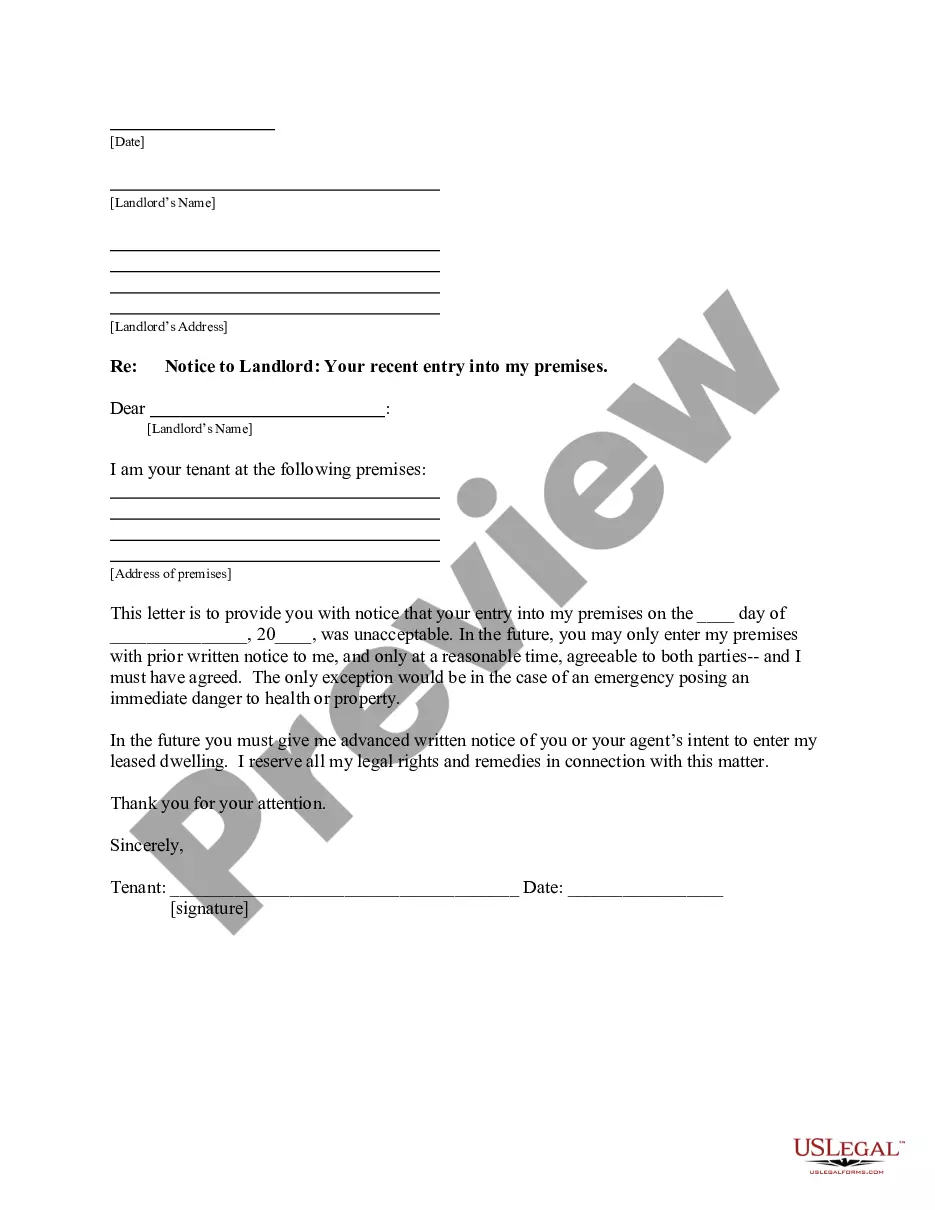
Michigan Default Judgment of Filiations and Support
About this form
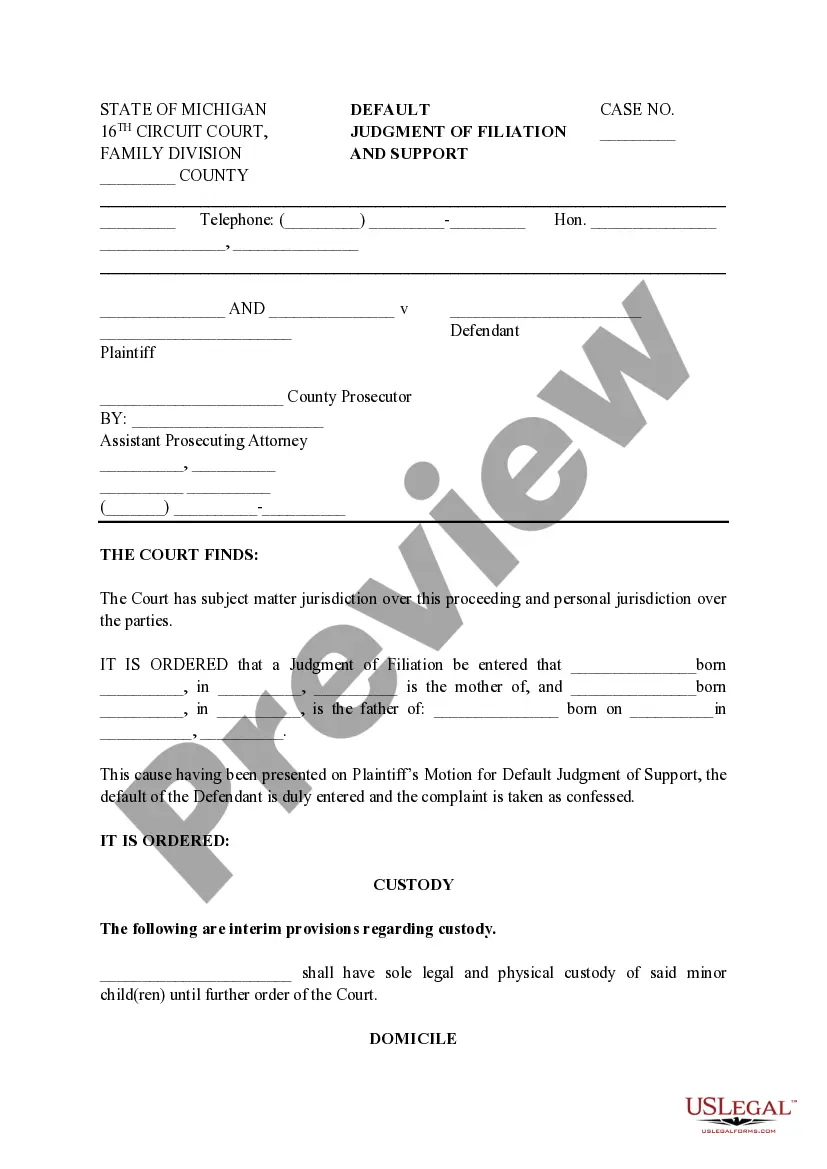
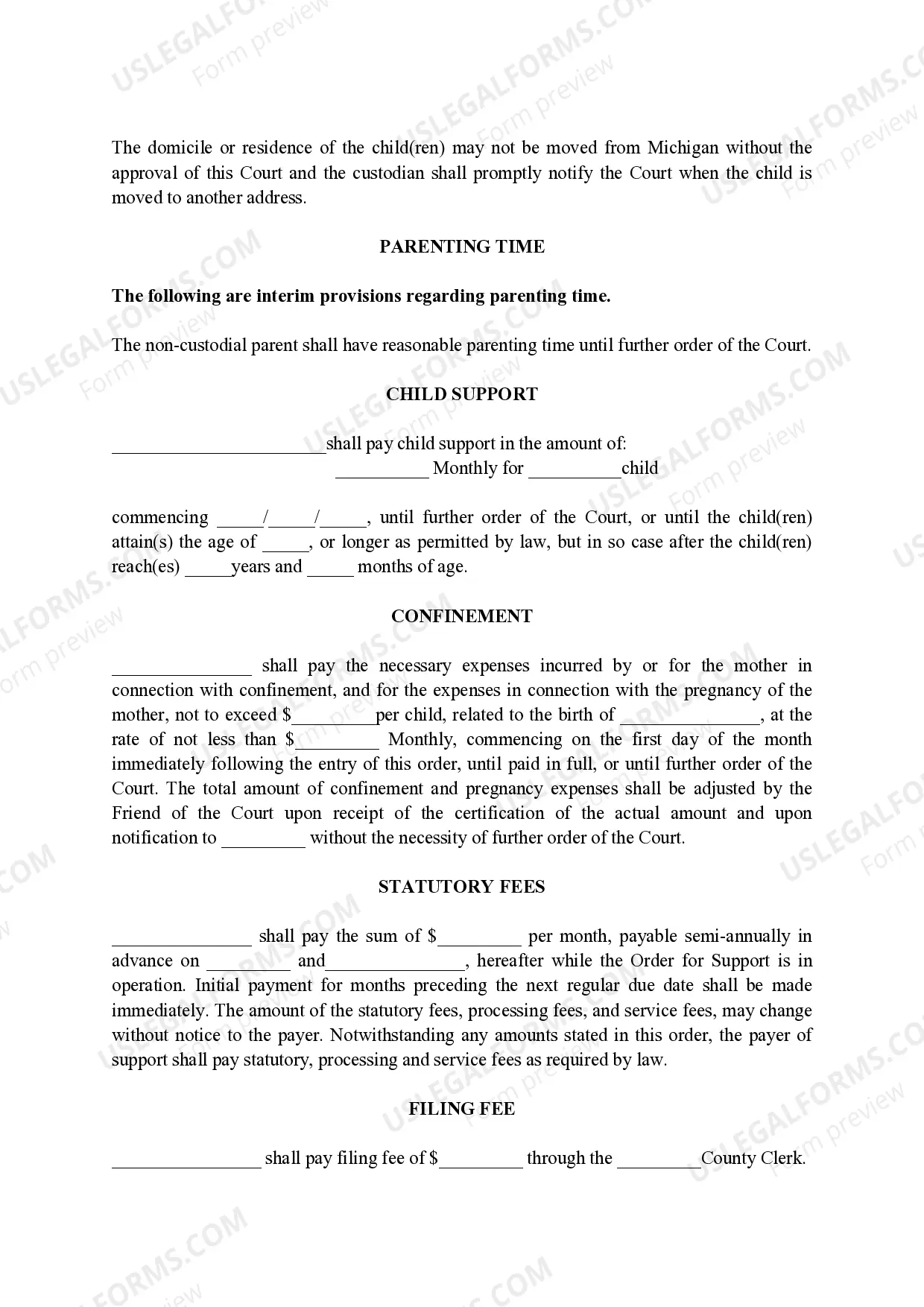
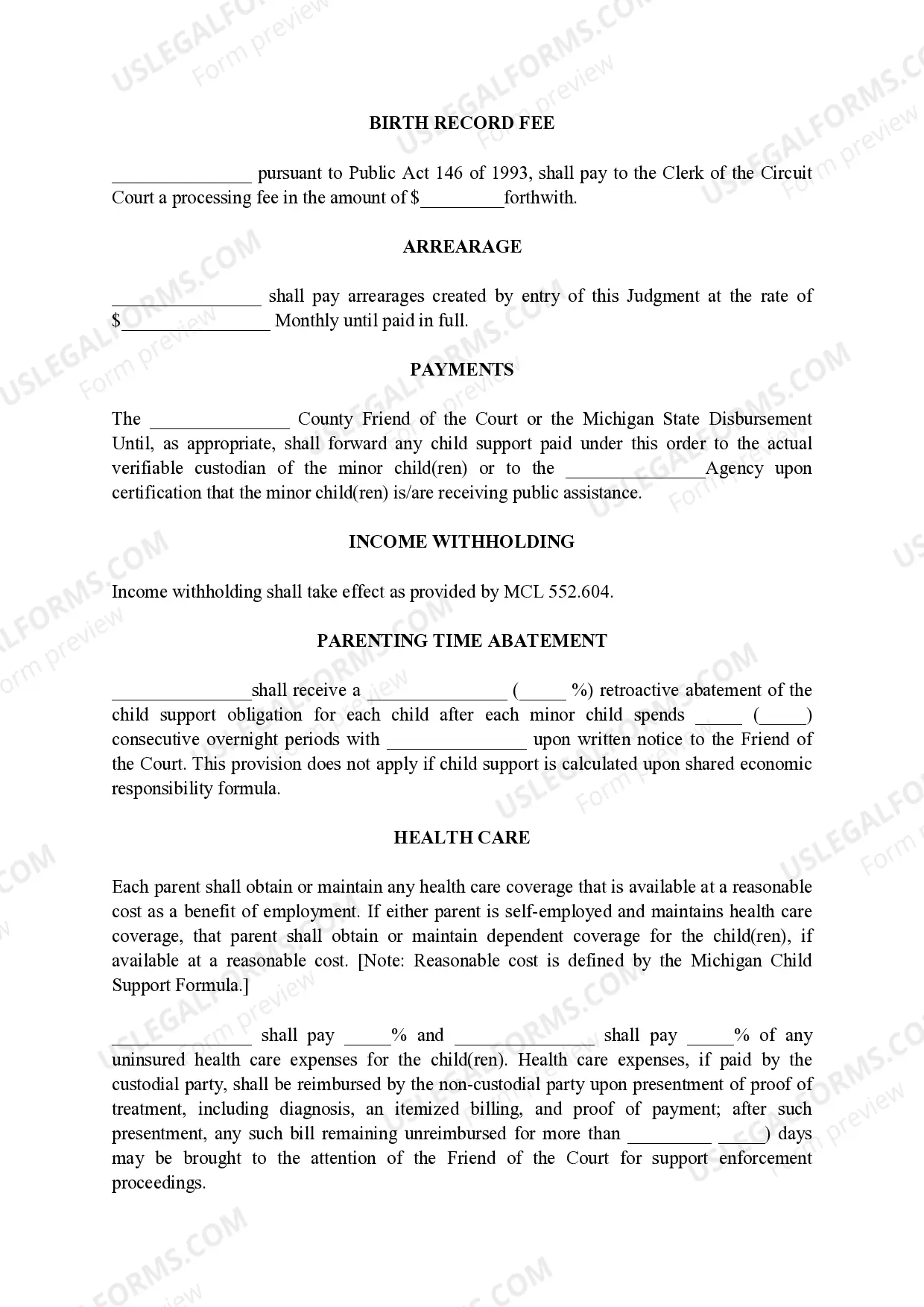
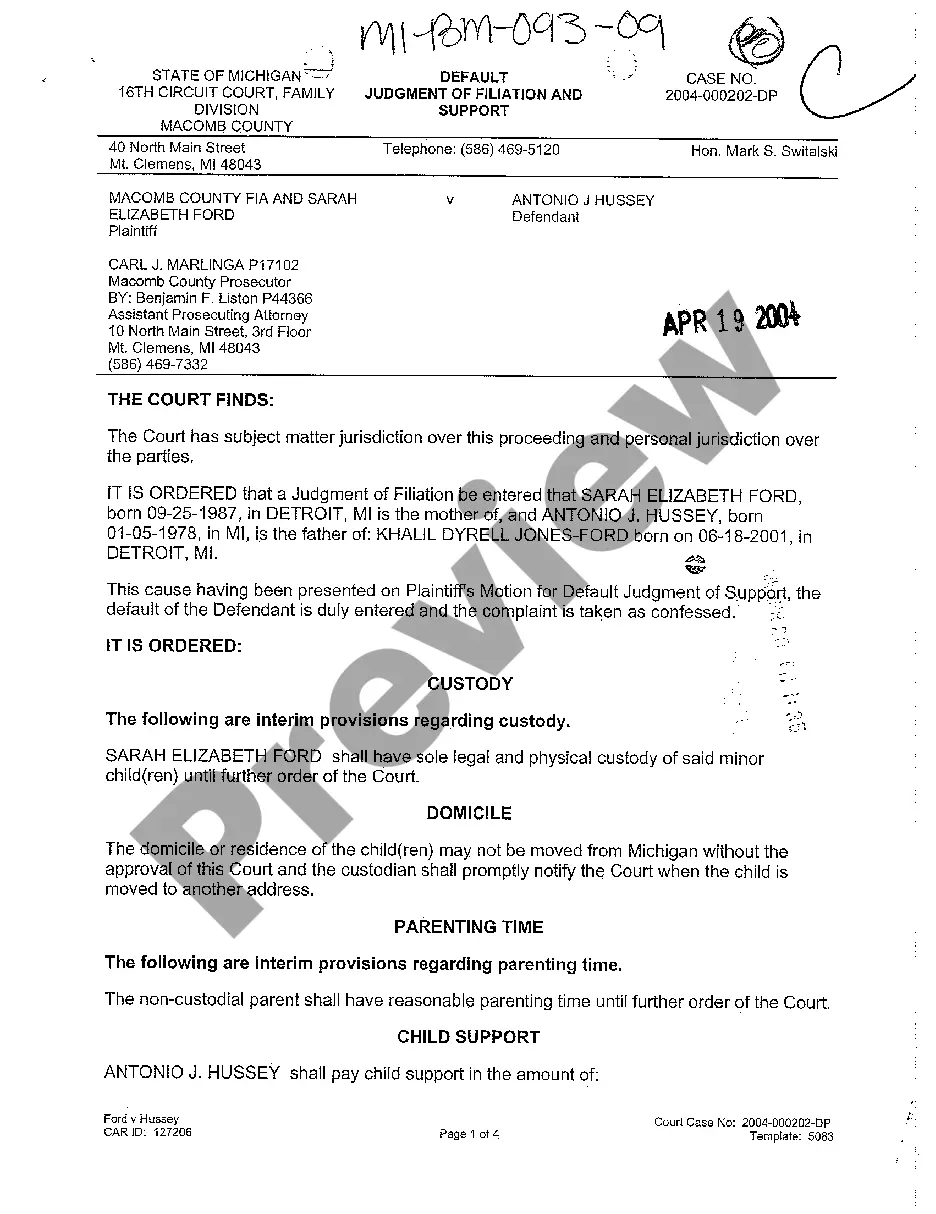
The Default Judgment of Filiation and Support is a legal document used in cases involving child custody when the defendant does not respond to the court's inquiries. This judgment allows the court to enter a decision in favor of the plaintiff, solidifying the terms of custody and support for the child(ren) involved. This form is crucial for ensuring that child support and custody arrangements are established legally, especially when one party fails to participate in the legal proceedings.
Main sections of this form
- Case number and court information.
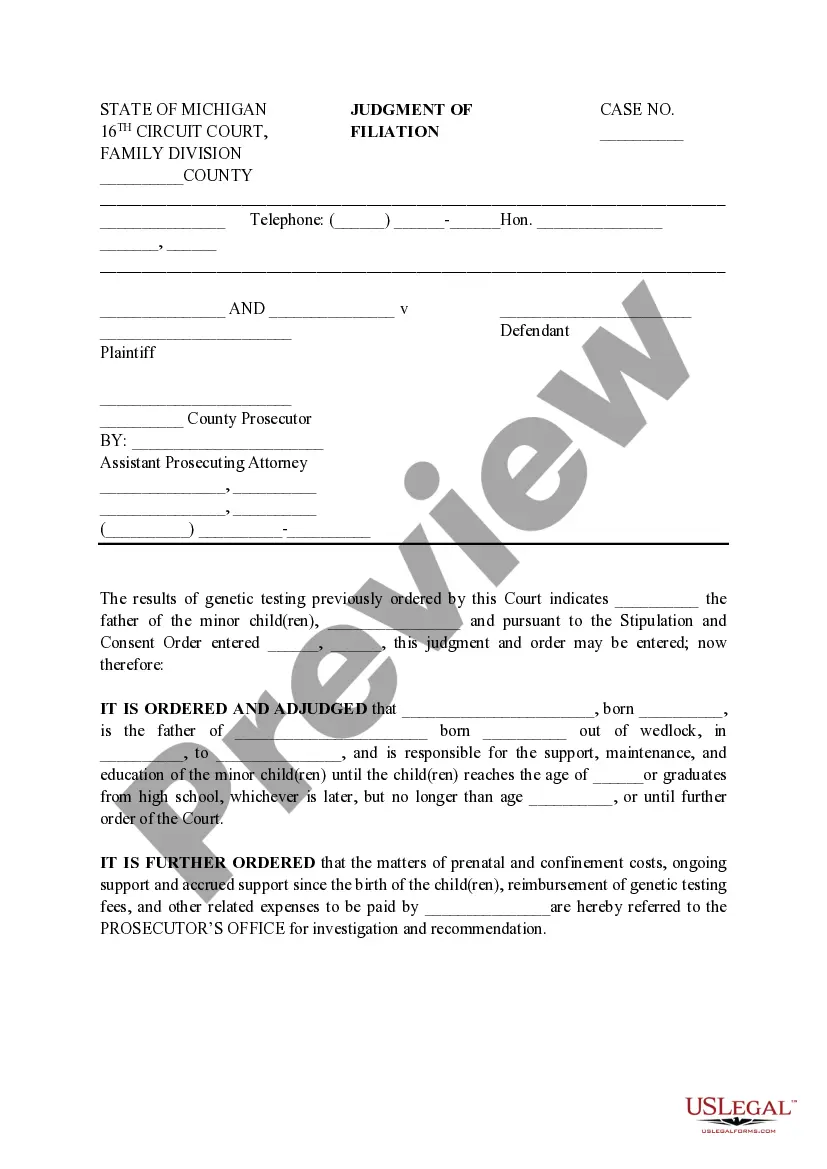
- Judgment of filiation establishing parental relationships.
- Custody arrangements for the minor child(ren).
- Details on child support obligations.
- Provisions for health care coverage and uninsured expenses.
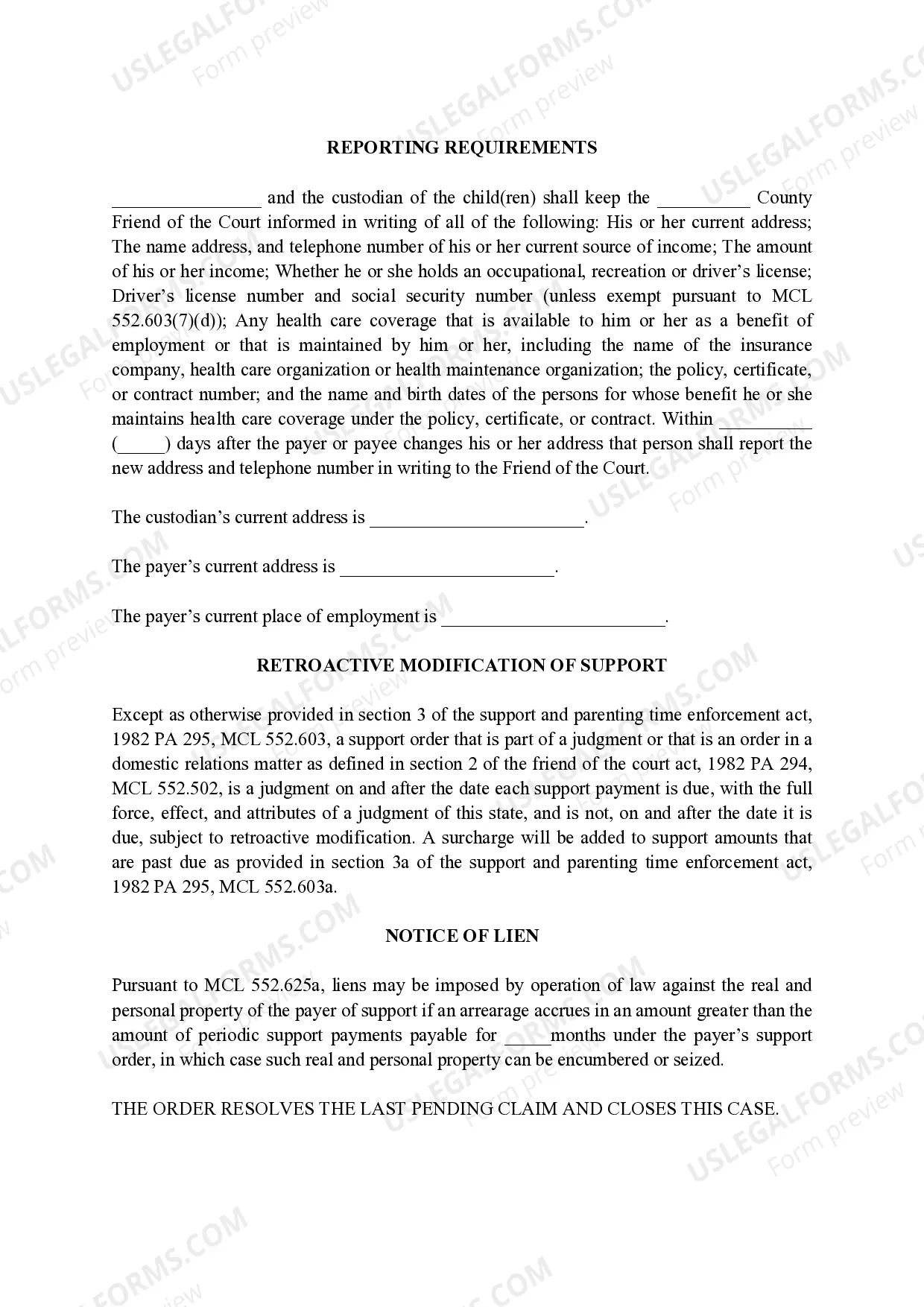
- Notification and reporting requirements for both parents.

When this form is needed
This form is used in situations where a parent is pursuing custody and child support from another parent who has not responded to the court's notifications. It is applicable in child custody disputes where establishing legal parentage is crucial and when timely responses from the defendant are lacking. By obtaining a default judgment, the plaintiff can clarify custody rights and support responsibilities without further delay.
Who this form is for
This form is intended for:
- Parents seeking legal determination of custody and support for their child(ren).
- Individuals needing to establish parental rights when the other parent does not respond to court orders.
- Custodial parents looking to secure financial support from a non-responsive parent.
How to prepare this document
- Fill in the case number, court name, and county of jurisdiction.
- Identify the plaintiff and defendant by entering their names and relevant details.
- Complete the sections regarding custody and child support by specifying amounts and conditions.
- Sign and date the form in the designated areas.
- File the completed form with the appropriate court to initiate default judgment proceedings.
Does this form need to be notarized?
This form does not typically require notarization unless specified by local law. Ensure you check with your local court requirements to confirm if notarization is needed for your specific case.
Get your form ready online
Our built-in tools help you complete, sign, share, and store your documents in one place.
Make edits, fill in missing information, and update formatting in US Legal Forms—just like you would in MS Word.
Download a copy, print it, send it by email, or mail it via USPS—whatever works best for your next step.
Sign and collect signatures with our SignNow integration. Send to multiple recipients, set reminders, and more. Go Premium to unlock E-Sign.
If this form requires notarization, complete it online through a secure video call—no need to meet a notary in person or wait for an appointment.
We protect your documents and personal data by following strict security and privacy standards.

Make edits, fill in missing information, and update formatting in US Legal Forms—just like you would in MS Word.

Download a copy, print it, send it by email, or mail it via USPS—whatever works best for your next step.

Sign and collect signatures with our SignNow integration. Send to multiple recipients, set reminders, and more. Go Premium to unlock E-Sign.

If this form requires notarization, complete it online through a secure video call—no need to meet a notary in person or wait for an appointment.

We protect your documents and personal data by following strict security and privacy standards.
Avoid these common issues
- Failing to provide complete information regarding the parties involved.
- Not including the correct case number or court information.
- Leaving sections on child support amounts blank or incomplete.
Benefits of using this form online
- Convenience of immediate access and downloading the form.
- Editability to customize based on specific case needs.
- Reliability from properly drafted templates by licensed attorneys.
Looking for another form?


Form popularity
FAQ
Yes, even after a Michigan Default Judgment of Filiations and Support has been made, there are options available. Parties can seek to modify the judgment if circumstances change, such as income fluctuations or job loss. Additionally, you might appeal the judgment if there are valid grounds for doing so. US Legal Forms can provide the necessary forms and guidance through this process.
Once a Michigan Default Judgment of Filiations and Support is granted, the court recognizes the legal obligations of the non-custodial parent to provide financial support. This judgment simplifies the process of enforcing child support payments. The custodial parent may receive support payments as determined by the court, impacting the child's welfare positively. For clarity on how to proceed, consider using US Legal Forms.
In Michigan, the order of filiation establishes the legal relationship between a child and a parent. This order can initiate a Michigan Default Judgment of Filiations and Support, ensuring that both parents fulfill their obligations. It legally recognizes the child's rights to support and inheritance. If you need assistance navigating this process, US Legal Forms provides reliable resources.
The consequences of a default judgment can be significant, as it often results in a binding decision that favors the party who filed for default. This judgment might include financial obligations, such as child support or spousal support, which are enforceable by law. Furthermore, a default judgment can impact your rights and options for appeal. Understanding these consequences is vital if you are dealing with a Michigan Default Judgment of Filiations and Support.
A default judgment in Michigan occurs when one party fails to respond to a lawsuit, allowing the other party, typically the plaintiff, to win automatically. This judgment can resolve various matters, including filiations and support issues. If a default judgment is entered, the court typically assesses evidence presented by the responding party on the matter. Knowing this process can assist you in navigating a Michigan Default Judgment of Filiations and Support effectively.
To fill out a request for entry of default in Michigan, you need to start by gathering all relevant information about your case, including the correct case number. Ensure to complete the request form accurately, detailing the parties involved and the nature of the case. Once completed, submit the form to the court clerk along with any necessary fees. This process is crucial for obtaining a Michigan Default Judgment of Filiations and Support.
A motion for entry of default in Michigan is a legal request to declare that one party has not responded to legal filings within the required timeframe. This motion is essential in the context of Michigan Default Judgment of Filiations and Support, as it paves the way for the court to proceed without the absent party's participation. It is important to understand how this motion relates to support obligations, ensuring that your rights and responsibilities are clearly defined.
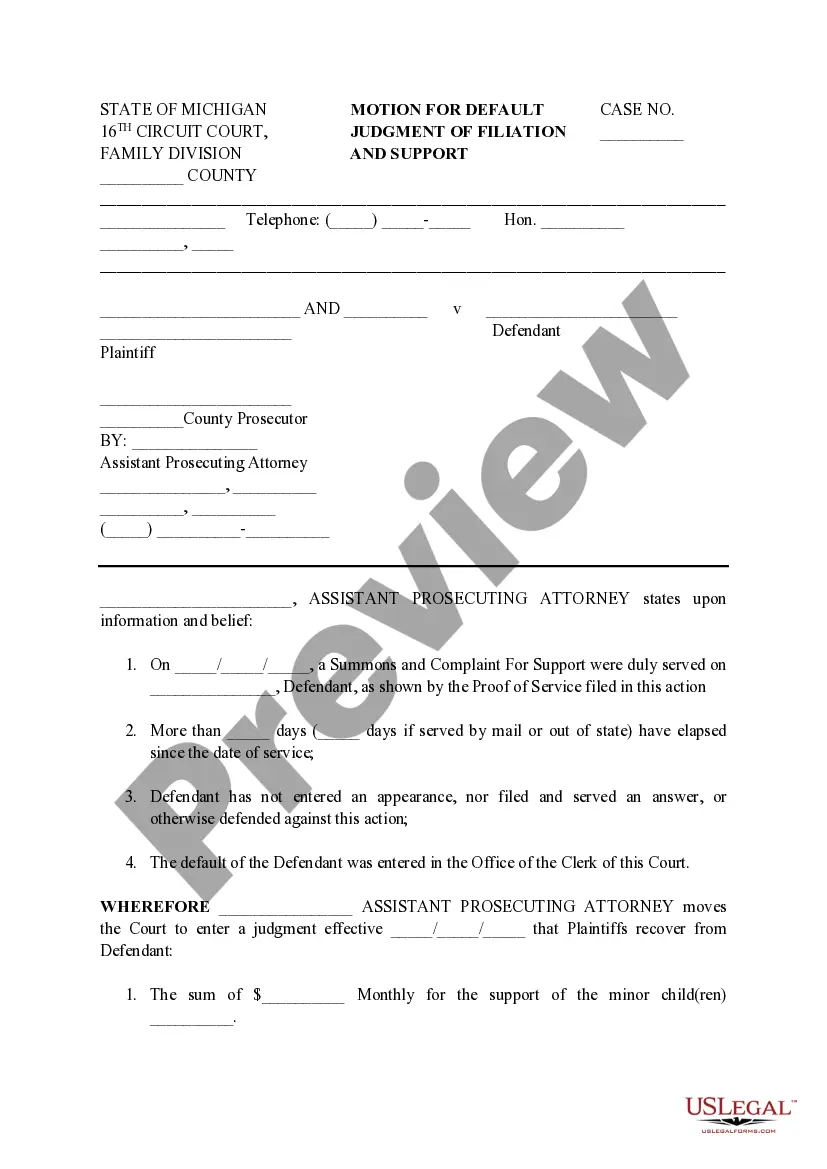
The motion for entry of default judgment in Michigan is the formal request made to the court to finalize a judgment after a party has failed to respond to a summons or complaint. In cases involving Michigan Default Judgment of Filiations and Support, this motion is crucial for establishing financial responsibilities when one party does not engage with the court proceedings. Submitting this motion can lead to a timely resolution of support matters, facilitating better outcomes for families.
Once a default judgment is issued in Michigan, the court establishes the terms of the judgment, which may include requirements for support payments. The parties involved will receive official notice of the judgment, allowing them to understand their rights and obligations moving forward. If you are navigating this process, knowing the implications of a Michigan Default Judgment of Filiations and Support can help you manage issues related to parental responsibilities effectively.
A motion for default judgment signifies a request to the court to issue a judgment in favor of one party due to the other party's failure to respond or participate in the legal process. In the context of Michigan Default Judgment of Filiations and Support, this motion helps ensure that obligations regarding support are enforced when one party remains inactive. It's a vital step to ensure that justice prevails and that support laws are upheld efficiently.