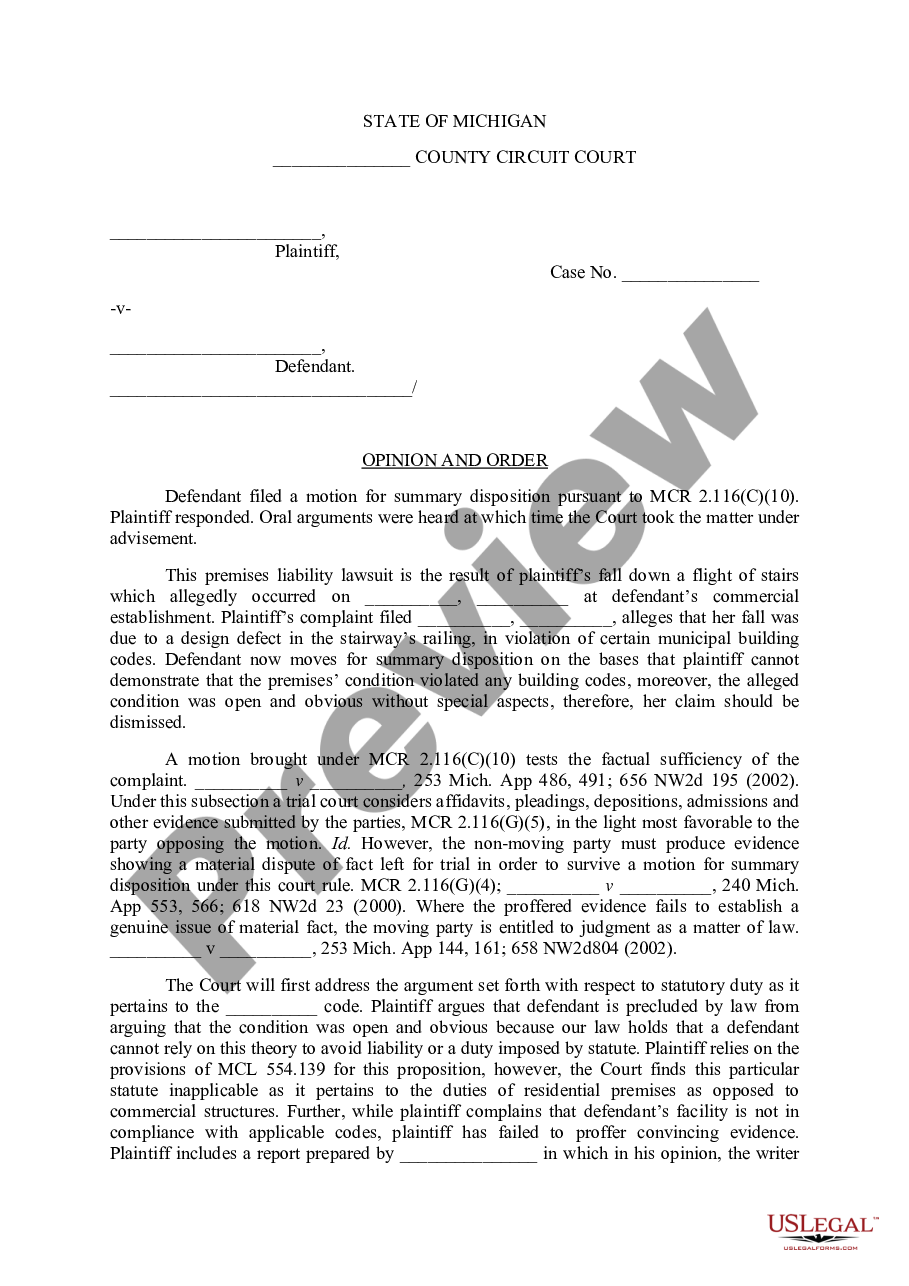
Michigan Opinion and Order Granting Motion for Summary Disposition
What is this form?
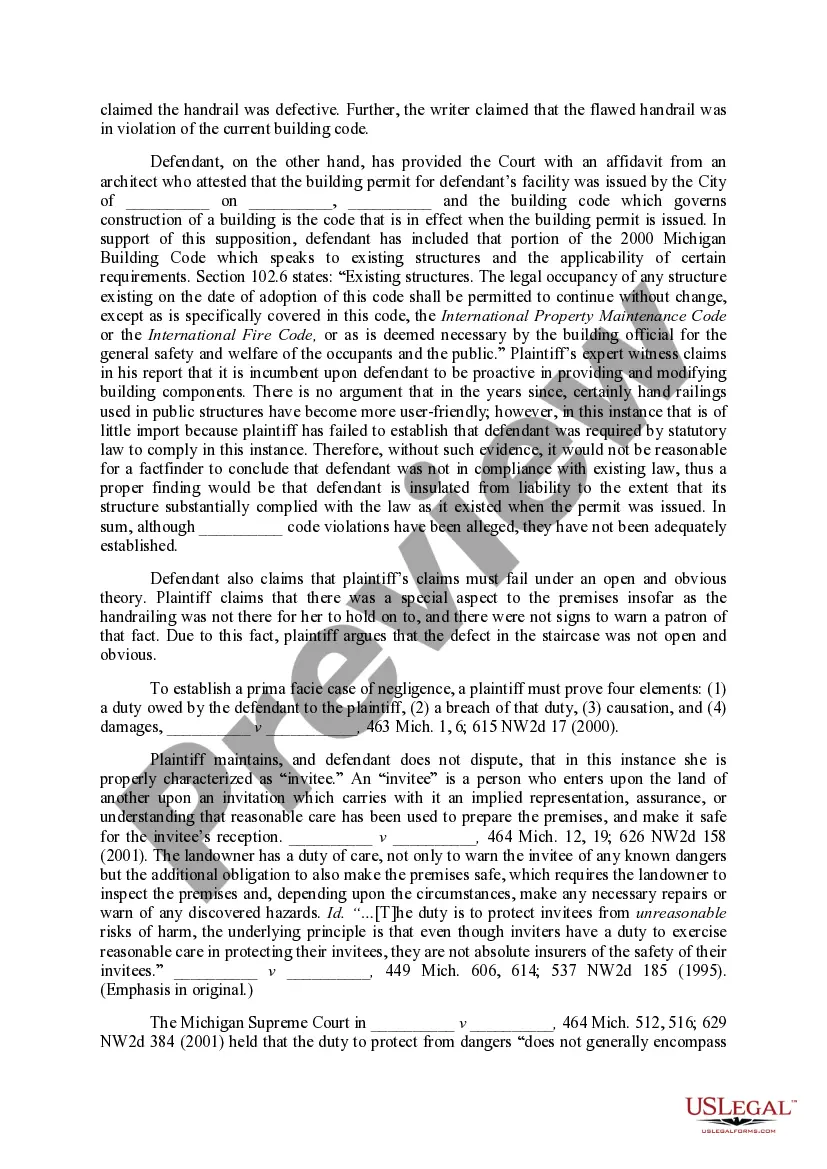
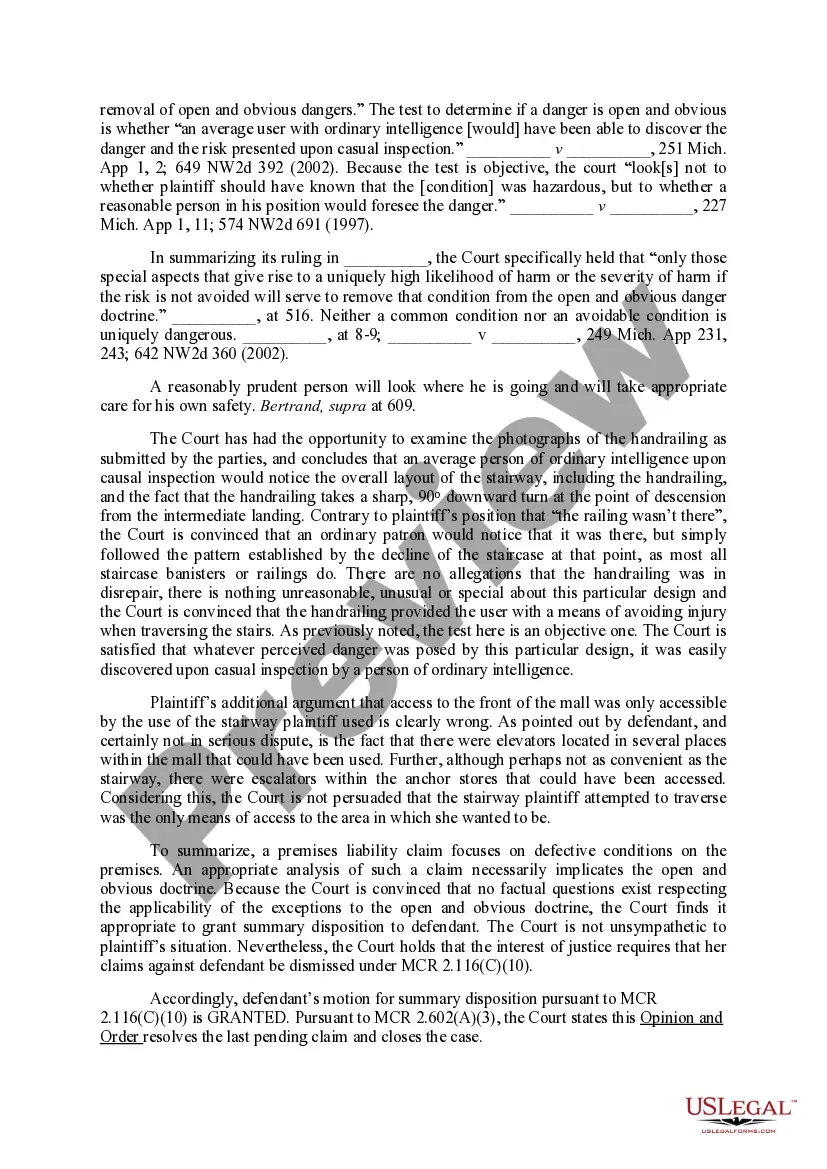
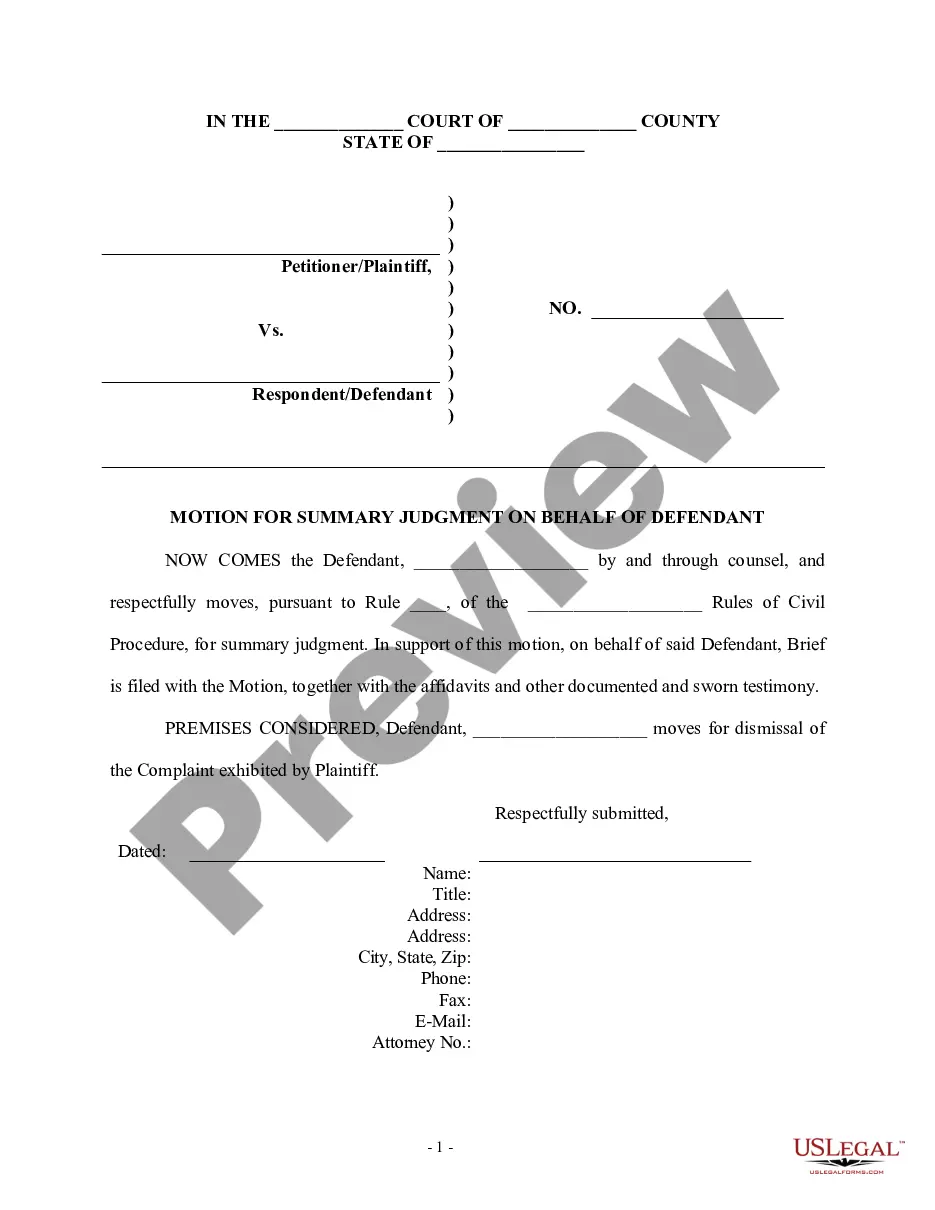
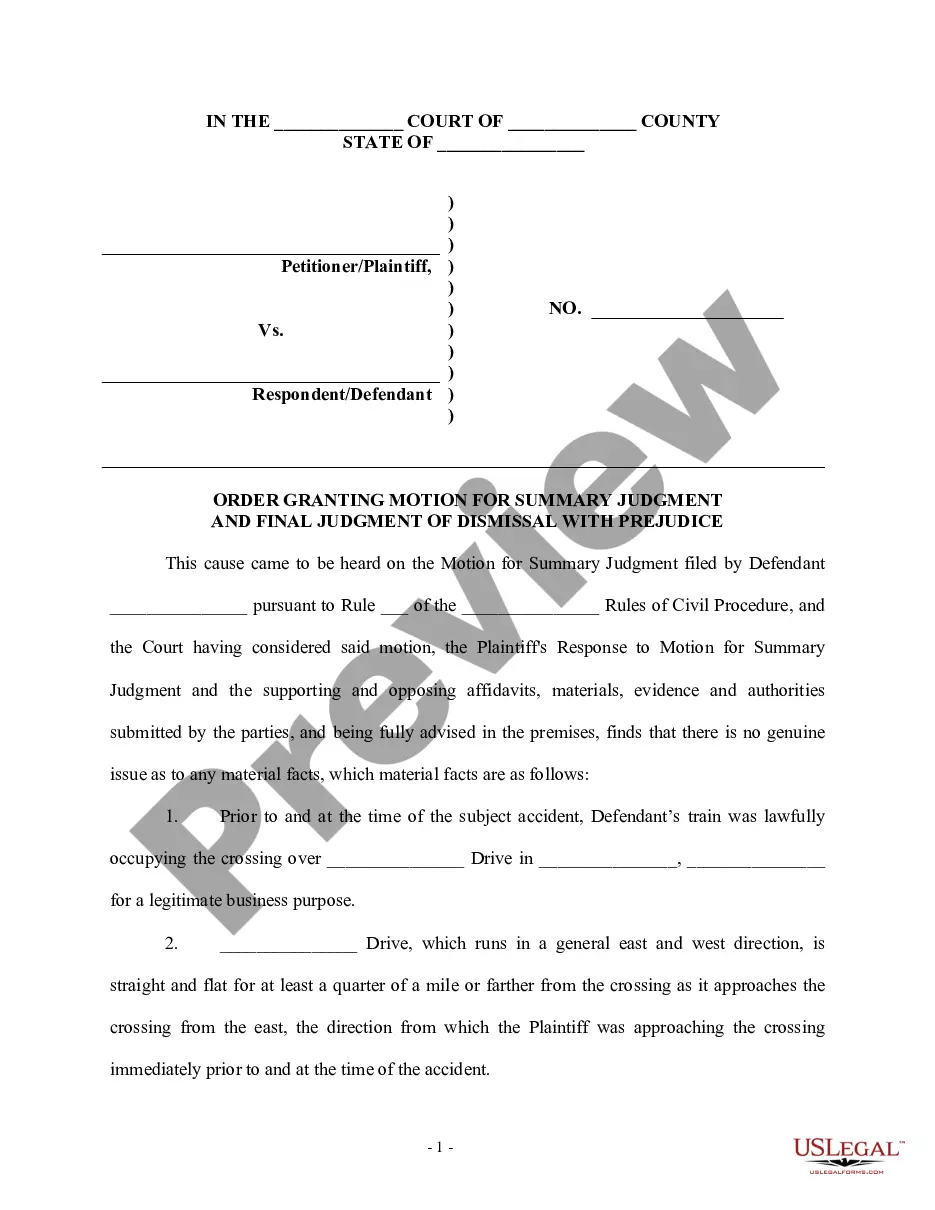
The Opinion and Order Granting Motion for Summary Disposition is a legal document used by courts to resolve a motion for summary disposition. This form allows a defendant to request the dismissal of a case before it goes to trial, arguing that there are no genuine disputes of material fact that warrant a trial. It streamlines court proceedings by allowing the court to make a ruling based on the submitted evidence without necessitating further litigation. Unlike other motions, this document specifically addresses the legal grounds for dismissing a case based on the sufficiency of the plaintiff's claims.
Key components of this form
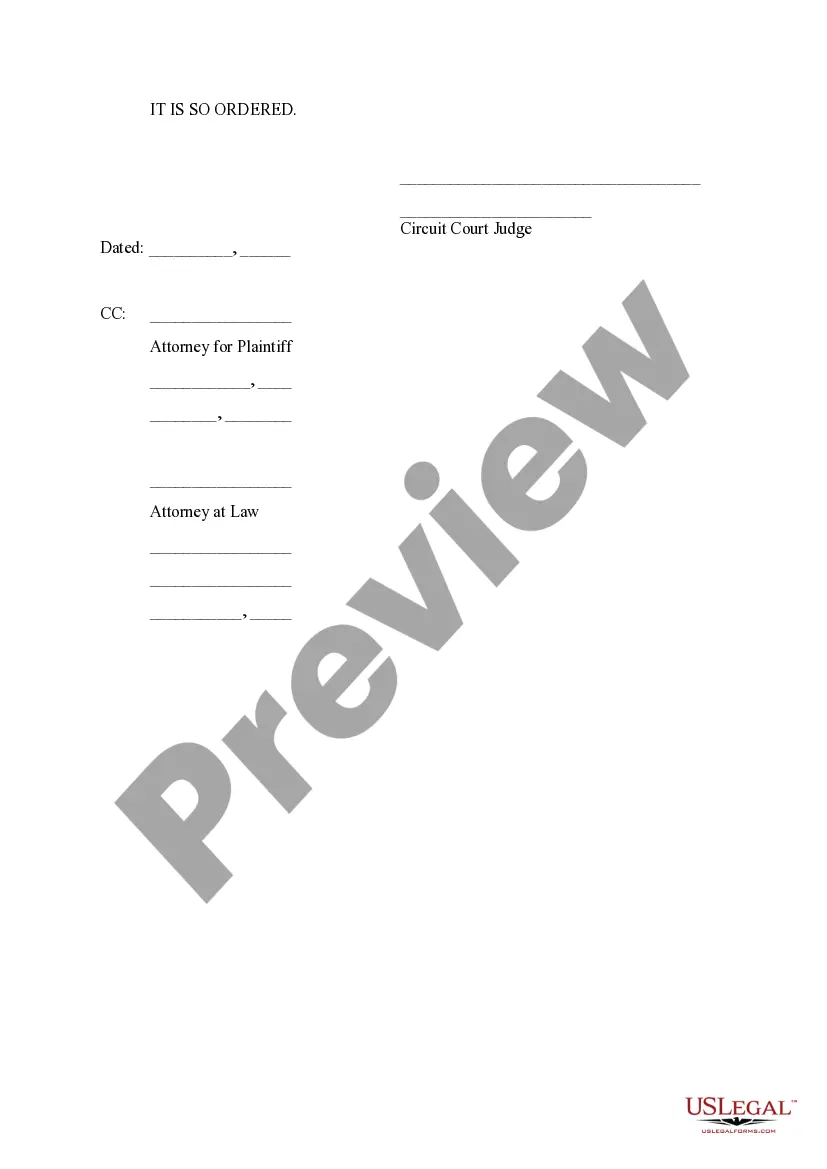
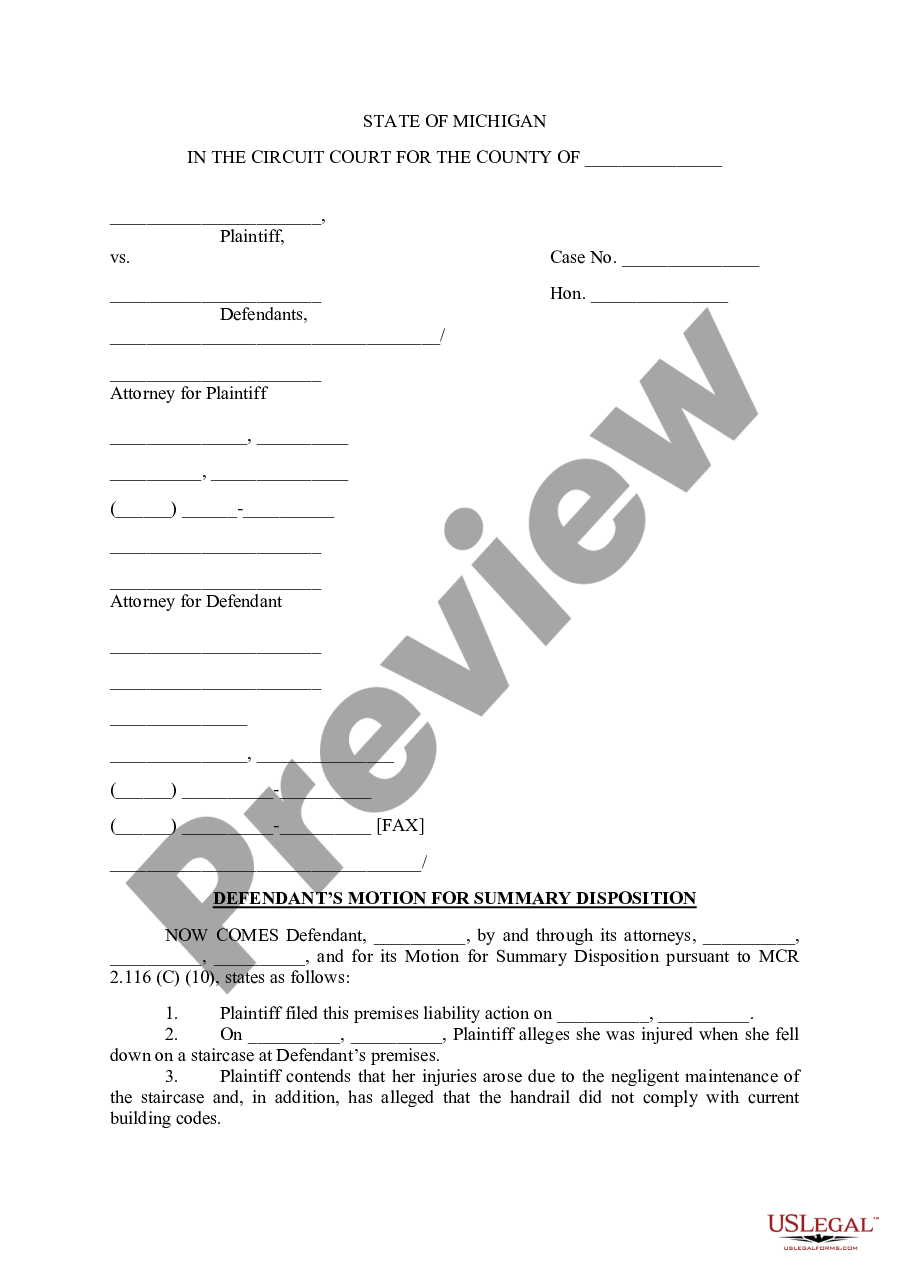
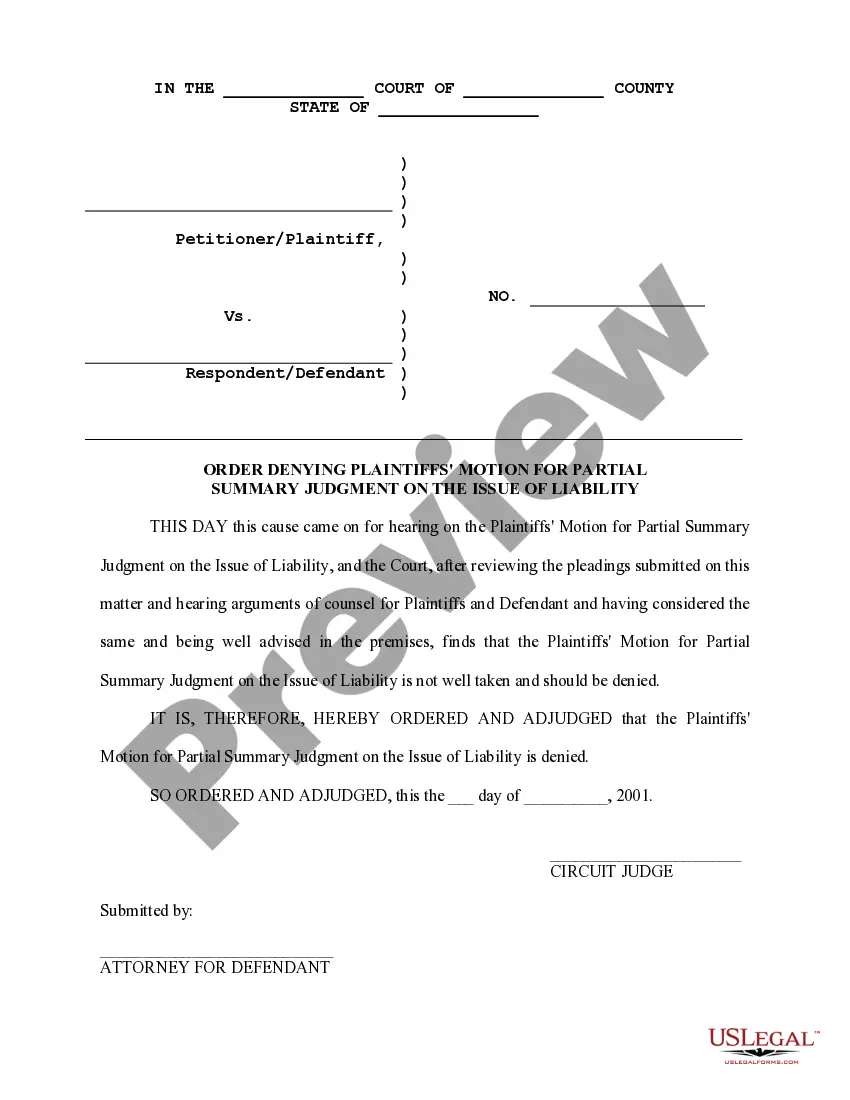
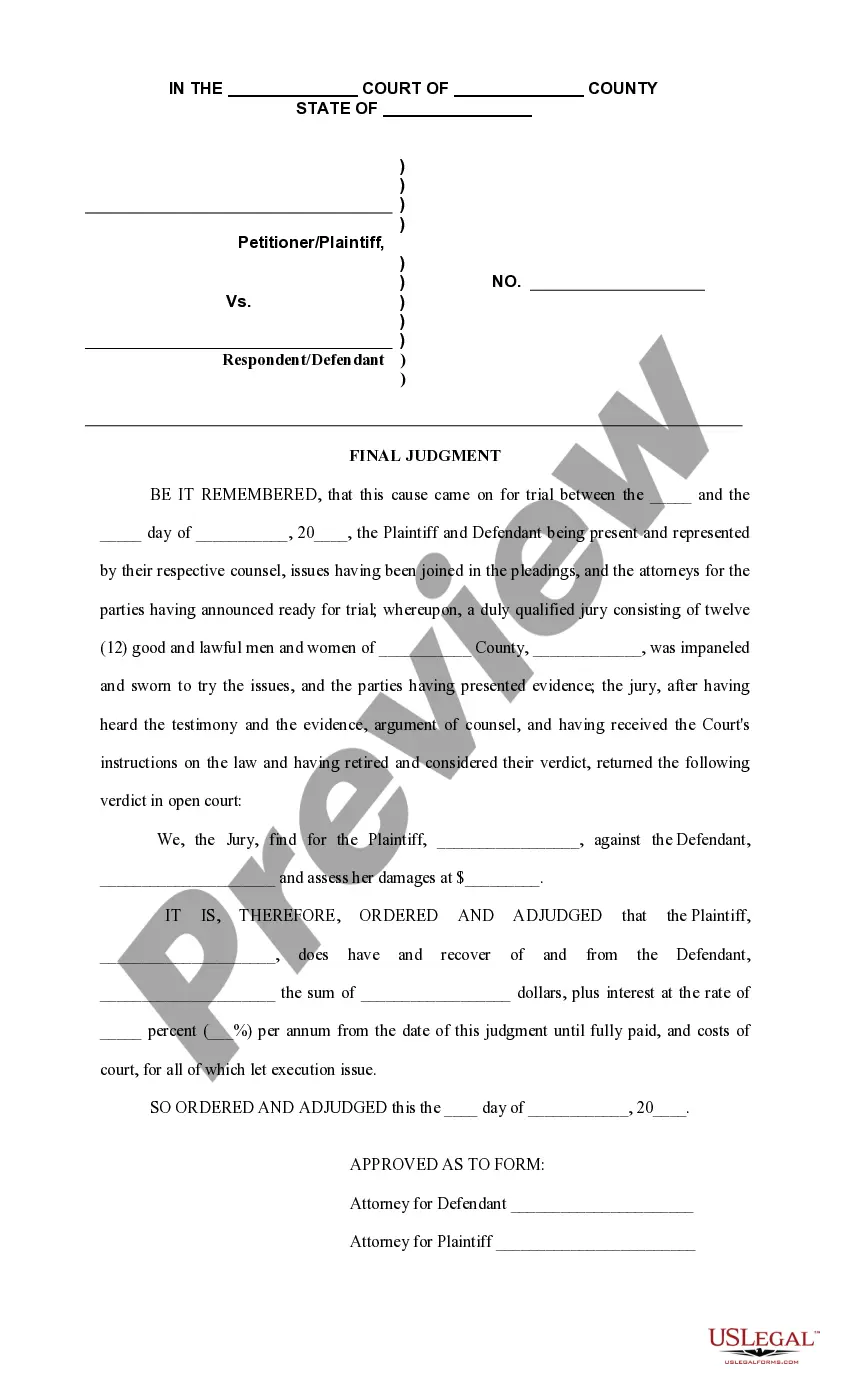
- Case title: Identifies the parties involved in the lawsuit.
- Motion details: Summarizes the defendant's motion for summary disposition.
- Court findings: Includes the court's reasoning behind granting or denying the motion.
- Conclusion: States the court's final decision on the motion.
- Judge's signature: Validates the order and confirms the court's decision.
When this form is needed
This form is typically used when a defendant believes that the evidence presented by the plaintiff is insufficient to support the claims made in the complaint. Examples include cases involving premises liability, where the defendant is arguing that the plaintiff cannot prove that the premises were unsafe or that the alleged hazards were open and obvious. If you are involved in a lawsuit and wish to request a ruling from the court to dismiss the case on these grounds, this form is necessary.
Who can use this document
- Defendants in civil lawsuits seeking to dismiss claims against them.
- Attorneys representing clients in motions for summary disposition.
- Individuals involved in premises liability cases looking to resolve disputes without trial.
Completing this form step by step
- Identify the case title: Enter the names of the plaintiff and defendant along with the case number.
- Summarize the motion details: Provide information on the basis for the motion for summary disposition.
- Present evidence: Include any affidavits, depositions, or other relevant documents that support your argument.
- Detail court findings: Outline the rationale behind the request for dismissal based on applicable law.
- Obtain signatures: Ensure the form is signed by the judge and includes the necessary date for validation.
Does this document require notarization?
This form does not typically require notarization unless specified by local law. However, checking local court rules is advisable to ensure compliance with any specific requirements that may apply.
Get your form ready online
Our built-in tools help you complete, sign, share, and store your documents in one place.
Make edits, fill in missing information, and update formatting in US Legal Forms—just like you would in MS Word.
Download a copy, print it, send it by email, or mail it via USPS—whatever works best for your next step.
Sign and collect signatures with our SignNow integration. Send to multiple recipients, set reminders, and more. Go Premium to unlock E-Sign.
If this form requires notarization, complete it online through a secure video call—no need to meet a notary in person or wait for an appointment.
We protect your documents and personal data by following strict security and privacy standards.

Make edits, fill in missing information, and update formatting in US Legal Forms—just like you would in MS Word.

Download a copy, print it, send it by email, or mail it via USPS—whatever works best for your next step.

Sign and collect signatures with our SignNow integration. Send to multiple recipients, set reminders, and more. Go Premium to unlock E-Sign.

If this form requires notarization, complete it online through a secure video call—no need to meet a notary in person or wait for an appointment.

We protect your documents and personal data by following strict security and privacy standards.
Common mistakes to avoid
- Failing to include all required evidence to support the motion.
- Not properly citing the relevant laws or rules that justify the motion for summary disposition.
- Omitting the case number or misidentifying the parties involved.
- Filing the motion without ensuring compliance with local rules and deadlines.
Benefits of using this form online
- Convenience of downloading and filling out the form at your discretion.
- Easy access to templates drafted by licensed attorneys, ensuring legal compliance.
- Editable fields allow customization to fit the specific details of your case.
Looking for another form?

Form popularity
FAQ
The order granting summary judgment is a final decision made by the court, stating that one party has established its case without requiring a full trial. This order typically summarizes the evidence presented and clarifies the legal principles applied. In Michigan, this type of order is significant and is often referred to as a Michigan Opinion and Order Granting Motion for Summary Disposition, streamlining the judicial process and providing closure for the parties involved.
To support a motion for summary judgment, evidence should be presented in the form of affidavits, depositions, and official documents. These documents must clearly demonstrate that there are no disputes over the critical facts of the case. For those navigating this process, a Michigan Opinion and Order Granting Motion for Summary Disposition requires that evidence is organized and clearly laid out to facilitate a favorable ruling.
Filing a motion in court in Michigan requires you to draft your motion clearly and concisely, stating the specific relief sought. You must file the motion with the clerk of the court where your case is pending and serve copies to all parties involved. For detailed guidance, you may consider using the services provided by uslegalforms, which can assist you in preparing the necessary documents for a Michigan Opinion and Order Granting Motion for Summary Disposition.
When a motion for summary judgment is granted, the court has determined that the evidence demonstrates there is no need for a trial, as the key issues are clear and uncontroverted. This means that the facts are so one-sided that one party must prevail as a matter of law. A Michigan Opinion and Order Granting Motion for Summary Disposition reflects this decision, providing a quicker resolution to the case.
The order granting motion for summary judgment is a legal document issued by the court, concluding that there are no genuine disputes about the material facts of a case. This type of order allows the court to decide the case based solely on the law. In the context of a Michigan Opinion and Order Granting Motion for Summary Disposition, this means the court believes that a party is entitled to win without proceeding to a full trial.