Michigan Guaranty Attachment to Lease for Guarantor or Cosigner
What this document covers
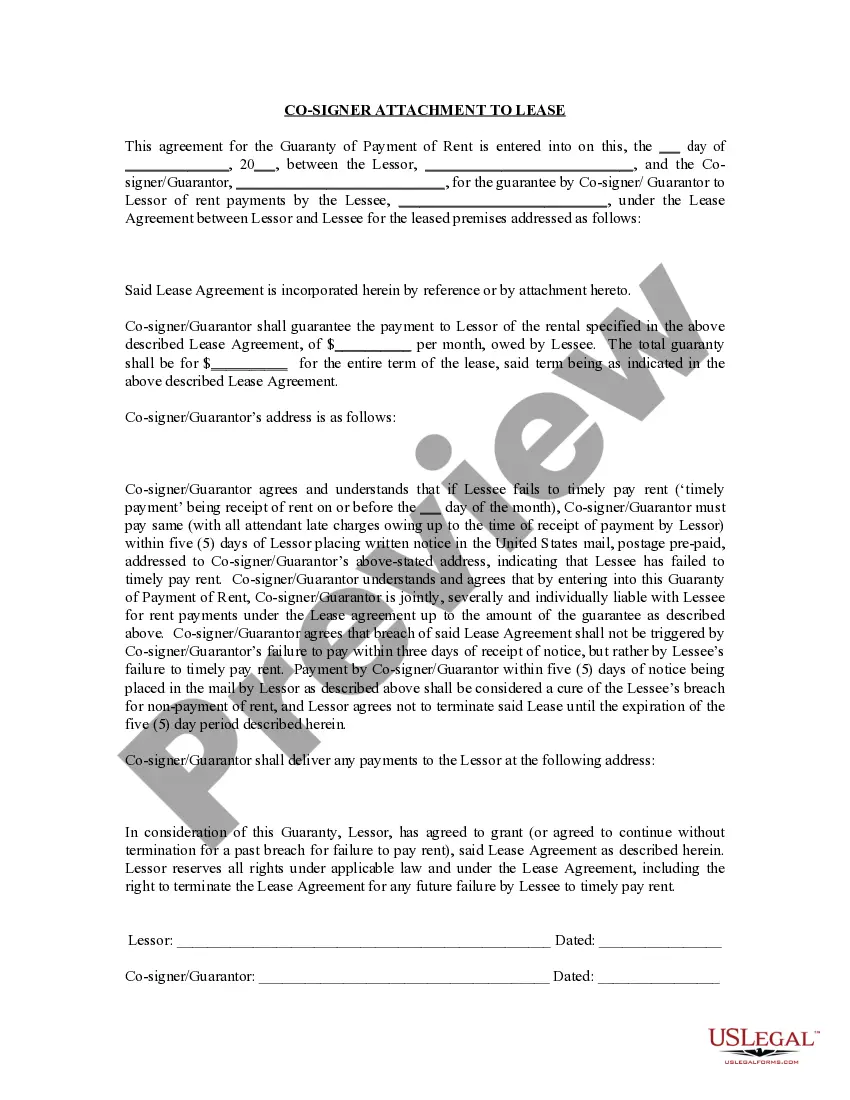
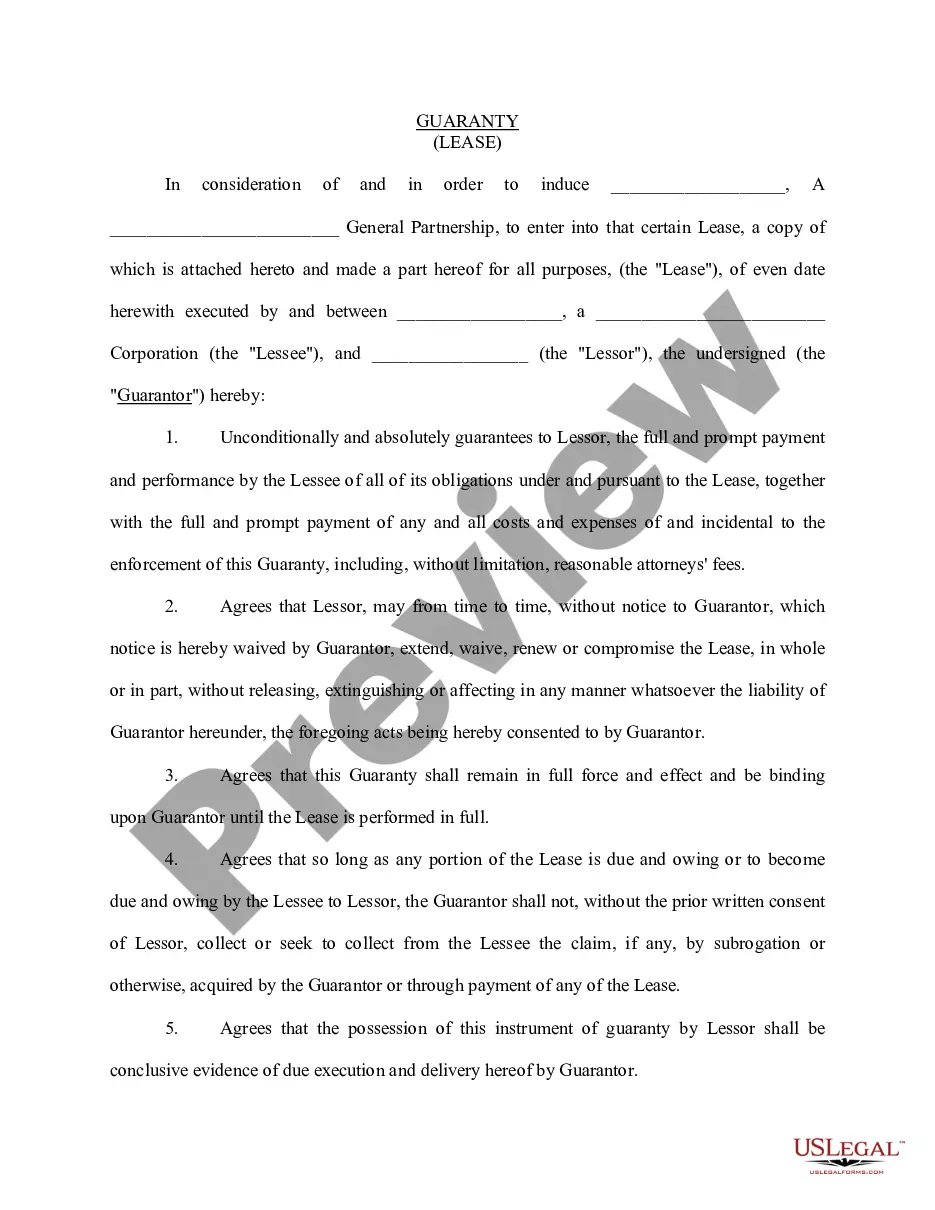
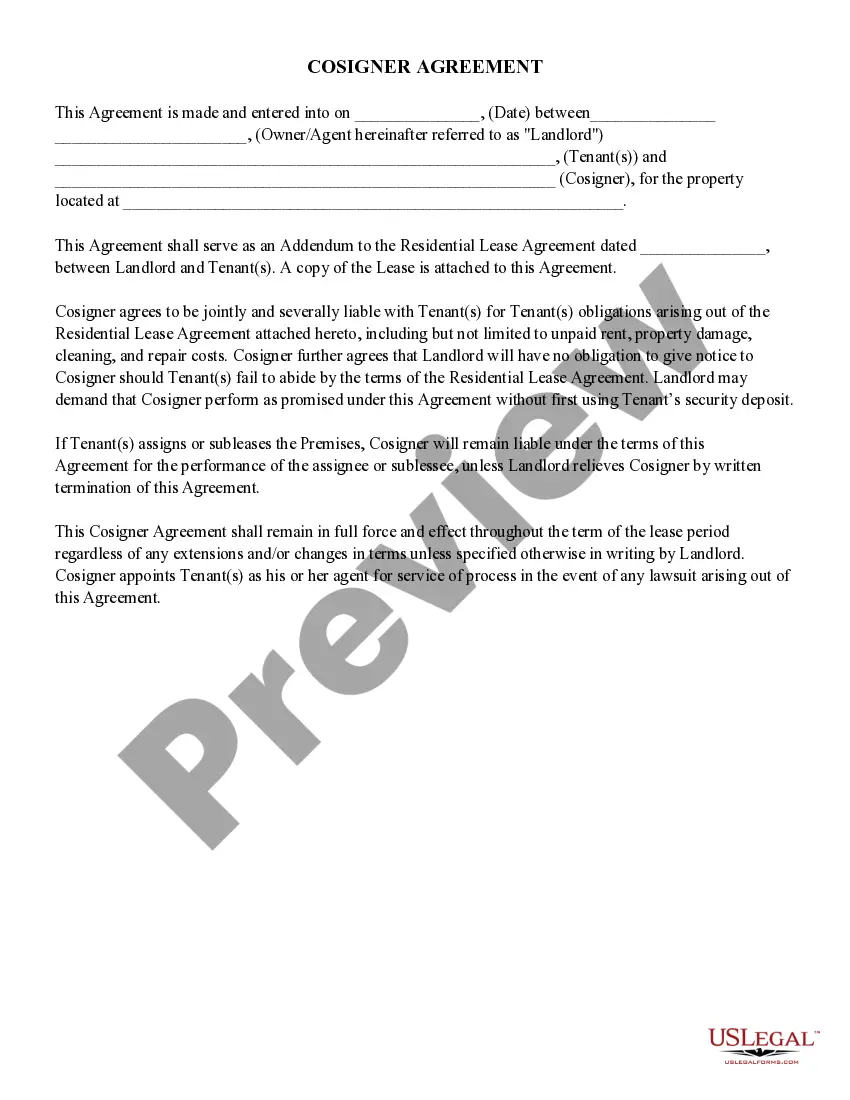
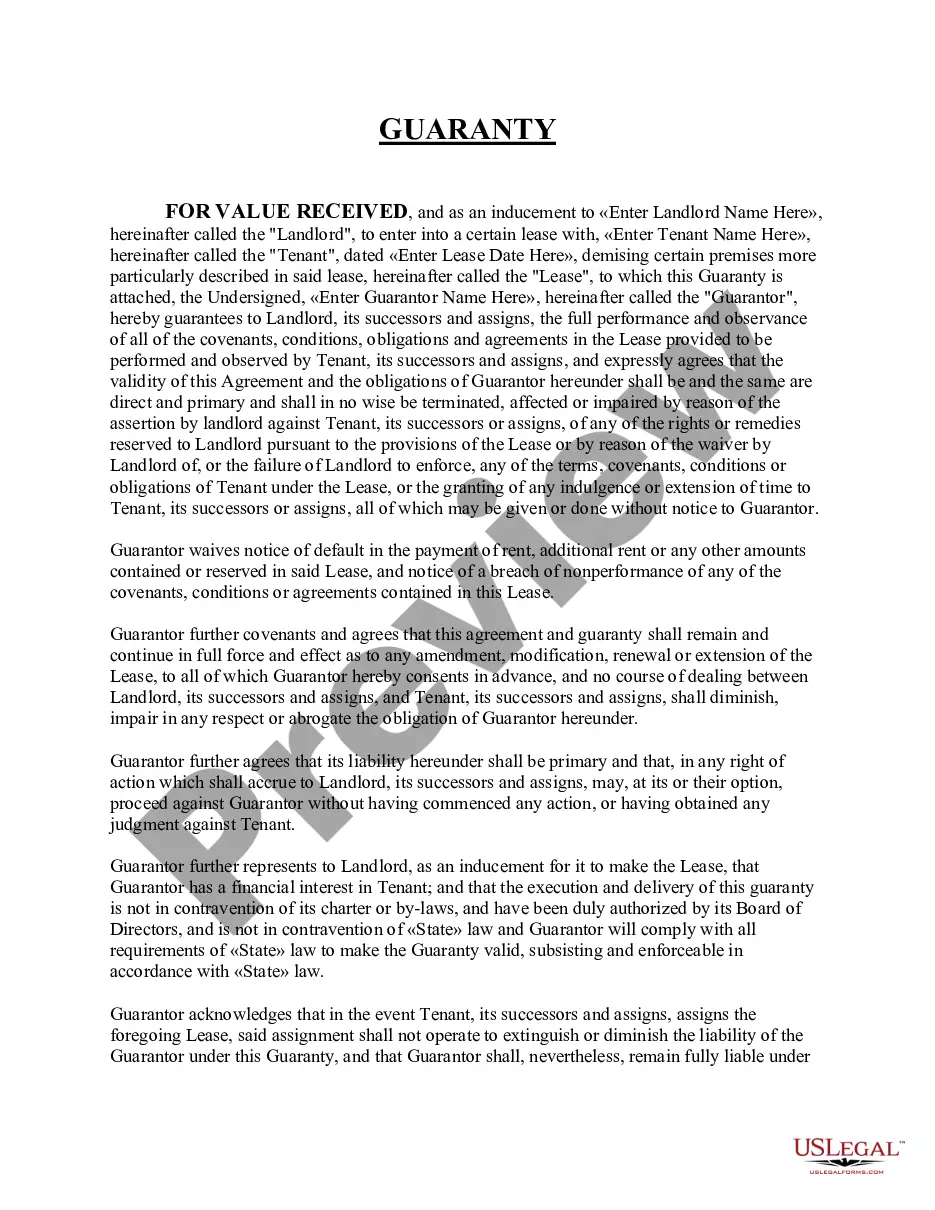
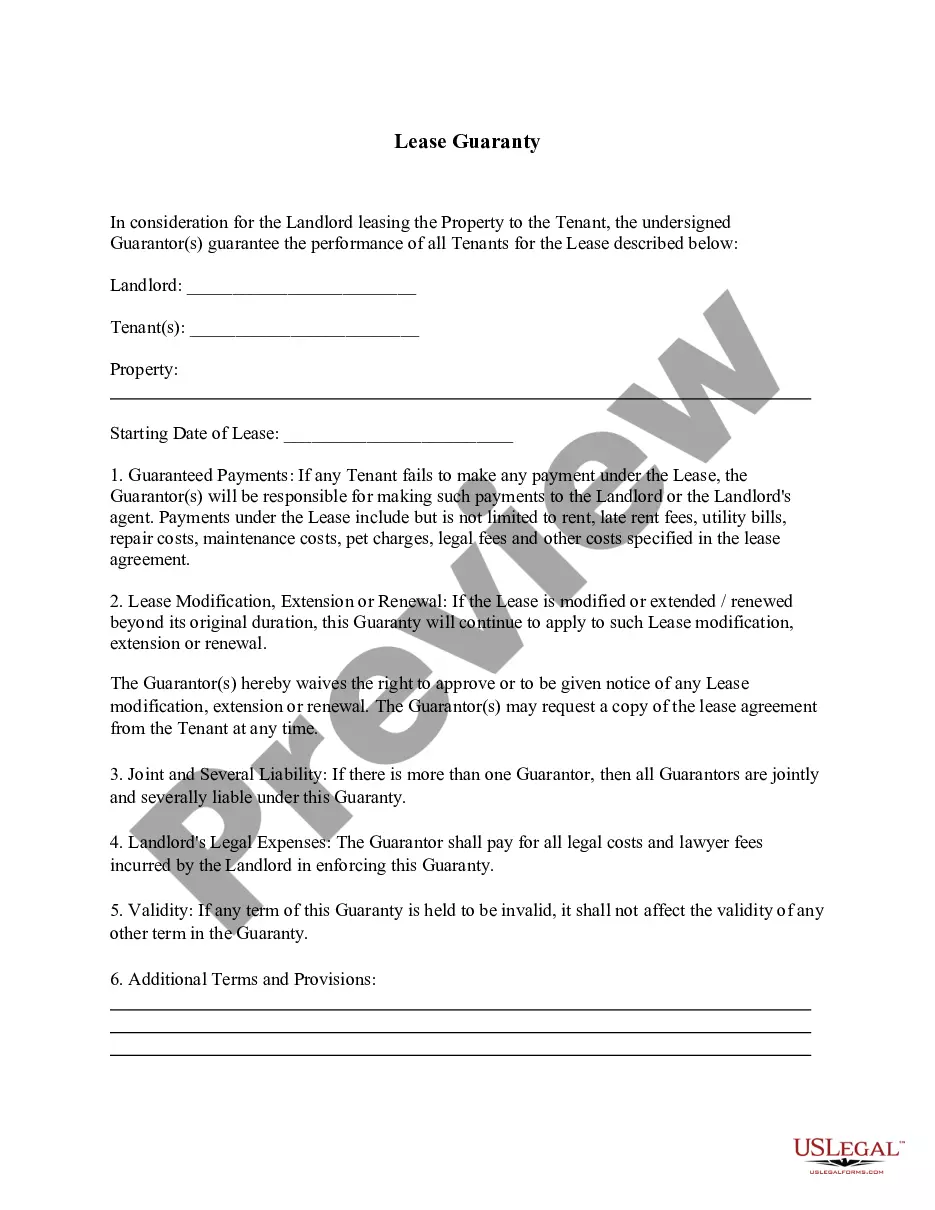
The Guaranty Attachment to Lease for Guarantor or Cosigner is a legal document in which an individual agrees to co-sign a lease agreement. This third-party, referred to as the guarantor or co-signer, commits to guaranteeing the payment of rent on behalf of the tenant. Unlike a standard lease agreement, this document ensures that if the primary tenant fails to pay rent, the guarantor is responsible for covering any unpaid amounts. It serves an essential role in providing landlords with additional security.
Key components of this form
- Co-signer/Guarantor's details: Information required includes name and address.
- Lessor's information: Details about the landlord or leasing party.
- Date of agreement: The specific date the guaranty is signed.
- Signature lines: Spaces for the signatures of both the co-signer and the lessor.
Situations where this form applies
This form is commonly used when a tenant may not meet the credit or income requirements set by a landlord. It is beneficial in situations where the tenant is a young applicant with limited credit history, such as college students or first-time renters. Additionally, if a tenant has poor credit or a history of missed payments, a guarantor's presence can provide the necessary assurance to a landlord.
Who should use this form
- Individuals renting a property who require a co-signer for their lease.
- Friends or family members of renters willing to take on the financial responsibility.
- Landlords seeking additional security in rental agreements.
Steps to complete this form
- Identify the parties: Enter the name and address of both the co-signer/guarantor and the lessor.
- Specify the property: Clearly define the rental property involved in the lease agreement.
- Enter the date: Fill in the date on which the form is completed.
- Obtain signatures: Ensure that both the co-signer/guarantor and the lessor sign and date the document.
Notarization requirements for this form
This form does not typically require notarization unless specified by local law. However, parties may choose to notarize for additional security and verification.
Get your form ready online
Our built-in tools help you complete, sign, share, and store your documents in one place.
Make edits, fill in missing information, and update formatting in US Legal Forms—just like you would in MS Word.
Download a copy, print it, send it by email, or mail it via USPS—whatever works best for your next step.
Sign and collect signatures with our SignNow integration. Send to multiple recipients, set reminders, and more. Go Premium to unlock E-Sign.
If this form requires notarization, complete it online through a secure video call—no need to meet a notary in person or wait for an appointment.
We protect your documents and personal data by following strict security and privacy standards.

Make edits, fill in missing information, and update formatting in US Legal Forms—just like you would in MS Word.

Download a copy, print it, send it by email, or mail it via USPS—whatever works best for your next step.

Sign and collect signatures with our SignNow integration. Send to multiple recipients, set reminders, and more. Go Premium to unlock E-Sign.

If this form requires notarization, complete it online through a secure video call—no need to meet a notary in person or wait for an appointment.

We protect your documents and personal data by following strict security and privacy standards.
Mistakes to watch out for
- Failing to provide accurate names and addresses of the co-signer and landlord.
- Not dating the form correctly, leading to disputes about agreement timing.
- Leaving signature lines blank, which may render the document unenforceable.
Why use this form online
- Convenience: Downloadable and ready for immediate use.
- Editability: Easily fill out and customize based on individual needs.
- Reliability: Drafted by licensed attorneys to comply with legal standards.
Looking for another form?

Form popularity
FAQ
A guarantor must fill out the Michigan Guaranty Attachment to Lease for Guarantor or Cosigner, providing essential details such as their name, address, income, and employment verification. It's also important to disclose any financial history that may affect their liability. This information ensures the landlord or property manager can evaluate the guarantor’s ability to support the tenant financially if needed. For clarity and convenience, using a platform like US Legal Forms can help simplify this process with clear templates and instructions.
To fill out a guarantors form for the Michigan Guaranty Attachment to Lease for Guarantor or Cosigner, start by providing your personal information, including your full name, address, and contact details. Next, enter the tenant's information and any specifics related to the lease agreement. It's crucial to review the form for accuracy before submitting it, as any errors could lead to complications. If you prefer a streamlined process, consider using tools like US Legal Forms to access templates and guidance tailored to your needs.
A lease addendum for a cosigner is a supplemental agreement that outlines the responsibilities of the cosigner regarding the lease. This document typically includes terms about rent payments and obligations in case the tenant defaults. The Michigan Guaranty Attachment to Lease for Guarantor or Cosigner can serve as a useful template for drafting this addendum, offering clarity for both the tenant and the cosigner. It's essential for ensuring everyone involved understands their roles and responsibilities in the leasing process.
To add a guarantor to a lease application, you typically need to complete a designated section within the application form. This section may require the guarantor's personal information and financial details. Using the Michigan Guaranty Attachment to Lease for Guarantor or Cosigner can facilitate this process, ensuring all necessary information is correctly documented. Moreover, discussing the implications with the guarantor beforehand can foster transparency and trust.
The guarantor form as an attachment to lease is a legal document that allows a guarantor to assume responsibility for rent payments if the tenant defaults. This form is crucial for landlords who want additional security in case the tenant fails to meet their financial obligations. The Michigan Guaranty Attachment to Lease for Guarantor or Cosigner ensures that both parties understand their rights and responsibilities. Utilizing this form can simplify lease transactions and provide peace of mind for both landlords and tenants.
The Basics: A Co-signor is part owner of the property, may or may not live in the property and is responsible for the debt repayment. A Guarantor is responsible for the debt repayment if the borrower (applicant) is unable to pay but has no benefits of owning any part of the property.
Some landlords don't accept co-signers for their apartments, so you are not guaranteed an apartment if you have a co-signer. In addition, your co-signer is taking on a fair amount of risk by consenting to be monetarily responsible for your lease.
The cosigner, simply by signing on to the debt, is liable for the debt without the creditor needing to to take any additional actions. The guarantor is only liable for the debt after the creditor has exhausted all other options of collections from the original borrower.
Guarantors sign the lease and are responsible for the payments under the law, but they don't occupy the apartment nor are they entitled to occupy it.
Note that the guarantor must always see and approve the tenancy agreement before he signs this is not a problem if the guarantee is part of the tenancy agreement.A guarantor cannot be forced to pay up in respect of a tenancy agreement he has never seen.