Michigan Office Lease Agreement
What is this form?
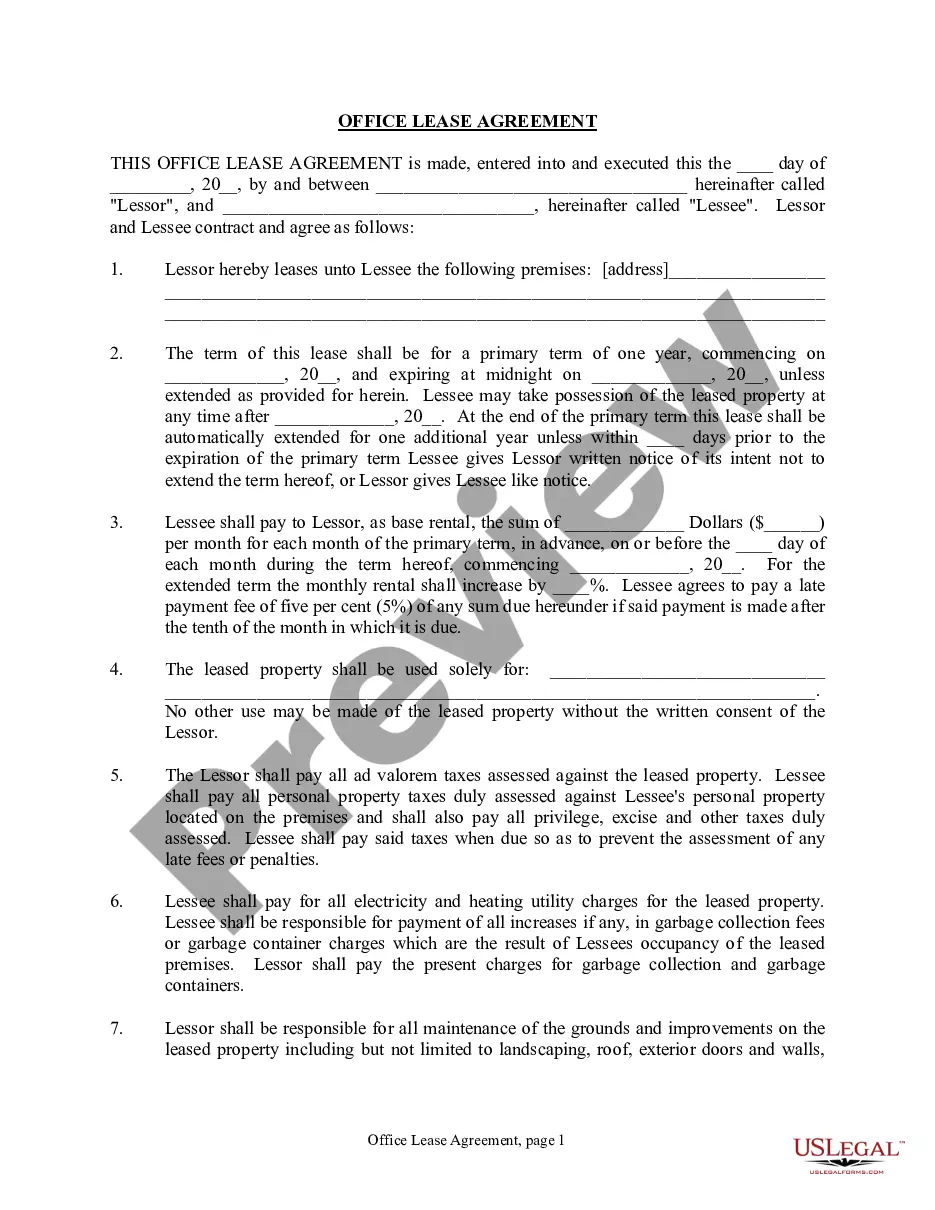
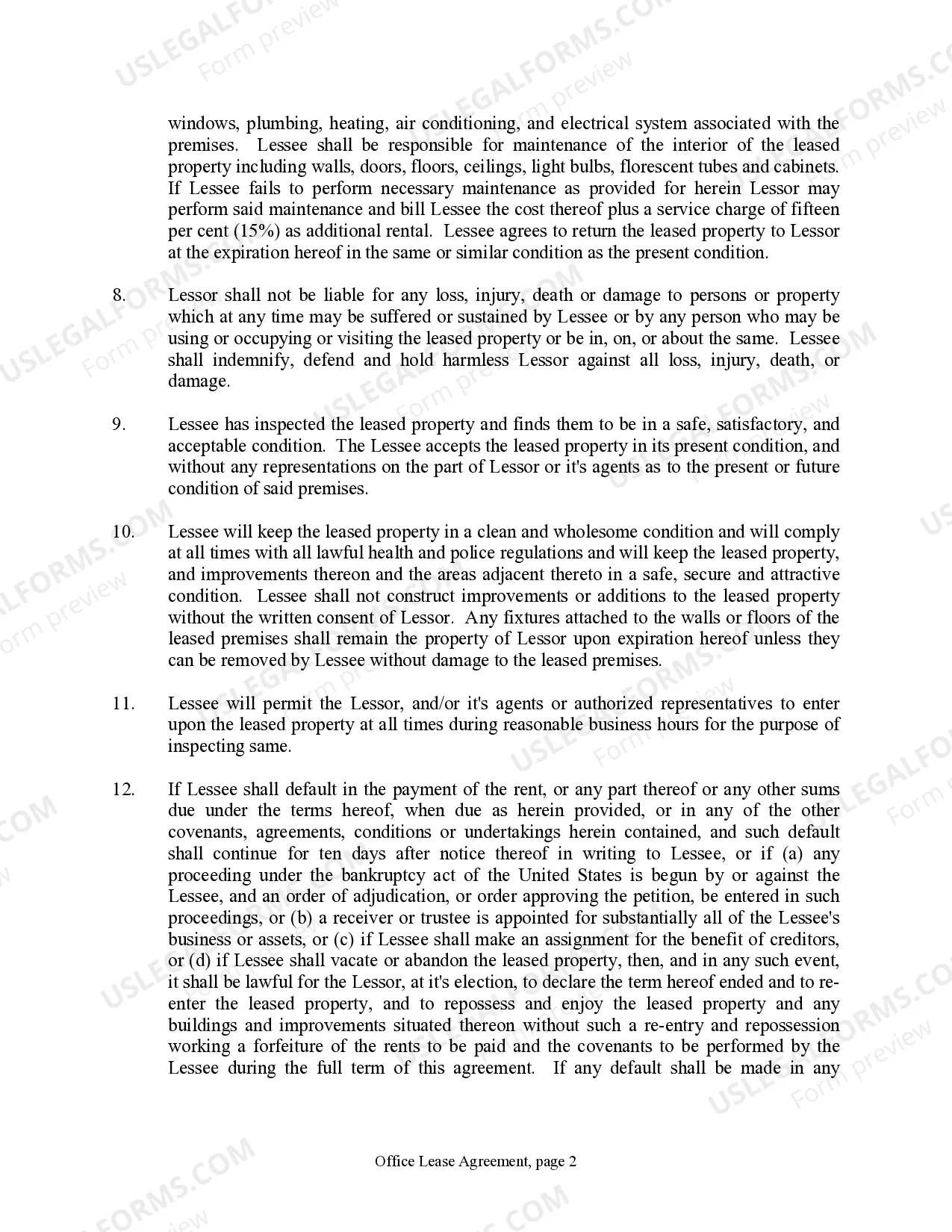
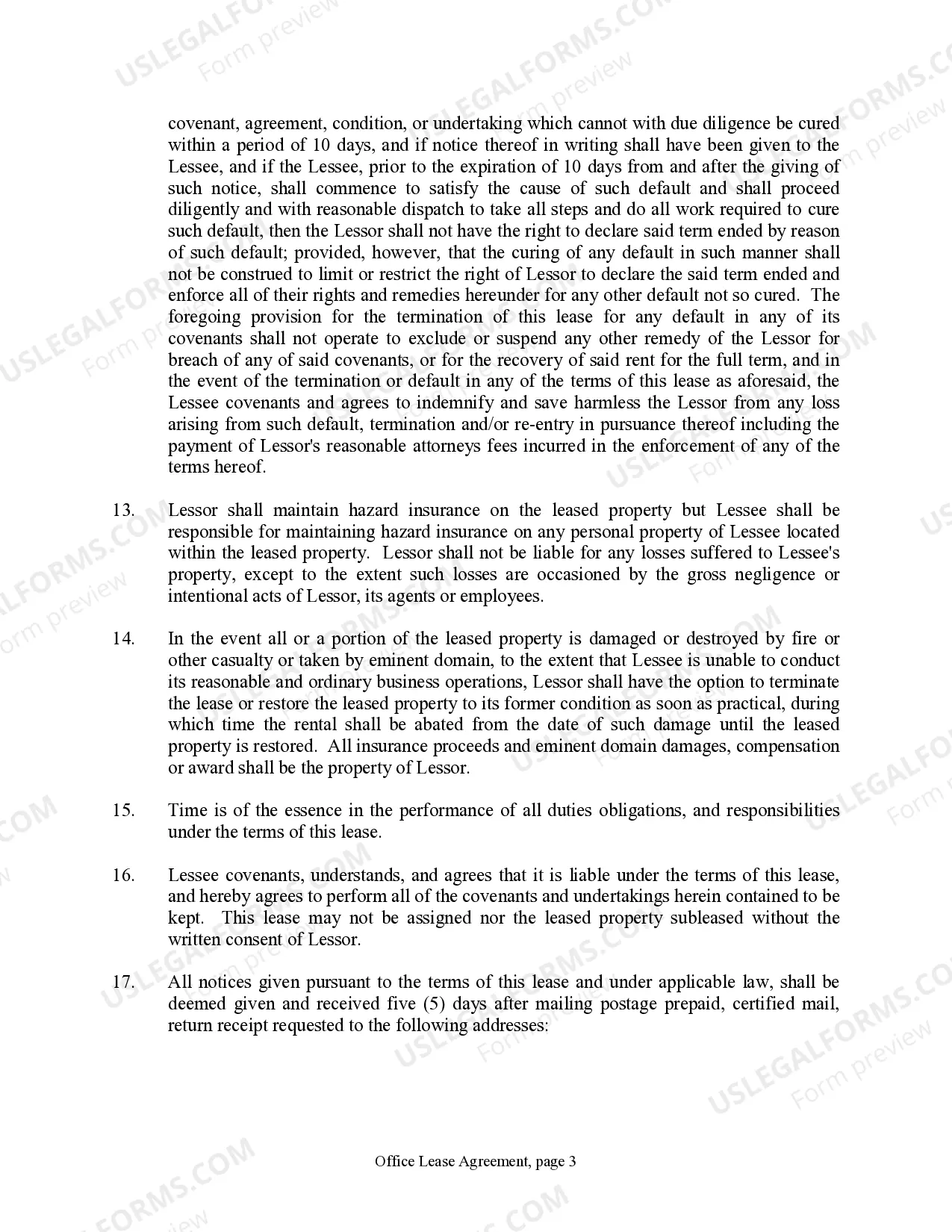
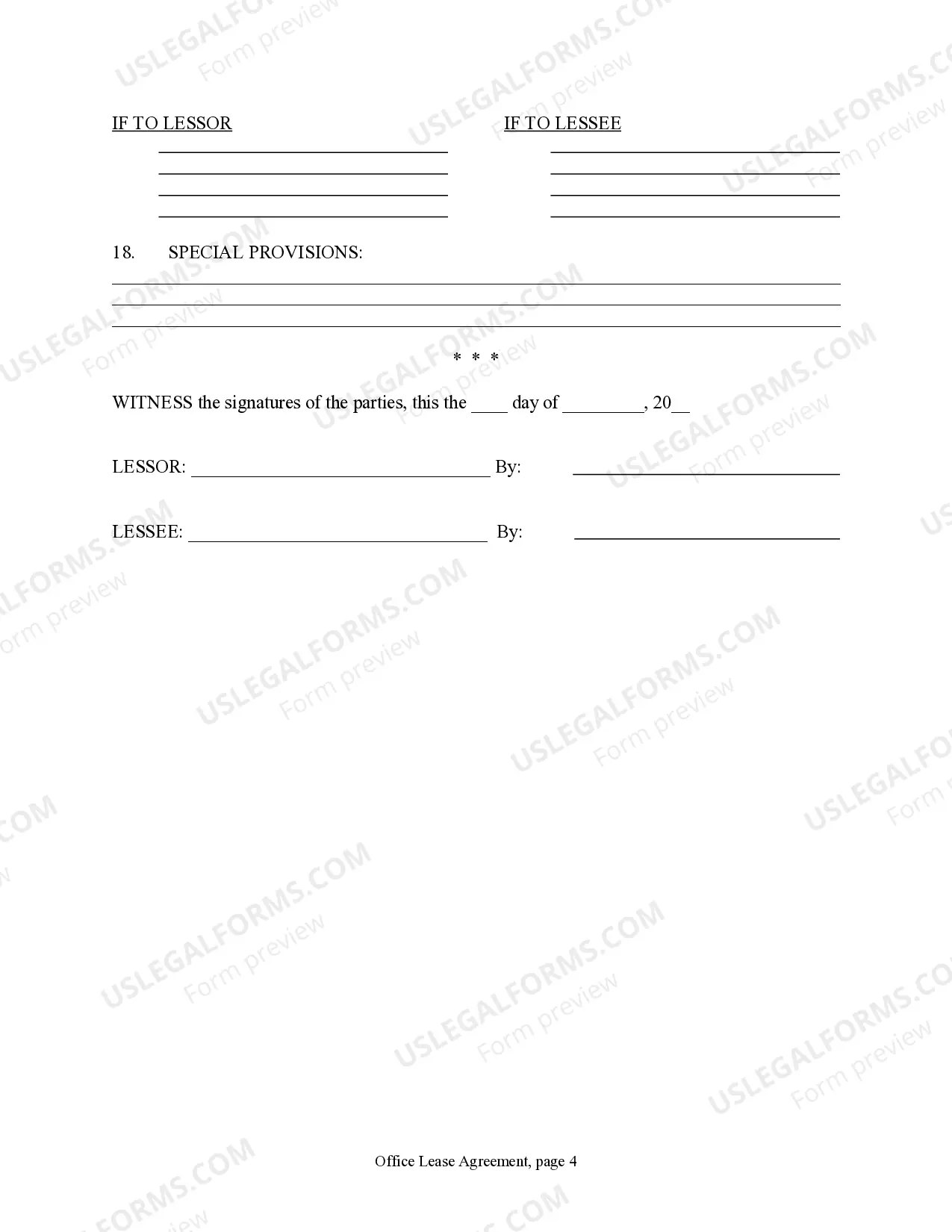
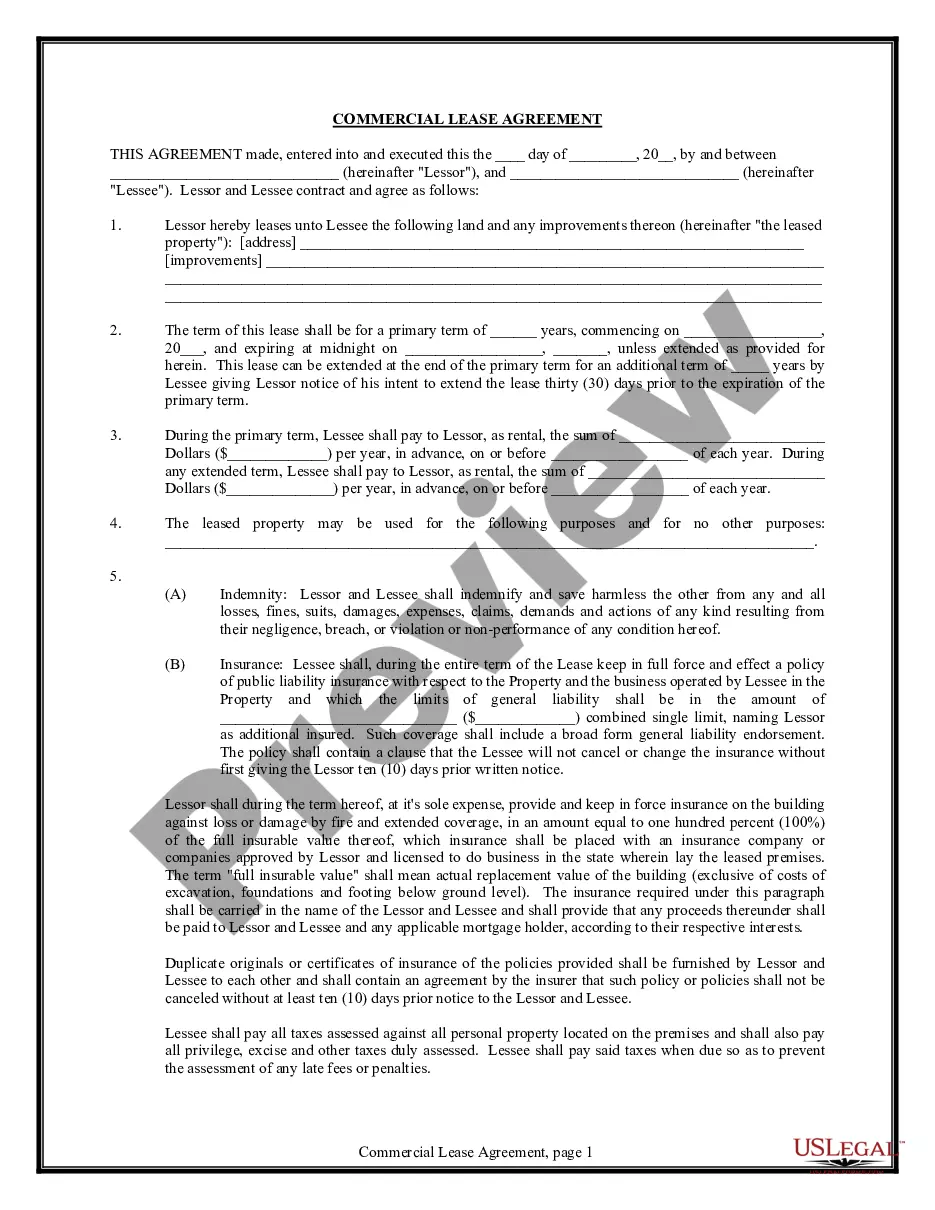
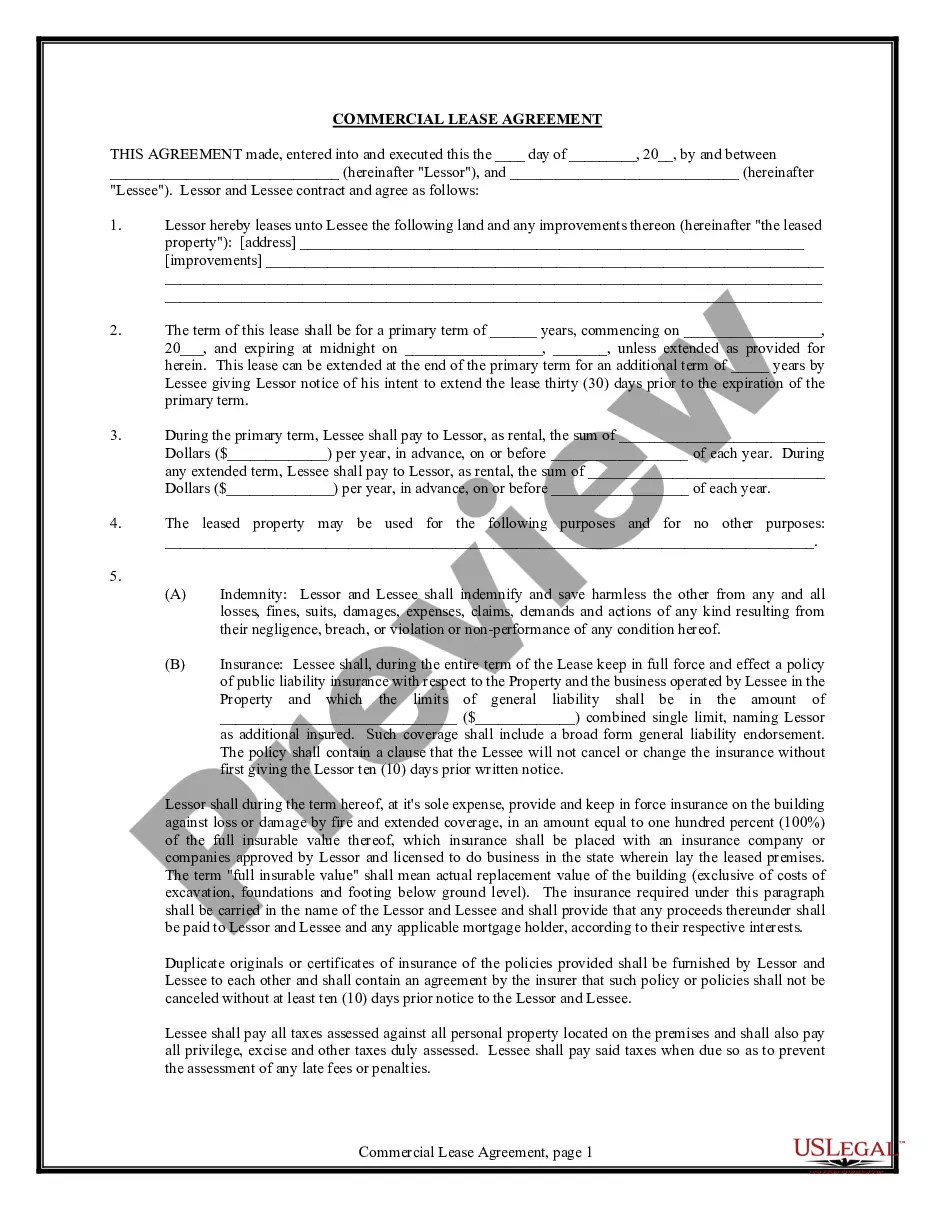
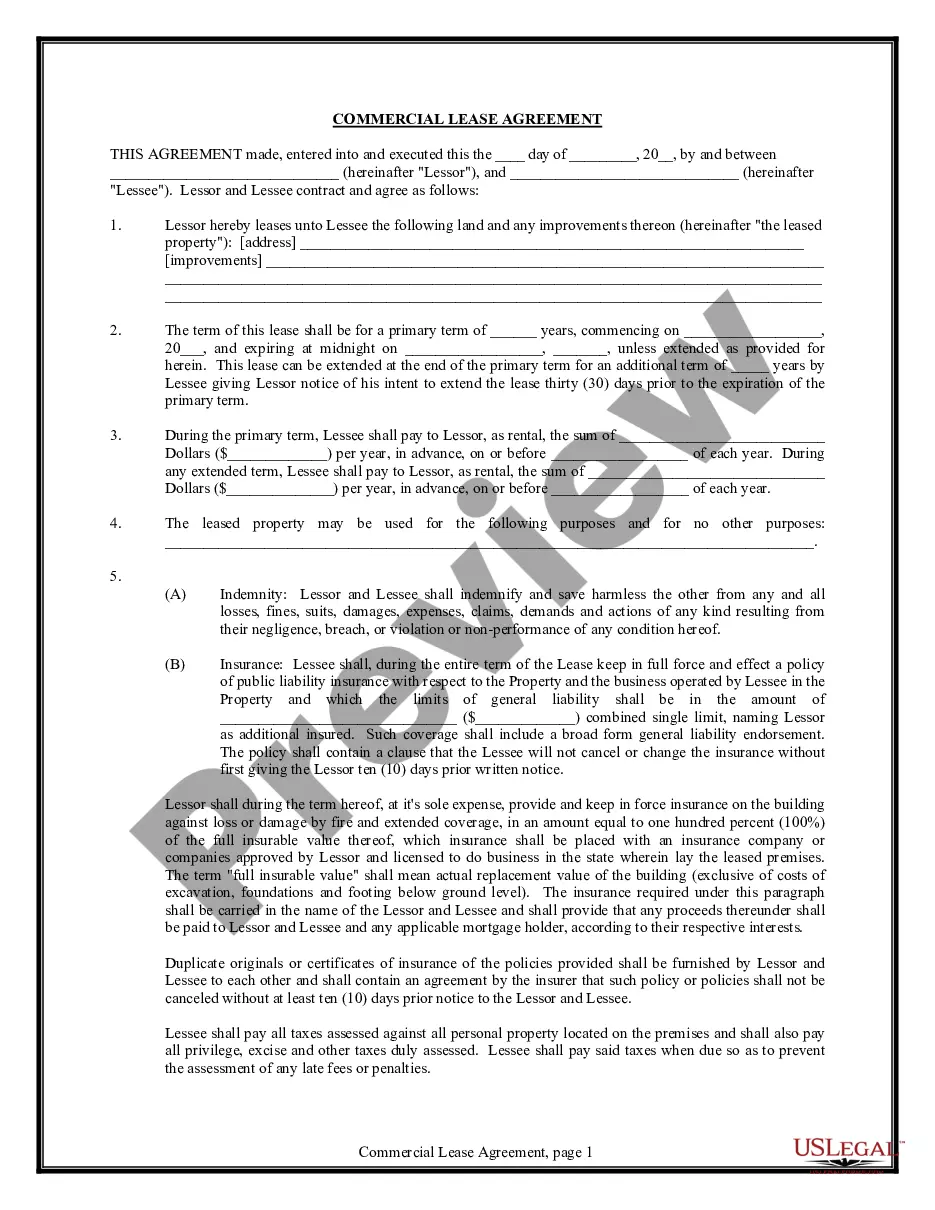
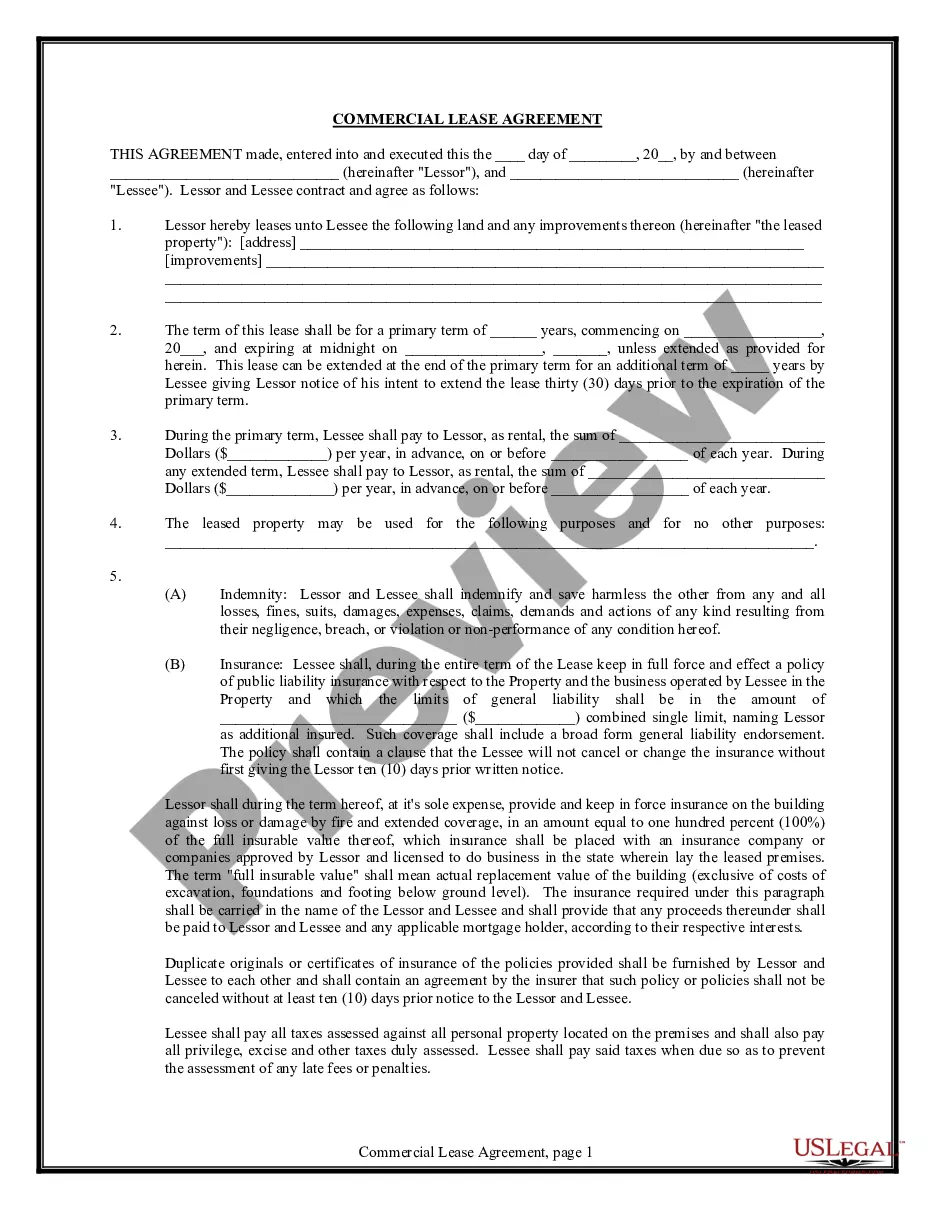
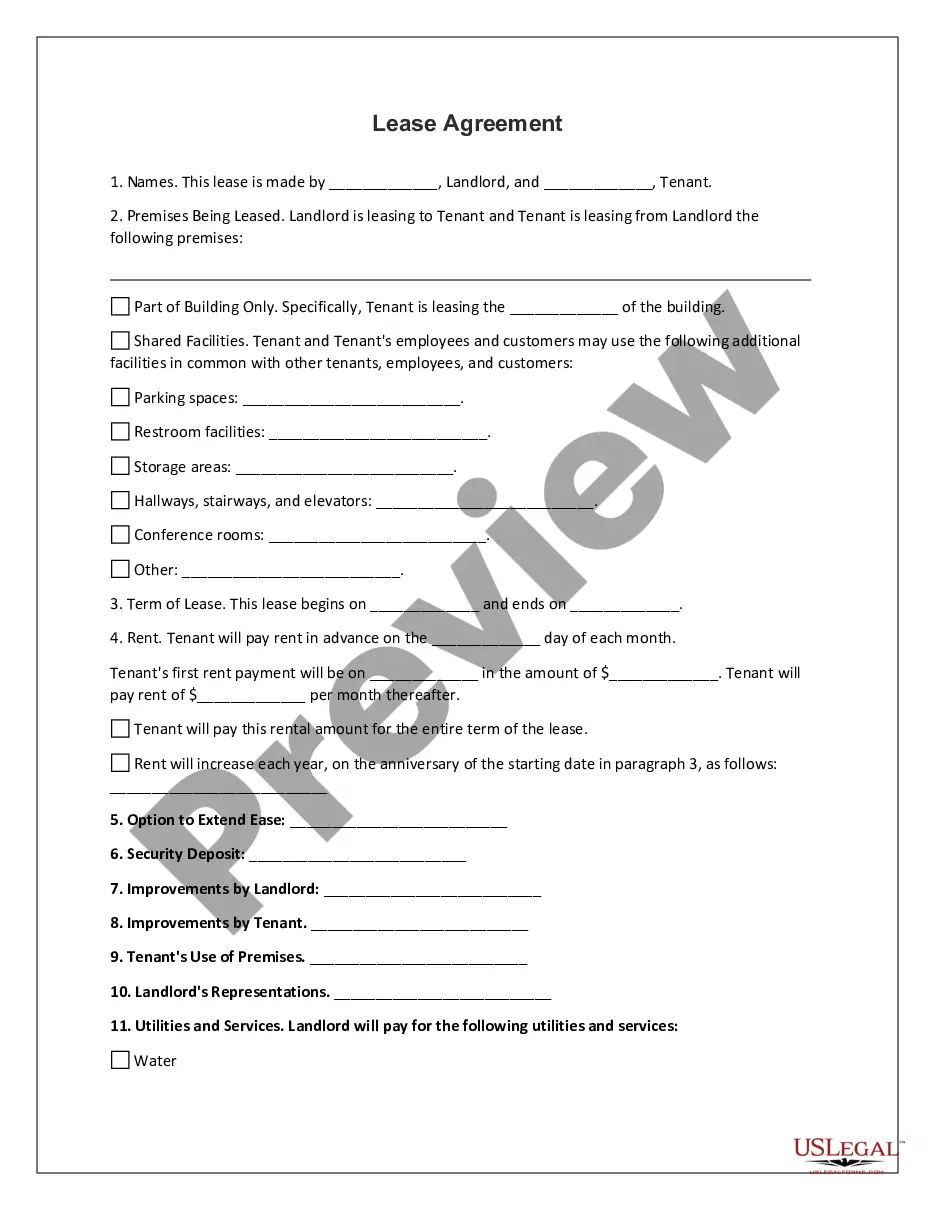
The Office Lease Agreement is a legally binding contract between a property owner (Lessor) and a tenant (Lessee) for leasing office space. This document specifies the terms of the lease, including rent amounts, duration, and responsibilities of both parties, ensuring compliance with state statutory law. It is essential for establishing clear expectations and protecting the rights of both the Lessor and Lessee.
Main sections of this form
- Identifies the Lessor and Lessee by name.
- Details the address and specifications of the leased office space.
- Defines the lease term, including start and end dates, and conditions for renewal.
- Specifies monthly rental amounts and late fees.
- Outlines responsibilities for maintenance and utility payments.
- Includes clauses for termination, defaults, and insurance obligations.
When to use this document
This form should be used when a property owner wishes to lease office space to a tenant. It is applicable in various scenarios, including new businesses needing a physical location, established companies looking to expand, or individuals requiring a dedicated workspace. Having a written agreement promotes clarity and helps prevent disputes between parties.
Who this form is for
- Property owners or landlords looking to lease office space.
- Tenants seeking to rent office space for their business operations.
- Real estate agents involved in commercial leasing transactions.
- Business owners planning to establish or relocate their offices.
Instructions for completing this form
- Identify and enter the names of both the Lessor and Lessee.
- Clearly specify the address of the leased office space.
- Fill in the start and expiration dates of the lease term.
- Set the monthly rental amount and any additional fees, such as late payment penalties.
- Outline the intended use of the leased property.
- Ensure all parties sign and date the agreement.
Notarization requirements for this form
This form usually doesn’t need to be notarized. However, local laws or specific transactions may require it. Our online notarization service, powered by Notarize, lets you complete it remotely through a secure video session, available 24/7.
Get your form ready online
Our built-in tools help you complete, sign, share, and store your documents in one place.
Make edits, fill in missing information, and update formatting in US Legal Forms—just like you would in MS Word.
Download a copy, print it, send it by email, or mail it via USPS—whatever works best for your next step.
Sign and collect signatures with our SignNow integration. Send to multiple recipients, set reminders, and more. Go Premium to unlock E-Sign.
If this form requires notarization, complete it online through a secure video call—no need to meet a notary in person or wait for an appointment.
We protect your documents and personal data by following strict security and privacy standards.

Make edits, fill in missing information, and update formatting in US Legal Forms—just like you would in MS Word.

Download a copy, print it, send it by email, or mail it via USPS—whatever works best for your next step.

Sign and collect signatures with our SignNow integration. Send to multiple recipients, set reminders, and more. Go Premium to unlock E-Sign.

If this form requires notarization, complete it online through a secure video call—no need to meet a notary in person or wait for an appointment.

We protect your documents and personal data by following strict security and privacy standards.
Typical mistakes to avoid
- Failing to specify the exact address of the leased office space.
- Not detailing responsibilities for maintenance and repairs.
- Leaving out renewal notification terms, leading to misunderstandings.
- Neglecting to include clarity on the use of the property.
- Not obtaining signatures from both parties, making the agreement unenforceable.
Why complete this form online
- Convenient access to legal form templates at any time.
- Editability ensures you can tailor the document to specific needs.
- Compliance with legal standards provides peace of mind.
- Quick download means you can have the form ready when needed.
- Secure storage options to keep your documents safe.
Legal use & context
- The office lease agreement is a legally binding document once signed by both parties.
- Failure to adhere to the terms outlined in the lease may result in legal consequences.
- This form helps prevent disputes by providing a clear framework for landlord-tenant relationships.
Summary of main points
- A well-drafted office lease agreement protects the rights of both lessor and lessee.
- Accurate completion of the form ensures compliance with local laws and regulations.
- This document establishes clear expectations for rental terms and property usage.
Looking for another form?






Form popularity
FAQ
Commercial leases generally fall into one of three major categories based on how the building's operating expenses are passed on to tenants: Gross or full-service lease. You pay a flat monthly rate from which the landlord pays all operating expenses, including utilities, property taxes and maintenance.
The Gross Lease. The gross lease tends to favor the tenant. The Net Lease. The net lease, however, tends to favor the landlord. The Modified Gross Lease.
The Lease Must be in Writing It does not matter if the lease is handwritten or typed. If the lease is for more than one year, it must be in written form and contain the following terms.
1) Absolutely engage the services of a tenant representation broker. 2) Introduce competition into the negotiation. 3) Start early. 4) Do not accept the landlord's first proposal. 5) Ask for more than you can get. 6) Ask for more than just a great rate. 7) Do not expect returns on your good tenancy.
Termination Fees Most agreements require you to pay 2-3 months' rent and forfeit your security deposit.
In a full-service lease, or gross lease, the tenant pays the base rent, and the landlord pays for the utilities, insurance, taxes and other costs of operating the building.In a net lease, by contrast, the tenants pay a portion of the operating costs of the building.
Canceling a long-term lease agreement will require you to pay the remainder of the rent payments for your lease. Commercial landlords have the ability to take legal action against you if you leave without paying what you owe them.Be upfront with your landlord and ask him or her to cancel your lease early.
You can still break the lease by paying all the rent due for the remaining lease term. Under Michigan law, you only need to pay the amount the landlord loses, in the event of breaking the lease. No matter what your reason for leaving is, landlords must make reasonable efforts to re-rent the unit.
Just like a residential rental or lease, your commercial landlord is going to insist on a security deposit. The security deposit can be used by the landlord for a number of reasons, but most commonly it will be used to cover any damage at the end of your lease if you do not renew your agreement.