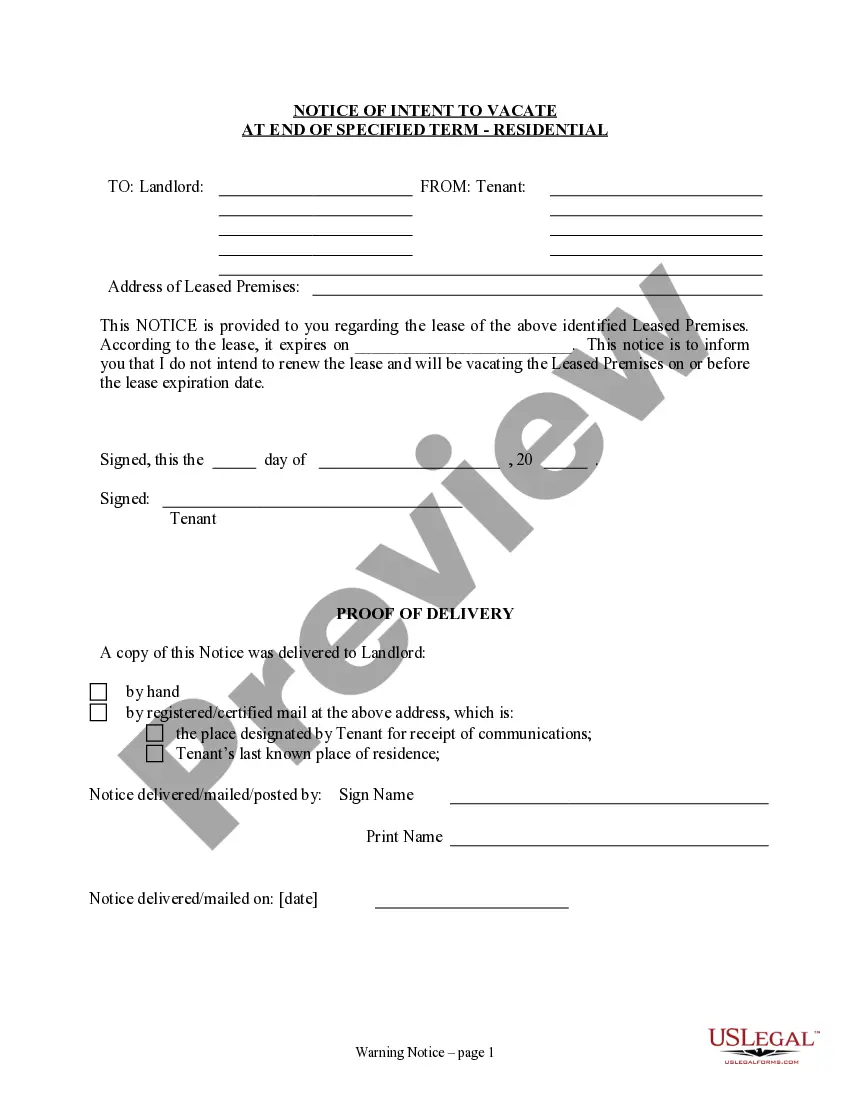
Michigan Notice of Intent to Vacate at End of Specified Lease Term from Tenant to Landlord for Residential Property
Description
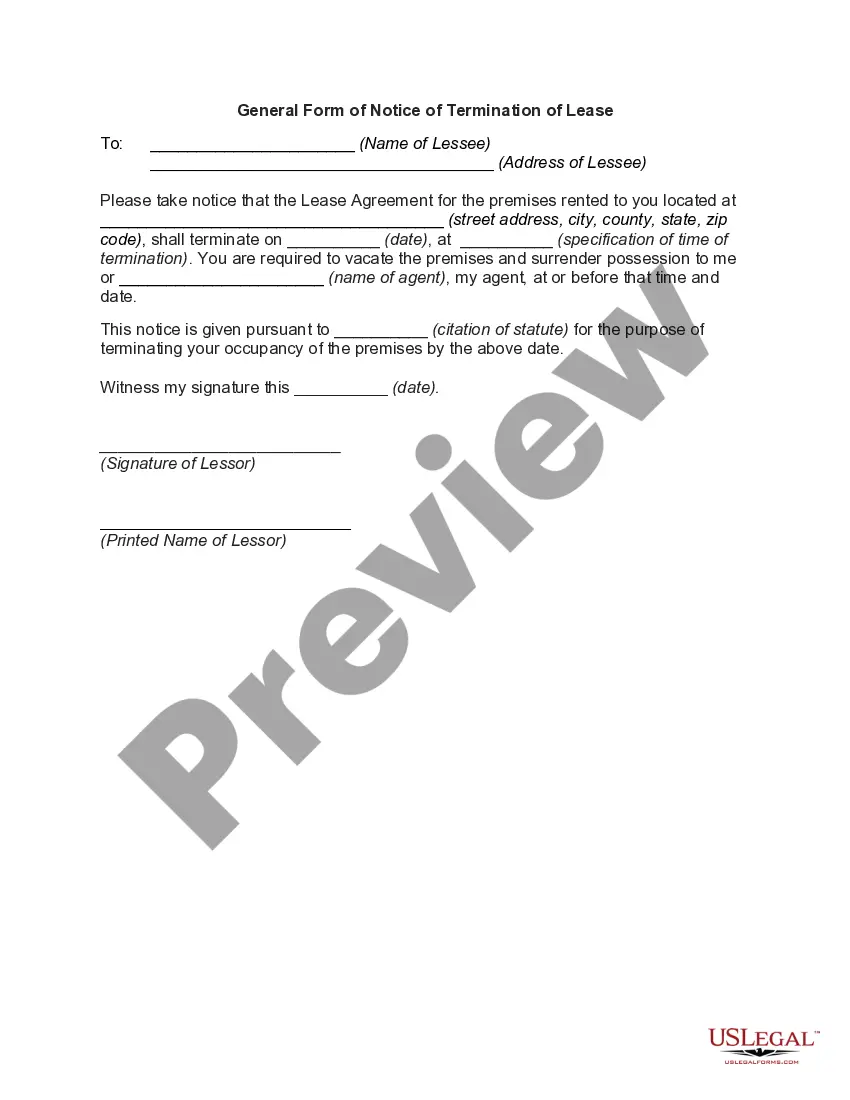
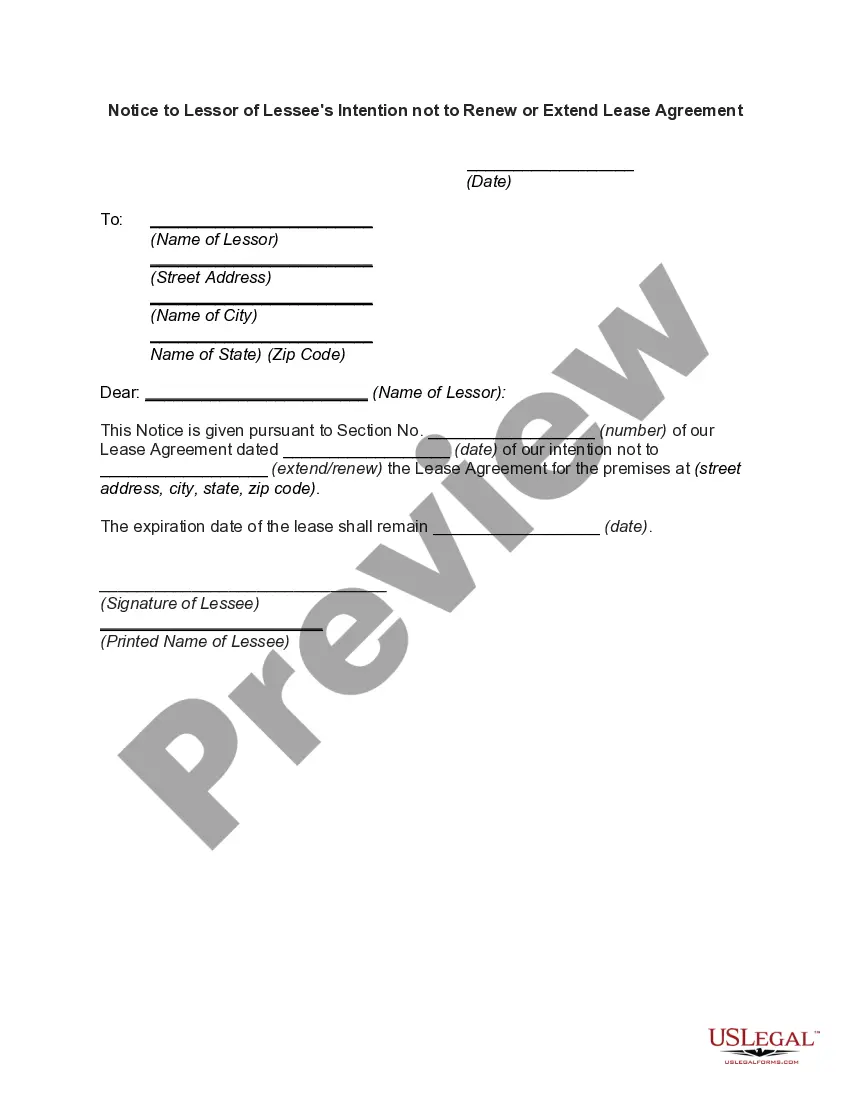
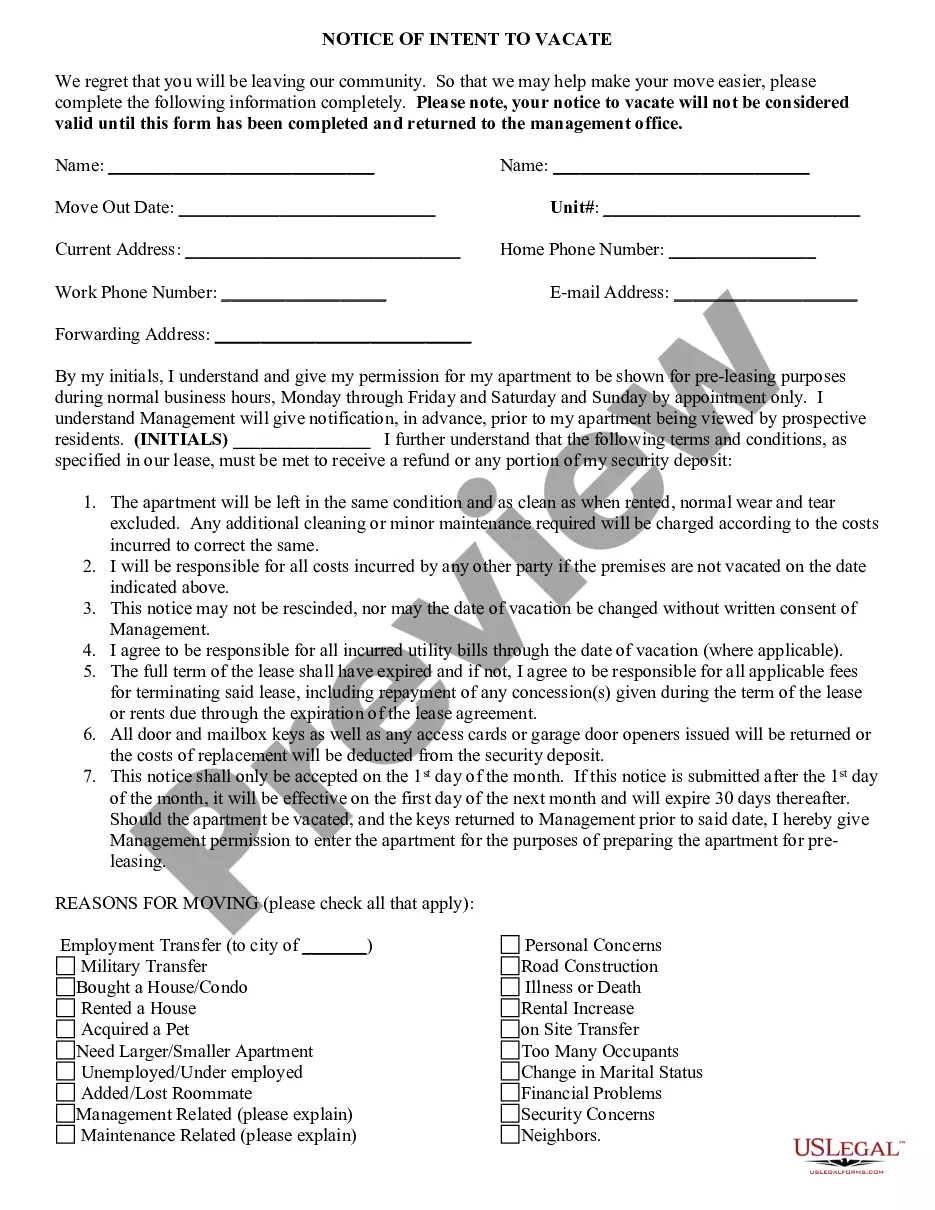
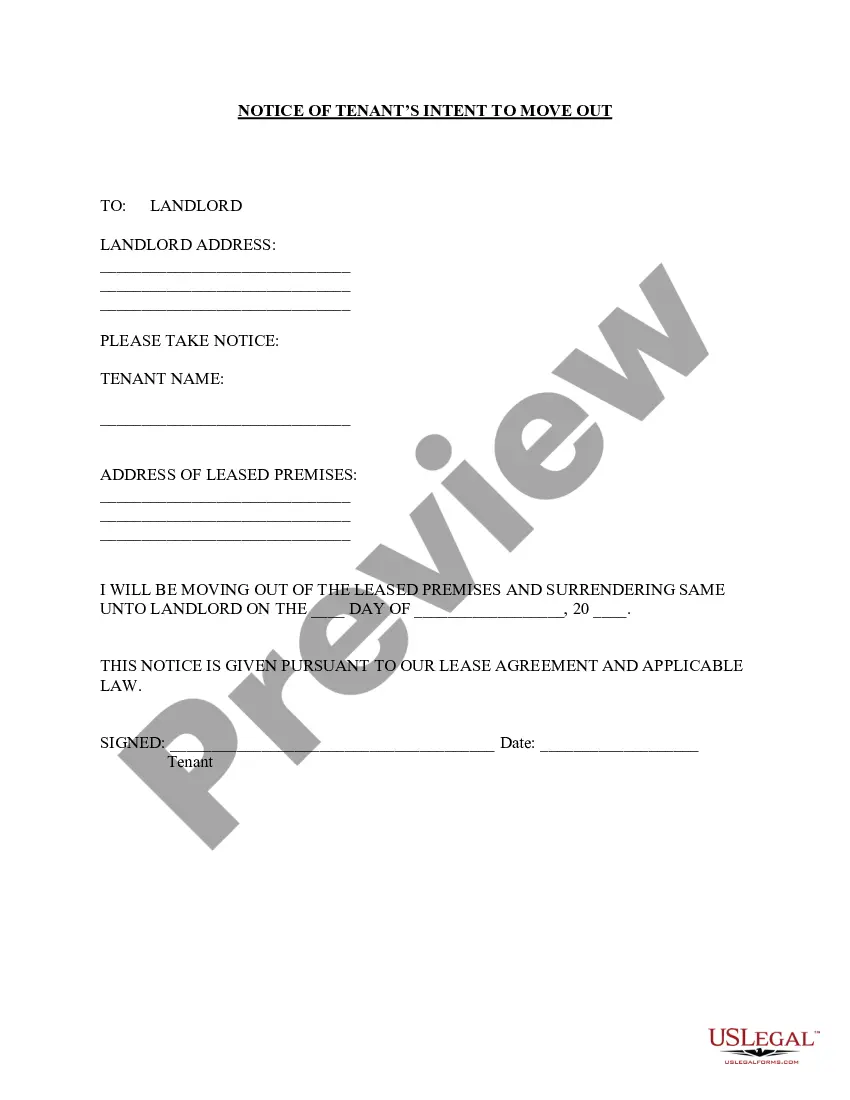


How to fill out Michigan Notice Of Intent To Vacate At End Of Specified Lease Term From Tenant To Landlord For Residential Property?
Obtain any template from 85,000 legal documents including the Michigan Notice of Intent to Vacate at the Conclusion of Designated Lease Period from Tenant to Landlord for Residential Property online with US Legal Forms.
Each template is composed and refreshed by state-certified attorneys.
If you possess a subscription, Log In. Once you’re on the document’s page, click the Download button and navigate to My documents to access it.
After your reusable template is downloaded, either print it out or save it to your device. With US Legal Forms, you will consistently have instant access to the needed downloadable template. The platform gives you access to documents and categorizes them to facilitate your search. Utilize US Legal Forms to acquire your Michigan Notice of Intent to Vacate at the Conclusion of Designated Lease Period from Tenant to Landlord for Residential Property quickly and effortlessly.
- Verify the state-specific prerequisites for the Michigan Notice of Intent to Vacate at the Conclusion of Designated Lease Period from Tenant to Landlord for Residential Property you wish to use.
- Examine the description and preview the template.
- Once you are certain the sample fits your needs, simply click Buy Now.
- Select a subscription option that suits your financial plan.
- Establish a personal account.
- Complete the payment in one of two acceptable methods: via credit card or through PayPal.
- Select a format to download the document in; two formats are available (PDF or Word).
- Retrieve the document to the My documents tab.
Form popularity
FAQ
Filling out a notice to quit in Michigan requires you to provide specific information about yourself and the tenant. Include the names of both parties, the property's location, and the reason for the notice. Clearly state the deadline for the tenant to vacate, based on the lease terms. This process is pivotal in establishing your Michigan Notice of Intent to Vacate at End of Specified Lease Term from Tenant to Landlord for Residential Property.
Filling out a notice to quit in Michigan involves including specific information. Start with your name, the tenant's name, and the rental property's address. Clearly state the reason for the notice, whether it is non-payment of rent or other lease violations, and indicate the deadline for the tenant to vacate the premises. This notice acts as a formal communication regarding your Michigan Notice of Intent to Vacate at End of Specified Lease Term from Tenant to Landlord for Residential Property.
Dear (Name of landlord or manager), This letter constitutes my written (number of days' notice that you need to give based on your lease agreement)-day notice that I will be moving out of my apartment on (date), the end of my current lease. I am leaving because (new job, rent increase, etc.)
Explain the Situation Tell your tenant in straightforward terms what the problem is, and explain that they cannot stay on the property any longer. Describe the Consequences Calmly explain that they will be evicted with necessary court orders if they remain on the property.
A holdover tenant is a tenant who stays in the rental unit after the lease expires. If the tenant continues to pay rent, the tenancy essentially becomes a month-to-month tenancy. A holdover tenant is legally allowed to stay in the rental unit as long as the landlord takes no action to remove them.
The mere expiration of the lease is not a reason to evict tenants under the Act. The lease simply continues in force and effect, with the only change being that the lease renews automatically on a month-to-month basis.So, if the tenants are protected by the Act, they can't be evicted simply because the lease expired.
A landlord can simply give you a written notice to move, allowing you 30 days (60 days if you've lived in the rental a year or more) as required by California law and specifying the date on which your tenancy will end.
At-will tenancy is subject to the will of both the tenant and the landlord (hence the name). In other words, the tenant can choose to leave and stop paying rent at any time, and the landlord can choose to stop accepting rent and ask the tenant to leave at any time.
You can quote the violations of contract in the court and make them a ground for eviction. There are only two ways of evicting a tenant - once the lease agreement is over or when the landlord terminates the lease by sending a legal notice under section 106 of the Transfer of Property Act.
In Michigan, the landlord must give the tenant at least 7 days' notice before filing to evict for non-payment of rent, for causing damage to the home, or for creating a health hazard.