Michigan Pre-Purchase Recommendations - Horse Equine Forms
What is this form?
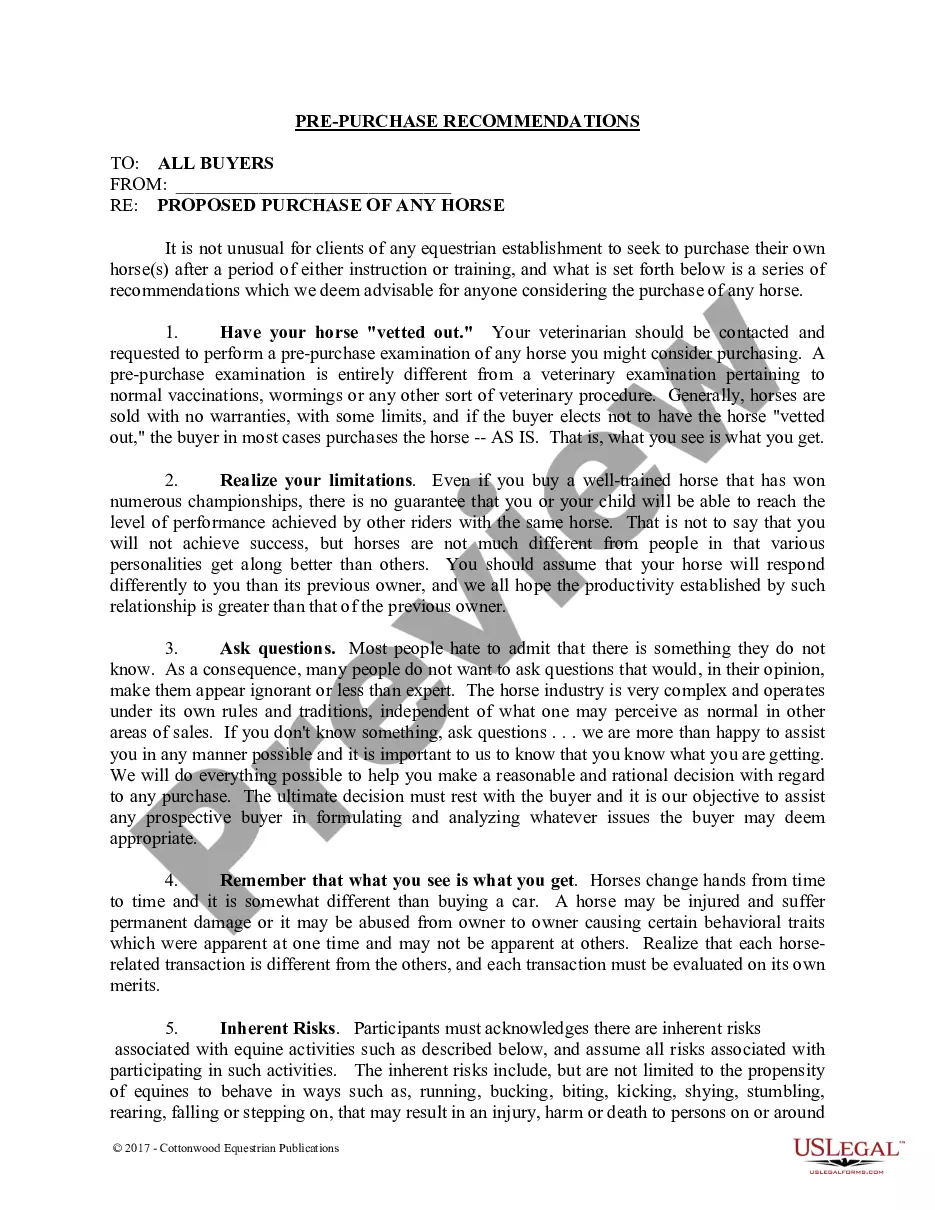
The Pre-Purchase Recommendations form is an essential tool for anyone considering purchasing a horse. It provides prospective buyers with a set of guidelines and advice to ensure they make informed decisions. This form differs from others by specifically focusing on the recommendations that buyers should consider before committing to a purchase, rather than simply documenting the transaction details.
Form components explained
- Recommendations for a pre-purchase veterinary examination to assess the horse's health.
- Advice on recognizing personal limitations and compatibility with the horse.
- Encouragement to ask questions to clarify any uncertainties in the buying process.
- Warning about the "as is" nature of horse sales, emphasizing the importance of thorough evaluation.
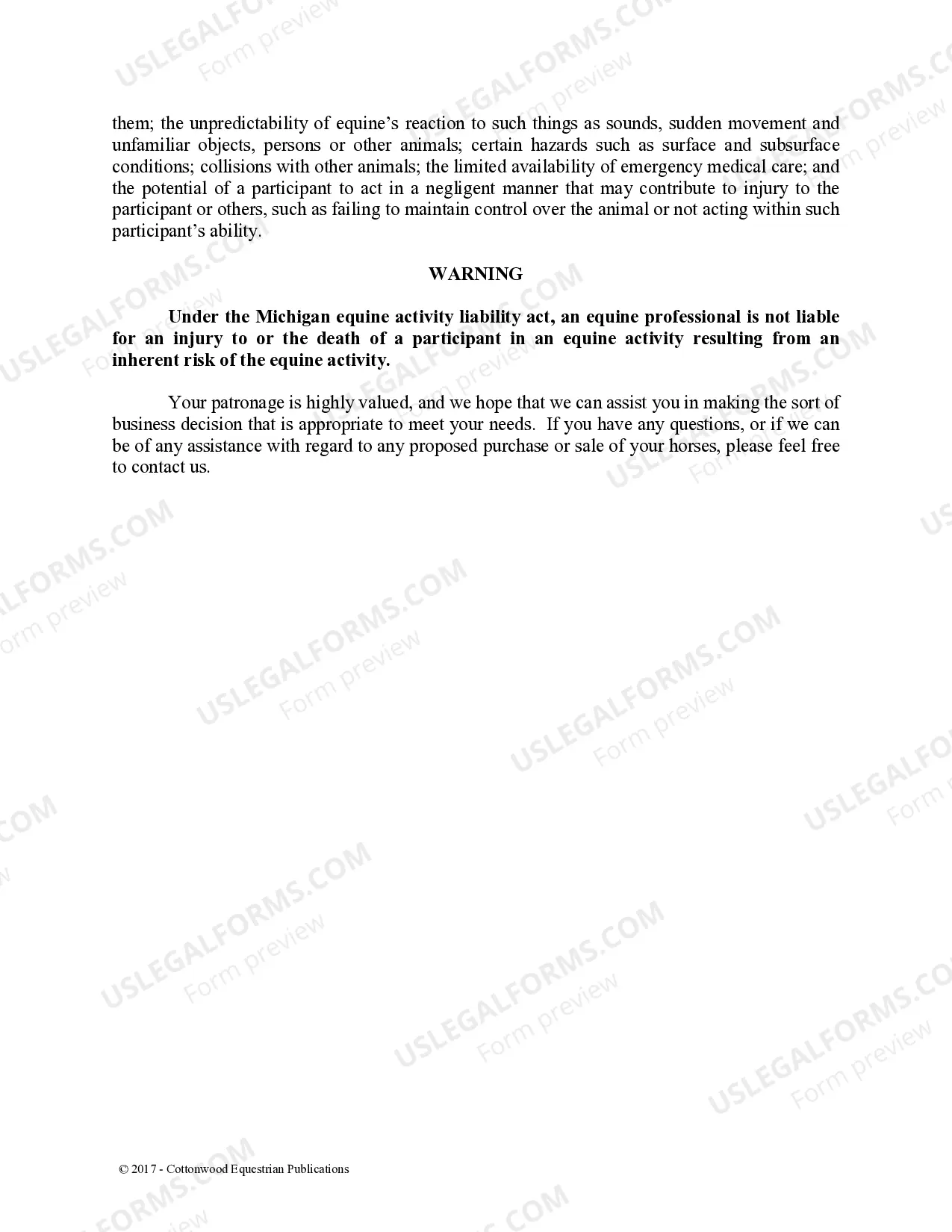
- Acknowledgment of inherent risks associated with equine activities and transactions.
When to use this document
This form is useful when you are considering the purchase of a horse, particularly if you are a first-time buyer or unfamiliar with the horse industry. It guides you through the critical factors to evaluate before making a significant investment, helping to mitigate risks associated with horse ownership.
Who needs this form
This form is intended for:
- First-time horse buyers seeking guidance on the purchasing process.
- Experienced equestrians looking to evaluate a prospective purchase critically.
- Parents considering buying a horse for their children.
- Individuals seeking to understand the equine market and related risks.
Completing this form step by step
- Identify the buyer and seller's information at the top of the form.
- Read through the recommendations provided and acknowledge understanding each point.
- Consult with a veterinarian to schedule a pre-purchase examination for the horse in question.
- Request clarifications and ask questions regarding any uncertainties related to the horse's history or sale.
- Sign and date the form once all recommendations have been understood and considered.
Notarization requirements for this form
This form does not typically require notarization unless specified by local law. Always verify any additional requirements that might apply in your jurisdiction to ensure the form's validity.
Get your form ready online
Our built-in tools help you complete, sign, share, and store your documents in one place.
Make edits, fill in missing information, and update formatting in US Legal Forms—just like you would in MS Word.
Download a copy, print it, send it by email, or mail it via USPS—whatever works best for your next step.
Sign and collect signatures with our SignNow integration. Send to multiple recipients, set reminders, and more. Go Premium to unlock E-Sign.
If this form requires notarization, complete it online through a secure video call—no need to meet a notary in person or wait for an appointment.
We protect your documents and personal data by following strict security and privacy standards.

Make edits, fill in missing information, and update formatting in US Legal Forms—just like you would in MS Word.

Download a copy, print it, send it by email, or mail it via USPS—whatever works best for your next step.

Sign and collect signatures with our SignNow integration. Send to multiple recipients, set reminders, and more. Go Premium to unlock E-Sign.

If this form requires notarization, complete it online through a secure video call—no need to meet a notary in person or wait for an appointment.

We protect your documents and personal data by following strict security and privacy standards.
Mistakes to watch out for
- Not conducting a pre-purchase veterinary examination, which can lead to unforeseen health issues.
- Ignoring personal capabilities and limitations when assessing compatibility with the horse.
- Failing to ask questions due to fear of appearing uninformed, which can result in misunderstandings.
- Assuming the horse's behavior will remain consistent with its past without considering the change in environment.
Advantages of online completion
- Convenient access to the form from any device at any time.
- Easy editing and customization to meet specific needs.
- Immediate downloads, allowing for quick use and action.
- Access to legal documents drafted by licensed attorneys, ensuring compliance and reliability.
Legal use & context:
- The recommendations provided are based on industry standards and best practices for horse purchases.
- Understanding inherent risks is crucial for responsible equine ownership and participation in activities.
- Compliance with local laws regarding purchases and ownership is necessary to avoid legal issues.
What to keep in mind
Key takeaways:
- Use the form to guide your horse purchase and evaluate important factors.
- Engage professionals to ensure a thorough understanding of the horse's condition and suitability.
- Recognize that each horse sale is distinct and requires careful consideration of all variables.
Looking for another form?

Form popularity
FAQ
A stage 2 vetting typically takes between one to two hours to complete, depending on the number of tests involved and the horse's condition. During this time, the veterinarian will conduct more detailed examinations and tests. By engaging with Michigan Pre-Purchase Recommendations - Horse Equine Forms, you can better understand what to expect and how to optimize this critical time.
Horses typically require a vet check at least once a year for general health and vaccinations. However, if your horse is actively competing or has health issues, more frequent evaluations may be necessary. Understanding these guidelines through Michigan Pre-Purchase Recommendations - Horse Equine Forms helps ensure the ongoing health of your equine companion.
A 2 stage horse vetting is a two-part evaluation of a horse's health prior to purchase. The first stage typically involves a thorough physical examination, while the second stage includes specific diagnostic tests such as radiographs or blood tests. Utilizing Michigan Pre-Purchase Recommendations - Horse Equine Forms helps you select the right tests based on your potential horse's needs.
The 20% rule for horses suggests that a horse should not work harder than 20% of its maximum capacity for sustained periods. This guideline helps prevent injuries and maintains a horse's overall well-being. Employing this principle while following Michigan Pre-Purchase Recommendations - Horse Equine Forms can lead to healthier and happier equine companions.
PRP injections can provide benefits for several weeks to months, depending on the horse's specific condition and response to treatment. These injections are designed to enhance healing by promoting tissue regeneration. Regular follow-ups with a veterinarian are advised to assess the progress. Michigan Pre-Purchase Recommendations - Horse Equine Forms can offer vital insights into managing these procedures effectively.
To check a horse before buying, perform a thorough inspection and consider obtaining a veterinary examination. Look for signs of soundness, such as smooth gaits and healthy hooves. Ensure the horse's vaccination and health records are up to date. Using Michigan Pre-Purchase Recommendations - Horse Equine Forms will provide essential information in this crucial evaluation.
The success rate of Platelet-Rich Plasma (PRP) treatment in horses varies, but many studies indicate it can improve healing in soft tissue injuries significantly. Results often depend on the type and severity of the injury, as well as the horse's overall health. Consult a veterinarian for tailored advice and options. Utilizing Michigan Pre-Purchase Recommendations - Horse Equine Forms can help you navigate these treatments.
The 1/2/3 rule in horses helps you understand their age and maturity regarding training and performance. Typically, a novice horse should be at least three years old to start serious training. Horses aged four to five are often suitable for basic work, while those aged six and above are generally ready for advanced training. Understanding this rule can assist with informed decisions in accordance with Michigan Pre-Purchase Recommendations - Horse Equine Forms.
When viewing a horse to buy, focus on its physical condition, behavior, and temperament. Look for any signs of lameness or injuries, which can impact performance. Observing how the horse interacts with you and its environment provides insights into its personality. Michigan Pre-Purchase Recommendations - Horse Equine Forms can guide you in this process.
The 3 F's for horses are Feet, Form, and Function. These elements help you assess a horse’s overall health and abilities. By evaluating the feet, you can determine soundness. Additionally, considering the horse's form and function informs you about its potential for various equestrian activities.