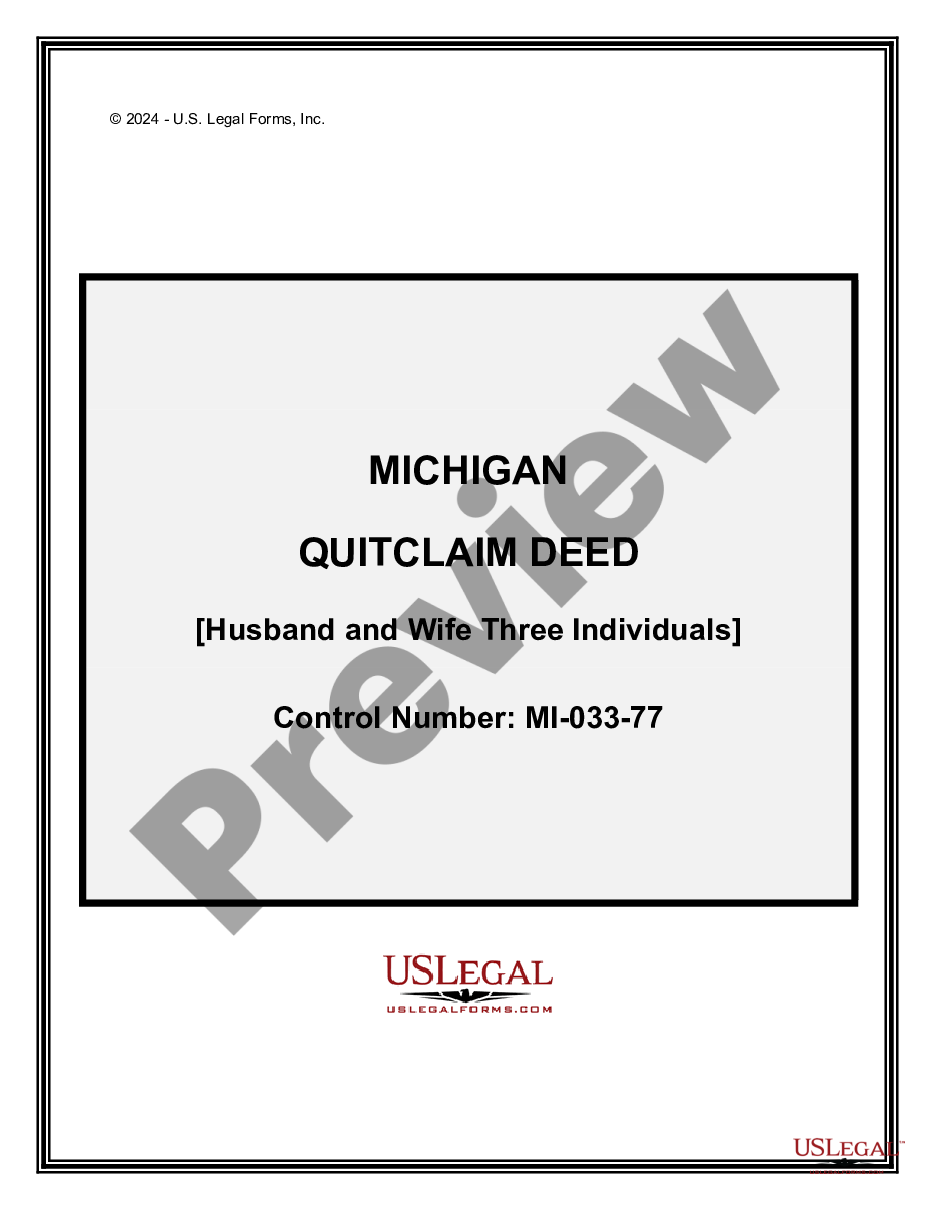
Michigan Quitclaim Deed - Husband and Wife to Three Individuals
Overview of this form
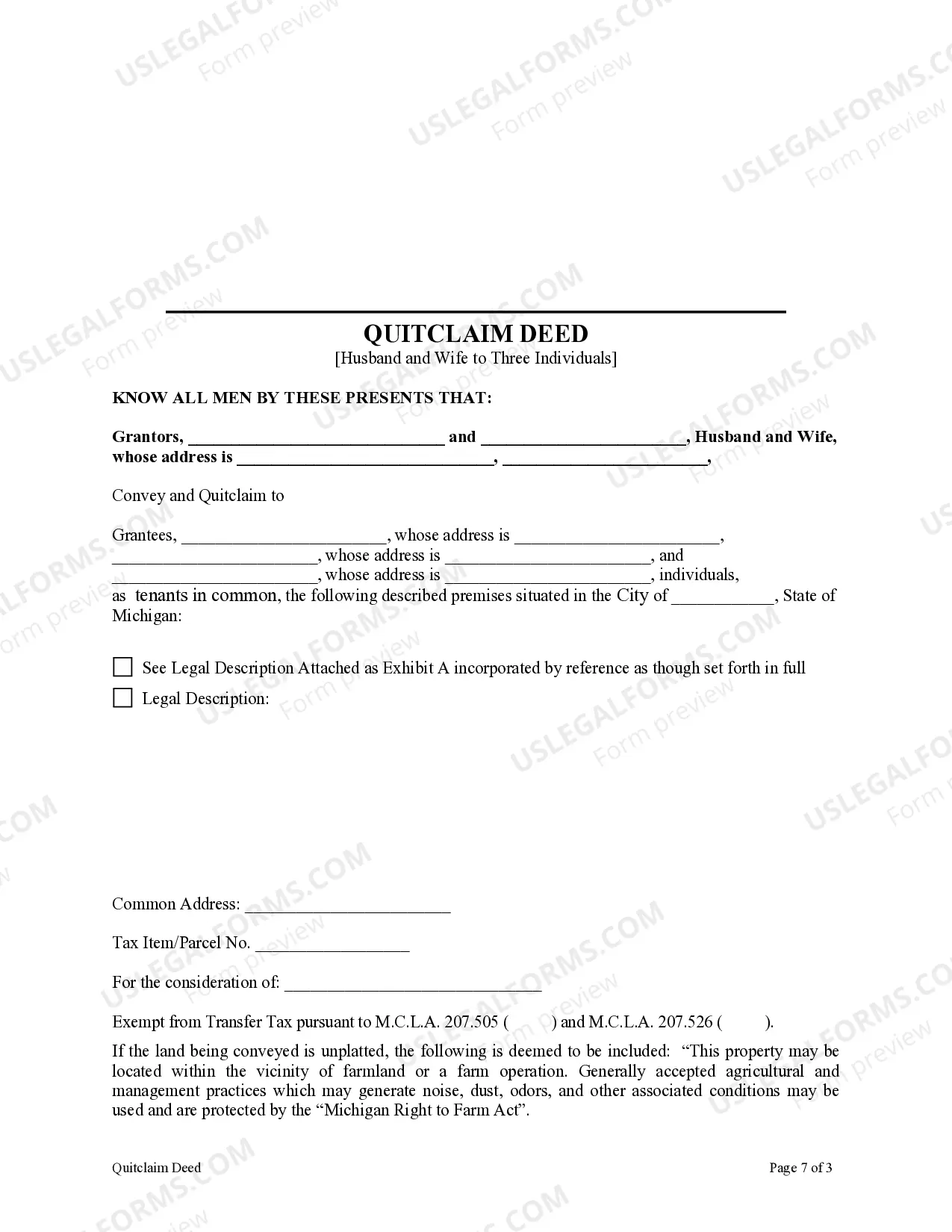
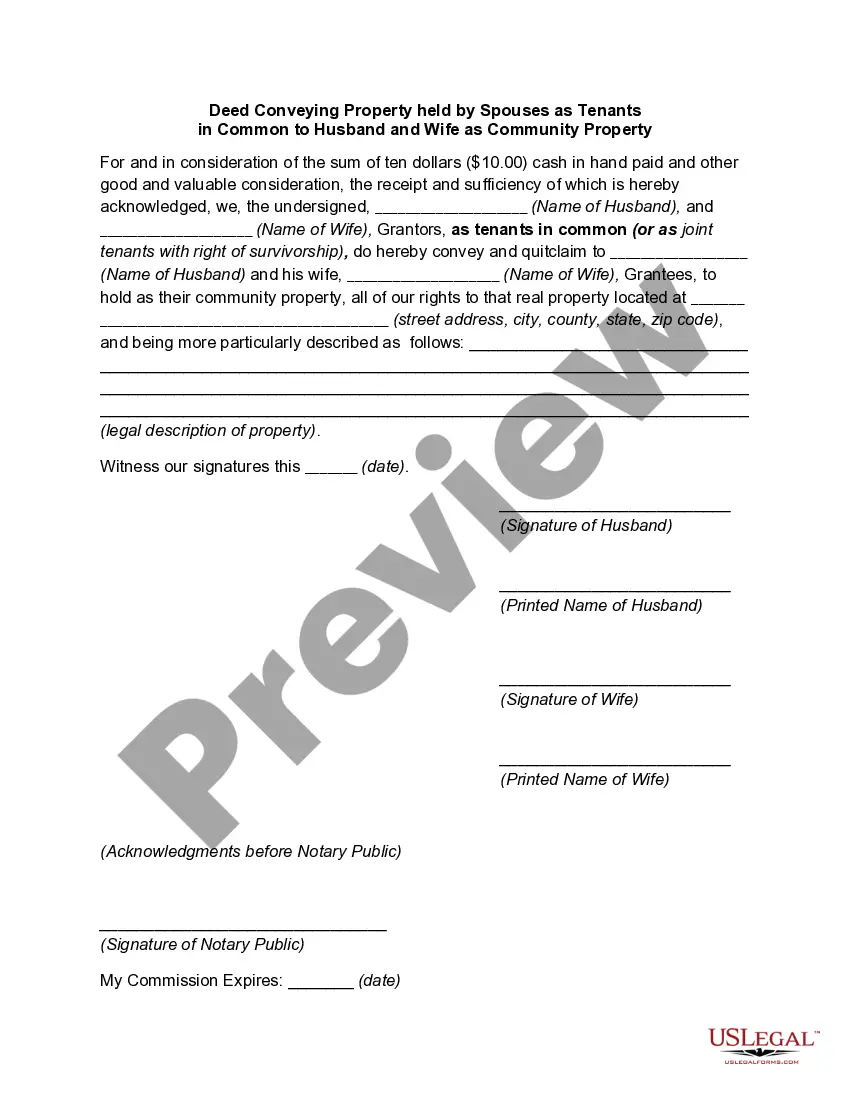
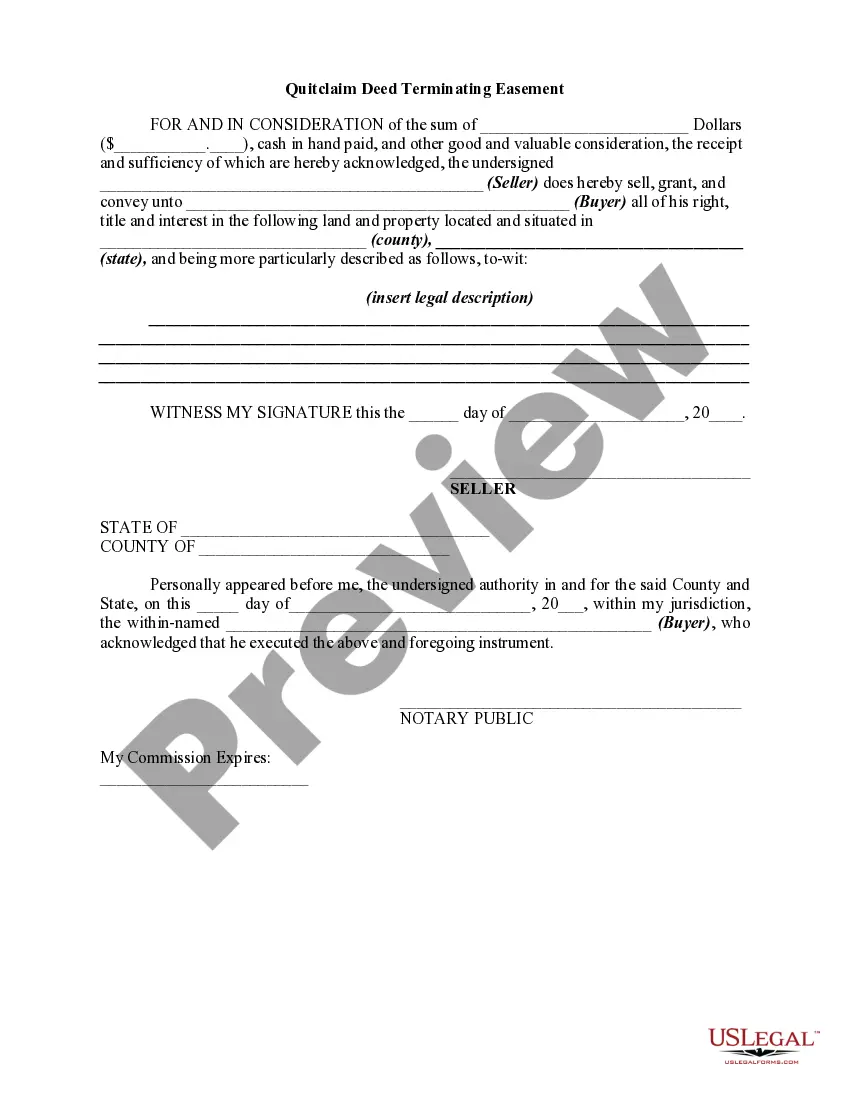
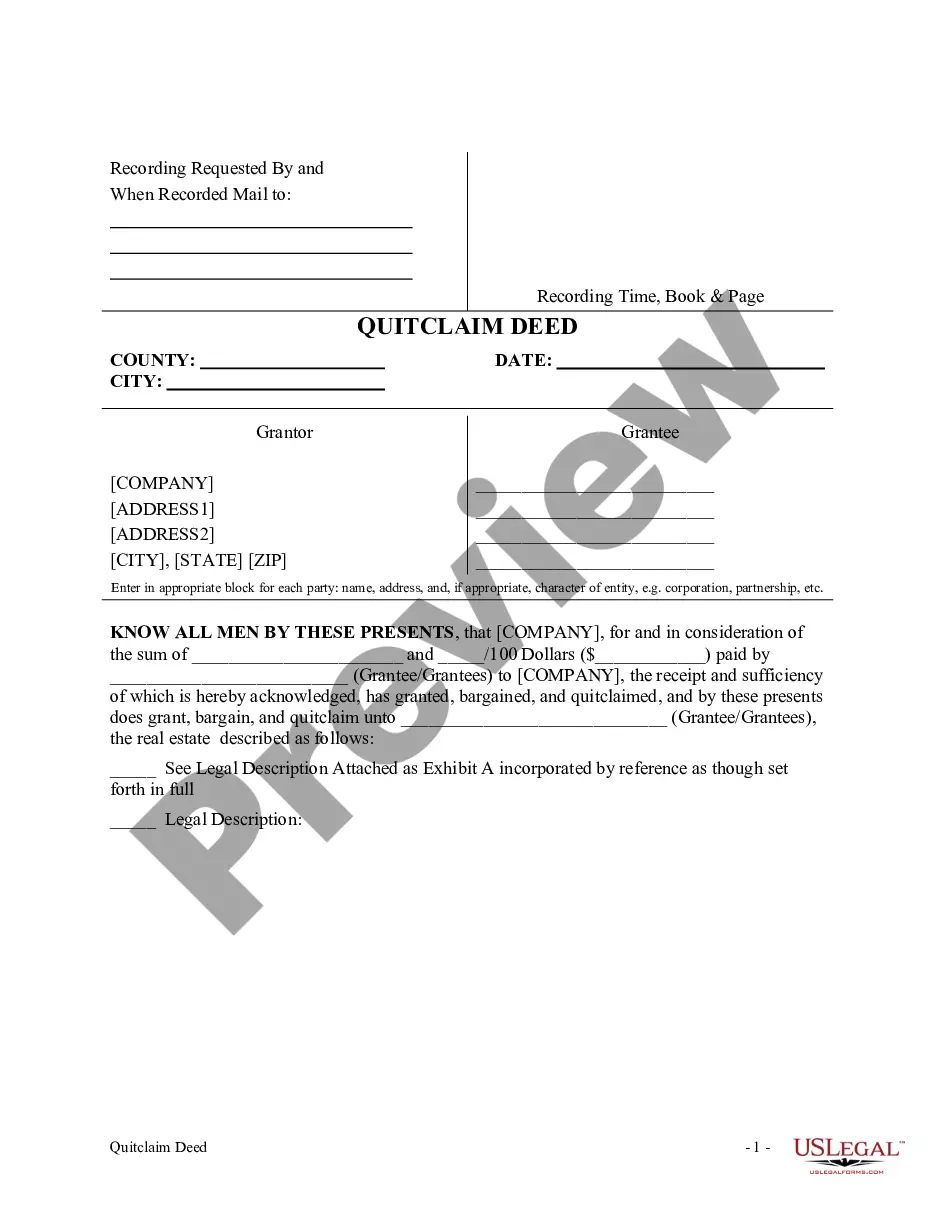
The Quitclaim Deed - Husband and Wife to Three Individuals is a legal document through which a married couple (the Grantors) transfers their ownership interest in a property to three individuals (the Grantees). Unlike a warranty deed, a quitclaim deed does not guarantee that the Grantors hold title to the property; it simply conveys whatever interest they may have. This form differentiates itself by specifying the structure of ownership for the Grantees, who may take the property as tenants in common or joint tenants with the right of survivorship.
Main sections of this form
- Grantor Information: Names and addresses of the husband and wife transferring the property.
- Grantee Information: Names and addresses of the three individuals receiving the property.
- Description of Property: Detailed information about the property being transferred, including its location.
- Ownership Structure: Specification whether the property is held as tenants in common or joint tenants with the right of survivorship.
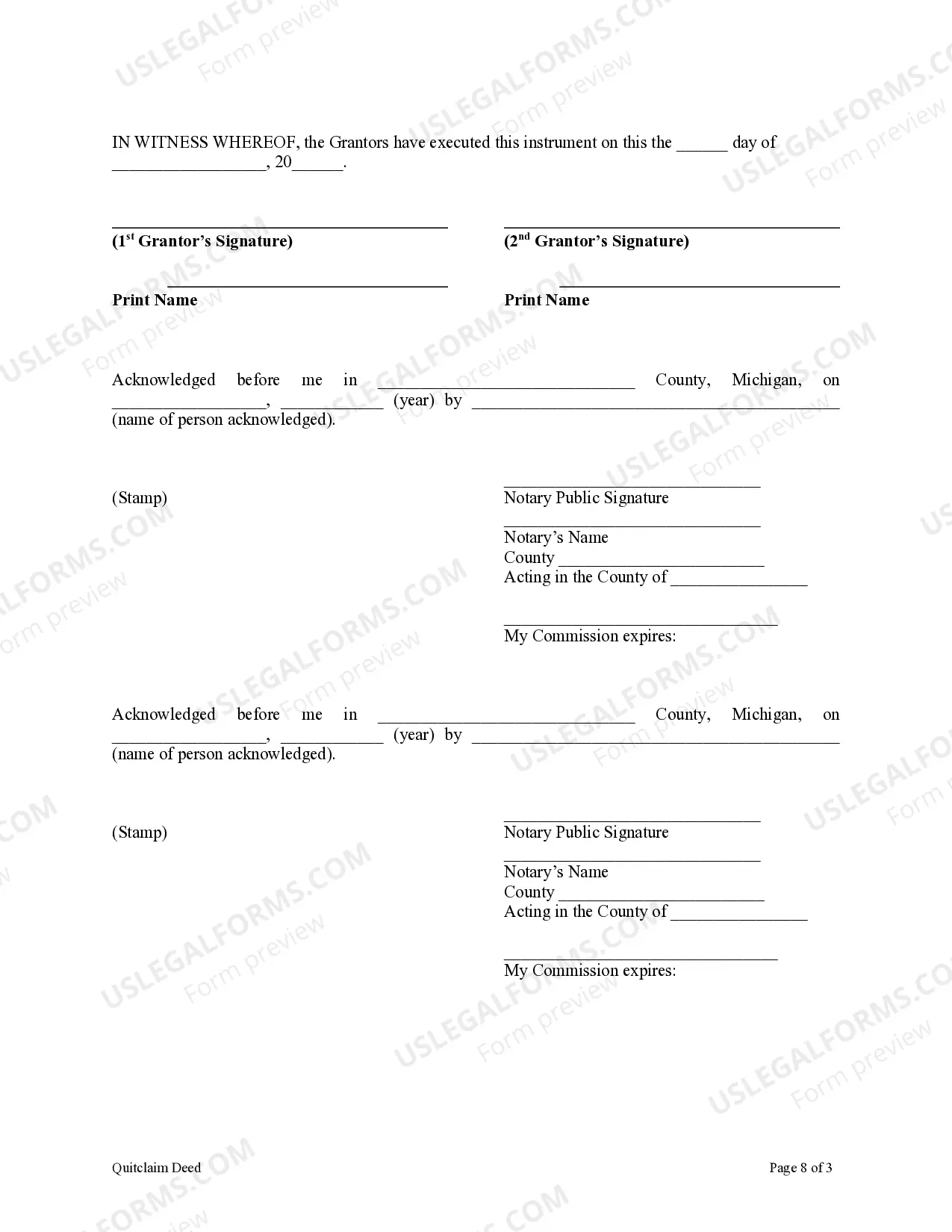
- Signature Section: Area for the Grantors to sign and date the deed.

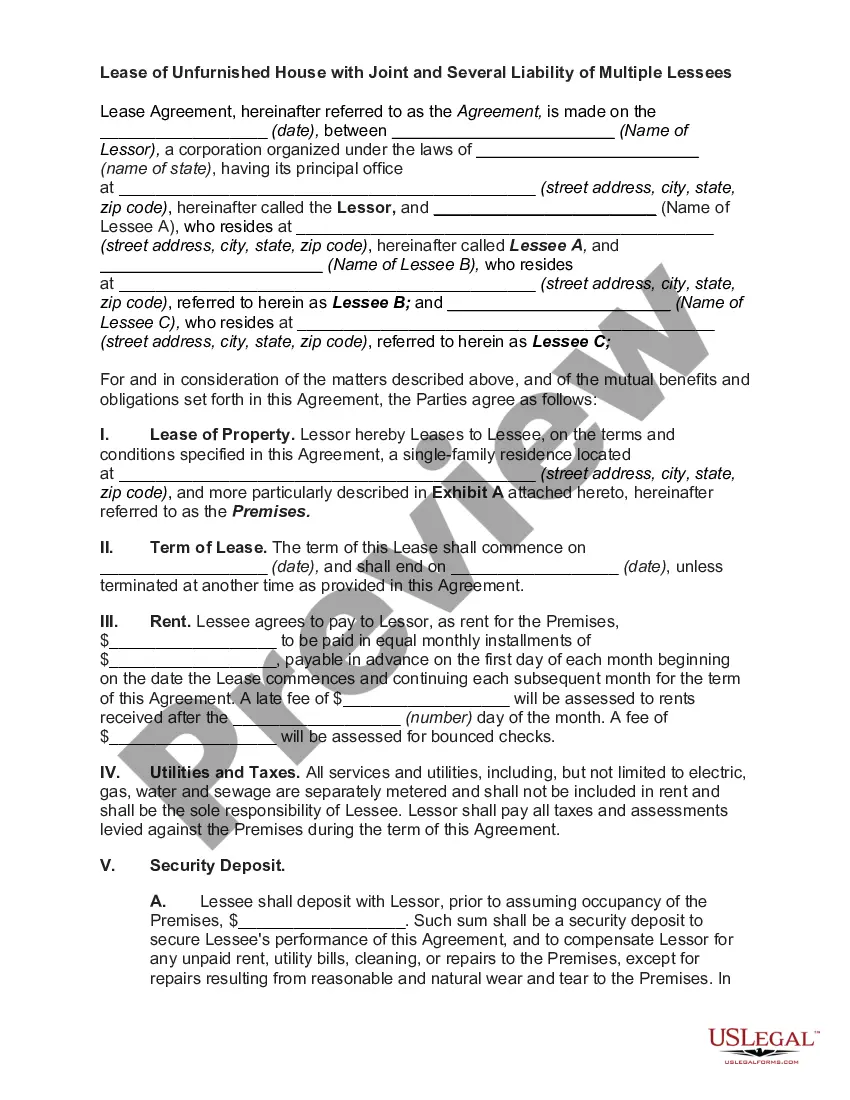

When to use this form
This quitclaim deed is typically used in scenarios where a married couple wishes to transfer ownership of a property to other individuals, such as in estate planning, resolving ownership disputes, or when transferring property to family members or friends. It's particularly useful when the Grantors want to relinquish their interests without the warranties found in other real estate deed types.
Who should use this form
- Married couples who are transferring property to three individuals.
- Individuals involved in estate or family planning considerations.
- People resolving ownership disputes where no warranties are required.
How to complete this form
- Identify the parties: Enter the full names and addresses of the husband and wife as Grantors.
- Specify the Grantees: Input the names and addresses of the three individuals who will receive the property.
- Describe the property: Include a detailed description of the property being transferred.
- Select the ownership structure: Choose whether the Grantees will hold the property as tenants in common or joint tenants with rights of survivorship.
- Enter the date and signature: Have both Grantors sign and date the deed to finalize the transfer.
Does this document require notarization?
This form does not typically require notarization unless specified by local law, but having it notarized can add an extra layer of validation to the document. It is advisable to check local regulations to ensure compliance.
Get your form ready online
Our built-in tools help you complete, sign, share, and store your documents in one place.
Make edits, fill in missing information, and update formatting in US Legal Forms—just like you would in MS Word.
Download a copy, print it, send it by email, or mail it via USPS—whatever works best for your next step.
Sign and collect signatures with our SignNow integration. Send to multiple recipients, set reminders, and more. Go Premium to unlock E-Sign.
If this form requires notarization, complete it online through a secure video call—no need to meet a notary in person or wait for an appointment.
We protect your documents and personal data by following strict security and privacy standards.

Make edits, fill in missing information, and update formatting in US Legal Forms—just like you would in MS Word.

Download a copy, print it, send it by email, or mail it via USPS—whatever works best for your next step.

Sign and collect signatures with our SignNow integration. Send to multiple recipients, set reminders, and more. Go Premium to unlock E-Sign.

If this form requires notarization, complete it online through a secure video call—no need to meet a notary in person or wait for an appointment.

We protect your documents and personal data by following strict security and privacy standards.
Mistakes to watch out for
- Failing to accurately describe the property being transferred.
- Not including all necessary Grantee information.
- Omitting signatures or dates from the deed.
Benefits of completing this form online
- Convenience of completing the form from home at your own pace.
- Editability allows for easy adjustments before finalizing the document.
- Instant access to legally compliant forms drafted by licensed attorneys.
Looking for another form?
Form popularity
FAQ
Joint tenancy represents one legal option when two or more people desire to own real property. Its distinct characteristic is the right of survivorship. It is possible for four people to own land as joint tenants as long as certain legal requirements are met.
A quitclaim deed transfers title but makes no promises at all about the owner's title.A person who signs a quitclaim deed to transfer property they do not own results in no title at all being transferred since there is no actual ownership interest. The quitclaim deed only transfers the type of title you own.
The grantor must sign the deed according to the law in every state and county. The grantor's signature finalizes the transfer of ownership, and quitclaim deeds aren't considered valid unless the grantor signs them. A certified notary public must typically be present as the grantor signs.
Signing: § 565.201 requires that the grantor sign the document in front of a notary public. Recording: All quitclaim deeds in Michigan must be filed with the Michigan Register of Deeds in the county where the property is located.
A quitclaim deed affects ownership and the name on the deed, not the mortgage. Because quitclaim deeds expose the grantee to certain risks, they are most often used between family members and where there is no exchange of money.Quitclaim deeds transfer title but do not affect mortgages.
Tenancy by the entirety, another joint-owned property option, is when the parties are husband and wife. In this case, each spouse has an equal and undivided interest in the property. If one spouse dies, the full title of the property automatically passes to the surviving spouse.
In Michigan, a quit claim deed must be signed by a witness, in addition to the notary, to make it legal.After all required signatures are collected and notarized, file the document with your local register of deeds to complete the transaction.
A Michigan quitclaim deed form provides no warranty of title. That means that the new owner has no legal right to sue the prior owner if there is a problem with the title to the property. The new owner simply takes whatever title that the prior owner has.
A quitclaim deed doesn't always need to be signed before the divorce is final. Your divorce judgment will detail the terms of your property settlement agreement, and the requirement for transferring title will likely be incorporated into this agreement.