Michigan Quitclaim Deed from Grantor Trust to Five Individual Grantees
About this form
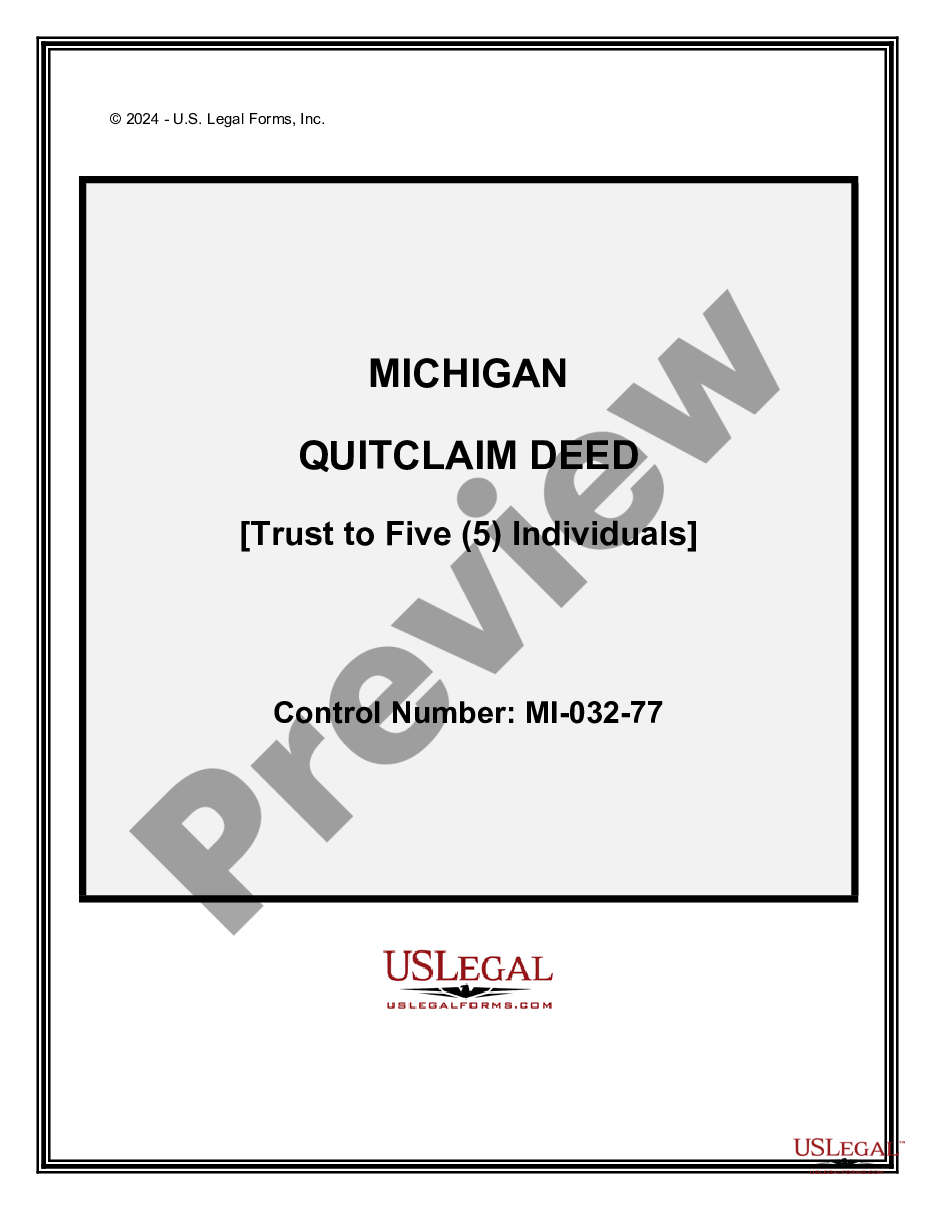
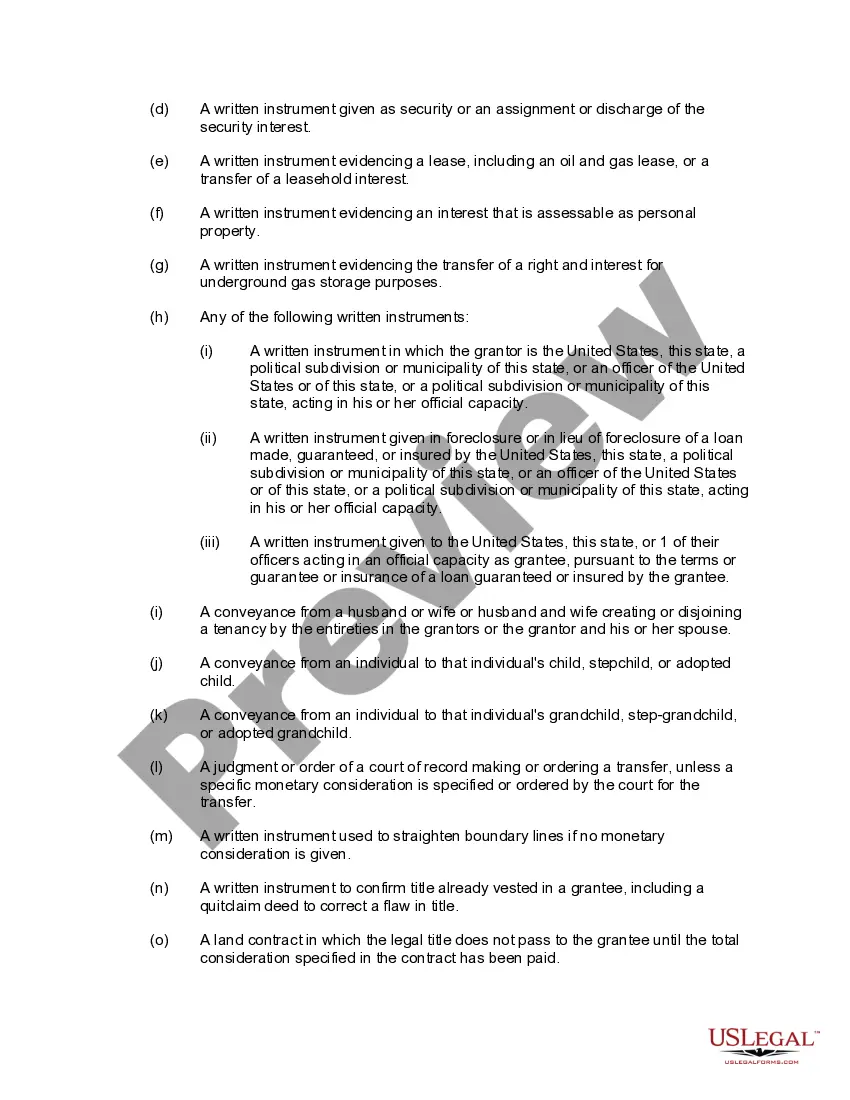
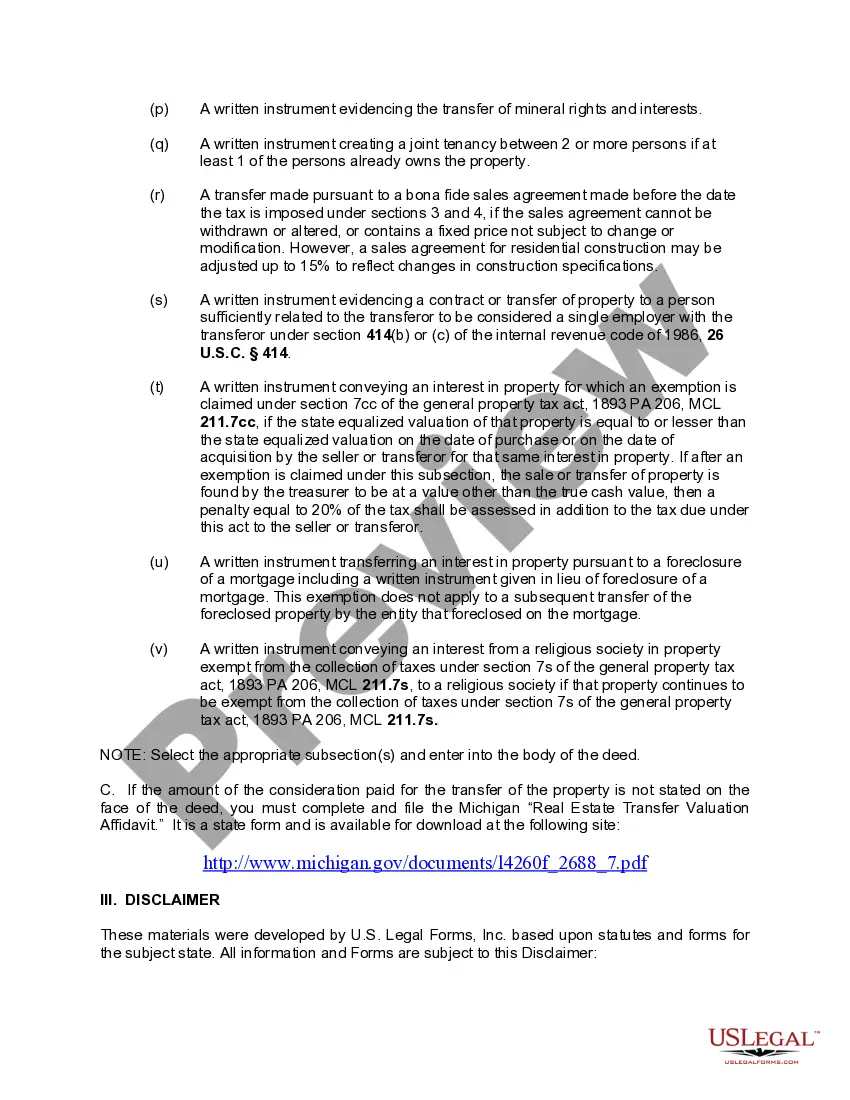
The Quitclaim Deed from Grantor Trust to Five Individual Grantees is a legal document used to transfer property ownership from a trust to multiple individuals. Unlike other types of deeds, a quitclaim deed conveys whatever interest the grantor has in the property without guaranteeing that title is clear. This form is ideal for transferring property among family members or friends and allows grantees to hold the property either as joint tenants with the right of survivorship or as tenants in common.
What’s included in this form
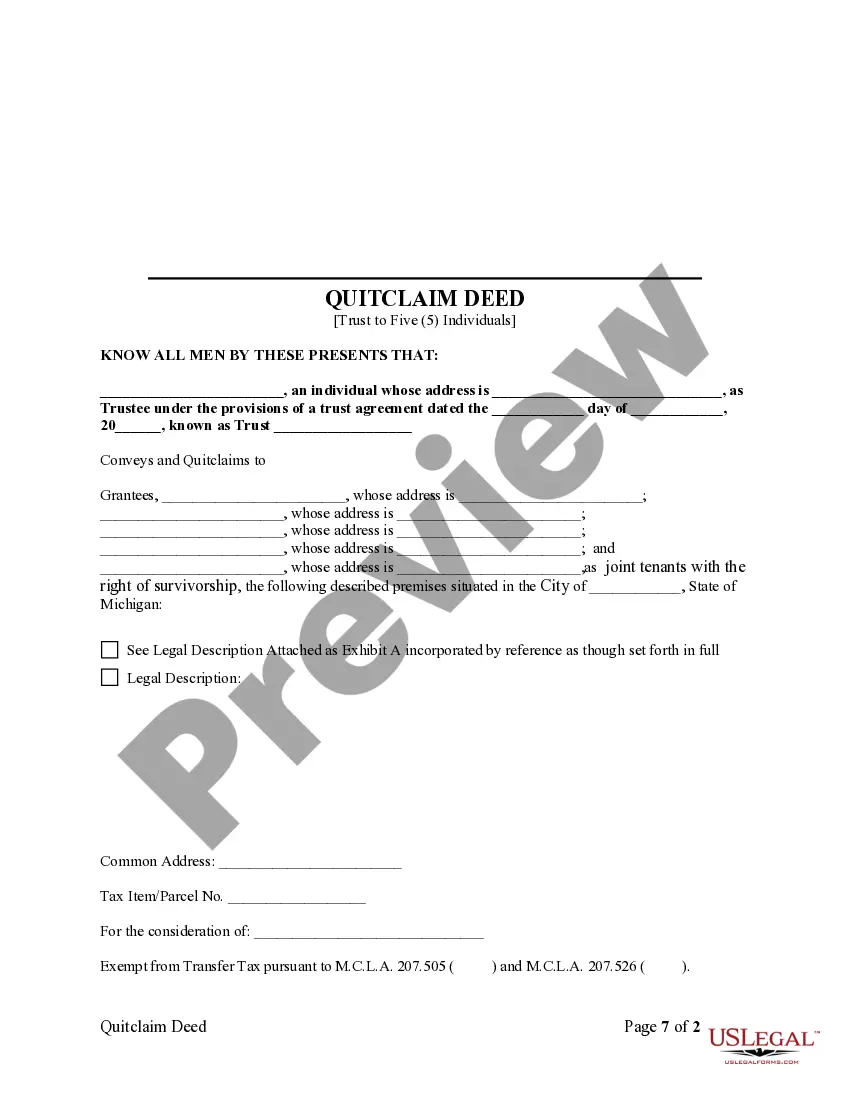
- Identification of the grantor (trustee) and grantees (individuals receiving the property).
- Description of the property being transferred, including a reference to a legal description.
- Specification of how grantees will hold the property (joint tenants or tenants in common).
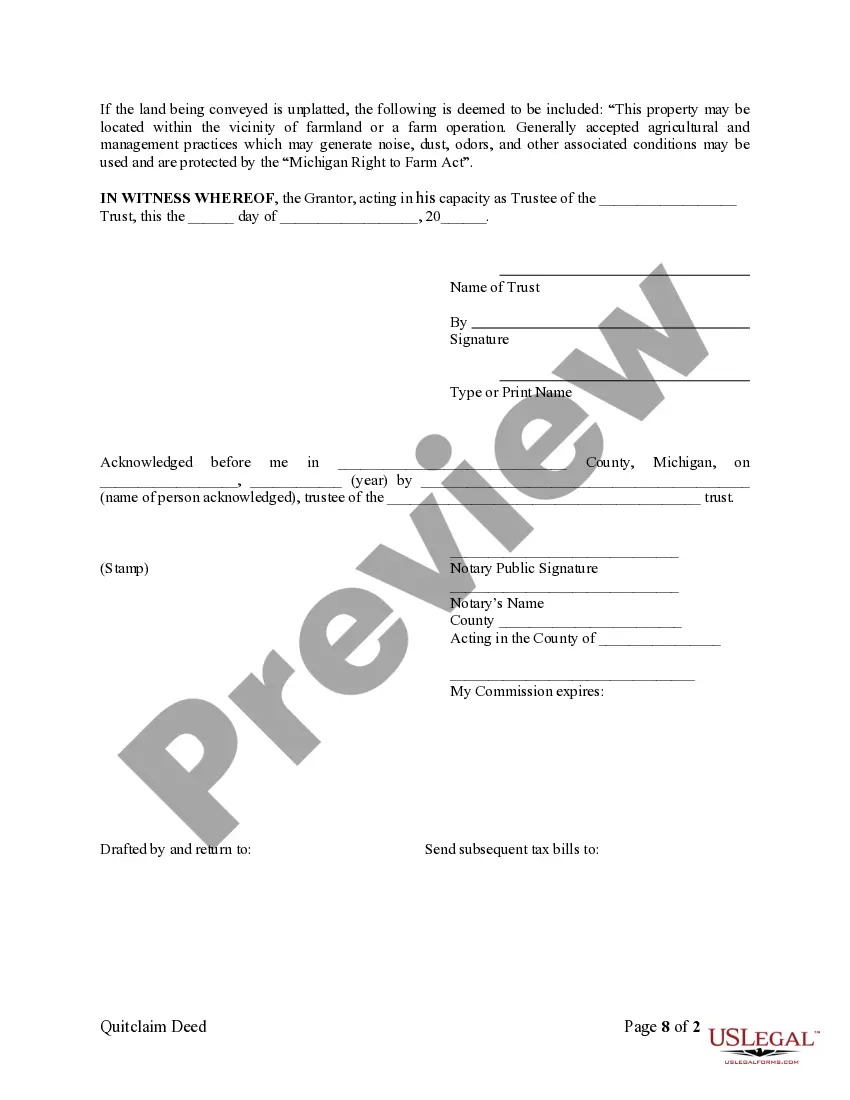
- Signature line for the trustee, dated appropriately.





When this form is needed
This form is typically used when a property needs to be transferred from a trust to several individuals. Scenarios may include when a trust is being dissolved, or when the trustee desires to transfer ownership of the property to beneficiaries to facilitate estate planning or family arrangements. It can also be used in situations where property needs to change hands quickly without the need for extensive legal formalities.
Who can use this document
- Individuals acting as trustees who wish to convey property from a trust.
- Beneficiaries of a trust who are receiving property as part of estate planning.
- Family members or friends involved in transferring property ownership among themselves.
- Anyone needing a simplified method for property transfer without title guarantees.
Completing this form step by step
- Identify and enter the name and address of the trustee as the grantor.
- List the names and addresses of the five individual grantees.
- Provide the legal description of the property being transferred.
- Specify whether the grantees will hold the property as joint tenants or tenants in common.
- Sign and date the form as the trustee to finalize the transfer.
Notarization requirements for this form
To make this form legally binding, it must be notarized. Our online notarization service, powered by Notarize, lets you verify and sign documents remotely through an encrypted video session.
Get your form ready online
Our built-in tools help you complete, sign, share, and store your documents in one place.
Make edits, fill in missing information, and update formatting in US Legal Forms—just like you would in MS Word.
Download a copy, print it, send it by email, or mail it via USPS—whatever works best for your next step.
Sign and collect signatures with our SignNow integration. Send to multiple recipients, set reminders, and more. Go Premium to unlock E-Sign.
If this form requires notarization, complete it online through a secure video call—no need to meet a notary in person or wait for an appointment.
We protect your documents and personal data by following strict security and privacy standards.

Make edits, fill in missing information, and update formatting in US Legal Forms—just like you would in MS Word.

Download a copy, print it, send it by email, or mail it via USPS—whatever works best for your next step.

Sign and collect signatures with our SignNow integration. Send to multiple recipients, set reminders, and more. Go Premium to unlock E-Sign.

If this form requires notarization, complete it online through a secure video call—no need to meet a notary in person or wait for an appointment.

We protect your documents and personal data by following strict security and privacy standards.
Common mistakes to avoid
- Failing to accurately describe the property, which can lead to legal disputes.
- Not specifying how the grantees will hold the property.
- Omitting the signature or date from the deed, making it invalid.
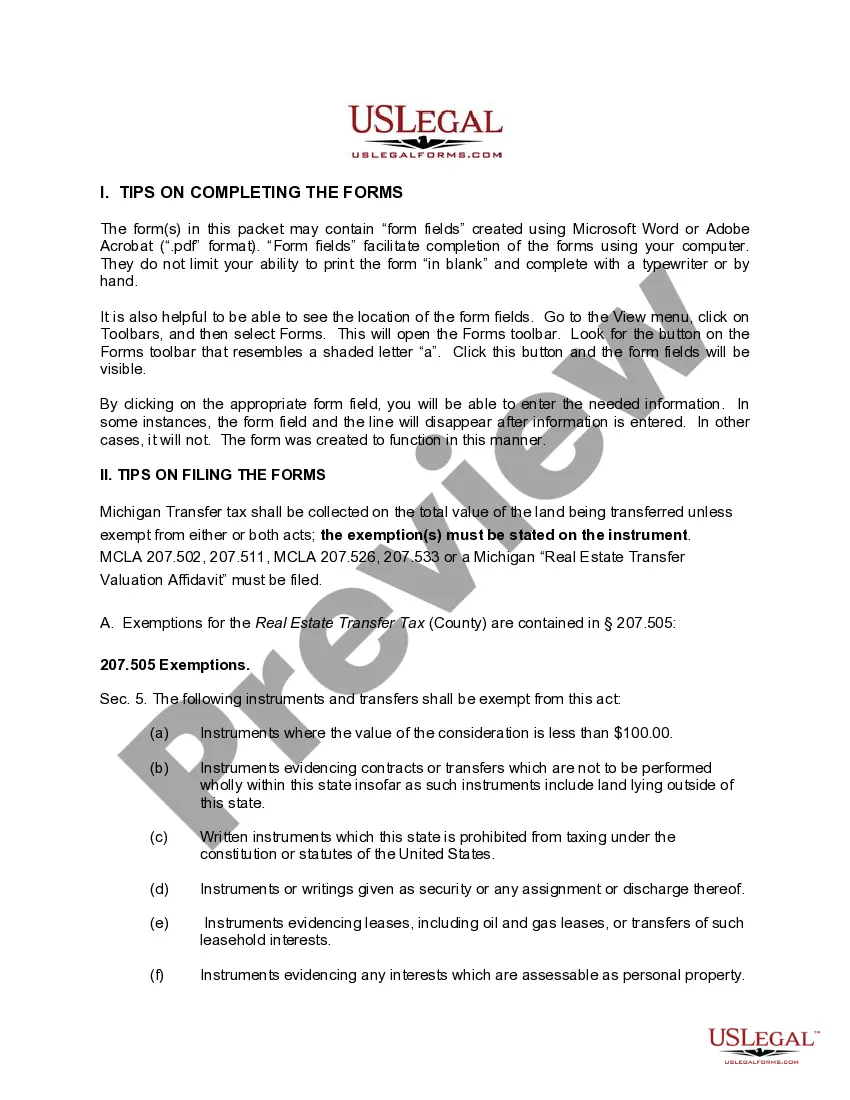
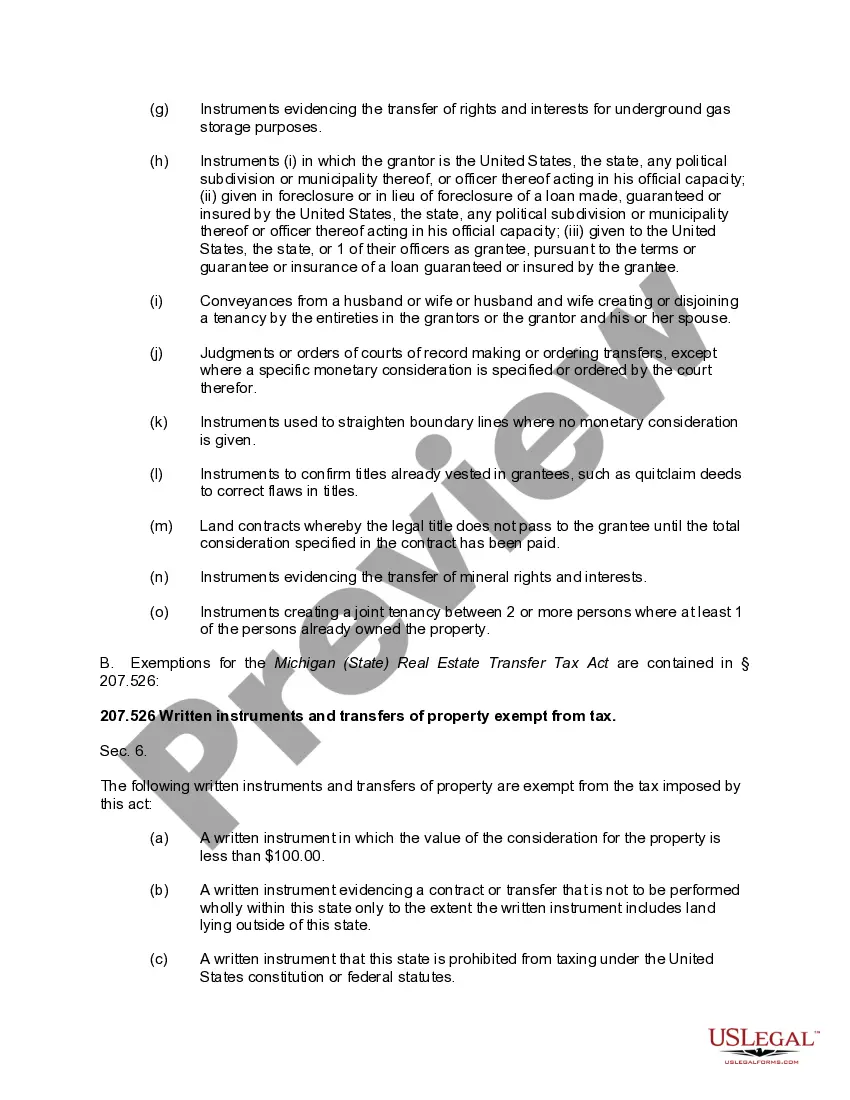
- Neglecting to account for possible transfer taxes and exemptions.
Why use this form online
- Convenient access allows completion of the form anytime from anywhere.
- Editability ensures correct information entry without needing to start over.
- Reliability of templates drafted by licensed legal professionals.
- Immediate download capability facilitates quick processing of property transfers.
Looking for another form?
Form popularity
FAQ
The Quit Claim Deed form uses the terms of Grantor (Seller or Owner of said property) and Grantee (Buyer of said property) for the two parties involved. First, the parties must fill in the date. Then, write in the name of the county and state in which the property is located.
California Property TaxesTransferring real property to yourself as trustee of your own revocable living trust -- or back to yourself -- does not trigger a reassessment for property tax purposes. (Cal. Rev. & Tax Code § 62(d).)
Step 1: Download the MI quitclaim deed form. Step 2: Add the name and address of the preparer under Prepared By on the first line of the document. Step 3: Add the return address under After Recording Return To. This is typically the name and address of the grantee, but it could be a different party.
In Michigan, a quit claim deed must be signed by a witness, in addition to the notary, to make it legal.After all required signatures are collected and notarized, file the document with your local register of deeds to complete the transaction.
But you might be wondering if an owner can transfer a deed to another person without a real estate lawyer. The answer is yes. Parties to a transaction are always free to prepare their own deeds.A quitclaim deed, for example, is far simpler than a warranty deed.
Locate the deed that's in trust. Use the proper deed. Check with your title insurance company and lender. Prepare a new deed. Sign in the presence of a notary. Record the deed in the county clerk's office.
Write the Deed Fill out the quit claim deed form, which can be obtained online, or write your own using the form as a guide. The person giving up the interest in the property is the grantor, and the person receiving the interest is the grantee.
A quitclaim deed can be used to transfer property from a trust, but a Special Warranty Deed seems to be a more common way to do this.