Michigan Quitclaim Deed from Limited Liability Company as Grantor and Husband and Wife as Grantees
Understanding this form
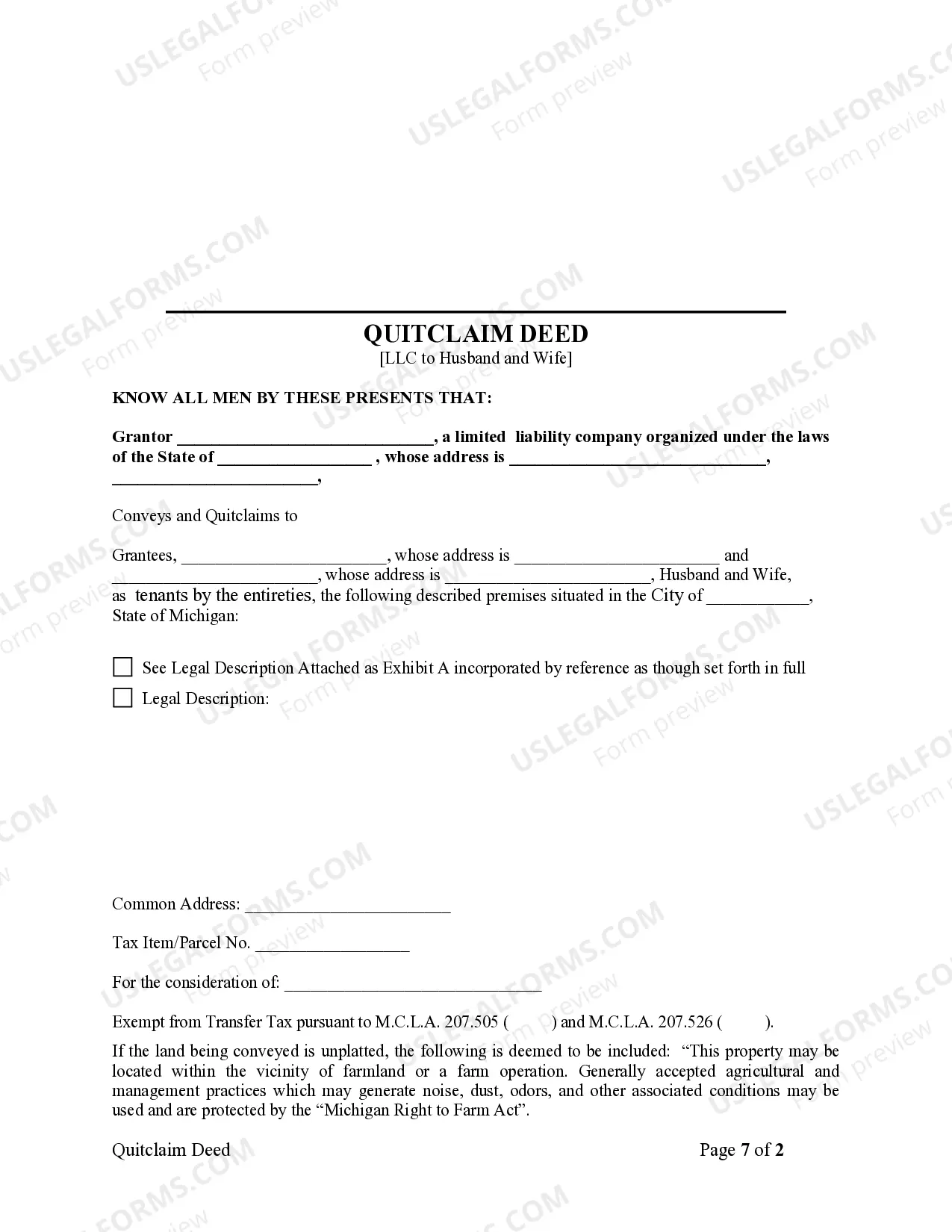
This Quitclaim Deed is a legal document where a Limited Liability Company transfers its interest in a property to a Husband and Wife. This form is distinct from warranty deeds as it conveys any interest the Grantor has without guaranteeing the title's validity. The Grantees can hold the property in various ways, including as joint tenants with the right of survivorship or tenants by the entireties, depending on their needs.
What’s included in this form
- Identification of the Grantor as a Limited Liability Company, including its legal name and address.
- Identification of the Grantees as Husband and Wife, including their names and addresses.
- Description of the property being transferred.
- Specification of how the Grantees will hold the property (e.g., joint tenants, tenants by the entireties).
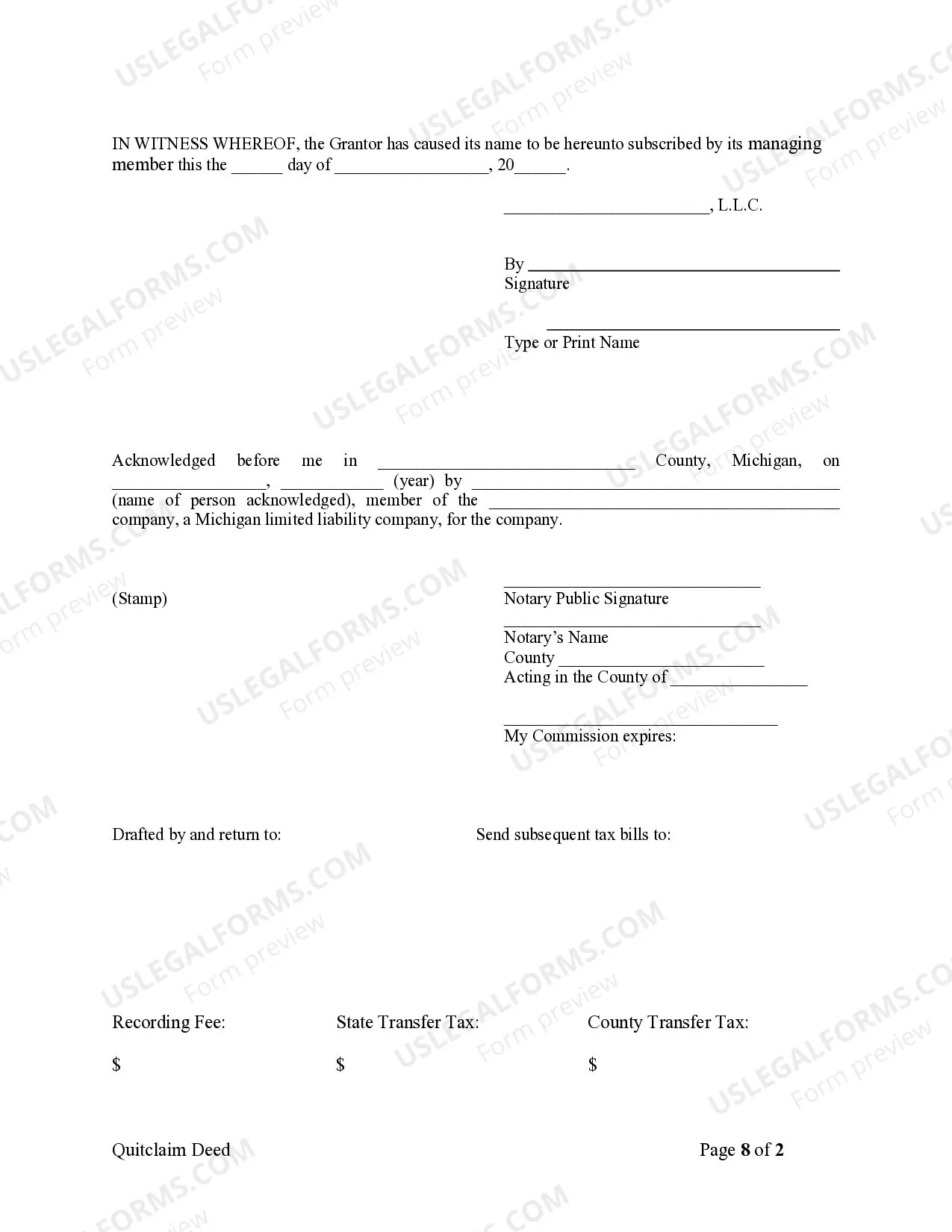
- Signature line for the Grantor, including a space for its authorized representative's title.






Situations where this form applies
This Quitclaim Deed is suitable when a Limited Liability Company intends to transfer property ownership to a married couple, typically for estate planning or transferring property among family members. It is also useful for correcting property title issues when the ownership interest of the company needs to be clarified.
Intended users of this form
- Limited Liability Companies wishing to transfer their property to individuals.
- Married couples who are the intended recipients of the property.
- Individuals handling estate transfers or property corrections within their family.
How to complete this form
- Identify the Grantor: Enter the full legal name and address of the Limited Liability Company.
- Identify the Grantees: Enter the names and addresses of both Husband and Wife.
- Describe the property: Provide a clear legal description of the property being transferred.
- Specify the type of ownership: Indicate how the Grantees will hold the property (e.g., joint tenants, tenants by the entireties).
- Complete the signature line: Have an authorized representative of the Grantor sign and date the deed.
Notarization requirements for this form
This form does not typically require notarization unless specified by local law. However, having it notarized may provide additional legal protection and validation of the signatures.
Get your form ready online
Our built-in tools help you complete, sign, share, and store your documents in one place.
Make edits, fill in missing information, and update formatting in US Legal Forms—just like you would in MS Word.
Download a copy, print it, send it by email, or mail it via USPS—whatever works best for your next step.
Sign and collect signatures with our SignNow integration. Send to multiple recipients, set reminders, and more. Go Premium to unlock E-Sign.
If this form requires notarization, complete it online through a secure video call—no need to meet a notary in person or wait for an appointment.
We protect your documents and personal data by following strict security and privacy standards.

Make edits, fill in missing information, and update formatting in US Legal Forms—just like you would in MS Word.

Download a copy, print it, send it by email, or mail it via USPS—whatever works best for your next step.

Sign and collect signatures with our SignNow integration. Send to multiple recipients, set reminders, and more. Go Premium to unlock E-Sign.

If this form requires notarization, complete it online through a secure video call—no need to meet a notary in person or wait for an appointment.

We protect your documents and personal data by following strict security and privacy standards.
Common mistakes
- Failing to provide a complete and accurate property description.
- Not indicating how the Grantees hold the property.
- Leaving the signature line incomplete or unsigned.
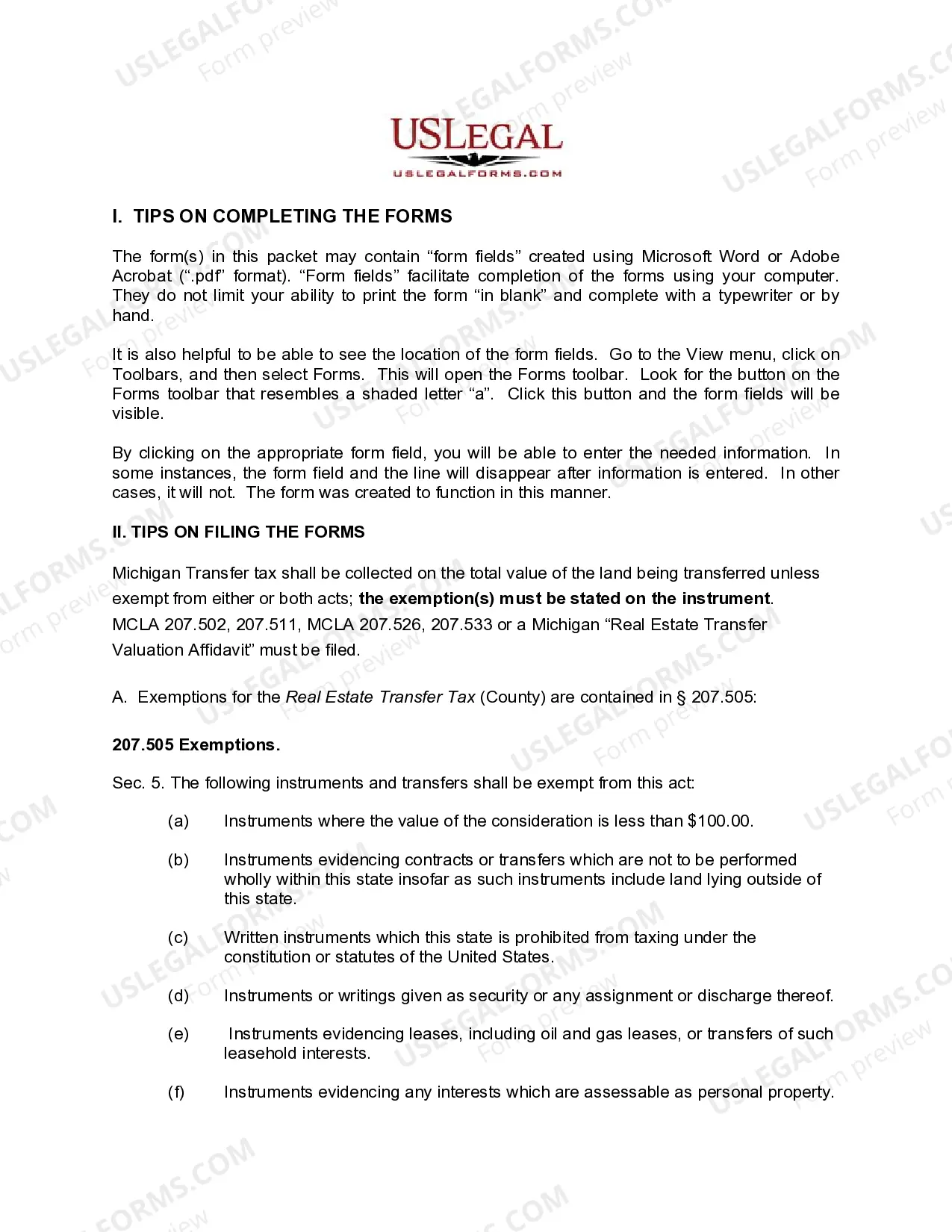
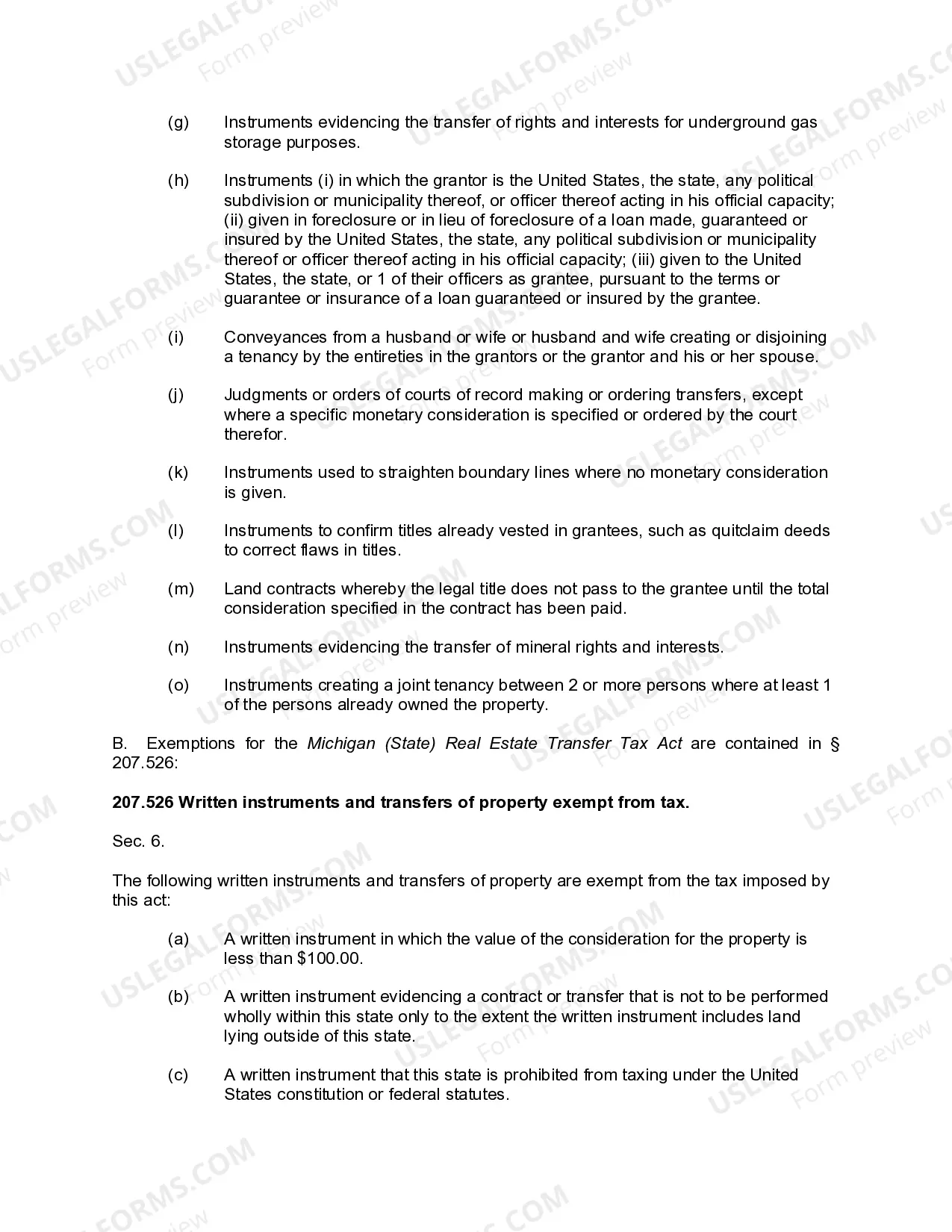
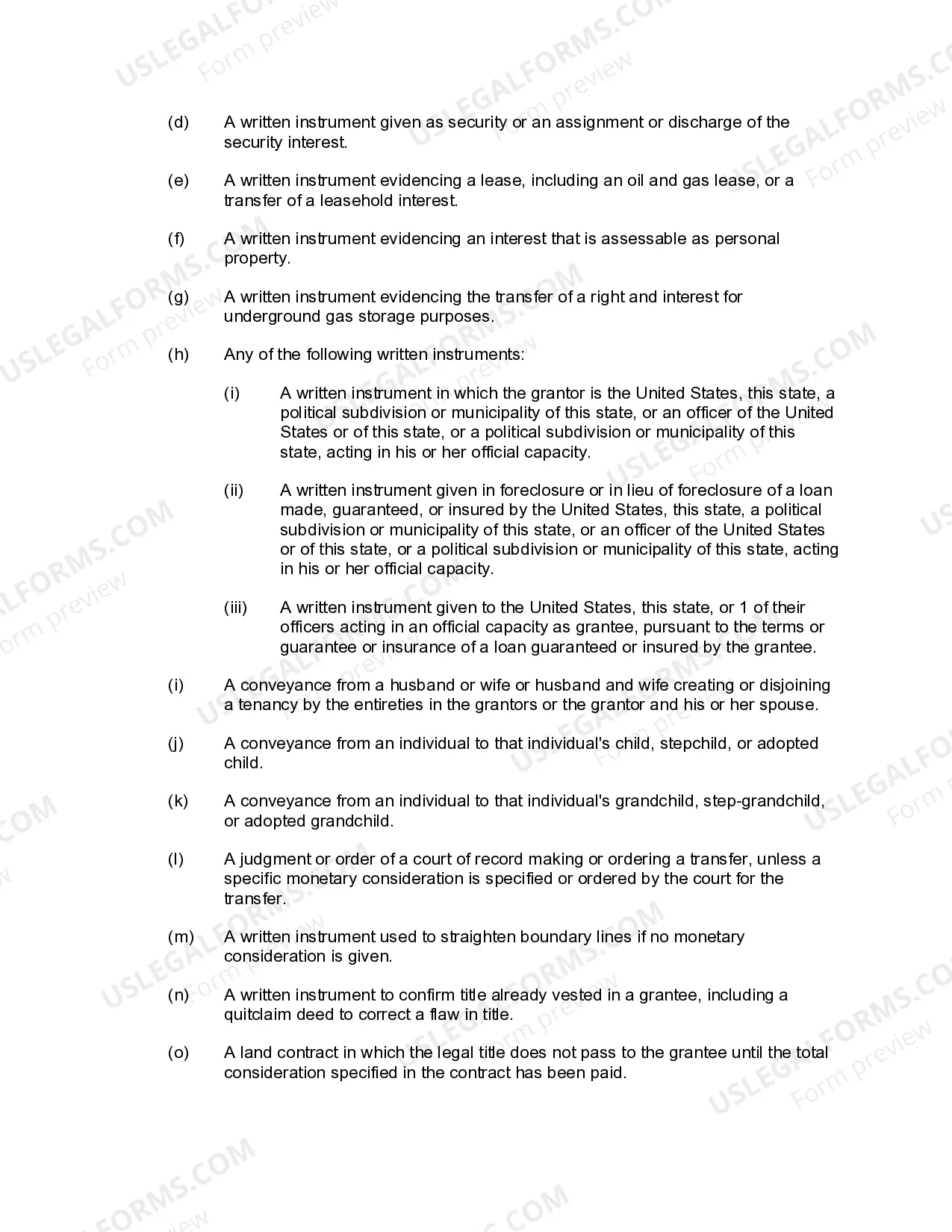
- Omitting required exemption information for transfer taxes if applicable.
Advantages of online completion
- Convenience of downloading and completing the form from your device.
- Editability to customize the form for specific needs.
- Accessibility to updated forms that comply with current legal standards.
What to keep in mind
Key points to remember about the Quitclaim Deed from Limited Liability Company as Grantor and Husband and Wife as Grantees include:
- It is a straightforward way for an LLC to transfer property to a married couple.
- The grantees can take ownership under specific tenancy arrangements.
- Properly completing the form is essential to ensure legality and avoid future disputes.
Looking for another form?
Form popularity
FAQ
To fill out a quitclaim deed form in Michigan, start by gathering information about the property, including its legal description. Next, clearly state the grantor, which in this case is the Limited Liability Company, and the grantees, identified as the husband and wife. After entering this information, you should ensure both parties sign the document in front of a notary. Finally, submit the completed Michigan Quitclaim Deed to your local register of deeds office for recording.
Signing: § 565.201 requires that the grantor sign the document in front of a notary public. Recording: All quitclaim deeds in Michigan must be filed with the Michigan Register of Deeds in the county where the property is located.
It is also crucial that a spouse know about the loan, even if he or she is not on the mortgage. In general, the spouse must sign a deed of trust, the Truth in Lending and Right to Cancel documents. By signing these documents, they are simply acknowledging the existence of the mortgage.
In order to transfer ownership of the marital home pursuant to a divorce, one spouse is going to need to sign a quitclaim deed, interspousal transfer deed, or a grant deed, in order to convey the title to the property.
If the quitclaim deed requires the signature of all co-owners, the deed is invalid unless all co-owners have signed it and the deed is then delivered to the grantee.If one individual owns real estate and desires to add a co-owner such as a spouse, a quitclaim deed might be used.
Misconceptions and Realities. It is a misconception that someone can be removed from the deed. Nor can a co-owner simply take away another party's interest in a property by executing a new deed without that other party. In short, no one can be passively removed from a title.
The Grantor is any person conveying or encumbering, whom any Lis Pendens, Judgments, Writ of Attachment, or Claims of Separate or Community Property shall be placed on record. The Grantor is the seller (on deeds), or borrower (on mortgages). The Grantor is usually the one who signed the document.
A grantee is the recipient of something, such as a college grant or real estate property. A grantor is a person or entity that transfers to another person or entity the interest or ownership rights to an asset. Legal documents, such as deeds, detail the transfer of assets between grantors and grantees.
In general, a grantor is someone who transfers a property right to a grantee. In a real estate transaction, the grantor is the current holder of the property right, or in other words, the seller. The deed, which transfers ownership, is the grant.
The Grantee in a Quitclaim Deed is the person who is being given interest in a property from the Grantor. It is possible for someone to be both a Grantor and a Grantee in a Quitclaim Deed.Most real estate deeds are notarized by attorneys.