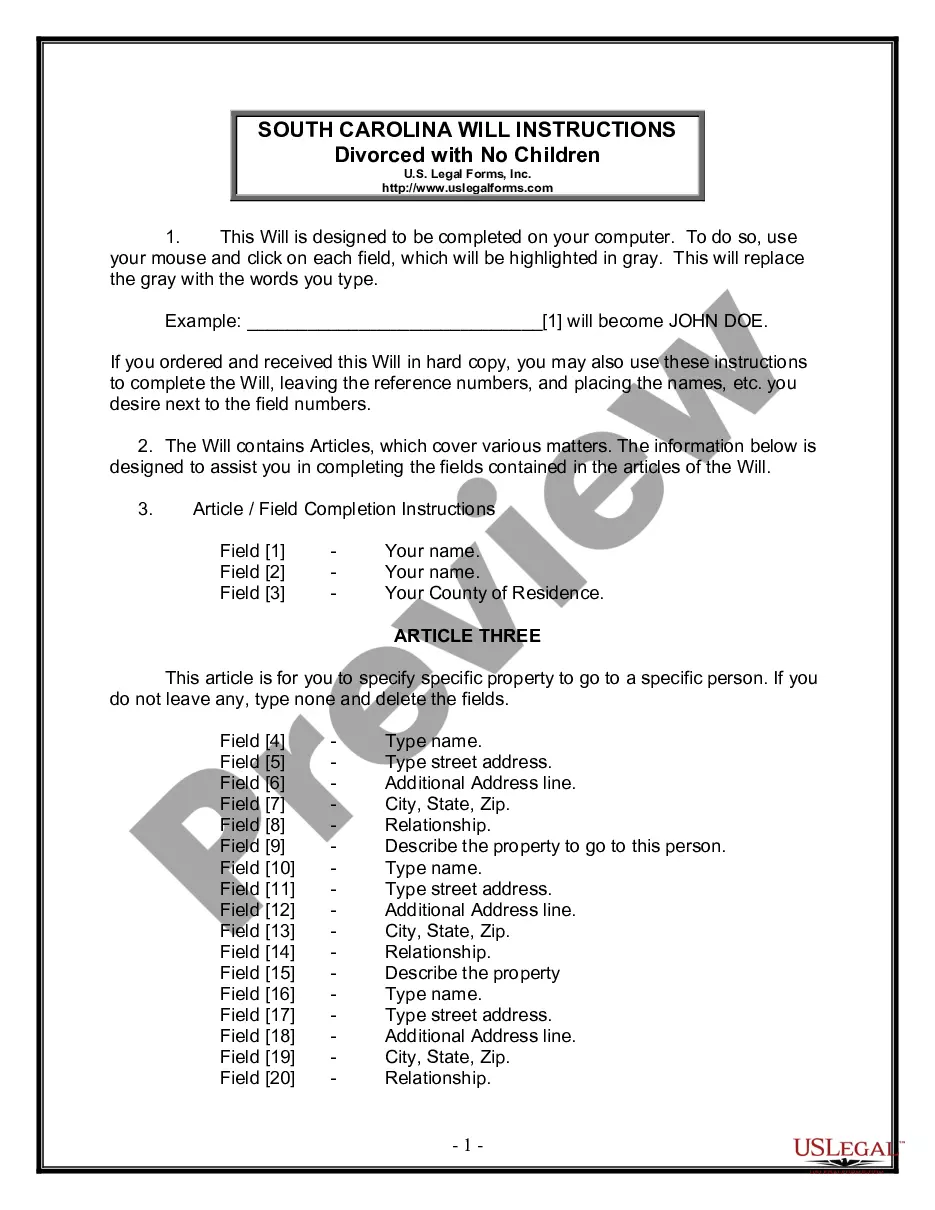
Michigan Seller's Disclosure Statement
Overview of this form
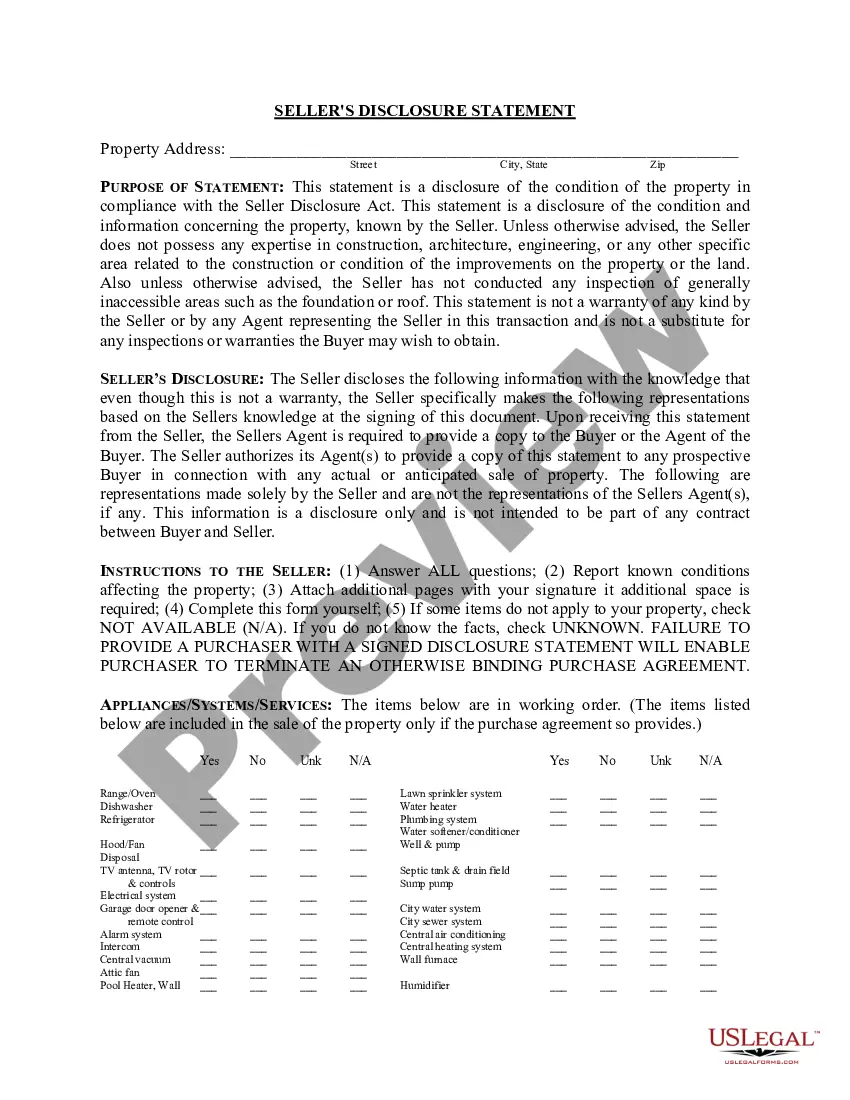
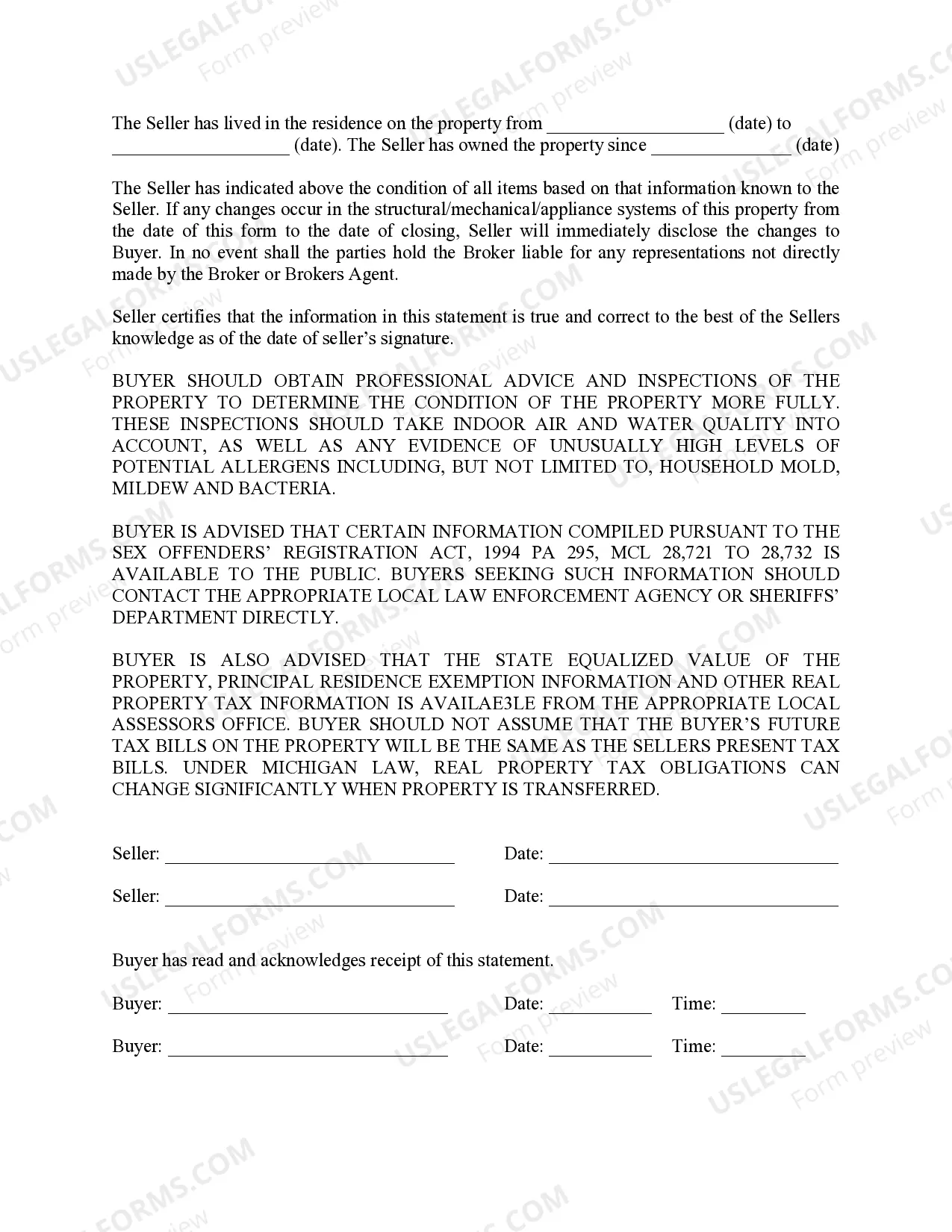
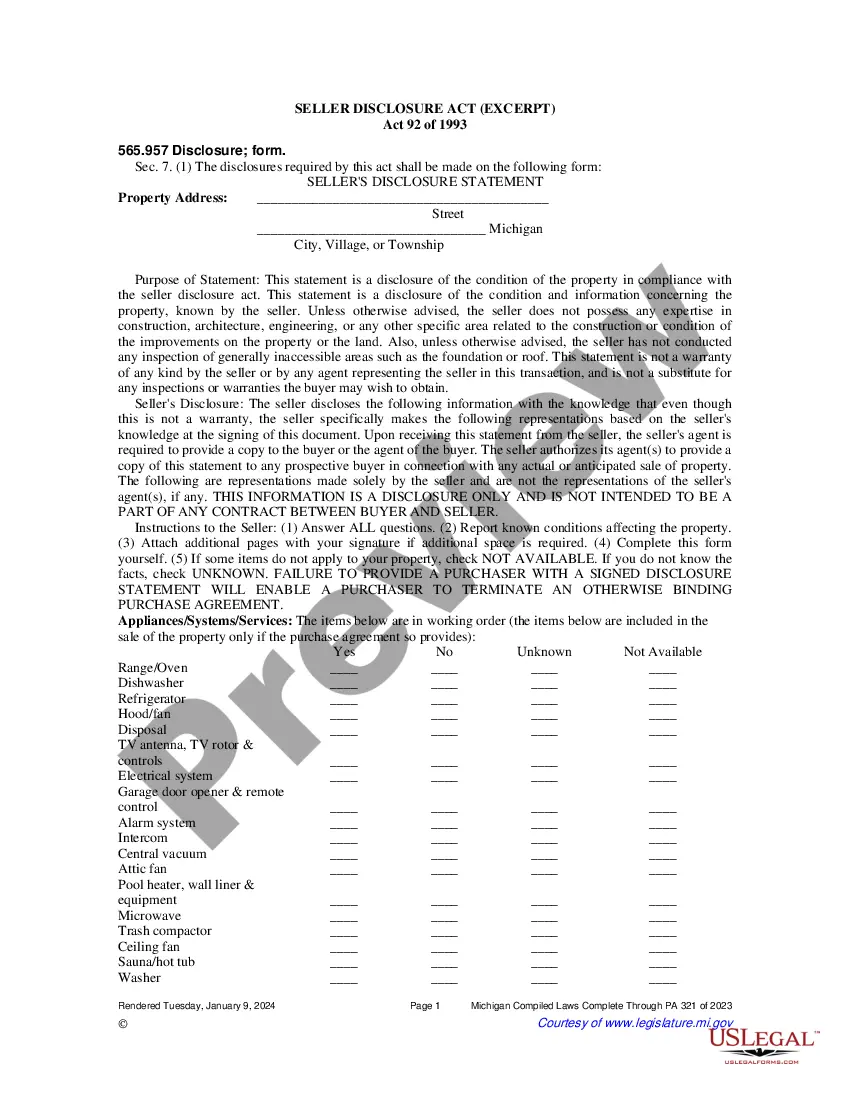
The Seller's Disclosure Statement is a legal document where the seller discloses the condition of the property being sold. This form ensures transparency between the seller and the buyer regarding known issues and features of the property, in compliance with the Seller Disclosure Act. Unlike warranties that guarantee the state of a property, this statement merely reflects the seller's knowledge at the time of signing and does not substitute for further inspections.
Key parts of this document
- Property address section to specify the location.
- Purpose of the statement outlining its intent and limitations.
- Sellerâs disclosure section detailing known property conditions.
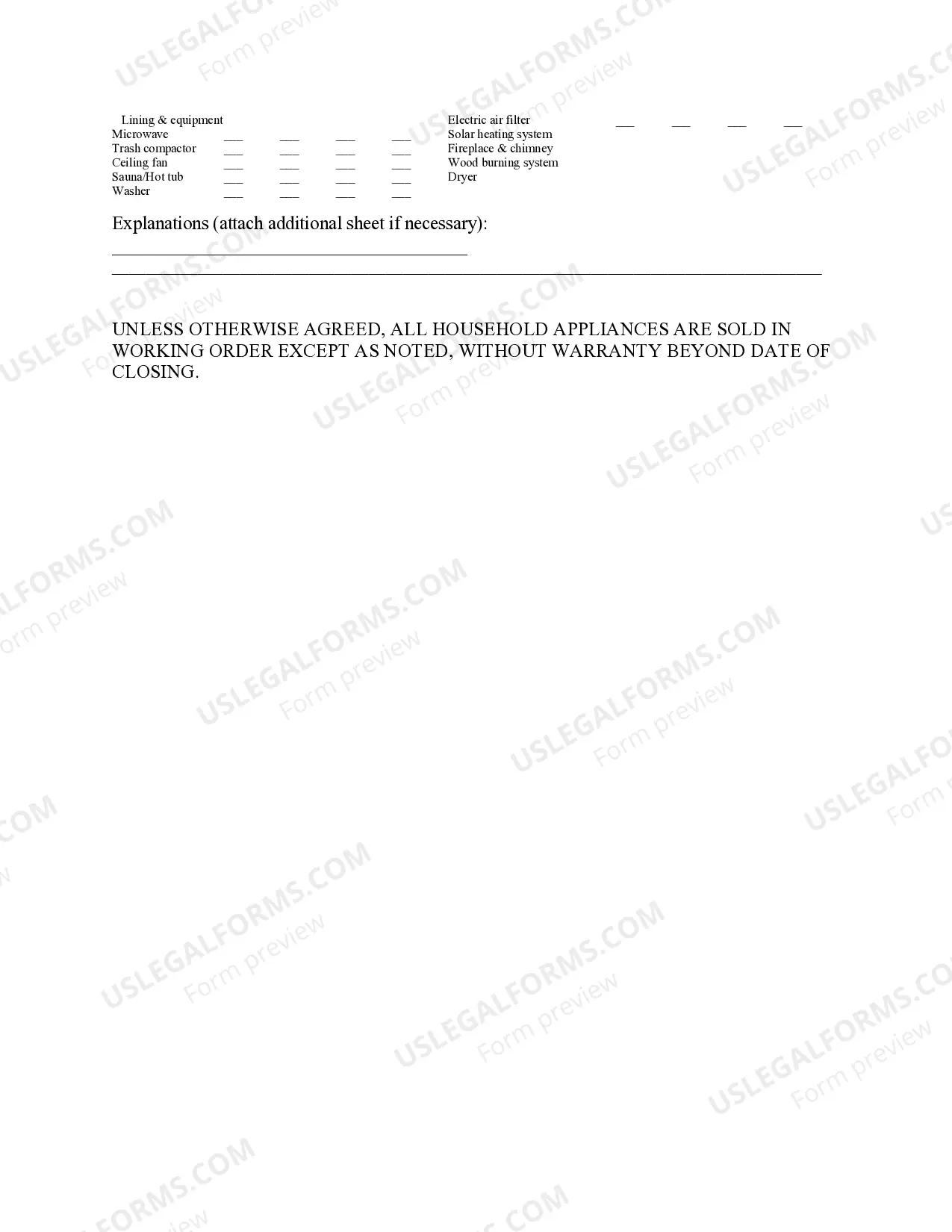
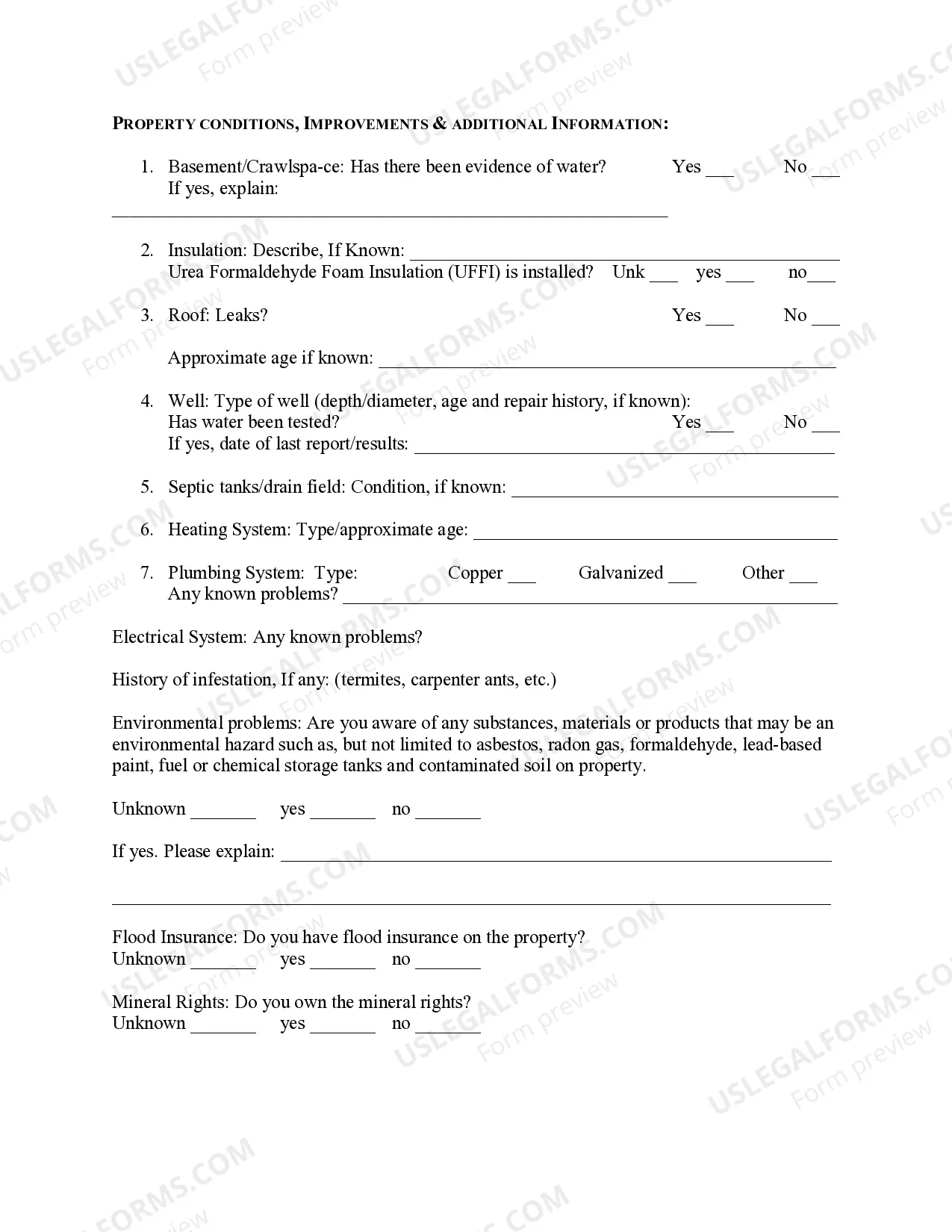
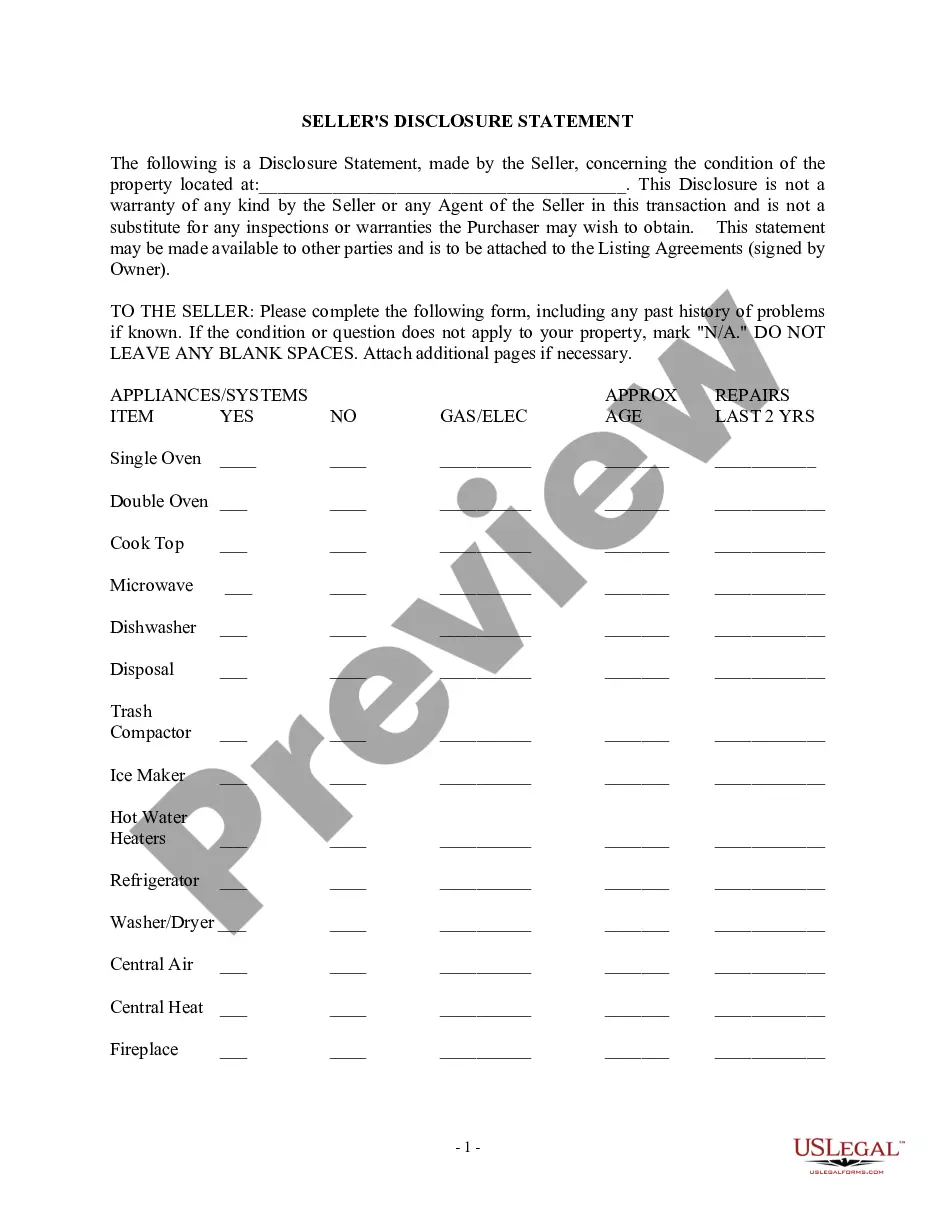
- A checklist of appliances, systems, and conditions affecting the property.
- Environmental hazards and history of infestation disclosures.
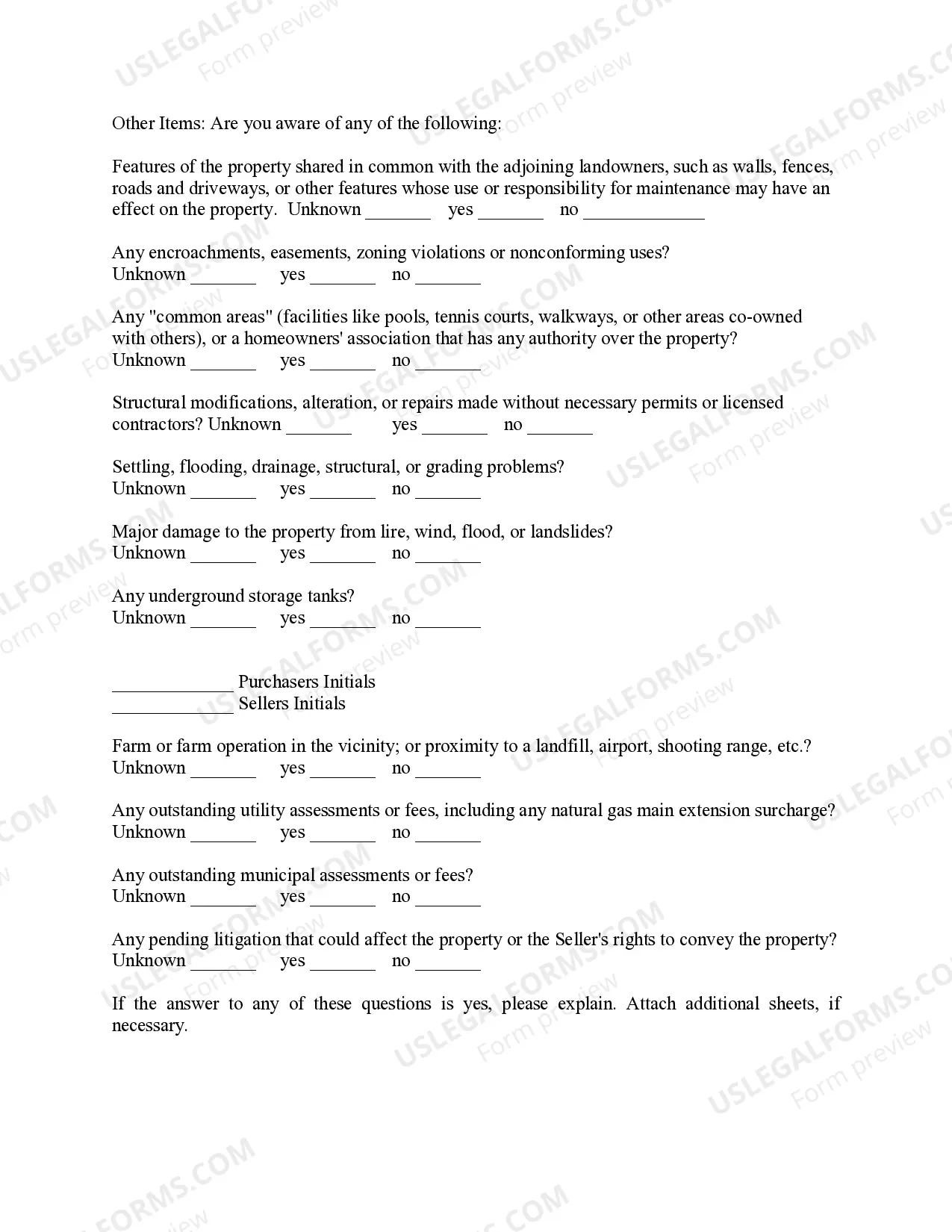
- Section for any legal or municipal assessments affecting the property.
When to use this document
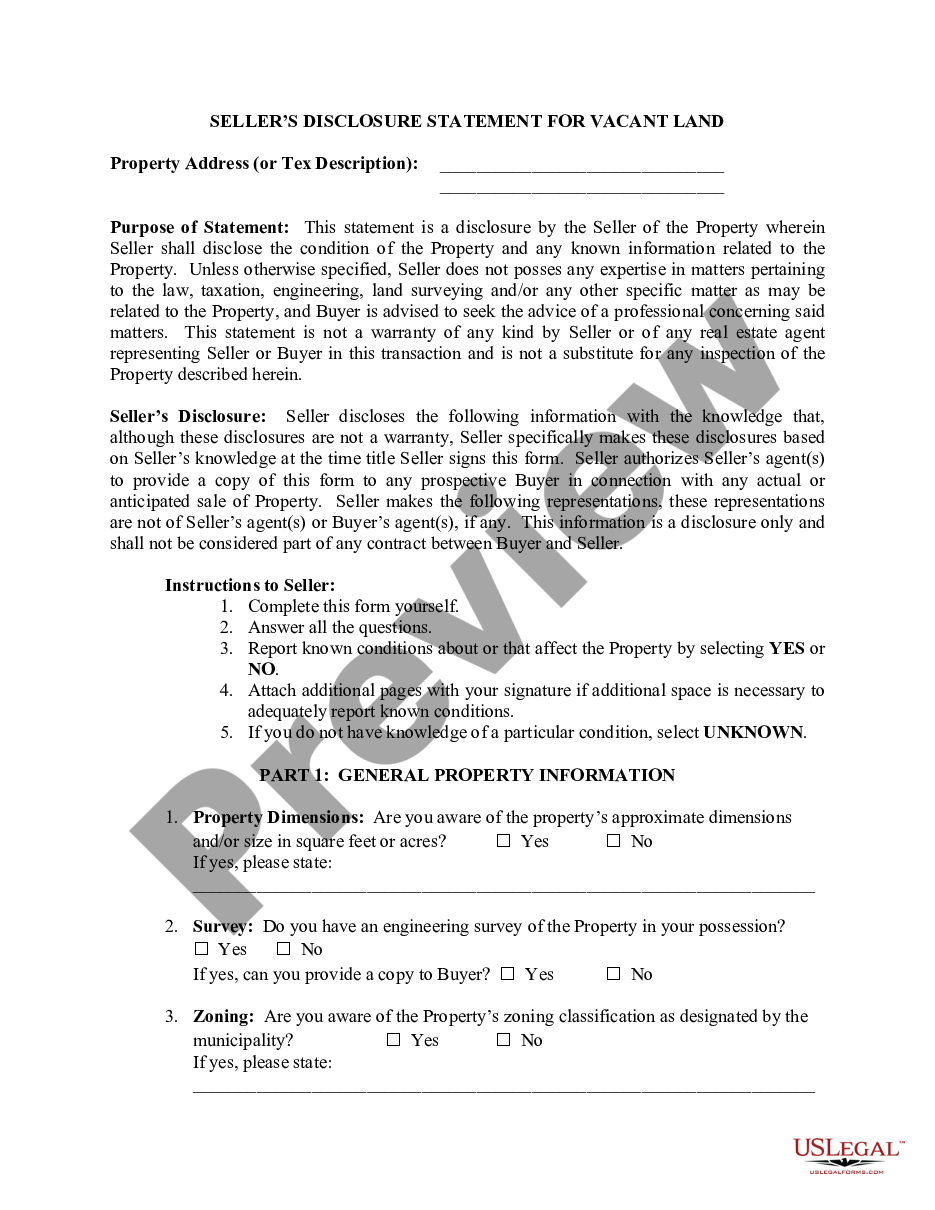
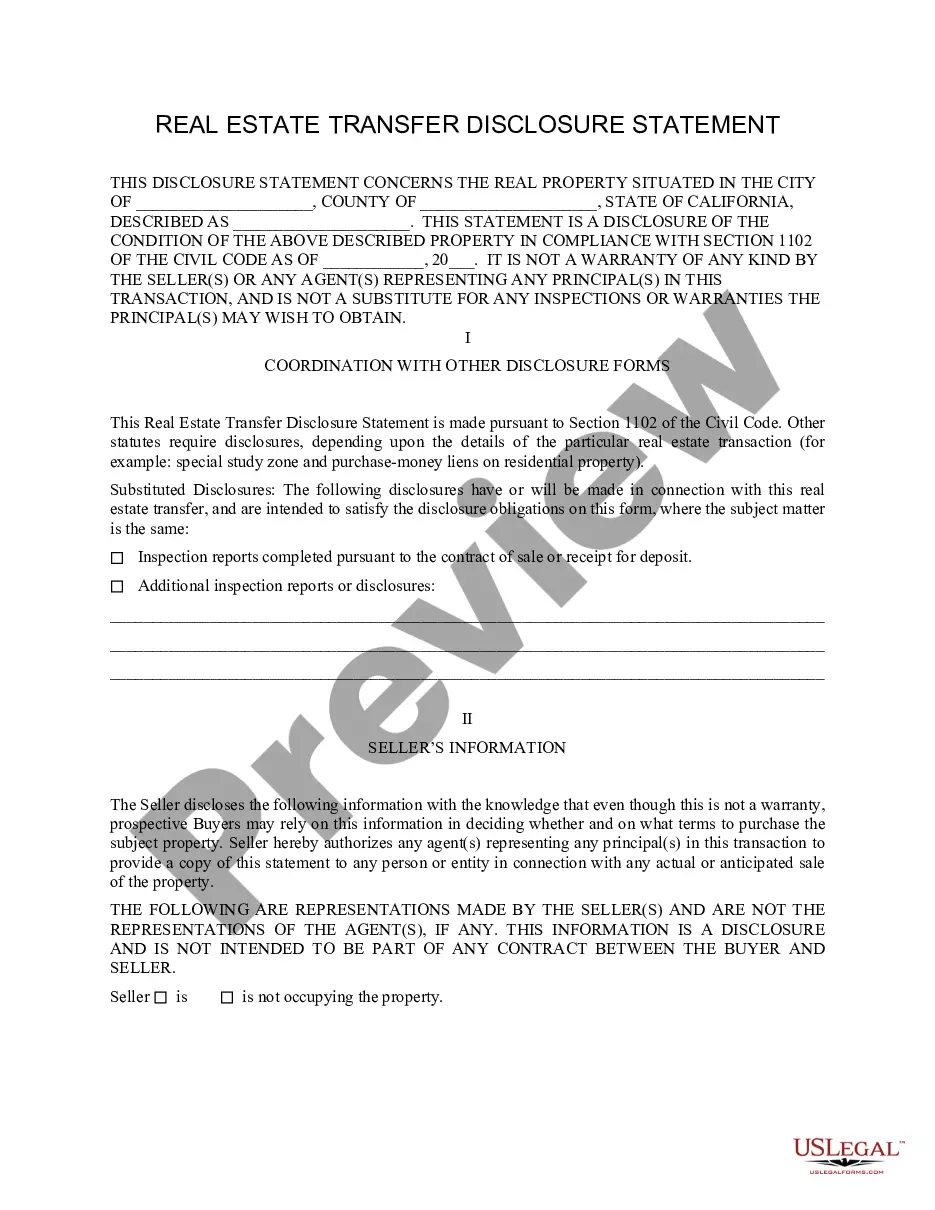
This form should be used when a property is being sold to ensure that the buyer is informed about the property's condition and any known issues. It is commonly required by law in many states to protect both parties in a real estate transaction from potential disputes regarding undisclosed property defects.
Who needs this form
- Property sellers who are preparing to sell their real estate.
- Real estate agents assisting sellers in compliance with disclosure laws.
- Buyers who need detailed knowledge of the property before purchase.
How to prepare this document
- Identify and enter the property address at the top of the form.
- Complete the purpose section, acknowledging the nature of the disclosure.
- Answer all questions truthfully, indicating known issues and features of the property.
- Provide any necessary explanations for disclosed conditions on additional sheets, if needed.
- Sign and date the form to validate the disclosure.
Notarization requirements for this form
This form does not typically require notarization unless specified by local law. Always check your local regulations to determine if notarization is necessary for this document to be legally valid.
Get your form ready online
Our built-in tools help you complete, sign, share, and store your documents in one place.
Make edits, fill in missing information, and update formatting in US Legal Forms—just like you would in MS Word.
Download a copy, print it, send it by email, or mail it via USPS—whatever works best for your next step.
Sign and collect signatures with our SignNow integration. Send to multiple recipients, set reminders, and more. Go Premium to unlock E-Sign.
If this form requires notarization, complete it online through a secure video call—no need to meet a notary in person or wait for an appointment.
We protect your documents and personal data by following strict security and privacy standards.

Make edits, fill in missing information, and update formatting in US Legal Forms—just like you would in MS Word.

Download a copy, print it, send it by email, or mail it via USPS—whatever works best for your next step.

Sign and collect signatures with our SignNow integration. Send to multiple recipients, set reminders, and more. Go Premium to unlock E-Sign.

If this form requires notarization, complete it online through a secure video call—no need to meet a notary in person or wait for an appointment.

We protect your documents and personal data by following strict security and privacy standards.
Typical mistakes to avoid
- Failing to disclose known issues or defects can lead to legal consequences.
- Not signing the form, which is a requirement for its validity.
- Leaving questions unanswered or marking them incorrectly (use N/A or UNKNOWN where applicable).
Advantages of online completion
- Easy access to downloadable templates that can be filled out at your convenience.
- Editable format allows for modifications as necessary.
- Access to legal forms prepared by licensed attorneys for increased reliability.
Looking for another form?
Form popularity
FAQ
In Michigan, sellers of owner-occupied residential property up to 4 units, are required by law to complete a Seller's Disclosure Statement.
Michigan's Seller Disclosure Act apply to the transfer of ANY interest in residential real estate consisting between one and four dwelling units, whether by sale, exchange, installment land contract, lease with an option to purchase, or any other option to purchase the land.
A Michigan property disclosure statement is a form through which sellers must report the condition of their residential real estate to potential buyers. The items specified may include pending legal cases, unpaid fees, property defects, or damage from flooding or fires.
However, sellers should report these defects to the best of their knowledge and understanding. ? Note: From pest infestation to pending legal issues, you shall disclose any known information about your Michigan house. This will help you avoid future disputes.
Exceptions to the Michigan Disclosure Requirements These exceptions include: transfers pursuant to court order, including by probate, a writ of execution, foreclosure sale, those made by a trustee in bankruptcy, transfers by eminent domain, and transfers resulting from a decree for specific performance.
Contents of the Seller Disclosure In addition, the SDS includes the condition of all structural aspects of the property and improvements, as well as specific information about water problems, insect infestations, legal issues, and environmental issues and hazards.
The statute of limitations in Michigan is six years for both breach of contract and for fraud.